Ira Levin, legendary novelist and playwright, published The Stepford Wives in 1972, a time when feminist ideas were at a fever pitch for many, and a frightening development for others. Women’s rights were at the forefront in a way that they had not been since the suffragists had won the right for women to vote over 50 years earlier. Now the book is re-released in audio format, at a time when the advances won during that time have been rolled back in some places, and appear to be under attack everywhere. So although I was already familiar with this book, I jumped at the chance to listen to it and promote it; I wish Levin was still alive today, because we can use men like him.
Version 1.0.0
My thanks go to NetGalley and Blackstone Audio for the review copy. This book is for sale now.
Stepford, Connecticut appears to be idyllic; beautiful homes; rolling lawns; good schools. There’s no crime to speak of in Stepford, and Joanna and Walter jump at the chance to move their young family away from the city and into a lovely new home. The children make friends almost immediately, but for Joanna, it’s a little harder. All the women are stay home mothers—not unusual in 1972—but they are insular, preferring housework and beauty regimens over any outside interests, including other women. She finds two women that are friendly, and that have moved here fairly recently themselves, and she turns to them for solidarity. But then one of them begins to change, and Joanna has become suspicious. Is it something in the water? Why are Stepford women such docile, ornamental drudges?
This is a brief book, more of a novella than a novel, and that’s part of what makes it so effective. Levin uses spare prose and doesn’t let anything clutter his central message. In doing so, he creates a more spine chilling effect than a more description laden, dialogue rich novel could have done. And once you read it, you’ll never forget it.
I highly recommend this classic work of horror for women and those that care about them.
System Collapse is the seventh book in Martha Wells’s acclaimed Murderbot Diaries series, and it’s a humdinger. Fans have been waiting for this one, and they will not be disappointed. My thanks go to NetGalley and Tor Publishing for the review copy. This book is for sale now.
If you are one such fan, I’ve already told you what you need to know; for the uninitiated, I’ll continue. I am a reluctant science fiction reader. I generally avoid anything that involves complex world building or a new vocabulary extensive enough to require a glossary. I absolutely don’t read science fiction series anymore, because I am not that dedicated. As we age, our brains become less flexible, and so whereas I loved reading a handful of excellent but rather intricate series when I was thirty, I’m just not up for it in my retirement years. I include this information because I know that a good number of my readers are also at or near retirement age, and may be similarly reluctant. So, first: you can do this, and it will be painless.
I was finally persuaded to try this series—not for review, merely as an audiobook from the library, which is about as low risk as it gets—when readers from a number of unrelated places in my life all recommended it. I saw good things from a couple of my Goodreads friends online. How nice, I thought, but I’ll pass. Next came my children, my eldest and my youngest, both grown, of course. Their rabid enthusiasm cracked my resolve a tiny bit, but I thought, maybe later. The final straw came when a couple of lifelong friends came to visit from out of state last spring. They were embarking on a road trip around the Pacific Northwestern USA, concluding their stay here in Seattle, and they, too, were wildly enthusiastic—and one of them doesn’t read for pleasure much at all! They listened to the audiobooks of the entire series up through the sixth, which is what was available at the time, and heartily recommended it.
Well, I thought. I could check the library. I could probably listen to the first one while watering the plants, and if I don’t like it, I’ll just send it on back. But of course, I didn’t send it back; I checked out the rest of the series, and friend, if you have to stand around for thirty or forty minutes daily with a hose in your hand, this is the way to do it.
The Murderbot is a being that is part machine, part human, and the term for this within the fictional world it inhabits is “sec unit,” because it has been invented for the security of the human beings inside the various spacecraft that are flying around out there, and also partly for the security of the ship also; but as we learn, the ship can sometimes take care of itself.
“Murderbot” is the specific name that our protagonist has chosen. And the main character is indeed about ninety percent of what’s important here. We don’t need a host of invented words. There are a bazillion other characters, and no effort is made to introduce them to us gradually, but it doesn’t matter. Just let it flow over you and at some point, the most important characters will click in.
This seventh installment in the series is the first time that I have read it with my eyes. I wasn’t sure how this would go, since voice actor Kevin R. Free is so adept at reading the series that I had begun to equate his voice with the character; I needn’t have worried. In fact, I find that I prefer reading it this way, because the internal monologue is immense, and it’s much easier to tell when the character’s ruminations have ended and the action resumes when I can see the (many, many) parentheses. Also, the humor here is often sly, and when listening to the story, I don’t get a pause that provides me with time to consider what’s been said; we’re off and running, and if I don’t want to miss anything, I have to forget all about that little witticism and move forward. Reading by sight allows some reflection.
The series is drop dead funny, and it is also timely, as AI makes more inroads toward humanity of its own, raising all sorts of ethical questions for the future.
For any fans of the series that are still reading, despite having been dismissed at the start of this review: my favorite character, apart from the protagonist, is Art, the ship that is also Murderbot’s beloved friend. Murderbot’s sarcasm is matchless, except when Art is around. matching snark for snark with Murderbot as it does here, and foreshadowing suggests that when #8 is written and available, the same will be true.
And I cannot wait for the next in the series. Highly recommended!
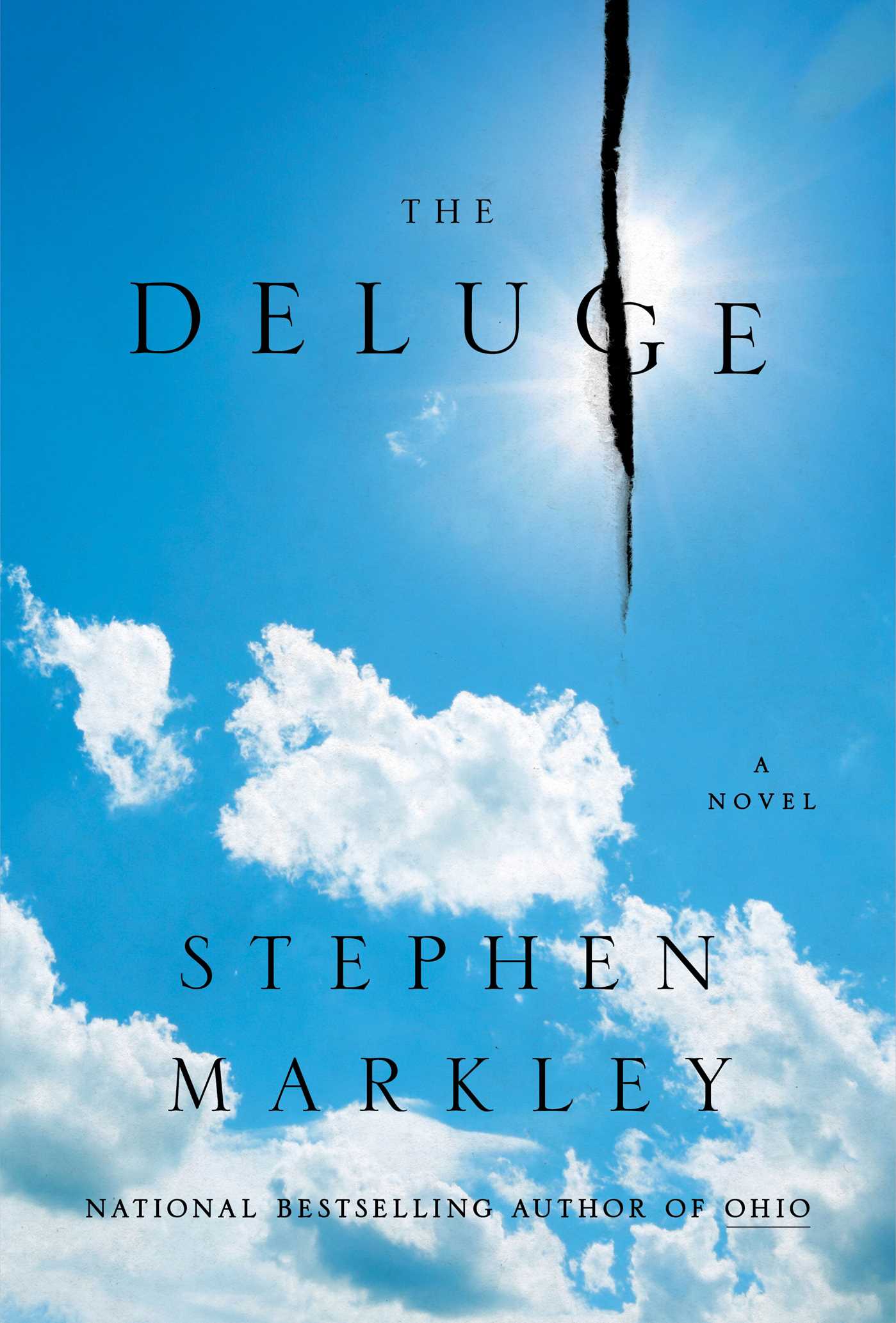
Markley’s debut novel, Ohio, came out in 2018, and it was one of the year’s best that I promoted at the end of the year. I loved it so much that I was convinced that anything this author wrote would be golden. So when Simon and Schuster invited me to read and review his next book, The Deluge, I was delighted. But although I am grateful to the publisher and Net Galley for including me, I cannot bring myself to finish this thing. I suspect Markley may have bitten off more than he can chew, because it’s kind of a mess.
To be fair, I have only read the first twenty percent, but since the book is 900 pages in length, that’s a chunk. After all of that, I can’t even keep the characters straight, let alone bond with them. One character, Kate, seems to hold the most promise, but just as I begin to develop interest, we transition to a different character—or news article, or whatever—in a manner that feels abrupt and jerky. Some of these characters appear more than once, and other may have, but I’m not even sure of it. There’s one horrifying rapist that speaks to the reader intimately and in the second person, and he gives me the heebie-jeebies so badly that I am glad to move on to someone else. That guy—whatever his name is—and Kate are the only two I can identify, sort of. I’m a language arts teacher. Good luck to everybody else.
I do understand that the overall message has to do with the environmental ruin that is marching toward us at an alarming pace. Markley isn’t wrong to sound the alarm, although it may in large part be a case of preaching to the choir; the most concerned among us are probably the most likely to read this book. At the same time, some of us have been following this horrifying debacle since the ‘70s, or the ‘80s, and when one is already virtually hyperventilating with alarm over this issue, reading this novel doesn’t do much good.
But more to the point, fiction is an excellent medium to promote an urgent political cause, but it’s only effective when the other story elements are outstanding. When the format doesn’t do justice to the characters or provide clarity to the reader, the effort is wasted.
I read other reviews saying that if one patiently reads the chaotic scramble at the beginning, eventually it will all come together and make sense, but honestly, if nothing makes sense two hundred pages in, then you can stick a fork in me, cause I’m done.
I loved Dark Matter, Crouch’s award-winning science fiction novel based on the notion of parallel universes. When I was invited by Net Galley and Random House Ballantine to read and review Upgrade, I jumped on it.
This is a story that hits the ground running. Logan is a scientist, and he’s also a husband and father. He leaves home one day in the normal fashion, and he never gets to go back home. He’s been kidnapped, more or less, by his own government; they plan to use him in experiments, but then he’s busted out of there by a badass ninja type that turns out to be his sister.
Surprise!
The pacing is swift and at times, the story is electrifying. However, the first half of the book is more interesting than the second half. My main criticism is the unhappy appearance of one of my least favorite tropes, the Bad Mommy. How has any living author missed the fact that this device has been done to death? Without this annoying feature, I would rate this book 4 to 4.5 stars.
As always when I read science fiction, I cannot tell you whether the science aspect of this novel is credible or entirely made up. I am a humanities animal through and through, so with every scientific explanation of a development in the plot, I just nod along. Okay. I believe that. Of course, I’d believe anything when it comes to scientific explanations. I have no idea how much is actual science, and how much is pseudo-, and I am okay with that. After all, it’s also fiction.
Crouch’s fans will likely appreciate this novel, and those without my own aversion to the trope mentioned above may very well like it, too. It’s for sale now.
So much build up; so much promise. What a crying shame. This dystopian novel is conceptually strong, addressing the invasive nature of facial recognition software and government access to what should be private digital communication, but the execution is abysmal.
I received a review copy from Net Galley and Simon and Schuster.
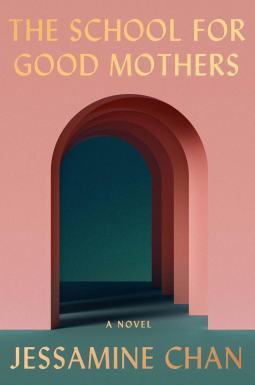
Frida Liu is a new mother, and she’s got problems. She has severe postpartum depression, and she’s home alone with her baby, all day and all night, trying to work from home. She doesn’t want childcare; she wants to be with her daughter, Harriet, but she’s overwhelmed. The original plan was for her to be the stay-home mother, with her husband supporting the family, but at the same time Harriet was born, her husband fell for someone else.
One day—“just one bad day”—she is summoned in to work. She could have brought Harriet with her, or she could have called a sitter, but instead, she leaps into the car, leaving the baby in her bouncy chair at home, all alone. She tells herself she will quickly drop off and pick up info, and then she’ll zip back home, but instead, she allows herself to be caught up in reading and answering emails. Eventually, her phone rings. The caller tells her that her baby has been removed from her home by the police; neighbors were alarmed by the baby’s nonstop screams. Now, Harriet is going to live with her daddy and that woman, and there’s not much that Frida can do about it.
At the outset, I think this is a brave scenario for an author to choose. Leaving a baby under the age of two, which some would contend is the very worst age to leave a child unattended, is no small matter, and I am eager to see how Chan will play this. How will she keep me on Frida’s side in all of this?
Turns out she won’t.
I have seldom seen a less sympathetic protagonist, and clearly, Chan doesn’t intend for Frida to be a villain. Yet in all of the puling, the whining, the self-pity, Frida’s prevailing concern isn’t for her child’s well-being, it’s for herself. She needs her baby. She wants her baby. She wants her baby to want her. And so it goes.
But wait, there’s more. The worst thing of all is that this eighteen-month-old baby is not accurately depicted developmentally. Discussions around the care of Harriet are premised on Harriet’s ability to understand abstract concepts that no child this age is capable of. At first, I anticipate that it’s only Frida that holds these expectations and that others—her ex, or the professionals within the child welfare system—will set her straight, but no, they all buy into these assumptions as well. Then I wait to see if there is some aspect of this futuristic, dystopian world that renders children different from those in our real world today; nope! At one point, Harriet bites someone, and Frida tells her to “apologize at once!” This is a kid barely old enough to walk. Give me a fucking break!
The plot wanders and Frida wallows; at about the 30% mark I commence skimming. I read the last 25% carefully to be sure there’s no grand aha, no surprising event that causes all of this to make sense, or at least to mitigate it, but there’s no redemption to be found. Where are the editors? There are editors, right? How did this wasted trainwreck of a novel end up on Oprah and other prestigious lists and websites? I just don’t get it.
Oliva made her debut in 2016 with The Last One, a genre-defying story in which technology fails with disastrous consequences for reality show contestants. I was delighted when I received the invitation to check out her current novel; big thanks go to Ballantine Books and Net Galley for the review copy. This book is for sale now.
Linda Russell lives alone. She has had a traumatic past, and she is naïve in some ways about the world around her, having been kept apart from it for so many years. Money isn’t a problem, though; she has inherited a pile of it. Yet we cannot envy her, because the unspeakable horrors she has seen outweigh the benefit of her wealth.
When we meet Linda, she is in her nest chair surfing the internet. Her sheath provides her with information, but we have to figure out what a sheath and nest chair actually are by examining context, which takes a little while. And this is a key part of the suspense, giving us some information about the time period, the place, the technology and the characters, but also withholding quite a lot, doling it out to us in small portions so that we can follow along, without ever getting a firm grip on the situation till we are far into the story. And for me, there were moments when I became confused enough that I wanted a little more information in order to follow events as they unfolded, but most of the time the narrative was paced effectively. I began to have a solid enough grip on the basic facts to follow the story well at about the 36% mark.
Linda is a clone, and her story went big several years ago, when she was found emaciated and filthy, having been more or less feral inside a walled property where her mother abandoned her. The part of her past that weighs on her mind most heavily is the fate of her twin. Lorelei, whom she must not call “Mother,” loved Emmer, but not Linda. Both of them were created in an effort to duplicate Lorelei’s deceased daughter, Madeleine, and Emmer resembled Madeleine more. Of course, everyone knows that eye witnesses are notoriously unreliable, and so it is with Linda’s memories, but she knows this for certain: after a particular point in time, Linda never saw either Emmer or Lorelei again.
Meanwhile, a cult of sorts has sprung up around Linda, whom social media has dubbed “clone girl.” Rumors are spread; even the tiniest hint as to her possible whereabouts is greedily devoured by those following her story. And so, Linda hides, and she talks to no one; that is, until her new neighbor, Anvi, pushes her way into Linda’s life. Anvi is new in these parts, and she wants a friend.
To say that this story is a thriller or a mystery is unfair, and will lead the reader to a dissatisfying end. The focus of the book is not on unraveling a crime, and the hair-on-fire pacing that marks a thriller isn’t present here. I keep turning the pages, not because my heart is slamming in my chest, but because I am curious. The story really is about our character. Likewise, although the story is technically science fiction, my interest isn’t captured and held by complicated new technology, but by Linda herself, wanting to see her unharmed and able to lead something resembling a normal life. So I urge interested parties to come to this novel with an eye for character, because that’s the anchor here.
At the climax—and I’m being fairly vague here so as not to spoil the ending—there’s a moment when Linda behaves fairly stupidly when she is faced with an urgent problem, and I feel let down, but then she rallies and pulls herself together, and I let my breath out and smile. Go, girl, go.
When I learn what is really in back of the personal mysteries Linda faces, I’m inclined at first to regard it as far-fetched, but then the sci fi aspect kicks in, and let’s face it: science fiction and fantasy both permit and even require far-fetched material. What needs to be credible and consistent is Linda, and Oliva does a fine job developing her protagonist. I believe Linda at the outset, and as she changes over the course of the story, I believe her every step of the way.
I enjoyed this story a great deal, and I look forward to seeing what Oliva comes up with next. I recommend this book to anyone that enjoys good fiction that is character driven.
My thanks go to Net Galley and Flatiron Books for the review copy. I alternated my digital copy with the audio version I found at Seattle Bibliocommons; the reader does a fine job, and so if you want this book, you can’t go wrong in terms of print versus sound.
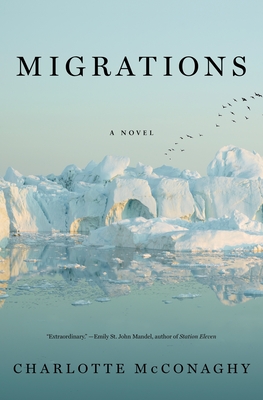
This is either exactly the right time to read this book, or exactly the wrong time.
Franny Stone has never been happy staying in one place, and now, when the walls are about to close in on her, she decides that one final voyage is in order. The Artic terns are about to make one final migration, and she means to go with them. Posing as a marine biologist, she persuades a fishing crew to take her along; she has the data to follow the terns, and the terns are following the fish. It’s in everyone’s best interest to work together here, now that so many species are extinct and the fish are so scarce. Once in motion, however, few things go according to plan.
The setting is the future, at a time when humanity has depleted most of the world’s wildlife. It is bleak, bleak, bleak.
Much of the story revolves around Franny’s character, and since we know from the get-go that she doesn’t intend to return alive once this trip is done, there are two questions that keep me turning the pages. I want to know why she wants to die, and of course, whether she does. The reason for her morbid plans is spooled out to us in small bits; whether she dies at the end is something the reader must learn for herself.
As for me, I had huge expectations by the time I began reading, because this novel shot up to bestseller level almost overnight. Perhaps that’s why I felt a trifle let down when it was done. It’s a good story, but I wouldn’t call it one of the year’s finest. Certainly, there is moral gravitas behind it, and yet those most likely to read it are not climate change deniers. For me to have loved this story, I would have needed more hope and less utter despair. When a story starts sad and ends sad, the little places in which it is slightly less sad aren’t enough to bond me to the narrative.
On the other hand, I am just one reviewer. There are a whole lot of readers out there getting all the feels and loving them. I recommend this story to anyone looking for a catalyst for a good ugly cry.
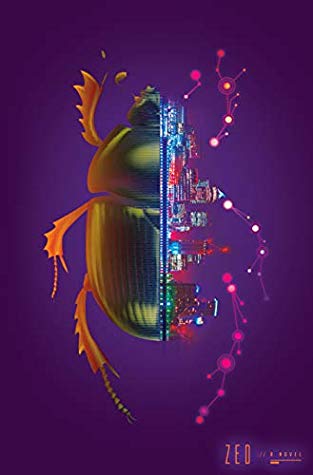
Kavenna is an established writer, but she is new to me. I saw the description and—okay, yes, the cover—and I knew I had to read this book. Thanks go to Doubleday and Net Galley for the review copy. This book is for sale now.
At the outset this story is electrifying. It’s set in future Earth in what was once London. Beetle is an all-powerful company that governs both business and government; it resembles Future Amazon more than a little. Its employees have Real Life selves, and they have virtual selves that make it possible for them to attend meetings without physically being there. They have BeetleBands that measure their respiration, pulse, perspiration and other physical functions, and those bands are supposed to stay on:
The Custodians Program tracked people from the moment they woke (having registered the quality of their sleep, the duration), through their breakfast (registering what they ate, the quality of their food), through the moment they dressed, and if they showered and cleaned their teeth properly, if they took their DNA toothbrush test, what time they left the house, whether they were cordial to their door, whether they told it to fucking open up and stop talking to them, whether they arrived at work on time, how many cups of coffee they drank during the course of an average day, how many times they became agitated, how many times they did their breathing relaxation exercises, if they went to the pub after work and what they hell they did if they didn’t go to the pub, how late they went home, if they became agitated, angry, ill, drunk, idle at any point during any day, ever.
Of course, it is possible to avoid the entire Beetle system, but there’s almost nothing that someone that is off the grid can do for a living; these people scuttle about in abandoned buildings, living miserably impoverished, private lives.
Those in high positions of responsibility have Veeps, which are virtual assistants that run on artificial intelligence. There are few human cops out there because those jobs are done by ANTS—Anti-Terrorism Droids—and these in turn follow the protocol, which says they should shoot at their own discretion. And all of these things lead up to the murder of Lionel Bigman, who bears an unfortunate resemblance in both body and name to George Mann, who has just cut the throats of everyone in his family. The ANTS find Bigman and kill him.
The aftermath features the sort of government whitewash and cover-up that every reader must recognize. The error was caused, say the higher-ups, by two factors: one was Mary Bigman, wife of Lionel, the uncooperative widow of Lionel who demands answers and is therefore conveniently scapegoated; and Zed, the term for chaos and error within the system. And Zed, unfortunately, is growing and creating more errors which must also be swept under the virtual carpet.
Those dealing with this situation are Guy Matthias, the big boss at Beetle; Eloise Jayne, the security chief who’s being investigated for saving the life of a future criminal that the ANTS had been preparing to shoot; Douglas Varley, a Beetle board member; and David Strachey, a journalist torn between his paramount duty to inform the public, and his self-interest that suggests he shouldn’t rock the boat.
Once the parameters of this book are defined, I am excited. The book could be the bastard antecedent of some combination of Huxley, Rand, Vonnegut and Orwell. The possibilities! But alas, though the premise is outstanding, the execution is lacking. I have gone over it multiple times trying to figure out what went wrong and what could fix it, and I am baffled. All I can say is that by the thirty percent mark, though a major character is running for her very life, the inner monologue drones until I am ready to hurl myself into the path of the ANTS just to end it. All of the fun stuff has been offered up already, leaving us to slog our way out of it. How could a story so darkly hilarious and so well-conceived turn so abstruse and deadly dull?
Nevertheless, I would read Kavenna again in a heartbeat. Someone this smart will surely write more books that work better than this one. But as for you, read this one free or cheap if you read it at all.
I received a review copy courtesy of Net Galley and Grand
Central Publishing. Buxton has had her work appear in The New York Times and
some other impressive places, and I was drawn by the buzz. To be honest, this
book didn’t work for me, but I also have to admit that I am probably outside
the target audience.
The setting drew me first; it’s hard to resist work set in
my own hometown of Seattle. The premise has to do with a smart crow and a dumb
dog setting out to save what’s left of their world. It’s billed as a romp, and
I make a point of punctuating my other reading with humor so it doesn’t get too
dark out there. So there were reasons to think I would enjoy this book.
But I was expecting a story arc and a plot. And I noted at
the ten percent mark that I had seen enough product placements for the rest of
the story and a boxed set to go with it. I quit about halfway through and
skimmed till I reached the 80 percent mark, and then read the ending; no joy.
If a friend has read this book and says they think that you
will like it, that friend might be right. But I can only share what I have seen
and give you my honest opinion, which is that this is only something to be
obtained only if it’s free or cheap unless your pockets are deep.
I was invited to read this work of science fiction by Net
Galley and Random House; it’s for sale now.
At the outset, I was thrilled with this story’s audacity.
The Farm is a luxury retreat that exists for the purpose of pampering young
surrogate women that are carrying babies for the most privileged families. In
some cases the mothers that will claim these babes after birth are sterile;
some waited until they were too old to bear a child naturally; and some just
don’t care to deal with the discomfort, the pain, or horror of horrors, the
stretch marks.
Mae runs the show. Her talent scouts look hither and yon for
suitable young women, and though few white women are available, those that are
paler are considered most desirable. Most of all, they need to have incentive, which pretty much translates
as desperation. The fees for carrying healthy children to term and through
delivery are hefty; money is the carrot as well as the stick, and impoverished
young women with helpless dependents will do a great deal to avoid penalties,
to earn a bonus.
The set up makes my feminist heart sing.
Our primary protagonist is Jane, a Filipino with a tiny
daughter of her own. Who doesn’t want the best for her child? The surrogacy fee
will permit her to move her baby, her aging cousin, and herself out of the
tiny, nasty dive that is their current residence, and in return for being
sequestered away from her family for nine months, she will be able to give her
daughter a much better head start in life. Her cousin Ate will watch the child
while Jane is away; she is so young that she won’t even remember having been
separated.
But piece by piece, we see what appears to be a reasonable
business deal descend into a dystopian nightmare. Such things as constant
surveillance, personal communication that is monitored without regard to the
women’s privacy, and other Big Brotherish components make it clear that the
surrogates are little more than meat. Their health is important only as long as
they are pregnant; they are kept from their loved ones and deceived in
nefarious ways, all with the end result—a healthy baby for each client—as the
sole consideration.
Up to the climax I am riveted. For three-quarters of this
story, I am making notes and occasionally exclaiming over it out loud. But
unfortunately, the message that I believe Ramos intends to drive home is more
or less tossed out the window in the end.
I don’t want to spoil it and so I won’t be specific, but it is a
massively wasted opportunity. In the end, I am left with my mouth hanging open,
not in surprise but in disappointment. I read back a few pages to see if I
missed something, because surely a writer competent enough to write the
beginning and middle so cleverly wouldn’t write an ending as stupid as it seems
to be. But actually? I’m afraid that’s what’s happened.






 Seattle Book Mama