If It Sounds Like a Quack, by Matthew Hongoltz-Hetling*****

Pulitzer Prize finalist Matthew Hongoltz-Hetling takes on the weird world of alternative medicine and the medical freedom movement in his new book, If It Sounds Like a Quack. My thanks go to Net Galley and PublicAffairs for the review copy. This book is available to the public right now.

The fact is, I have—or I had—no particular interest in alternative medicine, but I had read Hongoltz-Hetling’s last book, A Libertarian Walks Into a Bear, which was well researched, well written, and most importantly, completely hilarious. I have reviewed over 800 books, but the number of those that I later purchased is smaller than 10; yet I bought that book to give as a Christmas gift. So when I saw that he had another book available, I didn’t hesitate. And I wasn’t disappointed.

The book describes the bizarre programs and treatments espoused by six individuals: Larry Lytle, Toby McAdam, Robert O. Young, Alicja Kolyszko, Dale and Leilani Neumann, and The Alien. The seventh player in each section is America, and that’s where we see what U.S. laws say, and what enforcement, if any, comes down on these snake oil salesmen.

The opening section, the first of four, introduces each of these players and explains what led to them going into the businesses they have chosen. Among the various One True Cures are a laser salesman, a leech peddler, faith healers, a supplement seller, and a Mormon missionary that resurrects a long-dead theory about germs. There’s also a pair that develops a health drink; one of them is human, and one is not.

The author suggests that the success of these characters—and some of them have become wealthy beyond belief—has a good deal to do with the state of standard medical care in America. Nobody trusts Big Pharma. The disparity of what treatments we can expect is so great that in one New York hospital, there’s a wait time in the ER of nearly 6 hours for most people, whereas the wealthy can get a private room with high thread count sheets and a butler. One can see why many people conclude that anything must be better than this; yet, they are mistaken.

Apart from his sterling research and documentation, and his clear, conversational tone that at times caused me to forget, momentarily, that I was reading nonfiction, the thing that sets Hongoltz-Hetling apart from others is his ability to shift seamlessly from prose that is falling-down-funny, to that which is not only serious, but tragic, without ever breaking the boundaries of good taste. Because he did it so brilliantly in his last book, I watched for it this time—and I still couldn’t catch the segue way from one to the other.

Because I had fallen behind in my nonfiction reviews, I checked out the audio version from Seattle Bibliocommons and listened to it while I watered my plants. It is very well done, and I had no problem following the thread. The only downside is that the printed version has some humorous puns by way of spelling that the listener misses.

One way or the other, get this book and read it, even if the topic isn’t inside your usual field of interest. Highly recommended to everyone.

Deliver Me from Nowhere, by Warren Zanes*****

I’m a diehard Springsteen fan and also loved Zanes’s biography of Tom Petty, and so when I saw this book, I was all in. My thanks go to Net Galley and Crown Books for the review copy; this book is for sale now.

Springsteen, yes; but why Nebraska, of all albums? Nebraska just may be the one song that leaves me cold. In the early portion of this story, I wasn’t as enthused as I expected to be, but as the narrative moved forward, I totally got it. Nebraska was written and performed during a crisis period in Bruce’s life. He had grown up in horrible, grinding poverty, and now suddenly he had all this fame and money. On the outside, his life was looking mighty good, but inside, the walls were crumbling. He was clinically depressed, sometimes suicidal, having never dealt with the traumas of his formative years. He rented himself a farmhouse and went there by himself to write songs and tape some demos. He took no friends or family, nor his band; he took one guy along to see to his creature comforts, and that guy’s second job was to be invisible. For most of the book I was convinced that the farmhouse was in Nebraska; nope. New Jersey. And it seems that my lack of enthusiasm for this music was not atypical:

“Nebraska was going to ask a lot of the listeners. If they loved Springsteen for the sliver of hope and possibility of redemption his songs offered, they were out of luck with Nebraska. If they loved the sound of the E Street Band and the way Springsteen led the group, that, too, was gone. If they loved the way he produced and arranged the songs into recordings rich in dynamics, nope, it wasn’t there in the same way…This was the sound of a man forcing out songs while held under water, a rough hand on his neck.”  

The album’s structured to tell the story of murderer Charles Starkweather and his accomplice, Caril Fulgate. He tells the story without judgment, and considers the characters to be a pivotal part of his work.

Here’s the fun part. As Springsteen wrote and recorded the songs, one after another, right there in the master bedroom of the house he was renting, he didn’t worry about any of the finer points of recording, because these were essentially supposed to be demos. For musicians that don’t read or write music in the formal manner, the demos are critical. How will you remember the song you came up with when it’s time to put the album together? You need a recording. So there was Bruce, perched on the end of the bed, with the water damaged Panasonic boom box nearby. He pops in a cassette and commences recording. He writes prolifically, practically vomiting up song, after song, after song. Sometimes you can’t feel better until you get it all out of your system, right?  

But later on, when it’s time to do the mixing and whatever technical processes usually go into a professional recording—which Zanes describes in an easy to follow manner—nothing works. After trying every imaginable method, they end up publishing the music on the cassette, exactly as he recorded it.

Those that want the full story of Springsteen’s life should read his autobiography, Born to Run, which is excellent. But there’s a lot to recommend this smaller little slice of the least known part of this rock and roll icon’s life. For those that love Springsteen’s music, and for those interested in rock music in general, or the technical side of recording, this book is highly recommended.

Biting the Hand, by Julia Lee****

Julia Lee is not amused, and she’s decided to say the things nobody else is saying. In this deeply analytical, provocative memoir, she tells us about her own experiences growing up, and the issues faced by Asian immigrants and Asian Americans in the United States, where “we are critical to the pyramid scheme of the American Dream.”

My thanks go to Net Galley, Henry Holt Publishers, and Macmillan Audio for the review copies. This book is for sale now.

In some ways, I feel as though I am reading someone else’s mail as I read this, because it is clearly intended for an audience of people of color. However, I did read it, and I’m going to review it.

When the discussion of race in the U.S. comes about, it is, as Lee states, almost always a conversation about Black people and Caucasians. Those that don’t fit into either group are sidelined. Perhaps more harmful is the way that people of Asian descent are presumed to be sympathetic to the status quo. Ever since a major news periodical dubbed Asians as “the model minority” back in the early 1960s, expectations and assumptions have leaned in that direction. And the roots of this division—Black versus Asian—make this a particularly thorny assumption to untangle. After all, a large percentage of African-Americans can trace their lineage to slavery; their ancestors weren’t born in the States, nor did they choose to come here, but were kidnapped and brought by force. Angry? You bet! But Asian immigrants came of their own accord, oftentimes fleeing untenable circumstances in their countries of origin. And so, their children, and those that have come after, have largely been indoctrinated to be appreciative. If things don’t go well, they tell them, then we must work harder!

This Caucasian reviewer comes to you without the Asian background, appearance, or experience that Lee speaks of; yet I live in a city that has one of the largest Asian populations in the U.S., and am married to an Asian immigrant, and parent to a child that is half-Japanese. So many of the stories—strangers that ask where you’re from, and won’t accept the truth of “California,” where Lee was born, or “Seattle,” my daughter’s hometown, are familiar ones.

Lee is fed up with the mainstream news stories that endeavor to pit Asian and Black people against each other. Her parents were small business owners in a mostly Black part of Los Angeles during the riots of 1992, and her experiences inform her conclusion, that there must be solidarity between all people of color in order to successfully fight for significant change.

The one bone I have to pick is the casual manner in which she dismisses the question of social class as a key factor. Her very brief note about this is that it’s a tomato and to-mah-to issue, not worth much discussion, because most people of color are working class. This is simply untrue, and it enforces a stereotype of Black people as being mostly poor and dispossessed, when in actuality, eighty percent of Black people in the US live above the poverty line. There are African-Americans that have far more money than I will ever see; some of the many Asian groups have a higher median income than Caucasians. So yes, social class is a huge factor here, one that Lee should examine more critically. There are working class Whites that can be allies; there are wealthy families of color that would shut down the struggle, given half a chance. The missing star in my rating reflects her failure to recognize this, and to offer concrete solutions to this problem.

The book’s title comes from Lee’s mentor at the otherwise very white-supremacist dominated Harvard—Jamaica Kinkaid. I actually gasped when I saw this. What a luminary she found to guide her!

Both the audio and print version of this book are equally readable, so go with whatever you usually prefer.

This is a fine resource for those seeking to examine Asian and Asian-American racial dynamics. Read it critically, but do read it. There’s a lot here that has needed to be said for a long, long time.

Our Man in Tokyo, by Steve Kemper****

My thanks go to Net Galley and Mariner Books for the invitation to read and review; Our Man in Tokyo is for sale now.

For the most part, my curiosity about World War II has been slaked, but this book has a different point of view than any other I’ve seen. American history students know of the miserable experience of the two Japanese ambassadors to the U.S., whose own government did not even give them a clue that Japan was about to bomb Pearl Harbor, right there on American soil. But I had never heard a word about their counterpart, the U.S. ambassador to Japan. Joseph Grew was a skilled and seasoned diplomat, and he tried mightily to find common ground between the two nations. Of course, in the end he was more or less shouting into the wind. But I had never read a single thing about him, and so this biography caught my interest.

Readers should know that the last two thirds are much more interesting than the beginning. I don’t care about Grew’s early life, or his marriage, or his golf game. I’m in this strictly for the historical record regarding the U.S. and Japan during the period leading up to the war; also, of course, I wanted to know what happened to him, stationed over there as he was, once war broke out. All of these things are explained clearly and in a conversational manner that is easy to read or listen to. (Since I had fallen behind, I checked out the audiobook from Seattle Bibliocommons, and it sped things up for me.)

The various politicians with whom Grew dealt are interesting indeed. The divisions within the government itself, and also within the Japanese military, created all manner of problems with communication and decision making. There are some bizarre circumstances, and they’re well described. But also interesting to me are the less historically necessary, yet fascinating tidbits that he picks up along the way, living for a decade or so in Japan. Here’s just one nugget for you: Mt. Fuji was (and is) a popular vacation destination, but just prior to Japan entering the war, a terrible trend developed. Young people in their twenties and even their teens went to Mt. Fuji in order to throw themselves into the volcano! When 500 young lives had been lost, the government acted. There were no mental health clinics, and no counselors. Instead, they simply made it illegal to sell anyone a one way ticket to Mt. Fuji. And the really weird thing is, it worked! I am still shaking my head over this one. Kemper’s biography is full of these odd little bits that I doubt you will find anywhere else. His research and documentation are sterling.

As to the audio book, the reader does a serviceable job, apart from his dreadful pronunciation of Japanese names. Shudder.

I recommend Our Man in Tokyo to anyone interested in reading nonfiction about American diplomacy in Japan just prior to the outbreak of war between that country and the U.S. Don’t be ashamed to skip a couple of chapters at the outset if you wish; there’s not much there that will become important later.

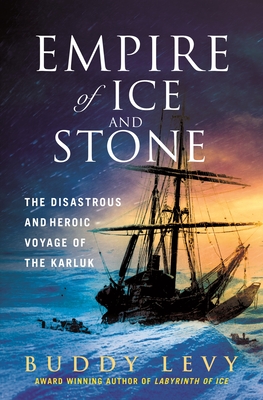
Empire of Ice and Stone, by Buddy Levy****

Empire of Ice and Stone tells of the voyage of the Karluk, a brigantine vessel that sailed from Canada to the Arctic in 1913. It was led by Captain Bob Bartlett, the world’s best ice navigator at the time, and Vilhjalmur Stefansson, a “visionary” leader in search of wealth and fame. My thanks go to Net Galley and St. Martin’s Press for the invitation to read and review; this book is for sale now.

This well told narrative details a part of history of which I have read very little. As school children, most of us in the Western developed nations read of the early explorers, but stories of voyages in the twentieth century are few and far between. This is why I take this one on, but I begin to wonder partway into it whether it is more than I have bargained for.

The first half is more than a little confusing, because there are so (so, so, so) many names to remember, and almost all of them are Caucasian men—as is usual for the time and situation. About halfway into it, I abandon my efforts to memorize all of them, and once I am satisfied with memorizing the names of the two leaders plus “Auntie,” (more in a moment) and the ship’s pets, I calm down a bit and it’s easier to follow.  I am fortunate enough to receive the audio galley as well as the digital review copy, and that combination makes it easier to follow.

That said, this is not gentle reading. There is death—in many cases slow and terrible—and betrayal around every corner. I understood that there would be some of that when I took the book, but I’ll tell you right now, if you, dear reader, have any sort of mood disorder or are going through a dark time personally, you may want to stay away from this thing.

As the bodies begin to pile up, I start to feel angry, and I remain so, to some degree, until the book is done. Because this was a dumb thing that these men did. Their ship wasn’t up to the task, they cut too many corners at the outset, and this more or less spelled doom for many of those aboard. I can’t help speaking to these men as though they can hear me, and I’m asking what the fuck got into them to do this at all? If everyone had stayed home, most likely all of them would have lived to a ripe old age. True, they made some scientific discoveries; yet air travel was just around the corner, and the whole thing could have been done much more safely later on.

The story has a definite hero (Bartlett,) and a definite villain (Stefansson,) and the farther into the voyage we go, the more obvious this becomes. However, I would have liked to hear a good deal more about the other hero. Levy tells us that a lot of these men would have been dead before the rescuers arrived had it not been for the Innuit woman that was hired, along with her small children (!) to travel with them, and the narrative bears this out. Time and again, when they are on the razor’s edge of starvation, she comes up with an innovative way to use the environment around them to provide calories. Not always delicious calories, to be sure, but alive is alive. “Auntie” is a total badass, and deserves more ink; possibly not much information is available, given the biases of the time.

The book feels longer than it actually is; however, given the amount of complex information provided, it probably shouldn’t be pared down further. At the same time, I kept thinking that this would be so much more approachable if Jeff Shaara were doing the telling (via historical fiction.)

For those that are very interested in the history of early sea voyages, and to researchers, this immaculately researched book is recommended.

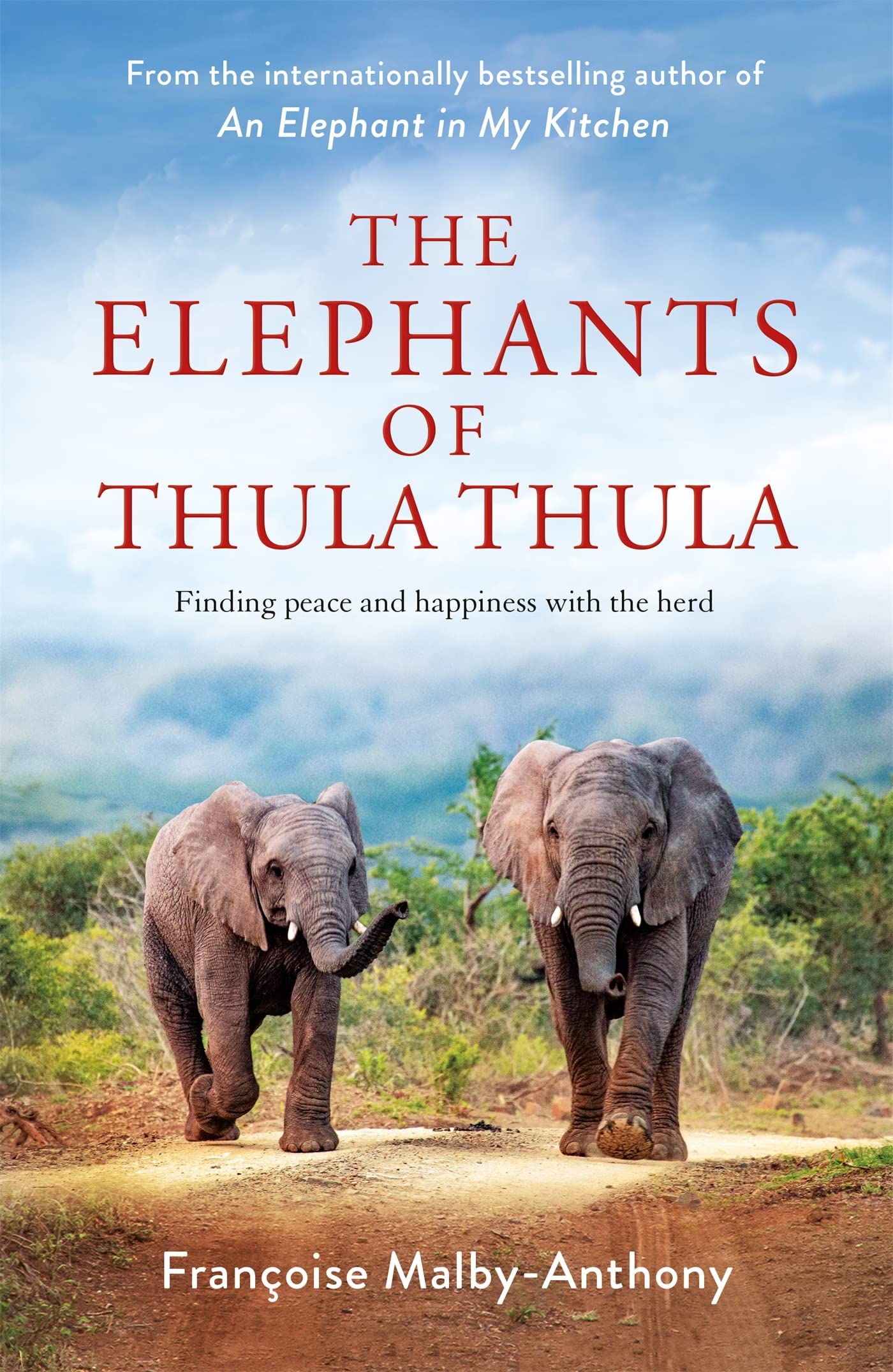
The Elephants of Thula-Thula, by Francoise Malby-Anthony****

Francoise Malby-Anthony is an established author and the owner of a game reserve in South Africa. Although she’s written previous books about this reserve, The Elephants of Thula-Thula is the first of her books that I’ve read. My thanks go to Net Galley and Macmillan Audio for the review copy; this book is for sale now.

As I begin listening to the audiobook, I am not sure I like it much. After a brief passage about elephants, the author segues into a longer piece about rhinos and by the time she admits that the rhinos are her favorites, I mutter, “No kidding!” There are other passages in which she gushes about the refuge’s well-heeled but generous donors, and I’m beginning to feel as if this is the sort of book that people will buy because the refuge is a good cause, but nobody will actually learn anything or even enjoy it much.

About halfway in, though, I have a change of heart. The second half is much better than the first. She discusses throughout the book the challenges posed to the refuge by the pandemic, and she talks about the measures taken to remain solvent while also keeping her employees whole. There is actually more talk about elephants now. I confess I am jarred by the moment when a favorite animal dies (no spoilers) and she tells us that this is the worst grief of her entire life. She says this not too long after explaining that the reserve’s founder, her husband, has recently died, and so my head snaps up when the tells us that the loss of the animal is the worst. I am chalking it up to hyperbole, but if I were the editor, I’d suggest a rewording.

Nevertheless, there are wonderful anecdotes about the elephants, and of course the rhinos, as well as the addition of a cheetah. She discusses baboons—I’d never fully realized how scary they can be—and I enjoyed hearing about how one goes about moving a giraffe to another location. There’s a lot more about elephants in the second half, and she discusses the threat to the herd when some bureaucrats add up the acreage and decide that there are too many elephants here, and some must be either moved out or “culled” (which means, of course, killed!) The reserve is expanded, but it takes a whole lot of jockeying and maneuvering to carry it off.

Readers that have enjoyed Malby-Anthony’s earlier books, or that have a strong interest in wildlife preserves may enjoy this book greatly, and it is to them that I recommend it.

Poverty by America, by Matthew Desmond****

“Hungry people want bread. The rich convene a panel of experts. Complexity is the refuge of the powerful.”

Desmond is the author of Evicted, the Pulitzer winning examination of urban homelessness. Desmond himself grew up poor, and his family was forced out of their home when he was a child. These things give him a different and more authoritative perspective than most urban ethnographers.

 My thanks go to Net Galley and Crown Publishing for the invitation to read and review. This book will be available to the public tomorrow, March 21, 2023.

This book is written for a general readership, and it’s more readable than any other nonfiction work I’ve seen on this subject. His tone is conversational, and his research is impeccable, drawing from a wide variety of sources, well integrated and organized. He addresses the past and present roles of racism, explaining how the overtly discriminatory statutes and policies of the past have morphed into more subtly framed, yet still ubiquitous ones of today. He tells us “why there is so much poverty in America and…how to eliminate it.” He speaks to an audience of middle and upper class readers, warning that we must “…each of us, in our own way, [must become] poverty abolitionists, unwinding ourselves from our neighbors’ deprivation and refusing to live as unwitting enemies of the poor.”

In revealing the roots of American poverty, Desmond is thorough. He discusses the role played by medical costs, and the many workers that still cannot afford health care; the withering of unions, and the way that gig workers and independent contractors have replaced permanent employees; incarceration, and the debilitating effects it has, not only on the person sent away, but on their families for generations to come; the way that government assistance programs have been legally diverted to programs having nothing to do with the poor; the way that poor people are forced to pay more for the same goods and services that the better off pay. He discusses the ways that those living in poverty are cut off from political and economic opportunities. He does these things better than anyone else is doing them right now, and it makes me mad as hell, seeing millions of ruined lives all laid out so starkly.

It is when he approaches solutions that things become a little muddy. There are a few of his suggestions that I genuinely disagree with, but most of them are sound; the problem is that, despite his assurance that all of these changes can be made without much incursion into the lives of the wealthy and powerful, the chances of these people agreeing to implement such changes are somewhere between slim and none. He assures us that he is no Marxist (and that’s the truth, alas,) and that the rich can still have plenty; yet in reality, it’s clear to this reviewer that the kinds of changes that are needed are ones that working people will have to force from the tightly closed fists of the rich. This is where the fifth star falls off of my rating.

Nonetheless, Poverty by America is well worth your time and money, and I recommend it to you.

The Answer Is, by Alex Trebek*****

I first sought to read this book when its author was still alive. I couldn’t get the galley, and so I obtained a copy of the audiobook from Seattle Bibliocommons, by which time Trebek had left us.

It’s a curious thing, the attachment so many of his viewers, myself included, felt toward him. He was a game show host. There are other game shows that have longstanding hosts, but when they die—if they haven’t already—it will register as nothing more than a footnote, a handy answer in Trivial Pursuit. But somehow, with his polished yet soothing demeanor, Trebek found his way into our hearts. Go know.

The audio is read alternately by Trebek and by Ken Jennings, a record-breaking champion that found a measure of fame himself. It works nicely. Here are the things that surprised me. First, Alex’s family lived in a small town in Canada near Ottawa. They struggled financially, and so in order to pursue higher education, Alex had to have a scholarship. He got one, but while enrolled, he got into a power battle with a particularly hated teacher. Alex was expelled. That was a good school, though, in spite of the man Trebek so hated (and about whom he never changed his mind!) In the end, he and his father returned to the school, met with the administrator, and begged. A more sympathetic teacher/mentor agreed to be in charge of young Alex, and he was able to go back and complete his degree.

His career started in radio, working as a disc jockey. He had a love of classical music, and found his way to the Canadian Broadcast Corporation. Later, he was invited to audition for a game show in the States. So much more money! From there he hosted quite a number of game shows, finally landing his berth in Jeopardy in 1984. Later on he briefly considered trying to move into acting, but he came to know some actors that worked on the same set where Jeopardy was filmed, and he soon found out that they were making the same money as he was or less, but he only worked for a couple hours each day, home in plenty of time to eat dinner with his family and pursue hobbies and whatnot, whereas the actors were keeping grueling schedules. At that point, he decided he liked it just fine right where he was.

In parting, he reminded his listeners that everybody dies, and he is in his nineties. He’s had a good life. It’s time to go. I found this tremendously graceful, because pancreatic cancer has a reputation for being one of the most painful forms of the disease. But maybe that was Trebek’s magic:  always putting the other person at ease.

Highly recommended.

Waco Rising, by Kevin Cook*****

Waco is a disaster that will be remembered for a very long time, one of the most egregious uses of excessive force against a group of people in the history of the United States. Kevin Cook’s new book, Waco Rising, is well researched and documented, yet is also written in a way that is accessible to a general audience. My thanks go to Net Galley and Henry Holt for the review copy. This book is for sale now.

The religious compound at Waco was headed by the charismatic David Koresh, and Cook takes us there, through the evolution of this sect, various splits and skirmishes among the faithful, and its final structure. Unlike many cults and other religious offshoots, this one was largely middle class, and numerous members brought their assets into the group. But the most distinctive aspect of it, compared to other such oddball organizations, was its fondness for munitions. The compound at Waco was armed to the teeth.

Koresh’s organization drew the attention of the Federal government when a disaffected former member leaked the news that Koresh was practicing polygamy—nobody else, just him—and that many of his wives were children:

“One Davidian remembered [Koresh] ‘approaching Michele in the dead of night.’ The word “approaching” was a euphemism. Describing the encounter later as if he found it amusing, [Koresh] told some of the men that he’d invited Michele, who had recently celebrated her twelfth birthday, into his bed “to get warm.” When he tried to pull down her underwear, she resisted. He kept going, he said, because God told him to.”

Initially, the ATF (Bureau of Alcohol, Tobacco, Firearms and Explosives) saw this situation as an opportunity to redeem themselves after the debacle at Ruby Ridge. This time, they would get it right, rescue the little girls, and their reputation would be restored. It didn’t shake out that way. The ATF, and eventually the FBI and the armed forces were deployed, surrounding the Davidians from the land and even the air in a siege of fifty-one days. When it was over, the compound was a smoldering ruin, and seventy-six people, including twenty-five children, were dead.

I was initially unsure if I wanted to read this thing. I knew how it was going to end, after all, and did I want the details in my head? However, Cook paces the story expertly, punctuating the first two-thirds with the occasional darkly funny vignette. But the ending is nothing but grim, and that’s because there’s no other honest way to tell it.

The conversational way it’s written makes it a quick read, and there are a lot of excellent quotes. Cook uses material that hasn’t been reported previously, and he does a fine job. I highly recommend Waco Rising to anyone that is interested in this topic.

The White House Plumbers, by Egil “Bud” Krogh and Matthew Krogh

Egil “Bud” Krogh was one of the men known as the “White House Plumbers,” which was a small group of operatives that dressed as tradesmen in order to illegally break into and ransack private offices for the purpose of digging up dirt on political opponents. Krogh’s job, together with E. Howard Hunt, was to lead a small team of men to burglarize the office of Dr. Fielding, the psychiatrist that treated journalist Daniel Ellsberg, in search of a way to discredit Ellsberg, whom President Richard Nixon regarded as an opponent.

My thanks go to Net Galley, St. Martin’s Press, and Macmillan Audio for the review copy and audio book. This book is for sale now.

Few people shy of the Boomer generation will have personal recollection of the Watergate scandal that brought down a sitting U.S. president for the first time, and the burglary of Fielding’s office was the first illegal event that set it all in motion. Nixon was furious that the Pentagon Papers had been released and that the U.S. Supreme Court had come down on the side of the First Amendment and the free press. Consequently, the president decided that the executive branch must go it alone, and sought a way to discredit the journalists behind it. That was how all of this came about. He howled about national security, and may or may not have believed it; or, he may have sought to cover up lies he had told to the American people about the war in Indochina, and  since he couldn’t force the publication out of circulation, the next best thing would be to persuade the public that its authors—or annotators, at any rate—were crazy and not to be believed. This background information comes from me, not from the book.

At any rate, this political memoir comes to us courtesy of Bud Krogh, and also his son Matthew, who completed it after Bud’s death. For the purpose of this review, I will use the name Krogh to refer to Bud, unless otherwise noted.

Krogh was brought into this mess by John Ehrlichman, one of the two advisors that were nearly as close as a second skin to Nixon during his time in office. Other accounts refer to both as cold-blooded thugs, and my earlier reading leads me to agree with them, but to Bud, Ehrlichman was a noble soul dedicated to his country and his president, a fine, devout individual that was like a second father to him growing up. It didn’t occur to him, initially at least, that anything he was being asked to do was corrupt or scandalous; here, I find myself shifting in my seat. Surely he must have wondered why this secret little group of men, not even government employees, were being tasked with this job, rather than the agencies that ordinarily do the cloak-and-dagger jobs? He claims that Nixon couldn’t trust FBI director J. Edgar Hoover, who was a slimy character, and that makes at least a little sense to anyone familiar with him. Yikes.

The writing as well as the accountability are uneven throughout this book. The prologue sounds sketchy to me. Those of us that have spent any time at all watching criminal trials take place is familiar with the vaguely nebulous language I see and hear at the beginning of this thing. Instead of saying that he has done something very wrong and is sorry, he says he has made bad choices, and he is sorry about “what happened.” This is the language that guilty people use when their attorney has told them to show remorse. Someone not listening carefully might think that the speaker has apologized, but they’ve actually distanced themselves from wrongdoing. During this portion of the memoir, I glanced at the text and also the device playing the audio, half expecting to see a little slime leaching from its margins.

And yet, at the end, the prose is more eloquent, and the accountability rock solid. Krogh goes to the psychiatrist in order to apologize in person, once he is out of prison. He visits Nixon to apologize to him (which baffles me, but okay.) He claims to have declined a presidential pardon. He never loses an opportunity to put on a hair shirt prior to his many speaking engagements. And so it goes.

One could surmise that the early portion was written by Krogh, and the end written by his son, but even if that is true, those speaking engagements were taken by Bud, not by Matthew, and likewise the specific apologies rendered. So who knows?

The narrator for the audiobook is Peter Krogh, who does a fine job.

If you are interested in studying the Watergate scandal and haven’t read any other books about it, this is not the one. Krogh’s involvement ended with the break-in to Fielding’s office, and he helped cover it up, lying under oath as he was told to do, but he had nothing to do with the Watergate Hotel burglary of the Democratic National Committee’s offices. In short, though famous enough to be remembered for his actions, he was not a central player. For those interested in reading just one book about this scandal, I’d go with All the President’s Men, by Woodward and Bernstein; The Nixon Defense, by John Dean; or Nixon: The Life, by John A Farrell. These are all fairly lengthy; if you are looking for something less lengthy, try One Man Against the World, by Tim Weiner.

As a general read for the uninitiated, I’d give this book 2.5 stars. For Nixon and Watergate buffs, I rate it 3.5 stars.