Unfinished Business, by J.A. Jance*****

Judith Jance has done it again. Unfinished Business is the sixteenth in the Ali Reynolds series; not only does she weave a compelling, tightly plotted tale, but she may have broken new ground with the role technology plays in solving crimes within the storyline. Add a sprinkling of social justice issues, and what emerges is an unmissable novel. My thanks go to Net Galley and Gallery Books for the review copy. This book is for sale now.

Ali is a former journalist, but now she and her husband, B. Simpson, own and run a cyber security firm called High Noon. B. is a nice enough fellow, but we see very little of him. Most of the time he is away on business, leaving Ali to flex her badass crime solving muscles, and providing her with a healthy chunk of disposable income that makes it easier. Other continuing characters are Cammie and Stuart; Frigg, the AI entity operating out of High Noon; and Bob and Edie Larson, Ali’s parents. Our two new characters are Harvey “Broomy” McCluskey, who is a serial murderer, and Mateo Vega, a second-chancer newly out of prison and in High Noon’s employ.

The best long-running mystery series are ones that go deep into the character of the chief protagonist and sometimes others, as well. When you think about it, there are only so many interesting crimes; only so many credible motives; and only so many believable plots an author can spin that involve only the mystery at hand. What makes the most successful ones stand out is the investment the reader has in the character and her life. Jance works her characters like a champ. Within this one, we have multiple interesting side threads. Ali’s parents are aging, and although she is more than willing to support them and advocate for them, they don’t tell her everything. They are independent and intelligent. They treasure their dignity, and their privacy. Sometimes this combination spells trouble, and so it is here. We see Ali trying to juggle the ever-changing aspects of the business while B is out of town, along with health issues facing her father, who won’t talk about them; one of her children gives birth; and then there are issues with her employees.

Point of view shifts between chapters, and so we first meet Harvey, who is a resentful, entitled jerk who has murdered his mother and gotten away with it. Unfortunately, Harvey is also a tenant of High Noon’s, and he’s in arrears on his office rent. No one at High Noon knows that he is dangerous; they figure he’s a deadbeat, and he has to go. Ohhh, honey, look out!

We also meet Mateo. Mateo has spent 16 years in prison for a murder he didn’t commit. His public defender told him the plea deal was the safe bet, and so he took it. He could have been released early if he’d expressed remorse, but nobody and nothing could make him say he did it when he didn’t, so he rotted there for his entire youth. But while inside, he continued to study technology, and earned an online degree. Now he’s released, comes out with skills, and is hired by High Noon.

I love the way Jance uses all of these characters, and the thread involving Cami is particularly interesting.

I read and reviewed most of the recent books in this series, and in number 13, I called this author out for making all of the bad guys in the story Latina or Latino, and all the good guys Caucasian, except for Cami, who is Asian. It’s great to see how she’s turned it around. The social messages here—the broken prison system; issues with keeping the aged safe; the difficulty former prisoners face in starting a new life; and of course, violence against women—are all progressive ones, and none of them hijacks the plot or slows it in any way. In fact, this novel is among Jance’s best, and that’s a high bar to meet.

Highly recommended.

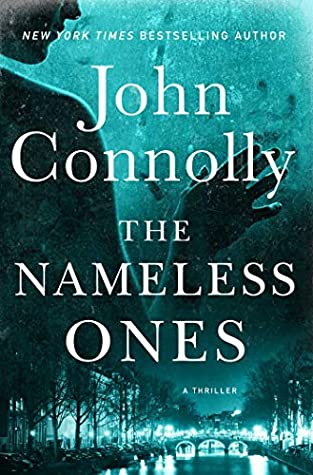
The Nameless Ones, by John Connolly*****

Connolly has written the creepiest, spookiest, best written novel you will see this October. The Nameless Ones is #19 in the Charlie Parker series; my thanks go to Atria Books and Net Galley for the review copy. This book goes up for sale October 26, 2021.

The series continues a conflict that began earlier in the series; that said, you can jump in here anyway. However, once you read this one, you’ll want to go back and pick up the others, or at least, say, the last five or six leading up to it. That’s all to the good, since Connolly can’t write as fast as you can read. Perhaps if you collect them you will be entertained until his next one comes out.

Unlike any of his other Charlie Parker stories, Parker plays a relatively peripheral role, with his two massively popular assistants, Angel and Louis, up front, with Louis having the lion’s share of the action. These two, who have served as Parker’s investigators and at times, as his body guards, are interesting characters. They do not love the law, but they do love each other. Angel is recovering from cancer treatment and Louis is in search of vengeance. Someone they had hired as a liaison in Serbia has been murdered, and the man’s last act, when he saw the walls closing in, was to wire a substantial sum into Louis’s account. Louis, in turn, intends to use that money to terminate the men that terminated his colleague. Stranger still, he is supported—in a massively unofficial manner—by the FBI. He doesn’t like it much, but there they are.

There’s a new character named Zorya, who is dead, but hasn’t crossed over. “She was a creature of the cold and dark. Zorya had winter blood.” She is physically small, and in a hoodie she is generally accepted by bystanders as an adolescent. She has attached herself to one of the men Louis is hunting, and has clairvoyant gifts. But what’s particularly interesting is her relationship to Jennifer Parker, the murdered seven-year-old daughter of Charlie. Jennifer has appeared to her father on a number of occasions, sometimes providing him with critical information. Now Connolly has decided to develop Jennifer, who has obtained a fair amount of power and authority on the other side of the veil. When Zorya targets Charlie, Jennifer targets Zorya. This is one of the coolest gambits I have seen in years, and I can’t wait to see what happens in the next book. But let’s get back to this one, since that’s what I’m supposed to be doing here.

New readers should prepare for a good deal of violence, and the most graphic and horrific shows up right at the beginning, so if you read it and aren’t sure you can stay the course through the end of the book, take heart. Lots more people are going to drop dead, but the most nightmarish details are up front. Nevertheless, it’s not something I read directly before sleeping.

The intensity and horror are nicely broken up with humor; the dialogue featuring Louis, Angel, or both positively crackles. I laughed out loud more than once. A pair of secondary bodyguards, the Fulci Brothers, whom Angel and Louis have deputized to watch out for Charlie at one point, are also welcome additions, and in no way resemble the pair that hired them. Sure enough, they save Parker’s butt. When the police arrive and Parker tells them only the bare minimum, the detective in charge reminds him that his would-be assassins may try again. “The Fulcis won’t always be ready to come to the rescue with a tire iron and a bear head.” (!!!)

As always, Connolly deftly employs a huge number of characters, and yet I am able to keep all of them straight. He keeps the time sequence linear, and this helps the story flow and keeps the players and events from becoming entangled.

If you’ve followed this review to this point, you have all the stamina you need to enjoy this exceptional novel. True, the book is longer than my review, but Connolly writes a lot better, too.

Highly recommended!

Harlem Shuffle, by Colson Whitehead*****

Ray Carney has a foot in both worlds, and he isn’t given to thinking too deeply about that. As the son of a badass criminal, he considers that he has turned out quite respectably; yet, when Cousin Freddie occasionally brings a consignment piece of jewelry to his store, he doesn’t ask many questions about its history. Thus begins a slow, steady slide, from being a mostly-straight retailer, to a mostly-crooked fence. But oh, what a glorious story it makes!

My thanks go to Doubleday and Net Galley for the invitation to read and review. You can buy this book now.

The first time I read Colson Whitehead was when The Underground Railroad was published five years ago. It was unquestionably a work of genius, but it was also a fair amount of work to read. Then The Nickel Boys came out, and when I finally found a copy, it was well written yet so harsh, and at a difficult time for me personally, that I thanked my lucky stars that it wasn’t a review copy, and I gave myself permission to abandon it. So thus far, my admiration for this author has been tempered by the awareness that I would need to roll up my sleeves, or to brace myself, or both.

Harlem Shuffle contains none of that. It’s told in linear fashion, beginning in the late 1950s and ending in the late 1960s. The writing is first rate, as one might anticipate, but it’s also an unmitigated pleasure to read.

Our protagonist, Carney, has married up. His beautiful wife Elizabeth comes from a family with lighter skin, higher social position, and a good deal more money. Elizabeth loves him, but she has expectations. As his young family grows to include a son and daughter, the pressure increases. But let’s not kid ourselves; this isn’t just about Carney supporting his family:

“If he got a thrill out of transforming these ill-gotten goods into legit merchandise, a zap-charge in his blood like he’d plugged into a socket, he was in control of it and not the other way around. Dizzying and powerful as it was. Everyone had secret corners and alleys that no one else saw…The thing inside him that gave a yell or tug or shout now and again was not the same thing his father had. The sickness drawing every moment into its service…Carney had a bent to his personality, how could he not, growing up with a father like that. You had to know your limits as a man and master them…His intent was bent but he was mostly straight, deep down.”

Freddie comes to Carney with a plan: he and his confederates intend to rob the Hotel Theresa, which is the pride of Harlem, the place to stay for Negro patrons of breeding and taste. It was almost sacrilege; and yet, it would also be a fantastic take. Would Ray Carney put out some feelers to find out who could move the sorts of valuable baubles that might be found in the hotel safe? Ray tells him of course not. No no no no no. A thousand times no! And then, he commences doing exactly that.

There are several aspects of this tale that make it exceptional. Whitehead resists the amateurish urge to fall back on pop culture of the period, instead imparting the culture and the pressures of the time more subtly. Racism against Negroes (the acceptable term of the time) by Caucasians; racism by light-skinned Negroes against darker ones, such as Carney; cop violence against all of them; the difficulty faced by Harlem merchants that want to carry first-class products but must first persuade snooty Caucasian company representatives; protection rackets endemic to Harlem, run by Negro criminals as well as cops, so that envelopes had to be passed to multiple representatives every month; and a plethora of other obstacles, stewed into the plot seamlessly, never resembling a manifesto. There’s Whitehead’s matchless ability to craft his characters, introducing each with a sketch so resonant that I had to reread them before moving on; highlight them; then go back and read them a third time after I’d finished the book. My favorite secondary character is Pepper, an older thug so terrifying that even the cops wince when they’re near him. And then there are brief shifts in point of view, and again, my favorite of these is Pepper’s.

Carney isn’t a brilliant decision maker, but he is an underdog, and he’s a survivor as well, and both of these things make me cheer him on. I haven’t had so much fun in a long damn time. When events escalate, Carney finds himself rolling a corpse into a fine carpet, and I can only hope that he chose a relatively cheap rug, because otherwise, what a waste! Those that love the genre mustn’t miss this book, filled with everything anyone could ever want in a noir-style crime novel. Do it, do it, do it!

Another Kind of Eden, by James Lee Burke****

James Lee Burke is a living legend, a novelist who’s won just about every prize there is, and whose published work has spanned more than fifty years.  My thanks go to Net Galley and Simon and Schuster for the invitation to read and review. This book is for sale now.

Another Kind of Eden is a prequel to Burke’s Holland family trilogy. The time is the 1960s, and protagonist Aaron Holland Broussard is in Colorado working a summer job. He falls in love with a waitress named JoAnne, but there are obstacles to their happiness everywhere he looks. There’s a charismatic professor that won’t leave her alone, a bus full of drugged-out young people that have fallen under his influence, and of course, there’s corruption among the local wealthy residents, which is a signature feature in Burke’s work. Aaron is a Vietnam veteran, and he has residual guilt and grief that get in his way as well. He’s got some sort of an associative disorder, though I am not sure that’s the term used; at any rate, he blacks out parts of his life and cannot remember them. He also has anger issues, and he melts down from time to time; there’s an incident involving a gun that he forces a man to point at him that I will never get entirely out of my head, and kind of wish I hadn’t read.

I had a hard time rating this novel. If I stack it up against the author’s other titles, it is a disappointment; a lot of the plot elements and other devices feel recycled from his other work, dressed up a bit differently. But if I pretend that this is written by some unknown author, then I have to admit it’s not badly written at all. By the standards of Burke’s other work, it’s a three star book; compared to most other writers, it’s somewhere on the continuum between four and five. Since I have to come up with something, I decided to call it four stars.

All that being said, if you have never read anything by this luminary, I advise you to start with one of his earlier books–almost any of them, actually.

Steel Fear, by Brandon Webb and John David Mann*****

Steel Fear is the first in a series by Brandon Webb and John David Mann. It’s billed as a “high-octane thriller,” and that’s what it is. My thanks go to Net Galley and Random House Ballantine for the invitation to read and review. You can buy this book now.

Before starting the novel, I flipped to “About the Authors,” which is at the end of the book. Webb is a retired SEAL himself, boasting a list of awards as long as your flippers. He is a top level frog, which is a combat diver, and he not only is trained as a sniper, but has been in charge of training other snipers. Suffice to say, he is qualified to write a book like this and knows what he’s talking about. This thriller took ten years to see publication, and a good part of that delay was getting one aspect after another of his description of the aircraft carrier, The Abraham Lincoln, cleared by the Pentagon. Mann is not ex-military, but has an impressive list of achievements in the arts.

Our protagonist is Finn, a SEAL who’s being sent back to the states on The Abraham Lincoln. He doesn’t know why; nobody on the boat does, either; and he cannot reach anyone that can enlighten him. This keeps Finn off balance, the reader doesn’t know whether Finn is trustworthy, so that keeps the reader off balance, too. We meet him when Monica Halsey, a helicopter pilot who is also an important character, is sent to pick him up. Two men approach the helicopter, and they are described as a large man that looks like a mountain lion, and a little guy that looks like a marsupial. Finn is the marsupial, and when I learn that he is a funny-looking little guy, it endears him to me. When we see him disappear on board ship, blending in, seeing and hearing things he isn’t meant to, it’s all the more impressive. I still don’t know if I should like this guy, yet I do.

The crew is reeling from a horrible, unexplainable accident that took the lives of a helicopter crew; soon after, there is a suicide, and then another. Suicide, we learn, is at epidemic levels in the military, and so at first, most people don’t question it; but both suicides are a little too similar, and Halsey smells a rat. So does Finn.

At the outset, there’s a great deal of description of the aircraft carrier, and at first I feel impatient to get on with the story, but soon I can see that the setting is very important, and the description is necessary to understanding it. Webb does a fine job with it, and it’s a good thing, because when I ran a Google search for images, I got mostly air.

National security indeed.

The chapters are very short, and the point of view changes constantly, with Finn and Monica occupying more space than other crew members. Between the shifting viewpoints; Finn’s anxious attempts to find out where he’s going, what his status is, and why he’s being sent away; and Monica’s urgent need to know why her friends are dead, and if anyone else she cares about is next, I am kept on the edge of my seat. Still more deaths follow, and by the halfway mark, my heart is beating a little quicker, and I know better than to let myself read it at bedtime. Fortunately, despite the deaths, which continue of course, there isn’t a lot of gore, and I happily made this book my lunchtime companion. Once I got near the climax, there was no putting it down till the thing was done.

I tend to be leery of books written by military folks, because sometimes there’s a right-wing overtone to the prose that grates against my own values. This isn’t a problem here.  Instead, this is a rock solid opening to a promising new series, and I can’t wait to read the next one. Highly recommended to all that love the genre.

Thief of Souls, by Brian Klingborg**-***

I was invited to read this mystery, and my thanks go to Net Galley and St. Martin’s Press for the review copy. I am always looking for something a bit different, and this sounded like it would be. And it is, but it’s not.

Here’s what I mean. A woman has been murdered in a particularly ugly, grisly manner. A hot shot cop who’s been buried in a backwater where nothing ever happens gets the case. Because he is clever and ambitious, he digs more than most cops might, and voila! Turns out this could be the work of a serial killer! But there are higher-ups in the force that would rather have a quick solve than an accurate one. Obstacles! And next thing you know, the cop is in danger too.

Yawn.

Okay. Now, take this same tired thread and drop it in China. With resonant characters, compelling use of setting, and some word smithery, it might come alive, and in the hands of a master storyteller, we might not even notice that the story’s bones are nothing new. Instead, I came away disaffected and mildly depressed. I quit at the sixty percent mark and didn’t even go back to look at the ending, which for me is unheard of, particularly in this genre.

I am no fan of the Chinese government, but the steady flow of negativity wore me down, not to mention the lack of strong character development. We know right away that Lu is a rebel, and as the story progresses, we also know that Lu is a rebel. At the start, we sense that the government, both local and national, is corrupt; as we near the climax, we also know that the government is corrupt.

What, in this story, is worth saving?

I thought it would be fun to see how an investigation works in China, and what sort of rights—or lack thereof—form the contours of the legal system. I came away sensing that the author doesn’t know all that much, either. There’s no Bill of Rights there, surely, but I knew that much going in.

I don’t have to have lovable characters to enjoy a mystery, but there does, at least, have to be someone interesting. Give me a complex, well-developed villain, for example, and I’m a happy camper. But there’s none, and I’m not.

So there you have it. Thief of Souls is one more sad case of an intriguing book cover and title promising more than it can deliver. If you want this book now, it’s for sale, but I would advise you to get it cheap or free unless you have a big stack of money sitting around that you were thinking of burning in the backyard. Otherwise, maybe not.

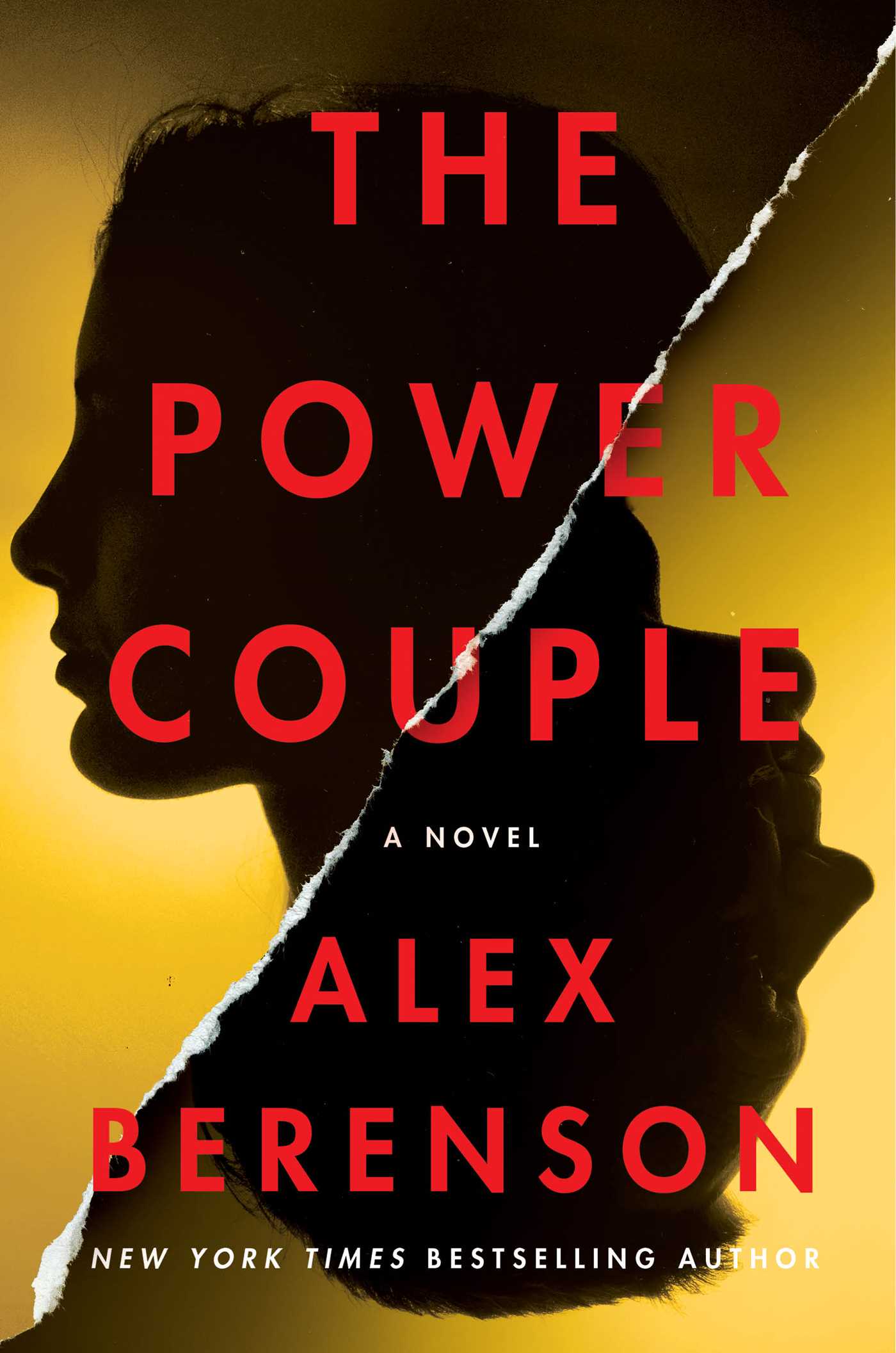
The Power Couple, by Alex Berenson****

Alex Berenson has done it again! I first read his work when I found a galley for The Prisoner, the eleventh in his John Wells series. When I saw that this stand alone thriller was available, I jumped on it. My thanks go to Net Galley and Simon and Schuster for the review copy.  The Power Couple is a fast read and a fun one, and I recommend it to you.

Rebecca (call her Becks) and Brian Unsworth are type A achievers, and both work for the federal government; she is a spy, and he is a hacker. But like so many couples, the similarities that brought them together are getting in their way now. With their children, Kira, who is nineteen, and Tony, who is younger, they take off for Europe to let off steam and spend quality time together. Maybe.

Early in the story, Kira is abducted, and from there forward, the pacing is perfect. Now and then Berenson pulls us back a bit as he shares sketches from their pasts that lead up to this event, but each reminiscence is brief, and the shift between points of view and time periods adds to the suspense. We see their lives through the perspectives of all except Tony, who is a minor character. In the end, Kira is the one we like best. (Trust me.) There’s not a lot of character development, but this isn’t that kind of novel.

I don’t want to give more away, because if I kill any surprises, you won’t enjoy the story as much; what I will say is that even if your own marriage is less than perfect, it is a shining beacon of integrity and affection when contrasted with that of the Unsworths.

This book is for sale now, and just right to take on vacation with you.

Mother May I, by Joshilyn Jackson*****

Joshilyn Jackson is one of my favorite authors, and so I was delighted to see that she has another novel coming out this spring. My heartfelt thanks go to Net Galley, Harper Audio, and William Morrow for the review copies. This book is for sale now.

One of the things I love about Jackson is that she recognizes and includes social class as a large factor in the lives of her characters. I am initially sorry to see that her protagonist, Bree Cabbat, is married to a wealthy man, but once the story unfolds, it becomes obvious that the story won’t work any other way. Although Bree is rolling in it now, she grew up poor, the child of a single parent that took her back-to-school shopping at a Goodwill two towns over from their tiny Georgia town, carefully making sure that Bree’s classmates not recognize their own castoffs when Bree wore them. Later, theater classes helped Bree refine her accent to make her more employable; acting lessons helped her project the carefree confidence that is common to young adults whose families have money.

Now she is married to Trey, a man “who’d grown up with Scooters and Biffs and Muffys.” As the story progresses, there are frequent subtle reminders of this; Trey has a gun safe; Trey has a bottle of whiskey, a gift, that cost over two thousand dollars; their daughters are in an upscale school with a nice theatre program, and their daughters are enrolled in extracurricular activities like Quiz Bowl and Robotics. Yes, our Bree has come up in the world, alrighty. And so when their baby is kidnapped out from under her very nose, naturally Bree’s assumption is that there will be a ransom, and that she and Trey will pay it.

But this time, she is oh so wrong.

When the call comes, it turns out to be a very elderly woman bent on exacting revenge against Trey’s business partner, who is also his cousin. Bree must do exactly as she says, because if she sees any sign of police, “I’ll break his flimsy neck…I’ll twist his little head right around backward.”

Dear God.

 This story grabbed me by the hair and didn’t let me go till I was done with it. I was initially approved for the audio version, and by the time I was given access to the print version, I had finished the first galley. Ordinarily, when something like this happens, I write my review, submit it to both places, and figure my work is done here. But for Jackson I do due diligence and more, and it’s a pleasure to read her book twice, so I did. And while both versions are excellent, I give a slight edge to the audio version. Print is a desirable medium anytime one is reading any mystery, because sometimes we want to flip back to check a detail or two. But Jackson always records her own audio books, and so I know the interpretation of the reader is always completely consistent with the writer’s intention. And in this case, the key side character—Marshall, an ex-cop that was married to Bree’s best friend, now dead—has a distinctive voice that comes through somewhat in the printed version, but much more plainly in the audio. I love the way she voices him, and although Marshall isn’t the protagonist, his role in this story is critical. The narrative shifts between Bree, who speaks to us from the first person limited, and Marshall, who comes to us in the third person.

The story carries an added social justice component: it’s MeToo on steroids. The things we learn about the men in the story add complexity, and though there’s a trigger or two here, I suspect most female readers will find the denouement deeply satisfying. I do.

The ending would ordinarily be deemed over-the-top, but because I believe the characters and story so completely by the time we get there, I also believe the resolution.

The one thing I would change here, if I wanted to be picky, would be to find a way to inject some of the epic laugh-out-loud humor I have enjoyed in Jackson’s earlier books. But that’s a tall order, given the intensity of this one.

One way or the other, this book is guaranteed to be one of the year’s very best. Don’t let yourself be left out. I strongly recommend this book to you, even at full cover price.

The Bounty, by Janet Evanovich and Steve Hamilton**

This book is the seventh in the Fox and O’Hare series. Our protagonists are Kate O’Hare, who is an FBI agent, and Nick Fox, a conman. My thanks go to Atria Books and Net Galley for the invitation to read and review. While this book isn’t my cuppa, there will be readers that enjoy it. One way or the other, it goes up for sale on Tuesday, March 23.

The first six books of this series were cowritten by Evanovich and Lee Goldberg. There’s no explanation for why Goldberg is out and Hamilton is in, but the switch may account for some of the inconsistencies between the earlier books and this one. An example: Kate and Nick were tight in the earlier stories, and yet somehow, they can’t stand each other now. There’s no reason given for the change, so I have to assume it’s an authorial quirk; I have to say, not an original one.

The premise is that the pair are hot on the trail of a massive cache of Nazi gold; also pursuing this treasure is criminal organization known as The Brotherhood. Kate and Nick are charged with finding the gold and bringing The Brotherhood to its knees.

Before they are even off the plane, I have questions. For example, since when does the FBI have authority to do this sort of thing abroad? In cases of terrorist attacks on American citizens, sure. But treasure hunting on foreign soil? And since when does any law enforcement body send two officers to bring down an entire organization? You can see my point.

But this is the sort of story that one can only appreciate by suspending disbelief and buying the premise. The whole thing has something of a James Bondian flavor to it, consisting of large amounts of chasing, hiding, climbing, leaping, and in between, dialogue, dialogue, dialogue. There’s a fair amount of derring- do; there’s a parachute, a grappling hook, lock picks; you name it. The element that distinguishes it from other such books is that both Fox’s and O’Hare’s fathers get involved.

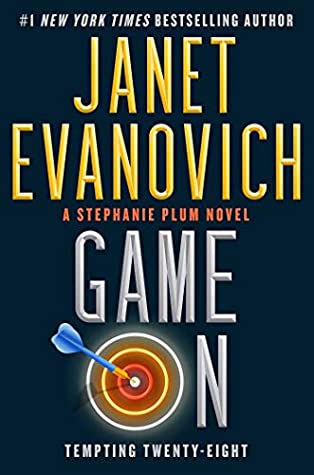
For me to enjoy a novel from this genre, I need either a well-crafted story with literary merit, including character development, (i.e., James Lee Burke, Sue Grafton, John Connolly,) or else some form of well-executed humor. There are a fair number of wonderful satires out there, and of course, there’s the series that made Evanovich famous, the Stephanie Plum numbered series, which have hit more than they’ve missed and almost always make me laugh out loud more than once. In reading The Bounty, I don’t find these things.

However, not every reader has the same preferences that I do. This is a fast read with accessible vocabulary—my inner snark popped out at one point, and my galley has a note when the word “independence” is used: “Wow, four syllables!”—a linear story line, and an easily followed plot. I could see hauling something like this to the hospital when you’re going to have surgery and your attention span won’t be up to par. And then there’s the consideration of interest. Some want to read action, action, action, and if the story were more realistic, we’d probably be reading about paperwork, reports, and endless months cultivating a contact that proves to be useless. Not entertaining.

Even so, I can’t recommend this book for general audiences, or even for those that like the series.

A Small Town, by Thomas Perry*****

This is a super fun read. An entire small town is undone by a prison break that leaves so many townsfolk dead that those that remain mostly just move away. The chief of police is a woman that lost her family and her boyfriend, and she decides to take herself on a black op to find the guys that did the killing and remove them from the map. The town council quietly backs her by steering a Federal grant aimed toward law enforcement toward her project.

I got the audio version from Seattle Bibliocommons, and Christina Delaine does a sensational job as narrator. Cops that act outside the law are a sore spot right now, especially within the US, but Perry and Delaine drop me right into a make-believe time and place. It helps that the bad guys are Caucasian. I also like having the protagonist be a tall woman, bucking the trend toward tiny-firecracker female cops and detectives. The things she does on her mission seem more plausible for a tall woman, and Perry doesn’t knock himself out to make her seem adorable. In addition, there’s never a slow spot from start to finish, and never a moment when the mood is ruined by a detail done wrong. It’s about as perfect a thriller as you can get. Highly recommended, particularly in audio.