Charlie and Me, by Mary Neiswender, Kate Neiswender

Mary Neiswender was the first and primary journalist that the notorious serial killer Charles Manson was willing to talk to. She did so at a time in history in which women in journalism were exceedingly rare, and she put up with a whole lot of crap, first in order to remain in her field, and then later to rise to its pinnacle, receiving a Pulitzer nomination.

My thanks go to the University of Nebraska press and NetGalley. This book is for sale now.

Charles Manson was the leader of a group that called itself “The Family,” almost entirely made up of girls and young women that had nowhere else to go. However, people came and went within it, and so those that spoke of it as a cohesive entity were mistaken. Manson was handsome and charismatic despite his small physical form, and he was convicted of the 1969 Tate-LaBianca murders even though he was almost certainly not present at the time.

Neiswender regarded him as a killer, but also was convinced that he hadn’t had a fair trial. She makes a good case. She delayed writing this book until Manson’s death in prison in 2017, as she had promised to keep much of what he said off the record. Once he died, she considered herself to be freed from that agreement. Neiswender died in March of this year, and her daughter has assisted her in seeing that the book was completed and published.

I don’t read a lot of true crime, but I couldn’t put this book down. Neiswender’s observations and insights are fascinating, and she does a fine job of bringing Manson to life—in a way that the public can appreciate without the physical threat the man represented in person.

Highly recommended.

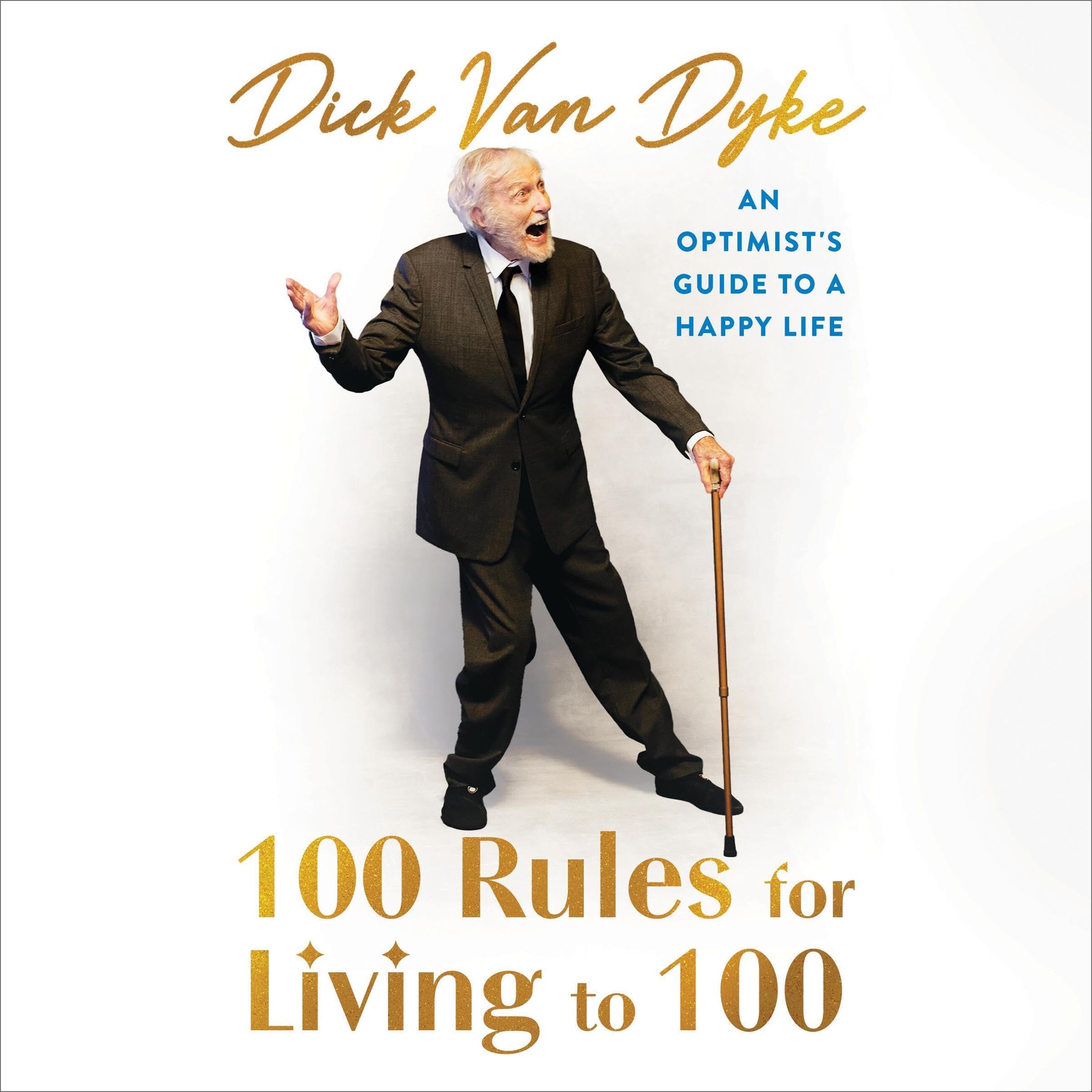
100 Rules for Living to 100, by Dick Van Dyke****

Version 1.0.0

Dick Van Dyke was a wonderful part of my childhood, and this lovely audiobook has put a little more bounce in my step. It’s not really about rules, of course, but the format is a perfect scaffold for a combination memoir and self-help book. My thanks go to NetGalley and Grand Central Publishing for the review copy; this book is for sale now.

Van Dyke entered my consciousness when I was a kindergartener, and the original movie Mary Poppins brought droves of families to theaters. I was not the only family member that was entranced, and all of us sang along to the sound track once the record was on our stereo turntable. The movie, and its lead characters, played by Julie Andrews and Van Dyke, glowed with humor and optimism.  What a wonderful message to share, the idea that the best we can give our children is our time and our attention. In the early 1960s, the suggestion that adults ought to listen to children was ahead of its time and much needed.

Many of the anecdotes the author conveys have to do with experiences shared between him and Arlene, his current wife. Despite the May-December romance, it sounds like a wonderful union. He talks about the recent and horrific events with the Santa Ana fires that took the homes of so many—though his own was spared. My favorite parts, though, are the ones in which he discusses the future roles he’d like to play, because he isn’t really retired from the industry. Way to go, Dick!

Reader Tom Bergeron does a nice job, and as a bonus, he sounds quite a bit like the author.

I recommend this little gem to everyone that could use some positive energy, and to all that love the author.

The True Happiness Company, by Veena Dinavahi****-*****

4.5 stars, rounded upwards. Veena Dinavahi’s experience as a member of a cult called The True Happiness Company is so outrageous that if it were written about as fiction, it would be universally panned as ridiculous and unbelievable. But it isn’t fiction; it’s what happened to her. My thanks go to Random House and NetGalley for the invitation to read and review. This book is available to the public now.

Veena’s parents are immigrants from India who gave everything that they had in order to provide their children with the best opportunities possible. Between their sacrifices and Veena’s high I.Q., she was admitted to a coveted, highly competitive school that also had a horrifyingly high rate of suicides and suicide attempts due to the intense pressure under which its students labored. When Veena became suicidal, her parents turned to professionals for guidance, but one of the so-called professionals they consulted, the most persuasive and charismatic of them all, was a charlatan. With their life savings neatly stashed in his own bank account, this man, who claimed to be a psychologist but was not, diagnosed Veena as having a borderline personality; once she accepted the diagnosis, “Bob” used it to undermine her instincts of self-protection and what seemed to her to be common sense. She couldn’t be trusted to decide anything for herself, because she was crazy. And thus was this young woman brought under the spell of an insidious conman and sexual predator, one who also used her parents’ unfamiliarity with American culture to gain their acceptance of the things to which their daughter was subjected.

Before she knew it, Veena was married to a young man she didn’t know very well, but who was also susceptible to the charms of this snake oil salesman. She married him because the doctor said to; once this was done, Bob became the third element in their marriage. Both of them spoke to him in person or by phone daily, or even multiple times a day. He resolved every dispute, and he forbade them to resolve anything without involving him first. It is a miracle that Veena was able to find the support and resolve she needed in order to extricate herself and her children from the dungeon of despair he created.

I am quite late with this review; the book came out in May, but it is a harsh read, and I took my time with it. Were it fiction, Veena could have inserted moments of levity or joy to relieve the horror, but it isn’t, and there were none. I would have liked for her to break up some of the roughest bits by flashing forward to bits of her life as it is now, but then, it’s not my story to tell. I’m just glad she and her children are safe, and that she can rebuild her life.

Those that enjoy true crime will be interested in this memoir. Highly recommended to those that have interest in cult stories, and that will willingly endure a rough read.

Heartbreaker, by Mike Campbell and Ari Surdoval*****

Mike Campbell is a musician and songwriter who served as Tom Petty’s lead guitarist and songwriting partner from the band’s inception until Petty’s death in 2017. I’m a sucker for a strong musical memoir when I can find it; although the galley for this book was available, I chose not to request it, instead using an audiobook from Seattle Bibliocommons. I didn’t want the pressure of a deadline. I wanted to be able to lose myself in Campbell’s story, to take unlimited side trips to stream songs that he refers to, either because I haven’t heard of the song and want to listen to it, or because he’s identified a song that I have loved for a long time and want to hear again.

Although I listened to Tom Petty and the Heartbreakers from the late ‘80s onward, I was never one to follow the news about individual band members. In fact, before I read Warren Zanes’ biography of Petty, I didn’t even know who was in the band. I just knew that when I was in the car and I heard Petty’s voice on the radio, it was time to turn up the volume. And so I come to this memoir without any preconceived ideas, and also without a lot of prior knowledge. Sometimes when a luminary dies, people that have only known them peripherally come out of the woodwork with their stories, looking to make some quick money by inflating their own importance in that person’s life. Once I begin listening to Campbell—who narrates his own audiobook—I can see that this is definitely not that.

It’s also not a Tom-and-me kind of memoir. Petty appears in it of course, but this story is about Campbell, not about Petty, and once it gets rolling, I can tell that Campbell has plenty of interesting experiences worth hearing about independent of anyone else.

The audio takes me a little while to get used to. As it begins, I note the delivery that is nearly a monotone, and a less than fluid reading style. In a strange way, it reminds me of being in an elementary school classroom that’s doing round robin reading aloud. We have come to the student that doesn’t want to read aloud because he knows he won’t sound good. And just as I am thinking that surely for a book that has the kind of reach I expect it to have, they could have found a more engaging narrator, the penny drops, and I realize—oooh, this guy is reading his own book! That being the case, I resolve to stop being so picky and accept the author’s narrative style. Eventually I grow accustomed to it, and it’s a good thing, because I find Campbell’s experiences fascinating! What a lot these musicians endured in order to be heard. Hunger, homelessness, and the derision of their elders; broken down cars, unfriendly cops, and shifty bar owners that want the music, but don’t really want to pay for it. And I am so glad they persevered, because the world of rock and roll would have been so much poorer without them.

I strongly recommend this memoir to those that enjoy listening to Tom Petty and the Heartbreakers.

Shattered, by Hanif Kureishi***

A while back, I read a novel by Hanif Kureishi titled The Last Word.  It was not his most successful book in terms of sales, but I was gob-smacked by his cleverness, and so when I saw that he had a memoir coming out, I felt compelled to read it, even though it was likely going to be sad, since it is, at least in part, a memoir of what it’s like to be almost completely paralyzed.

My thanks go to Harper Collins and NetGalley for the review copy. This book is for sale now.

Kureishi is a seasoned writer and journalist, and as he writes about this horrifying event alternately with the earlier parts of his life, we see happier times as well. I thought it would be a narrative that I would need to take in small bursts because of its tragic nature, but that I would nevertheless appreciate it for its brilliance. What a surprise; I can read about his accident, hospitalization, and the experiences he has as a disabled person without a lot of difficulty, but I am drawn up short by the numerous passages about his sexuality.

You see, I am of the old school that believes that just because a thing is true, that doesn’t necessarily mean that its many details belong in a memoir. For example, sometime during nearly everyone’s life, we have digestive difficulties brought on by a case of the flu or some other thing. Has it happened? Yes. Do we need a detailed description of the writer’s vomit and bowel movements? Perhaps not. And this is the way I feel about his fondness for porn, for explorations of his own sexuality with various partners and all by himself (ew!) and even his fondness for street drugs and booze. Why would I want to read about any of this?

Sadly, Kureishi says that he no longer enjoys reading or writing fiction, and since that is the part of his work that I admire, I think we’re done here.

To be clear, he is a capable wordsmith, and those that are curious about what a disability might be like can get a taste of that here, which is why there are three stars and not fewer. I cringe when I read about his plane flight, with people shoving past him, even as they glance pityingly down at him. But like many Boomers, I have tasted a less extreme aspect of this myself, and so Kureishi’s version of it feels to this reviewer like a busman’s holiday.

This book is recommended to those of his readers that have appreciated his earlier nonfiction work, and to those with an interest in the lives of paraplegics and quadriplegics. For others, there are numerous online reviews that include large excerpts, and I recommend reading those before you invest in this book.

You’ll Never Believe Me, by Kari Ferrell**-***

My thanks go to NetGalley and St. Martin’s Press for the invitation to read and review. This book will be available to the public January 7, 2025.

The blurb for this book had me at hello. Korean baby girl adopted by Caucasian Americans, who then become Mormons; a childhood and adolescence rife with alienation, discrimination, and ultimately a life of crime; prison time, followed by social crusades, among them prison reform, which is hugely necessary. I was all in, but that was before I read this thing. My own daughter is half Japanese and has to listen to “Where you from?” a fair amount, so this is a sensitive area for me, too. Racial teachings within the LDS (Mormon) church are a veritable minefield, and indeed, I can see how Ferrell’s upbringing would have been fraught.

And yet, the memoir that I read was not what I expected. The memoir, the blurb said, would be laugh out loud funny; I chucked a few times at the outset, and then was mostly just horrified. I received both the digital and audio galleys, and halfway through I abandoned the audio, because Ferrell, who provides her own narration, sounds so ebullient, so proud of herself, that I couldn’t take it. Reverting to the digital made it doable, but I found myself finishing it from a sense of obligation rather than a desire to read more.

Ferrell’s friends during her adolescence are what most adults would consider to be the wrong crowd. Truancy, petty theft, lying, drinking, and drugs are hallmarks. But Ferrell neither stays there as an adult, nor reforms herself once she reaches adulthood, though her parents, even though they divorce, likely can provide her with psychiatric treatment or counseling. Instead, she escalates, and commences stealing and defrauding her friends, pretending to need an abortion, pretending to have cancer, receiving so-called loans and gifts from those that don’t have a lot of money but love her dearly, and then disappearing. Steal in Utah, move to New York City. Steal in New York, go home to the folks in Arizona. And it continues until, at long last, she is arrested, tried, and convicted.

I tried to put my finger on what it is that makes me edgy here. Why do I not believe she’s all that sorry? Partly, it’s that other people appear only briefly and vaguely here. Of course it’s Ferrell’s life that’s the focus, but I would have expected some passages that flesh out the people that have loved her and tried to help her, even if it is necessary to conceal their identities as a matter of their own preferences. What happens to them later? What hardships, if any, do they suffer because of her actions? Instead, all of them come across as shadows, and as if they don’t really matter. I would have expected some emotion around reconnecting with some of these people, trying to make amends and financial restitution, even if they don’t want to see or hear from her. She talks a fair amount about the realization that her behavior is a form of self-sabotage, cutting herself off from positive relationships, but she doesn’t talk much about how she has sabotaged, or even completely blown up, the lives of others.

Lastly, I’m disturbed by some of her assumptions. The one that comes immediately to mind is when she reminds us—as if this is well known—that lying is fun. What??

In order for a memoir to be successful, the reader must be able to bond with the author. I have been unable to do that, either because Ferrell enjoys talking about her crimes and betrayals a little too much, or because she is unable to convey remorse in her writing; either way, I cannot recommend it to you.  

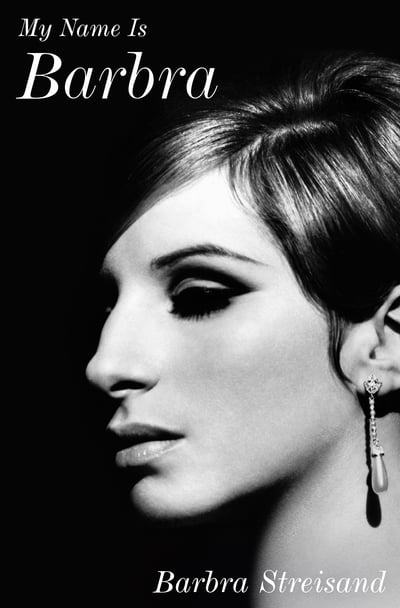
My Name is Barbra, by Barbra Streisand*****

As I came of age in the late 1970s, Barbra Streisand was a tremendous star, and when it came to movies in which she sang, she was peerless. She still is. I was starstruck by her brilliance, her charisma, and her astounding voice, and even so, I didn’t know the half of it. She wouldn’t accept glass ceilings, and when she encountered one, she kicked it in, and she did it with style.

Once her place in the industry was established, Barbra tried to erect a few boundaries around her private life, but it wasn’t easy; when she declined interviews whose focus was her relationships with men, some members of the press chose instead to portray her in an unfriendly light. And some people were threatened by her. A woman director? A woman producer? Who did she think she was, anyway? And she showed them who, sometimes wearing multiple hats in a given film, directing and acting, or…well, you get the idea. And thanks to the resistance she encountered, she grew to be a fierce feminist activist as well.

The autobiography is done in linear form, which I appreciate. I chose not to request the galley, because the book exceeds 1000 pages, and I’d have had only a month till it was published. Instead, I put it on my Christmas list, and Santa delivered it both in print and audio. Both are wonderful, but the audio is read by the author, which makes it my favorite. One more thing I greatly appreciate: when she discusses her music, we get to hear a brief, seconds-long excerpt. A pet peeve of mine is when song lyrics are spoken on audio books, and it is triply aggravating when the book in question is written by and read by the musician that made it famous. I’m sure there are hoops that must be jumped through to be allowed to include these snatches of song, but I know it can be done, because Barbra did it.

We begin with her childhood, the loss of her father, the unavailability of her mother, and I marvel that she grew up to be a good person, and that she nevertheless found the inner strength and confidence to pursue a career as a performer.

A good person? How would I know? We’ve never met. Surely authors do their damnedest to shine the light on their better qualities when they scribe their memoirs. But ultimately, it’s the way that Barbra’s own character makes its way into her productions that convinces me. She has no use for pretension, for one thing, even after the millions she’s made (and given away a lot of.) And she’s spent decades as an activist, using her talents to raise funds for AIDS research, to combat climate change, and to promote women’s equal treatment.

One word about that: there are long passages, at least one whole chapter and parts of others, where she discusses her causes and the politicians she admires, and I must confess that her adoration of various Democratic politicians is my least favorite part of the book. I actually lean further left than she does, and as she gushes over the Clintons, I find myself arguing a bit with her in my head. Sure, Bill Clinton did A and B as president, but he also did C and D, which are dreadful. And so on. Ultimately, I skipped to the end of one such chapter, and I was able to enjoy the rest of the book just fine.

I was fascinated by her explanation of why The Way We Were, one of her massively successful movies, is curiously devoid of politics, even though that is the point of the movie. She tells us that there was a lot of excellent content that landed on the cutting room floor. Nixon’s people had leaned hard on the studio not to disparage the McCarthy witch hunt, for example, and they folded. Happily, Streisand thought to ask if she might keep the portions that were cut, and a new version is being published for its 50th anniversary, so that we can see what it was supposed to look like. And it was this travesty, the way the original film was butchered without her input or consent, that made her determined to direct, and not to make any more movies unless she could have the final cut in her contract.

In her old age—she is in her eighties now—she is willing to talk about her private life in ways she would not do earlier, and she finds just the right level of intimacy to describe it. She speaks well of most of her past loves and many, many fellow performers, and has met and spent time with just about every public figure you can imagine. At one point I challenge myself to think of someone famous that isn’t in her book. Ha, I’ve got it! Nelson Mandela. Then I flip through the vast trove of photographs at the end of the book, and there she is with him.

Her harsh words are very few, and even so, she can often find some positive words to round out her discussion. Sidney Chaplin, son of Charlie, was monstrous, and he terrorized her just as her career was taking wing. Her longtime boyfriend, the hairdresser-turned-producer, Jon Peters, is the other major entrant on her unhappy list, but she recognizes the good things that he did, too, and the fact that he—and every one of her exes—sends her flowers on her birthday says it all.

I could go on even longer about this book, but it won’t be as fun for you as if you get the book for yourself, and I want to go back and re-watch her movies, especially Yentl. As for you, this audio book could make your daily commute much more enjoyable. Highly recommended.  

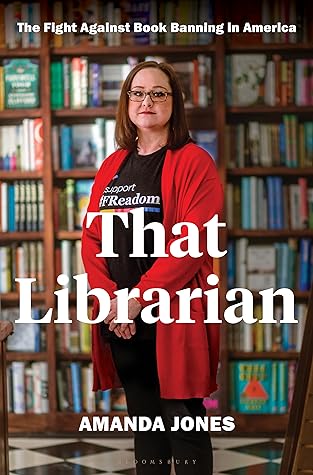
That Librarian, by Amanda Jones****

If ever a clarion call were needed in defense of the First Amendment in general and libraries in particular, that time would be now. Amanda Jones is an educator in a small Louisiana town, where she has lived all of her life. When a censorship battle presented itself, primarily at the behest of organized outsiders with an agenda, she turned up and spoke in a public meeting; in doing so, she unwittingly entered the most chilling chamber of horrors one might imagine.

My thanks go to Bloomsbury and Net Galley for the review copy. This book is for sale now.

Amanda describes herself as a committed Christian and a political moderate; she blushingly confesses to have voted for Trump in 2016. How could a Southern Baptist teacher and librarian suddenly find herself at the heart of a maelstrom, being referred to online as a pedophile, a groomer, and a member of the “woke” left? In a place in which outsiders hold less credibility than those with longstanding roots, how could so many native residents be convinced that pornography is being peddled to children by one of their own? Of course, the only way to create such an atmosphere is through fear and convincing lies.

“Book censors will often say there are books containing pornographic, or sexually explicit, material in children’s sections of the library to rile up public fear. They decry the need to protect children from the evil smut they say is next to Dr. Seuss books. As if a kid could be looking for The Very Hungry Caterpillar and whoops, there’s The Joy of Sex or The Kama Sutra right next to it. That’s never the case. Libraries have collection development policies for ordering books, and appropriate books are placed in the appropriate section. Public libraries do not purchase pornography. Adult books are not in the library’s children section, and to suggest otherwise is ridiculous.”

The American Library Association has guidelines for challenging books. This is essentially what Amanda tells those in attendance at the meeting called by book burners that evening. She is one of more than twenty other locals that show up for the same purpose.

What occurs at this meeting turns out to be a formula frequently used by the extreme right. A page of alarming material is blown up on a big screen for attendees to see. The presenter explains that this very book was found in an area easily accessed by children, right here in the public library in Livingston Parish. It’s a lie. The book isn’t there at all. But most people are decent and tell the truth most of the time; it doesn’t occur to audience members that this is a complete fabrication.

Why Amanda was chosen by these sinister visitors to be the sacrificial lamb is anyone’s guess. Perhaps she is more persuasive than others, or better organized in her remarks. Who knows? By the following day, social media has blown up with vile, horrifying accusations against her. Worst of all, there are people that she has known all of her life and considered friends, that add approving reactions to these poisonous lies. People she always believed would stand up for her, disappear instead, or join the opposition. Her family, her closest friends, and her fellow librarians across the country are the core of her defense, which eventually finds its way into the courtroom. Fellow educators at work? Not so much.

Although this takes place in the deep South, Amanda points out that these challenges are taking place across the country, with the ultimate goal of defunding public libraries. She mentioned a challenge in my hometown, Seattle, Washington, and I gasped. And so, this is an issue that must be monitored, and libraries and free speech defended, by all liberty loving readers everywhere.

The first half of the book is beautifully organized and compelling. I believe my jaw dropped when she wrote of sleeping with a shotgun under her bed, and checking for bombs or tracking devices on the undercarriage of her car. Death threats? Oh honey. Yes. The second half is also good, but could probably use a bit of tightening up. However, were I in her shoes, I would no doubt ramble endlessly.

This would make a terrific movie, and if well done, would certainly deliver the message to still more people.

I wholeheartedly recommend this memoir to all readers that support libraries and the First Amendment.

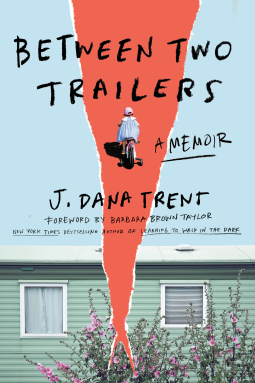
Between Two Trailers, by J. Dana Trent*****

And you thought your childhood was difficult.

Dana Trent is the child of two drug addicted schizophrenics who met and fell in love on the psych ward. The fact that she lived to adulthood is astonishing. Her story is captivating; my thanks go to NetGalley and Random House for the invitation to read and review. This memoir will be available to the public April 16, 2024.

“’Kids make the best hustlers,’ King told me the week after I was expelled from preschool. He lifted me onto the counter and coated his arms with palmfuls of petroleum jelly from the biggest Vaseline tubs Walmart sold. Then he greased up mine. ‘No one expects a runt in a Looney Tunes T-shirt to shank you,’ he explained. ‘Budgie!’ he said and pointed to my chest, then sealed my street name with a Vaseline cross to my forehead. ‘Budgie,’ I parroted, finger to my own chest…‘Guns are for idiots,’ he added. ‘Here.’ He handed me my first pocketknife, a foldout two-inch blade with a horse and buggy painted on the handle. Knives teach you to accept the inevitable. ‘You’ll get stabbed,’ he said, ‘but you’ll survive. No big deal.’”

The nickname “Budgie” was chosen because she was his lookout on drug deals. She would ride along with him, his trunk stuffed full of drugs, and when he got out, she was stationed on the highest available vantage point. If she saw someone—an ambush, the cops, anyone—she was supposed to sing like a bird. (Even other drug dealers and manufacturers questioned the wisdom of hauling a three year old on such expeditions, but King, as her father was known, was not easily influenced.)

At such moments, one might wonder where her mother was. Usually her mother was either unconscious in bed, or on the way into or out of that state. Because her father was awake and slightly more predictable, Dana considered him the more reliable parent. Before she was old enough for kindergarten, she understood that it was up to her to take care of The Lady.

My initial response to this scenario was to be bitterly angry at whoever decided to expel this child from preschool. Boom, there went that tiny girl’s one tie to the safer, saner world. How could anyone look at her behavior, her clothing, her hair and not call Children’s Services? I’m still fuming.

Miraculously enough, Trent made it to adulthood, and after years and years of therapy, she is able to lead a normal life. She’s achieved a remarkable amount, with a Ph.D. to her credit along with a solid career in academia.

And she can write! There is never a slow moment in this memoir, a hair raising read that I brought out at lunchtime, but never at bedtime. There is very little by way of dialogue, and that makes the swift, steady pacing even more remarkable.

Between Two Trailers is one of the year’s best reads. Highly recommended.

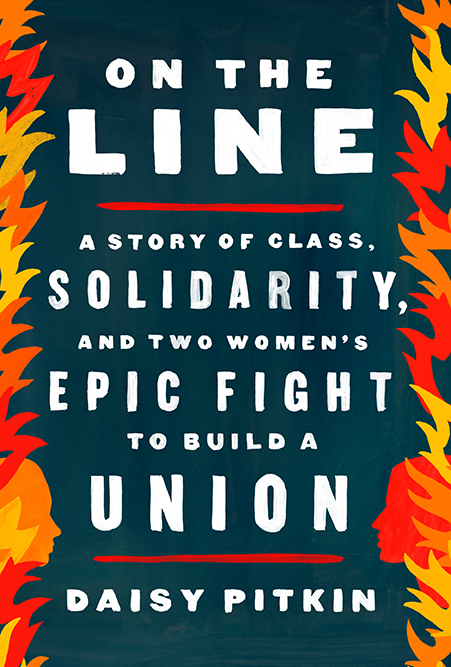
On the Line, by Daisy Pitkin*****

On the Line, a labor memoir by Daisy Pitkin, tells the true story of a grassroots struggle to organize a nonunion laundry in Arizona as part of an industry-wide unionizing campaign. My thanks go to NetGalley and Algonquin for the invitation to read and review. This book is for sale now.

Daisy is an organizer for UNITE, a labor union that organizes textiles, laundries, transportation, service workers, and some others, created by the merger of ILGWU (International Ladies Garment Workers Union) and ACTWU, the American Clothing and Textile Workers Union (of which this reviewer was once a member and union activist.)  She is working at the ground level, approaching workers in the parking lot, partnering with a woman named Alma that worked there and could talk to other workers inside the factory.

The memoir is written in the second person to Alma, and at first this seems odd, but as I read, I realize this is an effective and intelligent choice. By addressing Alma and the things that Alma has said and done during this fight, as well as the things the author did, along with what they did together, and the occasional differences of opinion they had and how they resolved them, she avoids making herself sound like a martyr to the cause. It would not read nearly so well in the first person, with the reader as audience.

The tasks of the workers all revolve around the commercial laundering process. Immense bags of dirty linens weighing up to 300 pounds are pushed off of the delivery trucks in rolling carts.

“The linen moves down the belt, you said, and then you flicked your arms back and forth to demonstrate how you and the other sorters toss sheets into one bin, towels to another, gowns to a third, and so on. You said, Sometimes they speed up the conveyor, and we don’t have time to be careful. There is a lot of blood and puke and feces. You said, We don’t get shoe covers, so some of us take off our shoes and drive home in our socks. You said, Our gloves are too big—they slip off our hands. Sometimes when they tear open, we have to handle the soiled linen with exposed skin…you were demanding a seemingly simple thing: to work your eight-or-ten-hour shift and come home unharmed. You wanted gloves that hospital needles cannot puncture. You wanted face masks to keep the blood and fluids from other bodies from entering your bodies. You wanted safety guards put back on machines where they had been removed. You wanted linen dust cleaned from the rafters to prevent fires.”

Safety rules are routinely flouted. Dirty linens land on the belt, and the belt feeds them into the mouth of a tunnel washer. When the washer jams, workers sometimes have to crawl through hot, bleachy, contaminated water to clear it and get it working. The supervisors are supposed to cut power when someone is in there, but they don’t. Ultimately it’s a choice for the owners to risk a possible, but unlikely fine from the government, or frequent decreases in production, which cut into profits. The workers are expendable; they can always find more. The wash and dry departments of industrial laundries are the most fatal of all industries, according to U.S. government statistics.

Daisy and Alma are working on a shoestring. When they have to be away from home overnight in order to meet workers as they go in or come out, they sleep in the car. Their signs are made by hand with posterboard and Sharpies. Initially, all of the workers sign cards, but then management begins a campaign of threats and intimidation. Not all of the workers are in the States legally, and most of them don’t know their legal rights. Most of them rescind their votes, and then it’s an uphill climb to get them to sign again.

This is a topic that is of great interest to me, and I was supposed to have read and reviewed this book in April of 2023, but my stomach twisted as I read of the horrific obstacles encountered by workers and by Daisy, and halfway through I had to put it down. Only recently did I slap myself upside the head and resume reading.

In any labor union, there are two sets of obstacles. The first, the one that is obvious, is the company, the bosses. Unions cut into profits, so the owners or boards of directors nearly always fight unionization. The second, and lesser known, is the union officialdom at the top. These people spend more time around the bosses and other highly paid union officers than they do around the workers, and they become jaded, sometimes contemptuous of those that they are supposed to represent, whose dues pay their salaries. When Daisy is eventually promoted, she discovers it’s harder to do anything that is in the interests of the clientele.

The book also includes a fair amount of union history, and it’s clearly explained, well woven throughout the narrative.

For those that are interested in unions and labor history, this is an excellent resource. But don’t read it at bedtime; it will do things to your dreams.