
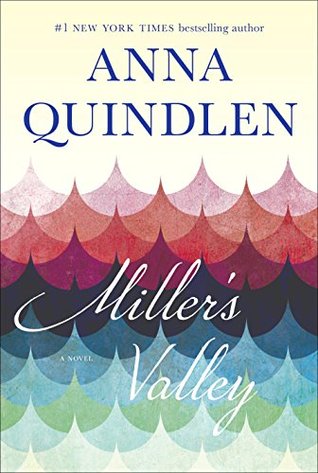
 Miller’s Valley is an intimate, poignant story so personal that it is hard to remember that it’s fiction rather than a memoir. Thanks to Net Galley and Random House for the DRC. Though I usually read several DRC’s at a time, this was the one I saved for the end of the day, for that time when the phone stops ringing, the dogs quit barking, the family doesn’t need my attention, and there’s nobody at the front door. During those deep, silent hours I immersed myself into the life of Mimi Miller, hypnotized as if my best friend were perched on the bed spilling out her secrets.
If you love good literary fiction, you have to read this book!
The Millers are a family of working farmers. Day by day, inch by inch, water is claiming their land. Shifty business is going on between a developer, who wants to build and sell a waterfront community in what is now rural land containing farms and woods, and the government, which is interested in increasing the size of the local dam. Visitors come to all land owners in the valley, slick people ready to wheel and deal, threaten and cajole.
The Millers are having none of it.
The reader sees all of this through the eyes of Mary Margaret “Mimi” Miller, who grows up amid the tension, the resistance to the governmental takeover of their land, and the pride…above all, the pride. Her family mucks out the mud when the floods come, and they persevere. They resign themselves to the notion that wall-to-wall carpeting can never happen because water comes into the house so often. You can shovel the muck off of wood or linoleum, but a carpet would be ruined the first time the flood came.
Woven in and out of her story is that of her family members and closest friends, including reclusive Aunt Ruth, her mother’s sister who lives in a separate house on the property. Ruth is agoraphobic, and would not come out of her house if she believed it to be on fire. Ruth says that getting out of the house is “overrated”. We also see her older brother, Eddie, who is “the glory of Miller’s Valley”, the perfect son who goes off to college and makes good; we also follow her other brother Tommy into a host of trouble, trouble, and more trouble.
We view each setting as individual snapshot; she paints it, and we are there. Character development is likewise outstanding. As Mimi grows older, we see the same characters with deeper layers of complexity, just as our understanding of those around us grows fuller and deeper as we age. And as she grows into her adulthood, Mimi becomes so similar to her mother in so many ways that I have to remind myself continually that this is fiction, not memoir.
Quindlen is a veteran writer, and when I started to pass this galley by, I realized it was for a foolish reason: I had been required to read her essays and stories sometimes in teachers’ workshops, and so when I ran across her name, my instinctive response was to associate it with work. But those required-readings were some of the best workshops I ever sat through, and now that I am reading on my own time, I find her novel suits me down to the ground.
And I agree with Mimi’s conclusion that “Maybe everyone stays the same inside.”
Those that love good literary fiction as well as stories of finding ourselves through our heritage will appreciate this beautifully told story as much as I did. It is available for purchase April 5, 2016. Highly recommended.
 Oh my stars. Keillor is at his finest here. I’ve never read anything funnier. Every now and then I permit myself to read a title that isn’t a new release but that I’ve been considering reading for a long time. This is one of those.
 I confess that I am a big fan of Burke’s. He’s written a prodigious number of novels over the past fifty years, and I have read almost all of them. This is why, although I get nearly all of my books free prior to publication, I put this title on my Christmas wish list when I wasn’t given access to a galley. Perhaps because my spouse paid full jacket price for it, I am holding it to a higher standard than I usually do. This book is either a three star or four star read, depending on whether we factor in the dollars. Let’s call it 3.5 and round it up. It seems like a shame to 3-star a writer who is so talented and has contributed so much to American literature.
 Dragon’s Teeth is the third in the Pulitzer-winning Lanny Budd series. Set in 1942—the present, at the time it was written—it provides the reader with a fascinating, well-informed, hyper-literate view of Europe during the years before and during Hitler’s ascent to power. While it requires a fair amount of prior knowledge in order for the reader to keep up with the story, history lovers, political philosophers, and especially those fascinated by the period in question will find it riveting. Thank you Open Road Integrated Media and Net Galley for allowing me a DRC. This title is available for purchase digitally now.
 If Fannie Flagg worries that she has no heir, she can relax; Richard Fifield is here. The Flood Girls is his brilliant debut, and you have to read it! Fifield will cut out your heart and feed it to you with a rusty spoon, and he’ll make you like it, too. Hell, he’ll even make you laugh through it. I got the DRC free via Net Galley and Gallery Books in exchange for an honest review, and I’m going to read it a second time before I archive it as I am supposed to. This is only the second time I have done so after hundreds of galleys have come my way; that should give you a measure of how impressed I am with this title.
 Lambert is a brilliant writer, and his absorbing new novel, The Children’s Home, is the best literary fiction I have read in some time. Thank you to Scribner and Net Galley for the DRC, which I received free in exchange for an honest review.
 Richard Thomas is a monstrously great writer. In Breaker, a Windy City Dark mystery, he presents us with Ray, a man of unusual and intimidating appearance; a sinister stranger in a white van who victimizes Chicago’s working class school girls; and Natalie, the girl that lives next door to Ray. Though this is the first Windy City Dark mystery I read, I fell in, only extricating myself close to bedtime, because this is not the kind of thing you want entering your dreams. This smashing thriller came to me free of charge from Net Galley and Random House Alibi.
 Lambert is a brilliant writer, and his absorbing new novel, The Children’s Home, is the best literary fiction I have read in some time. Thank you to Scribner and Net Galley for the DRC, which I received free in exchange for an honest review.
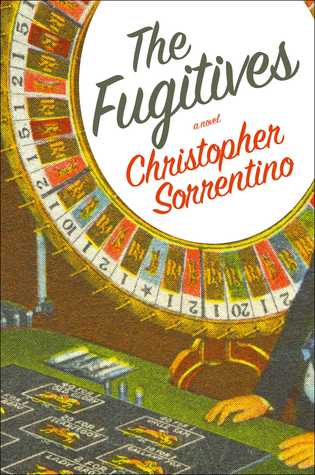 Sandy Mulligan is a renowned author, but he’s hit a crisis. He’s left his wife and children for someone else, and it didn’t work out. Now he’s taken to the hinterlands to try to write the book he’s contracted to produce. Meanwhile, he runs across John Salteau, who claims to be an Ojibway storyteller, but it doesn’t ring quite true. Like Mulligan, Salteau is hiding from something. And if that isn’t enough, we have Kat Danhoff, herself a refugee of sorts, and she has landed in the same tiny burg, first to write about Salteau, and then to write about Mulligan interviewing Salteau. And before I can say more, I need to tell you that this clever satirical work was given me free of charge by Net Galley and Simon and Schuster in exchange for this honest review. It goes up for sale on February 9, 2016.
 As a rule, I am not fond of British fiction; I prefer working class protagonists to the silver-spoon variety; and I like urban settings more than pastoral ones. But The Lake House is written by the author that produced The Forgotten Garden, and so when I had the chance to grab the galley, I went for it. And once more, experience proves that a brilliant writer can sell any story, in the setting of her choice, with the protagonists of her choice, and she can make it flow smooth as warm butter.
 Seattle Book Mama