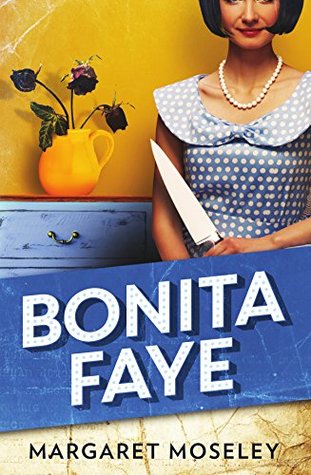
Bonita Faye, by Margaret Moseley****

bonitafayeBrash Books has a new release, and it’s exactly the kind of novel you’d want to take to a warm sandy beach, or perhaps just to curl up with while the snow falls. I was permitted an advance glimpse, courtesy of Brash Books Priority Reviewers Circle. It was originally published in 1997, but due to be released again February 23, 2016. You’re in for a good time with this one.

Bonita Faye is our protagonist, of course, and although her story has been compared to Fannie Farmer’s work, I found her to be more of a female, less extreme version of Forrest Gump. The narrative begins in a dialect that is semi-literate; the setting is partly in Poteau, Oklahoma and partly elsewhere. Bonita Faye is born poor and without any real source of support, but rises above it through means that are both ingenious and at times, very funny. Although the story is ostensibly a mystery, we don’t need to know who-dunnit, because Bonita Faye did it. All of it.

Because some of us don’t need a knight to ride to our rescue. Some of us can take care of ourselves.

Although I found the protagonist to be engaging, I think the novel would actually be strengthened by pulling back a bit on the cornpone dialect. There is also a point at which her education is improved and her English becomes more eloquent, but then for no discernible reason, she falls back into the same aw-shucks dialect she had initially.

There are multiple characters that are developed besides Bonita Faye. I liked Claude (“Oink oink!”) and also Simone. I had trouble buying into the second half of the thread involving Michel. I also found the thread with Elly to be problematic, although I loved the final resolution of the problem that develops toward the end.

When push comes to shove, Margaret Moseley is a force to be reckoned with, and I look forward to seeing more of her work in the future. Those looking for a fun, accessible vacation read should order this book.

Hitler is Alive!: Guaranteed True Stories Reported by the National Police Gazette, edited by Steven A. Westlake**

HitlerisaliveI was invited to read and review this compendium of articles from long ago by my friends at Open Road Integrated Media and Net Galley. I appreciate the invitation. The articles in the collection were really published in a tabloid by the title above during the period after World War II ended, and they are presented here as a bit of humorous nostalgia, rather like the spirit of Punch or The Onion. These articles will tickle the funny-bone of some of its readers, but it wasn’t a good match for me.

It appears that Hitler did indeed have a man-made island set up as a place of retreat; most likely, word of the USA’s nuclear weapons program had filtered through and so an alternate location was devised for him and those he needed with him. In the end, his defeat was so clear and so absolute that even he could see there was no point in going there. However, between the Allied leaders’ claims that he was dead before anyone really knew what had happened and a few other intriguing details, journalists had a great deal of fodder to chew on for the period that followed. The overall tone at times nears hysteria, and because of this, it seems comical now.

Because it was not written initially to be humorous but instead was regarded by its writer as hard journalism, there is a lot redundancy, with old facts being repeated and new ones added in. I suspect that a much more amusing novella could be written using these articles as their basis; on the other hand, Hitler has been the subject of so much other historical fiction that it would have to be unique indeed to stand out from the crowd.

Those considering purchasing this collection might do well to go to a retail site that offers a chance to read sample pages first. If it works for you, go ahead and make the purchase. I have to confess I made it about halfway through and then bailed.

This collection was published Jan 12 of this year and is available for purchase now.

The Flood Girls, by Richard Fifield*****

TheFloodGirlsIf Fannie Flagg worries that she has no heir, she can relax; Richard Fifield is here. The Flood Girls is his brilliant debut, and you have to read it! Fifield will cut out your heart and feed it to you with a rusty spoon, and he’ll make you like it, too. Hell, he’ll even make you laugh through it. I got the DRC free via Net Galley and Gallery Books in exchange for an honest review, and I’m going to read it a second time before I archive it as I am supposed to. This is only the second time I have done so after hundreds of galleys have come my way; that should give you a measure of how impressed I am with this title.

From his arresting first line to the deeply satisfying ending, I was completely bound up in this book, only setting it aside as a reminder to myself to delay gratification and make it last a little longer. In the end my e-reader had 177 notes and marks, and every single one of them was there to highlight outstanding imagery, a passage in which yet another character was developed, a place in which he had shown us something important while saying something else, or a place in the text that was drop-dead funny. I would guess the last of these accounts for 100 of those 177 notes.

Let’s start with the premise: Rachel Flood has returned home to Quinn, Montana after many years away. She is here to make amends. It isn’t easy: “A small town never forgets, or forgives.” It’s a tough town, full of people that have survived dozens of harsh 6 month winters. Its people are abrupt and sometimes rude; they don’t suffer fools here.

Rachel’s sponsor has assured her that she doesn’t have to move back to Quinn to make amends; she isn’t here to do penance, after all. Offer the amends and then, whether or not they are accepted, hit the road! But for several reasons, not all of which Rachel understands herself at first, she chooses to stick around, and it isn’t easy. Ultimately, she is cornered into playing in the outfield of The Flood Girls, the local softball team sponsored by the mother she has wronged. She becomes a friend and mentor to Jake, a quirky twelve year old with a fondness for fine fabrics, wardrobe and design, and an intolerant right-wing Fundamentalist stepfather.

Perhaps the most technically impressive aspect of this work is the way Fifield differentiates a very wide cast of characters. I cannot think of any other novel among the 151 books I read and reviewed over the past year in which there were so many characters that were juggled so deftly. When I put down the book, I did a quick finger count of how many characters I could actually name and identify without looking. I stopped at 21, and I didn’t try long or hard. Every single one of these characters, most of whom are wonderfully eccentric, stood out in my mind, apart from two small groups (the silver miners and the Sinclairs) that are treated as such in the text.

It isn’t only the eccentric characters and the small town setting that makes me think of Flagg’s masterpiece, Fried Green Tomatoes; it is also the message. Fifield wants us to know that intolerance will kill us. It is only by accepting and celebrating one another’s differences and quirks that we become part of the human family. We must learn to help and rely upon each other, because we are all we have. That said, The Flood Girls shares Flagg’s spirit, yet it is not derivative, but wholly original.

You don’t have to like baseball to enjoy it.

This hilarious, engaging new novel is for sale to the public February 2, 2016. Very conservative evangelical Christians won’t enjoy it, and it wasn’t written for that audience anyway. It is highly recommended to everyone else. This book will be talked about, and you’ll want to be in on it from the get-go! Put this one at the top of your list.

Blanche On the Lam, by Barbara Neely*****

BlancheontheLamI was already a Barbara Neely fan when I received this DRC, courtesy of the Brash Priority Reviewers Circle, in exchange for an honest review. I’ve been reviewing books for Brash Books and others for the past couple of years, and had read three other Blanche White mysteries out of order, so when I saw that the first in the series—which I think was the only one I hadn’t read yet—was up for grabs, I nailed it right away. It’s available for purchase now.

The amazing thing to me is that although these novels were originally published in the ‘90s, they are extremely relevant right now. For those new to this Anthony, Macavity, and Agatha Award winning book and series, Blanche White is author Barbara Neely’s foil for a number of social issues that are best approached with humor, yet also with absolute, stark clarity. Those that have supported the #BlackLivesMatter movement should order this fantastic book right away. It’s a double win, treating those of us that favor social justice and also enjoy strong fiction. On the other hand, those that don’t understand the current of Black anger that pumps through the small towns, fields and cities of the United States may want to read this book and catch a clue.

She makes everything crystal clear.

Here’s the premise: Blanche, who does domestic work and also has custody of her late sister’s children, is in trouble with the law. She has written some checks she can’t cover, and the fact that they’ve all been paid in full by the time she stands before the court doesn’t make much difference to the judge. She is given two months in the slammer, but a much greater disturbance distracts the officer who’s supposed to lock her up, and without a moment’s hesitation, Blanche slips out a side door to freedom. She knows she has to get gone and figures on leaving the state as soon as she has the money for travel, but in the meantime she escapes by using the greatest camouflage possible…because nobody looks a domestic worker in the face.

The family that has hired her has problems of its own, and Blanche can’t leave once the shit hits the fan, because if a domestic worker suddenly disappears when a crime has been committed, the thing will automatically be blamed on them. Instead, she is pinned like a butterfly, stuck in the kitchen of a horribly dysfunctional—and criminal—family. But Blanche is a born survivor, and the cynical things she does in order to keep herself from harm’s way, and ultimately to avenge the death of a nice man that didn’t deserve his fate are both amusing and riveting.

It is here that we meet Mumsfield, an engaging character who will turn up later in the series.

Blanche’s attitude toward the sheriff and the situations that feature him made me want to stand up and cheer!

I took the opportunity to read Blanche White mysteries as they became available, and I am glad I did. Reader, you have the chance, if you haven’t begun the series yet, to read them in order. Neely’s writing is both politically on-point and also seriously funny. What more could you ask for? Once you read this one, you’ll want to continue the series.

Highly recommended!

Tricky Twenty-Two, by Janet Evanovich

tricky twentytwoHere’s the short version: she’s done it again! Janet Evanovich’s latest Stephanie Plum novel was one of only three titles on my Christmas wish list. I get most of my books free prior to publication, and the rest I can generally find at the library. But I wanted this one hard, and my eldest son came through. And for the first 36 pages, I thought our writer had lost her magic. Turns out she was just warming up; my first laugh was on page 37, but most of the fall-down-funny moments take place during the last third of the book.

This one starts out with Stephanie finally ready to get off the fence and make a definite choice between Morelli and Ranger. Just as she gets ready to commit, she is surprised to discover her charms are rejected. Bummer. But her bad luck has only just begun. She’s being stalked by an amorous stranger who knows where she lives, and what appears to be a fairly routine FTA re-schedule job turns out to be a madman on the loose, one that may be breeding biological weaponry.

In this installment Grandma Mazur discovers social networking in a big way; Stephanie discovers there are new and different ways to have her vehicle destroyed; and Stephanie’s mother breaks loose from her kitchen and kicks some ass.

You probably won’t want to miss this one! I read it in three evenings and was sad when it was over.

Practical Sins for Cold Climates, by Shelley Costa*****

practicalsinsWhat a terrific surprise! Shelley Costa is a contender. This is the first of her books that I have read, although she has won the Agatha Award with her first novel, You Cannoli Die Once, which I have to find and read now. For those that love a snarky, spirited female investigator, Practical Sins for Cold Climates is a must-read. Thank you to both Net Galley and Henery Press for the DRC. The title is available for purchase January 26.

Val Cameron has been sent out to Lake Wendaban, which is out in the middle of nowhere way too far from Toronto. Worse, she has been directed by her boss to find Bob’s Bait Shop in order to be directed to the home of a reclusive writer with a hot new book that her publishing house covets. She figures it will take two days to achieve, since the train just goes once each way per day. Get off; take a day to get to the writer and get the signature; and then the next day, she can be back in her own Manhattan apartment, away from the bears, the mud, the snakes, the invertebrates. Done deal. Because the fact is, “She wasn’t a bait-buying kind of gal.”

Of course, it doesn’t go as quickly as she had hoped. What kind of story would that provide us? For starters,

“There had to be some mistake. Where was the town?
“When Peter Hathaway, her boss, first told her she had to get to the town of Wendaban, Ontario, she figured on awnings and sidewalk café seating. Some charming cross between Fire Island and Bedford Falls…Barbershops and garden clubs. …Had the train let her off pre-maturely, say, at a whistle stop? Some little pre-station station where you just had to wait while the moose crossed the tracks?…The town looked like the outskirts of itself.”

By the time Val successfully navigates the terrain—think of a cross between Mirkwood Forest and Venice, where the only way through all those hostile damn trees is by all-too-rare boat ride—she has learned of a murder that took place awhile back, but has never been solved. Once she is stuck out there in mosquito paradise, it occurs to her that it would really be a journalistic coup to sign the author AND solve the murder! Her career would take off like a rocket. No more doomed adventures in the hinterland, thanks. She can’t believe people actually paid money to come sit in the middle of the wilderness!

Stuck waiting for a ride out to the author’s almost-inaccessible cabin, “Val spent the night at the Hathaway cottage, listening for noises that portend god-awful death. Snuffling, growling, clawing, heavy footfalls, buzzing chainsaws, that sort of thing. When nothing materialized, she realized she’d been condemned to a day in somebody else’s paradise.”

This book made me laugh out loud all the damn time! I started considering it my reward for slogging through a few pages of a less desirable galley. But at the three-quarters mark, the casual city girl snobbery recedes as one discovery leads to another, and the tension is thick, tight, and unmistakable.

I fell for two red herrings Costa casually dangled, but she did cheat the reader a trifle by introducing late, new plot elements necessary to the solution; we really can’t figure it out without the information provided around the 90% mark. So for this, I should probably lop off half a star, but I’m laughing too hard to change my rating. Sorrr—eee.

When the last page was turned, I wanted more, and I realized that although there was no “Val Cameron #1” below the title, this could indeed become a series; in fact, it could become another Edgar winner. Oh, yes please! And I was gratified to discover while reading the notes that more Val Cameron mysteries are planned. Hell yes! I will be avidly prowling the Henery Press section of Net Galley looking for new opportunities to read and review this series as it unfurls.

In a nutshell: fan-damn-tastic. This is a terrific book in which to bury oneself on a holiday break or even a long, cold weekend. Not a bad beach read, either for that matter. Just buy it. Just read it!

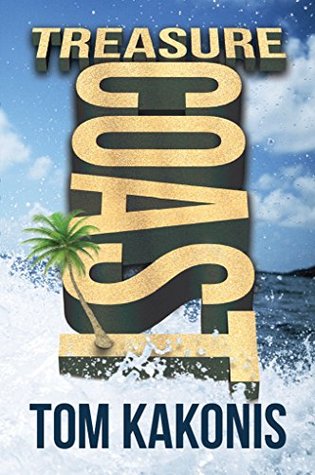
Treasure Coast, by Tom Kakonis*****

TreasureCoastHugely imaginative, terribly funny, and utterly tasteless, Kakonis delivers the chortles with Treasure Coast, a comic caper that juggles numerous entertaining characters with surprising deftness. Thank you twice, first to Brash Books and second to Net Galley, for providing me with the DRC to review. This title will be available September 14, 2015 to the book-buying public.

Our tale begins with Uncle Jim Merriman, a professional gambler who can’t even manage to break even these days, and “his numbnuts nephew”, Leon Cody, “…this kid with the crop of wild hair and Magoo glasses and dippy grin”, who is in debt to loan sharks. Leon’s mother has died and left not only her body, but also her foolish son, to Uncle Jim’s care and keeping. And of course we have the shark’s collection agents, Morris “Junior” Biggs and “your badass Hector Pasadena”.

On the other hand, we have Bryce Bott, hustler of gravestones that once purchased, will never arrive and “séances” delivered with the help of his hillbilly sidekick, Waneta Jean, who feigns nearness to death as a part of the séance scam.

Of course, ultimately, the characters wind up in a messy pile trying out-scam each other. “Circles inside of circles, games within games.”

But oh, that’s not enough! We also have trophy bride Billie Swett, who within my mental movie soon became Bernadette Peters, and her obnoxious, porcine, but almost infinitely wealthy spouse, Big Lonnie Swett. Eventually we add Cheetah, to whom Reverend Bott referred as “that other intrusive fellow”. Their roles in all of this, you will have to find out on your own.

“And how do you count the ways of weird?”

This was a story worthy of patience. There were so many nasty racist comments made about almost everyone you can think of; however, they are used within the context of Junior’s vapor-brained, “Aryan” sensibilities. There are several horribly ugly sexist remarks using the worst possible terms you can imagine, but again, it is only the bad guys that use them…and a reckoning comes down in a manner I found deeply satisfying.

To put it another way: we were halfway through before I was even sure I liked this novel, but once I was on board, I was in it for keeps, flagging one clever passage after another, most of which I can’t share here. I can share this YouTube promotional clip, though:

So although I was ultimately dumbstruck by the creativity with which Kakonis wove all of the complicated strands of this story together without dropping a single one, I also caution the reader. There are some really crass, fairly specific references to corpses in this book. If you have just lost someone and the wound is still raw, this is probably not the title with which you should escape. There are repeated references to the joys of rape. If you or someone near to you has been down that brutal path, maybe this is not your story, either. And one more caveat before I can go back to singing praises: if your mother tongue is not English, you may not want to embrace this challenging novel, which despite its Keystone Cops-like atmosphere requires exceedingly strong vocabulary skills. For those that enjoy word play, it’s a real treat, but any time you have to look up more than 3 words per page, the effort will outweigh the enjoyment you receive.

With the above caveats in mind, this new release comes highly recommended by this reviewer. The only real question is how you will wait until Monday to get your copy!

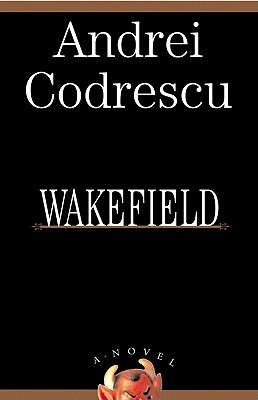
Wakefield, by Andre Codrescu ***

wakefieldWakefield is absurdist, dark humor written by award-winning poet and playwright Andre Codrescu. Thank you to Net Galley and to Open Road Integrated Media for permitting me to access a DRC. The title, originally published in 2004, will be available for purchase digitally September 8.

Wakefield is an anti-motivational speaker. He’s in great demand. People grow weary of the cheerful chipmunk types that show up with a big grin and a you-can-do-it attitude, and so corporations are seeking balance by also providing a guy that tells them it’s all a waste of time. As a natural cynic, Wakefield assumes, when the devil comes to call and tells him his time is up, that he ought to be able to strike a Faustian bargain. But oh what a surprise—the devil doesn’t want his soul. “You’re assuming, dear sir, that you have one…”

The devil wants one thing only: proof that Wakefield has found a “true life”. This broad brush stroke gives the author all sorts of leeway. At times, Wakefield’s search is savagely funny. There are some literary references that I thought were terrific; quirky philosophy; and, true to his poetic nature, some kick-ass figurative language.

The main problem is that the plot doesn’t really have a structure to hold onto. “True life” is too general, and so Wakefield wanders, both geographically, in his relationships, and in his own thoughts. The author is obviously a very intelligent man, but he’s relied too much on innate cleverness and not enough on the structural requirements of a novel. Even the most unconventional literature needs to be able to hold its audience, or it won’t be successful.

I confess I took issue with the author’s characterization of Marxism as a kind of religion; then as well, one might think that someone that spends his life considering matters philosophical would recognize that Marxism and Stalinism are not necessarily identical.

But this isn’t the reason for my rating. The three stars reflect a story that has moments of great strength, even ones that made me laugh out loud, but its inconsistency and lack of a problem that builds, peaks, and is resolved in one way or another, makes it hard to get a handle on. The result was that I found my attention wandering at times, which doesn’t happen much , and then I’d have to tab back a few pages and do some rereading. Even with notes in my e-reader, I can’t find any functional pattern. There’s an ending of sorts, but it seems to be sort of tacked on because the book has reached its required length, rather than because the plot has led us there.

Those that are familiar with Codrescu’s other work and are fans may feel differently, and so I recommend this novel to that niche audience.

Storme Front: A Wyatt Storme Thriller, by WL Ripley*****

storme frontStorme Front, the second mystery in the series featuring former NFL player Wyatt Storme and his buddy, Chick Easton, is smart and sassy. Ripley proves that an action-packed thriller with a he-man protagonist is stronger, not weaker when it treats women respectfully, as equals to men. Thank you twice, first to Net Galley, and second to Brash Books. I received this DRC from them in exchange for an honest review. This title was released August 4, so you can get it right away.

When someone offers one a thousand dollars to make a single, simple delivery, it’s natural to be suspicious. But when it appears to also involve pulling a good friend’s cojones out of the fire, an experienced badass will sometimes agree, however cautiously, to tag along. So it is here. Drugs, guns, and bodies pile up, and all through it runs some kick-ass banter that made me laugh out loud a number of times. The exchanges are typically between Wyatt and Chick, but there’s some pretty strong humor, at times, in the interactions between Wyatt and his fiancée, Sandra Collingsworth, as well. As well as respect. I like the respect even better.

“No one likes smart, self-assured women, you know.”
“Except you,” she said. “And I’m glad.”

Complicating the picture without making it into a soap opera is the involvement, however peripherally, of an old flame of Wyatt’s. They split up a long time ago, and she married the man whose afore-mentioned cojones Wyatt is trying to salvage.

“His wife?” said Billy, smiling. “Ain’t she a sweet piece of—“
“Her name’s Kelly,” I said, interrupting. “But you can call her Mrs. Jenkins.”

The action is linear in format, so the fairly sizeable number of characters doesn’t create confusion. Then too, Ripley’s memorable character sketches certainly help:

“Snakeskins came around the truck. He had a big face, crooked nose. About thirty. A little overweight. Too many Coors in cowboy bars. Blond mustache, untrimmed, and a diamond stud in one ear. His hands were immense.”

Oh, there are so many more memorable passages, and I highlighted 78 of them, just for giggles. But the fact is, I would just hate to ruin it all for you. All told, the flavor is a bit like Sue Grafton’s, but with male protagonists in Colorado.

The examples I’ve provided show up early on, but the pace never slows till the last page is turned. In the end, I just wanted to read the next book in the series. And so will you.

Highly recommended for mystery and thriller lovers, or for anyone that needs a snappy, amusing beach read.

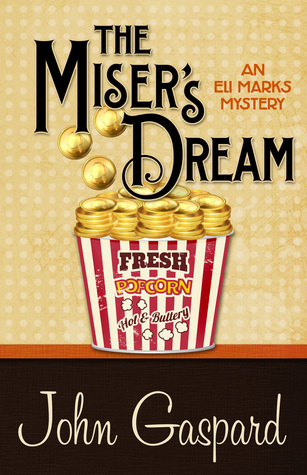
The Miser’s Dream, by John Gaspard*****

themisersdreamThe Miser’s Dream is the third in a series featuring magician Eli Marks. Once I got into it, I did a forehead slap because I could also have read the first two in the series free and reviewed them, had I been paying attention. Thank you to Net Galley and Henery Press for hooking me up with this enormously entertaining novel. It’s billed as a cozy mystery, but were the humor placed around the killer rather than the sleuth, it could have been a comic caper. The title will be for sale October 27.

Marks runs a magic shop and works as a magician locally. He lives over the shop, and the quirky placement of its windows permits him to see into the projection booth of the adjoining theater. Imagine his surprise one fine day when he looks out his window to see a corpse—the projectionist—on the floor of the projection room. It is a locked room mystery, since the man could not have killed himself; the weapon is there in the room; and the door is locked from outside, showing no sign of forced entry.

Just like magic.

Gaspard occupies common country with Grand Master James Lee Burke in his cleverness at choosing engaging, oddball names for his characters. In addition to Detective Sutton-Hutton, we also have the sinister Mr. Lime and his assistant Harpo. The latter two seem to have some inside information. Whereas the character descriptions for these two were a trifle overdrawn, putting me in mind of a Tim Burton animation, the dialogue was sometimes quite splendid, and their role in the story is interesting and well played.

For the first half of the book, I didn’t care at all who the killer was. I was having such a good time with the double features, which I highlighted in my DRC and added to at length, but you’ll have to get the book because I’m not going to post a spoiler. There were other odd bits of hilarious detail in unexpected places, perhaps the best, in my view, being the scene with the flower pot. I had begun to wonder whether there was so much extraneous hilarity here that the murder was becoming obscured, but then it all came into focus just when it needed to, and I didn’t have to retrace the thread to figure things out. The plot is mostly linear and Gaspard has used just the right number of characters, not enough to confuse or clutter.

If you need a good laugh, get this book when it comes out. If you like a good cozy mystery, I likewise recommend it. And for those that have precocious pre-teens and adolescents that sometimes read adult-reading-level material, this one has no explicit sex and relatively clean language, and so it is safe to pass on to your budding bibliophile.

To sum up: this is hands-down the funniest thing I have read in a long time, expertly paced and hilariously detailed. Do it.