
 What, another one? Yes friends, every time I find a noteworthy biography of Grant, it leads me to another. This is not a recent release; I found it on an annual pilgrimage to Powell’s City of Books in my old hometown, Portland, Oregon. I always swing through the American Civil War shelves of their history section, and I make a pass through the military history area as well. I found this treasure, originally published in 2001 when I was too busy to read much of anything. It was a finalist for the Pulitzer; A New York Times and American Library Association Notable Book; and Publishers Weekly Book of the Year. But in choosing a thick, meaty biography such as this one—it weighs in at 781 pages, of which 628 are text, and the rest end-notes and index—I always skip to the back of the book and skim the sources. If a writer quotes other secondary texts at length, I know I can skip the book in my hand and search instead for those the writer has quoted. But Smith quotes primary documents, dusty letters, memos, and military records for which I would have to load my wide self into the car and drive around the country to various libraries in out of the way places. Source material like Smith’s is promising, so I bought a gently used copy for my own collection and brought it on home. And unlike the DRC’s I so frequently read at a feverish pace in order to review them by a particular date, I took my time with this one, knowing that if I only read a few pages each day and then reflected on them before moving on, I would retain more.
Usually the best place to read about a famous person is to read their own account. Grant’s autobiography was, at one time in US history, the second most commonly book owned by ordinary families. He was so deeply loved that many homes held two books: the Bible, and Grant’s memoir. That says a lot. And I did read that memoir quite awhile ago, and it was great. I recommend it. However, there are areas where we need an outside party to discuss things. For one thing, Grant was exceptionally modest. It takes an outsider to tell the full extent of his remarkable achievements, which Grant tended to soft-pedal. Also, alcoholism was not considered a disease during Grant’s lifetime, and his memoir simply makes no note whatsoever of his struggles with it; he doesn’t tell us about his early problems with it, or when he quit, and so he also doesn’t defend himself against later charges by enemies at times when most scholars say he was likely dry as a bone. And finally, of course, Grant was unable to tell us how the nation would respond to his death. So for those with a deep and abiding interest, it’s worth it to read multiple histories in which he is largely figured, as well as multiple biographies.
The fact that I had read a handful of Grant biographies in addition to Grant’s autobiography, yet came away with this volume studded with sticky notes marking new information as well as new insights and perspectives on known information is a good indication that Smith’s biography has met the gold standard.
We start with Grant’s childhood and his early gift for working with even the most difficult horses. Grant was physically quite compact, even by the standards of the day, about five feet five, weighing not more than 120 pounds. In another life, he could have been a jockey, but the purpose his life served gave us so much more. His education at West Point was not part of an initial plan toward a military career; his family could not afford to send him to college, and Grant sought higher education. A connected friend of his father’s got him into West Point, which charges no tuition but requires a period of service after graduation; until war broke out, his plan was to become a professor of mathematics, at which he excelled.
The war with Mexico is where he first saw service, and his job as quartermaster taught him a thing or two about priorities. Although many biographers say that Grant had no head for business, Smith argues that his early misfortunes in business were flukes for which outside causes were really to blame. As quartermaster, Grant succeeded in actually turning a profit for the army by buying flour, baking enough bread with it to feed the army and also sell to the local Mexican populace, with whom he kept friendly relations, and so Uncle Sam was able to feed his troops at bargain prices, since Grant put the profit back into food purchases and did not have to requisition the amount of other food ordinarily required. While in Texas and Mexico, he grew to greatly admire his commanding officer, General Zachary Taylor, whose understated, unpretentious manner and friendly relationships with those he commanded Grant would later emulate.
Smith carries us through all of Grant’s major battles, including Donaldson, Shiloh, Vicksburg, and The Wilderness. He argues convincingly that Grant was never corrupted, but that those that would overturn the victory for African-Americans gained by the Civil War by denying them suffrage went out of their way to smear Grant’s reputation. Grant was also somewhat naïve when it came to politics. Surely he had had to deal with military politics—struggles for control between generals and generals, between generals and bureaucrats—but he did not understand initially how limited the executive power is, and how much Congress can undermine a president.
Grant had not wanted to become president, had in fact hoped to return to the beautiful West Coast after the war, but Andrew Johnson, who succeeded Lincoln as president after his assassination, so brutally and intentionally set about dismantling Lincoln’s legacy that he felt compelled to run. He was nominated by his party unopposed, never even attended the nominating convention, and won the general election by a landslide.
The American people loved him. I myself feel he was our last truly progressive president, and although Smith never makes such a flat assertion as mine, he gives me plenty of documentation to back it with, should I ever again find myself in a position where it’s called for.
This tome is not for the novice. If the reader is new to the American Civil War, I recommend James McPherson’s Pulitzer winning Battle Cry of Freedom, which is lengthy, comprehensive, and fascinating. For those looking for less of a time commitment, Michael Shaara’s The Killer Angels, well researched historical fiction which also won the Pulitzer, is excellent. If you like it and want more, his son Jeff has continued the series one battle at a time, and I have yet to find a book he’s written that is not worth your time and money. All of these titles are reviewed on my blog.
For those that know the basics of the Civil War but are interested in learning more about Grant himself, this biography is the best I have read to date apart from his autobiography, which is also excellent.
Highly recommended to those with a strong interest; basic knowledge of the American Civil War; and college level literacy skills and stamina. Brilliant work.
 Dragon’s Teeth is the third in the Pulitzer-winning Lanny Budd series. Set in 1942—the present, at the time it was written—it provides the reader with a fascinating, well-informed, hyper-literate view of Europe during the years before and during Hitler’s ascent to power. While it requires a fair amount of prior knowledge in order for the reader to keep up with the story, history lovers, political philosophers, and especially those fascinated by the period in question will find it riveting. Thank you Open Road Integrated Media and Net Galley for allowing me a DRC. This title is available for purchase digitally now.
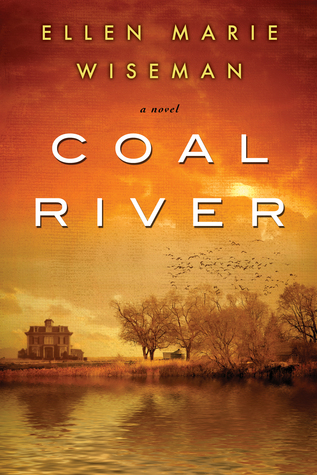 Coal River is a work of historical fiction set in Coal River, Pennsylvania. A region by that name exists, and was the location of pitched battles between the United Mine Workers of America and local cops, strikebreakers, and company goons. Wiseman does a creditable job in her rendering of the setting in which it all unfolded. Thank you to Kensington Publications and Net Galley for the DRC, which I received in exchange for this honest review. It is now available for purchase.
 If you have any interest whatsoever in African-American history; American history in general; or Black Studies, this book should already be on your shelf. It is one of the most important volumes to have been written in decades, a comprehensive yet readable and enjoyable look at a migration that dwarfs the smaller California Gold Rush and Dust Bowl migrations in size and scope. Black folks started to leave the south as Jim Crow became entrenched. They did so often at their peril; Caucasians who wanted that cheap and servile day labor were so violently opposed that Blacks planned their departure, in many cases, with the utmost secrecy, buying the train ticket from their own backwater hamlet to a nearby town so no one would suspect they really meant to go to Chicago, Milwaukee, Washington DC, New York City, or any of a number of places in the north and west where there was no official Jim Crow.
