The Flood Girls, by Richard Fifield*****

TheFloodGirlsIf Fannie Flagg worries that she has no heir, she can relax; Richard Fifield is here. The Flood Girls is his brilliant debut, and you have to read it! Fifield will cut out your heart and feed it to you with a rusty spoon, and he’ll make you like it, too. Hell, he’ll even make you laugh through it. I got the DRC free via Net Galley and Gallery Books in exchange for an honest review, and I’m going to read it a second time before I archive it as I am supposed to. This is only the second time I have done so after hundreds of galleys have come my way; that should give you a measure of how impressed I am with this title.

From his arresting first line to the deeply satisfying ending, I was completely bound up in this book, only setting it aside as a reminder to myself to delay gratification and make it last a little longer. In the end my e-reader had 177 notes and marks, and every single one of them was there to highlight outstanding imagery, a passage in which yet another character was developed, a place in which he had shown us something important while saying something else, or a place in the text that was drop-dead funny. I would guess the last of these accounts for 100 of those 177 notes.

Let’s start with the premise: Rachel Flood has returned home to Quinn, Montana after many years away. She is here to make amends. It isn’t easy: “A small town never forgets, or forgives.” It’s a tough town, full of people that have survived dozens of harsh 6 month winters. Its people are abrupt and sometimes rude; they don’t suffer fools here.

Rachel’s sponsor has assured her that she doesn’t have to move back to Quinn to make amends; she isn’t here to do penance, after all. Offer the amends and then, whether or not they are accepted, hit the road! But for several reasons, not all of which Rachel understands herself at first, she chooses to stick around, and it isn’t easy. Ultimately, she is cornered into playing in the outfield of The Flood Girls, the local softball team sponsored by the mother she has wronged. She becomes a friend and mentor to Jake, a quirky twelve year old with a fondness for fine fabrics, wardrobe and design, and an intolerant right-wing Fundamentalist stepfather.

Perhaps the most technically impressive aspect of this work is the way Fifield differentiates a very wide cast of characters. I cannot think of any other novel among the 151 books I read and reviewed over the past year in which there were so many characters that were juggled so deftly. When I put down the book, I did a quick finger count of how many characters I could actually name and identify without looking. I stopped at 21, and I didn’t try long or hard. Every single one of these characters, most of whom are wonderfully eccentric, stood out in my mind, apart from two small groups (the silver miners and the Sinclairs) that are treated as such in the text.

It isn’t only the eccentric characters and the small town setting that makes me think of Flagg’s masterpiece, Fried Green Tomatoes; it is also the message. Fifield wants us to know that intolerance will kill us. It is only by accepting and celebrating one another’s differences and quirks that we become part of the human family. We must learn to help and rely upon each other, because we are all we have. That said, The Flood Girls shares Flagg’s spirit, yet it is not derivative, but wholly original.

You don’t have to like baseball to enjoy it.

This hilarious, engaging new novel is for sale to the public February 2, 2016. Very conservative evangelical Christians won’t enjoy it, and it wasn’t written for that audience anyway. It is highly recommended to everyone else. This book will be talked about, and you’ll want to be in on it from the get-go! Put this one at the top of your list.

Wake Up and Die, by Jack Lynch****

wakeupanddieThis book is the fourth in the series featuring Peter Bragg; the series was nominated for the Edgar Award and twice for the Shamus Award. I’ve read three others in the series already, so imagine my delight when I located this book, formerly published as Sausalito, among the DRC’s offered by Brash Priority Readers Circle.

And apologies to my readers: I originally published this review under a different title. I use my Goodreads account to organize my shelves, a lazy, easy way to keep track of what I am reading (usually 6-8 books at a time); what is waiting to be read next; what I have, own, and intend to read later; and even what books I don’t have and hope to get. The weak link, as was proven here, is that when a book’s title changes, Goodreads’s new owner, Amazon, is very restrictive about accepting new titles. In years past, since I am a Goodreads volunteer librarian, all I had to do to personally add a title and book jacket was either scan it physically, or send a relevant link to the superlibrarians (the ones that get paid), and they would drop it into the website.

Not anymore.

Before I knew it I was confused, and since I knew I had two Bragg titles to read and had just finished one, I assumed it was that of the single book jacket on my Goodreads page. There is a cost to letting someone else’s system organize one’s reading, and this is it. So this review was originally published on this blog as The Dead Never Forget, which is the first Bragg title and which I have not yet read. My apologies again to my readers and to Brash Books.

Like most Peter Bragg mysteries, this one is set in the Bay Area. A huge development is about to built on the waterfront, complete with a convention center and any number of hotels and restaurants. The problem arises when the residents of area houseboats protest the likelihood that they will be shut out. Bragg is working a different case, one involving pornographic photos that have been sent to the subject’s father, when he finds himself on the waterfront near his home helping to get people and pets to safety after a suspicious fire breaks out. A murder is discovered and before you know it, all hell has broken loose.

The setting is the 1990’s, shortly before the internet changed all of our lives. It is actually a contemporary setting because this is when the mystery was written, but now as it is re-released, it feels like a noir setting, because all of the telephones are land lines and all files are on paper buried in metal cabinets. In this sense, I think the series actually benefits from the time lag.

The novel is ambitious, bouncing us from one setting to another and introducing a large number of characters. I had trouble keeping track of them all. I might have wondered whether my mind was getting old and rusty but for the fact that I was reading a different galley at the same time with even more characters, and the latter left me with no doubt whatsoever who each one was.

On the plus side is not only our opportunity to meet the detective in his first criminal investigation, but I also like the way issues of race and gender are treated; appropriate and at times quite zesty without ever appearing to be self-consciously PC or awkward. There is a moment toward the end that made me want to stand up and cheer! This moment took what was about to be a three star review and bounced it back up to four stars.

On the downside, in addition to the confusion engendered by too frequently hopping between undeveloped characters and situations, there’s an over-the-top moment that some readers will enjoy, but that I found was too much for me: too much vigilantism, too violent, and over the top on my personal ick-meter.

Those that are fans of Jack Lynch will want to read this newly-republished mystery in order to introduce themselves to a kick-ass series. Those that love good mysteries and/or fiction set in the San Francisco area should also get this book and read it.

Why not spend a weekend curled up with Peter Bragg?

Blanche On the Lam, by Barbara Neely*****

BlancheontheLamI was already a Barbara Neely fan when I received this DRC, courtesy of the Brash Priority Reviewers Circle, in exchange for an honest review. I’ve been reviewing books for Brash Books and others for the past couple of years, and had read three other Blanche White mysteries out of order, so when I saw that the first in the series—which I think was the only one I hadn’t read yet—was up for grabs, I nailed it right away. It’s available for purchase now.

The amazing thing to me is that although these novels were originally published in the ‘90s, they are extremely relevant right now. For those new to this Anthony, Macavity, and Agatha Award winning book and series, Blanche White is author Barbara Neely’s foil for a number of social issues that are best approached with humor, yet also with absolute, stark clarity. Those that have supported the #BlackLivesMatter movement should order this fantastic book right away. It’s a double win, treating those of us that favor social justice and also enjoy strong fiction. On the other hand, those that don’t understand the current of Black anger that pumps through the small towns, fields and cities of the United States may want to read this book and catch a clue.

She makes everything crystal clear.

Here’s the premise: Blanche, who does domestic work and also has custody of her late sister’s children, is in trouble with the law. She has written some checks she can’t cover, and the fact that they’ve all been paid in full by the time she stands before the court doesn’t make much difference to the judge. She is given two months in the slammer, but a much greater disturbance distracts the officer who’s supposed to lock her up, and without a moment’s hesitation, Blanche slips out a side door to freedom. She knows she has to get gone and figures on leaving the state as soon as she has the money for travel, but in the meantime she escapes by using the greatest camouflage possible…because nobody looks a domestic worker in the face.

The family that has hired her has problems of its own, and Blanche can’t leave once the shit hits the fan, because if a domestic worker suddenly disappears when a crime has been committed, the thing will automatically be blamed on them. Instead, she is pinned like a butterfly, stuck in the kitchen of a horribly dysfunctional—and criminal—family. But Blanche is a born survivor, and the cynical things she does in order to keep herself from harm’s way, and ultimately to avenge the death of a nice man that didn’t deserve his fate are both amusing and riveting.

It is here that we meet Mumsfield, an engaging character who will turn up later in the series.

Blanche’s attitude toward the sheriff and the situations that feature him made me want to stand up and cheer!

I took the opportunity to read Blanche White mysteries as they became available, and I am glad I did. Reader, you have the chance, if you haven’t begun the series yet, to read them in order. Neely’s writing is both politically on-point and also seriously funny. What more could you ask for? Once you read this one, you’ll want to continue the series.

Highly recommended!

The Children’s Home, by Charles Lambert*****

Hot off the presses! I reviewed this just before Christmas, and it is available today. Fantastic read.

seattlebookmama's avatarSeattle Book Mama

thechildrenshomeLambert is a brilliant writer, and his absorbing new novel, The Children’s Home, is the best literary fiction I have read in some time. Thank you to Scribner and Net Galley for the DRC, which I received free in exchange for an honest review.

We start with Morgan, a bitter recluse rattling around in his immense family mansion, afraid to leave its walls for fear someone will see his face and ridicule him. His sister Rebecca runs the family business, and she hires Engel to serve as housekeeper and cook to him. Moira and David are two children that magically appear at his estate. Unlike normal children, they don’t leave messes lying around, whine, or need to be cleaned up; Morgan notices that whenever he wants to concentrate or not have the children around, they seem to vanish, appearing again when wanted.

Motherhood should be so sweet.

But back to…

View original post 366 more words

The Two-Family House, by Linda Cohen Loigman*****

TheTwoFamilyHouse What an amazing book! Once I began reading Loigman’s masterful historical fiction, my other galleys waited, meek and neglected until I was done with this one. Thank you twice, first to Net Galley and second to St. Martin’s Press for giving me a DRC in exchange for this honest review.

I have seldom seen such brilliant character development in a novel. Although Loigman is proficient with setting, it’s really the characters that drive this book. It begins just after World War II. Mort and Rose live downstairs with their three daughters; Abe, Mort’s brother, lives upstairs with his wife Helen and their sons. Though Rose and Helen are not biologically related, they are emotionally closer than many sisters. And what a great thing it is when they both find themselves pregnant, just when they believed they were finished having babies! Mort has wanted a son forever, and his resentment has begun to damage his marriage. He isn’t abusive, but he is cold toward Rose. When she says another baby is on the way, he becomes almost sentimental, making a deal with the cosmos that if he treats his wife well enough, she will bear him a little boy.

Helen loves her sons of course, but she sure would like a daughter; just one. Please.

And then during a blizzard, both women go into labor. Nobody can get to a hospital, and no doctor can reach their home. Instead, a midwife makes her way into the bedroom where both of them labor. Two babies are born.

This story grabbed me by the front of my shirt and wouldn’t let me go. Where I ordinarily make remarks about pacing, setting, and characterization, my e-reader is instead full of indignant comments. First I have become annoyed with Rose, and jot down notes about the things she says and does as if I were gossiping; eventually my remarks are made to Rose herself, because all of these people are so real to me, and she is behaving so badly. The author’s development of her characters, primarily Rose, Mort, and Judith, is so subtle and so sly that at first I wonder if I am imagining the change; eventually I just want to grab Rose and yank her into the kitchen for a good talking-to.

Maybe you think I have said too much, but there is oh so much more. I never saw the ending coming until we were there, and it was so cleverly done. When the story was over, I felt bereaved in a way I had not felt since I read The Goldfinch.

Those that love excellent historical fiction, strong literary fiction, good family stories or all three have to read this book. I gobbled it up early and had to sit on my hands for awhile prior to reviewing; a number of other books have passed between then and this writing, but The Two-Family House still stands out in my mind as having met excellence and surpassed it.

This book is available for purchase March 8. Highly recommended!

Blind Spot, by Tom Kakonis***-****

BlindspotThis one is 3.5 stars, rounded up. Thanks go to my friends at Brash Books for permitting me access to a DRC. The book is available for sale now.

Kakonis is a kick in the pants, and he builds suspense like nobody’s business. What could be scarier than having one’s youngster snatched by a stranger? The stakes build high, higher, and higher still. Into the bargain we are concerned for the hopeful yet still-grieving mother who believes she has lawfully adopted young Davie (formerly Jeff). Her own child, Sara, died tragically, and her husband has done everything, including the unthinkable, to bring home another child to make the family feel whole again.

Meanwhile, the Quinns search everywhere for their son. After the first 48 hours, the cops have clearly quit looking, so they print flyers to tack on every available public surface, and for good measure, they post an extra large one on their own car window. The “blind spot” occurs when a friend of the new parents passes the Quinns’ car in traffic. The friend’s husband is at the wheel, leaving her free to crane her neck and gawk at the poster, and Marshall Quinn’s pulse quickens as he sees the woman’s mouth form the words, “I know that kid.” Now the search is even more heated as Marshall searches for Della, the woman who knows who has their little boy.

Kakonis’s strength is in his spicy dialogue and strange dialects. In some ways his work is hyper-literate, delving into vocabulary most folks may not see often, but both the dialogue between characters and the internal dialogue as well are so riddled with offensive terms that it’s hard to enjoy. It’s true that Kakonis uses these terms to make plain who is a bad guy and who is not—not that it’s ever unclear, but it’s not the first time I’ve seen an author use the device to make us hate a character even more than we already do. But in such a case, less is more, and the whole first half of the story is studded with really ugly racist expressions, as well as slurs on women, the aged, and the gay. I can see where there would once have been a readership that would have casually flicked through these terms and excused them either because they were untroubled by them at all, or because it is the villain that generally says them. I know this work is seeing fresh publication after a hiatus. But to me, it feels like a lot of work to sift through the epithets to find the mystery under all that sludge.

I considered rating this tale, one with strong pacing and characterization but so many challenges, as 3 stars, but I enjoyed another of this author’s stories quite a lot, and some of the good will has carried over into this review. I’m not ready to give up on this writer’s work yet.

For those that like a fast-paced thriller or mystery and that can overlook the issues I have mentioned, this book is recommended.

City on Fire, by Garth Risk Hallberg*****

cityonfireLuminous, epic, and brilliantly scribed, City on Fire is the buzz book of the year. I would be hard pressed to find a story of greater genius published this century. Those that love literature have to read this book. It will be available to the public for purchase October 13.

I received my copy early from Knopf Doubleday Publishers and Net Galley in exchange for an honest review. In doing so, I feel as if I struck oil.

The story, some 992 pages of it, is a complex story, and like an onion, the reader can decide how many layers of interpretation they wish to uncover. What the reader cannot do, however, is skim, or make the story make sense without reading it in its entirety. It is the thing that makes this story great that makes it complicated, and so those that lack the stamina for a book this length will probably not find it fulfilling. A college-ready literacy level is required in order to understand it.

First, the reader will want to know who committed the act of violence that sets so many things into motion, and how the planned escalation by her friends will unfold. But ultimately, the story is a much broader one, and its genius is in the way each character, even its most peripheral ones, is developed, usually within the same space that the setting is described, and how both of these things drive the plot forward rather than slowing it down. This reviewer came away with hundreds of flagged pages, eloquent quotes, and fifty notes to myself, most of which say exactly that; in fact, eventually I was too engrossed in the story to write a full note anymore, and began using “ch dev, setting” as a shorthand that meant, look! He’s done it again! And by the 80 percent mark, the author had so consistently developed so many characters that I began to ask myself who had not yet been included. Those I watched for were also developed by the conclusion.

In looking for a writer’s purpose, it’s easy to choose one part or another of a storyline and home in on that, and it’s particularly dangerous when the writer touches upon one’s own particular fond subject, or one’s own pet peeve.

In her memoir, Amy Tan remarks upon having stumbled upon a set of Cliff Notes for her own first novel, and discovering that she had intended as metaphor or message passages that actually, she had included for the sake of telling a good story. It’s a cautionary reminder here. If we want to know the author’s purpose and we aren’t sure, we should probably just ask him.

Yet the emphasis on the city, and the development of the characters, seems to point to one thing above all else: “I see you”. For though the author includes the diverse races, genders, ethnicities, and classes that make up a great cosmopolitan city, the story isn’t really about race, and it isn’t really about being gay or straight, and it isn’t really about the entitlement that comes of great wealth and capitalism unfettered, or anarchy and cataclysmic change, or cops, or the disabled, or addiction, or any of the story’s other facets. Rather, each is a foil to show the common humanity of all.

And at a time such as this one, with our social fabric strained and our political ideas polarized, it isn’t such a bad thing, I think, to have an author come forward and say, in a way far more compelling than anyone else has managed to do for decades, that we are all of us just people, after all. All of us will grow old or sick or both, and eventually die. All of us will grieve. Most of us will be injured, and we will forgive it to the extent that we are able. And if any of that sounds trite, it is only my own failing in this review rather than the author’s work, which is breathtaking in its scope and mesmerizing in its capacity to weave so many threads and perspectives into one intricate, flawless story.
If you read one great book this year, let this be it.

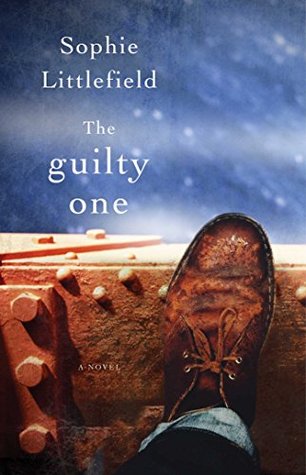
The Guilty One, by Sophie Littlefield *****

Sophie Littlefield, author of the Bad Day series (A Bad Day for Sorry, etc) has hit a new level of excellence with The Guilty One. Many thanks to Net Galley and Gallery Books for the DRC! This book goes up for sale on August 11, and if you love a good novel, this one is for you.

Our chief protagonists are Maris and Ron. Maris is Calla’s mother…or she was. Calla is dead now. The court has convicted Karl of her murder, a heartbroken, enraged loss of control over a bad teenage breakup. Ron is Karl’s father, and as we open our first setting, he is considering jumping off the Golden Gate Bridge. At the last minute he decides to phone Maris, and ask her whether to jump or not.

theguiltyoneIt shows a good deal about Ron’s character, weak and lacking in integrity, that he not only phones Karl’s victim’s mother to dump the responsibility on her, but also wears a windbreaker to the bridge because his travel guide mentions that it is cool and windy there, even in warm weather.

The last time I read Littlefield’s work, it was the Bad Day series. The first book won multiple awards and was deeply satisfying, a savvy, witty dig at domestic abuse. The same topic enters this discussion in a more oblique fashion. In her earlier series, she seemed to lose momentum as the series unfolded, and it appeared to me that she couldn’t decide whether she wanted to write a series that was mostly of the detective fiction genre, or mostly romance. Here, she has taken a giant step away from mystery and detective fiction, and this straight-up fictional story is told with grace, maturity, and authority. It’s obvious right there in the first few pages. I was reading a handful of galleys at the time, and my first note to myself was “See now, this is good writing.”

Maris has lost her marriage, and at first it appears to be a consequence of Calla’s death—so few couples can experience the death of a child and stay together—but as the story progresses, it becomes clear that a split was in the works long before this. And Maris makes a decision that resonates with me. She drops everything and everyone, more or less, and without thinking, going purely on instinct, starts over in a new place, with a greatly reduced standard of living. At first I wonder whether Maris is merely slumming, seeing how the other half lives, but deep down, I have to trust Littlefield not to do anything so shabby, and she doesn’t. Maris is the one we root for, the one that drives the plot forward and pulls us in.

Ron and Deb have stayed together as Karl has gone through the trial and been found guilty, but the strain is there. Ron starts out entirely believable and not very likeable. He never becomes the stand-up individual that Maris is, but he is a dynamic character, complicated and interesting. He undergoes a lot of change as the story progresses.

Throughout this riveting novel, there was never a moment when the veil lifted and I recalled that these characters weren’t real. I raced toward the end with a sense that I had to see how it came out, and then when it was over, I felt a sense of loss, wanting to turn another page and find Maris still there so I could check in with her, like a good friend. And that is ultimately the hallmark of great writing.

Get online. Take a bus. Get in the car. Hijack a plane—okay, maybe not—but do what you need to do in order to get a copy of this accessible, compelling new fiction. Littlefield rocks it. You can pre-order it now, so you will be able to read it right away. If you do, you too will want to stand up and cheer!

Rock of Ages, by Howard Owen ****

rockofagesRock of Ages, an intriguing novel by Howard Owen originally published in 2007, isn’t merely a mystery, but engaging fiction. I enjoyed everything except one small but noticeable problem near the end. Giant thanks to Net Galley and Open Road Integrated Media for allowing me a glimpse of the digital version in advance. It becomes available for purchase June 9.

Georgia is a respected professor for whom menopause and mounting personal losses—the death of her husband comes at almost the same time her aunt dies, and her parents are both gone—become so distracting that she abruptly takes a leave of absence. She has seen her father’s ghost sitting in the back of her classroom.

She takes time off and heads for the small town in North Carolina where her aunt had lived. When she arrives, her son Justin is there with his girlfriend, Leeza, who is pregnant.

The first half of the book is where the writer is at his best. The villain, “Pooh” Blackwell, is artfully portrayed. Georgia’s former teacher, Forsythia Crumpler, was also really well spun. I found myself talking to Georgia, making notes in my kindle asking her just what the heck she is doing, talking to her son and his honey that way. Does she want to be forever estranged?

Georgia’s misbehaviors are subtle enough at first that the reader is left wondering whether this is the author’s idea of appropriate parental behavior, or whether he is deliberately drawing a difficult protagonist. Turns out it’s the latter, and the way he develops her as the story progresses is terrific, at least until near the story’s conclusion.

So now let’s talk about the rape. What on earth makes the writer think that a woman of 52 years who has been through a good deal of trauma in her life, will think rape is not a very big deal? When she was “younger, a little more precious and fragile”, it would have been much worse.

Say what?

If the protagonist’s mental narrative had only said she was glad to be alive, I could roll with that, but he adds just enough other considerations to make me want to throw the book across the room. I speak as a woman that has never been sexually assaulted, but like most people, I know women that have. And research actually indicates that the more trauma one has been through after age 30, the harder one grieves, because all of the other losses are relived along with the new, fresh loss. Until this point, I had bonded to Georgia’s character, and she was practically tangible to me. When she began reflecting about the rape, the spell was broken and it was just the product of some clueless male’s bizarre imagination. It’s probably a bad idea for anyone to try to quantify a rape or decide where it falls on the progression of a character’s negative experiences, and all the moreso for a man to decide about a female character. One star fell off and this tirade jumped into my review. So there you have it.

The ending is otherwise not terribly imaginative, but also veers away from the trite, pat ending I thought I saw coming. Sadly, by that point I was too irritated to enjoy it.

The novel is billed as a mystery, and it surely includes two of them. We wonder about the ghost; it has made another appearance at the Rock of Ages, which is locally known to be haunted. We also wonder whether Pooh Blackwell killed Aunt Jenny for the deed to her house, or whether she drowned accidentally. But really, the main story here is Georgia’s inner struggle. The mystery takes a back seat, and it works well that way, apart from my earlier qualification.

The prequel to this story won acclaim, and I would love to read it if I can find a copy.

The series will be one to watch. Perhaps Owen will write Justin in as his next protagonist, and if so, I would love to read it.

Interesting work from an award-winning writer.

I’d Walk with My Friends If I Could Find Them, by Jesse Goolsby ****

idwalkwithmyfriendsifThis fictional memoir chronicles the lives of three men who join the US armed services and wind up together in Afghanistan. It follows them after they leave, coming home but not home, alienated, injured in various ways both tangible and intangible. It’s an important book to read, given the current state of affairs and the ways in which the government denies us information regarding the US war in Asia. Thank you to Edelweiss Above the Treeline and Houghton Mifflin Harcourt for the DRC. It will be available to the public at the beginning of June.

Dax, Wintric, and Torres come from different parts of the country, but all are members of the American proletariat. Jobs and a future are not abundant in down-at-the-heels America, economically past its prime. Each of them comes to the service not out of a longing for glory or out of feverish patriotism, but pragmatically; where else can they find a job? Who else will train them, send them to school free?

Most of their time in uniform is mind-numbingly dull. But it only takes a few minutes, perhaps even a few seconds to rock someone’s life and forever change it.

All of them return, and no one is the same. Goolsby deserves credit for developing well crafted, if not necessarily likable, characters. The ambiguity as to some of their fates made me a little crazy at times, but that also demonstrates how much I was invested in the story. Interesting to me was the fact that I bonded a lot more with the women in their lives than with any of them. Yes, I am female, but I can’t count the number of male protagonists in other novels that I’ve bonded with. I think it comes down to culture; I have never been able to understand gun nuts (which is how at least one of them comes back), or with those who turn to violence as a necessary aspect of their domestic lives. And yet the story is written in such a way that it is entirely believable.

Although I generally prefer urban settings in my fiction, I appreciated the way the writer cut across stereotypes of California by setting Wintric in the Northeast part of the state, a rural area near Chico. I think a lot of people who have not been to California, or who have flown into a major city and then back out, fail to appreciate how much of it is rural or wilderness. The character of Kristen as a girl who never wants to go further from home than the giant redwoods—doesn’t even need to get as far away as the Pacific Ocean!—was a brilliant stroke.

I’d Walk With My Friends If I Could Find Them is not a cheerful book or an uplifting one; if you are inclined toward depression and decide to read this timely novel, find a second book that is humorous or heartwarming to alternate with this one. But for those of us here at home who see no film footage of this war, no news articles that show what takes place on the ground or even the coffins that are sent home thanks to the governmental news blackout, it is an important addition. Thoughtfully written, and recommended.