 Oh my stars. Keillor is at his finest here. I’ve never read anything funnier. Every now and then I permit myself to read a title that isn’t a new release but that I’ve been considering reading for a long time. This is one of those.
By now you probably have an idea whether or not you are a Keillor buff. His appeal is largely (but not limited to) the boomer generation. His trademark capacity to satirize people from rural Minnesota, and in particular Lutherans and Norwegians and most of all himself, is legend. He somehow manages to tug the heartstrings occasionally and evoke bittersweet feelings that are experienced by those of us who grew up in the USA during a particular time period, even if we are not from his part of the nation or his culture.
Keillor seemed to me to be sort of a hit-or-miss writer for awhile, but lately, he’s been hitting, at least for me. Liberty, Pontoon, and this one, which parodies Chaucer’s pilgrims in the Canterbury Tales, carries on without slowing or hitching or ceasing to be interesting and at many times (especially the end) a total crack-up.
If you have never read Chaucer and don’t intend to, that won’t wreck it. The basic contours: Chaucer wrote about people going far away, in a limited group, and Keillor uses the same style of poetry Chaucer used to mark the beginning and end of this book. If there are other parallels, then I am not deep enough to find them, but if I found this to be a good bedside read with only that much recollection, then it will likely suffice for you too.
Here are the story’s components. (I actually flagged fifteen hilarious passages, and then realized that if I quoted them here, it would ruin it to you, so I’ll just give you the basics and set you free.) Margie is 53 and very unhappy. Life has sort of ground to a dull halt; the nest is empty, and husband Carl has moved to a different bedroom. She doesn’t know why. She hopes that if they take a romantic trip to Italy, it will rekindle the flame.
Writer Gary Keillor comes to town. No one includes him in anything. They all assume he is being standoffish by not coming, and he is hurt that no one invites him; very Scandinavian. Before he knows it, he has livened up the speech he is giving (and which is obviously boring his audience senseless) by offering to fund the trip to Italy. Holy smokes! What has he done?
On top of all of it, the town hero, Gussie, their fallen Norwegian soldier who fought in World War II, should have his grave decorated. His daughter Margo, born in Italy outside the sanctity of wedlock, has never gotten around to coming to the USA to meet him, and his remaining brother, very elderly and in a nursing home in another part of the USA, has long wanted someone to convey a photo of Gussie to his grave site. A simple request, and nobody would do it. Now, Margie calls to tell him she’ll be happy to help, and joy of joys, he sends her a big pile of money, and on his deathbed, he refers to her as his “daughter, Margie.” She is entirely untroubled about taking his money as the little band from Lake Wobegon sets out on its vacation and its mission to decorate Gussie’s grave.
This should give you enough information to decide if you want to see the rest. I will only tell you this: the story has some surprises in store at the end; it is not as predictable as it appears to be at the 75% mark.
I found my copy during an annual pilgrimage of my own, to Powell’s City of Books in Portland, Oregon. It has been available to the public for some time.
Hilarious, and highly recommended!

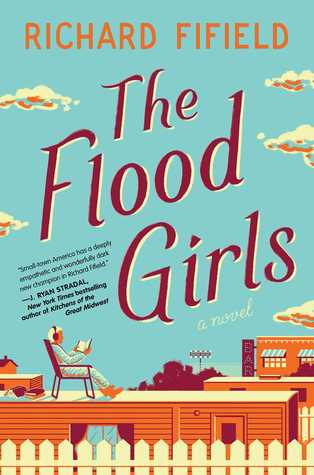 If Fannie Flagg worries that she has no heir, she can relax; Richard Fifield is here. The Flood Girls is his brilliant debut, and you have to read it! Fifield will cut out your heart and feed it to you with a rusty spoon, and he’ll make you like it, too. Hell, he’ll even make you laugh through it. I got the DRC free via Net Galley and Gallery Books in exchange for an honest review, and I’m going to read it a second time before I archive it as I am supposed to. This is only the second time I have done so after hundreds of galleys have come my way; that should give you a measure of how impressed I am with this title.
 In 2015, I reviewed Storme Front, the second of four books in the Wyatt Storme series. I loved it and rated it 5 stars. Given the opportunity to read and review this first in the series, thanks to Brash Books Priority Reviewers Circle, I didn’t have to think twice. Thank you to Brash for the DRC, which I read free in exchange for this review.
 Dragon’s Teeth is the third in the Pulitzer-winning Lanny Budd series. Set in 1942—the present, at the time it was written—it provides the reader with a fascinating, well-informed, hyper-literate view of Europe during the years before and during Hitler’s ascent to power. While it requires a fair amount of prior knowledge in order for the reader to keep up with the story, history lovers, political philosophers, and especially those fascinated by the period in question will find it riveting. Thank you Open Road Integrated Media and Net Galley for allowing me a DRC. This title is available for purchase digitally now.
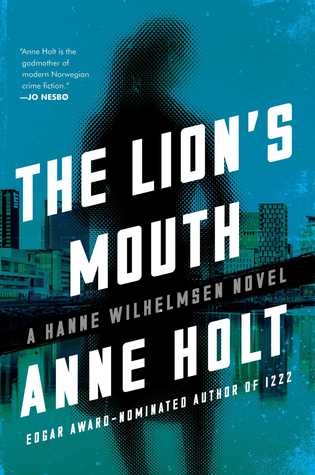 Who killed Prime Minister Birgitte Volter? Was it the neo-Nazis? The Satanists? Was it a personal thing, perhaps an angry family member? The answer is cleverly built up to, so that the reader has a fair chance of figuring it out, and yet will most likely be surprised. I was.
 Sarah and Jack Quinlan are called to his family’s home in Penny Gate, Iowa when Jack’s aunt is in a serious accident. Julia is not just any aunt; she has been his surrogate mother following the death of both his parents in a car accident. At least, that’s what he tells Sarah. But as she soon finds out, she has been misled about Jack’s early life; in fact, she’s been lied to. What she has to find out on her own is where the lies end and the truth begins.
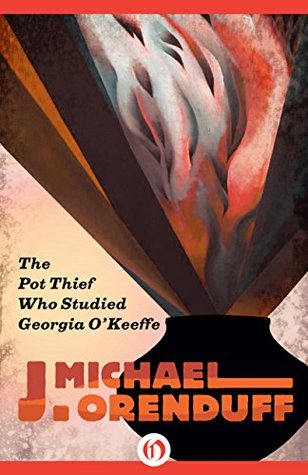 I read this book at the invitation of Open Road Integrated Media and Net Galley. Thank you to both parties. This title is one of several in a series that I had not encountered before. The pot in question is the ancient artifact sort, not the type that people grow and smoke. The author manages to work several disparate and esoteric topics into a single novel, but not necessarily to its benefit. My own viewpoint is that a high profile editor might be of great use here.
 If Fannie Flagg worries that she has no heir, she can relax; Richard Fifield is here. The Flood Girls is his brilliant debut, and you have to read it! Fifield will cut out your heart and feed it to you with a rusty spoon, and he’ll make you like it, too. Hell, he’ll even make you laugh through it. I got the DRC free via Net Galley and Gallery Books in exchange for an honest review, and I’m going to read it a second time before I archive it as I am supposed to. This is only the second time I have done so after hundreds of galleys have come my way; that should give you a measure of how impressed I am with this title.
 This book is the fourth in the series featuring Peter Bragg; the series was nominated for the Edgar Award and twice for the Shamus Award. I’ve read three others in the series already, so imagine my delight when I located this book, formerly published as Sausalito, among the DRC’s offered by Brash Priority Readers Circle.
