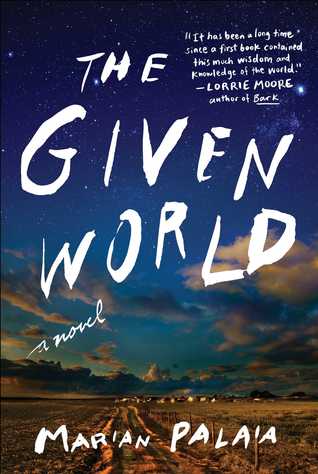
 Three and a half stars, rounded up. Thank you thrice to Net Galley, Edelweiss Books, and Simon and Schuster for the ARCs. This novel, which has generated a fair amount of buzz, comes out in spring of 2015.
The story takes place about fifty years ago in the western USA. Riley’s brother has been sent to fight in Vietnam, and Riley has gone to pieces without him. She takes every drug known to humanity, or nearly so, including alcohol, and in liberal doses, too. When her lover goes to Vietnam too, she dumps the baby on her parents in Montana and takes off in her car. She has always wanted to see the ocean. And see it she does; all that water, all those bridges. Many times she considers jumping, and the only thing that tells us she won’t is that the story is told in the first person. Her self-destructive impulses are in high gear, though; she doesn’t jump, but she dares fate to take her out in about every other imaginable way.
In a narrative that is strangely disjointed—possibly deliberately so on the author’s part, given all those drugs—she travels to Vietnam, where her brother has been listed as Missing In Action. Though most of those whose remains go unreturned are, according to the Pentagon, people who died over water, she is obsessed with the notion of him burrowing into a tunnel somewhere and just not coming back out. She goes there to see if she can ferret out his remains.
Here, I confess that a half star fell off my rating by the stereotype she assigned the people of Vietnam. The war came, and all they probably wanted to do was go back to farming their rice paddies, she says. And I find myself wondering why so many people who are not Vietnamese have such a rough time envisioning the Vietnamese, or at least a portion of them, as intelligent, political thinkers. After all, they gave just about everything they had, right down to their children and their jungles, in order to repel the invaders who came to tell them what kind of government they ought to have. They farmed out of the fucking CRATERS. Go ahead and tell me that all that was in their heads was rice. I dare you.
Ahem. Moving on.
Inevitably, Riley returns, and though I don’t want to spoil the rest of the story, she encounters more loss. Rivers of loss; oceans of loss; entire mountain ranges of loss. This is a really sad story, and if you are in need of a good hearty cry, this book just might do it for you. Think of San Francisco in the 1980’s. It was a rough time; lots of us lost people then.
At times I had difficulty figuring out the character’s motivation. Is she just so deep into her grief that she can’t come up with a plan? Has she been overtaken by some mental illness? Is she alcoholic? Or is she passively trying to avoid the pain? I suspect it’s the latter, but I am never quite sure. Maybe the ambiguity was intentional.
Time shifts, and Riley has reason to return to Montana. Will she stay once she is home, or will she return to San Francisco? One thing is certain; she won’t get on an airplane. Instead, she takes the Coast Starlight train northeast, across the California line into Oregon.
This is one of those little quirks that is bound to come up once a novel hits a certain number of readers. I too have taken the Coast Starlight, and I have also sent many loved ones on it. The Coast Starlight is a train that goes through from San Francisco (and maybe further south for all I know), to Portland, Oregon (my hometown), to Seattle. And it’s a lesson to writers everywhere: if you are going to describe an actual place, be sure you know what you are talking about.
Riley’s narrative explains that when she got off the train in Portland in that big old station (so far so good; it’s huge and historical, a glorious place), she wants to walk around the neighborhood, but unfortunately, the station is surrounded on all sides by freeways.
Whoopsie! The station is located in Chinatown. It is chock full of tourists at all but the grimmest time of year, and Portlanders take a great deal of pride in its rich heritage. Like San Francisco, Portland attracted large Chinese immigrant populations during the boom period of railroad building. It’s true that there are freeways on two sides of it; one of them parallels the river. But that train station is a long way from being some island in the middle of a bunch of concrete and girders. Not so much.
For those of you focused solely on the story line and character development, I think this will be about a three or four star read, depending upon how stringent your own personal rating guidelines are. I am glad I had the chance to read it; I just wish I understood where it was going and what the writer intended.
 3.49 stars, and my thanks go to Net Galley and Open Road Integrated Media for the DRC. The digital version of this story became available yesterday, and you can get a copy of your own if you’d like.
 Keillor is best known for his radio show, A Prairie Home Companion, on NPR. I have read many reviewers (not from the mainstream media, but amateurs like me, who review on amazon and goodreads) who insist that Keillor is only funny when he delivers the lines himself, and that once you put his work in print, the humor is lost.

