Falling Onto Cotton, by Matthew E. Wheeler*****

“This is the most famous thing to happen in Milwaukee since Laverne and Shirley got cancelled.”

Chance McQueen is a musician and restauranteur, an honest man doing his level best to tiptoe around the morass of organized crime that exists around him without getting his toes wet. It isn’t easy. His ancient Uncle Vinny is the local don, and he’s dying. Chance has told him many times that he would prefer to avoid this part of the family business, but he’s been dreaming. Uncle Vinny has stage four lung cancer, and he summons his nephew to share some hard truths:  “It’s simple. Either you take over the family before I’m dead, or Frank will have you killed before my body’s cold…Charles, when did you ever get what you want?”

This oddly charming debut came to me free and early, and my thanks for the review copy go to Net Galley and M.D.R. Publishing. This book is for sale now.

Wheeler’s debut reads as if scribed by a seasoned novelist, and he introduces a lively collection of memorable characters. He serves as mentor and father figure to Winnie, a dapper young man that has it bad for a sweet young thing named Alex; Geoff, his best buddy, who is Black and gay, and endlessly loyal; a homeless veteran living behind the restaurant, who is never a caricature; and Chance’s nemesis, Frank Bartallatas: “Frank Bartallatas was pure evil in a massive frame. More than one little fish had disappeared after swimming too close to Mr. Bartallatas.”

The story is set in 1990, and each of the agreeably brief chapters is headed with the title of a rock song from the 1970s and 80s, which is a portent of what the chapter brings. I like this guy’s playlist, and I stopped reading more than once to add his songs to my own collection.

Here are the things I like most, apart from the playlist: I like the strong, resonant characters, which are well enough developed that they are easy to keep straight; the setting, which hasn’t been overused by other writers, and is a credible choice; the selective use of violence, which cannot be left out of a story like this, but never feels excessive, sickening, or prurient; and the pacing, which never flags. In addition, I like the mobster aspect of this story, an angle that we aren’t seeing much in new fiction.

I have no serious complaints, but if I could change anything here, there are two things I’d tweak: First, Geoff practically can’t have a conversation with Chance without making awkward race jokes, and Caucasians that spend time with African-American people will tell you that never happens, no matter how close you are; and second, the alcoholic protagonist is becoming trite, so I’d either let Chance kick his habit without a protracted, detail-laden struggle, or I’d just let the guy drink. Chance’s dead fiancée is enough hubris all by herself. But clearly these are minor concerns, or this wouldn’t be a five star review.

This rock solid debut signifies great things to come from this author, and a little birdie tells me that there may be future novels featuring Chance McQueen. My advice to you is to get in on the ground floor of this series-to-be, because it’s going to be unmissable. Highly recommended.
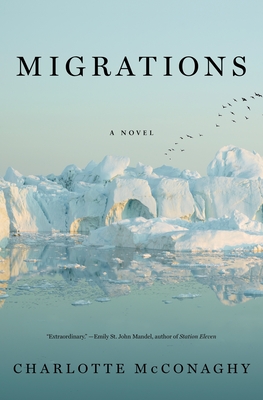
Migrations, by Charlotte McConaghy****

My thanks go to Net Galley and Flatiron Books for the review copy. I alternated my digital copy with the audio version I found at Seattle Bibliocommons; the reader does a fine job, and so if you want this book, you can’t go wrong in terms of print versus sound.

This is either exactly the right time to read this book, or exactly the wrong time.

Franny Stone has never been happy staying in one place, and now, when the walls are about to close in on her, she decides that one final voyage is in order. The Artic terns are about to make one final migration, and she means to go with them. Posing as a marine biologist, she persuades a fishing crew to take her along; she has the data to follow the terns, and the terns are following the fish. It’s in everyone’s best interest to work together here, now that so many species are extinct and the fish are so scarce. Once in motion, however, few things go according to plan.

The setting is the future, at a time when humanity has depleted most of the world’s wildlife. It is bleak, bleak, bleak.

Much of the story revolves around Franny’s character, and since we know from the get-go that she doesn’t intend to return alive once this trip is done, there are two questions that keep me turning the pages. I want to know why she wants to die, and of course, whether she does. The reason for her morbid plans is spooled out to us in small bits; whether she dies at the end is something the reader must learn for herself.

As for me, I had huge expectations by the time I began reading, because this novel shot up to bestseller level almost overnight. Perhaps that’s why I felt a trifle let down when it was done. It’s a good story, but I wouldn’t call it one of the year’s finest. Certainly, there is moral gravitas behind it, and yet those most likely to read it are not climate change deniers. For me to have loved this story, I would have needed more hope and less utter despair. When a story starts sad and ends sad, the little places in which it is slightly less sad aren’t enough to bond me to the narrative.

On the other hand, I am just one reviewer. There are a whole lot of readers out there getting all the feels and loving them. I recommend this story to anyone looking for a catalyst for a good ugly cry.

Daughter of a Daughter of a Queen, by Sarah Bird*****

Cathy Williams was a real person, and Sarah Bird steps up to tell her story, marrying an engaging narrative with historical fact. Though I am mighty late, I received this book free and early. My thanks go to St. Martin’s Press and Net Galley for the review copy.

Cathy Williams was born a slave, though her mother told her to regard herself not as a slave, but as a captive, one of noble warrior blood whose destiny was freedom. The American Civil War led General Philip Sheridan to the tobacco farm in Missouri where Cathy and many others performed forced labor for “Old Mister.” Sheridan chooses her to work in the kitchen; she isn’t pretty, and he figures she will do what she’s supposed to, rather than being caught up in romance. She and other former slaves work in exchange for meals and protection against Rebel slave-hunters.

The American Civil War is my favorite historical period to read about, and I have a soft spot for Sheridan, so this makes the story all the sweeter for me. Before my retirement, I was a history teacher and the civil war was what I taught for one term every school year, yet I didn’t find any inaccuracies here. That’s a rare thing.

Usually, stories that are set during this period hit a climax when the war ends, and soon after that, the book is over. Bird doesn’t do that here; after all, this story isn’t about the war, it’s about Williams. Victory is declared, everyone whoops for joy, and we’re not even halfway in it yet. I like this, because it shows some continuity, and one must wonder, at times—so the war ends, and then what? The South is decimated. The army virtually dissolves. What becomes of those we have been reading about? Reconstruction starts and fails, we know this; yet one wonders about individual stories.

After the war, the army is still Cathy’s home. She is a big woman, and when a soldier friend is murdered, she takes his army coat and dresses herself up as a man, becoming Private Cathay, and she joins the Buffalo Soldiers. In real life, she is the only woman to do so.

I won’t even try to recount the many experiences Williams has; in some ways, it’s a less exaggerated version of Forrest Gump, or Little Big Man, but an African-American woman is the subject, and the story is true. Bird did some top-notch research for this thing, and between that and her considerable skill with character development, pacing, and dialogue, the result is pure gold.

It starts a little slow, but patience will reward you. There’s a fair amount of violence—how could there not be—and a number of ugly situations that might make this a bad fit for a classroom read-aloud, and that’s a shame, but the story had to be told this way. I recommend it for high school libraries, and Black History Month shelves; it might also make a fine gift for your precocious reader, depending on your comfort level and theirs. The very best thing to do, younger readers or no, is to read it yourself. I alternated my review copy with the audio version that I scooped from Seattle Bibliocommons, and the reader is a standout, so I recommend it in that form as well.

Behind the Red Door, by Megan Collins**-***

I enjoyed Collins’s debut, The Winter Sister, and so when I was invited to read and review this second novel, I jumped on it. My thanks go to Net Galley and Atria Books for the review copy. This book is for sale now.

Have you ever had someone in your life that’s a hot mess and makes terrible decisions, one after another? This felt a little bit like that, at least during the periods when I believed the character; and I did, some of the time. But whereas The Winter Sister held together beautifully until the implausible ending—a common issue with mysteries and thrillers—this one is riddled with difficulties throughout.

Fern had a traumatic childhood. Her father used her to conduct cruel experiments, deliberately terrifying his daughter in a variety of ways so that he could write about her responses. Now she’s grown and gone, though not surprisingly plagued by serious mental health issues, but healing nonetheless, and he summons her home. He says he needs her. Against the advice of stable people in her adult life, Fern packs her bags and comes a-runnin’. Who knows? Maybe her daddy wants to say sorry; perhaps he is terminally ill and set on making amends.

Well, um, no.

Upon her return, three terrible things happen almost immediately. First of all, her father, Ted, has not changed a bit, and he only called her back because he’s moving and doesn’t have time to pack. He wants her to pack for his move. He doesn’t plan to help pack his own crap, and he doesn’t plan to pay her for her time. Plus, he still plays cruel tricks on her, just like bad old times.

On top of this, her best friend’s sadistic brother, Cooper, is still around, and he’s still not a real nice guy. She discovers this almost immediately firsthand.

And on a trip to the store, she runs across a book, a memoir written by Astrid Sullivan. Flash! Bang! She knows that face, doesn’t she? Did she know Astrid?  Now Astrid has been murdered, and Fern has been having dreams about her, which might be flashbacks. Has she buried memories of the murder? And…WHO would have DONE such a thing?  Nobody SHE knows would do a mean thing like that! Unless…naw.

Oh dear.

The story is told in alternate narratives, Fern’s and Astrid’s, courtesy of her memoir. This method does build a sense of dread, but it feels a little choppy in the telling.  In addition, I had difficulty believing the character’s motivation. I could see reflexively running home—I’ve known people that would do the same—but what I cannot understand is why, when she found out what Ted’s big emergency was, she didn’t toss her bag back in her car, say Buh-bye and good luck with the move, and hightail it home.

There’s a lot of extraneous business here; we have Fern’s mental health problems, and on top of it all, she’s pregnant. (Oh, good idea. A baby. What could possibly go wrong?)

I believe Collins has a great book in her, but this isn’t it. That’s okay; back to the drawing board. Life is long. But reader, as for you, I recommend you either pass this one up, or read it free or cheap.

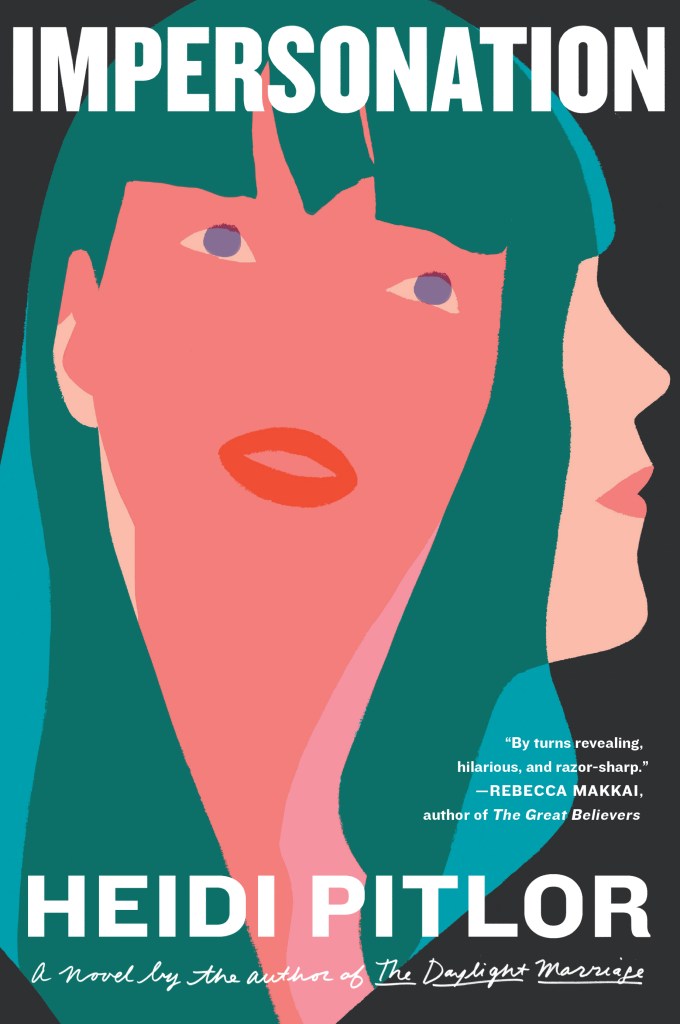
Impersonation, by Heidi Pitlor***

My thanks go to Algonquin Books for the review copy. This book is for sale now.

Allie is a single mother and a professional ghost writer. Because her income is sporadic, she picks up money between publishers’ paychecks substitute teaching and landscaping. She’s always broke, always paying the most pressing bill at the expense of others. Then her big break comes, and she’s over the moon. She’s going to write a memoir for a famous feminist, someone she has idolized for many years. The pay is more money than she’s ever earned before, and as a bonus, she will get to spend time with an icon.

Except she won’t.

Her icon is a busy woman, and she isn’t forthcoming with any personal information. Nothing. With deadlines looming, then passing, Allie desperately invents anecdotes drawn from her own experiences, hoping that if they don’t satisfy, her subject may part with some true stories of her own; but ultimately, she is the one that gets tossed under the bus.

The story begins well, witty and absorbing. If I were to review the first few chapters, this would be a four or five star review. However, in the middle of the book the plot bogs down and the pacing grinds to a crawl. I had hoped for a climax and finish that would make it worthwhile, but instead, the story becomes a pedantic manifesto. The feminist issues that are near and dear to Allie’s heart, and one may assume, Pitlor’s as well, are also mine. If anyone in this world should love this story, it should be me. And oh, how I wish it was. But because the protagonist has become such a nonentity, there is no inspirational melding of character and social issues that might have made it possible.

There’s a terrible irony here, or at least there may be. Perhaps Pitlor deliberately ceased developing Allie because Allie is a ghost writer, and her entire career is predicated on her ability to lie low. Perhaps we are meant to see her disappear, and perhaps that’s intended to be part of the message. But if so, it doesn’t work for me. I need more internal development, or more of something else.

Conceptually the story is strong; but the execution leaves something to be desired.

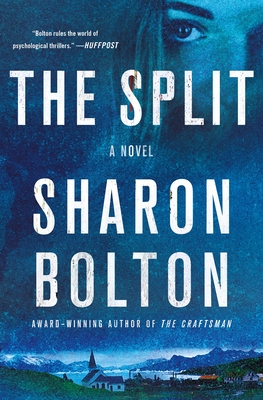
The Split, by Sharon Bolton****

My first book by this author was The Craftsman, which came out in the fall of 2018. That story blew me away, and after that I made it a point to watch for new books by Bolton. Thanks go to Net Galley and St. Martin’s Press for the review copy. This book is for sale now.

The title is a double entendre: our protagonist, Felicity, is avoiding someone, and she is certain he’s found her. Since her field is glaciology, she decides to travel to Antarctica with an expedition. He’ll never find her there, and even if he should, he’d be at a distinct disadvantage to her. Those are her stomping grounds. Thus, she is about to split.

The catch, however, is that her superiors are uncertain she is mentally stable enough for this journey. She keeps missing time; there are whole blocks, an hour, an afternoon, a weekend, when she doesn’t recall where she was or what she is doing. She finds evidence that she has done things she does not remember doing. As we perch in her psychologist’s office, veritable flies on the wall observing her therapy sessions, it soon becomes clear what the issue is, or at least it did to me; and thus, the second meaning of the title.

One of the things I appreciate about this story is that there is no coy effort on Bolton’s part to deflect the reader’s awareness of what ails Felicity. I would have liked at some point to see or hear the correct name used; Felicity has a dissociative disorder. But this is a small quibble.

What I appreciate the very most is that Bolton doesn’t sensationalize this disorder, but sticks closely to the truth. Why not? The real thing is dramatic enough all by itself to keep our interest. And when I realized where we were headed with this I regretted, if just for a brief while, having signed on, because this topic cuts close to the bone for me. I have a close family member with this disorder, and hearing the voices of people that were, and yet were not, my relative’s voice is one of the most horrifying experiences of my life. After a few weeks of it, I had to pull back and ask to only be phoned by the dominant person in my relative’s body, the one that I, like the rest of the family, was acquainted with. And so, once I decided to continue reading this book, I listened closely for inaccuracies in its telling, using my relative as a baseline (a sample size of one, which I’ll admit is sketchy,) and I found none. Most readers won’t have this experience for comparison.

Although the mental condition is revealed, bit by bit, fairly early in the story, there are still surprises aplenty, particularly with regard to the stalker. The climax is a bit farfetched, but nevertheless this is a solid job, and Bolton gets big props from me for dealing with a difficult premise accurately and fairly.

I flipped back and forth between the printed review copy and the audio version I scooped from Seattle Bibliocommons. Both versions are well done and easy to follow, so you can’t go wrong. Recommended to those that love a good psychological thriller, and that have no triggers that might conflict with your enjoyment.

Anxious People, by Fredrik Backman*****

He’s done it again, only better.

My thanks go to Net Galley and Atria Books for the review copies. You can buy this book today, and I suggest you do it. The world around us may have gone nuts, but Backman helps us to remember the good in ourselves and in those around us, even in the most unlikely people. For that alone, this book is worth its weight in gold.

We start with an attempted robbery at a cashless bank; as with so many crimes done on impulse, nothing goes the way it’s supposed to. There’s no money to be robbed, and with the cops on the way, the best thing to do is to duck out quickly…until you realize that the door you chose isn’t an exit. Then there are these hostages, an insurance policy to prevent your being swept away to prison, but “it’s harder than you might think to take people hostage when they’re idiots.”

Backman often creates complex situations with huge numbers of characters in his novels, and he does better than hardly anyone else when he does it. This book, by contrast, has a more manageable number of characters, and perhaps that’s a big part of its even greater success. We have the robber; the hostages, who are the people viewing an apartment for sale, and the seller and realtor; a pair of cops that are also father and son; the therapist that sees one of the hostages; and a couple of other people. The first that we meet is Zara, a sharp-tongued, wealthy woman that is viewing the apartment even though she is obviously too rich to want it. Just about everything that comes out of Zara’s mouth is smart, mean, and very funny; we gradually learn that she does this to deflect the conversation away from herself. With apologies to Dickens, Zara is as solitary as an oyster.

Besides Zara, the prospective buyers include two dysfunctional couples. There’s an older couple, man and woman; and there’s a pair of women, one of whom is hugely pregnant. When this is revealed I roll my eyes, convinced that the climax is almost certainly going to include the obligatory emergency birth. But I should know better, by now, than to underestimate Backman.  He doesn’t use tired tropes or formulas, and Julia isn’t going to give birth during this crisis.

I don’t want to give away any of the details here, but as we get to know our collection of hostages and others, it’s pretty clear, as the title suggests, that everyone’s misbehaviors come from their anxieties, and when they criticize and pick away at others, they are actually dissatisfied with themselves. But of course, Backman’s writing is much more magical than my own, and the result is the sort of feel-good denouement that doesn’t insult our intelligence or become maudlin. At this moment I can only bring to mind three writers that consistently do this for us. (The other two are Alexander McCall Smith and Amy Poeppel.) And right now, friends, we need all of this magic that we can get.

Buy this book if you can; if your wallet is too thin right now, then get on the list at your library. Highly recommended to everyone.

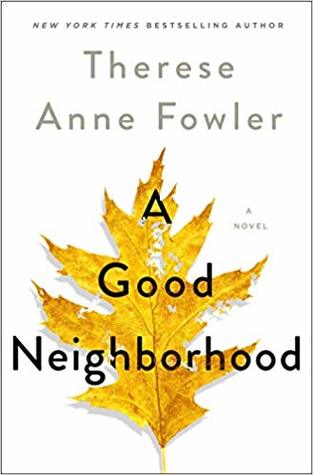
A Good Neighborhood, by Therese Anne Fowler*****

Therese Anne Fowler is a complete badass. I have never read her before, but you can bet your bottom dollar that I’ll read her next book. My thanks go to Net Galley and St. Martin’s Press for the review copy. You can buy this book now, and you should.

I don’t usually begin by discussing the narrative voice, but I’m doing it this time because it’s one of the most impressive aspects of this novel. The story is told in the second person, but the point of view shifts seamlessly from that of the neighbors that are friends with a key character—I’ll get there in a minute—to an omniscient narrative, and I never catch the shift; by the time I realize a change has taken place, we’ve been there awhile. So, one minute, the narrative will say things like “All of us thought…” and “Everyone knew…” but later, we’ll be told what a protagonist is thinking. This is a risky way to write, and she’s carried it off so well that I can only bow in awe.

The story is, to some extent, a modern day Romeo and Juliet. It’s a tragedy, and we’re told this at the outset. The neighborhood in question is Oak Knoll, an old, established one in North Carolina. Valerie Alston-Holt is a forestry professor with a deep dedication to the environment; her son Xavier is gifted. Xavier’s father was Caucasian, but died when the boy was small, so it is just the two of them, mother and son. The new folks next door, the Whitmans, are a blended family. Julia, the mother, was living a hardscrabble life as a single parent with her daughter, Juniper, when the wealthy, charismatic Brad Whitman, who was her boss, married her. They have a small daughter together, but Brad has also adopted Juniper so that they can be a real family. Julia can hardly believe her good fortune. Her standard of living has risen beyond anything she ever dreamed.

The tension is there from the start. The Whitman home is out of character in comparison to the neighborhood, a garish, over-the-top McMansion built on a large lot created by tearing down the existing home that had been there. And the outcome of the construction is that a tree—a beloved tree—on the Alston-Holt property next door—is now dying.  The forestry professor sees an attorney, and the battle is joined.

Despite the tension between the adults, Xavier and Juniper are drawn to one another. They are teenagers, upperclassmen in high school, and they’re both squeaky clean kids, serious students. Neither has been in a serious relationship before. As we see their romance blossom, the narrator reminds us that this won’t end well.

I began this novel using my review copy, and although I could see it was going to be good, I was falling behind my reading for unrelated reasons. I scooped up the audio version from Seattle Bibliocommons, and so I can tell you that the reader does a wonderful job, and the story is well suited to this medium.

Fowler is an experienced writer, and it shows. There are several lazy stereotypes she deftly avoids. The Alston-Holts are middle class, not struggling financially. (Here I think of the new book, Caste, by Isabel Wilkerson, who reminds us that only one in five African-American families is poor.) Brad Whitman, who is a complete horse’s ass, is a charismatic Christian, but he is not a preacher, he’s a businessman.

Of course this story has a great deal to say about race and wealth, and how society empowers us according to these parameters. But because the characters are so intimately developed, so brilliantly fleshed out, the message integral to the story never feels like a manifesto. And reader, I’ll tell you, I’m a tough old granny who rarely is undone by a sad story, but I grew a little misty at the end of this one, and I thought about it for quite awhile afterward.

Highly recommended in whatever form you enjoy.

Daddy, by Emma Cline***

In 2016, Cline published the hugely successful novel, The Girls, which I read and enjoyed. When I was invited to read and review this collection of her short stories, I was sure I’d be in for a treat. Thanks go to Net Galley and Random House for the early read. This book is for sale now.

Sadly, I am not in love with this collection. First of all, I have seldom enjoyed an open ending, and whereas there are those who admire this style for its authenticity and subtlety, to me it feels as if I’ve eaten a nothing sandwich on a nothing bun. Give me a story with an ending every day of the week. So there’s that.

Then too, there’s the way she deals with sex. I’ve never used the word “tawdry” in a review before, but there’s a first time for everything. Sex, sexuality, and the human body don’t have to be a deal breaker for me, but if it’s written in such a way that I want to gargle after I’ve read it, then less is more. Of course, there are times and places when sex is ugly; in one story a working class girl is struggling and eventually finds she can subsidize her miserable wages by selling her used panties to skeevy men. Fair. It’s certainly memorable. But if we’re going there, then I’d like the next story to either avoid sex, or else have it be a positive experience. When a book gives me a sour gut without delivering a message, I’m out.

There are passages where Cline’s facility with words and her originality shine through. She is a fine writer when it comes to setting, and her character sketches are clear and believable. This is where the third star comes in.

It’s something, but it isn’t enough. If you decide to read these stories, I suggest you get the book free or cheap; don’t pony up full jacket price this time. Save your dollars for the next novel Cline writes, because likely as not, it will be terrific.

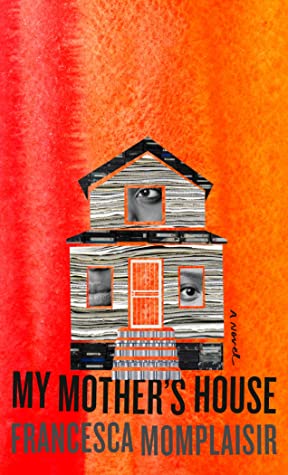
My Mother’s House, by Francesca Momplaisir***

The year seems to be riddled with novels that are brilliant conceptually, but whose execution falls short of its promise. Such is the case with My Mother’s House. My thanks go to Net Galley and Bloomsbury for the review copy.

The story is told in the third person omniscient, and the most interesting character by far is the house itself. The house has had it with its inhabitants, particularly with protagonist Lucien, a man that’s evil and demented from the top of his pointy head down to the toes of his nasty loafers. Think of the worst thing one human being can do to another, and whatever you’ve come up with, Lucien has done it.

Our rotten old man is an immigrant, a resident of a mostly Caribbean neighborhood in Queens, New York. He brought with him the wife—nearly a child-bride—that he had set his cap for early on, for she is a descendant of the Duvalier family that ruled Haiti ruthlessly for decades. Once he has married her and moved her, however, he abuses her in much the same way he does every other female in his life, including the daughters they have together.  

Do I need to tell you there are triggers all over this thing?

The house can’t take it anymore, all of the ugly within its walls. It decides that the only way to get rid of this bastard is to go down with him, and it sets itself ablaze.

One of the three stars is for this aspect of it, the animation of the house. This is where the story begins, with the house’s thoughts and actions, and I sigh contentedly, sure I am in possession of a great novel.

Alas, not so much.

I love a good horror story, but what makes such a story work is when there is an underdog to cheer for, or a victim to be rescued. This is part of Stephen King’s magic; not only does he provide visceral, original bad guys and monsters, but also some ordinary person that sees what is going on and tries to stop it. Whoever his good guy is, he develops the living heck out of them, and I feel as if I would know them on the street.

In contrast, Momplaisir gives me no possible good outcome; the only hope we have comes from the defeat and death of Lucien. That’s not enough to keep me turning the horrible pages of horrible deeds. I don’t just want to see the bad guy lose; I need a good character that might, against impossible odds, win.

Character development is also lacking. Although I learn about Lucien’s early life and the trauma that he’s endured, and which we know is often part of what warps a person, I never see him change internally. He is static all the way through, and since he’s the only important character, apart from the house, I feel cheated. His distinguishing characteristic is the need to count, because “I am nothing unless I count.” So all the way through, we hear him enumerating one thing after another, and to be honest, this device, though original, leaves me cold, and eventually it just becomes redundant. MAD Magazine—the original, from the 1960s and 1970s—would have had a field day here.

Unable to push myself all the way through the text, I seek out an audio book from Seattle Bibliocommons, and just to top all of it off, I dislike the reader intensely. The over-the-top dramatic voice would work in very small, shocking increments, but instead it is the main voice used, and by the end I just wanted to tell it to shut up. (Full disclosure: I actually did, not that anyone was there to hear it.)

In the end, I am left with a tremendously clever premise, a fantastic book cover, and then a whole lot of nothing.  How dare the publicist or whoever wrote the teaser compare this work to those of Tana French and Jesmyn Ward? For shame!

You can buy this book now, or you can take that same exact amount of money and burn it in the fireplace. Same thing, either way. Or you can do the smart thing, and go find another book by someone else.