The Drowning Kind, by Jennifer McMahon****

“’There was someone there, in the water.’ Her hand trembled as she held her teacup. ‘Ethel, if I tell you what I saw, you mustn’t think me mad.’”

You bring the hot dogs and marshmallows; I’ll bring the matches and a real good story. It’s time to head for the campfire, and—hey, look! It’s getting dark already. Do you scare easily?

My thanks go to Net Galley and Gallery Press for the invitation to read and review. This is a fun one! I was able to access both the print and audio versions, and I moved back and forth between them.  I would give a slight edge to the print version here, but the audio isn’t bad, either.

Our story takes place in Vermont, mostly, and the time period and point of view alternate. We begin and end with the present day; our protagonist is Lexie, a social worker. Jax grew up very close to her older sister, Lexie. As they grew older, however, bipolar disorder gripped her elder sister, and Jax has been forced to set boundaries with regard to her sister’s obsessions, lest she be pulled under herself. And so, when she finds nine missed calls on her voice mail, all from Lexie, Jax figures she’s off her meds again, and she chooses not to respond. She has work to do. But the next call comes to tell her that Jax is dead. She drowned in her backyard pool.

Our alternate protagonist is Ethel Monroe, and the year is 1929. Ethel is nearly too old to conceive; she and her husband desperately want a baby. The doctors are stumped; then she hears of a resort whose springs are said to have healing powers. With nothing to lose, she and her spouse hop in the car and make their way to the magic waters. In time, they are told that the water should be avoided. Whenever it grants a wish, it takes something else back for itself, often something that devastates those it has aided. But Ethel is pregnant now, and there is nothing, nothing, nothing more important than her baby.

Of course, there are all kinds of connections between Lexie and Ethel; after all, they are using the same waters, nearly 100 years apart from one another.

McMahon has a well established writing career, but the first time I read her work was when the last book, The Invited, was published. Both stories have certain elements in common, and perhaps because of this, I enjoyed the last one a wee bit more than this one, because it was completely new to me then. Both stories take a sensible, modern-day female character that doesn’t believe in spooks at the outset, and then spin them around every which way until they do. And in both, I see classic elements that include urban legends, but the story McMahon tells is fleshier, updated, and original.

In listening to the audio version, I was at first taken aback, because when the reader shifts from Jax’s story to Ethel’s, no mention is made that we are changing protagonists. The print version captions the new chapter, and since I had both versions, I grabbed the print version once I became confused and saw what had happened. However, it would have taken me longer if I had simply purchased the audio book and been forced to figure it out. The two characters are voiced (in the first person), and Ethel is given a very distinctive speaking style; I found the style to be annoying at first, a bit contrived, but once I got used to it, I was all in. Ethel’s odd speaking style does make it easier to tell when we have switched characters, and perhaps that’s why the reader chose to do it this way.

The pacing never flags. I believe Jax from the first page, and eventually I believe Ethel as well. I successfully predicted the ending, but we are eighty percent of the way in by the time I make my prediction, so I am not disappointed.

For those looking for a deliciously creepy tale, look no farther. This book becomes available to the public Tuesday, April 6, 2021.
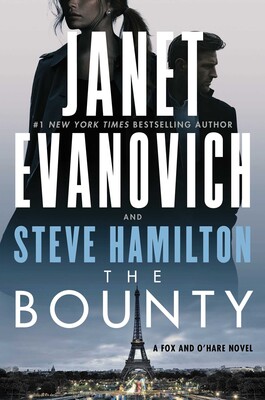
The Bounty, by Janet Evanovich and Steve Hamilton**

This book is the seventh in the Fox and O’Hare series. Our protagonists are Kate O’Hare, who is an FBI agent, and Nick Fox, a conman. My thanks go to Atria Books and Net Galley for the invitation to read and review. While this book isn’t my cuppa, there will be readers that enjoy it. One way or the other, it goes up for sale on Tuesday, March 23.

The first six books of this series were cowritten by Evanovich and Lee Goldberg. There’s no explanation for why Goldberg is out and Hamilton is in, but the switch may account for some of the inconsistencies between the earlier books and this one. An example: Kate and Nick were tight in the earlier stories, and yet somehow, they can’t stand each other now. There’s no reason given for the change, so I have to assume it’s an authorial quirk; I have to say, not an original one.

The premise is that the pair are hot on the trail of a massive cache of Nazi gold; also pursuing this treasure is criminal organization known as The Brotherhood. Kate and Nick are charged with finding the gold and bringing The Brotherhood to its knees.

Before they are even off the plane, I have questions. For example, since when does the FBI have authority to do this sort of thing abroad? In cases of terrorist attacks on American citizens, sure. But treasure hunting on foreign soil? And since when does any law enforcement body send two officers to bring down an entire organization? You can see my point.

But this is the sort of story that one can only appreciate by suspending disbelief and buying the premise. The whole thing has something of a James Bondian flavor to it, consisting of large amounts of chasing, hiding, climbing, leaping, and in between, dialogue, dialogue, dialogue. There’s a fair amount of derring- do; there’s a parachute, a grappling hook, lock picks; you name it. The element that distinguishes it from other such books is that both Fox’s and O’Hare’s fathers get involved.

For me to enjoy a novel from this genre, I need either a well-crafted story with literary merit, including character development, (i.e., James Lee Burke, Sue Grafton, John Connolly,) or else some form of well-executed humor. There are a fair number of wonderful satires out there, and of course, there’s the series that made Evanovich famous, the Stephanie Plum numbered series, which have hit more than they’ve missed and almost always make me laugh out loud more than once. In reading The Bounty, I don’t find these things.

However, not every reader has the same preferences that I do. This is a fast read with accessible vocabulary—my inner snark popped out at one point, and my galley has a note when the word “independence” is used: “Wow, four syllables!”—a linear story line, and an easily followed plot. I could see hauling something like this to the hospital when you’re going to have surgery and your attention span won’t be up to par. And then there’s the consideration of interest. Some want to read action, action, action, and if the story were more realistic, we’d probably be reading about paperwork, reports, and endless months cultivating a contact that proves to be useless. Not entertaining.

Even so, I can’t recommend this book for general audiences, or even for those that like the series.

The Sweet Taste of Muscadines, by Pamela Terry*****

Pamela Terry’s debut novel, The Sweet Taste of Muscadines, had me at hello. My great thanks go to Net Galley and Random House Ballantine for the review copy. You can buy it now.

Lila Bruce Breedlove (I even love the characters’ names) hasn’t gone home to Georgia in a good long while, and it’s not accidental, either. Her home in Maine with her dogs and fond memories of her late husband are the furthest thing from her mama’s censorious gaze and the smallminded thinking of the people of Wesleyan, Georgia. But now Mama has been found facedown in the Muscadine arbor, and Lila knows there’s nothing else to do. She packs her bag, gets a friend to look after the dogs, and buys a ticket. Her brother Henry, who has also made a permanent home up north, does the same, but he advises his life partner, Andrew, to stay put. Their sister, Abigail, is the lone family member that didn’t flee. She and Mama were best friends, as they told everyone  constantly, including Lila and Henry. Still,  duty calls. It wouldn’t be fair to leave Abigail to do this on her own.

The whole story is told by Lila in the first person limited. I find this refreshing. The tone is intimate, confidential at times, and downright conspiratorial at others. Lila lets us know that “Growing up in the South is not for the faint of heart…When you’re the slightest bit different, you stand out like a monkey in a chorus line.”

Before they’ve even touched down, Lila and Henry have questions. For example, why was Mama in the Muscadines at all? The arbor is nowhere near the house, and she never chose to visit it when she was a younger woman. It had been Lila’s special place. Once they arrive in Georgia, they confront more questions, and though not all of them are answered, a plethora of surprises greet them, some of them hilarious, others shocking. Lila tells us that

Secrets are spilled at southern funerals. Death, particularly when its inevitability has been ignored for generations, possesses a power to snap diffidence and dignity right in two, causing those left behind to be overcome with the need to unburden their consciences before they themselves are found sleeping in a slick, shiny coffin in their best Sunday suit.

The first surprise, it turns out, is that Geneva Bruce left an advance directive specifying no funeral at all upon her demise, which she had known to be imminent. For the widow of a Southern Baptist Georgia preacher to bail from her own funeral is unheard of! However, the lack of a proper funeral does not, cannot prevent family secrets from unspooling, and some of them are bombshells, too.

Terry is a gifted wordsmith, and her figurative language is original and at times, drop dead funny. The pacing never flags, and the transitions that take us from raucous levity, to bittersweet reflection, to aching sorrow, and then back again are buttery smooth. It was like hearing from my best friend. I generally read several books at a time, but this one proved to be the one I read when I would not be interrupted, and I was sorry to see it end.

It was only at about the eighty percent mark that I realized that one of my least favorite elements was included here, that of the Bad Mama. This is a trend right now, and I’m ready to be done with it. Novelists far and wide have enjoyed crafting stories centered around unworthy mothers, and when I see one coming in advance, I consider it a deal-breaker. But almost any device, character, or plot point can be forgiven when a novel is of exceptional quality, and that is what I see here.

Highly recommended.

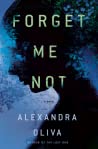
Forget Me Not, by Alexandra Oliva****

Oliva made her debut in 2016 with The Last One, a genre-defying story in which technology fails with disastrous consequences for reality show contestants. I was delighted when I received the invitation to check out her current novel; big thanks go to Ballantine Books and Net Galley for the review copy. This book is for sale now.

Linda Russell lives alone. She has had a traumatic past, and she is naïve in some ways about the world around her, having been kept apart from it for so many years. Money isn’t a problem, though; she has inherited a pile of it. Yet we cannot envy her, because the unspeakable horrors she has seen outweigh the benefit of her wealth.

When we meet Linda, she is in her nest chair surfing the internet. Her sheath provides her with information, but we have to figure out what a sheath and nest chair actually are by examining context, which takes a little while. And this is a key part of the suspense, giving us some information about the time period, the place, the technology and the characters, but also withholding quite a lot, doling it out to us in small portions so that we can follow along, without ever getting a firm grip on the situation till we are far into the story. And for me, there were moments when I became confused enough that I wanted a little more information in order to follow events as they unfolded, but most of the time the narrative was paced effectively. I began to have a solid enough grip on the basic facts to follow the story well at about the 36% mark.

Linda is a clone, and her story went big several years ago, when she was found emaciated and filthy, having been more or less feral inside a walled property where her mother abandoned her. The part of her past that weighs on her mind most heavily is the fate of her twin. Lorelei, whom she must not call “Mother,” loved Emmer, but not Linda. Both of them were created in an effort to duplicate Lorelei’s deceased daughter, Madeleine, and Emmer resembled Madeleine more. Of course, everyone knows that eye witnesses are notoriously unreliable, and so it is with Linda’s memories, but she knows this for certain: after a particular point in time, Linda never saw either Emmer or Lorelei again.

Meanwhile, a cult of sorts has sprung up around Linda, whom social media has dubbed “clone girl.” Rumors are spread; even the tiniest hint as to her possible whereabouts is greedily devoured by those following her story. And so, Linda hides, and she talks to no one; that is, until her new neighbor, Anvi, pushes her way into Linda’s life. Anvi is new in these parts, and she wants a friend.

To say that this story is a thriller or a mystery is unfair, and will lead the reader to a dissatisfying end. The focus of the book is not on unraveling a crime, and the hair-on-fire pacing that marks a thriller isn’t present here. I keep turning the pages, not because my heart is slamming in my chest, but because I am curious. The story really is about our character. Likewise, although the story is technically science fiction, my interest isn’t captured and held by complicated new technology, but by Linda herself, wanting to see her unharmed and able to lead something resembling a normal life. So I urge interested parties to come to this novel with an eye for character, because that’s the anchor here.

At the climax—and I’m being fairly vague here so as not to spoil the ending—there’s a moment when Linda behaves fairly stupidly when she is faced with an urgent problem, and I feel let down, but then she rallies and pulls herself together, and I let my breath out and smile. Go, girl, go.

When I learn what is really in back of the personal mysteries Linda faces, I’m inclined at first to regard it as far-fetched, but then the sci fi aspect kicks in, and let’s face it: science fiction and fantasy both permit and even require far-fetched material. What needs to be credible and consistent is Linda, and Oliva does a fine job developing her protagonist. I believe Linda at the outset, and as she changes over the course of the story, I believe her every step of the way.

I enjoyed this story a great deal, and I look forward to seeing what Oliva comes up with next. I recommend this book to anyone that enjoys good fiction that is character driven.

Celebrate Women’s History Month With This Terrific New Release

I reviewed this excellent novel in January, based on a true story of American women that travel to France to help civilians during World War I. If you haven’t checked it out, have a look by clicking the link below the picture.

The Four Winds, by Kristin Hannah****-*****

“‘My grandfather was a Texas Ranger. He used to tell me that courage was a lie. It was just fear that you ignored.’ She looked at him. ‘Well, I’m scared.’

‘We’re all scared,’ he said.”

Kristin Hannah’s electrifying new novel, The Four Winds, is set during the Great Depression in the American Dust Bowl and California. It’s a story about courage, and about the ways that love can transform us. My thanks go to Net Galley and St. Martin’s Press for the invitation to review. It’s for sale now.

Elsa is born into a wealthy family, but this doesn’t do her much good. She is tall, ungainly, and considered homely by her parents, a contrast to her two younger, more adorable sisters. She was very ill when younger, and the family liked having her tucked away in her room so much that they would like her to remain there. When company comes over, it is suggested that she go “rest.” Affection and kindness are denied her entirely.

One day, in a fit of unheard-of rebellion, she buys herself a silk dress and sneaks out to a speakeasy. There she meets Rafe, and before long she is rolling in the hay. When the morning sickness comes upon her, her furious father drives her to the Martinelli farm, (“Italians, no less!”) and she is unceremoniously dumped there. The baby is a Martinelli, he tells them, and it—and its mother—are your problem now.

Rose and Tony Martinelli are not affluent like Elsa’s parents; she learns to haul water and do farm chores, and she learns how to make delicious, cheap food the Italian way. But her father’s abandonment is a blessing in disguise, because the Martinellis are good people. She is happy there with them. She marries Rafe, and she bears two children. But the land has been over-farmed, and soon the dust storms come and destroy nearly everything they have built:

Past the outhouse, a murky, urine-yellow haze burnished the sky. Wind picked up, barreled across the farm from the south. A board flew off the chicken coop and cracked into the side of the house. Rafe and Tony came running out of the barn. The cows mooed angrily and pushed into each other, pointing their bony butts into the dust storm.

The door opened. Rose yanked her to her feet, pulled her into the rattling, howling house.

Elsa and Rose ran from window to window, securing the newspaper and rag coverings over the glass and sills. Dust rained down from the ceilings, wafted from infinitesimal cracks in the window frames and walls. The candles on the makeshift altar blew out. Centipedes crawled out from the walls, hundreds of them, slithered across the floor, looking for somewhere to hide.

A blast of wind hit the house, so hard it seemed the roof would be torn off. And the noise. It was like a locomotive bearing down on them, engines grinding. The house shuddered as if breathing too hard; a banshee wind howled, mad as hell.

Friends, this isn’t even the climax. This is sixteen percent of the way into the story. And misery and tribulation continue to rain down on this poor little family and thousands more like them. The crops die, and the livestock that doesn’t starve is killed by breathing dust. Children, including Elsa’s little boy, fall ill with dust pneumonia; no matter how hard they try to prevent it, so much dust is in the atmosphere that it makes its way into the lungs, and so the youngest and oldest are soon in trouble.

The first half of this novel is a rough read. There’s sorrow, and suffering, and loss, and grief, and I find myself eyeing the page numbers and thinking to myself that if this were written by anybody else, and if I didn’t owe a review, I probably wouldn’t finish it, because who wants an entire story of this? But at about the halfway mark, things begin to change.

By now, Rafe has hit the bricks. Never a man of character or great resolve, he sneaks off into the night, leaving the three remaining adults to care for the children and the farm. And it is now that change takes place. Without Rafe to anchor the family as is traditional during this period, Elsa is left to make the decisions about her children’s futures, and in doing so, she changes.

Hannah portrays the Depression era American West vividly and accurately, and this is when the story grows legs. The plight of agricultural workers is likewise dealt with in clear, immediate detail. My one quibble, and it is the source of the missing half star in my rating, is her inexpert portrayal of Communism, which plays more than a passing role in the last thirty percent of the story. The first time I saw farmworkers’ struggles as “shutting down the means of production,” I cleared my throat, but I told myself it was possibly a typo that might be edited out in the finished version. The next two times I saw it, I started making notes. This is not a technical error; this is a dumb-butt error (trying to elude the censors here) that should have been caught on the first pass, and because it appears when the climax ramps up, it is a distraction that interferes with the flow of the narrative.

Nevertheless, this is a well-written novel, set during an interesting time period. Particularly arresting is the development of the relationship between Elsa and her adolescent daughter, Lareda, whose point of view is shared alternately with Elsa’s.  Setting, character, and plot work together seamlessly to enforce one another and move the story forward, yet if I had to hang my hat on one laudable aspect of this book, it would be character development.

I strongly recommend this novel to you.  

Foregone, by Russell Banks*****

“Oh, Canada!”

Leonard Fife is a legendary filmmaker, his searing social commentary an important part of North American history. But now he is dying, and he has a few things he needs to get off his chest before he goes. My thanks go to Net Galley and Harper Collins for the review copy. This book is available to the public March 2, 2021.

Fife is not a lovable character, and now that the end is near, he wants everyone to know it. With the cameras trained on him, darkness all around him but for the spot shining on him as he speaks, he tells his life’s story, and he spares himself nothing. One relationship after another, abandoned without even a goodbye. Children left fatherless. Lives laid waste in his passing. Banks is one of the most brilliant novelists in the U.S., and his word smithery can turn nearly any terrible story into spun gold, but he never pulls punches. His writing is often painful to read, and here it is true in spades, agonizing. By the halfway mark, I am watching the page numbers crawl by and wishing it over.

But of course, there’s a surprise in store.

I don’t want to give spoilers, but in the last half of the book, the question arises as to whether our narrator is reliable. He says he did all of these dreadful things; but did he really…?

The book flows so seamlessly that the difficulty of writing it is not obvious, but here it is: almost the entire thing is one man’s narrative. There’s very little dialogue. It’s not an easy thing to carry off, and yet, this is Banks, and he does.

As his narrative unspools, we are occasionally reminded of his current circumstances by breaks in the action. Once in awhile he is overtaxed and starts to drift off, or worse, and action has to cease immediately while the nurse does important things quickly. Now and then she has to change his bag, or help him onto the toilet and wipe his butt afterward. There’s not a lot of dignity left to the man. But he doesn’t give a…okay, I’m not saying it.

As he insistently recounts his many betrayals of loved ones, ignoring the more suitable, conventional questions that the people filming him thought were going to provide the framework of the film, he makes it crystal clear that it doesn’t bother him in the slightest, what he is doing to his legacy. Torpedo all of it; hell, he’ll be dead before the film opens. What he wants is to be truthful, and the one person he wants to know the truth is Emma, his wife. He knows he cannot be truthful with her unless the camera is rolling, and he won’t proceed unless she is there. RIGHT there. He calls for her many times, making certain she hasn’t left. And through the occasional things she says, we are aware that Emma is not merely his arm candy, not a sycophant that married him for fame, fortune, or prestige; she’s a respected professional in her own field, juggling her own commitments in order to be present here and now for Leonard.

By the time the story ends, my feelings have changed. Leonard is still no angel, but he’s not the sack of excrement I believed him to be, either. The guy I hate at the end is the filmmaker, once Leonard’s protegee, but now wolfishly eager for his mentor to die on camera for him. The nurse orders the camera turned off, but the director calls over the top of her to keep it rolling, the vulture. I want to smack him!

Ultimately we see that death is a final betrayal, a form of abandonment; but Leonard is at peace, because his goal is realized. And this is the story’s title, but I am not going to tell you how that works.

Get the book and read it. All your own sorrows will feel smaller.

The Museum of Forgotten Memories, by Anstey Harris***

Cate Morris has her back to the wall. She’s lost her job and her apartment; her husband, Richard, is dead and she and her son, Leo, are still grieving. With nothing left to lose, she packs their belongings and heads for Richard’s ancestral home at Hatters, a place that turns out to be full of secrets and the unexpected.  In the end, the museum is renovated, as well as its occupants.

My thanks go Net Galley and Gallery Books for the review copy. This book is for sale now.

I read and enjoyed Harris’s last novel, Goodbye Paris, and when I saw that she had another book in the works, I leapt on it. Harris develops plots that are fresh and original, and so when I open the book, I expect great things. And in most ways, I find them.

The first and most obvious aspect is the museum. The family patriarch, Sir Hugo, is now deceased, but he was a benign presence in the tiny village; his museum, which is now somewhat anachronistic, showcases a collection of taxidermized African animals, among other things:

“It is a conundrum, like everything else in this peculiar house. From the glaring dead animals conserved in their alabaster homes, through the thousands of books that no one can reach to read, right into the wet green foliage of the unmanageable woods Colonel Hugo’s grandfather meticulously planted, this place contradicts itself at every turn, gives then takes away, frightens then comforts.”

Though Leo is an heir and has the right to be there, Cate and Leo are met coolly by Araminta, an older woman who has become nearly the sole caretaker of the whole enormous enterprise.  There are a number of things that don’t add up, but since there’s no real choice, Cate and Leo forge on. Leo, who has Down’s Syndrome, is a hugely congenial character, and again, Harris brings in an element that few other novelists have done lately. I have never had much interest in this syndrome, and came to the novel for the author rather than this attribute, but I enjoy Leo a lot, and he has a shining moment toward the conclusion that I will remember for a long time.

Throughout the novel’s progress, Cate is still processing and grieving Richard’s loss, though it’s been years. There’s a stretch midway through that feels repetitive, with Cate grieving, remembering, stewing, and assuring the reader that she won’t tell anyone everything about Richard’s death. I become impatient with it, mentally telling her to fish or cut bait and get on with it, but soon after I hit that point, she does exactly that. There are a lot of secrets floating around this museum; there’s one involving Araminta that I am able to guess ahead of time, but there’s another big reveal toward the end that I find inappropriate and jarring, and it’s important enough to the story that I can’t overlook it. Up to the ninety percent mark, I had this book pegged as a five star read.

Despite my disappointment, I am not finished with Anstey Harris. Her work is bold and original, and I respect her willingness to take risks. However, my advice to you is to buy it cheap or get it free if you’d like to read it; save the full cover price for her next novel, or use it to buy the last one, if you haven’t yet read it.

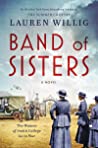
Band of Sisters, by Lauren Willig*****

Lauren Willig is an established author, but she is new to me. Band of Sisters, her newest release, has made me a fan. I read it free and early, and my thanks go to Net Galley, William Morrow, and Harper Audio for the review copies. It will be available to the public March 2, 2021.

A group of Smith College alumni sail to France on a mission to help civilians suffering extreme deprivation during World War I.  “They carry money, supplies, and good intentions—all of which immediately go astray,” says the promotional blurb, and that’s what happens. It’s hard to make plans when you don’t know which way the battle may turn or where bombs may fall, but these are plucky women, two doctors among them, and several of them are members of wealthy, influential American families as well. The story is based on actual women and events, and the teacher in me wishes I were still in the classroom and able to order sets of this excellent novel to share with honors students, girls especially, who need to see more of themselves in the study of American history.

Our two protagonists are Kate and Emmie, best friends and roommates a decade ago, united in this adventure. Kate is the only woman among the “Smithies” that doesn’t come from money and that doesn’t pay her own way; she is led to believe no one else paid their own way, either, but it isn’t true. And this is a chewy, inviting historical truth that we don’t see often in fiction. Though social class divisions are every bit as present and sharp today, assumptions made by most Americans have become more generous. During the early years of the twentieth century, there was a widely held belief that rich people were better in other ways as well, whether they had earned their fortunes or inherited them. They considered themselves to be God’s own chosen ones, and their wealth was one more sign that the Almighty loved them a bit more than others. Poverty was considered shameful, a thing to be concealed; there were no government funds of any kind to help the poor, and if there had been, women like Kate would have just about died before accepting them. Taking charitable contributions was a sign of personal failure and possibly dishonesty to most people back then. And the truth is, Kate isn’t impoverished, and she surely hasn’t failed at anything, but she has to work to earn her living, a thing most Caucasian women in the U.S. didn’t do in 1917. She is horrified when, midway through our narrative, she learns the truth about her travel expenses, and this creates one of the crises within the story.

Willig is a fine novelist. The pace never flags, and there’s never a moment of revisionism that makes me blink. She is true to the time period and the characters. Emmie’s character is a harder sell, to my way of thinking, because she comes from tremendous wealth, but her family has made her feel unworthy because of her physical appearance, and by the end of the book, I love Emmie as much as I do Kate.

I’ve plucked a sample for you, a scene in which Kate and Emmie are evacuating an area which is being overrun by the Germans:

[Kate] wanted Mrs. Barrett; she wanted Dr. Stringfellow; she wanted anyone who could tell them what to do and where to go. Grecourt looked different already, the anemones churned up by the tread of two hundred soldiers, tents dotted around the lawn, Maybe, if she closed her eyes and wished hard enough, she could make it a week ago; the ground bright with flowers; slipping into story time and holding Zelie on her lap while Nell read to the basse-cour children in French about little Red Riding Hood and the Big Bad Wolf, joking with the unit around the supper table about their amazing ability differentiate between types of guns.

But it wasn’t a week ago. The Big Bad Wolf was here, he was on the march, with his big, big teeth and big, big guns, and maybe she wasn’t the best the Unit could have, but she was what they had right now.

By the time we reach this part of the story, I could not stop reading if I wanted to. It would have been impossible.  

The hardest characters for many writers are the children, and although we have no child protagonists, there are numerous scenes in which children play a part. How does a child act when he is traumatized by war? Willig is in perfect form here as well.

I received both the digital review copy and the audio, and I used them both. At the beginning there are so many women introduced to us at once that I felt lost with just the audio, and so I listened and read along to keep track. The narrator, Julia Whelan, does a superb job with a challenging manuscript, changing her tone and point of view to let us know which woman’s point of view we are hearing. My only concern regarding the audio version—which is much easier to follow once you have learned the most important characters—is that the story begins with a lengthy list of the women that participated, and it’s not great to listen to. I recommend you fast forward the audio to somewhere between five and seven percent, and then dive in.

I requested this galley because a number of Goodreads friends whose opinions I respect recommended it to me, and all of them were absolutely right. This book is a gem, and I highly recommend it.

The Awkward Black Man, by Walter Mosely**

I had intended to read this author’s work for some time now, and collected a couple of his paperbacks that have sat unread for years. I’ve been so busy reading galleys, with the goal of being done by their dates of publication, that I read very few of the books I’ve bought for myself. When this galley came available, I figured my problem was solved; and in a way, it has been. My thanks go to Net Galley and Grove Atlantic for the review copy. This book is for sale now.

Like some other reviewers, I assumed that these short stories would be from the detective fiction genre that has made Mosely famous. As it happens, they aren’t. I could live with that; they aren’t especially compelling, but they’re not badly written. If not for one problem, I would go with three stars, or perhaps even three-and-a-half and consider bumping it up. However.

Mosely seems to have a problem regarding women. It isn’t that he hasn’t gotten the memo that women would like to be regarded as human beings; his writing gives one the impression that he simply disagrees. The first story of the collection is the title story, and it’s one of a physically large but socially clumsy African-American man that takes a liking to a receptionist where he works. His duties take him to her desk now and then, and he begins finding extra reasons to drop by. He chats with her a bit, but her response is unenthusiastic, and she doesn’t make eye contact. Believing that his intentions aren’t plain, he commences leaving a gift at her work station each day, beginning with a simple token and culminating, at the end of the week, with a Bonsai tree that costs him hundreds of dollars. She never thanks him for any of these, which confuses him. When he approaches her, she deals quickly with his work business, and then asks if there’s anything else she can do for him. His every overture is politely turned aside. Eventually, he is called into the boss’s office; he is accused of sexual harassment. The young woman he’s been trying to woo is scared to death of him, and only then does he realize that she actually can’t leave her station when he approaches her. It’s her job to be there. But he is distraught at having his reputation at work sullied, his position nearly terminated. He’s pretty sure it’s because he’s large and Black.

Huh. Well, perhaps the thing to do here, would be to not hit on women he works with. Maybe that’s the best plan for any man in any work setting, unless someone is clearly, plainly interested in him, has, for example, offered him a phone number. But I remind myself not to dismiss an author, especially one so well regarded for so many years, on the basis of a single story. So I read the others.

Indeed, the other stories don’t overtly demonstrate the same dismissiveness toward sexual harassment in the workplace, but the stereotypes never stop with this guy. Women that appear in his stories do so exclusively in relation to men. Even when they show up as mothers, their worth is in relation to their families; sons, grandsons, nephews, and of course, husbands. Women can be vixens, scheming and deceiving for their own evil ends; they can be victims. What women never are in Mosely’s stories are respected professionals, or community members, or anything else that suggests that they make a valuable social contribution that stands alone, that doesn’t bear directly on the life of whatever male character the story is really all about. It’s almost as though the last fifty years of the women’s movement and its achievements never. Fucking. Happened.

So, who wants my paperback copy of Devil in a Blue Dress? Cause now I know I won’t be reading it.

Recommended to those that love short stories and have no respect for women.