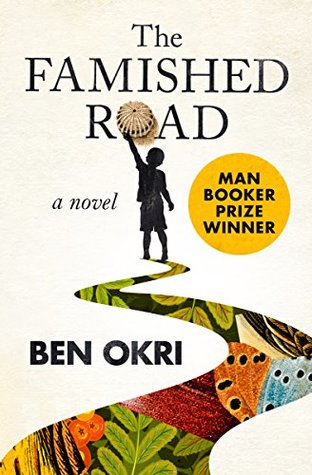
The Famished Road, by Ben Okri**

thefamishedroadI surrender! Thanks go to Net Galley and Open Road Media, from whom I received a DRC in exchange for an honest review; however, try though I have, I cannot push past the molasses-like allegory and other figurative language to locate a plot. After painfully forcing my way through the first 20% of the book, I went to Goodreads to see what other reviewers had to say about it. Some felt as I did, but others swore that if the reader could endure the first two-thirds of the story, the last third would not only be so amazing, it would also enlighten us as to why the earlier part was necessary. Seeing this, I vowed to persevere. By the 25% mark, I found I was avoiding this DRC, because just about every other galley in my possession was either more enjoyable to read, or more rewarding, or both.

Tonight I decided it was time to put up or shut up. Maybe this is one of those rare occasions when one should read a book out of sequence. I skipped to the 70% mark and found it was pretty much more of the same. The allegory pointed toward the horrific debt load that cripples African nations, but I already knew that, and if that is actually where this story is supposed to lead me–because really, I am still not sure–then it’s a disappointment. I already knew about the impact of colonial overlords on African nations, and this did nothing to improve either my knowledge or my appreciation for that, or for literature.

I will add, however, that I have also never liked magical realism. Either write fiction or nonfiction, don’t try to do both at once. Even the work of literary goddess Isabel Allende makes me crazy this way: we are in the midst of what feels like a genuine memoir, and then someone turns bottle-green and levitates. No, no, and no.

Those that have a great love of magical realism and thirst for African fiction may find joy here. This book has won prestigious awards, and I had anticipated that reading it would be rewarding. Just because it didn’t happen for me doesn’t mean it won’t happen for you; but if you come to feast at Okri’s table, bring a high literacy level with you, or you’ll find yourself leaving it still hungry.

This title is available for purchase now.

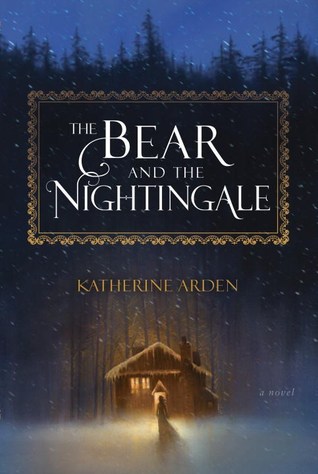
The Bear and the Nightingale, by Katherine Arden*****

“Blood is one thing. The sight is another. But courage—that is rarest of all, Vasilisa Petrovna.”
 thebearandthenigh

The Bear and the Nightingale is the most brilliant fantasy novel I’ve seen since Tolkien wrote, and I want you to understand how different, how special it is. I received my copy free in exchange for an honest review—and those of you that read my last two reviews know that this privilege has never made me obsequious. Thank you Net Galley and Random House Ballantine for the advance copy. It’s worth its weight in spun golden magic, and it will be available to the public this Tuesday, January 10, 2017.


“The brave live…The cowards die in the snow.”


Our protagonist is Vasilisa, affectionately known as Vasya; she’s an adolescent with many talents, some of which are supernatural. She generally keeps these abilities to herself, lest she be called a witch. Her father, Pyotr, is a minor prince in the frozen Northern hinterlands of Russia during the 14th century.  The setting here is mesmerizing, and from the first page I understood that this particular story is one I would save for late nights when my family is asleep. Let my other reading be interrupted by the minutiae of running a household, but not this one. This is a juicy tale, perfect for a cold winter night burrowed beneath the quilts. I open this magical tale and am lost inside it.

Our setting is ancient Northern Russia, then known as ‘Rus’, since no central government had formed yet. This is a time when women carry about as much social worth as a poker chip or livestock, and yet as the story progresses, I realize that this is a stand-up-tall feminist folk tale of the highest order; in fact, it’s a lot of things. This is the sort of debut that most likely causes writers like Harper Lee to go back in the house and never publish anything else, lest the second novel be considered a let-down after the first.  I hope, however, that we’ll see a lot more of Arden.

Our story commences in the house of Pyotr, a minor prince whose wife has died in childbirth. He loved Marina dearly, but as his daughters grow closer to marriageable age, he knows he must go to Moscow to seek a new bride to run his home, and marry his elder daughter Olga to a man of wealth and power. And though Olga’s match is a good one, it’s in Pyotr’s remarriage that things go badly wrong.

A brief note about the setting and other details involved with time and place. First know that this story does require a relatively high literacy level; for those that struggle with a high vocabulary level, it may prove to be more work than fun. However—for those reading digitally especially—please note that there’s a glossary at the back of the book. And those that are able to read this digitally on a device with a touch screen will be happiest of all, because it’s so easy to touch a word and get a definition immediately. I also ran a few searches due to curiosity, since I was not at all eager for this book to end. I took my time with it, and while I was buried in this magical world, I was nevertheless learning details of history and geography that I hadn’t known before.

Because I taught teenagers how to write for a number of years, it’s my natural inclination, even in an absorbing story such as Arden’s, to go back and look again to see what specifically produced this alchemy.  Undoubtedly, the development of multiple characters in a deft, expert manner is essential. There’s not one character in this story that I don’t believe. Every last one of them is real to me, a feat in and of itself when writing fantasy. It takes confidence and authority to tell the reader that although the story contains all manner of supernatural elements, it’s all true, and so are its characters.

But also, there are real life details true to the time and place that Arden weaves in seamlessly. As I reread some key passages, I note that when the men come indoors from the snowy woods, they aren’t merely cold, dirty and tired; they’re covered in scratches, they’re voracious, and their boots steam and stink up the room once they remove them. In another scene, when Pyotr travels far from home, he can afford fine guest lodging, but although he gets a big, soft, fluffy bed, he also has to put up with vermin, because they were a part of everyone’s life.  Such details contribute to the immediacy of the story.

It’s Arden’s outstanding word smithery that makes this story a standout. When Arden writes, the mists clear and we are transported, quivering in the snowy forest of the 14th century Russia, tearing pell mell across frozen ground on the back of a noble stallion, facing down death as demons scream and shadows dance.

I won’t spoil any of the subsequent plot points for you, but please know that this is a multifaceted story with a lot of secondary threads that contribute to the main story rather than distracting us from it.  To do so in a debut novel is stunning. A particularly interesting side character is Dunya, the nurse that has raised Vasya and has held onto a talisman intended for Vasya at great personal cost.

Messages and possible themes come out of the woodwork once one looks for them. A story such as this one, in which Vasya defends the old pagan deities against the religion of Kostantin, would once upon a time have caused conservative Christian parents to come screaming to the school with their lawyers on their cell phones in one hand and a flaming torch in the other. It could happen still, but what greater honor could Arden ask than to find her way into the ten most frequently banned books?

Meanwhile, in this trying time for independent women, we need strong female characters like Vasya and Dunya to remind girls and women that we are powerful, and that together, we can conquer those that would strip us of our autonomy and march us barefoot back to our kitchens. I have no idea whether any such direct political purpose is intended by Arden, but it certainly serves as a potent message: we will be oppressed only if we let that happen. Those that have even a fraction of Vasya’s independence, confidence and courage can not only prevent the door opportunity from slamming shut;  we can knock that door off its fucking hinges, for ourselves, our daughters, and theirs as well.


’All my life,’ she said, ‘ I have been told ‘go’ and ‘come.’ I am told how I will live, and how I must die. I must be a man’s servant and a mare for his pleasure, or I must hide myself behind walls and surrender my flesh to a cold, silent god. I would walk into the jaws of hell itself, if it were a path of my own choosing. I would rather die tomorrow in the forest than live a hundred years of the life appointed me.’”


Those looking for themes here have a banquet of opportunities. Though I would say the story is one of solidarity among women, or of woman’s independence, there are so many other possibilities. One could make a case that this story is about loyalty; one could claim it’s about family. One could say it’s about the victory of the collective good over the pride, greed, and ambition of the individual.

One thing I can say for certain is that The Bear and the Nightingale is impressive any way you approach it. It holds the potential to become a favorite of the genre, handed down lovingly from one generation to the next.  Buy it for yourself, for your daughter, your mother, or for any woman that you love, or for someone that loves women and good fiction. A book like this doesn’t come along every day.

Don’t even think of missing this book. You can get it Tuesday, or better still, you can pre-order it now.

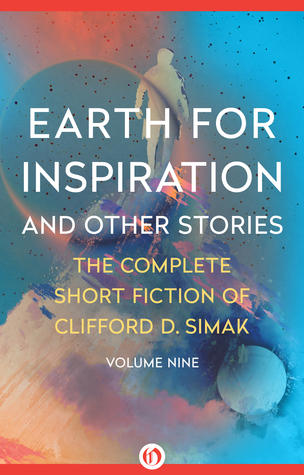
Earth for Inspiration and Other Stories, by Clifford D. Simak*****

earthforinspirationClifford D. Simak wrote for decades during the mid-twentieth century.  His close friend, David W. Wixon, has undertaken, with Simak’s approval in his declining years, to collect all of the stories that were published in various magazines and anthologies beginning in the 1930’s and ending before the digital age was off the ground. This one is volume 9, and it’s an interesting hodgepodge of the very best—which is most of it—and the very worst, which is just two stories. Needless to say, I thought a lot about how I should rate such a collection.

Finally, I decided that price would be the deciding factor. If it was going to set you back twenty or thirty bucks, then I’d have to cut it down the middle and call it three stars, which would be sad but fair. However, I logged onto the big A and found it’s sold digitally for six bucks. At this price, you’re paying a buck each for six absolutely stellar short stories; there are three more good ones thrown in; and you can afford to skip the two stinkers. Given that factor, I’m rating this 4.5 stars, with just half a star gone for the two missable stories, which I’ll talk about in a moment.

Thank you Net Galley and Open Road Media for the DRC, the fifth Simak collection I have received from them. I sat on this one for a long time because I’d been reading a lot of his work, and was beginning to get grumpy at the similarities among some of them. Just how many different characters can a writer name “Doc” and remain credible? But then I realized that when Simak submitted his stories to various periodicals, names were about the least important aspect of his work, because he wrote them never dreaming that his writing would be important enough to appear in an entire series, back to back. Who knew he would become so successful?

During the 1940s and 1950s, as Wixon points out, science fiction was barely off the ground—pun intended—and Westerns were massively in style. I guess you could say they were the zombie apocalypse of their time; if a writer wanted to pay his rent without having to work a day job, he had to write some westerns. And since Wixon is publishing all of Simak’s stories rather than the best-of, he has to insert the few losers somewhere also.

So let’s just get the bad stuff over with so I can tell you what’s great here. The bad ones are sandwiched midway through the collection and appropriately flanked by good writing before and after. “Hellhound of the Cosmos” is bad enough that Wixon’s preface—a brief paragraph appearing before each story—says he “…will not try to excuse this story’s failings” by pointing out that Simak wrote it in 1931, at the very get-go of his career. Fine; don’t. But it’s a really dumb story, and I’d hate to see you use it as a yardstick by which to measure this man, who would become a Grand Master of sci fi. Read it or skip it, but this is not the story I recommend.

Further along we have “Good Nesters Are Dead Nesters”. This one is actively offensive, and if it were written today, I might well shoot down the entire collection because of it. But I know from the things I heard during my childhood that the language used here, while truly offensive, was also commonplace back then. The US was a lot whiter; the interstate was a new thing; satellite communication wasn’t yet dreamed of. People lived in isolated areas and got stupid ideas about what other people were like, largely due to stereotypes promoted in the news, on radio, and on black and white television.

So although I—married to an Asian immigrant—am as pissed as anyone about the singsong caricature of the Chinese cook, I also know this was a widely accepted way to regard people from China and Japan. As if that’s not terrible enough, a disabled person is referred to as a helpless, “twisted cripple”. Ohhh, no thank you. As you can imagine, I quickly gave myself permission to make a note and then skim till I reached the next story.

However, the stories that flank the collection, starting with the title story and ending with “Full Cycle”, are outstanding.  The latter is written in the 1950s, and reflects both the reality of a pair of Atomic bombs having been dropped in Japan eleven years before it was written, as well as the anti-communist hysteria so prevalent in the news. The idea is that all cities are decentralized, because a bomb might be dropped on a large urban center, but the USA is a very big place, and so small, mobile communities, all of them having traded their houses for trailers, is now the way Americans live. It’s very cleverly put together conceptually, and Amby, the protagonist, is so well drawn that at times, I wanted to weep for him.

“Honorable Opponent” has to do with a US planetary colony that has just been defeated by another planet’s military. The result took me entirely by surprise, and I think I’ll remember this story after I’ve read other science fiction by other authors. The same is true of “Carbon Copy”, a fine tale combining  science fiction, ruthless capitalism, and brilliant imagination. “Desertion” is another stellar story. If you want to read science fiction that makes your dreams sweet, read this one at bedtime. “Golden Bugs” is equally clever.

So for the price you pay, there is too much good writing here to turn your back on. My records tell me that over time I have read over 100 short story collections, which is about 90 more than I ever expected to read, and yet this one is outstanding among them. For those that love old school science fiction, this one, with the caveats mentioned, is highly recommended, and it’s available now.

A Death in the House and Other Stories, by Clifford D. Simak****

adeathinthehouse.jpgClifford D. Simak wrote fiction, mostly science fiction in the form of short stories, for more than fifty years.  Thanks to Net Galley and Open Road Integrated Media, I’ve been binge-reading for the better part of a year. I received this DRC, as I did the others, in exchange for an honest review.  This is my fourth Simak collection; most of its stories are brilliant and have stood the test of time, though a couple of them haven’t aged as well as the rest.

The collection begins with one of his best, “Operation Stinky”, which is about a skunk with supernatural ability. A hallmark of a truly brilliant science fiction writer is his capacity to take a truly preposterous premise and make us not only believe in it, for a short time, but respond to it emotionally. I laughed out loud at least once at a wry moment here, and in other places I was really moved. Simak does that to me a lot.

Another favorite was “Green Thumb”, about a plant that comes from outer space and is horrified to learn that its new host is actually—dear heaven—eating plants! Again, Simak plays this string like the sweetest violin, and at the end I had to put my reader down and assimilate what I’d read before I could read anything else. “The Sitters” made me think of Stephen King, though of course Simak’s story was written before King had published a novel at all. I also enjoyed the title story as well as “Tools” and “Nine Lives”, but the one I liked best was “Target Generation”, a longer story about a huge spaceship that had hosted so many generations of people, many of them born right there on the ship, that an entire origin myth had become the basis for the ship’s culture and the beliefs of its residents…all but one. When the character—if we can call it that—called ‘The Mutterer’ came, I could not move until that story was done.

That said, there were some weak places. In some respects this may be unfair of me, because I don’t think Simak wrote with the knowledge that anyone would ever sit down and binge-read his stories end to end; he submitted one story at a time to magazines and earned his living that way. Nevertheless, I really wish he’d write more stories in which nobody gets named “Doc”.  And the story titled “War is Personal”, while I am sure it was well received by many readers when he wrote it during World War II, really upset me. I found the “J” word a couple of times and together with the overall flavor of the story, was disturbed enough to straight-up skip to the next entry. I began the lengthy novella, “When It’s Hangnoose Time in Hell”, and was absorbed, but part way through it was shot through with some unbelievably bad dialogue and trite expressions. And although “The Birch Clump Cluster”, the final entry, wasn’t bad, it didn’t measure up to most of his work.

Two stories give unfortunate titles to disabled people and refer to them in a disrespectful way. Again, it was common at the time the stories were published, but as a society we are more enlightened now, and so this aspect of his work hasn’t aged well.

Unless you are a diehard Simak fan, skip the introduction. It was written by a close friend of his and has to do with a break from writing on the part of the author. I didn’t care at all and decided not to finish it, because trying to slog through it was going to prevent me from getting to the stories themselves.

The good news is that most of the stories here are fantastic, and this collection was published this summer, so you can have it now. Recommended for those that love good science fiction.

Two if By Sea, by Jacquelyn Mitchard*****

twoifbysea“Whoever really believed that thing you feared most would come to pass?”
It’s Christmas, and Frank is outside Brisbane, Australia celebrating with his wife Natalie and their family, awaiting the birth of his son. It’s to be a boy, and he’s so excited. But then the tsunami comes while he is away from the house, watching on high ground in speechless horror as Natalie and nearly all her family are washed away. Gone, just gone. Unthinkable!

I was fortunate enough to read this riveting novel in advance, courtesy of Net Galley and Simon and Schuster, in exchange for an honest review. And what follows the disaster is purest spun magic, laced with moments of breathless fear, anticipation, and gratitude. Because if this story doesn’t make you want to hold your family and even your pets close to you, nothing will.

Frank is in a boat assisting with the rescue effort when he pulls the little boy out of the sinking minivan. He has a child that appears to be 7 or 8 years old in a good firm grip, but the boy pushes his younger brother out and says to take him first, because he’s important. When Frank reaches back for the first boy after saving Ian, it’s too late. The van has gone down.

Frank tells himself that he will hang onto Ian for a bit, knowing that these family-destroying events are fertile hunting ground for pedophiles and other sick bastards on the hunt. That’s what he tells himself anyway. But ultimately, he can’t make himself drop the child off with the others that have been rescued, and the fiction develops that this is his nephew.

He takes him home with him.

One thing he had feared proves true: there are other people that are very interested in Ian, and willing to go to extreme lengths to find him and take him. Even the watchfulness of a former cop is challenged by those that are stalking his new little son. Ian has a way with people that is sometimes a better defense than what any cop could provide. Sometimes Ian’s method works; sometimes, not so much.

Mitchard incorporates elements of fantasy and the supernatural into this remarkable story, and when I sit back and analyze it, I don’t understand why I didn’t find myself rolling my eyes. When you take the story apart one step at a time, it seems absurd. No no no! But just as a lousy writer can’t make us believe much of anything, so can a gifted writer make us believe anything. Michard removed all doubt before it could even get a toehold near my imagination.

When I read something particularly excellent, I return to my desktop to see what else the author has published. In doing so, I discovered that Mitchard’s first novel is regarded as the second-most influential fictional writing in the UK (topped by Harry Potter, I am so sorry to report). That book will now hold place of pride on my extremely short list of books I’d be willing to pay for.

Whether you are headed to the beach or just looking for something to provide you with a really great weekend curled up at home, you have to read this book. So, as Ian advises, just “be nice.” Please? Get it and you’ll be glad you did!

This brilliant novel is available to the US public March 15, 2016.

The Invisible Guardian, by Delores Redondo***-****

theinvisibleguardianThe Invisible Guardian has received widespread acclaim in Spain. It will be available to English speaking audiences March 8, 2016. My thanks go to Net Galley and Atria Books for the DRC, which I received in exchange for an honest review. I rate this book 3.5 stars and round upward.

The title comes from the Basajaun, which translates to “invisible guardian”. It’s a mythological creature, large, hairy, filled with kind intentions; sort of a goodhearted Bigfoot. Protagonist Amaia Salazar is a detective who finds herself drawn back to the Basque country, where she grew up and where her family resides, in order to solve a mystery. Locally, many residents regard the Basajaun as undeniable reality. Salazar deals with this, in addition to limitless family drama, in order to solve the crime.

I really struggled with this novel. There were times I felt I was being talked to death, and I am guessing that Basque conversational tradition may be very different from that of the US. I was stunned that a detective would be permitted to run an investigation in which her own family members are considered suspects, but since it isn’t discussed beyond a brief conversation in which Salazar is offered the chance to hand the case off to someone else, it is probably a thing that is done in that part of the world. I can’t see how it would become an international best seller if not. Or perhaps I am naïve.

At times it feels as if there was far too much personal drama, and it seems to distract from the mystery. Some of it turns out to be germane to the case, and other parts are included primarily to develop the protagonist. On top of the relationship issues between Salazar and siblings, Salazar and in-laws, and Salazar and her colleague, she is trying to become pregnant, and we have to deal with her feelings about that. If it were up to me, the pregnancy thread would be yanked and saved for a future installment if used at all. It seems like one thing too many.

I did a huge eye-roll during the scene in which a local resident wants to know whether the body was bitten by a bear or the Basajaun, and Salazar explains that it’s too early in the investigation to know, one way or the other. There are also hideous sexist assumptions and statements in the dialogue throughout the book, but these will be dealt with near the end, so don’t abandon the story over this alone.

To the positive, I wanted to read this novel partly to stretch my own cultural boundaries, and in that I succeeded. When I think of Spain, I tend to think—as urban dwellers often do—of its cities, art, and music. I knew nothing, nothing, nothing about the Basque people. I still don’t know a great deal, but I got my toes wet, and everyone has to start somewhere.

In addition, Redondo can tell setting like nobody else. The descriptions of areas I have never been and never will are adroit and visceral. I felt as if I were the invisible presence standing alongside Salazar.

It seems unfortunate that there is new information introduced during the last ten percent of the novel, without which the reader has no possible opportunity to unravel the mystery. However, the plot and pace pick up significantly, and many of what seem to be extraneous story elements are braided together so deftly that my overall impression of the novel is greatly improved.

For those interested in learning more about the Basque culture, this novel is recommended.

Pawn’s Gambit and Other Stratagems, by Timothy Zahn*****

Just released today; reviewed in November and bringing it back to remind you, because this is science fiction/fantasy at its best.

seattlebookmama's avatarSeattle Book Mama

pawnsgambitPawn’s Gambit and Other Stratagems is a collection of kick-ass science fiction stories, including a novella, produced digitally for the first time. This is the cool thing about Open Road Integrated Media: the publishers find outstanding work from the pre-digital era and bring it to present-day readers anew so that it can be widely read and appreciated all over again. But though these stories were written earlier, many of them have never been published in book form before. I got to check out the collection free in exchange for an honest review, and I struck oil. I wondered why I hadn’t found this writer earlier, since I have been known to binge on sci fi now and then since the 1990’s. What Zahn is best known for is the Star Wars series, which I didn’t read. In passing it by, I nearly missed a fine writer, and I will watch…

View original post 266 more words

The Children’s Home, by Charles Lambert*****

Hot off the presses! I reviewed this just before Christmas, and it is available today. Fantastic read.

seattlebookmama's avatarSeattle Book Mama

thechildrenshomeLambert is a brilliant writer, and his absorbing new novel, The Children’s Home, is the best literary fiction I have read in some time. Thank you to Scribner and Net Galley for the DRC, which I received free in exchange for an honest review.

We start with Morgan, a bitter recluse rattling around in his immense family mansion, afraid to leave its walls for fear someone will see his face and ridicule him. His sister Rebecca runs the family business, and she hires Engel to serve as housekeeper and cook to him. Moira and David are two children that magically appear at his estate. Unlike normal children, they don’t leave messes lying around, whine, or need to be cleaned up; Morgan notices that whenever he wants to concentrate or not have the children around, they seem to vanish, appearing again when wanted.

Motherhood should be so sweet.

But back to…

View original post 366 more words

The Children’s Home, by Charles Lambert*****

thechildrenshomeLambert is a brilliant writer, and his absorbing new novel, The Children’s Home, is the best literary fiction I have read in some time. Thank you to Scribner and Net Galley for the DRC, which I received free in exchange for an honest review.

We start with Morgan, a bitter recluse rattling around in his immense family mansion, afraid to leave its walls for fear someone will see his face and ridicule him. His sister Rebecca runs the family business, and she hires Engel to serve as housekeeper and cook to him. Moira and David are two children that magically appear at his estate. Unlike normal children, they don’t leave messes lying around, whine, or need to be cleaned up; Morgan notices that whenever he wants to concentrate or not have the children around, they seem to vanish, appearing again when wanted.

Motherhood should be so sweet.

But back to the manse. Soon more children come, first in ones and twos, then in waves. Eventually Morgan can’t tell how many children are on his estate. Investigators show up eager to find that he’s breaking the law; they sniff around and leave without seeing anything. And to the burgeoning household a doctor is added. Morgan wants someone discreet and trustworthy to deal with his medical issues, and soon Dr. Crane is not only making house calls, but has a room of his own. And subtly, the power dynamics start to shift. A seismic change is in the wind.

Morgan doesn’t dare leave the estate. At first, the reader believes it is because he is afraid his appearance will be ridiculed, but then others also mention fear for his safety should he leave the walls of his property. And eventually we see the flipside of all this bitter privilege, the big house with the on call servants and medical care. Because someone has to pay in the end; there’s not enough wealth to go around when the few get so much of it, and we learn what is taking place outside those walls. That said, this is not a simple nod to social justice, but a juicy tale full of surprises.

I won’t take you any farther than that, but I must say that Lambert is a writer of undeniable talent. The Children’s Home is brilliant literary fiction. The allegory is a mite on the heavy handed side, but it doesn’t matter when the spell woven is as magical as it is here. I was expecting something along the lines of Miss Peregrine’s Home for Peculiar Children, but this is so much more than that.

Parents may want to be aware that there’s a great deal of violence inherent here. For some adolescents, it will be all the more delicious for it, but it is written for an adult audience, and some parents may want to read it themselves before passing it on to younger folk.

When you come down to it, you want to read it anyway. It comes up for sale January 5, 2016, but you can order it now, and you know you want to!

Alien Blues, by Lynn Hightower*****

alienbluesAlien Blues, the first in the David Silver series, was originally written in the 90’s, when I was busy returning to school, having my fourth child and raising the first three. I mention this only because I am dumbfounded that I missed this amazing series the first time around, and that’s the only possible reason; I was too busy trying to find a few minutes in which to sleep back then. Thank goodness Open Road Integrated Media has re-published it digitally. After reading and being really impressed by Flashpoint, another of Hightower’s terrific novels, I searched Net Galley for anything else she had written that was available to read and review, and I scored this little treasure. It’s a brave, bold genre cross of detective fiction and science fiction, and if I can read the others in the series, you had best believe I will.

First, of course, we have a murderer. Machete Man, as he is known, enjoys hacking his victims and their belongings into portable pieces. A nice touch is the would-be victim that gets away and can describe him. He hacks up all her stuff, and we know that if she hadn’t been as quick as she was, she would have been among the sliced and diced items in her bedroom. And I find the scene that occurs later between David’s wife Rose and Machete Man spectacular.

Into the mix we have the murder of an Elaki. Elaki are another species, but to a certain extent they work and interact with humans. They shimmer; they walk on fringe; they have flippers instead of hands. Roof tops are terribly dangerous, because they are slender and lightweight, and can easily blow away in a breeze. They are shorter than humans and because they have no legs, they must fold themselves to ride in an automobile made for humans. Their own are specially adapted. But we learn all these tidbits as we go along. Hightower doesn’t waste a lot of time describing them, but makes everything we learn part of the action. And so String, an Elaki that has never fit in well with his own folk, volunteers to aid in the investigation; some suspect his motives are other than what he says.

Lurking in the background is David’s traumatic past. He grew up in a ghetto, the tunnels underground known as Little Saigo. The tunnels were invented originally to house the wealthiest members of society from Earth’s degraded environment; imagine a carefully controlled housing development where there is no fear of skin cancer or other environmental hazards. But humans tend to crave the sun, and when the rich didn’t want to buy in, the project was never completed. Squatters populated the many half-completed nooks and crannies in the enormous subterranean catacombs, and eventually an implant similar to a microchip was developed so that those that lived there could identify one another, achieving a measure of safety from those that came to pillage and wreak chaos among the vulnerable.

David has not lived in Little Saigo for a long time; he has a modest but comfortable home, a wife, and darling daughters. But ultimately, he is forced to return to Little Saigo, home of his worst nightmares, in order to solve the crime.

It’s riveting.

Hightower is brilliant. The Elaki are the most memorable nonhuman characters in literature since Spock, and her female characters defy all possible stereotypes. Her pacing, character development, and capacity to develop setting that we can nearly see and breathe is outstanding. She has won the Shamus and her work has been included in the New York Times Most Notable Books list. She’s been published on four continents, and thanks to Open Road Integrated Media, those of us that missed her the first time around can now read her work digitally. And it’s available for sale now.

Highly recommended!