The Missing and the Dead, by Jack Lynch *****

themissingandthedeadJerry Lind is missing, which is especially strange, given that he knows he is about to inherit a small fortune. It seems unlikely that he would take off for a long time without letting someone know about it. He ought to be back by now. Moreover, the next people in line to inherit his share are also wondering if he is okay. Not that they hope he isn’t. Of course not! And at this point I have to break my narrative to let you know that I was fortunate enough to get this DRC free, courtesy of Net Galley and Brash Books. It was previously published in the 1980’s and is just now being released digitally.

Back to Jerry. No, never mind, forget him for a minute. Let’s talk about our assassin.

Our assassin is not getting any younger, and his wife is exhausted from all the moves. Every time he carries out a contract, they have to either abandon their stuff or get a truck, and over years and years of professional killing, it wears a woman down. She wants a garden. From now on, he needs to either make do with the significant amount he’s squirreled away from his successful if messy business, or he’s going to have to goddamn hide the bodies.

It’s the least he can do for her.

Peter Bragg is our man. Jerry’s sister hires him to go to Barracks Cove, where Jerry was supposed to be running a professional errand, and see if he can’t track him down. And Bragg goes in prepared. If you are sick of reading wussy narratives that give flimsy reasons for the intrepid sleuth not to carry a gun and make sure he has bullets, this is your guy, and this is your story. Has he ever fired that thing? Oh yes. But not just for practice…in the line of duty? Again, oh hell yes.

And it’s a good thing, as it turns out.

By the time the thing is over, a great deal of action has taken place, and though I am a six-to-eight book-at-a-time reader, the urgent, taut narrative (reminiscent somewhat of the Richard Stark detective novels from about the same period) grabbed me by the front of my shirt and held me there until the last page was turned.

It was nominated for an Edgar, and the clever juggling of setting and character development, along with a plot line that is unbelievably lean and compelling, will probably leave you wondering, as it did me, why he was denied and just who exactly did get it.

The consolation? If you have a kindle, you can read this book right now. Change the window on your screen and order it up. You’ll have an excellent weekend…if you can wait that long!

Betrayal of Trust, by J.A. Jance *****

betrayaloftrust Jance’s JP Beaumont detective series is one of my all-time favorites. Set (usually) in my own home town, it carries a gritty yet human, thoroughly believable flavor that I just can’t find anywhere else.

In this case, Beaumont is roped into a scandal unfolding at the governor’s mansion; it turns out he knows the governor. She was the girl who was too important to talk to him in high school, but now she wants his skill in discreetly looking into some things she’d rather not see on the front page.

It doesn’t work out that way.

This title has been re-released, and so I accidentally read this twice, but even once I had realized my error, I decided to plow through and finish it a second time. It wasn’t that I had no other books; but this series is on my very short list of things I don’t mind seeing a second time around.

Highly recommended to anyone who enjoys good detective fiction.

Burning Angel, by James Lee Burke *****

I’ve enjoyed and reviewed the whole Robicheaux series over the course of the last year and a half, burningangeland began with a much more recent one that I read out of sequence because it found its way into my home. So now that I’ve commented multiple times upon the brilliance and eloquence of this writer, I just have to get this off my chest:
Does this protagonist EVER eat VEGETABLES? (Onions on a sandwich don’t count!)

We move through the plot lines with a steady series of meals, & this makes it realistic. Some crime/mystery writers have protagonists who appear to never eat or sleep, & at some point one starts to notice. This writer uses food to evoke a sense of setting, constantly parading before us his begniets, his boudin, his po’ boy sandwiches. He fries fish and gobbles that up, too.

In one of his novels his narrative mentions a bad guy as being among those who let their bodies get vastly overweight because they eat wrong and don’t care what they look like, and I want to say, maybe they didn’t get your excellent DNA, pal, because even though you jog and work out, your diet is a walking heart attack. Coffee, Dr. Pepper, fried fish, dairy, and starch. Holy crap.

Okay, I just had to rant this once about that, because I’ve been thinking about it awhile.

The story line itself is like others, except that it isn’t; by this time he has established a following, and the series is consistent in its approach and has characters we see again, and others that are hauntingly real, but that we probably won’t see. As always, Burke uses his characters to show us the ambiguity in humanity, and that sometimes the people you expect to be good guys aren’t all that good, and that sometimes the archetypical bad guy has some good in him, too. In this story, a gangster gives his life to save Dave’s. This also gives him one more dead person to talk to and dream about. But it isn’t stale; it makes me snuggle a bit more deeply under the comforter at night and think, “Ah yes! Here we go!”

If you are a reader of Burke’s who fancies Clete Purcel, as my spouse and I do (and my guy, who is almost always strictly a nonfiction reader, is completely hooked on this series and is reading ahead of me now, chuckling happily whenever he runs across Cletus), be assured he is an integral part of this particular story, and he’s in fine form.

The constant struggle Robicheaux finds throughout his career is that when you are a cop, you have a decent paycheck, the authority to do things that a private citizen cannot, and a certain amount of personal protection, especially in dealing with mobsters. But the problem with being a cop is that you’re working for an apparatus that is not set up to defend those who need it most:

“The big trade-off is one’s humanity…you start your career with the moral clarity of the youthful altruist, then gradually you begin to feel betrayed by those you supposedly protect and serve. You’re not welcome in their part of town…the most venal bondsman can walk with immunity through neighborhoods where you’ll be shot at by snipers. You begin to believe that there are those in our midst who are not part of the same gene pool. You think of them as subhuman…whom you treat in custody as you would humorous circus animals.”

From there, he describes the quick, slippery slope in which a cop may shoot a suspect who held something out that glinted in the very dark night and which the cop thought to be a weapon. After shooting the man with the screwdriver or car keys in his hand, a weapon with a filed serial number gets wrapped in the guy’s hand, then dropped nearby. And cops stand by one another in these cases. The corruption has solidified, and you are no longer on the side of the angels.

He does a nice job with character development here. His wife Bootsie is not the frightened and easily horrified woman she once was; when he launches himself out into the darkness to do something dangerous, she sends him off with the reminder: “Watch your ass, kiddo.”

Alafair, an enchanting toddler when the series started, has begun dating. She won’t let him call her ‘little guy’ anymore. And she learns how to use a gun, because it seems as if bad guys are always lurking around, waiting to exact revenge either on her father, or against him by harming her family. She wants to be ready.

He’s on the force; he’s off it. The bait shop/cafe doesn’t make more than 15K a year; the family can’t live off that. The private detective business Clete recruits him into doesn’t make good money either. The only takers are the bad guys they don’t want to deal with.

At one point, someone reminds him that having his badge means he gets to walk on the curb instead of in the gutter. But he is ambivalent, because being the enforcement arm of the US government isn’t pretty, and there’s no way to turn that around. Being a rural deputy rather than a city cop is the compromise he has made at this point, but it’s still a nasty business, and as usual, the ending is bittersweet.

I wouldn’t have it any other way.

The Bum’s Rush, by GM Ford *****

thebumsrushI have read every speck of fiction written by the man who calls himself GM Ford. Part of it is that he sets a good deal of his work in Seattle, and I was stunned to find him (in one or another of the Leo Waterman books) chasing a villain into my neighborhood, down my street, and when he turned and I read the description of the house in which the body was found, I thought…MY STARS! I KNOW WHICH HOUSE HE MEANS!

Okay. That won’t happen for most of you. But if you can track down the old Leo Waterman books (Ford’s earliest series), they are both riveting in their own right, and absolutely hysterical in places. I have always liked books that feature working class heroes. Some of Waterman’s friends are homeless men, and when he gets money, he takes them things. It’s sort of sweet, at the same time that the mystery is compelling, at the same time that it is, in a wry, clever way, very VERY funny!

I was heartbroken when he ended this series, and overjoyed to see him come back with Chump Change, his most recent release (see review). Consider this a generic endorsement of all of the Waterman books. His other series, with Frank Corso as protagonist, is well written, but not meant to be funny. It was good too, but ultimately, my heart belongs to Leo.

Droll, witty, and brilliantly written. If you can, get them all and read them in order!

Serpents Rising, by David A. Poulsen ****

serpents risingWhat fun to get in on the first mystery novel of a planned series! Poulsen is an experienced writer, and he knows how to set the hook to reel readers in. I was immediately engaged as I read the initial chapters.

Thank you, Net Galley and Dundurn Press, for the advance peek!

I’d classify this as a cozy mystery, and it’s the first such book I’ve read that was written by a man. I enjoy a limited number of this sub-genre. I dislike seeing everyday people (housewives, caterers, hoteliers) “outsmart” the professionals, and I avoid like the plague any cozy mystery with (*shudder!*) recipes! For those, I use a cookbook. And Poulsen doesn’t do either of those annoying things listed above; so far so good.

His reason for wanting to get to the bottom of his wife’s death by arson is a strong one, not all that new, (the cops suspected him for a long time, and he misses his wife), but old devices like these can still work if the writer is skillful enough to make them seem new. In the beginning, it worked for me.

Equally if not even more engaging is the help he provides his friend Cobb, a private detective being paid to search for a missing teenager with a history of drug abuse. The characters of Jay and Zoe were almost tangible. I used to teach kids of this age, and Poulsen made them so believable that I felt as if I knew them.

That said, the first half of the book is better than the second half. Some of the details in the resolution strained credibility, and the second half also saw a couple of seen-it-many-times plot devices that didn’t look new; they made me groan and mutter, “Oh come on, not that again!”

But you’ll note there are four stars there. It’s a good book, despite the occasional momentary mutter on my part. When the second Cullen and Cobb mystery comes out, it will be on my to-read list.

I was pleased that the author did not add a sickening amount of gore, or add elements that would leave me with a leaden gut for the next two days. Some authors feel that in order to gain the attention of an increasingly easily distracted audience, they have to dig up every horrible possibility and traumatize us. Not so here (or in anything I would label “cozy”). If your “ick” factor keeps you away from Stephen King, you can read this one.

For a fun, relatively quick read to curl up with over the weekend or take to the beach, get a copy of this book. If you are a mystery fan, I think you’ll like it!

Beware Beware, by Steph Cha *****

Bewarebeware

Steph Cha’s new thriller, Beware Beware, starts out like a sassy beach read and ends with muscle and authority. It’s gritty, urban,edgy, and ultimately deals with a burning real life issue in a way that is not preachy, but instead is integral to the plot. Her character development and pacing are handled as expertly as a champion driver at the Indy 500. Buckle up and be ready!
Daphne Freamon, a renowned painter, contacts PI Juniper Song, the first Korean-American to join the formidable array of female sleuths marketed in contemporary detective fiction, for what appears to be a routine domestic investigation case. In the end, it is far more. There are more twists and turns than you can possibly imagine, and the pages turn so rapidly that by the end of the weekend, I was done, yet still thinking about what I had read, which for me is significant; usually I mow through one book, reflect long enough to spin a review, and then move on.
Freamon hires Song, a hard-drinking, hard-working PI with a past that haunts her daily, to follow her boyfriend around. Is he having an affair? Is he back on drugs?
The answer is obviously “yes” to at least one of these, and yet Freamon still wants Song on the case. Two weeks have gone by and she’s still doing this work after she has more than enough information; something feels off about it, but hey, it’s Daphne’s dime. Daphne Freamon wants her to continue, and Song follows through. Oh boy, does she follow through!
A distraction that becomes urgent, then menacing, is the ugly man who has taken an unmistakable yet unwelcome interest in Song’s roommate, whom she considers her little sister. Why can’t Lori lose this guy? When Lori’s boyfriend, the one she loves, is beaten so badly that he requires hospitalization, the facts come out, and they aren’t pretty. Now Song has two problems instead of one. How can she protect Lori from this thug, a man with a thousand tentacles that reach everywhere?
Freamon, who has become not only a client but a friend as well, sees the problem too. She has a quick word with Lori at a nightclub. From there, things speed up. You may find yourself leaning forward as you read!
One small thing that twitched at the back of my brain all the way through the book, being a practical-minded gal, was whether Freamon pays up for Song’s sweat and hard work. I keep waiting for Song to send an invoice or cash a check. She spends so much time on this case and does so much for this woman, and I just want to know that Song can pay her bills at the end of the day. It shouldn’t bother me, given the immediacy of the story line, and yet it does.
This picky detail shouldn’t keep you away from fresh, original writing by a new talent who is sure to be a huge hit. Cha writes with confidence and authority, and if you take this book to the beach, you won’t notice the sand or the sea. Carve out some time, because you won’t want to do anything else till you have turned the very last page!


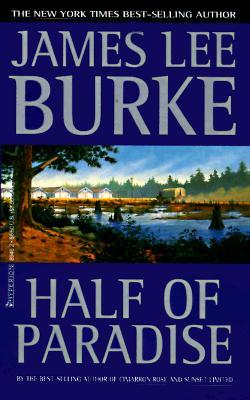
Half of Paradise, by James Lee Burke ****

halfofparadiseJames Lee Burke has been writing for roughly fifty years now, and this was an early effort, published in 1965; I think it was his first, in fact. It starts out appearing to be short stories, but the narratives involving three individuals eventually make one crushing point about the dismal, cynical failure of the US criminal justice system, which rains down its uneven blows hardest upon the poorest sectors of the population. He never actually says it. He goes one better, by demonstrating it through his fiction.

Those who have read his Edgar winners (Neon Rain and Black Cherry Blues) have come to expect brilliant rendering of setting and complex, absolutely believable character development.

As for me, if Half of Paradise, not an award-winning story but strong nevertheless, a stark, brutal, depressing book reminiscent of some of Russell Banks’s work (but with a Southern exposure) were as good as Burke were ever going to become, I would still choose to read his work over that of most other writers. And because it is indeed grim–and anything with this subject matter ought to be–I always have another book going, too. Actually, I usually have four to six books that I read in rotation. By not making more than one or two of them morbid, I keep myself from plunging to the depths one otherwise might while reading it.

A worthy early effort, still worth reading today if you can stand the sting of the “n” word.

The Yankee Club, by Michael Murphy ****

theyankeeclubMichael Murphy has created an entertaining read that may keep you up past your bedtime as the end approaches. I was fortunate enough to get a chance to read it early via his publishers and Net Galley.

The premise is that Jake, a former PI turned mystery writer, has been living in Florida, having fled there heartbroken after his romance with the lovely Laura ended. Now he is back in New York. Laura is a famous actress, engaged to a very wealthy man, but Jake has not come back for her; he has returned because his former partner, Mickey, has been murdered.

During the first 25% of this novel, my attention wandered. This is unusual for me, and of course not a good sign. I went back over the writing to try to diagnose why this happened, since there was no obvious problem in his plotting, setting, or character development. Finally I decided that the pace was a little slow because so much attention had been given to scene setting and the introduction of peripheral characters (who would later be very important). My advice to any reader who enjoys detective fiction is to hang in there, if you find this happening to you, because it does pick up and becomes much more engaging once the story begins to roll forward.

There is a plethora of bad guys, surprises and betrayals at every turn. Jake proves to be as tough as Sam Spade, and he is ready to give his all to protect the woman he loves, though as it turns out, she is hardly a damsel in distress; I won’t say more lest I ruin it for the reader.

If I had one piece of advice to offer this writer, it would be to use a little more subtlety. Don’t tell us how your character feels, and in particular, don’t do so repeatedly. Show us in action and dialogue. If these things are handled effectively enough, it won’t be necessary to tell us who feels what and why.

Small details I particularly enjoyed: the florist’s truck, and toward the end, the bicycle.

One thing I didn’t enjoy and didn’t need, though hardly the writer’s fault: a message repeatedly popping up on my kindle telling me that I had something on my tablet that had not been purchased at amazon, and if they were in error and it had been something of theirs, I should restart my kindle and pull it out of the archives. I blew past this message 3 times; once they totally removed my view of the text and put the home page back up. Did I mention that this was irritating, especially since Net Galley does offer the option of sending the galley straight to kindle, which is how mine got there?

Thanks for permitting this rant to interrupt my review. All told, this is a really fun story once the scene has been set and action is underway. You won’t be disappointed.

Kinsey and Me: Stories by Sue Grafton *****

This wonderful collection is quirky, but not only in the manner in which the now-immortal Kinsey Millhone is quirky. I suspect it’s the closest Grafton will ever come to writing an autobiography or memoir, and what little of it is here, is very brave stuff. As we approach the time of life in which Grafton now finds herself, it’s good to do some looking back, figuring out why we did some of what we did, and also coming to terms with some of the less lovely things we went through.

The introduction is expository in nature, and it’s very good. It is the first time I’ve seen it spelled out, what the distinction is between mystery, detective fiction, and crime fiction. In addition, she speaks to the ways in which short stories differ from novels within her genre. She makes it crystal clear and wraps it up with a bow. No droning lecture, but of course, that isn’t Grafton’s style; not ever. She also attempts to differentiate herself from her character. When she says Kinsey is who she might have become had she remained single and childless, I believe her. When she says that mischievous sense of humor is Kinsey’s rather than her own, I don’t believe it for a minute. But it’s a very fun read, one of the most interesting introductions I have ever read.

The first section consists of some Kinsey short stories that were written, some of them published in magazines, prior to the takeoff of the alphabet series. They are every bit as good. I am very fond of collections and anthologies, because they give me permission to put the book down at some point and go do something else…sleep, for instance. Though shorter, they are every bit as good as her longer work.

The last section is one that Grafton says was created largely from her own effort to come to grips with her own past as the child of two alcoholic parents. I think somewhere along the line, every really prolific reader hits a piece of writing that unexpectedly punches them in the solar plexus, leaves them staring disbelieving at the page saying, “Aw, holy shit, I totally did that too!” This was one of those moments for me. I have read thousands of books and had moments like this one maybe three times. It won’t be the same for you, most likely, but if you are a fan of Grafton’s, it is still worth reading. There follow some stories that are not humorous, but strong writing nevertheless.

Because she so effortlessly switches hats so many times in this one volume, first providing us with the most informative, most accessible, best written overview of the genre I have come across; then offering some brief personal notes about herself; then giving us the detective humor that we have come to know and enjoy; then writing briefly and more soberly about her own past; and then breaking out the stark, somber short stories that caught me by surprise, she underscores exactly what a serious, bad-ass writer she is. She is not just a writer of funny detective stories, though I consider those books to be excellent literature, and I love them. She is a scholar, and I can’t help wondering if that wasn’t a good part of the reason she put this volume together in the twilight of her career. We must regard her a serious writer, a woman of great talent. That’s what she is.

Thicker Than Water, by GM Ford *****

There are a number of masters of the mystery genre that I read faithfully. There are about a dozen, if we count those no longer among us (such as Ed McBain, Donald Westlake, and Tony Hillerman) whose novels I would read simply on the basis of their authorship.

GM Ford is among my dozen. In fact, he’s toward the top of the heap. I can’t objectively say whether the latter is because he sets his mysteries here in my own stomping grounds–so that while James Lee Burke can give me a really great travelogue, when Ford hooks a left on Madison and heads to Madison Park, I am looking out the front of the car windshield with him, since we’re less than twenty minutes from my home.

But the one thing I can say with objective certainty is that he is one fine writer. He can take a premise that is as old as the hills and in the hands of a lesser writer would cause me to moan, “Oh, come ON, not THIS again!” and give it a twist to turn it into something else, so NOT really ‘this again’, and then write it with such amazing deftness, word-smithery, pacing, and wry humor that I almost can’t put it down.

But I do. I put it down at bedtime, because I’m going to read SOMETHING after I take my sleeping aid for the night, and whatever it is, I may not remember it very well. My very favorite reading material only gets read while my brain is in fully active mode. I doled this out to myself in bits and pieces, like Mary Ingalls hoarding her Christmas candy. Ohhh, don’t let it be over yet!

But I don’t delay gratification all that well, and as the weekend hazes to a close, the last page of the book terminated, and now I must wait for the one that will be out in a few months.

I had half a dozen sticky-noted quotes to toss your way, poignant moments with “the boys”, as the first-person protagonist fondly refers to his late father’s crowd, some of whom are truly as down-and-out as people can be, living beneath freeways, in doorways, and under trees in city parks. His trenchant observation that “the line between middle class and out on your ass is thinner than a piece of Denny’s bacon” is most painfully clear in pricey metropolises such as Seattle, where the annual take-home pay of a waitress or clerical worker would not even pay the rent for an studio apartment in the city, let alone allow for other costs of daily living like food, transportation, medical premiums, and clothing.

And for me, this recognition is one of the key grooves that turns my mental tumblers into place and permits me to feel empathy toward an author. It’s a hard world out there, and even in a glorious place like Seattle, poverty’s knife edge is closer to most of us than we care to even acknowledge.

Leo Waterman, our intrepid detective, has inherited enough to live off of, having come of age at a middling forty-five, but life has already taught him what down-and-out looks like. He feels the bumps on the head and the shock that strikes his skeleton when he climbs a fence and jumps to the concrete on the other side, but if there’s a good enough reason, he does it anyway. He doesn’t have a death wish, but he has the character and integrity to go out and butt heads with bad people when the city’s cops settle in more comfortably behind their desks and wait for retirement to edge ever closer. Leo’s an easy hero to bond with.

As for the rest of the little bookmarks and sticky notes I have reluctantly pulled from my still-new book’s pages…why ruin it for you? It doesn’t get much better than this. Find the quotes for yourself. You can order that book and it will be at your gates inside the week. But you can’t have my copy. It’s been claimed by another family member, even as I typed this review.