The Museum of Desire, by Jonathan Kellerman****

I’ve been reading the Alex Delaware mysteries since Kellerman wrote the first in the 1980s; The Museum of Desire is the 35th installment in a successful, long-running series. Thanks go to Net Galley and Random House Ballantine for the review copy; this book is for sale now.

Kellerman was a child psychologist before he became an author and he brings his knowledge of children and families when he creates characters and situations. This is a reliably strong mystery series and I always smile when Alex’s BFF, Detective Milo Sturgis, barrels into Alex’s kitchen and starts eating his food. I feel as if I am receiving a visit from an old friend also.

The premise here is more shocking than most, and I find myself a bit squeamish when reading it. In reviewing the others he’s written, however, I can see that this isn’t a lot more extreme than usual, and so I conclude that perhaps I am more sensitive than I used to be. Those with doubts should read the promotional blurb carefully before making a purchase.

That said, the dialogue here is first rate, and pacing is brisk, as always.  Kellerman maintains credulity deftly by avoiding having Delaware tote a gun or tackle bad guys. In real life a kiddy shrink would be in his office, in the police station, or in court, period. But that’s dull stuff, and so the author has to strike a balance, creating fictional situations that don’t strain the reader’s ability to believe. He doesn’t wear a Kevlar vest or carry out other tasks that are clearly the work of on-duty cops; he provides his professional insights and does some extracurricular research, but the latter is the sort that a semi-retired professional might choose to do for a good friend. I had no trouble engaging with the story.

If I could change one thing, I would include more of the affluent, troubled teenager. Crispin is an interesting kid, but he pops in and out of the story in two very brief spots. Kellerman’s strongest suit is developing abnormal child characters, and I think this story would be more compelling if it had more of this bizarro kid in it.

One way or another, this is a solid entry in an already solid series, and I recommend it to you.

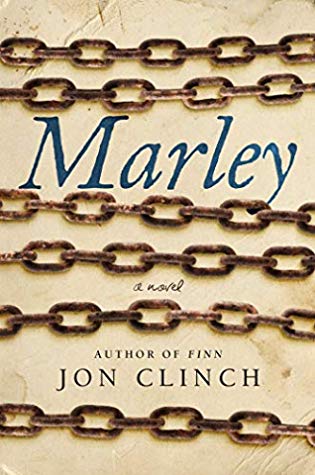
Marley, by Jon Clinch**-***

My thanks go to Net Galley and Atria Books for the review copy of Marley, a retelling of the Dickens classic told from a different point of view. This book is for sale now.

This work of historical fiction took off with a bang, and then fizzled.

I have not read any of Clinch’s earlier work, and at the outset of this novel, I am electrified by his prose. I love a good word smith, and Clinch’s facility with figurative language is impressive as hell. I was ready for a good Christmas book, and the October release date was right on the money. I snuggled beneath my favorite fleece blanket and immersed myself, savoring the clever phrasing and rereading parts of it before moving on.

There are two aspects of this work that hold it back; one is a quibble, but one worth mentioning, and the other is more significant. The quibble is that so much of the story isn’t about Marley. We know about Scrooge. If the author wants to write about Scrooge from a different angle, then the book’s title should reflect it. Instead, Marley’s effort at winning Scrooge’s sister Fan pulls us back into the Scrooge family, and there we stay for long stretches of the book. I echo other reviewers in asking, “But what about Marley?”

My larger objection, one that took awhile to gel as I read and ultimately prevents my recommending this book, is that the entire premise, the sacred message imparted by Dickens, is ground beneath Clinch’s authorly heel as he reframes Marley as a forger, smuggler, and criminal of the highest order. Dickens, in writing the original story, took pains to demonstrate that it is possible to be a “sound man of business,” to function entirely within the letter of the law, and still be morally bankrupt. A Christmas Carol was written to let readers know that those that succeed in legally building fortunes may nevertheless be damned if they are unwilling to extend themselves, whether through private charity or humane governmental programs. Scrooge made a point of telling his nephew that he pays his taxes, after all, and that’s the end of it.

In painting Marley as a man that brings money into the partnership through a multitude of illegal practices, Clinch not only ignores Dickens’s timeless moral and social message, but torches it, leaving only so much ash and cinder.

The chains that bind Marley in the afterlife reflect the chains of human bondage in his corporal one, as he invests the assets of Scrooge and Marley in slave ships, is a lovely literary device. I wish the author had found a way to use it without laying waste to the heart and soul of a timeless classic whose message is needed more today than ever.

Not recommended.

The Man That Got Away, by Lynne Truss*****

This is the second entry in the Constable Twitten series, and my fourth book by this writer. Truss is a reliably funny author, but this is her best yet. My thanks go to Bloomsbury and Net Galley for the review copy. You can buy this comic masterpiece now, but first you should read A Shot in the Dark if you can, because the background information you will find there will make this book even funnier.

Constable Twitten is the only capable, driven cop in Brighton, a small seaside tourist town in England. Steine, his boss, is unwilling to recognize that crime exists here at all; he is possibly the most gullible character to appear in fiction. For example, he believed an April Fool’s Day newscast about the spaghetti weevil, said to be ruining the spaghetti harvest. The other officer is slightly better, but when his dream of going undercover finally comes true, he becomes so immersed in his new role that he forgets he is supposed to be fighting crime. He is posing as a musician and spends all his time at the club performing or practicing; he doesn’t even bother to check in at the station. Twitten is left virtually alone to deal with Brighton’s crime wave.

Here is a pattern I’ve seen with Truss’s novels. The beginning is usually lame. The first time I read her work, I saw so many not-funny lines in the first ten percent that had I not owed a review, I might have been tempted to abandon it. However, even though I had decided that this was probably a pretty stupid book, I noticed a change as it went on, and by the last thirty percent or so, I was laughing out loud. Consequently, I was expecting a progression in this novel, from not-funny to slightly-funny to actually-pretty-funny to gut-splittingly-funny. I reminded myself that patience would pay off here, and I opened the book…and laughed on the first page. This book starts out at ten and it stays there all the way through.

There are several threads that are good here; we have the blind wax sculptor that makes dreadful likenesses for the wax museum, and there’s Inspector Steine being duped into believing a con woman is his long lost niece. But the most memorable, achingly funny bits are centered around Mrs. Groynes, the police station’s secretary who is also the janitor, and also the brains of an organized crime ring. Twitten knows this, and Groynes knows that he knows, but he cannot persuade another living soul that it’s true, and so there she remains, unhindered, using her job to obtain intelligence that in turn helps her underworld minions avoid detection.

 It isn’t difficult.

Those that love excellent satire need look no further. I highly recommend this hilarious book to everyone.

The Janes, by Louisa Luna****+

 4 stars plus. Louisa Luna debuted in 2018 with the first book in this series, Two Girls Down. When I learned that Alice Vega was returning, I jumped on the galley without a moment’s hesitation. Thanks go to Doubleday and Net Galley for the review copy. This book becomes available to the public tomorrow, January 21, 2020.

Alice Vega is back home in Southern California, and she is hired as a consultant on a case for the local cops. Two dead girls have turned up, both recent immigrants with IUDs in their too-young bodies. All signs point to their having been victims of trafficking for purposes of sexual exploitation, yet there is no evidence of rape. What happened here, and where did the IUDs, which aren’t available in stores, come from? She is offered an astonishing amount of money for her services, and she decides to use some of it to hire her old partner, Max Caplan, who’s back on the Eastern seaboard entertaining job offers. When Vega crooks her little finger, Cap comes running.

Luna has a voice and style not like anyone else’s. One of the things that I love is the way she swaps the stereotypic gender roles of these two main characters. Cap is nurturing, and he loves kids. Vega isn’t a nurturer, and when huge stressors come down on her, she becomes angry and violent, but as a reader I love this because her rage is always spot on. Cap has sex when he’s in love, but Vega has sex to fulfill a biological need, and then wonders why the guy is still hanging around. Clean yourself up and get out of here, dude, I have things to do today. Run along. And while Vega’s vigilante justice would be a terrible thing in real life, in fiction it feels deeply satisfying.

In other words, Alice Vega makes my feminist heart sing.

Luna is better than most authors of the genre in that no matter how off the chain her protagonist is, I never disengage because of an unlikely plot element. We have corrupt cops; we have bureaucrats; we have secrets that would become public if Vega and Cap were prosecuted for crimes committed in the line of duty. My single twinge of regret comes when Cap sustains a head injury that renders him unconscious; wakes up dazed and confused, with some memory loss; and then shakes it off without tests or treatment of any kind. Vega reminds him to get an MRI when everything is over, but it doesn’t feel like enough. I wonder at times whether she meant to do more with it and then edited it back out.

Given that both stories, this one and the last, feature two female victims, I wonder if this will be her signature element throughout the series.

This story differs from the first in that it is darker, less funny, and ramps up to the high octane, pulse-pounding excitement of a true thriller at around 80%. The plot and characters are credible, but they lack the bounce and the zip that made the first book so memorable. Nevertheless, I love Alice Vega and eagerly await the next in the series.

Heartily recommended to those that love the genre and respect women.

The Secret Guests, by Benjamin Black****

It’s World War II, and the Blitz has begun. The Royals are torn, wanting to remain with their subjects and share their misery, but not wanting the risk the well beings of their daughters. It’s decided that the girls must be moved, but with the shipping lanes and skies fraught with peril, where can they go and be safe? Ah, a fine idea: they’ll send them to a cousin in Ireland.

My thanks go to Net Galley and Henry Holt for the review copy. This book is for sale now.

As historical fiction goes, this is lightweight material, based on almost no historical event other than the war itself. However, as general fiction goes it’s terrific, immensely entertaining and droll as heck. I figure it’s 3.5 stars for historical fiction, 4.5 stars as general fiction; thus my 4 star rating.

Our protagonist is Garda Strafford-With-An-R, a marginally competent Irish detective who resembles Stan Laurel, tasked with the security the estate where the girls will be housed. Secondary characters are Celia Nashe, a British cop equivalent to a Secret Service agent, who is assigned to serve as personal security for the princesses; an arrogant, sleazy ambassador named Laschelles; and Strafford’s boss Hegarty, who resembles Oliver Hardy. We also have clueless but entitled Sir William, the girls’ host; two bored princesses that get up to things when nobody’s looking; some household servants that know more than they are supposed to; and a few local people that also know too much.

The fact is that I’m entirely burned out on World War II fiction, and that fact nearly prevents me from requesting this galley. But the spin—Ireland, which remained neutral and flirted with taking the side of Germany, what with its enmity toward the British—proves irresistible. The greatest surprise is how much wit is employed and how fast the story moves. I have never read Black’s work before, and this guy is hilarious. He shifts the point of view often, always from the third person omniscient but varying several times within a single chapter, so we get snippets of the person that’s bored, the person that’s nosy, the person that’s confused and so forth. The word smithery is so original and clever that I cannot put my highlighter down. Highlighting is pointless when I highlight close to half of the text, but I can’t help myself. And best of all, the cliched ending that I think I can see a mile away isn’t happening.

Those of us in the States have a three day weekend right around the corner, and the weather will be too miserable to want to go anywhere. This novel might be just the ticket. If you’re lucky enough to be planning a vacation soon, this would also be a fine beach read. But the humor will be a terrific pick-me-up for those stranded indoors with a case of the grumps. I recommend this book to you, and I would read this author’s work again in a heartbeat.

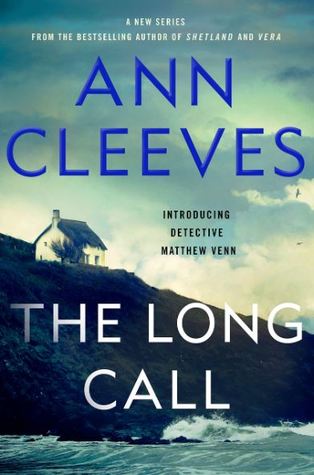
The Long Call, by Ann Cleeves***-****

This mystery opens a brand new series by Ann Cleeves. I haven’t read this author before, but when Net Galley and St. Martin’s Press invited me to read and review, I hopped on board. This book is for sale now.

Detective Matthew Venn is called upon to investigate the murder of a man found on the beach. His queries force him to return to the strict evangelical Christian community in which he was raised. The Brethren cast him out because he is gay, and so returning in a professional capacity brings back all sorts of memories and feelings.

The last person to see the victim prior to his death may have been 30-year-old Lucy, a woman with Downs Syndrome. This character is engaging as is her adoring father. Lucy rode the bus to The Woodshop each day with this man, and this produces some consternation when her father learns of it. As a mother, I can appreciate his concern.

This is a solidly constructed mystery fashioned by a pro, and yet for some reason I had difficulty engaging with the protagonist. I’m rounding my rating up to 4 stars because I have a hunch that if I had read the printed galley provided me, I might have understood it better and therefore might have found it more interesting. I fell behind in my reading and reviewing over the summer and obtained audio books of a few titles whose publication dates had passed, figuring to catch up. It took me a long time to figure out that The Woodyard was actually not a lumberyard or hardware store, and so some of the plot left me scratching my head. If I’d read with my eyes instead of my ears, I might have caught on sooner. Once I figured out all the pieces, I could follow what was happening and recognized the red herrings as they passed by. The ending was reasonable and the whodunit surprised me.

This is a decent work of crime fiction and I recommend it to the author’s faithful readers.

The Chalk Man, by C.J. Tudor**

It’s a rare book that I find abrasive right out of the gate, especially since there are no controversial social messages here, just a mystery that I didn’t like and didn’t finish. Thanks go to Crown Publishing and Net Galley for the review copy, which I received free and early in 2017. I should have written a review long ago, of course, but I found it hard to reconcile my antipathy for this story—a debut, no less—with the nearly unanimous adulation expressed by other reviewers. I am still a bit bewildered, but there it is.

This is a book that tries too hard. There are too many cutesy nicknames, and the structure of the plot feels gimmicky and formulaic, as well as mighty unlikely. Of course, most mysteries have aspects that are unlikely because most real-life murders and other mysterious doings have logical, obvious, dull explanations. We agree to pretend the murder mystery is plausible in exchange for being entertained. The problem is that I wasn’t, and so I couldn’t.

Two other factors that contributed to my grumpiness were the overwhelmingly male list of characters, and the cultural collision between British fiction and my brain. I’ve read and enjoyed some British fiction; if not, I wouldn’t have requested this galley. But here the culture and jargon are thick on the ground, and the inner narrative feels endless.

I no longer have to be concerned that I will crush this author’s hopes and dreams; Tudor’s debut is a huge success both in terms of sales and the corresponding enthusiasm of its readership. This author has gone on to publish more books, and I have had the good sense not to request those this time. Ultimately this came down to taste more than anything else, but I have to call ‘em as I see them, and I found nothing to love, apart from a compelling jacket and an attention-getting title.

Your House Will Pay, by Steph Cha*****

The quality that distinguishes Cha from other top-tier mystery writers is her absolute fearlessness in using fiction to address ticklish political issues.  Your House Will Pay is impressive. I read it free and early thanks to Net Galley and Harper Collins. I am a little sick at heart that I’m so late with my review, but this book is rightfully getting a lot of conversations started without me. It’s for sale now, and you should get it and read it.

Our two protagonists are Grace Park and Shawn Matthews. They don’t know each other, but their families intersected one critical day many years ago.  The Parks are Korean immigrants, the owners of a small pharmacy.  The Matthews family is African-American, and they have never stopped grieving the loss of sixteen-year-old Ava, who was shot and killed one evening by Grace’s mother in a moment of rage and panic. The other thing shared by Grace and Shawn is that both were quite young when it happened. Shawn was with his older sister when she was killed and has memories of what happened; Grace has been shielded from the event and knows nothing about it until the past opens itself up in a way that is shocking and very public.

The story alternates between the initial event, which happened in the 1990s, and today; it also alternates between the Park family and the Matthews’.  The development of the characters—primarily Grace and Shawn, but also Shawn’s brother, Ray and a handful of other side characters—is stellar. Throughout the story I watch for the moment when the narrative will bend, when we will see which of these two scarred, bitter families is more in the right, or has the more valid grievance. It never happens. Cha plays it straight down the middle. Both families have been through hell; both have made serious mistakes, crimes against one another. And ultimately they share one more terrible attribute: both families have been callously under-served by the cops and local government, for which relatively poor, powerless, nonwhite families are the dead last priority.

Cha bases her story on a real event, and she explains this in the author’s notes at the end of the book.

As a reviewer, I am closer to this than many will be: my family is a blend of Caucasians, Asian immigrants, and African-Americans. I read multiple galleys at a time, shifting from one to another throughout the reading parts of my day, but it is this story that I thought about when I wasn’t reading anything.

The first book that I read by this author was from her detective series. When I saw that she had a galley up for review, I was initially disappointed that this wasn’t a Juniper Song mystery, but now that I have seen what Cha is doing and where she is going with it, I see that this had to be a stand-alone novel. There isn’t one thing about it that I would change.Highly recommended to those that love the genre and that cherish civil rights in the U.S.; a must-read.

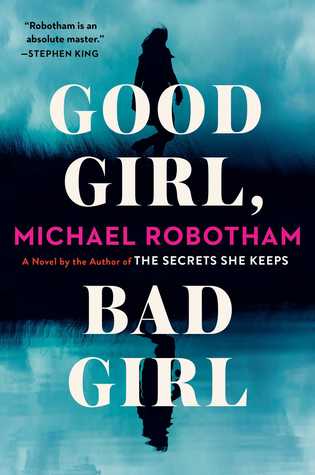
Good Girl, Bad Girl, by Michael Robotham****

I had never read this author’s work before, but went looking for it after reading raves about it from online friends. Thanks go to Net Galley and Scribner for the review copy, and to Seattle Bibliocommons for the audiobook that helped catch me up when I found I’d fallen behind. This book is for sale.

Evie Cormac–whose real name is unknown–is a patient in a children’s psych ward. She was found emaciated and filthy at the scene of a violent crime; it’s believed she was kept hostage, though she won’t deny it or confirm, or talk to anyone about it. Cyrus Haven, a psychologist that looks to become a recurring series protagonist, has his own tragic past. When Evie applies for emancipation, Cyrus offers to bring her home as a foster child until she can live alone. Everyone tells him it’s a crazy thing to do.

Meanwhile, a very different girl has been murdered. Jodie Sheehan had a golden future; a championship figure skater, she was locally famous and appeared destined for great things. Instead she was found murdered not far from home. Who the heck would do such a thing? Jodie had no enemies. Police are baffled.

Throughout this tautly written novel I found myself waiting for big reveals. What connection can there be between Evie and Jodie? Who is Evie really?

The thing I admire about this story is the restraint Robotham shows. A more formulaic writer would twist things around and then hit us with all sorts of deep though wildly unlikely ties between the two cases. He doesn’t do that. I expected the big dramatic scene in which Evie spills everything; he doesn’t write that scene. I’ve probably read a few too many novels of mystery and suspense lately, and I was in the mood to roll my eyes. That eye-roll had to wait for a different book and author, because I believed most of this story, and Robotham had shown excellent taste in keeping the reveals minimal.

Here’s the one thing that makes my eyebrows twitch; it’s the same issue I sometimes have with Jonathan Kellerman’s Alex Delaware books, which I  like a lot. Psychologists don’t race around conducting independent investigations, confronting possible perpetrators, and interviewing people t hat don’t want to talk to them. And sure as hell, psychologists don’t wear bulletproof vests.

But those of us that like these stories agree to suspend disbelief given half an excuse, because a psychologist’s ordinary job—interviewing truculent teens in an office, perhaps, or making hospital rounds—is not nearly as much fun to read about as is a psychologist-as-detective protagonist.  There were a couple of times toward the end where I made little frowny notes in my copy, but for the most part I was on board. Robotham takes us deep inside Cyrus’s head, and the more I felt I knew the character, the more I was able to believe the narrative.

Should you read this book? Sure, why not? It held my attention quite nicely, including during my loathsome hours on my exercise bike.  I would happily read this author’s work again.  Recommended to those that enjoy the genre.

Quantum, by Patricia Cornwell**

I’m a longtime fan of Cornwell’s Scarpetta series, so when Amazon offered me a free, early look at this first book in the new Captain Chase series, I was over the moon. Thanks go to Amazon First Reads, and I am sorry not to provide the kind of review that I expected to write, but this one doesn’t work for me.

Whereas her earlier series was the original forensic thriller genre, Calli Chase, our protagonist, is a cop for NASA. Perhaps I should have seen this problem coming. I am generally not interested in the sciences, at least to any detail. I don’t mean to sound like a Luddite: I maintain the practical knowledge necessary to raise plants, provide quick home-medical treatment when called upon, and carry off other every day, practical matters. But physics? Chemistry? That whooshing sound right now was me leaving the room. So all of the science chatter early in the narrative led me to close the book and read something else several times, until I realized we were past the pub date and I owed a review. Surely it would get better, once we got into the actual plot. We have heavy foreshadowing that lets us know that some big bad event is about to unfold, and more foreshadowing that tells us there are some great big ol’ skeletons in Calli’s closet and that of her twin, Carme.

But that’s another matter. The foreshadowing used in the Scarpetta series is masterful stuff, suffusing me with a profound sense of dread that makes me turn the pages faster just to know what in the world is around the corner. This foreshadowing, on the other hand, is so heavily troweled on that it makes me impatient. This foreshadowing feels like filler by the 25 percent mark, and there are places in my notes where I say, Enough already. What. Just tell us and get on with it.

As Cornwell’s Scarpetta became a long-running series, she did what great writers of the genre do, moving more deeply into character. After a certain point readers became jaundiced as our hero was once again knocked out, blindfolded, and stuffed in a car trunk or whatever–how many times can this happen to the same person?–and so she moved more toward a psychological thriller, where there were possible enemies within the fortress, so to speak. Could she really trust her Benton, her husband, who is keeping secrets from her? Could she trust her niece? What about her work partner? There was all sorts of scheming and things were not as they appeared. Some readers grew cranky at this point, but I found it fascinating, because I felt I knew her core characters so completely.

But with Captain Chase none of this works, because the author has basically created the same characters with different names and relationships. Perhaps wary of this inclination, the protagonist is unlike Scarpetta, but obnoxiously so, and Chase is not a character I believe. Every tenth word from this character is a euphemism, with copious amounts of the first person narrative explaining and re-explaining how much she hates vulgar language. But whereas I have no problem with most off-color language, I’ve had people in my life that avoided it on principle, usually due to a religious conviction, and not one of them used euphemisms like this character does. Most of them believe that a euphemism is wrong because it’s a swear word dressed up as something else, and the best thing to do is omit them altogether. Instead of yelling ‘Gosh darn,’ they would say ‘Oh no!’ or, ‘How did this happen?’ But with Chase, it’s one long eye-roll, and so when we get to our less-than-stirring climax and she actually says, “Shit!” (and then of course has to talk about having actually said that word) I let out a snort and closed the book. I quit at 85 percent and didn’t stick around for the ending.

It’s a sorry thing, having to write a review like this for an author I like, because of course I cannot help but wonder what personal circumstances would make a bestselling author write and publish something this unworthy. Money? Health? But I don’t know, and ultimately my responsibility is not to the author but to my readers.

As for you, if you are fascinated with NASA, maybe you won’t find this story as repellent as I do, but I would urge you not to spend big on it. Get it free or cheap unless your pockets are very, very deep.