The Wedding Guest, by Jonathan Kellerman****

The wedding guest is dead, slumped on the toilet, strangled. Is she someone invited by the bride’s family, or the groom’s? Neither one. Total stranger…or so they say. The thirty-fourth book in the Alex Delaware series comes out tomorrow, February 5, 2019. I read it free and early thanks to Net Galley and Random House Ballantine. 

Kellerman is a child psychiatrist, and his knowledge and experience dealing with children and their families provides him with a rare ability to invent quirky but believable characters. Here we find a wedding reception unfolding in a seedy building that used to be a strip club, and this provides the world’s tackiest wedding theme. All the women—including the bride—are supposed to dress to look “hot.” The groom’s family, a more conservative, scholarly bunch, are less than delighted, but they bear it stoically, till someone finds a dead guest in the loo. The bride—already turned bridezilla–is just undone. How could someone ruin her big day like this? How thoughtless. They should have killed that woman somewhere else. Or maybe on a different day. 

This series never fails to delight me. Once again, Detective Milo Sturgis gets the call; once again, his best pal Alex is tapped to analyze a young guest, and from there he becomes further involved in the case. 

There have been other books in the series that pushed this improbable situation too far, with Alex the doctor donning a Kevlar vest to go chase and apprehend bad guys with Milo. This time I find Alex’s involvement much more believable. On the one hand, he still does things that doctors advising cops never do, but limiting Alex’s participation to interviews held either in his office or at the police station wouldn’t make for good fiction. All we want is to believe. Kellerman helps us along by creating a strong friendship bond that makes Milo and Alex want to work together, and that’s coupled with Milo’s unpopularity among his colleagues due to the fact that he’s gay. Nobody else wants to get in the car and go places with Milo, and Alex does; and after all, the police do employ him, so it’s not like some random civilian is partnered with Milo. I thought this was finessed nicely this time around. 

Kellerman always writes strong dialogue that includes some very funny bits here and there, and the pages turn rapidly. It’s a lot of fun to read, and if I hadn’t been able to get the galley for this one, I’d have hunted it down later at the library rather than miss out. 

Highly recommended for fans of the genre. 

As Directed, by Kathleen Valenti****

Oh, I do love me some Maggie O’Malley mysteries. Thanks go to Henery Press and Edelweiss Books for the review copy. This is the third in the series, and will be available to the public March 12, 2019.

Maggie is recovering from brain trauma inflicted on her by a bad guy in an earlier book. Maggie 2.0 is more savvy than before, tougher than before; yet she is impaired sometimes in memory and thought because of her injury, and this adds to the suspense.

But you can’t keep a good woman down and she is here to prove it. She is healing and also planning her wedding to Constantine, which is a delicate balancing act, with the senior women from her family and Constantine’s ready to do battle over critical world issues like frosting choice and the cut of the bridal gown. These things fade in importance, however, when three pharmacy customers collapse after ingesting cyanide that is traced to Petrosian’s Pillbox. They are forced to close indefinitely, and the police—who Maggie and Constantine agree are “falling short of Magnum P.I. status”—focus on two people of interest: Maggie, and her boss. Once again Maggie and Constantine must team up in order to save her job and her reputation. They have to unravel the problem themselves as they have done so successfully before. 

“What could possibly go wrong?”

Along the way we encounter newsman Brock, who follows Maggie relentlessly as he jumps out from behind dumpsters and whatnot with a microphone at all hours, and an admirer of sorts who is following her, leaving her threatening notes. Constantine points out that Maggie has a “two-fer” on stalkers, and he isn’t wrong. We also meet The Boulder, a steroidally enhanced bodybuilder that teaches spin class at the local gym; Maggie’s friend Ada works at the gym and serves as confidant. 

And Maggie gets a dog. 

Insightful humor pops into all the best places. Valenti knows all the timeworn clichés that hack writers utilize, and she turns them all on their heads in a delightfully satirical way. As we go, she deepens Maggie’s character and the bond she shares with Constantine, her father, Miss Vanilla, and now of course, the dog. 

I love the ending, and the creative uses that Maggie finds for bridal ribbon.

This is a damn fun series and you should get all three of these books, but if you want to read this as a stand-alone novel you can do it without getting lost. Recommended for those that like humorous mysteries.

Forget You Know Me, by Jessica Strawser***

I was invited to read and review this book; my thanks go to Net Galley and St. Martin’s Press.

The story unfolds with a Skype date between besties Liza, who lives in Chicago, and Molly, who remains in Cincinnati where both of them grew up. Molly excuses herself for a moment and leaves the laptop with the camera on; through the camera, Liza sees a masked man come into the house. The connection is cut, and Molly doesn’t respond to Liza’s frantic cell calls to see if she has been harmed. Yet when Liza and a friend drive all through the night to race to the rescue, Molly gives Liza the cold shoulder, not even inviting her in. It is almost as if Molly has told Liza to forget she even knows her.

The premise is a good one, but the title is a problem. It sets up an expectation of a thriller, which this book isn’t. Even lamer, it is based on a quote that nobody actually even says. Moving on.

As we move deeper into character, we see what each of them is dealing with. Liza is lonely and dissatisfied. A tragedy closer to her own home plays out while she is still in the car returning from Cincinnati, and she is shaken by it. Meanwhile, Molly has an autoimmune condition that creates chronic pain, and we learn that because she uses experimental pain treatments, she is deep in debt to a predatory lender. She doesn’t want to tell her husband Daniel what she has done; meanwhile, she is developing a close bond with the male neighbor whose daughter plays with hers. He is a widower, and easy to talk to. At some point, she has to choose whether to remain in her marriage or step away and try again with this other guy.

I enjoy Liza’s character. She’s sassy, smart, and hopeful; I enjoy seeing her interact with her family once she is near them again. I also like Daniel, the spouse in Molly’s troubled marriage. Molly, on the other hand, is a pill, but I am not sure the author intends her to be. We see a lot of the challenges that chronic pain presents, but do we want to? Some that experience chronic pain in their own lives may find some validation here; some of us with chronic pain issues read fiction to escape it, and we don’t necessarily need this reminder.

Ultimately, this is more of a relationship story, and what little mystery it contains—the guy in the mask—is hardly even part of it, and his identity proves to be more fizzle than pop. I suspect this story might receive more accolades of it were titled and marketed as a romance or even just straight fiction. However, Strawser has made a name for herself with psychological mysteries—which I enjoyed a good deal also—and by sticking to her brand, she may see some good sales. The question is whether her readers will still be receptive once they read it.

I hate to be the wet blanket here, because Strawser is a capable writer. I look forward to seeing what she writes next.   This book comes out February 5, and I recommend it  to Strawser’s fans, but get it free or cheap unless your pockets are deep.

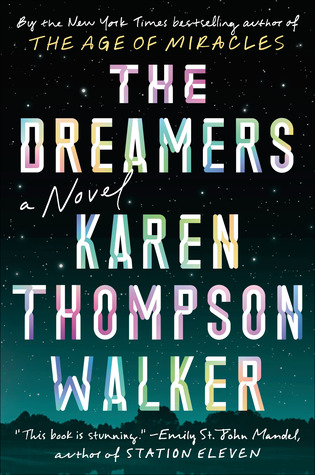
The Dreamers, by Karen Thompson Walker*****

Our story is set in the imaginary town of Santa Lora, California, a college town in the hills of Southern California. It’s sunny, green, and beautiful; parents feel safe bringing their children here…until one by one, they fall sick. No one can identify the illness; it’s “a strange kind of slumber, a mysterious, persistent sleep.” 

I read this book free and early in exchange for this honest review. Big thanks go to Net Galley and Random House; this title will be available to the public tomorrow, January 15, 2019. 

Kara is the first, and roommate Mei, who is shy and hasn’t made friends yet with Kara or anyone else, is shuffled from her original dorm room to another. Then other students fall sick, and those in charge can’t decide what to do, so they do what administrators do best: they craft rules that change often and invent multiple layers of bureaucratic red tape. There’s a quarantine imposed. Parents aren’t allowed in; students aren’t allowed to leave. But they do it anyway. These are college kids. You can’t really tell them what to do, and even under guard, some are ingenious enough to escape.

Under guard! Now the parents are going nuts. Lawyers are called; who wouldn’t?

Meanwhile the illness spreads into the town anyway, because the college employs instructors, cleaning staff, and other adults that don’t live in dormitories. At first it’s kept quiet, since the trustees don’t want negative press getting out about their fine institution of learning, but of course eventually word gets out anyway. The kids have phones, after all. 

It doesn’t take much time for all hell to break loose. 

Walker is a gifted writer, and the story sucked me in and didn’t let me go till it was over. Conceptually it isn’t all that remarkable, but there are two standout features here that elevate it and make it a standout. The first is the prose style, lyrical and accessible, that makes it read like a truly creepy bedtime story for grownups. Some of it is created by short sentences that use repetition expertly, and the rest is probably just plain magic. 

But the main thing that makes me love this book is the dead accurate character development. Those that read my reviews know that nothing makes me crankier than a novelist that uses child characters that don’t act like children, or that don’t act the age they’re assigned. Here, the reverse is true. Every single character, from pre-teenage Sara and younger, mid-elementary age Libby; to the late teen and young adult college students; to the young professors with the newborn; to the older resident with a partner in assisted living are written in age appropriate thought and deed. I confess I was surprised to see how young this author is, because I could swear she had personally experienced each of these age groups. 

All eight characters that we follow are so well developed that I feel I’d know them on the street, and I care about what becomes of them. The impulsive, judgmental, occasionally reckless yet heroic Matthew, who steals Mei’s heart and then crushes it is the sort of kid I have taught in years gone by, and for that matter, so is Mei. And oh how my heart aches for Sara and Libby, whose father’s conspiracy-oriented paranoia is difficult to separate from his genius. I’ve known this guy too; when he speaks, you never know how to tease apart the brilliant parts from the crazy. With their mother dead, Sara and Libby have been sworn to silence about any number of things and told never to trust outsiders. Their home is in disrepair, and he tells them that if others can see inside, social workers will cart them away and they will never see him or each other again. And so when he falls asleep and they cannot wake him, they have a real dilemma. I want to dive into the book and carry those girls away—together—myself. 

And then I remember—oh yeah, they’re fictional. 

Other compelling characters are Catherine, the psychologist called in as a consultant and then not permitted to go home to her toddler when the quarantine is imposed; Ben and Annie, who try to protect their newborn; and Nathaniel, whose partner, Henry, is in assisted living. And though I ache for all of these characters, there are moments when humor is salted in, and so it remains a fun read. I thought the ending was perfect. 

There’s a lot more I can say, but I can’t say it like Walker does. This is a fast read and the ultimate in escapist fiction. I highly recommend it. 

The Waiter, by Matias Faldbakken**

Translated by Alice Menzies

Thanks go to Net Galley and Doubleday for the review copy. I am sorry to be so late here; the truth is that I kept setting it aside because I didn’t like it, and then returning to it, thinking that I was missing something. I’ve given up on finding the magic, though there are some nice moments here; I also have a strong hunch that there may be a cultural barrier in play. Those that spend time in Europe, possibly with some Scandinavian background, may enjoy this in a way that I didn’t. 

The setting is a fine restaurant in Norway, and the protagonist is of course the waiter. The author pokes fun at the pretensions of everyone present. I like satire and dislike pretension, and so I expected to like this book. There are some clever character sketches, and that’s where I am able to engage, but a character sketch is by definition a brief thing, and so I am quickly disengaged again. I feel like the same joke is being made a different way a great many times, and the “neurotic waiter whose wit is sharp as a filleting knife” (to quote the teaser, more or less) seems not just sharp or witty, but downright vicious. And here it isn’t just a lack of connection that gets in my way; I recoil at some of the passages. 

The book is supposed to appeal to everyone that likes food and wine, spends time in restaurants, or has European sensibilities. Food and restaurants are a match; but I don’t keep wine in the house and have no European sensibilities at all, apart from a few Irish habits passed down over generations. So maybe foodies that spend time in Europe will respond better than I have. In order to see print in other languages than the original, the novel must have met with acclaim locally, and this is why it confuses me that my own response is so negative. But a reviewer can only write her own viewpoint, and mine is that this book isn’t funny, and I don’t recommend it.

The Burglar, by Thomas Perry****

Thomas Perry’s tightly plotted suspense novels always keep me on the edge of my chair. Big thanks go to Net Galley and Mysterious Press for the review copy. This book will be available to the public January 8, 2019. 

Our protagonist is Elle, a twenty-four-year-old Californian that is also a professional burglar. She was raised by relatives that ditched her when she was barely grown, and so she makes her living taking jewelry from rich people’s houses. They in turn will file the loss with their insurance companies, so no harm, no foul. She is on one such expedition when she comes across three murdered people that were apparently killed while they were having a three-way on the homeowner’s bed. Worse: there’s at least one camera involved. It might provide the identity of the killer, but then it might provide her identity as well. What’s a girl to do? 

In the real world, the answer would be simple: you were never there. Destroy the camera, go through the wallets for any cash, then get gone fast. Elle has no police record, so even if she wasn’t gloved up, her prints wouldn’t matter, nor would her DNA. Just go. 

But that wouldn’t make for an interesting story, now would it? 

Elle decides to make sure that the cops get the camera, but without her identity on it. This adds a twist, requiring her to break in again in order to return the camera once she’s looked at it and done the other things she needs to do, but in the midst of all this she is being stalked by a mysterious black SUV. In time it becomes clear that someone associated with the house, and likely associated with the murders, wants to kill her. In order to stay alive without going to jail, she must learn the killer’s identity and get the proof to the cops, again without being implicated herself. 

There are a number of places here where I stop, roll my eyes and say, No way. For one thing, Elle owns her own house. How does an orphaned 24-year-old afford a Los Angeles home? I could easily see her squatting in a house that’s for sale, or even inheriting a house from a dead relative after her other family members scarper out of the area, but to have purchased real estate by age 24? No no no no. How does a young woman like that even have a credit history? It defies common sense. In addition, Elle has a vast amount of knowledge in many different areas despite her lack of formal education. How does a 24-year-old know about the history of architecture in Southern California, just for one example? 

But here’s the interesting thing. Despite all of these inconsistencies, I wanted to keep reading. I usually have somewhere between four and ten books going at a time, in various locations and on various devices, and this was not the only good book I was reading at the time; yet when it was time to kick back and read, this one is the one I most wanted to read. And this has never happened to me before. Usually a book with so many holes in the plot and in the construction of the protagonist either causes me to abandon the title or more frequently, plod through it simmering with resentment because I have committed myself to writing a fair review. But not here. With Perry’s book, while part of my brain is tallying the impossible aspects of the novel, the other part of my brain asks, “So what happens next?”

The simple truth is that despite everything, Thomas Perry is a master of suspense. This is what keeps me coming back to him, every stinking time. There’s nobody that writes taut, fast-paced novels of suspense the way this guy does, and so come what may, I had to finish this novel, not out of obligation but for myself, and for the same reason, I will come back to read him again, again, and again.

Holy Lands, by Amanda Sthers*****

HolyLands


“Does keeping the memory fresh prevent history from repeating itself? Surely not. Memories are meant to be forgotten. History is meant to be repeated. That of Jews, of women, of Arabs, of people who suffer, of Little Red Riding Hood. And the grandmother always, always has sharp teeth.”

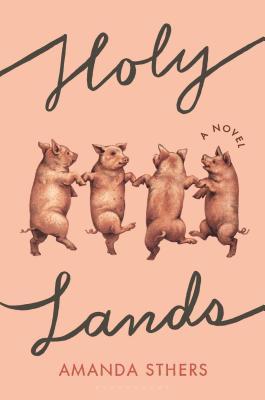
Seldom do I make a decision to read a galley based almost entirely on the book’s cover, but really. A dancing pig in the Holy Land? How can that story not be interesting? Big thanks go to Net Galley and Bloomsbury. This book will be available to the public January 22, 2019.

The whole book is a series of letters and emails sent between five characters. We have four family members: Harry and Monique are divorced, yet it’s one of those complicated divorces where there’s no clean break; David and Annabelle are their adult children.

Harry is an American expatriate who has moved to Israel, but instead of embracing his culture and homeland in a more conventional way, he has opted to become a pig farmer in Nazareth, one of the few places in this Jewish nation where the animals are not straight up illegal. And so the fifth character is the rabbi, who entreats Harry to give up the pork business. He’s upsetting people, and he should respect his roots a little more. Jews have been through enough, nu? And before we know it, there’s mention of the Holocaust.

Harry wants to keep his pigs, and he thinks it is time for Jews to lighten up about the Holocaust, maybe tell a joke about it now and then. The rabbi is floored. Joke? About the Holocaust? And so it’s on.

You would think that with such edgy subject matter the story would veer over the boundary of good taste, but Sthers—who has many bestsellers to her credit, though this is her American debut—is deft, insightful and very, very funny. The prose is angry, hilarious, and aching all in turns, not unlike our feelings for our kin.

Families are such fertile territory, and this one is among the best fictional families in literature. David, Harry and Monique’s son, is a gay playwright whose father has not come to grips with David’s sexuality. David writes him endless letters; Harry won’t respond. We see how Harry thinks and feels about David through his correspondence with the rabbi, and with the things Annabelle learns when she comes for a visit. Meanwhile, David’s new play is about to open, and it’s titled “Kosher Pig.” It’s about his father. Oh, how he wants Harry to be there for the opening! But Harry remains incommunicado.

This is a slender little book, just 176 pages, and so I expected a casual romp, but it’s more than that. It’s a quick read, not because it’s lightweight literature but because it’s impossible to put down. I recommend you should get it and read it, and then…maybe you should call your parents. Better yet, go visit them.

Best Humor 2018

MrFloodsLastHonorable Mentions: 


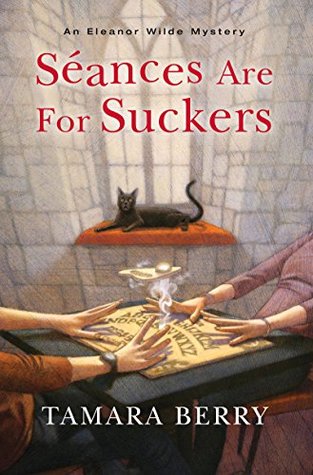
Seances Are For Suckers, by Tamara Berry****-*****

SeancesareforTamara Berry is the queen of snarky humor, and now that I have read the first installment of the Eleanor Wilde series, I am primed and ready for those that follow it. Big thanks go to Net Galley and Kensington Books for the review copy; this book is for sale now.

Ellie narrates her own story in the first person. She explains that she makes her living through fraud, scamming those that want to talk to their dead relatives and solve their Earthly problems via séances. A referral brings her a wealthy Brit that wants a fake medium to vanquish the ghost his mother believes is haunting their mansion. Expenses paid, she flies out to join him and is delighted to find that he lives in an actual castle. His mother, however, hates houseguests and discourages them with miserably small, terrible meals and bad accommodations. As preparations are made for the séance, guests exchange furtively obtained and hoarded snacks in order to avoid starvation.

Nicholas is a hunk; he and Ellie are both drawn toward each other and repelled in classic fashion, and there’s a lot of crackling banter that keeps me snickering. Other well drawn characters include Nicholas’s mother, his sister and her teenage daughter, and a couple of other men, one of whom works for the family. When she comments to the reader, “Bless the sturdy and simple folk of this world,” I nearly fall off my chair. The narrative and dialogue are wonderfully paced and hugely amusing. The solution to the mystery is both partially obvious and wildly contrived, but since this is satire, that makes it even better. In fact, there’s more than one tired old saw that works its way into this story, but it’s with a side-eye wink every time, and I love it.

As the narrative unspools, a corpse is found and then lost, threats and warnings heighten the suspense, and we wonder along with Ellie which of these guests and family members are truly as they seem, and which might be a killer.

The scene leading into the séance is so hilarious that I nearly wake the mister with my cackling.

The only aspect I find unappealing here is the somewhat saccharine story having to do with Ellie’s dying sister. Ellie’s dishonest vocation is, she tells us, necessary so that she can pay for her catatonic sister’s nursing care, and while squeamish cozy readers may find it comforting, I am more than ready to dispatch sis to the great beyond and just let Ellie be Ellie anyway. Happily, this doesn’t hold the story back, particularly since most of the sister’s part of this tale is told at the start and is out of the way by the time we are rolling.

I can’t wait to see where life—and the wakeful dead—will take Ellie next. Highly recommended for mystery lovers ready to be entertained.

A Shot In The Dark, by Lynne Truss****

AShotintheThe world is a serious place right now, and everyone needs to step away from it now and then in order to stay sane. Here it is, your very own mental health break. In fact, if you look at the hourly rate of a good therapist versus the number of hours you’ll read this mystery, even at the full jacket price, Truss’s book is clearly the more economical choice, and it’s far more fun. Lucky me, I read it free courtesy of Net Galley and Bloomsbury. It’s for sale now.

The story doesn’t start as well as it might. It begins with a note from the author explaining that she has written this book exclusively for the purpose of joining a particular writer’s club. It’s likely intended to be a tongue-in-cheek reference, but it comes across as an in-joke between people other than me. I almost feel as though I have walked into a party to which I am not invited.

Then, to make matters worse, the opening chapters contain some jokes that fall completely flat. At about the quarter mark, I consider skimming and then bailing, but I am reluctant to do this with a galley, so I double check the author and publisher first. That changes everything. Bloomsbury is not some small, desperate press that will take any old thing, so that gives me pause. Then I see that Truss also wrote Eats, Shoots and Leaves as well as Cat Out of Hell. At this point the tumblers click into place. I liked both of those books quite well, but I felt exactly the same at the quarter mark of the latter story as I feel about this one. Truss is a writer that takes her time warming up, but she is worth the wait. Soldier through the start as she sets up her characters and puts the story in motion, because once she is on a tear there is no stopping her, and then she’s funny as hell.

Our story starts in a little tourist town in Britain. Twitten is the eager new guy on the force; Sargent Brunswick is unimaginative but sincere, shackled by the lead cop, a bureaucratic blowhard that avoids doing police work by pretending that Brighton has no crime. Since this is the first in the Constable Twitten series we know he won’t be killed, but everyone else is at risk.

Our story features performers from the Brighton Royal Theatre, a woman that works as a cleaner and occasional secretary for the constabulary, a love triangle, a playwright, and an ambitious journalist. The satire is both thick and at times, subtle. I appreciate a writer that can sneak humor into odd nooks and crannies without hitting me over the head with the fact that she’s made a joke, and Truss does that even as she lays out the larger joke in an unmissable way. Ultimately, even the captain must acknowledge that a crime has taken place:

“’May I offer you a sherry before you go?’ And then she opened the door to her front living room, and let out a scream of horror. Furniture was in disarray; ornaments shattered, curtains torn, blood dripped from the fireplace and was sprayed in arcs across the walls. There was no doubt that a life-and-death struggle had taken place inside this room–the biggest giveaway being the lifeless remains on the best Persian rug, of the magnetic young playwright Jack Braithwaite, whose own personal Gas Man had arrived unexpectedly to read his meter and collect his dues.”

The glory of satire is that instead of needing to dream up a variety of innovative twists and turns to liven up the plot, Truss instead can take the oldest and tritest murder mystery elements and make us choke with laughter as we read them.

An added perk is that this is the first in a series, and so the reader can get in on the ground floor. Just don’t trip over the corpse.

Once Truss warms up, her humor is hilarious. Cancel that expensive therapy appointment and order this book instead.