
 This particular book is not in my wheelhouse, but I was offered a free copy in exchange for a fair and honest review, and the person doing the offering is a friend of the author’s and of mine. Thus, I found myself spiraling down the rabbit hole, reading about everything from Watergate to the connection between the Freemasons and the Mormons. This book is available to the public right now.
Guffey’s purpose as stated at the outset is to offer an encyclopedic view of every conspiracy theory prevalent today. He organizes his book into sections dealing with pop culture and ‘mind control’; secret societies; conspiracies and the dominant Western religions; conspiracies in ‘high places’, which refers to heads of state, with the most attention being focused on Bush, Cheney, and Hitler; and conspiracies and the paranormal. He tells us he wants to tease apart the conspiracies that have been proven to be true, such as the Watergate cover-up, from those that are from among the lunatic fringe, such as those that claim, despite all evidence to the contrary, that President Obama is secretly a Muslim and not really an American citizen. But most of what he discusses is material that he considers to be fuzzy and ambiguous, a matter of perspective. Most of these things I regarded before and after reading Guffey’s book as more material for the lunatic fringe.
To be sure, there are some vital nuggets to be found here. Many people aren’t aware, for example, of programs of involuntary sterilization. Guffey points out that that Ronald Reagan, when he was governor of California, had been convinced that there was no moral wrong in sterilizing African-American men that landed in Californian psychiatric wards and in prisons, because after all, these had been proven to be the most violent members of the population…right? Furthermore, Black kids, categorized as “pre-delinquents”, that hadn’t actually done anything wrong might receive brain implants without their knowledge or consent so that they might be tracked and studied. However, Guffey also points out that this program was killed by more sensible people in state government and it was never implemented. This and much of the other meaty, credible material in his book was made available through the Freedom of Information Act, and because it was relatively easily found, I was frustrated that Guffey didn’t offer more widely known sources to back up his statements. And I was also frustrated that he didn’t discuss the involuntary sterilizations of poor Black women in New York that sought abortions in the 1970s. It was ripe fruit hanging from a vine, but he left it where it was, and without providing it any mention, went on to talk about Jonestown and mind control.
Reading Guffey’s findings in a wide variety of places, one might readily accept his leaps as he adds his facts to sometimes astonishing conclusions, because he’s a good writer. He’s very fluent, but as a researcher I found him wanting. This reviewer’s spouse, who more or less skimmed, said it looked like solid work, but he didn’t read the sources cited at the ends of the chapters. Anytime something seems peculiar or surprising—no, anytime one is reading nonfiction material based on research—it’s absolutely essential to read the sources. Such audacious claims as are bandied about here should have multiple citations from as wide a variety of well known sources as is possible. In some cases it would have been fairly easy to come up with a lot of great sources in a relatively short time span, yet it isn’t done.
My conclusion: Guffey is a good writer but a less than conscientious researcher. Because of this, it’s impossible to tell which of the widely touted conspiracies examined here are actually verifiable when he hasn’t shown much proof, and which are scantly cited because there’s nothing out there beyond a few tin-foil-hatted survivalists that think it’s true.
There are those that will love this book because it offers at least the benefit of a doubt to the conspiracies to which they already ascribe. I can see these folks right now, sitting in a basement rec room somewhere telling each other, “See? And look here! He says…”
What I didn’t find was any basis for the art form mentioned in the title, beyond a few literary phrases tossed in here and there.
For those interested in today’s most popular conspiracies, this will provide hours of juicy reading. But for academics that need credible sources, this book won’t provide what you need. And that’s kind of a shame.
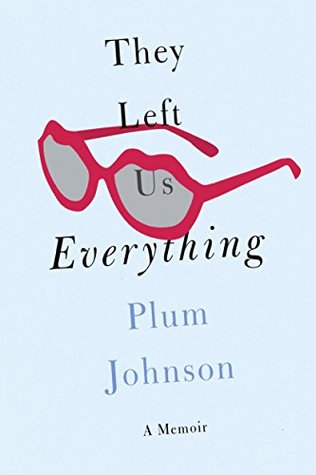 Plum Johnson is gathered, together with her siblings and other family members, at the family manse following the death of her mother. This memoir focuses on the things she’s learned and the insights she gains over the course of the year it takes to empty and sell the property. Thank you to Net Galley and Putnam Penguin for the DRC, which I received free in exchange for this honest review.
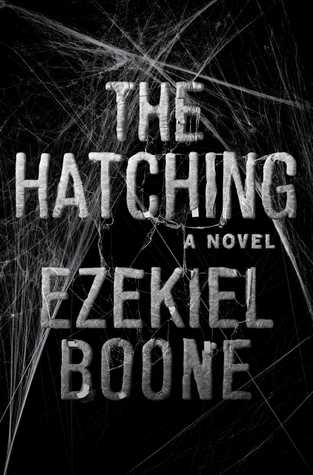 I was never afraid of spiders until I read this book. Thanks to Boone’s monstrous, boisterous, hair-raising new novel, I now eye the ceiling for wolf spiders that hunt at night just before I fall asleep…and I usually find one. I received this DRC in advance thanks to Net Galley and Atria Books, in exchange for this honest review. This book goes up for sale July 5, 2016 and frankly, I don’t know how you’re going to wait that long!
 Seattle Book Mama