
 A good book leaves me in a great mood, and a lousy one makes me grumpy. Today was a good day, and so were the hours, carefully stretched out, over the last week or so, when I was reading this wonderful little e-book. It was not a bundle book, it was one I paid for, and it was worth buying and then some. I will admit that I have a soft spot for promising newbie writers whose careers have not yet taken off; on the other hand, I have never suffered fools gladly. A good book leaves me in a great mood, and a lousy one makes me grumpy. Today was a good day, and so were the hours, carefully stretched out, over the last week or so, when I was reading this wonderful little e-book. It was not a bundle book, it was one I paid for, and it was worth buying and then some. I will admit that I have a soft spot for promising newbie writers whose careers have not yet taken off; on the other hand, I have never suffered fools gladly.
If you want to see my snarky reviews, go to Goodreads or amazon; I save this location for the favorable reviews, unless a publisher straight-up insists that I post my review of their ARC regardless of outcome, which does not happen that often. A mystery reader needs to feel comfortable with the characters and buy the premise before anything else is believable. Although I live in a major urban center and generally prefer mysteries set in big cities, Ms. Crocker managed to make me right at home in a tiny New Hampshire village, though I have never been to New England. She did this by forging common bonds–the target audience here is the female boomer, and I related to it well for that reason–and also by making the characters real enough, through narrative, dialogue, and above all consistency, that I could visualize them. I also related well to the thread woven into the story that champions the rights of immigrants. Like Ms. Crockett, I am married to a man who comes from another country, has darker skin than Caucasians, and has an accent. When her ignorant but otherwise mostly likable villagers started assuming that anything that went wrong should be chalked up to “those people”, my dander went up exactly the way hers did. This is not an adrenaline-rushing type of book, it is a cozy mystery. Not everyone in the story is a rocket scientist. At one point an out-of-town official asks her if she could imagine anyone stupid enough to kill someone as the victim is killed; she looks around at her hilariously drawn fellow citizens and says honestly, “Yes.” It’s a crowded genre; nevertheless, I found myself chortling over the brand-new witticisms and turns of speech she brought into the story. Examples: “bacon fog”, a “clinically depressed” couch, and a very funny scene featuring a disaster on a lawn festooned with lit-up plastic Christmas statues. (My husband shifted restlessly as the bed quietly quaked under my suppressed laughter.) How does someone who is not a cop solve mysteries, particularly those related to murder? Those who have noted in other books that most are solved by police of some ilk (i.e., also fire chiefs, coast guard, forest rangers) are absolutely right. Hers works, though probably not for a series. As a single novel, the setting of a very small town where many of the second-in-command jobs are parceled out to hard-working volunteers, having this postmistress, who is forced to hear everyone’s private business because she is a captive audience, worked really well. She is on the scene and volunteering in a hundred different ways because she has no personal life; her spouse is dead, her kids have flown. She sets up a different premise by the story’s end that could conceivably offer her a back-door route to further adventures if she decides to go there and do that.. |
Monthly Archives: November 2014
Terrible Swift Sword, by Bruce Catton *****
 Brilliant and highly recommended for those who want the details in their American Civil War account. May be read singly or as the second in Catton’s trilogy.
Catton’s trilogy was written as a Centennial History for the 100th year of Union victory and the preserved integrity of the United States of America. His writing reflects the time period, as a strong historian with a nevertheless very Caucasian focus to his work. “People” means white folk when he does the talking, and to be fair, in 1965, unless a writer was a person of color, this was the unfortunate tendency. Nevertheless I give this work five stars, because I have done quite a bit of reading about this bottomless topic, and he taught me a great deal.
Before you set off to read it, though, whether by itself or as the second volume of a trilogy, look at the subject and the page count. Don’t read it if you are still separating Stanton from Seward or McClernand from McPherson. Be ready.
That said, I never really understood before that the Cumberland Gap is also the Wilderness Road (so, Daniel Boone meets the Civil War, sort of). I hadn’t completely understood that US forces were poised on the border of Kentucky, which had (ridiculously it seems now) attempted to remain neutral between the warring factions, way too much land right there in the middle, but they gave it a go, and said that the first army to cross into Kentucky was the enemy, so Lincoln said to wait till the Confederacy crossed, and the rest is history. And before reading this trilogy, I didn’t realize that there was ever a thought over fighting for West Virginia, which was silly of me. In a time where almost every square foot of the border (and eventually beyond) was a source of contention, why would I have believed that West Virginia could leave Virginia, with all of its resources, and no effort have been made by the Confederacy to keep it? And because McClellan took the (physical) high ground before the opposing forces could get there, he got to be the grand pooh-bah of the Union army, after humiliating poor old Scott whose Anaconda Plan was actually very good.
In fact, McClellan really wanted all the power all of the time, and the nasty-tempered letters he sent back to the missuz (oh how many of us think our correspondence will be kept private?) show that he not only wanted to control the army, but he wanted to be either dictator or president long before the re-election of Lincoln was in question. His slowness and reluctance to do battle with his slave-holding pals down south looks more treasonous the more I read about it. Catton builds a compelling case. But Lincoln had to be very careful in replacing him, as Catton documents it, because the attitude had entrenched itself down into the other officers and to a smaller (but weaker) extent, the rank and file. Ultimately, when Lincoln unseated McClellan, it was the rank and file that pulled the army through to the other side when McClellan weighed the matter to see whether his army would march against its own president to install him in personal, powerful splendor. I tremble to think what might have happened had McClellan been more fortunate, and Lincoln less savvy.
I most of all enjoyed a quote by Lincoln that says it all, and which I don’t recall seeing elsewhere. When a representative of Louisiana Unionists sought his reassurance regarding slavery in 1862, Lincoln responded, “It may as well be understood once and for all, that I shall not surrender this game leaving any available card unplayed.”
Well played, President Lincoln, and well written, Mr. Catton. Onward to the last volume in the series!
Top-Secret Twenty-One, by Janet Evanovich *****
 “Hold on here,” Lula said. “Are we talking a rocket like ZOOM BANG! and everything’s blown all to hell?” “Hold on here,” Lula said. “Are we talking a rocket like ZOOM BANG! and everything’s blown all to hell?”“It was more like BANG WHOOSH!” Briggs said…”And at great personal risk to myself I rescued the hamster.”
For those reading in digital format, be aware that a teaser for one of Evanovich’s other series books takes up the last 11% of the book. I was crushed when it ended at 89%, because I had expected it to keep going. Now I will have to read something else until #22 comes along! |
Collected Stories by Frank O’Connor *****
 What an unpretentious little book, and who would have dreamed it would be so full of first-rate short stories? Mr. O’Connor wrote from the 1930’s to the 1960’s, and may be one of the finest writers Ireland has produced, which is saying a great deal. Thank you and thank you again to Open Road Media and Net Galley for the ARC. It’s been a real joy to read!
O’Connor’s early life was marked by alcoholism and domestic violence, and he tosses these into the stewpot of his stories that is so congenial, so resonant, that we little know the pain he went through before he wrote them. The quality of the writing is consistent throughout, which is even more remarkable given its length, which clocks in at over 700 pages! At times poignant and wrenching, and at other times witty and a little naughty, though never breaching the bounds of good taste, Mr. O’Connor delivers.
His protagonists are ordinary people, all of them in Ireland. They live in small villages for the most part; some are wives and mothers, some are brave young lads; there are noble priests and those who are not as noble, but all of them are believable and create an instant bond with the reader. His overarching theme is to remind us, in his folksy, understated way, that all of us are human. He lets us know that whether we believe in God or whether we don’t, for the moment we are all each other has.
O’Connor lived through revolutionary times, and was no stranger to the Irish struggle, which is near and dear to my own heart. His famous opening story, Guest of the Nation, focuses on a card game that takes place between Republican soldiers and their prisoners. Its blend of the ordinary with the wrenching emotion that ran high at such a time makes it immortal. The soldiers’ ambivalence and humanity lends it much of its authenticity.
One of my own favorite quotes appears early in the collection in a story titled “The Luceys”, in which Charlie visits his uncle, a priest. Charlie thinks his uncle is eccentric and cannot fathom how the man thinks:
“One conversation in particular haunted him for years as showing the dangerous state of lunacy to which a man could be reduced by reading old books.”
May we all suffer similarly!
I loved the references he made to “a gang of women” outside of Mrs. Roche’s house in “The Drunkard”. I also laughed at his reference to “…the mood of disillusionment that follows Christmas”. And in “Darcy in the Land of Youth”, I liked how Mick traveled to work in England and “He found the English very queer as they were supposed to be, people with a great welcome for themselves and very little for anyone else.” Here I would hasten to add that I am descended of both Irish and English, though I tend to lay claim more to the former than the latter; Mr. O’Connor’s gift is in wryly touching upon the cultural nuances that sometimes lead to misunderstandings, and others to genuine disagreement, culture or no.
I could continue quoting marvelous passages, but I think it is better for you to ferret out some of your own, and let’s face it, if I haven’t sold you on this book right now, I never will.
Except for this one last bit, which is really a commentary on all strong short story collections: this time of year, many of us will have guests in our homes. If yours is a family that reads, you may choose to set something out in your guest room, and short stories are especially lovely for them to have, because whereas one may not finish a great thick book during a visit over the holidays, one can pick up a short story at bedtime and finish that story before turning out the light.
And the glorious thing is, guests don’t expect a book that is left for their perusal to be brand new; they can enjoy a well-thumbed book without worrying if they inadvertently crease a corner. Right now, you have the chance to get the book for yourself, finish it, and then leave it for company.
That’s a good thing to do, because in the end, all we have really is one another.
Dirty Chick: Adventures of an Unlikely Farmer, by Antonia Murphy *****
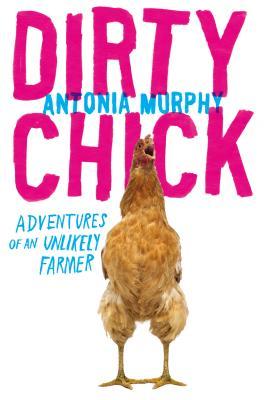 Writing humor is risky business. If one writes mainstream fiction or nonfiction and the book is not well reviewed, of course it hurts–writing is always personal, at some level–but few things are as painful as the I-thought-this-was-going-to-be-funny review. In writing about her own family and friends, albeit with a few small changes to protect the privacy of the individuals concerned, Antonia Murphy takes her bleeding heart in her own two hands and offers it up to the public for consumption.
Personally, I have never laughed so hard in my life, or at least not recently. My thanks go to her and to the Goodreads first reads program for the ARC.
If my earlier reference to Murphy and the bleeding heart made you wince, you won’t want to read her book, either, because it has lots of gooey, graphic, gross stuff in it. It is edgy humor out there on the edge of wild, like the hinterlands of New Zealand where she has made her home. Well, see for yourself. This is from the prologue, so it doesn’t ruin the book for you:
“As I watched my goat eat her placenta, I was mostly impressed…Pearl had always been a strict vegan, so her sudden craving for raw meat showed a real taste for adventure…The placenta draped gracefully from her hindquarters, a translucent pink train enclosing a network of blue veins. There was a dark red, ropy thing inside, heavy with blood and the color of liver. It was this that Pearl tucked into first, craning her neck to nibble and swallow…”
As I read, I tried to analyze what it was that made her humor work. Part of it was her sense of remove, the dry commentary of the detached observer even when she is right in the middle of everything. But every now and again, something will happen in her personal life that shatters the entire I’m-just-watching thing. For one thing, she has two children, and when one meets with a really dangerous misadventure, Murphy is nearly consumed with the fear, the stress, the confusion that every mother on this planet, save for a frightening few misfits, would feel at such a time. So we laugh at all the icky stuff and her reactions to same, but now and again we remember that she is vulnerable to the same nightmares that we are. It gives us a stake in what comes next, and between the hilarity (most of the book) and the pain (deftly meted in small doses), there is no putting this book down once you reach a certain point.
Here’s how it shook out at our house: I would read a passage to myself, then burst out laughing. I would hustle straight past my husband, a man of delicate sensibilities with regard to animals and biological detail. I knew he did not want to hear it, or read it, or even be reminded of it. Instead, I made for the younger daughter’s room. She is a teenager with a great lust for gore, so of course she loved it. And I know that if I had headed for the adult-son-who-sometimes-lives-here, he would have chortled merrily also.
The narrative of this amateur adventure at farming just sat on my giggle button. Murphy, rather than wanting to control and fix every little (and large) thing that occurs, has this brilliantly mellow approach. Wow, the goats keep attacking the cars. A neighbor observes that eventually, they will break her windshield. Huh. Well…she loves those goats, so she isn’t going to “dead” them (her daughter Miranda’s word). She doesn’t want to sell them, and after all, who would want them? And fences are very expensive. She is, after all, just a renter.
Occasional visions of the landlords returning to find their property trashed would wink into my head, then wink away.
Every time I think Murphy and her husband are in over their heads and everything is completely out of control, she takes on an additional project. When all is falling apart, why not find something more to add to it?
So there’s Jabberwocky, the rapist rooster. They might have to dead him. Everyone likes baby chicks, and the hens can’t get preggers without him, but the thing is, he’s psychotic. Eventually she comes to understand that this is how it is with roosters. They start bad and get worse, and sooner or later, one generally HAS to dead them.
Good god. See what she’s done to me?
I have four more outstanding quotes, but they are too close to the end of the book. and it would ruin it for you. And the fact is, almost every single page has at least one quote that is fucking brilliant. I think I mostly marked the pages that showed transitions occurring in the plot, and that’s all well and good for academics, but this is not an essay, this is a review, and therein lies the distinction.
Because you, dear reader, don’t want to know how the book ends, and you are capable of analyzing all its nuances yourself, should you choose to do so. On the other hand, you could also just get the book, have an outstanding weekend curled up in your favorite reading spot, and then be done with it.
For those not grossed out by the references in this review, this is a sure fire hit. Pick it up when you have the blues, and I guarantee that in minutes your worries will be smaller.
When you look at it that way, ordering a copy of this book is really the sensible thing to do.
The Impossible Exile: Stefan Zweig at the End of the World, by George Prochnik ****
 |
If you’re looking for a real-life horror story, this one is for you. It is the story of Stefan Zweig, a writer and collector of original musical scores, very well known in Vienna and throughout Europe prior to the rise of the Third Reich. It’s also a Holocaust survivor’s story, to a degree. When one surveys it objectively, his fate seems so much more sanguine than so many others who were unable to escape, or who suffered terrible physical and material misfortune before doing so. And yet it isn’t. Zweig makes it out of Vienna in time…and yet, he doesn’t.
My thanks go to Net Galley for the ARC. Prochnik is an able writer, and he balances Zweig’s perspective with world events well in most instances; it is a highly literate, well documented biography. It is hard to rate a book like this, because while the writer is proficient, I finished the book not knowing why Zweig’s story was important. The man cut himself off from political resistance, and while he initially helped other Jews who needed to escape, eventually he was so overwhelmed by their need that he not only turned them away, but spoke of them in contempt as “schnorrers” (Yiddish which literally means ‘beggars’) who had not had the prescience to get out in time. At one point, he is said to have thrown one giant party in order to discharge all of his social obligations in one extravagant evening. He supposedly embraced “all classes”, but the single “working class poet” is the only member of the working class ever mentioned as a guest or friend, and the poetry arguably inches that man toward the intelligentsia and professional crowd that Zweig embraced, when he was embracing anyone. Depression and mental illness were not understood well in that time, and that had to be the key to his terrible end, which otherwise seems so unnecessary. Without it, the reader may have a difficult time sympathizing with a man who was able to travel the world after his escape and afford servants upon his arrival. I had a hard time liking this protagonist. Before reading The Impossible Exile, I had never heard of Zweig, but I have read hundreds of biographies, autobiographies, and memoirs, and often they are by or about strangers (or both). Often I find myself seeking out the protagonist’s work after I have read about them, because they have endeared themselves to me as I read their stories. Not so with Zweig. But again, those who have spent any amount of time with a depressed individual know that depression doesn’t merely imbue sorrow; depressives are often angry, moody, or appear lazy when they just won’t get out of bed. Thus, I can understand his difficult nature to that degree (and Prochnik also recognizes it). My recommendation, then, is for a niche audience only. If you are interested specifically in Stefan Zweig, read Prochnik’s book; I cannot imagine the subject in better hands. If you seek a wide cross section of Holocaust refugee stories, this one is likely atypical enough that it should be included. If you are looking for a story in which a survivor rises triumphant against adversity, or dedicates himself to helping others after a narrow escape, this is not your story. It is instead, almost unbearably tragic. |
|---|
Sweet Holy Motherfucking Everloving Delusional Bastard, by Jerome Segundo****
 Wow. What do I do with this story? It is clear to me that it’s most likely only nominally fictional. This is the saddest funny memoir I have ever read in my life.
Most of you won’t have the benefit of reading the cover letter that first-readers receive, which made me laugh out loud. This man has a gift for writing, and has the potential to be really hilarious. In places, his book is funny, in a dark way. But life has taken the spring out of his step.
He’s been to prison, and he emerged broke, without a license or a home. He had earned a college degree before being incarcerated, but now because his name was tarnished, it is virtually worthless, since he has to get a job under an assumed name. And he has to register as a sex-offender.
I got this from the Goodreads.com giveaway, and it initially gave me serious pause–and gentlemen out there, this is almost reflexive for most women–to see the man say that he was a convicted rapist who had pleaded nole contendre…and I had given him my address. Yes, that’s irrational. But “rape” is a really electrifying term to most of us.
Once I had read the book (and it’s a quick read, partly because I couldn’t put it down till I had the whole story, especially once I had peeked at the ending and come to believe in the guy’s innocence after all) I just wanted to cry for the man. He isn’t a rapist. He was clueless and in a relationship with a really unstable woman, unless he’s made parts of his story up wholesale…and I don’t think he has.
The fact is, the U.S. “justice” system isn’t much of one. More and more often, it serves to isolate and undercut a layer of young men and make them lesser citizens when they emerge, assuming they ever do. And whereas Segundo should have fought the charges against him, he was so physically ill,alienated and demoralized that he didn’t. Where was his family? Did they turn their backs on him, or did he slink away, afraid that they would be ashamed of him?
And I need to say this, too. This business of registering one’s whereabouts for life after having done the time for a crime (which is, as is always the case in capitalist society, unevenly enforced and penalized according to one’s wealth), is absolute bullshit. I say this as an old-school, card-carrying feminist warrior who has marched on the Capitol multiple times for women’s rights. We cannot isolate one group of “offenders” and make them permanent pariahs and then say that we have a rehabilitative system. What’s that about?
There is a lot of really graphic sexual content here. On the one hand, I am an old lady and it embarrassed me, but on the other hand, I have never seen a story where the sexual content was more essential to the telling of the story.
I wish this guy well, and I hope he can rebound and regain some joy in living. If he has become cynical, one can hardly blame him. This is not a light read, but a Lenny-Bruce-like attempt to restore some dignity to his own life and that of others who may find themselves wrongly accused and convicted of one of society’s most heinous crimes.
 Seattle Book Mama