
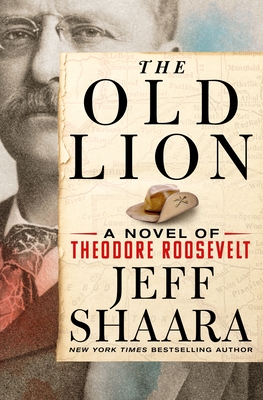
The Old Lion, by Jeff Shaara****

There are a good many books that have been written about President Theodore Roosevelt, and no two are exactly alike. That said, the two I’ve read—this one, and a biography by Clay Risen—could not be more different. In fact, you would never know they were writing about the same man.
My thanks go to Net Galley and St. Martin’s Press for the invitation to read and review. This book was published in May, but it took me some time to push my way through it.  I started out not knowing what tack Shaara would take here, and it is this introductory note that caused me to sit back a bit:

“Few, very few, would disagree that Theodore Roosevelt ranks high among the most revered, most respected, and most admired presidents in history.”

I guess it’s time for me to change my name to Few.

Because I had signed on for it—on the strength of my admiration for its author, whose books I always read without regard to topic—I hunted down the audio version at Seattle Bibliocommons. The voice actor that reads it is second to none, and does a remarkable TR impression. But I also have to say that the various thoughts and conversations which the historical fiction genre permits its author to create seem a bit on the rosy side. Where is the TR that not only organized volunteers, himself included, to fight in Cuba, but used vast amounts of his family’s connections and wealth to advocate for it? Where is the braggard that crowed to his friends about how much he enjoyed shooting an enemy soldier from just a few feet away “like a jackrabbit,” and called his 45 days of combat the ultimate hunting trip?

This is one more reminder that all history is political. Nobody will, or should, write a book about a public figure that uses every single fact available, but it is when the author chooses what to include, and what to leave out, that bias shows. There’s no way around it, even for the most objective of writers.

I cannot deny that there were positive aspects of TR’s tenure in the White House (which he named,) the birth of the nation’s park system, beginning with Yellowstone; he also gets points for having seen, ultimately, that these are not meant to be preserved as hunters’ playgrounds, but rather to preserve the natural life, including animals, that are native to the park. His attitude toward women and Black peoples’ suffrage is laudatory, compared with other politicians of his time, but Shaara doesn’t comment on the ugly racist attitude Roosevelt displayed toward other races and ethnicities, most notably those from Central and South America.

This is a four star read because no matter what he chooses to write about, Shaara spins a tremendously entertaining tale. If you choose to read this one, I recommend you obtain the audio version, and take the dialogue and in particular, Roosevelt’s innermost thoughts with a larger than usual grain of salt, and also read a second, nonfiction work for balance.
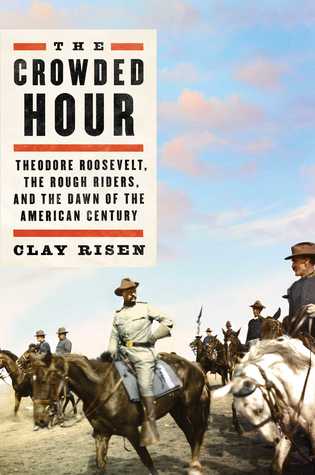
The Crowded Hour, by Clay Risen*****

The Spanish-American War sparked the earliest fire of U.S. imperialism, and the eccentric rich man that pushed it forward, Theodore Roosevelt, was at its center. Risen provides a contemporary view of this badly managed chapter in American history, dispelling longstanding myths and examining the long term effect of the conflict on the U.S. military. My thanks go to Net Galley and Scribner for the review copy, which I read free in exchange for this honest review. This book is for sale now.

Roosevelt was challenged with a number of health problems as a youngster, but instead of embracing his sedentary, privileged existence, he embarked on a series of physically demanding adventures in order to strengthen his constitution and affirm his masculinity.

When Cuban nationalists sought independence from Spain, Teddy began campaigning for American intervention. Men of his generation was had not known the destruction of lives and property that touched every part of this nation during the American Civil War, and like most young people, they were unwilling to listen to their elders. Roosevelt believed that war was a splendid thing, and that in facing death, men were elevated to a higher level. He joined his voice to those in the press advocating military aid to Cuba, and after tapping every powerful connection his wealthy family could access, he was successful.

 His own unit—all volunteers—were dubbed the “Rough Riders.” Most had no military training of any kind; the mighty Union Army had been all but disbanded once the nation was reunited. Though they were promoted as cowboys, the rugged individuals of the Wild West, a goodly number hailed from Wall Street and Harvard. In addition to being able to fund their own wartime excursion, they were noteworthy in their riding capability.

There was no San Juan Hill. There was a series of them.

The American invasion of Cuba cast a spotlight on its unpreparedness. Transporting troops, beasts and equipment across the Atlantic was a debacle of the worst order. There weren’t even close to enough seaworthy vessels, and because of this, most of the so-called cowboys fought on foot the entire time; horses and mules were stuck back in Tampa waiting to sail. There wasn’t enough food, potable water, or appropriate clothing for most of the men; the wealthiest among them fared best, but there were many occasions when there wasn’t any food to be bought at any price. There had been no reconnaissance and so they went in blind; the heat and disease killed more Americans than the Spaniards did. Vultures and immense land crabs that measured 2 feet across and traveled by the thousands made short work of the dead when not buried immediately. American losses were nearly triple those of the Spanish, and when the war ended there were no hospitals or sanitation ready to receive the legions of sick and wounded when they returned from the Caribbean.  

Roosevelt used the occasion to point to the need for a standing army and U.S. readiness, and ultimately this was his one useful contribution. In other regards, the man was an ass hat. His bald-faced racism, though not unusual at the time, went over badly with the Cuban freedom fighters that were supposed to benefit from their presence. He crowed to his friends about how much he enjoyed shooting an enemy soldier from just a few feet away “like a jackrabbit,” and called his 45 days of combat the ultimate hunting trip. Mark Twain hated the guy, and it’s not hard to see why.

Risen has an engaging writing style, and he uses lots of well-chosen quotations. His research is excellent as are his sources. I would have liked to see more of a breakdown along the lines of social class and other demographics, but this war did not yield a rich archival treasury like the one that came from the Civil War, so this may not be possible.

All told, this history is a find. Right now it seems that every second historian on the planet is writing about World War II, whereas this cringeworthy but significant chapter of American history has been largely left by the wayside.  I highly recommend this book.