North Woods, by Daniel Mason*****

By now the word is out about this genre-bending novel. North Woods, by Daniel Mason, is nothing short of brilliant. My thanks go to NetGalley and Random House for the invitation to read and review; this book is available to the public now.

This book is all about the setting; there are some terrific characters, but don’t get too attached to any of them, because for the most part, they come and then leave. Rather, our story is about a cabin in the woods of upstate New York, and the acreage surrounding it, and how its use changes over the years.

We commence before the American Revolution, and so in the beginning, the narrative has the style of a very old diary, with antiquated spelling and language. This section is the reason I am so dreadfully late reading and reviewing this book. Honestly, the first fifteen percent or so is as dull as watching paint dry. I would begin reading it, but then my eyes would glaze over and I knew I had some other things to read by authors I knew and loved, and so I would switch books. But my Goodreads friends were raving about this book in unusually large numbers. Nobody didn’t like it. And so I summoned my self-discipline and went to it in a determined fashion, fortified by the audio version, which I received from Seattle Bibliocommons. This was very helpful. And once I got past that dry beginning, I began to understand why other readers were raving about it.

The first characters that are noteworthy are twin daughters named Alice and Mary, who are left to run the apple orchards on their own when their father goes off to war. He is a Loyalist, determined to save New England for his king. He doesn’t survive the war, which is just as well, because the locals hate him; he chose the wrong side to fight for. Neither daughter marries, and the property eventually goes to someone else.

The chain of owners is varied and, in many regards, absolutely hilarious. We see one new owner after another explore the house and the grounds, and of course, none of them has a full picture of the previous owner. I love the fact that I know more about this place than its most recent purchaser, and the assumptions that they make range from the merely incorrect to the disastrous. I cannot say too much more, although I particularly enjoy the character of George, whose phlegmatic, unattractive qualities are rendered uproarious in the audio version, and also the medium, a complete charlatan who’s horrified when she inadvertently awakens some actual supernatural beings. I would love to say more, but that would ruin it for you, and that would be a crime because surprise is an important part of the book’s success.

There is a formidable cast of actors that take on the reading for the audio book, and for those readers that are on the fence between audio and print, I recommend the audio version; better still, use both together.

After reading this one clever, memorable book, I will be watching to see what Daniel Mason writes next, because whatever it is, you know it will be good.

Highly recommended to those that enjoy historical fiction, literary fiction, humor, and horror.

Happiness Falls, by Angie Kim*****

Angie Kim’s barnstorming best seller in 2019, Miracle Falls, showed us that she is a force to be reckoned with. Now she’s written something even better. My thanks to go Net Galley and Random House for the review copy. This book is for sale now.

I admired Kim’s debut novel, but because of its complex nature, it was a fair amount of work to read. Happiness Falls is every bit as brainy, but it’s streamlined, with just five important characters and a handful of secondary ones, so the reader can spend more time enjoying it and trying to puzzle out the solution, and less time trying to keep up with the plot and recall the intermittently appearing characters as it progresses.

As with her debut, this story features a main character with special needs. Eugene Parson has Angelman syndrome, a rare disorder that has rendered him incapable of speaking. This is a problem, because one day, Dad and Eugene go to the park for their daily walk, but Eugene comes home alone, bloody, disheveled, and tremendously upset. What happened? The family’s concern intensifies when Dad’s backpack is found floating downstream, but Eugene cannot speak. And so, the mystery that is interwoven into this family drama is established.

The story is told in the first person by Mia, Eugene’s older sister. Mia’s twin, John, rounds out the siblings, and their mother is the fifth family member. It’s set in Virginia during the pandemic; however, plot and character are much more important here than setting.

The mystery—what has happened to Dad—is wholly original because of the critical role played by Eugene’s communication challenges. Originality becomes more important to me every time I pick up a mystery; once you’ve read several hundred of these things, sameness can produce tedium. But this novel has much more going for it than that. The characters are absolutely believable. The teenagers are all convincing; they are age appropriate, bright but occasionally impulsive. Best of all is that there is no abuse story tucked in here. Their dad is or was a loving one, and the same is true of their mother. The parents have navigated bumps in their marriage, but by the time we hear of them, they’re fine. There’s no horrific baggage waiting to ambush us. These are nice people whose lives are complicated solely by the need to assist Eugene, whom everyone also loves. I make a point of telling you this, because I am sick to death of stories about terrible mothers. I’ve had enough of them, and am delighted Kim doesn’t go there.

Our narrator, Mia, is cleverly drawn; she is the family cynic, and she’s the family motormouth, and so if we occasionally wonder why Mia is telling us everything in such detail, it’s because Mia is a talker.

There are twists and turns all over the place. Just when I begin to think I might have a handle on this mystery, Kim throws in something else that leaves me gaping like a guppy. What? Huh? Oh. Well, there goes my theory. What now?

Because I came to this post-publication, I checked out the audio version at Seattle Bibliocommons to help me catch up. The audio is very well done. Initially I didn’t find Mia’s narrative voice appropriate because she seemed mighty chirpy for a girl that may have just lost her father; however, once Mia’s character is further developed, which doesn’t take long, I realize that the chirpiness is part of Mia’s denial. She’s very close to her dad, and she can’t bear to think that he is in danger, or worse.

I have rarely felt any interest toward any profound learning disability, but Kim made me care about Eugene and Angelman’s.

This novel is brilliant, a standout for 2023. I highly recommend it to all that love a good mystery or family story.

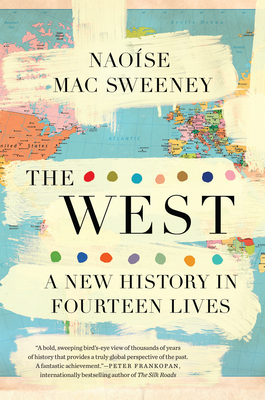
The West, by Naoise Mac Sweeney****-*****

4.5 stars, rounded up.

Those that have taken a course on Western Civilization—as college freshmen or otherwise—are familiar with its framework, that the modern world can attribute its earliest, most progressive, democratic, and technically superior attributes to the dead White European men that came before us. Archeologist and award-winning historian Naoise Mac Sweeney has taken a sledgehammer to this construct, proving that many of the smartest scientists, inventors, and social, military, and political leaders were not White, not European, and not male.

My thanks go to Net Galley and Random House for the review copy. This book is for sale now.

Mac Sweeney demonstrates her thesis by discussing fourteen key figures from the past that don’t fit into the standard framework. She begins with Herodotus and ends with Carrie Lam. Some chapters read like a college text or lecture, one where I know that this information is important, but my mind keeps wandering, and I check to see how much longer the chapter will be. Others woke me up. In chapter seven, she features Safiye Sultan of the Ottoman Empire. She was not legally able to become sultan following her husband’s death, so she saw her son installed, and then “summarily executed” his nineteen younger brothers to prevent anyone from contesting his right to rule. Another that made me sit up and take notice is Njinga of Angola. I was riveted by this one, to the extent that I actually shouted at one point. (It’s all right; I was at home.)  If we judge her work by whether she has proven her thesis, then unquestionably she has done so. 

There are two aspects that I didn’t care for here. The first is a mannerism. The use of the Victorian “we” is grating. “As we shall see…” “We have discussed…” No. She has already seen, and the only one doing the discussing within the pages of this book is the author.  Also, since the title itself identifies this tome as a history book, Carrie Lam of Hong Kong, whose quotes date from 2021 and 2017, has no business being included here. History is defined as what has occurred fifty years or more prior to publication. Mac Sweeney knows this.

In a fit of pique over these two flaws, in addition to the snoozy parts of the narrative, I initially rated this book with four stars, but this is a groundbreaking body of work, and after reflection, I changed my rating to 4.5 stars, rounded up.

Highly recommended to students and to anyone interested in world history.

When the Moon Turns Blue, by Pamela Terry*****

Once in a while the odd thing happens,

Once in a while the dream comes true,

And the whole pattern of life is altered,

Once in a while the moon turns blue.

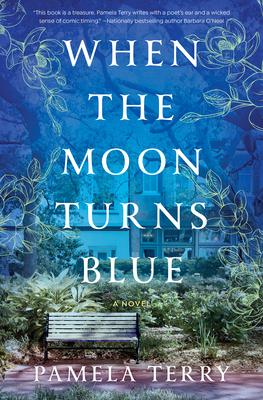
The tiny Georgia hamlet of Wesleyan is preparing to bury one of its own, and Mother Nature is preparing to cover the entire town in ice. But nobody—well, almost nobody—knows that a source of local tension is about to go nuclear, as someone is planning to topple and destroy the statue of a Confederate general in the park inside the boundaries of Old Man Griffin’s land. “The fight was just getting going good, and now somebody’s declawed the cat.”

This riveting, curiously charming and sometimes hilarious novel is the second by Pamela Terry, whose outstanding debut novel was The Sweet Taste of Muscadines. This one may be even better. My thanks go to Net Galley and Random House Ballantine for the invitation to read and review. This book is for sale now.

With the death of Harry Cline, we find ourselves at his funeral, a massively attended affair. But his wife, Marietta, develops a disabling, blinding migraine, and although they have been on the outs for years, Butter, her (former) best friend, comes to the rescue. By the time they’ve snuck out the side door of the church, we already know at least a little about both women, and now we want to know everything.

With just two novels published, Terry has already proven herself to be among the best authors when it comes to character development. Soon we’ll meet others—Marietta’s obnoxious brother, Macon and his beleaguered wife Glinda, who will have a large part in this story and is one of my favorite characters, as well as a host of others, who have smaller roles but are each so unmistakably established that it’s no work at all to keep track of them. But perhaps her finest achievement here is in creating a masterpiece that is ultimately a feel good book, despite the use of a red hot real world controversy within its pages.

I generally read several books at a time, and this one is the one that I saved for bedtime, because I wanted to be able to read it uninterrupted, and it is the one I wanted in my head when dreams came. It didn’t let me down.

This inspirational work of Southern fiction stands shoulder to shoulder with the finest classics, To Kill a Mockingbird and Fried Green Tomatoes. I wholeheartedly recommend it to you.

Alpha and Omega, by Harry Turtledove****

I greatly enjoyed We Install and Other Stories when it came out a few years ago, and so when Turtledove’s name came up again, I pounced on the chance to read and review Alpha and Omega. Thanks go to Net Galley and Random House Ballantine. This book will be available to the public Tuesday, July 2, 2019.

The Dome of the Rock, an ancient Islamic shrine, is about to be relocated so that the Jewish Third Temple may rise in its place. As the story commences, a rare, completely red heifer has been identified and will be used as a sacrifice for the occasion. Chaim, a youngster who has raised Rosie and regards her as a pet, is not entirely on board, but he is just one kid, and he has no authority at all.

Until he does.

Turtledove is a master writer of alternative history, which I confess isn’t my usual wheelhouse, but I do love me some old school science fiction now and then, and this book is that, too. A three-way conflict develops between the Orthodox Jews of Israel; the Muslim Grand Mufti—and the Islamic nations with which he is aligned—and the evangelical Christians of the American South, led by the Reverend Stark. Archaeologist Eric Katz, a secular Jew with no religious axe to grind, provides the reader with an objective, every-man perspective, accompanied by his girlfriend, Orly.

If I could change one thing about this story, I’d like to see a female character developed well outside of the traditional pigeonholes; journalist Gabriella almost gets there but doesn’t. However, this is an issue that’s endemic to the genre.

All told, the miracles that unfold within this witty tale are delightfully provocative; this is a story that will rocket to the top of the banned book list, and you’ll want to know why. I recommend it to fans of the genre.