
A story like this one only comes along once in a rare while, luminous, intimate, and deeply affecting. My great thanks go to NetGalley and also Farrar, Strauss and Giroux for the review copy. This book is available to the public, and you should get it and read it.
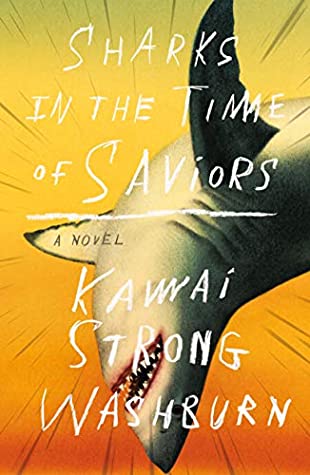
Initially I was drawn to this book for several fairly superficial reasons. The cover is certainly arresting; the title is perplexing. But the biggest draw for me was that it was set in Hawaii, and all of the characters are native Hawaiians. In my corner of the world, the Pacific Northwest, there are a lot of Pacific Islanders. Why anyone would leave such an idyllic climate for the dark, soggy winters we see here used to be a mystery to me, but ultimately, people follow the jobs, and so many Seattle residents come from there.
As a history teacher, I’ve always felt that my students deserve to be included in the curriculum, and so in addition to teaching about Caucasians during whatever time period we’re examining, I work in African-Americans, Latinx, Native peoples, and a variety of Asian ethnicities, but time and again I hit a wall when I tried to find something for my Islander students. And when I’ve taught literature, it’s been the same struggle. Islander kids get shut out every time. And so now I am retired, and here’s my appeal to other educators out there. Put this book in your classroom.
For the rest of you: apologies. Let’s get on with it.
As we open, the setting is Hawaii in 1995, and the protagonists are two parents and three children, all members of the Flores family. They’re on vacation when seven year old Noa falls into the ocean where sharks are circulating. But instead of devouring the boy, one of the sharks delivers him back to his family, carrying him gently in its jaws, “Like you were made of glass, like you were its child.” The first chapter is told in the second person, with Malia, the mother, recalling the event, speaking to Noa. She tells him, “The gods were hungry for change, and you were that change.” It’s obviously a miracle, and others see it happen also. Their lives will never be the same.
As the story continues, we hear from all of the family members. At first, Noa appears to be gifted with a magical healing ability, but he is still a child, and the demands on him are grueling, exhausting. But this is not the only change his magical abilities produce. Noa is the youngest child in the family, but now the siblings’ hierarchy is completely flipped, and the resentment felt by his brother and sister is dreadful. At one point Kaui, who is academically talented, fumes that she is “just his shadow, shaped like a sister.” And his brother Dean, who is an athlete, explains:
You’re out at breakfast without him, eating cereal and joking with Mom and Dad, Kaui coming in, and you get them all laughing and smiling, just because of you. But then Noa shows up right, and suddenly it’s all questions about what’s happening with his day and did he sleep okay and here’s some thoughts about which extracurricular program he should enroll in…Hard not for get angry at that. I felt it like a fist flexing inside my own chest.
To make matters even more fraught, there’s an economic downturn that makes it impossible for the parents to support the family. They begin charging people that come to be healed by Noa, and so the youngest child is not only the golden favorite because of his miraculous ability; he’s also the family breadwinner. And again: it’s an awful lot to put on the shoulders of one small child.
The dialect combines with the authorial voice to create characters that I swear I would know if I ran into them, and in many ways, they remind me of the adolescents that I taught. Because I was so unconscionably late here, I checked out the audio version at Seattle Bibliocommons, and I have never heard an audiobook I loved more. The voice actors are so convincing that I can hear them now, more than a month and several other audiobooks, after I finished it.
For me, that would be enough. Create visceral enough characters and I don’t even care much about the plot. But the plot is also gobsmackingly brilliant! I believed I could track where it was headed up until perhaps the 60% mark, and then there’s one surprise turn, and another, and another, till at the end I was simply sitting with my mouth open and my eyes on the text as the audio gave way to the afterword and credits. I had to remind myself to breathe.
This is one of those rare galleys that I could see reading again just for the love of it. This review is my 923rd for NetGalley, and I have chosen to reread fewer than 10 of them, so let that indicate the measure of esteem in which I hold this novel.

 Seattle Book Mama