Interior Darkness, by Peter Straub****

interiordarknessPeter Straub is a legendary writer of horror, and has been publishing novels and short stories for decades. Those that have followed him everywhere and sought every new thing he has written won’t find much joy here. This new collection draws on earlier collections. So for fans of Stephen King looking to add a second horror writer to their favorites list, this book is a winner, and it is for this new generation of horror readers that I mark this collection 4 stars. For die-hard Straub fans like me that are looking for stories that haven’t been published before, it may be a disappointment. I read my copy free courtesy of Net Galley and Doubleday in exchange for an honest review.
The first story, Blue Rose, is one of the most chilling, most terribly great stories Straub has ever written. This is probably why once I was partway into it, I suddenly remembered the middle and ending exactly after all these years, with over a thousand works of fiction read between then and now. I also suspect this story may have been featured in multiple collections, although I don’t know it for a fact. Likewise, the stories featured from his Houses Without Doors collection were all stories I remembered having read more recently.

However, I found three stories that had been published earlier in Magic Terror that had somehow slipped my attention. In particular, “Porkpie Hat” and “Mr. Clubb and Mr. Cuff” are  well done. I became a Straub fan before I finished college, and also before I was a literature teacher. It is great fun to go back and look at all the miraculous ways he uses imagery and other devices in these two stories to build dread in the reader and connect us in a nearly-visceral way to his protagonists. There is only one story in this collection that pushes my ick button—that part of my gut that turns over when something goes from being sick in an entertaining way to being sick in a way that makes me really feel sick and regretful at what I’d read; this is “The Ballad of Ballard and Sandrine”, originally published as a novella.

One sad thing in coming back to Straub’s work with more depth of knowledge than I had when I first read it is that I see a problem I didn’t notice before. Straub cannot develop female characters, and falls prey to every stereotype imaginable. There is one story in the “Noir” section where he deliberately uses stereotypes tongue in cheek, but this apparently hasn’t caused him to notice that he practices many of the same habits in the rest of his prose. It is this failure that denies him the fifth star in my rating.

Horror writers love to use kiddies, and Straub is no exception. If you cannot bear to read stories in which fictional children are subjected to cruelties in order to move the story forward, don’t read this book. In fact, if that’s the case for you, this may not even be your genre. Sometimes Straub rescues the kid at the end of the story, but then again, sometimes he doesn’t. And sometimes, it’s gruesome. I would not have cared to read these tales when I was pregnant or raising young children; I was way too close to his fictional characters at that time in my life. I mention this in case it’s true for you right now.

Conservative Christians won’t like this book.

Most of these stories were written for the book buying public of the late twentieth century, the majority of which was Caucasian and perhaps more clueless than most white folks are today. I could not help but notice that none of his scary characters had blue eyes. However, there’s one nicely done story involving allegory as well as wry humor titled “Little Red’s Tango”. In this story a Japanese book buyer turns up and stays awhile; Straub avoided every stereotype and the character was both believable and respectfully drawn. I appreciated it.

Between what I have said here and the table of contents that you can find online, you should know now whether this collection is in your wheelhouse and whether it’s something you want to pursue. It is available for purchase now.

The Future Never Lasts, by Phillip Gardner****

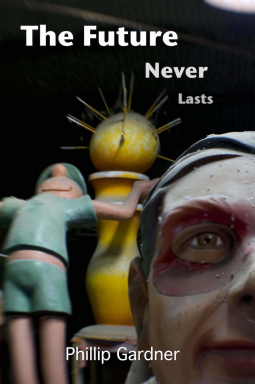
ThefutureneverlastsI do enjoy a good short story collection, and make no mistake, this collection is a good one. The marketing blurb says that these tales are “the finger on the pulse of collective secrecy”, but they could just as easily be tagged as stories of alienation. Almost all of them feature protagonists in dysfunctional marriages; some could easily land in an anthology of horror stories, or of crime fiction. But when all is said and done, if you like good writing, you should buy this book when it goes up for sale January 4, 2016. Thank you to Net Galley, Biting Duck Press, and Boson Books for the DRC, which I was given in exchange for an honest review.

Usually a collection like this one features its best work first and last, but this time I don’t see it that way. The first one is decent, but there are occasional moments when the dialogue goes awry, becoming at times either awkward and pretentious, or like a mouthful of mashed potatoes. The story itself wasn’t bad, it was specifically the dialogue that didn’t sit quite right.

The second story made the entire collection worth having. “This Time Comes From That Time” is a story of a Vietnam veteran who’s gone to pieces and commenced digging his own tunneled command center beneath his grandmother’s home. The jumbled trauma of that time—the murders of the Kennedy brothers and Martin Luther King, Junior; the war; demonstrations and riots that burned in cities across the nation—combine with the protagonist’s combat experience to leave him disoriented and seriously off kilter. Toss in some strangely comforting TV shows of the 1960’s, and the stew that Gardner makes of it is fascinating indeed. The prose is lean, the words well chosen. The man knows how to use figurative language like a champion; in particular, the use of repetition to drive the plot forward, to create a sense of urgency that is both visceral and memorable, is hard not to notice. At times it creates a take-me-to-church cadence that leaves the reader helplessly enthralled.

The titled selection was my second favorite, a story in which stone cold murder and every day irritations are juxtaposed in such a way as to leave a trail of shivers down even the most hardened reader’s spine. Yet there is also a place—I don’t want to give anything away, so I will refrain from being specific—in which a particularly obnoxious character’s comeuppance made me laugh out loud. This was made all the more amusing by the rapid way the author led us from the chamber of horrors to this brief, comedic moment, entirely unanticipated. And from there, things gradually chilled—even froze—not unlike the corpse in the story.

Gardner’s use of foreshadowing is sometimes predictable or mechanical, but at other times, it is used in the best way possible, building tension and suspense to the point where the reader has no option when the phone rings or a family member beckons, but to ignore them and keep on reading. “A Crime of Opportunity” is particularly strong in this respect, and was another favorite of mine.

Every single story in this anthology is hip-deep in booze. If you’re on the wagon right now and struggling, get yourself a different book.

The Peace Process, by Bruce Jay Friedman ****

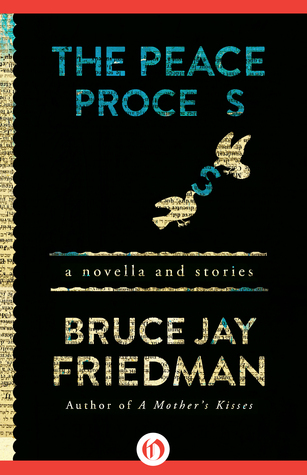
thepeaceprocessThe Peace Process is actually a collection of short stories plus one novella at the end. The writing is edgy all the way through and in a number of places it’s very, very funny. Thank you to Net Galley and Open Road Integrated Media for providing me with a DRC to read in advance. This collection will be available to the public October 13.

If any work of fiction you have read in the past five years or so has offended you in any way, the first selection in this collection is guaranteed to do so. It did me. Frankly, I am such a consistently fast, thorough reviewer that I could blow one off right now if I was disturbed enough by it, and I came pretty close. I don’t like to spoil things, but at the same time you ought to be warned. Is incest—even imagined incest, and with details—offensive to you? Is there a way to make a boy’s graphically imagined incest with an older sister acceptable, even funny? If so, then this is your collection. As for me, I almost wrote to the publishers to tell them that I wasn’t reading or reviewing one more story in this nasty little book; fortunately for me, I looked at the table of contents, figured out how much more of the book there was left to read, and decided to stick with it for one more story. And the next story, “The Storyteller”, was funny enough that I forgot—well, almost forgot–how mad I’d been a few minutes before.

But I seriously question the editor’s choice to put that one dreadful story right up front. It’s almost like begging the reader to throw the book out the window.

Moving on, the writing in all the other stories, from the second on through the last, is really strong. My imaginary red teacher’s pen sometimes comes out when I’m reading a galley, and I’ll think how much better the work would be if we could just nip this part here and take a meat-axe to another section. Not so for Friedman. Every word is well chosen, and the pacing is taut and brisk. Besides “The Storyteller”, my other favorites were “The Choice” and “The Strainer”. The endings always surprised me, and a couple of times, had I not had someone sleeping beside me as I read, I would have moaned aloud when I reached the denouement.

If I were to advise someone with tastes like my own as to whether to read the collection or leave it go, I would say get the book; skip the first story; read the rest of it. But then, you have to decide these things for yourself. I’ve done what I can, and the rest is up to you.

For fans of edgy, dark fiction, recommended with the caveat mentioned.

I Am Crying All Inside and Other Stories: The Complete Short Fiction of Clifford D. Simak*****

iamcryingallinsideClifford D. Simak is a science fiction legend. Before his 55-year career was done, he earned 3 Hugo Awards, the Nebula Award, and was named Grand Master by the Science Fiction and Fantasy Writers of America. I scored big when Open Road Media and Net Galley invited me to read and review this wonderful collection. It is available for purchase digitally now, and will be released October 20.
The fact is, I miss old-school science fiction writing, the fun stuff that is the product of a fertile imagination but requires no knowledge of programming code or other technological wizardry. What’s more, the quality offered in this collection is not only excellent, but evenly so. Common themes tend toward robots with complex feelings, sentient plants, and time travel, but there is no sense of sameness otherwise. Sometimes we are on a far-flung planet; sometimes we are back on planet Earth after it’s been wrecked to where anyone with any gumption has up and left, with only sorry-ass losers remaining. The common factor among all of these stories, in fact, is Simak’s ability to engage the reader.
Given the strangeness of the worlds science fiction and fantasy writers create, one would expect to feel intellectually curious about what the writer has cooked up, but what astonishes me every time I read really strong science fiction is the way the writer manages to work our emotions, causing a lump to form in one’s throat over something that could not possibly happen. By creating an alien setting in which a human, or human-like thought and emotion is present, a sneaking affection is created, and before you know it, there you are practically weeping over the poignant scenario that’s before you. The hook isn’t sentimental or maudlin, and that is why it is so successful. The subtlety is powerful, and we are connected to characters that not only don’t exist, but could never exist in the way the author has laid it out. And so, if Stephen King is drawn to things that go bump in the dark and binds our emotions to oddities in that genre, so has Simak laid our feelings bare using distant, fictional moons in solar systems that don’t exist. It’s a hell of a gift.
Every time I read a short story and decided that I had a new favorite, I looked back over the earlier ones—they were all so strong!—and then read on, and found myself uncharacteristically unable to choose one over the others. There isn’t a weak one in the batch; all are outstanding.
At one point I was ready to knock half a star off over the one-time use of the “N” word in one short story written in the first half of the twentieth century, but then there were all sorts of references to racial purity within the context of the story (alien races) that convinced me that he had an agenda when he did so, and not necessarily a bad one. If it were up to me, I’d leave the word out, but given its purpose here, one could argue for its inclusion.
But it’s worth being warned that it’s there. Nobody likes that kind of surprise.
The only other bad news here is that Simak is dead.
The good news is that over his prodigious career, he wrote enough material to fill 13 more collections beside this one, and if permitted, I will read and review every single one of them.
Highly recommended to anyone that loves old school sci fi.

The O. Henry Prize Stories 2015, by Laura Fuhrman, editor*****

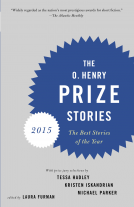
theohenryprizeshort2015Well of course it’s a five-star book; these stories are the winners! And having just read them, and changed my mind over and over as to which was my real favorite, rather like being at a banquet and being served all of one’s favorite foods, I was at something of a loss to find one that rose above the others…until the very end, and if I had to choose one of them, that would be it. That one, or Russell Banks’s “A Permanent Member of the Family”, a poignant, terrible, magnificent story that I had actually already read and reviewed about a year ago in a collection by that author. So, it goes without saying that Banks is a giant, and I just sort of set him aside with the knowledge that he was untouchable, and then read and compared the rest. But why take my word for it? Don’t just listen to me! Look here at how I’ve rambled on forever without mentioning that I got this book scot free (lucky me) from Net Galley and Knopf Doubleday Publishers in exchange for an honest review. This outstanding collection will be available for purchase September 15. I don’t know how you can bear to wait that long!

Okay, let’s try this again. See, it’s almost impossible to compare them, but here are some things I can say about the collection as a whole: first, that it is a multicultural collection, but it doesn’t appear to me as if anybody laid out special rules that said anyone had to vote for this, that, the other culture. They’re all really strong. There was never a moment where something went thud and I wondered how the hell that story got in here. I obsessively made notes on my kindle whenever I came to something that was funny, interesting, or—oh especially this!—when I found incredibly effective, purposeful figurative language. If I still taught (well okay, if I still taught, I wouldn’t have time to read galleys), but if I still taught, I would get a good hard copy of this book to slide under the projector in order to illuminate what the various types of figurative language look like when they’ve been used well. If I still taught and had an actual book buying budget, I would get an entire class set so that students could go through and find the passages for themselves, which is actually a much more powerful way to teach, and then I’d have them write their own stories and be gob-smacked by how much they had improved over the course of a week or so, just from reading a few choice, selected stories.

But I don’t teach anymore, and I do read a lot of books and write a lot of reviews, and I am telling you, this is better than what I generally read, and I’ve been reading good stuff, too. The last story in the collection, “Birdsong from the Radio”, by Elizabeth McCracken, is not only outstanding, but it’s chilling, horrifying, and absolutely fabulous read-aloud material for the month of October.

But if, like me, you no longer have anyone except other adults surrounding you now, you should get this collection for yourself. Read it on the beach; in a chilly, air-conditioned motel room; or snug by the fire this fall. Because this is what excellence looks like. It’s gluttony for the voracious reader, and extremely tempting, I should think, for the reluctant one.

All the Time in the World: New and Selected Stories, by E.L. Doctorow *****

allthetimeinWhen I was a kid, I often bore the distinction of being the second-smartest kid in the class. You’d think it would be an honor, but then, how often do we watch silver medalists at the Olympics stand ashamed, tears streaming, because they were not the very, very best? And so as I read these gob-smackingly brilliant short stories by Doctorow, I know exactly who he would have been in my life. He would have been that smartest kid, that gold medalist. I could never even touch his writing ability with anything I produced.

Back when I was that second-smartest student, I would have burned with envy at Doctorow’s brilliance, but now I can only bow in awe. What talent—and what a work ethic! He has produced prodigious prose over his lifetime, and I don’t think he has ever published anything that wasn’t top drawer work.

Here’s his author blurb, lifted from Goodreads.com:

“Among his honors are the National Book Award, three National Book Critics Circle Awards, two PEN Faulkner Awards, The Edith Wharton Citation for Fiction, and the presidentially conferred National Humanities Medal. In 2009 he was short listed for the Man Booker International Prize honoring a writer’s lifetime achievement in fiction, and in 2012 he won the PEN Saul Bellow Award given to an author whose “scale of achievement over a sustained career places him in the highest rank of American Literature.” In 2013 the American Academy of Arts and Letters awarded him the Gold Medal for Fiction.”

I rest my case, at least in terms of the author’s overall prowess. And no friends, I did not read this as an ARC; I don’t think Doctorow even needs people like me reviewing him, but I do so because it brings me joy. I ferreted this hardcover treasure from among the stacks at my favorite Seattle used book store, Magus Books, in the University of Washington neighborhood. I considered the used-book price a steal, and have enjoyed all of the stories included here.

One section is devoted to “Liner Notes”, and this one is from the liner notes to Billy Bathgate (also highly recommended). He describes a fugue state in which he is walking, yet dreaming:

“…it walks me through the underworld of the dreaming masses, where this pudgy demon of truth, W.C. Fields, with his dirty top hat, his run-down elegance of manners, his drunken scrollwork of a personality, presides over the technology of our souls…the clown won’t go away, you see…leading him through the window over the great landscape of the underworld that looks so beautiful from the window of this safe house and showing him what it really is. And he sees the bubbling sulfur pits of intentions, and the slake mountain of ideals, and great gray ash as far as he can see, the ashes of innocence creased by rivers of blood.”

Not everything he writes is in this flowery style, lest it exhaust us; instead, he intersperses it with other brilliantly funny work. “A House on the Plains” is dry wit at its best. Earle and his mother roam from one town to another, and gradually we come to understand why they have to keep moving. In one location, Earle is to call his mother “Aunt Dora”, and his mother has really outdone herself. Earle is used to a certain level of weirdness, but he can’t help inquiring, in the wake of her many troubling preparations for what is to come, “Aunt Dora, I said, what are we up to here?” (The author uses no quotation marks in this story, but it won’t muddy the meaning at all…and he makes up for it with his grammar police references in the final story, for which the book is titled.)

“Walter John Harmon” was one of my favorites; it features a religious cult, and is so wry and cutting that it made me laugh out loud in places.

The final piece, in which the writer makes better use of repetition as figurative language than anyone I have ever read before, is the coup de grace, and one can see why it is placed last; it leaves one holding the book with the sure and certain knowledge that it cannot be given away to a friend or relative, but must be nested softly back on the shelf. In my case, it will go in a small section of novels written by this remarkable word smith.

Has it just been published? Oh no no no. You will have to work to find it as I did. Well, of course you could check with various online retailers, and likely you would find a copy more easily than my breathless treasure hunt in the back stacks at Magus.

But if you love and respect good writing, you will do yourself a favor if you get a hold of it, one way or another, and dive in as soon as you can offer your complete attention.

Kinsey and Me: Stories by Sue Grafton *****

This wonderful collection is quirky, but not only in the manner in which the now-immortal Kinsey Millhone is quirky. I suspect it’s the closest Grafton will ever come to writing an autobiography or memoir, and what little of it is here, is very brave stuff. As we approach the time of life in which Grafton now finds herself, it’s good to do some looking back, figuring out why we did some of what we did, and also coming to terms with some of the less lovely things we went through.

The introduction is expository in nature, and it’s very good. It is the first time I’ve seen it spelled out, what the distinction is between mystery, detective fiction, and crime fiction. In addition, she speaks to the ways in which short stories differ from novels within her genre. She makes it crystal clear and wraps it up with a bow. No droning lecture, but of course, that isn’t Grafton’s style; not ever. She also attempts to differentiate herself from her character. When she says Kinsey is who she might have become had she remained single and childless, I believe her. When she says that mischievous sense of humor is Kinsey’s rather than her own, I don’t believe it for a minute. But it’s a very fun read, one of the most interesting introductions I have ever read.

The first section consists of some Kinsey short stories that were written, some of them published in magazines, prior to the takeoff of the alphabet series. They are every bit as good. I am very fond of collections and anthologies, because they give me permission to put the book down at some point and go do something else…sleep, for instance. Though shorter, they are every bit as good as her longer work.

The last section is one that Grafton says was created largely from her own effort to come to grips with her own past as the child of two alcoholic parents. I think somewhere along the line, every really prolific reader hits a piece of writing that unexpectedly punches them in the solar plexus, leaves them staring disbelieving at the page saying, “Aw, holy shit, I totally did that too!” This was one of those moments for me. I have read thousands of books and had moments like this one maybe three times. It won’t be the same for you, most likely, but if you are a fan of Grafton’s, it is still worth reading. There follow some stories that are not humorous, but strong writing nevertheless.

Because she so effortlessly switches hats so many times in this one volume, first providing us with the most informative, most accessible, best written overview of the genre I have come across; then offering some brief personal notes about herself; then giving us the detective humor that we have come to know and enjoy; then writing briefly and more soberly about her own past; and then breaking out the stark, somber short stories that caught me by surprise, she underscores exactly what a serious, bad-ass writer she is. She is not just a writer of funny detective stories, though I consider those books to be excellent literature, and I love them. She is a scholar, and I can’t help wondering if that wasn’t a good part of the reason she put this volume together in the twilight of her career. We must regard her a serious writer, a woman of great talent. That’s what she is.