
Isabel Allende is a living legend, a literary genius and fierce defender of human rights, foremost of women and immigrants. The Wind Knows My Name is a novel that features the struggle of two generations of immigrants, those that came to the U.S. during the Holocaust, and those that are coming here now from Latin America. Allende moves us seamlessly from one set of characters to the next, and then back again.
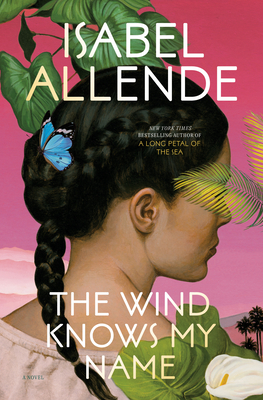
My thanks go to Net Galley and Random House Ballantine for the review copy. This book is for sale now.
I have been reading Allende’s work for decades. To read her stories is to be transported. In this case, the protagonists include two small people designed to possess the human heart. Samuel is a Jewish violin prodigy, still quite small as this story unfolds; his parents send him to safety when the Nazi occupation of Vienna takes hold, thinking that they will square things away and join him later. Of course, they are never able to do that. Our present-day protagonist is Anita, a Guatemalan immigrant child that is nearly blind. She is separated from her family at the U.S. border, and does her best to stave off loneliness by talking to her sister, Claudia, who is dead.
On the one hand, Allende is, to my way of thinking, on the side of the angels here politically. She always is. But if this feels a bit lecture-like to me, a diehard fan, it seems unlikely that she will reach a lot of newer readers. Usually I bond with her characters and carry them around with me for some time after I have turned the last page, but this time I find I am watching the page numbers go by. The person I feel most affinity for is Samuel, the tiny child clinging to his precious violin, but he disappears quickly and when he returns, he is an old man. Another reviewer commented that too much is told here, and too little shown, and that sounds right to me. And as much as I love Samuel, I also am burned out on historical fiction set during World War II. I hope in her next project, the author will turn in another direction.
To Allende’s many devoted readers, this book is recommended with the above caveats.
 Dangerous Crossing is an historical mystery set at the outset of World War II. I was invited to review it by Atria Books and Net Galley; it was published earlier this month, and you can buy it now.
 The German Girl arrived in my mailbox, a nice surprise from Atria Books. This novel is historical fiction, an international bestseller translated into many languages; it tells the story of Hannah, a survivor of the Holocaust who was sent to Cuba, and her namesake, Anna, who lives in present day Manhattan. This title is available for purchase now.
 Seattle Book Mama