|
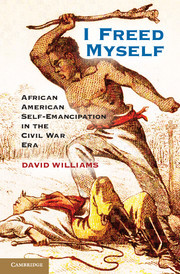 Williams is smoking hot when it comes to the role of African-Americans in the American Civil War. The overstatement that Lincoln freed the slaves rubs many of us, and his thesis that not only did the slaves largely set themselves free, but were pivotal to the Union’s ultimate victory, is a strong one. Williams is smoking hot when it comes to the role of African-Americans in the American Civil War. The overstatement that Lincoln freed the slaves rubs many of us, and his thesis that not only did the slaves largely set themselves free, but were pivotal to the Union’s ultimate victory, is a strong one.
In Marxist organizations, there is an expression for a political over-correction. It’s called “bending the stick too far back”. The idea is that you want the stick to be straight up, but sometimes when something has been done wrong, and once the evidence piles up until the reader cannot believe that anyone was dumb enough to think otherwise, it can cause other mitigating facts to be obscured; thus, the stick is bent too far the other way. And although I really like the work Williams has done here, and am making my 4.5 rating round up to 5 lest anyone not read this scholarly, well documented work, I do think he has made an error or two by disregarding the dynamics of the war and the decision-making process. It’s easy to do.
Actually, when I taught about this subject, I treated Lincoln and his role in it largely the way Williams does here, and that was a mistake. I used the same quotes Williams uses, and said that every American president basically does whatever he is pressured to do by those who hold the economy in their grip.
I was mistaken, and Williams is too, in this one way. Lincoln was such a friend to the Black man, in fact, that his name did not even appear on Southern presidential ballots (according to Catton, who notes it in the first volume of his trilogy). It was exactly because of this known fact that South Carolina gave notice of its secession even before Lincoln was inaugurated. And when Lincoln was being smuggled from his home to Washington, DC, plans for what to do once in office were prefaced by the qualifier, “If you live…” Because, despite the things Lincoln had to do to set the wheels in motion and set the stage for Emancipation, he was going to see the slaves freed.
The first thing Lincoln had to do, though, was protect the integrity of the Union. This was not a racist error; it’s hard to read about the things he said and did, but if the South were allowed to secede, or succeeded in its mission, it would become entirely dependent upon Britain for its manufactured goods, and largely so for its cotton market, and the slaves might well have remained in bondage much longer than they did.
The most graphic way to see it is this way: take a very basic political map of North America. Draw a line where the states end and territory begins as of 1861. Color all of Canada, which was a protectorate of Britain, red. Now color all of the Confederate States red. Mark the Border States with red stripes. Draw red arrows toward the eastern coast of North America pointing toward the USA. And once you have done all of this, put some red question marks on all of the western territory, and color the remaining Union states blue.
The result will be a very small piece of blue in the middle of all that red. If Britain were able to dominate North America so overwhelmingly, it would only be a matter of time before she began arming the borders, to the north, to the south, occupying harbors, and proceeding to take her “colonies” back. (Remember this had been attempted just 50 years before the Civil War during the War of 1812, when Britain burned the US Capitol to the ground.) So in many ways, this war started out being about maintaining national sovereignty, and could only be about freeing the slaves—which HAD to be done in order for Feudalism to die and capitalism to move forward, as history demands—once it was clear that the Union was safe. And the starting point there was keeping Maryland and Kentucky in the Union. (Color Maryland red and you will note that the entire Capitol city is now surrounded by the enemy; with the president and Congress on hostile soil, the war ends pretty quickly, and the slaves are still slaves, at least for the time being.) So I think that Williams is too harsh in his judgment of Lincoln at the outset of the war. It was like a chess game, in which everything had to be done in order. Had the South remained in the Union, slavery would still have had to end, and perhaps with less bloodshed. Most of Europe had ended slavery through government buy-out programs, and Lincoln quietly probed for this alternative several times, even after South Carolina had announced its secession. But the southern power brokers were having none of it.
But this does not diminish (as US history texts do) the role of the slave, the role of the free Black man, the role of the former slave, in the victory of the Union. And I learned a lot from Williams, because written US history has largely suppressed slave revolts, noting only the Nat Turner rebellion, and of course, the one led by John Brown, the only Caucasian male for many, many years that would fight and die for Black people. Williams fills out this missing piece of the puzzle admirably, and to my knowledge, no one else has adequately done so.
For the vast number of incidents documented here in one body for the first time that I am aware of, and done in such a methodical and scholarly fashion, all the while drumming away at Black empowerment and the role played by people of color, this book is worth your buck. If you have any interest whatsoever in the American Civil War; American history; or Black rights, this book should grace a place in your personal library.
And oh teachers, if you don’t have a copy of this in your classrooms—never mind that there is some difficult vocabulary here; when something is important enough, students will access the material—you should definitely dip into your classroom supply kitty, or if you don’t have one, your own wallet if necessary. African-American students have such a hard time dealing with the humiliating details surrounding slavery and the Civil War. They need to see this. They need to see that those who came before them stood up.
Black American leadership started during the American Civil War. Over 200,000 African-American men served as soldiers, and countless others did manual labor, served as spies and saboteurs, or simply walked away from the plantations. Others took ownership, literally, moving into the empty plantation houses and taking what they had already more than earned. (Would that the US government had enforced Reconstruction and kept it alive; but that is another story, a different book.)
Get this book. Read it. If you can afford to do so, get two copies so you can highlight one and write in the margins, and keep the other copy clean for visitors or family members. Its place in American Civil War history is unquestionable. |

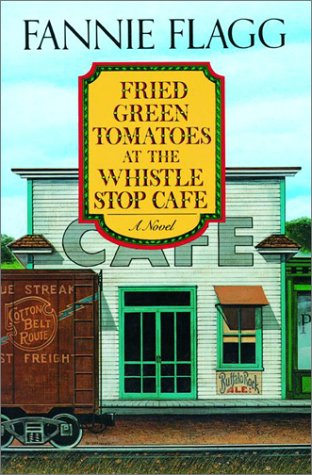 If I had to whittle several decades of reading down to thirty favorite books, this one would make the cut. It is wonderful on so many levels. Flagg has published a number of glorious, whimsical yet not shallow novels, always set in the deep South. This one is the jewel in her literary crown.
 Seattle Book Mama