
4.5 stars, rounded upwards.
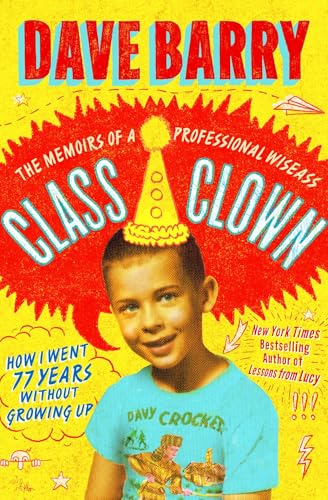
The first time I read a Dave Barry column, it was 1984, and a friend sent it to me. We had only snail mail back then, but it was so funny that she snipped it out of the airline magazine she’d read on a business trip and mailed it to me. I don’t remember which column it was, but it left me gasping for air, I laughed so hard. This was a difficult time for me, a young mother with two small children, a third on the way, and almost no money, and I floated along on the laughter that article brought me for a solid month. I hung it on the fridge where I could reread it whenever the urge struck me. That is how I became a Dave Barry fan.
Since then, his work has either hit or missed for me; almost all of the time, it has hit and although times are easier for me now, laughter is always a balm. When he misses—which is rare—he misses bigtime. But this time he’s golden, the Dave I remember reading that first time.
My thanks go to NetGalley and Simon and Schuster for the invitation to read and review. This book is for sale now.
It strikes me again how frequently the funniest humorists, be they journalists, novelists, standup comedians, or comic actors, have tragic backgrounds. Barry has experienced more than his fair share, with a schizophrenic sister who’s been institutionalized, a father that died too young, and a mother that couldn’t recover from his loss, and took her own life. Barry wrote about her when it happened, and he reprints some of it here.
He reprints some other things, too, and I expected that. I don’t think that it cheats the reader when he documents parts of his professional journey by reprinting some of the things he wrote; he’s been writing prolifically for thirty years, and it seems to me that it was probably a lot of work just choosing what to include and what to leave out. It feels strangely like a school reunion, rereading the excerpts from drop dead funny columns that I enjoyed for the first time when they were originally published. Oh, my heart, “Ask Mr. Language Person!” I’m an English teacher, and I’m in stitches all over again.
The thing about an autobiography is that the author is also the subject, and so when he decides what parts of his own life to write about and what to keep private, we readers need to accept that. At the same time, it does seem disingenuous to completely pass over his marriages and divorces. A paragraph for each, maybe? Just give us the benchmarks.
I hadn’t known that he was responsible for Talk Like a Pirate Day, and both I and my middle school students owe him for that one! But the thing that is most striking to me, and that I appreciate most, is his reflection about the political discourse in the U.S., and the way we have become polarized and too often, uncivil. In the past—and he cites the Kennedy/Nixon campaign—arguments between family and friends were “heated, emotional, sometimes angry, but never nasty. At the end of the night everybody hugged everybody, because they were friends, and they understood that they could disagree about politics without believing the other side was evil. Mistaken, maybe. Evil, no.” All I can say about that is thank you, Dave, and amen.
Because I was running late, I checked out the audio version from Seattle Bibliocommons. Barry does his own reading, and it’s even better that way.
There are a lot of hilarious experiences he recounts, but the thing about Barry that binds all of the experiences, the columns, and the books he’s written is his refusal to take himself too seriously, and it is his complete and delightful intolerance toward pretentiousness that keeps me coming back. I cannot imagine Dave Barry snubbing anybody, ever. Wouldn’t the world be a better place if everyone was like that?
Highly recommended.
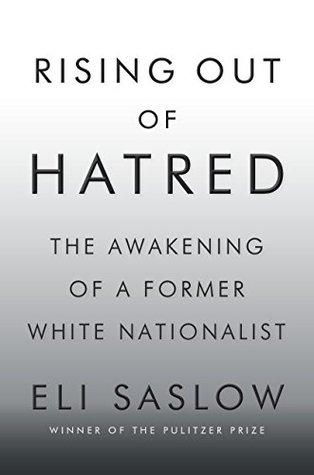 Derek Black was the heir apparent to the White Supremacist throne, godson of David Duke, and the son of the founder of the largest hate site in the U.S. This gripping biography tells the story of his transformation, from racist wunderkind to social justice proponent. Thanks go to Net Galley and Doubleday for the review copy. This book is for sale now.
 Seattle Book Mama