In 2016, Cline published the hugely successful novel, The Girls, which I read and enjoyed. When I was invited to read and review this collection of her short stories, I was sure I’d be in for a treat. Thanks go to Net Galley and Random House for the early read. This book is for sale now.
Sadly, I am not in love with this collection. First of all, I have seldom enjoyed an open ending, and whereas there are those who admire this style for its authenticity and subtlety, to me it feels as if I’ve eaten a nothing sandwich on a nothing bun. Give me a story with an ending every day of the week. So there’s that.
Then too, there’s the way she deals with sex. I’ve never used the word “tawdry” in a review before, but there’s a first time for everything. Sex, sexuality, and the human body don’t have to be a deal breaker for me, but if it’s written in such a way that I want to gargle after I’ve read it, then less is more. Of course, there are times and places when sex is ugly; in one story a working class girl is struggling and eventually finds she can subsidize her miserable wages by selling her used panties to skeevy men. Fair. It’s certainly memorable. But if we’re going there, then I’d like the next story to either avoid sex, or else have it be a positive experience. When a book gives me a sour gut without delivering a message, I’m out.
There are passages where Cline’s facility with words and her originality shine through. She is a fine writer when it comes to setting, and her character sketches are clear and believable. This is where the third star comes in.
It’s something, but it isn’t enough. If you decide to read these stories, I suggest you get the book free or cheap; don’t pony up full jacket price this time. Save your dollars for the next novel Cline writes, because likely as not, it will be terrific.
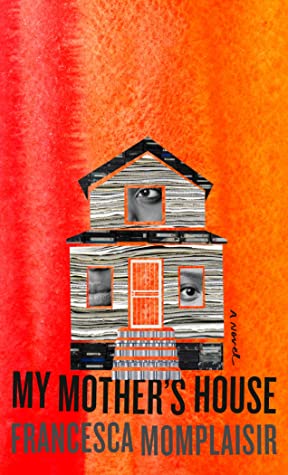
The year seems to be riddled with novels that are brilliant conceptually, but whose execution falls short of its promise. Such is the case with My Mother’s House. My thanks go to Net Galley and Bloomsbury for the review copy.
The story is told in the third person omniscient, and the most interesting character by far is the house itself. The house has had it with its inhabitants, particularly with protagonist Lucien, a man that’s evil and demented from the top of his pointy head down to the toes of his nasty loafers. Think of the worst thing one human being can do to another, and whatever you’ve come up with, Lucien has done it.
Our rotten old man is an immigrant, a resident of a mostly Caribbean neighborhood in Queens, New York. He brought with him the wife—nearly a child-bride—that he had set his cap for early on, for she is a descendant of the Duvalier family that ruled Haiti ruthlessly for decades. Once he has married her and moved her, however, he abuses her in much the same way he does every other female in his life, including the daughters they have together.
Do I need to tell you there are triggers all over this thing?
The house can’t take it anymore, all of the ugly within its walls. It decides that the only way to get rid of this bastard is to go down with him, and it sets itself ablaze.
One of the three stars is for this aspect of it, the animation of the house. This is where the story begins, with the house’s thoughts and actions, and I sigh contentedly, sure I am in possession of a great novel.
Alas, not so much.
I love a good horror story, but what makes such a story work is when there is an underdog to cheer for, or a victim to be rescued. This is part of Stephen King’s magic; not only does he provide visceral, original bad guys and monsters, but also some ordinary person that sees what is going on and tries to stop it. Whoever his good guy is, he develops the living heck out of them, and I feel as if I would know them on the street.
In contrast, Momplaisir gives me no possible good outcome; the only hope we have comes from the defeat and death of Lucien. That’s not enough to keep me turning the horrible pages of horrible deeds. I don’t just want to see the bad guy lose; I need a good character that might, against impossible odds, win.
Character development is also lacking. Although I learn about Lucien’s early life and the trauma that he’s endured, and which we know is often part of what warps a person, I never see him change internally. He is static all the way through, and since he’s the only important character, apart from the house, I feel cheated. His distinguishing characteristic is the need to count, because “I am nothing unless I count.” So all the way through, we hear him enumerating one thing after another, and to be honest, this device, though original, leaves me cold, and eventually it just becomes redundant. MAD Magazine—the original, from the 1960s and 1970s—would have had a field day here.
Unable to push myself all the way through the text, I seek out an audio book from Seattle Bibliocommons, and just to top all of it off, I dislike the reader intensely. The over-the-top dramatic voice would work in very small, shocking increments, but instead it is the main voice used, and by the end I just wanted to tell it to shut up. (Full disclosure: I actually did, not that anyone was there to hear it.)
In the end, I am left with a tremendously clever premise, a fantastic book cover, and then a whole lot of nothing. How dare the publicist or whoever wrote the teaser compare this work to those of Tana French and Jesmyn Ward? For shame!
You can buy this book now, or you can take that same exact amount of money and burn it in the fireplace. Same thing, either way. Or you can do the smart thing, and go find another book by someone else.
My thanks go to Net Galley and HarperCollins for the review copy; after publication, I used an audio book to finish it, thanks to Seattle Bibliocommons. It’s available to the public now.
There are two reasons I was drawn to this story. The first is the setting, which is primarily in Nova Scotia’s Black community. I have never read or heard a story set there, and so I was intrigued. There’s also a Civil Rights Movement tie-in, and for me, that sealed the deal.
The book starts out as a rough read, involving dead babies and “bad luck” babies that weren’t dead but needed killing. I was so horrified that I had to restart the book several times to get past it. Now that I have, I can assure you that once you’re past the introduction, that’s it. The dead babies are done. I’m not sure I would have lead off with this aspect, because I’m probably not the only reader to pick the book up and put it down fast. In fact, had I not owed a review, I would not have returned to it. I’m glad I did.
The story itself is ambitious, covering three generations of a family there. At the outset we have Kath Ella, who has ambition, but also a mischievous streak. I find this character interesting, but there are times when I don’t understand her motivation. The story is told in the third person and not all of her thoughts are shared with us, and so there are times when I’m left scratching my head. When the end of the book arrives, I’m still wondering.
Kath’s son and grandson comprise the second and third parts of the story; apparently the term used back then for passing as Caucasian was called “crowing,” and we see some of that. There are too-brief passages involving the Civil Rights Movement against Jim Crow in the Southern U.S., and I am disappointed not to see more about this or have the characters involved more deeply. What I do see of it is the surface information that most readers will already know.
Toward the end there’s a subplot involving getting an elderly relative out of prison, and I like this aspect of it, in particular the dialogue with the old woman.
The setting is resonantly described throughout.
All told, this is a solid work and a fine debut. I look forward to seeing whatever else Colvin has to offer. As to format, although Miles does a lovely job reading, something of the triptych is necessarily lost when we don’t see the sections unfold. For those that can go either way, I recommend the print version.
Anna isn’t eating, and she’s so weak that she faints from time to time. Her husband, Matthias is afraid for her; this isn’t the life they envisioned when they moved from France to the States. She is admitted to a facility for women with eating disorders, and it is that address that gives the book its title. Big thanks go to Net Galley and St. Martin’s Press for the review copy, and my deepest apologies for being so late with my feedback.
I never would have expected to want to read a novel about an anorexic protagonist. In real life, Anna would have offered me her fries and her dessert, and I would have cheerfully accepted them. She in turn would inwardly shudder, my stocky grandma body providing her with a cautionary example of what happens to those that eat such things.
When I was a sweet young thing growing up in the 1970s, there were rumors that some of the girls at school kept their figures slender by throwing up after they’d eaten; a friend and I commiserated over our own lack of self-discipline. We had scarfed down our Halloween candy and not even considered ralphing it back up in the bathroom. Now we could barely fasten our jeans, while those classmates were smaller than we were.
We thought that some girls have all the luck.
It wasn’t until the death of singer Karen Carpenter that anorexia became well known, and even then, it took us awhile to clue in on the details. Because it’s about body image, and yet it isn’t. And Zgheib does a wonderful job of educating the reader using that approachable medium, fiction.
In Paris, Anna was a dancer. When she and Matthias married, she planned to go on dancing professionally, at least until they had children. But when he was presented with a prestigious promotion that required him to relocate to the United States, they packed their things; Anna had expected to continue her career in America, but she was never chosen.
The in-patient facility where she is treated has strict, clear rules about every aspect of daily life, and most of the privileges hinge around timely consumption of the food that’s provided. Anna’s struggle is profound, and her story is moving. Because it’s about food, but not really. She has buried a trauma involving the deaths of her brother and her mother, and she’s channeled her self-hatred into this eating disorder. We catch glimpses of this as she expertly dodges questions raised in therapy. One of the most moving moments, strangely, has to do with a bagel and cream cheese. She’s supposed to eat it, and she throws a pluperfect hissy. She never eats dairy, she says. She wants the vegan option! No dice, honey. But as time moves forward and this difficulty continues, she finally reveals that actually, this might have once been her favorite food. It was so delicious, and it took her such iron self-control to forget its taste. All that work, she thinks, and now it’s ruined. And she is genuinely shattered by this.
Only one sufferer in three recovers from anorexia.
Due to a backlog of galleys, I checked out the audio version of this book from Seattle Bibliocommons, and the voice actor that reads it is perfect.
David Joy writes some of the best Grit Lit published in the U.S. of A, and if you haven’t read him yet, it’s time to get started. This soaring, wrenching tale of addiction, community dysfunction, and miserable unrelenting poverty delivers some hard truths about the distribution of wealth in this country, and about the uneven way that justice plays out. Lucky me, I read it free and early; my thanks go to Net Galley and Putnam Penguin for the review copy. It’s for sale today.
Ray Mathis is a big man with a big burden. His wife, Doris, has been dead for three years, but his grief hasn’t ebbed. A stoic man, he goes in and out of every day carrying out necessary tasks, but he feels as if his arm is missing, all the time. His companionship comes solely from his old hunting beagle, Tommy Two-Ton. His only child is Ricky, and although Ricky is in his forties, Ray still thinks of him as “the boy.” When the boy comes home, Ray is suffused with a sense of dread. Ricky is a hardcore addict, and all those stories you were told in junior high health class are true: a junkie has no loyalties and no shame great enough to override his need for the substance he’s come to crave. When he sees that Ricky is home for a visit, Ray’s first instinct is to check his few valuables that haven’t been stolen and pawned yet to see if they’ve vanished.
Is this all too familiar to some of you? Because it hit close to home for me.
Not long after he arrives, Ricky is gone again, and that’s not unusual; but later he gets a phone call from someone he doesn’t know. The caller says that Ricky has failed to meet a payment and will die if Ray doesn’t pay up. Because Ricky has no shame, he has told them exactly how much is in his father’s savings account. And though he understands that it’s only going to postpone the inevitable, Ray pays up, but he tells the men that collect that he will be back for them if they ever sell to his son again. And when Ricky is back on opiates before he has even recovered from the savage beating administered by the dealer’s goons, Ray tells him, “I’ve thrown you ropes till my arms is give out, and I ain’t got no more to throw.” ` “
Meanwhile, our second protagonist, Denny Rattler, a Cherokee burglar, is arrested and offered treatment for his own addiction, but he declines. It turns out that the very purest heroin is sold on the Cherokee Reservation, and so jurisdictional issues complicate law enforcement. Still worse, there are dirty cops right on the other side of the state line. Denny finds himself in the middle of it all.
One of the nastiest villains in literature is Walter Freeman, who goes by “Watty.” “I ain’t calling you that,” Ray tells him. “That’s the stupidest fucking name I ever heard.” Ray confronts Watty after his son’s death to deliver some “backwoods justice,” but Watty is entirely unmoved. He doesn’t even remember Ricky. He leaves the individual users to the minions beneath him. He tells the bereaved father, “Your son is small potatoes. They’re all small potatoes. It’s too much of a headache, dealing with junkies.”
It’s forest fire season in the Appalachian Mountains, and as the conflict between Ray and Watty, between Watty and local law enforcement, and among the addicts, law enforcement and Watty build, a conflagration begins on the reservation, encompassing the “Outlet Mall,” where drugs are sold. The entire ordeal rises to a fever pitch that leaves me sitting forward, as if the outcome is just beyond my physical reach. At one point I am sure everyone will die, and I tell myself I’ll be okay as long as nothing happens to Tommy Two-Ton.
What Joy does with the conclusion is tremendously satisfying. When I reviewed his last book, I felt as if he had wimped out on the ending, but this time it’s rock solid. It isn’t predictable, yet there are no new people or facts introduced at the last minute to prevent us from foreseeing the outcome, either.
In fact, this may be his best book yet.
I’ll offer a final word about genre. This book is billed as Crime Fiction, and that’s not how I see it. I consider this novel to be gritty Southern Fiction at its finest. The fact that it happens to involve crime as an integral part of the story is almost beside the point. But call it what you will, this book is one of the year’s best, and you should get it and read it.
I read this book free and early; thanks go to Net Galley and Berkley for the review copy.
Ordinarily, a book that I don’t enjoy or admire gets reviewed when it’s released, the same way I would with a book I love. However, on this one, I choked. The protagonist is a woman who’s grieving the loss of her little boy, and the author’s notes mention that as she wrote it, she was thinking of her own child that had died. How do you pan a book like that? And so I made a conscious choice to bury it. It was released in 2016, and it is by far the oldest novel in my backlog.
Since that time, this book has made bestseller lists and received acclaim from far more auspicious (and lucrative) sources than this humble blogger, and I realized this evening that I can go ahead and write my review with little likelihood of rocking this writer’s world.
What I found is some competent use of setting, but the plot was all over the place, both choppy and unfocused. I realize it is the author’s intention to build suspense by revealing the past in increments, but it didn’t build suspense for me; I felt irritated instead. The protagonist never became real for me, and ultimately the story was mostly predictable, increments or no. There was tired figurative language and a lot of cliches and truisms. I looked everywhere for the magic, but I never did find it.
I don’t recommend this book to anyone but the author’s diehard readers. The good news is that you can probably score a used copy inexpensively by now, if you’re going to go there.
Three sisters buy a winning lottery ticket and it changes their lives. Thanks go to Net Galley and Atria Books for the review copy.
Every now and then, my collection of galleys gets too dark, and so I turn to Net Galley in search of humorous reading to lighten things up. This novel caught my eye with its engaging cover, and sadly, I didn’t realize that the cover was its only positive attribute.
The word choice, character development, and even basic ability to use correct grammar came up short here, and I find myself wondering what’s up with the editor? But even a strong editor can’t help this book, because there’s nothing to salvage. None of the sisters came alive for me, and the tired old trope about money not buying happiness draws an eyeroll of epic proportions. If my mama was right and my eyes could get stuck up there, this would surely have done it.
This book is for sale now, but I’d keep my card in my wallet if I were you.
A Private Cathedral is the twenty-third in the immensely popular Dave Robicheaux series, which began in the early 1980s. James Lee Burke has been called “America’s Best Novelist” by the Denver Post, and his books have been made into movies. Lucky me, I read this one free and early; thanks go to Net Galley and Simon and Schuster for the review copy. This book is for sale now.
Fans of this series—and there are many—will recognize all of Burke’s signature elements. Set in New Iberia, Louisiana, a small working class enclave about an hour from New Orleans, we find the usual wealthy, sleazy bad guys, in this case the Shondell family and the Balangie family; their victims, ordinary people with no money that scrape by the best they can; a pair of grizzly murders; and in this instance, a case of human trafficking. There’s always a woman or two ready to fling herself into Dave’s arms, even though he and Clete are supposedly getting old, and as usual, one of the women stands on the tops of his feet before she seduces him, or vice versa. (This has got to be some sort of private joke or reference on the author’s part, because you know that a writer with this level of skill cannot be inadvertently ascribing the identical quirky behavior to all of his protagonist’s romantic interests across over three decades of a series.)
And of course, best of all perhaps, we have Dave’s fiercely loyal best friend, Clete Purcell, a man that looks “like an albino ape” and whose impulse control is even worse than Dave’s, at least most of the time. He shows up in his pink Cadillac wearing his signature porkpie hat, and I smile. I can’t help it. Clete does this to me every single time, and I’ll bet a whole lot of other readers feel just the same way.
“He was the trickster of folklore, a modern Sancho Panza, a quasi-psychotic jarhead who did two tours in Vietnam and came home with the Navy Cross and two Purple Hearts and memories he shared with no one. Few people knew the real Clete Purcel or the little boy who lived inside him, the lonely child of an alcoholic milkman who made his son kneel all night on rice grains and whipped him regularly with a razor strop…Nor did they know the NOPD patrolman who wept when he couldn’t save the child he wrapped in a blanket, ran through flames, and crashed through a second story window with, landing on top of a Dumpster…He hated evil and waged war against it everywhere he found it. I sometimes wondered if he was an archangel in disguise, one with strings of dirty smoke rising from his wings, a full-fledged participant in fighting the good fight of Saint Paul. “
My sole complaint, a key one I probably wouldn’t give any other writer a pass on, is the way the author deals with his female characters. All the women and girls are mothers, whores, lovers, or children, and in some cases more than one of the above. No woman comes into the stories on the merit of her occupation, her character, or her abilities, aside from Helen, a long-running character that is exempted by virtue or being a lesbian and androgynous in appearance. (God forbid she be gorgeous and gay, or gorgeous and straight and completely sexually uninterested in Dave.) But the fact is, Burke has been writing and publishing great novels since 1965, and now he’s an 83 year old author and it seems unfair to expect him to change direction with regard to his female characters, or to suddenly regard them as equals in all respects rather than to nurture the whole pedestal package.
Moving on.
The story commences with Dave suspended from the sheriff’s department, and he’s behaving badly, embarking on a series of “dry drunks,” a term used liberally throughout this series and that I’ve never seen or heard of anywhere else. He’s so far out of line that Clete has to reel him back, when more often it’s the reverse. A teenager named Isolde is being sold by her parents, and Dave is attempting to rescue her. But it’s a useless endeavor because there is so much money and power buffering the offenders. Meanwhile, Clete is kidnapped and hung upside down and tortured by a being that seems otherworldly to him—mostly because it is. And this is a departure for Burke, a good one, as it turns out.
Those familiar with the series and the author know that redemption is at the core of every story he writes, and given the amount of mystic imagery that appears in his prose, it isn’t a long stretch to go from imagined spiritual beings to actual ones, which is what he does here. And I can only bow in awe at a writer—even one with residual sexist attitudes—that can take a long-running, iconic series like this one, a series that has run for more than 30 years, and decide to expand it across genres now. This would be remarkable for anyone, but for an octogenarian, it’s jaw-dropping.
I also enjoy the way he develops the side character, Father Julian, who is heroic and who pursues pedophiles and brings them to justice. Way to fight stereotypes.
I love the ending.
Highly recommended to Burke’s many fans, and to new readers as well.
A heartfelt tribute, featuring a lot of famous writers:
I read this novel free and early, thanks to Net Galley and St. Martin’s Press. It’s for sale now.
Shay Miller has watched a woman die, and now life will never be the same. She is alone in the big city, barely getting by like so many working class women. She is in love with her roommate but doesn’t rock the boat by propositioning him; she has no friends or family nearby. Then one terrible day, she is waiting for her subway when a sinister looking man turns in her direction. Imagine how glad she is to see Amanda, a normal-looking woman who’s also headed her way. But instead of providing the security Shay is hoping for, Amanda jumps onto the tracks in front of a moving train.
It happens so quickly!
Shay is the sort of person that relies on information to deal with stress. She has a little notebook, what she calls her “Data Book,” filled with all sorts of oddball statistics that she quotes from at the start of each chapter and throughout the novel. (Frankly, I could have lived without this feature, which began to feel like filler at times.) She deals with the stress of having witnessed a suicide by finding out every single detail she can about the late Amanda.
And this part is the hardest aspect for me to buy into. She’s haunted by what she saw; okay. Amanda looked a lot like Shay, which made her more fascinating to our protagonist. Fine. But the obsessive way she pursues information—even once she finds she has the dead woman’s necklace, which she had forgotten momentarily—doesn’t jibe with me. She goes to her apartment, visits the woman’s mom…huh. Go figure.
Now, once I quit rolling my eyes and allowed myself to buy this premise, things flowed a lot more smoothly. Cassandra and Jane, friends of Amanda’s, hold a memorial service for her, and it is by attending this event that Shay comes to know these two sisters. They are kind, they are solicitous, and they are caring. Before Shay knows it, they are her new best friends, and because she herself is a good person—if a little odd—it doesn’t occur to her that their motives might not be as benevolent as they pretend to be. They are the spiders, and she is the fly.
Here’s the thing I like best about this story. Shay’s character has to be rock solid for it to work, and once we get past the stupid parts at the beginning, it is. I half expected her to be dumb as a box of rocks all the way through, but not so much. The way she is developed, neither too unrealistically savvy nor ultra-naïve, is admirable. There’s a thin path through the middle between these two extremes, and I wondered if she would be the dithering idiot that has to be saved by someone smarter, but that’s not how it shakes out. There are a couple of loose threads that are left dangling, but it’s the way Shay’s character is crafted that wins the day.
Those that enjoyed this authorial pair’s other books will like this one too; those in search of a good beach read or a fun weekend book should consider this one. All told, big fun, and delightfully original.
I read this copy free and early, thanks to Net Galley and Atria Books. From time to time I find myself reading too much dark material, which is the direction I’m generally drawn toward. I found this title and thought that it might balance my selection. And for what it’s worth, it did that.
The premise here is that Emmie has fallen hard for a young man that she met years ago by pure chance. At age 16, she had written a secret that she needed to share on a scrap of paper, along with her email address, stuffed it into a balloon and launched it into space. (How does one get a slip of paper inside a helium balloon without losing the gas inside it? But let’s not dwell there.) Rather than falling into the ocean and choking a seabird to death, the balloon makes it to dry land, and Lucas finds it. The two become fast friends, and as time progresses, she is sure they are meant to be more. She is devastated to learn that his plans are different from hers.
This story is a quick read with lots of dialogue. One of my pet literary peeves right now, however, is the terrible-mother-who-ruins-everything. Oh. Come. On. You can do better than this. However, other aspects of the story are more congenial. In the end Emmie takes control of her own life, as she should have done all along, and good things result.
Those looking for a pleasant beach read could do worse. However, the publicist that compares this book to Eleanor Oliphant is Completely Fine is completely delusional.






 Seattle Book Mama