My thanks go to Net Galley and Algonquin for the review copy. This book becomes available to the public tomorrow, February 9, 2021.
From the beginning, it was plain to me that this would not just be another anthology. Every school library has books that include children from many places around the world, but this one is more diverse than most, and it conveys more of the girls’ own words. Included are girls from 31 countries, and most of them are people of color. The United States does not dominate the collection; there are two girls from the U.S. included, but they are not given anchor positions, and neither is from New York or California.
Each entry contains writing done by the girl herself, more extensive than anything else I have seen; I cannot tell whether some of them have been translated, or if all of them wrote in English originally. There are multiple photographs of each girl, her home, and the things that are important to her. Most are students; one is a mother herself. There are a variety of social classes, though none appears to be from a wealthy family. The girls that live at or near what we in the developed world would call the poverty level, do not speak about being poor, but about everyday life. My favorites are the Cambodian, Syrian, and Irish girls, but they’re all interesting. I am pleased to see several Black girls in the mix.
Though the collection is inclusive, none of the girls appears to be, or says she is, disabled in any way. I would like to see at least one such girl. But more concerning to me is that, although twenty percent of girls worldwide is obese, all of these girls in the anthology are either near the ideal weight, or on the thin side. Ahuja does not say how the girls were selected, but I can just about guarantee that the big girls that view this book will not see themselves. I hope future endeavors along these lines will correct this omission. Right now, the message large girls will have is that nobody wants to look at someone like themselves.
Nonetheless, this is one of the best such collections available today. It would be wonderful if there were a way to offer it in different languages and sell it in other countries, too. I recommend this book for middle and high school girls, and in particular to school libraries and humanities teachers.
Cate Morris has her back to the wall. She’s lost her job and her apartment; her husband, Richard, is dead and she and her son, Leo, are still grieving. With nothing left to lose, she packs their belongings and heads for Richard’s ancestral home at Hatters, a place that turns out to be full of secrets and the unexpected. In the end, the museum is renovated, as well as its occupants.
My thanks go Net Galley and Gallery Books for the review copy. This book is for sale now.
I read and enjoyed Harris’s last novel, Goodbye Paris, and when I saw that she had another book in the works, I leapt on it. Harris develops plots that are fresh and original, and so when I open the book, I expect great things. And in most ways, I find them.
The first and most obvious aspect is the museum. The family patriarch, Sir Hugo, is now deceased, but he was a benign presence in the tiny village; his museum, which is now somewhat anachronistic, showcases a collection of taxidermized African animals, among other things:
“It is a conundrum, like everything else in this peculiar house. From the glaring dead animals conserved in their alabaster homes, through the thousands of books that no one can reach to read, right into the wet green foliage of the unmanageable woods Colonel Hugo’s grandfather meticulously planted, this place contradicts itself at every turn, gives then takes away, frightens then comforts.”
Though Leo is an heir and has the right to be there, Cate and Leo are met coolly by Araminta, an older woman who has become nearly the sole caretaker of the whole enormous enterprise. There are a number of things that don’t add up, but since there’s no real choice, Cate and Leo forge on. Leo, who has Down’s Syndrome, is a hugely congenial character, and again, Harris brings in an element that few other novelists have done lately. I have never had much interest in this syndrome, and came to the novel for the author rather than this attribute, but I enjoy Leo a lot, and he has a shining moment toward the conclusion that I will remember for a long time.
Throughout the novel’s progress, Cate is still processing and grieving Richard’s loss, though it’s been years. There’s a stretch midway through that feels repetitive, with Cate grieving, remembering, stewing, and assuring the reader that she won’t tell anyone everything about Richard’s death. I become impatient with it, mentally telling her to fish or cut bait and get on with it, but soon after I hit that point, she does exactly that. There are a lot of secrets floating around this museum; there’s one involving Araminta that I am able to guess ahead of time, but there’s another big reveal toward the end that I find inappropriate and jarring, and it’s important enough to the story that I can’t overlook it. Up to the ninety percent mark, I had this book pegged as a five star read.
Despite my disappointment, I am not finished with Anstey Harris. Her work is bold and original, and I respect her willingness to take risks. However, my advice to you is to buy it cheap or get it free if you’d like to read it; save the full cover price for her next novel, or use it to buy the last one, if you haven’t yet read it.
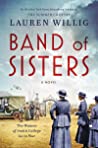
Lauren Willig is an established author, but she is new to me. Band of Sisters, her newest release, has made me a fan. I read it free and early, and my thanks go to Net Galley, William Morrow, and Harper Audio for the review copies. It will be available to the public March 2, 2021.
A group of Smith College alumni sail to France on a mission to help civilians suffering extreme deprivation during World War I. “They carry money, supplies, and good intentions—all of which immediately go astray,” says the promotional blurb, and that’s what happens. It’s hard to make plans when you don’t know which way the battle may turn or where bombs may fall, but these are plucky women, two doctors among them, and several of them are members of wealthy, influential American families as well. The story is based on actual women and events, and the teacher in me wishes I were still in the classroom and able to order sets of this excellent novel to share with honors students, girls especially, who need to see more of themselves in the study of American history.
Our two protagonists are Kate and Emmie, best friends and roommates a decade ago, united in this adventure. Kate is the only woman among the “Smithies” that doesn’t come from money and that doesn’t pay her own way; she is led to believe no one else paid their own way, either, but it isn’t true. And this is a chewy, inviting historical truth that we don’t see often in fiction. Though social class divisions are every bit as present and sharp today, assumptions made by most Americans have become more generous. During the early years of the twentieth century, there was a widely held belief that rich people were better in other ways as well, whether they had earned their fortunes or inherited them. They considered themselves to be God’s own chosen ones, and their wealth was one more sign that the Almighty loved them a bit more than others. Poverty was considered shameful, a thing to be concealed; there were no government funds of any kind to help the poor, and if there had been, women like Kate would have just about died before accepting them. Taking charitable contributions was a sign of personal failure and possibly dishonesty to most people back then. And the truth is, Kate isn’t impoverished, and she surely hasn’t failed at anything, but she has to work to earn her living, a thing most Caucasian women in the U.S. didn’t do in 1917. She is horrified when, midway through our narrative, she learns the truth about her travel expenses, and this creates one of the crises within the story.
Willig is a fine novelist. The pace never flags, and there’s never a moment of revisionism that makes me blink. She is true to the time period and the characters. Emmie’s character is a harder sell, to my way of thinking, because she comes from tremendous wealth, but her family has made her feel unworthy because of her physical appearance, and by the end of the book, I love Emmie as much as I do Kate.
I’ve plucked a sample for you, a scene in which Kate and Emmie are evacuating an area which is being overrun by the Germans:
[Kate] wanted Mrs. Barrett; she wanted Dr. Stringfellow; she wanted anyone who could tell them what to do and where to go. Grecourt looked different already, the anemones churned up by the tread of two hundred soldiers, tents dotted around the lawn, Maybe, if she closed her eyes and wished hard enough, she could make it a week ago; the ground bright with flowers; slipping into story time and holding Zelie on her lap while Nell read to the basse-cour children in French about little Red Riding Hood and the Big Bad Wolf, joking with the unit around the supper table about their amazing ability differentiate between types of guns.
But it wasn’t a week ago. The Big Bad Wolf was here, he was on the march, with his big, big teeth and big, big guns, and maybe she wasn’t the best the Unit could have, but she was what they had right now.
By the time we reach this part of the story, I could not stop reading if I wanted to. It would have been impossible.
The hardest characters for many writers are the children, and although we have no child protagonists, there are numerous scenes in which children play a part. How does a child act when he is traumatized by war? Willig is in perfect form here as well.
I received both the digital review copy and the audio, and I used them both. At the beginning there are so many women introduced to us at once that I felt lost with just the audio, and so I listened and read along to keep track. The narrator, Julia Whelan, does a superb job with a challenging manuscript, changing her tone and point of view to let us know which woman’s point of view we are hearing. My only concern regarding the audio version—which is much easier to follow once you have learned the most important characters—is that the story begins with a lengthy list of the women that participated, and it’s not great to listen to. I recommend you fast forward the audio to somewhere between five and seven percent, and then dive in.
I requested this galley because a number of Goodreads friends whose opinions I respect recommended it to me, and all of them were absolutely right. This book is a gem, and I highly recommend it.
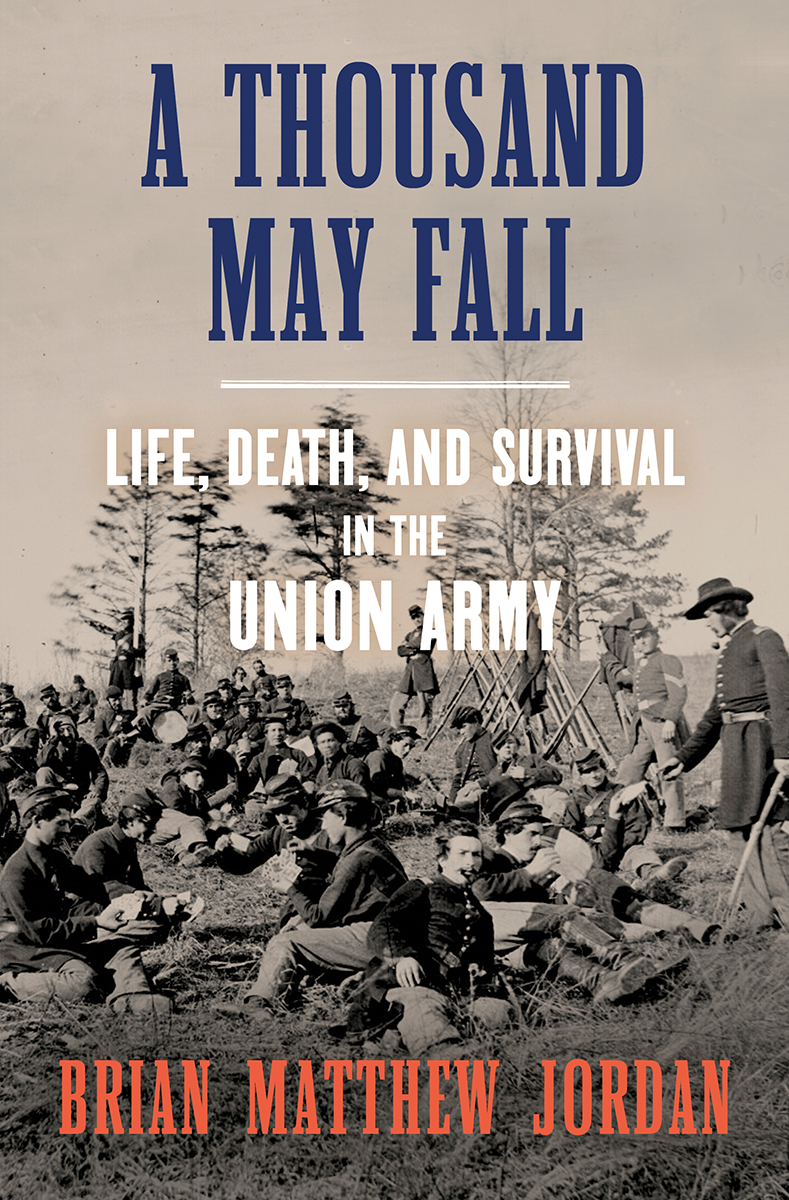
I had such great hopes for this book. Jordan was a Pulitzer finalist for his work on American Civil War veterans, which I have not read, and this new work focuses on the life of an everyday soldier in the 107th Ohio Volunteer Union Infantry, which includes a large number of immigrant troops. My thanks go to Net Galley and Liveright Books for the review copy. This book is for sale now.
I love a good history book, but I don’t love this one. For starters, we have no apparent thesis. After reading the first third of the narrative, my largest question was where the author wanted to take this thing. Is he demonstrating that the German immigrants weren’t as worthless in combat as their reputation suggests? If so, maybe we should focus on that, rather than on the 107th. Give me a thesis focusing on German Civil War soldiers, support it, make it interesting, and I’ll be a happy reviewer. Another possibility is to find an ordinary foot soldier with a fair amount of interesting correspondence or other material to hold my attention. I like seeing the rank and file recognized, and there’s such an abundance of documentation available for this conflict that this shouldn’t be a difficult project.
Sadly, this isn’t what I find. We have a linear story here, and that makes sense, but we go through training, through the nightmare of Chancellorsville, and then Gettysburg, and when we reach the end, I still can’t locate much purpose to Jordan’s endeavor. Once in a while a compelling nugget jumps out, such as the training march at the book’s outset, where men are driven forward without water, and in the end two men are dead; the march concludes, several hours later, just a mile from the starting point, and we see that brutal leadership and poor planning left some surviving men disillusioned. But in many places research appears to be thrown in for its own sake, and no matter how you dress it up, what that is, is filler. We see bits of letters sent home saying that war is pretty bad. Another writer says that he experienced a “hard, tedious march.” Actually, that one shows up in multiple forms, several times also. There’s another quote about passing “porches and verandas,” and another about arriving at an attractive location. (“Beauty and tranquility.”) I could go on, but since he’s done enough of that for the two of us, I won’t. All of it is meticulously—feverishly, even—documented, but so much of it is documenting material that shouldn’t be here in the first place that I can’t get too excited. A professor should know that you have to edit out the extraneous junk and tighten your writing.
There are a few bright spots. I didn’t know there were two different kinds of court martial, so I learned one thing here. Jordan seems to point toward the German infantryman being courageous and willing, but crippled by cowardly, incompetent leadership. I wish that he had used this as his central thesis and thrown away the extraneous crud. There would be a point to the book if he did that, and I could write the sort of glowing review that gets me out of bed in the morning.
This is a digital reprint of the last interview of John Lennon and Yoko Ono, two days before John was murdered on December 8, 1980. David Sheff is a journalist and also a die-hard fan of the Lennon’s. Lucky me, I read it free. Thanks go to Net Galley and St. Martin’s Press for the review copy. It’s for sale now.
This interview is a treasure trove for anyone interested in John Lennon, Yoko Ono, or the Beatles. 192 pages makes for a short book, but as interviews go, it’s a whopper. Lennon and Ono were about to release an album together, and so when Playboy requested an interview, they consented. The most wonderful thing about it is that because of the format, nearly everything is a direct quotation of either John’s or Yoko’s. Nobody knew during the course of the interview, which took multiple days, that John would be shot to death by a stranger two days later.
It makes for interesting reading. There are passages I love and others that make me see red, but I am not irritated with the author, who’s done a bang-up job, but rather, in places, at things said by his subjects. Most of it is tremendously entertaining. And in some places, it is almost unbearably poignant. At the outset, John makes a comment, almost off the cuff, about how the way to be really famous as an artist is to die in public, which he surely isn’t planning to do. Later, he quotes someone that says it’s better to burn out than to rust, and he says he disagrees, that “It’s better to fade away like an old soldier than to burn out.” And he notes that he has another forty years or so of productivity ahead of him.
Lennon was a happy man when this interview took place. He’d been a “house husband,” staying home and taking care of Sean, their son, although they acknowledge that it’s easier to do that when there’s a nanny available anytime he needs to go out for some reason, and someone else that will clean the house and so forth. Ono, on the other hand, is the one who’s handling their finances, and it’s a princely fortune at that.
And to me, the most interesting aspect of this interview isn’t him, it’s her. I was a child in elementary school when John left his first wife and married Yoko, but I remember the virulent, nasty things that appeared in the media. Those that don’t think any progress has been registered regarding race and gender should look through some archives. And John comments that the press treated their relationship as if he were “some wondrous mystic prince from the rock world dabbling with this strange Oriental woman.”
Ono said, “I handled the business…my own accountant and my own lawyer could not deal with the fact that I was telling them what to do…”
John continued that there was “…an attitude that this is John’s wife, but surely she can’t really be representing him…they’re all male, you know, just big and fat, vodka lunch, shouting males…Recently she made them about five million dollars and they fought and fought not to let her do it because it was her idea and she’s not a professional. But she did it, and then one of the guys said to her, ‘Well, Lennon does it again.’ But Lennon didn’t have anything to do with it.”
There’s a lot that gets said about the women’s movement and all of it is wonderful. Once in awhile John holds forth about something he knows nothing about (anthropology and the early role of women) and he makes an ass of himself. He may have been more enlightened than most men, but he still hadn’t learned to acknowledge that there were some things he just didn’t know.
There are passages that make me grind my teeth, and all of them have to do with wealth in one way or another. Ono is from a ruling class Japanese banking family, and the airy things she and John say about being rich make me want to hit a wall. People shouldn’t pick on them for being wealthy. And oh my goodness, when Sheff mildly suggests that John and the other former Beatles surrender and do a single reunion concert for charity, his response is horrifying. He points out that the concert for Bangladesh that George Harrison roped them into doing turned out to raise no money at all for the cause because all of it went to red tape and lawsuits; ouch! But the truly obnoxious bit is when he whines about how the world just expects too much of him. He wants to know, “Do we have to divide the fish and the loaves for the multitudes again? Do we have to get crucified again? We are not there to save the fucking world.”
The part that makes me laugh is when Ono describes how The Beatles broke up at about the same time she and John got together: “What happened with John is that I sort of went to bed with this guy that I liked and suddenly the next morning I see these three guys standing there with resentful eyes.”
Those that are curious about Lennon and Ono, or that are interested in rock and roll history, should get this interview and read it. There’s a good deal of discussion about the roots of the music, and about the music he made that the radio never played. There’s a good deal here that I surely never knew. For these readers, I highly recommend this book.
My thanks go to Net Galley and Random House for the invitation to read and review. This book is for sale now.
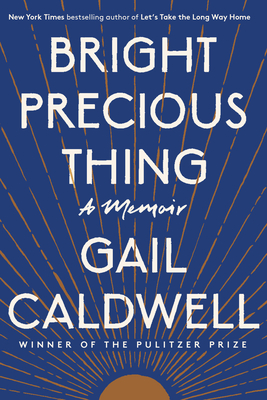
Gail Caldwell was the chief book reviewer for The Boston Globe, and she won the Pulitzer for Criticism. Once I began reading this luminous memoir, I could see that level of quality in her prose. She writes about her childhood in Texas, and about her travels and experiences growing up in the mid-twentieth century. More than anything, this is a feminist memoir, a chance to see how far we have come through a personal lens.
I missed the publication day here, and so I hunted down the audio version to supplement my reading. The author narrates her own work, and so it conveys the feeling that I am sitting by the fire with a dear friend, hearing about the challenges she’s faced as a single woman. Female readers will recognize the sensation: you start talking with a woman that you don’t really know, and before you know it you are talking and listening as if you’ve known one another for ages. That’s the essence of this book. In fact, I listened to it in the evening while preparing dinner, because I knew I’d be left alone during that time, and frankly, I didn’t want anybody to come barreling into the middle of my time with Gail. There’s a sense of intimacy that makes me feel a bit protective when I listen to it. Later, I go over what I’ve read and nod. Yes. Oh, yes, I remember that.
The title works in a number of ways. The darling little neighbor girl that becomes part of the family Gail chooses, bookends the memoir, coming in at the start as a very young person and ending it as an adolescent. But there’s more to it than that; life is a bright precious thing, and though she never says it overtly, I recognize that each woman is a bright precious thing as well.
I am a grandmother myself, but Gail is about the age to be my older sister. Women like Gail gave women like me a guiding light during our coming-of-age years. Our mothers were often resigned to their status as second class citizens, and ready to accept that there were things that women should probably not even try to do, and they couldn’t help transmitting their fears and reticence to us. It is women like Marge Piercy, Gloria Steinem, Wilma Mankiller, and yes, Gail Caldwell that provided us with a beacon, a way forward through the ocean of “no” to the bright shores of “yes,” that gave us courage to be insistent, even when we knew some would label us pushy broads, or worse. We needed role models badly, and they stepped up. They’re still doing it.
The calm, warm tone that came through this audio book, right during the turbulent period after the November election, was an absolute balm. Sometimes I would be shaken by the things I saw in the national news, and then I would head for my kitchen (perhaps an ironic place to receive a feminist memoir, but it worked for me,) and once I had had my time with Gail, I knew I’d be all right.
Highly recommended to women, and to those that love us.
I had intended to read this author’s work for some time now, and collected a couple of his paperbacks that have sat unread for years. I’ve been so busy reading galleys, with the goal of being done by their dates of publication, that I read very few of the books I’ve bought for myself. When this galley came available, I figured my problem was solved; and in a way, it has been. My thanks go to Net Galley and Grove Atlantic for the review copy. This book is for sale now.
Like some other reviewers, I assumed that these short stories would be from the detective fiction genre that has made Mosely famous. As it happens, they aren’t. I could live with that; they aren’t especially compelling, but they’re not badly written. If not for one problem, I would go with three stars, or perhaps even three-and-a-half and consider bumping it up. However.
Mosely seems to have a problem regarding women. It isn’t that he hasn’t gotten the memo that women would like to be regarded as human beings; his writing gives one the impression that he simply disagrees. The first story of the collection is the title story, and it’s one of a physically large but socially clumsy African-American man that takes a liking to a receptionist where he works. His duties take him to her desk now and then, and he begins finding extra reasons to drop by. He chats with her a bit, but her response is unenthusiastic, and she doesn’t make eye contact. Believing that his intentions aren’t plain, he commences leaving a gift at her work station each day, beginning with a simple token and culminating, at the end of the week, with a Bonsai tree that costs him hundreds of dollars. She never thanks him for any of these, which confuses him. When he approaches her, she deals quickly with his work business, and then asks if there’s anything else she can do for him. His every overture is politely turned aside. Eventually, he is called into the boss’s office; he is accused of sexual harassment. The young woman he’s been trying to woo is scared to death of him, and only then does he realize that she actually can’t leave her station when he approaches her. It’s her job to be there. But he is distraught at having his reputation at work sullied, his position nearly terminated. He’s pretty sure it’s because he’s large and Black.
Huh. Well, perhaps the thing to do here, would be to not hit on women he works with. Maybe that’s the best plan for any man in any work setting, unless someone is clearly, plainly interested in him, has, for example, offered him a phone number. But I remind myself not to dismiss an author, especially one so well regarded for so many years, on the basis of a single story. So I read the others.
Indeed, the other stories don’t overtly demonstrate the same dismissiveness toward sexual harassment in the workplace, but the stereotypes never stop with this guy. Women that appear in his stories do so exclusively in relation to men. Even when they show up as mothers, their worth is in relation to their families; sons, grandsons, nephews, and of course, husbands. Women can be vixens, scheming and deceiving for their own evil ends; they can be victims. What women never are in Mosely’s stories are respected professionals, or community members, or anything else that suggests that they make a valuable social contribution that stands alone, that doesn’t bear directly on the life of whatever male character the story is really all about. It’s almost as though the last fifty years of the women’s movement and its achievements never. Fucking. Happened.
So, who wants my paperback copy of Devil in a Blue Dress? Cause now I know I won’t be reading it.
Recommended to those that love short stories and have no respect for women.
This one was worth the wait! John Hart’s new historical mystery, The Unwilling, is simply magnificent. My thanks go to Net Galley and St. Martin’s Press for the galleys; this book will be available to the public February 2, 2021. Those that love excellent fiction should get it and read it.
The French family is troubled. The father is a cop in their small hometown in North Carolina; the mother, Gabrielle, has some sort of emotional disability. Bipolar? Anxiety disorder? Who can say. All we know is that her nerves are shot, and she loses it quickly and easily. The couple have three sons; the first two are twins, but Robert, the golden one, is dead, killed in Vietnam. Jason went to ‘nam too, and rumors say that he killed 29 people there in his first year. He is rumored to be bad news and has already done a stretch in prison. That leaves the youngest, Gibson, known as Gibby. Both parents are possessive of him. As adolescence sets in, it begins to chafe, the way he is overprotected, and now that he’s a high school senior, he’d like a little more room.
And then Jason is released, and he comes home. He isn’t welcome at the family manse, so he stays elsewhere, but he wants to spend some time with Gibby before he blows town.
The title is a chewy one. Initially, I associate it with the daredevil stunt that some high school seniors—mostly boys—consider a rite of passage. It involves jumping into the quarry from a very high bluff; make the jump wrong, and you’ll be dead when you land. Gibby doesn’t jump. Jason does.
The basic framework of the story has to do with crimes Jason has done time for, and others that are committed while he’s in town. A girl he’s spent time with is viciously tortured and murdered, and many in the community make assumptions. But in reality—and we know this early on—he is being framed by a man known as “X” in prison. Truth be told, X is actually the weakest element of the story, and he’s mostly superfluous, but since this is supposed to be a thriller, the thread involving him adds suspense, particularly at the end. The climax is something else again.
But the most interesting aspect of the narrative has to do with the family, and by extension, one could say, all families. Over the course of time, a family’s story is told, and eventually labels develop. The small town setting in a pre-internet era makes this especially true, since most people’s interactions are limited to those that live in the same vicinity. And so, Robert French is the tragic hero, cut down in his prime while fighting for his country; Gibby is the baby of the family, a good kid, a good student; and then there’s Jason. Not long after the murder, Detective French speaks with the medical examiner about Tyra’s murder, and he asks the ME what would make someone do this; not just murder, but torture and mutilate. And the ME tells him that although it’s not the accepted clinical expression, “People like that are born wrong.” And though French is reluctant to say such a thing about his own son, he wonders if he should accept this as true. His wife, mother of all three sons, tells him, “Gibby is all that matters.”
But as the story progresses, we see that there’s more to this story; a lot more. Jason has simply given up trying to defend himself. Refusing to do so is why he spent time in prison. When the world gives up on you, why try? To be sure, he’s no innocent, sad-eyed puppy. He’s seen things, and he’s done things. But people are complicated, and when we try to drop them into neatly labeled boxes, we shut ourselves off from learning details that don’t fit the picture we’ve painted.
For me, this story was less about solving a crime, and more about the characters. I was thrilled that the main story wasn’t about Robert. I’ve read too many novels lately that focus on the dead sibling, and it’s becoming trite. But Hart is a seasoned author, and he doesn’t drop into that well-worn channel. Instead, we see why various well-crafted, complex characters think and act as they do. Reading it, I find myself thinking about my sisters, and the small ways in which we developed labels as children and young adults; happily, none of us was labeled the bad seed, but if we’d been boys…? And I think also of my own children. For a brief, terrible time, I saw my eldest as that person, the one dragging his sister into trouble. Later, much later, I learned it was actually the opposite, but he figured it was better if one of them was still in good standing, and so he took blame that wasn’t entirely his. It’s not a great feeling, but at the same time, my own experience made this story more interesting, and I’m willing to bet there are a great many other readers that will read this book and think about their own families as well.
There are appealing side characters here, and the most compelling is Gibby’s best friend, a kid from the wrong side of the tracks who wants to make good.
So who is the unwilling one? Is it Gibby, for not jumping off the bluff? Is it Gabrielle, for not entertaining the possibility that her son, Jason, deserves more than she is willing to give him? Is it Detective French, for not being willing to completely give up on him? You can take this title in a lot of different directions.
Hart’s literary prowess shines here. It’s not always an easy read; during the more violent patches, I took it in small bites. I received both the print and audio galleys, and I moved back and forth between them, leaning more toward the audio, whose reader, Kevin Stillwell, does an outstanding job; but at times I forgot something, or wanted to check a detail or highlight a quote, and then I dove into my digital review copy. You can go either way without fear of disappointment.
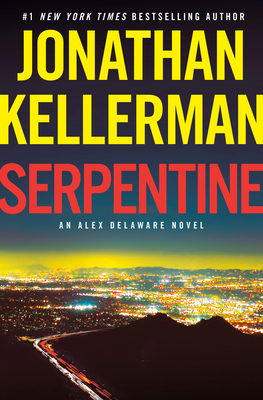
This is the 36th entry into the Alex Delaware series, and it’s still going strong. Lucky me, I read it free. My thanks go to Net Galley and Random House Ballantine for the review copy. It will be available to the public February 2, 2021.
Milo Sturgis, the only gay detective in Los Angeles, has been ordered to take up a very cold case. Money talks, and big money talks loudest. A massively wealthy young woman wants to know what really happened to her mother, and who her biological father was. Ellie Barker was raised by her stepfather, who left her everything, and now that he’s gone, there’s no reason not to go digging for information about the things he didn’t like to talk about. Milo does an eye-roll and reaches for his phone. He thinks it would be better to have a psychologist along, and so once again, Alex joins him on the case.
The case is a complex one, and it also holds a lot of surprises, especially at the end. There’s a side character named Winifred Gaines, “equine laugh” and all, that I enjoy greatly.
I’m going to use this opportunity to share some reflections on the series as a whole. At the outset, clear back in the single digits of the series, the focus was mostly on Alex, and on children. Since Kellerman is a child psychologist, this format gave him an excellent chance to showcase his professional knowledge by incorporating troubled children or adolescents into the plot. I always learned something when he did this, and it was riveting.
Over the course of the series, children have become thinner on the ground. Perhaps this is because Kellerman has used up his reserves, but I don’t think so, somehow. It’s a mighty rich field, and as far as I know, he has it all to himself in terms of long-running series. This time, there are a few references to how children might behave under particular circumstances, and there’s a brief mention of a custody case Alex is working on, which is not central to the plot, but I nevertheless learned something just from the tiny little fragment he snuck into the story. I fervently wish that he would incorporate more child psychology and less kinky sex into his series now. If that makes me sound like a bluestocking, I’ll live with that.
What he has done that I like is build Milo into a more central character. Earlier in the series, Delaware was the central protagonist, and he and his girlfriend Robin—the sort of girlfriend that seems more like a wife—had some ups and downs. They separated at one point, then reunited. It did make them seem more like real people to me. Now, both of them are static and bland, but they provide a neutral backdrop for us to see Milo in action. And I have to admit, it works for me. Right from the get-go, Milo, who has a large appetite, comes lumbering into Alex and Robin’s kitchen, flings open the fridge, and starts making himself the mother of all sandwiches, and I realize that I am smiling widely. What an agreeable character! There’s a point about a third of the way in, where another guy stands up and Milo takes his seat, and “the couch shifted like a lagoon accommodating an ocean liner.” I just love it. There are a couple of allusions toward the end that hint that Milo may be experiencing some health issues that are common to large folk, but there’s no way that this character will die; not unless Kellerman wants to kill of his protagonists as part of an authorial retirement.
When all is said and done, this is a solid mystery from a solid series. Can you read it as a stand-alone? You can. However, you may become addicted and find yourself seeking out the others as well.
It’s the best of books, but it’s the worst of books. K-Ming Chang has made her mark on modern literature, and her debut novel, Bestiary, has already made a number of prestigious lists. My thanks go to Net Galley and Random House for the invitation to read and review; sadly, its twisted edginess is too intense for me.
This much-buzzed-about book is for sale now.
How many triggers are packed into this one little book? All of them. Every trigger you can possibly think of, plus she may have made a few more up on the spot. There is violence a-plenty here, and the graphic child abuse and elder abuse provide such visceral imagery that I may never get it out of my head. I abandoned this book faster than just about any I can recall, and although I was certain it was the right thing to do for myself, I nevertheless experienced a twinge of regret along with it, because it is obvious from the first page that this author can write.
My gut hunch is that younger adult readers with cast-iron stomachs and level dispositions will be the most appreciative demographic for this one, but wimps like me will need to give it a pass. It is to the former that this book is recommended.







 Seattle Book Mama