
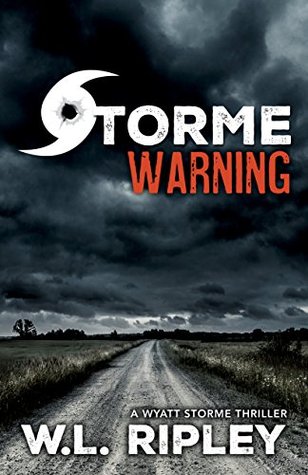
 Storme Warning is the fourth and thus far final installment in a terrific series. I have read three, and will read the fourth if I can find it. The snappy patter and nonstop action and suspense make it hard to put down once you’ve begun. I rate it 4.49 stars, and thank Brash Books Priority Readers Circle for providing me with this DRC in exchange for an honest review. The book is available for purchase right now.
Wyatt Storme is retired from football. He divides his time between his cabin in Missouri and another cabin in Colorado; this story takes place in Missouri. He owns a considerable piece of land because after having the press follow him hither and yon for the duration of his NFL career, he craves simplicity and solitude. “Reclusive”, as his best friend Chick explains to an outsider.
Because all of a sudden, Wyatt’s land is chock full of outsiders. Hollywood director Geoffrey Salinger wants to shoot his hot new movie on location; his star has received death threats, and Chick has been tapped as bodyguard. Wyatt doesn’t like it much, but Chick wants the work, so he agrees to tolerate the intrusion, but he sets terms in a way that provide him with an unusual amount of control over industry hotshots that aren’t accustomed to leaving the driver’s seat. Combine this scenario with the smart, snappy patter between Wyatt and Chick; throw some 70’s song lyrics into the narrative as if they are merely part of the story; add some mobsters from out of town; and you have a really fun, fast-paced story.
The final .51 star is denied because of the way the author deals with race. He means well to be sure. But racist terms that are sprinkled in an almost nonstop stream throughout the book are going to make this a prohibitively painful book for most African-American readers. It’s true that Ripley uses the “n” word and other slurs (against other races also, but mostly Black folk) to determine who is a bad guy, but when one is close enough to the heat those terms create, all the fun stops as soon as the word appears. It’s like finding a rattlesnake in the cookie jar; you’re having a good time, expecting good things to continue happening, and then, bam, there it is.
Depending on who you are, it’s enough to take your breath away.
To be sure, I don’t know what it is like to be a person of color; I am not one. But for many years I have been the only Caucasian person in my house, with others here being either Asian, Black, or mixed, and I do know what it is to be the wife and mother of people that don’t enjoy white privilege. The “n” word and others like it are serious, serious things. And insult is added to injury by having the African-American character unable to enter a scene without race issues being the first to fall from his lips. Most Black people don’t really want to engage white people in discussions of race unless it’s in a formal political setting, and even then, it’s more comfortable to talk to another person of color, or a room that is mostly people of color. But LeBeau is clearly in this story for no purpose other than to be the Black character. He isn’t developed, and what is worse, he isn’t capable of much that is positive. As with the Black girl in the brief restaurant scene, a white guy has to come to the rescue. To depict all characters of color as victims and set them up to be saved every stinking time by Caucasian characters is inexcusable. (LeBeau tries to carry off a rescue once, but it doesn’t work out, and Chick emerges the hero once more.)
Should the writer continue the series, I recommend that he simply use white folks, if that’s his comfort zone, or include multiple people of color and develop them. Give them characteristics beyond coming into the room and making readers aware they aren’t white. And don’t diminish them by making them unable to stand up for themselves or others. I further recommend not using that word, ever again. It’s cheap and easy, but it costs some readers dearly. I would not give this book to my son to read. The pain would outweigh the enjoyment; in fact, I guarantee he wouldn’t finish it. There are more subtle yet unmistakable ways to demonstrate that a character is racist, if that is a key goal. There are other ways just to show that a character is a bad guy, too.
Hollywood and television have learned how to create actual characters of color, as opposed to casting someone to “be the Black guy”. Ripley has skill enough to do the same.
I’ve given the downside of this novel more space than the 90 percent that I enjoyed, but I have done so because no other reviewer I’ve seen so far has addressed it, and someone has to do it.
With the single clear caveat provided here, this fast-paced, mostly-funny detective story is recommended .
 Dear god. What was I thinking?
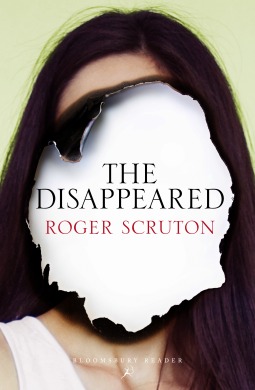 The Disappeared was published in UK, and is now available to readers in the USA. Scruton shines a spot light on victims of domestic violence, trafficking, and rape. It’s a timely issue, and no one can read his story and walk away unmoved. Thanks go to Bloomsbury Reader for inviting me to read and review the DRC free in exchange for an honest review. This book is available to the public tomorrow, February 26.
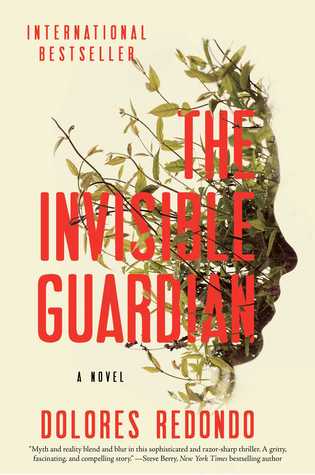 The Invisible Guardian has received widespread acclaim in Spain. It will be available to English speaking audiences March 8, 2016. My thanks go to Net Galley and Atria Books for the DRC, which I received in exchange for an honest review. I rate this book 3.5 stars and round upward.
 I’m a long time reader of novels by JA Jance, but until I read this new release, I would have told you that her Arizona series are second string efforts compared to the JP Beaumont titles set in Seattle. Not anymore! Thank you to Net Galley and Touchstone Publishers for the DRC, which I read in exchange for an honest review. The book will be available to the public March 8.
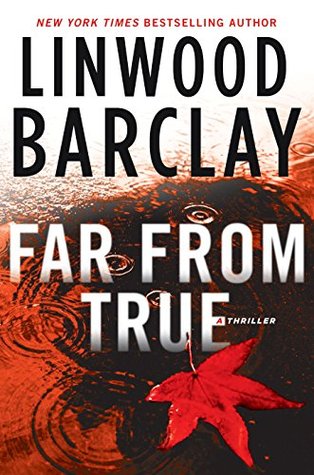 Barclay is an established writer, with a number of best sellers to his credit, but he was new to me. My thanks go to Net Galley and Berkley Publishing Group for providing me with a DRC in exchange for an honest review.
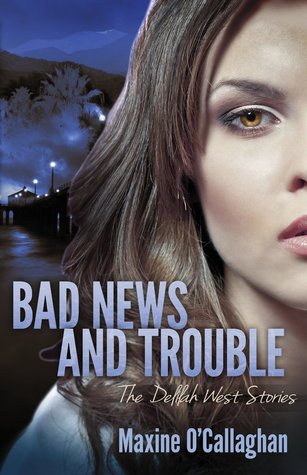 I am always on the lookout for a new, well written female detective series. There are some Grand Masters out there that I adore, but the problem is that I can read faster than they can write. So when I was given the opportunity to check out Delilah West, a sleuth whose stories originated during the latter half of the 20th century, I jumped on it, and I am so glad I did. Thank you, Brash Books Priority Reviewers Circle, for the free DRC. This book is available for sale now.
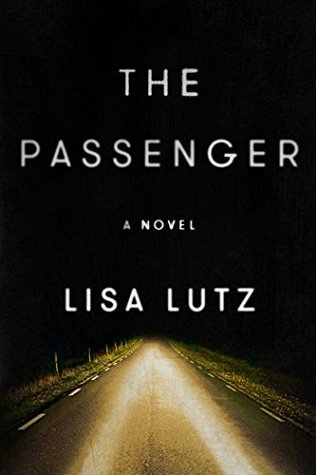 Lisa Lutz is best known for her series, The Spellman Files, which I confess I have not read or watched on television. I came to this stand-alone story brand new, and can tell you that it’s fresh and original, a real kick in the pants. Thank you Simon and Schuster, and thank you too, Net Galley, for the DRC. I picked this thing up and then hardly put it down, but my review had to wait awhile in order to be within the courtesy-window of no more than three months from publication. And it gave me some time to think.
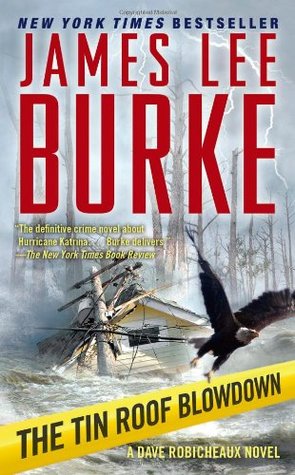 Sometimes people say they “ran across” a book, and that is close to how I came to read James Lee Burke for the first time. I had been tidying up for company, and my daughter had selected this book from the “free” pile at school, then decided she didn’t want it. She is a teenager, so instead of finding our charity box and putting it there, she dropped it on the upstairs banister. I scooped it up in irritation..then looked at it again. Flipped it over…read the blurb about the writer. This man is a rare winner of TWO Edgars. Really? I examined the title again; I hadn’t read any novels based on Hurricane Katrina, so why not give it a shot?
 In 2015, I reviewed Storme Front, the second of four books in the Wyatt Storme series. I loved it and rated it 5 stars. Given the opportunity to read and review this first in the series, thanks to Brash Books Priority Reviewers Circle, I didn’t have to think twice. Thank you to Brash for the DRC, which I read free in exchange for this review.
 Seattle Book Mama