Heartbreak Hotel, by Jonathan Kellerman*****

Happy release day! Fans of Kellerman’s are in luck; this one is for sale today.

seattlebookmama's avatarSeattle Book Mama

heartbreakhotelThis is #32 in the Alex Delaware series, and Kellerman’s writing just seems to get better with every entry. Thanks go to Net Galley and Random House Ballantine for the DRC, which I received free in exchange for this honest review.

For those unfamiliar with the series, Alex Delaware is a semi-retired child psychologist who’s also an adrenaline junkie. His nest is already well padded, his wife still happy in her career, and so he spends most of his time assisting his best friend, an LA homicide detective named Milo Sturgis. The premise is the hardest thing to swallow, but Kellerman makes it easier by letting us know how affluent Delaware is, and recently there’s the added twist that because Sturgis is gay, nobody on the force really wants to be his partner. Thus it seems more natural—for the sake of a good yarn—for Delaware to slip into that position…

View original post 275 more words

He Will Be My Ruin, by K.A Tucker***

hewillbemyruinMaggie Sparkes, heir to a fortune, is called to New York City when her closest friend, Celine Gonzalez, is found dead. Did Celine really commit suicide? Maggie doesn’t believe it for a minute, and when she finds Celine’s personal effects hidden away with a note, she believes it even less. Thanks go to Net Galley and Atria for the DRC and invitation to read and review this title. It was released February 2, 2017 and you can get a copy now.

Maggie and Celine grew up together; Celine’s mother Rosa was the housekeeper and nanny to Celine’s very wealthy family, and so apart from school, the girls were inseparable. Now Maggie is determined to find out what happened to Celine.

The cast of characters here is limited to Maggie, Celine’s neighbor Ruby, who was my favorite character, a cop named Doug, and two hunky men, both of whom were involved at some level with Celine. Jace is an investor; Grady is the property owner of Celine’s building, and both are described as immensely attractive. Who can be trusted? Who is a killer?

The limited number of characters and repetition—how wealthy and philanthropic Maggie is, how creative and hardworking Celine was—makes for an accessible read. The vocabulary is adult level but not out of range of the average reader. For those that are newly venturing into reading English language novels, this is a great place to start, because if something important slides by you the first time, you’ll be told again.

As for me, I prefer more nuance in my literature. When Maggie tells us how things went in high school, she wasn’t merely a debater, she was the captain of the debate team. Likewise, Celine wasn’t just a student actor, but scored the role of Juliet. Having both of them be so perfect within their realms of interest keeps them from seeming real to me. Maggie is rich, and we get told constantly in case we forgot. Maggie has a million charities and wants to save the world, and we’re unlikely to forget that either.

On the other hand, I wasn’t always this old and sometimes cynical. I can recall a younger version of myself that adored the writing of Victoria Holt, and I think that younger self might well have enjoyed this novel. Tucker is a successful, experienced novelist, and I have a hunch this is the pool of readers that find pleasure in her work.

Recommended to those that love Harlequin romances, Victoria Holt mysteries, and readers that enjoy romance but are still relatively new to reading in the English language.

Heartbreak Hotel, by Jonathan Kellerman*****

heartbreakhotelThis is #32 in the Alex Delaware series, and Kellerman’s writing just seems to get better with every entry. Thanks go to Net Galley and Random House Ballantine for the DRC, which I received free in exchange for this honest review.

For those unfamiliar with the series, Alex Delaware is a semi-retired child psychologist who’s also an adrenaline junkie. His nest is already well padded, his wife still happy in her career, and so he spends most of his time assisting his best friend, an LA homicide detective named Milo Sturgis. The premise is the hardest thing to swallow, but Kellerman makes it easier by letting us know how affluent Delaware is, and recently there’s the added twist that because Sturgis is gay, nobody on the force really wants to be his partner. Thus it seems more natural—for the sake of a good yarn—for Delaware to slip into that position. After all, he’s been doing it for years.

This story involves the homicide of a nearly one-hundred-years-old woman that has consulted Delaware. She paid him generously for his time but confided little about what she planned to do with the information he found for her, and so when she is found dead in her bed, he smells a rat. Sure enough; she was suffocated! Now who would do that to a sweet old lady like Thalia Mars?

Our story takes a million deft twists and clever turns, and in general shows us that what we think we see isn’t always real. We encounter some underhanded, sleazy real estate practices as well as insurance fraud along the way. The case also takes in some interesting LA history.

One aspect of Kellerman’s work that I often forget and then am happily surprised by all over again, is the humor he threads through the narrative, and I laughed out loud more than once.

Although it’s only one page in length, some readers will also want to be aware there’s one graphic, brutal rape. Consider your trigger warned.

At the end of the day, stories such as this one can be curiously comforting. It’s true that tax season is just around the corner, and my toaster just died. But after reading this novel, I can find comfort in knowing that no villains are likely to turn up in my bedroom tonight and burk me in my sleep.  Perspective! There you have it.

This fun story, which went by way too quickly, will be available to the public February 14, 2017. Highly recommended to those that love a good mystery.

Turbo Twenty-Three, by Janet Evanovich**-***

turbotwentytI’ve been a big fan of the Stephanie Plum series since Evanovich launched it over twenty years ago.Twenty? Whoa now, that hardly seems possible. But the first book in the series landed a host of great-first-book awards in 1995, the year before my youngest child was born.  I haven’t missed a single book nor even read any of them out of sequence.

There was a point somewhere along the way when the series started to lose its zip and some of the new fuel the writer injected turned sour. Does anyone recall the bit where Stephanie’s sister moves home from out of state, and one of the sister’s daughters thinks she’s a horse? It was beyond stupid to my way of thinking, but the point is that our author pulled it all back around within the next couple of books and it was funnier and fresher than ever. The last in the series, Tricky Twenty-Two, was an absolute scream, and so although I rarely purchase a book for myself anymore, I plunk #23 onto my Christmas wish list without a moment’s hesitation. And when Christmas is done, I scurry off with my four much-longed-for new books—three of them mysteries– and prepare to feast.

So this is a crushing disappointment. Sad, sad, sad. It isn’t funny enough to actually laugh at even once, and there are aspects of it that actually offend. I consider this sort of odd, given that since her movie deal, Evanovich has actually sanitized a lot of the spicier aspects of her work. The language isn’t nearly as blue as it was when she was new at this thing and had little to lose; the sex isn’t as steamy; and all told, it seems as if her imagination has an agent of its own whispering into its ear, asking just exactly how much revenue she’s willing to risk losing if she pursues this, that, the other creative but risqué notion.

How is it possible then that for the first time in a career of over twenty years and nearly two dozen published mysteries in this series alone, this author has been so politically tone deaf?

As I read one scene involving Stephanie and Lula, a pairing that’s almost always good for a laugh, my face was in a tentative smile, the expression one wears when expecting something funny to happen any minute. And that’s the moment when Lula claims to be extra lucky when seeking employment, because she can check off three boxes; she’s Black, she’s female, and she’s large in size. These should just about ensure that she’ll be hired. And then she tops it off by allowing that the only better thing that could happen would be if she were in an altercation with a cop and got beaten up and landed on YouTube.

Once I see this, I’m not laughing, and now I’m not smiling anymore either. It’s time to put the book away, read something else, and come back later when my blood pressure has settled.

The story continues; it isn’t funny, but it also isn’t dull. My attention is held, and I’m still somewhat convinced that it’s just about to get funny. And that’s when Lula says she is going to make money online by pretending to wake up one day “feeling like I’m a dude” and go use the men’s restroom. She’ll go in, “have my positive experience”, capture it on film and get rich. And of course, there are trans people all over America getting filthy rich just by identifying with a different gender than the one assigned them by nature and their parents…right?

Not so much.

I do find two amusing parts in this story. The first is some understated business with Stephanie’s parents. It’s the only subtle humor she employs, and maybe that’s why it works so well. I love seeing her mom and dad respond to uncomfortable situations.

The second is an entirely unexpected yet believable twist on the whole Morelli-or-Ranger thing, which had begun to go stale. I won’t spoil it for you, because you may still want to read this book.

One other obvious twist is that the writing, which has always been accessible to a reader that’s made it part way through high school, has been dumbed-down considerably. I find myself distracted by the number of four and five word sentences; where’s the fluency? I check the vocabulary and recognize that she’s dialed it down to a fourth grade level. I’ve administered vocabulary tests to fourth and fifth graders, and I find myself having flashbacks of the sort a retired teacher doesn’t really need. What the hell, Janet? Are we marketing to the functionally semi-literate now?

Nevertheless, I’ll be reading #24 when it comes down the pike; but not until I can get it used or free. My wish list is now reserved for other things.

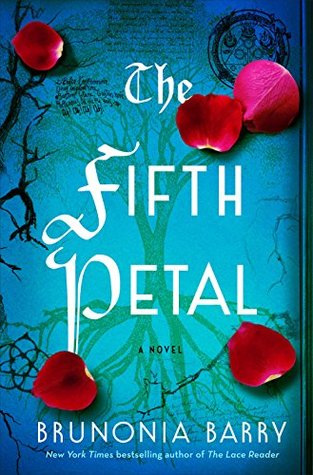
The Fifth Petal, by Brunonia Barry***

thefifthpetalA teenage boy named Billy Barnes dies on Halloween night; everyone knows that he was trouble, and no one is too surprised to see him come to a bad end. But police chief John Rafferty has a job to do, and he sets out to discover who the killer is. The setting is Salem, Massachusetts, the location of the Salem Witch Trials centuries ago and now the Mecca of Wiccans and others that practice witchcraft of various types, not to mention throngs of tourists that show up every autumn.  Chief Rafferty wonders what the connection is between this murder and those of 25 years earlier, dubbed “The Goddess Murders”.

Thanks go to Net Galley and Crown for the DRC, which I received free in exchange for an honest review. This book will be available to the public January 24, 2017.

Barry is an experienced novelist, but her work is new to me. This title can be read as a stand-alone novel, but there’s a tremendous amount of detail here. Perhaps having read The Lace Reader, an earlier novel that other reviewers tell us has some of the same characters that are present here, would make this book less complicated and easier to sort through; then again, if Barry had chosen fewer secondary threads to follow, the reader could relax more and enjoy the book anyway. More on that in a minute.

Rose Whelan is a Salem native, has shouldered the “unofficial blame” for the Goddess Murders; she maintains that a banshee took up residence in her body and left her with no choice. Rose has gone from the psych ward, to homelessness, and back again; Rafferty and his wife Towner have offered her a room indoors, but she won’t leave the tree outside their home for long at a time, lest bad things happen. She has bad memories, and they give her unquiet dreams:

“On that horrible night, after it happened, after the shrieking stopped, the world had quieted and then disappeared.  Rose had found herself staring into an eternal emptiness that stretched in every direction and went on forever.  When the keening began, Rose had believed that the sound was coming from her own lips. Then she’d seen the tree limbs and branches start to move with the breath of the sound itself, their last leaves burning in the black sky like crackling paper. Then the trees had begun to speak.  Come away now, the trees had said. Come away.”

The imagery here is amazing, as you can see; this aspect is the story’s greatest strength.

Our protagonist is Callie, who’s new in town. Rose had been her surrogate mother after her mother, one of the Goddesses, died. She had lost contact with her and is stunned to find her in such bad shape.  Brunonia does a fine job of highlighting the challenges of helping the homeless, not to mention the stereotypes that follow them. There’s a lot of Celtic lore that I also really like reading about.

The parts that disturb me are those throughout the book that reinforce the stereotype of women as being constantly in competition with one another, unable to get along and help each other.

However, the main thing that gets in the way of this being a really great read is the vast amount of detail about way too many things. At the 60 percent mark, my notes indicate that I wish the author would decide what, other than the primary plot line of the whodunit, she wants to feature. We have witches past; witches of the present; mean nuns; and way more about the healing properties of quartz bowls than I ever want to hear about. At this point in the book I am ready to throw in the towel and call it a 2 star read; I felt as if the mystery had degenerated into a New Age infomercial. I note that I can scarcely recall who’s dead, and who’s accused.  But it’s a DRC and I have an obligation, so I forge on.

And that diagram! The diagram of a five-petal flower is created, changed and discussed in such infinite, numbing detail that my eyes are half-crossed by the time we make our way to the climax. Once we’re there, though, the story becomes more cohesive and I like the way she resolves it.

Those that have read Barry’s other books and liked them will enjoy this one; likewise those that are drawn to various aspects of modern spiritual healing and Wiccan practices will also be pleased. For myself, I would enjoy her work more if she didn’t try to jam such an extensive collection of minutiae into a single novel.

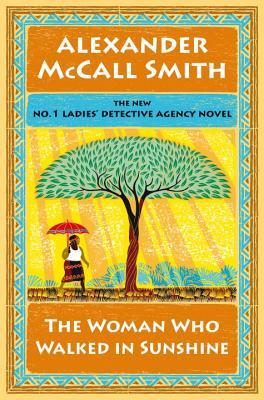
The Woman Who Walked in Sunshine, by Alexander McCall Smith*****

thewomanwhowalkedThe first week or two after Christmas is a sumptuous period for me as a reader. Nearly every book I read these days, fiction or non-, is a DRC, or Direct Reader’s Copy sent to me digitally by publishers via Net Galley in exchange for an honest review.  However, each year there are invariably half a dozen titles, sometimes more, that I really want to read and haven’t been able to obtain free of charge. Sometimes I discover a book after it’s already been published some time ago, and sometimes it’s a book that I couldn’t get as a DRC. These books land on my wish list, and my family is faithful in purchasing them and placing them, clad in pretty paper and ribbon, beneath our Christmas tree. By Christmas night, I’m snuggled deep beneath a pile of fluffy covers, my spouse and hound dog snoring sonorously while I immerse myself in the books I am just about guaranteed to love, bathed in a soft yellow bedside light. This ritual is as significant to me as the more widespread traditions of feasting, wrapping gifts, and hanging stockings. I can’t recall a Christmas without it.

This year we had our gift exchange on Christmas Eve, and by bedtime I was snuggled up in flannel and reading this paperback book, the 16th in the series. The series, for those unfamiliar, is of the cozy variety rather than the pulse-pounding thrillers that absorb a good portion of my reading life. Precious Romotswe is the owner and founder of the #1 Ladies Detective Agency, and a good portion of those that read this book will already be familiar, as I am, with the main characters and their stories. Mma (Ms.) Ramotswe is married to JLB Matekone, who owns and runs the automobile repair shop adjacent to the detective agency; Mma Makutsi , Mma Ramotswe’s eccentric but capable assistant, believes that it’s time for her mentor to take a vacation. And indeed, Precious has never gone on holiday before; it’s about time, isn’t it?

Mma Ramotswe is reluctant. She hates to leave her business in anyone else’s hands; then too, she’s disconcerted when she learns that her husband, his employees, and her own assistants have discussed her need for time off when she wasn’t present. Is it a conspiracy, or is it loving concern?

The mysteries to be solved include the problem on which the temporary assistant hired on for the duration of Mma Ramotswe’s holiday stumbles; an additional situation involving a child named Samuel, an orphan who’s been trained to shake down drivers for coins in exchange for not damaging their cars; and a new school bearing her signature “#1 Ladies” logo, which appears to be not only misappropriating her trademark, but shady in other ways as well. Yet much of the story is dedicated to character development and the personal lives of the main characters, and it’s this that keeps me coming back.

Ultimately, the story is about trust, kindness, and learning to let go sometimes.

It occurred to me for the first time that I don’t know how the majority of Botswana feels about this series. McCall is a native-born Botswanan with Scottish predecessors. Are these characters true to the way the people of color in Botswana see themselves and their people?

Yet another part of me recalls that we are in the land of fiction. Unless I see some sign that the series is objectionable or offensive to those it represents, it will continue to be a happy retreat for me.

Highly recommended to those that love a cozy mystery and an opportunity to drop their blood pressure; the mesmerizing cadence here is better for us than any bottle of pills, and far cheaper than therapy.

Best of 2016: Mystery

This category includes everything within the same zone: thrillers, suspense, detective fiction, crime fiction. If it’s related, I’m rating it here. I expected this to be my toughest call because I read so many books of this genre, but when I had a look at the original titles I’d seen this year, and then eliminated those crossover novels that had already been awarded as the best of some other genre on this site, it was down to three books. Unbelievable…but not at all mysterious.

MY TOP THREE:


The Roanoke Girls, by Amy Engel*****

theroanokegirlsAmy Engel makes her debut as a writer of adult fiction with this title, having begun her career writing fiction for young adults. The Roanoke Girls is smoking hot, a barn burner of a book, diving into some of society’s deepest taboos and yanking them from the shadows into the bright rays of Kansas sunshine, where the story is set, for us to have a look at them. It’s not available to the public until March 7, 2017, and frankly I don’t know how you are going to wait that long. I received a DRC for this title from Net Galley and Crown Publishing for the purpose of a review.

Lane grows up in New York City, raised by a mother that shows no sign of warmth or affection, a woman that seems to either cry or sleepwalk through most hours of most days. When she hangs herself, Lane bitterly wonders what took her so long. But then a surprise comes with the social worker assigned to her case. It seems there are grandparents in Kansas, who not only are willing to have Lane, but that actually want her.

Soon Lane finds herself being driven up the private drive to Roanoke, the family manse, a rambling, welcoming hodgepodge of a house, complete with a same-age cousin waving with manic joy from the front porch. Allegra is spoiled, and now Lane will have all the same luxuries. The ostensible farm on which they live is more of a gentleman’s farm, as it happens; the real money comes from oil. And so Lane, who has scraped for every scrap of clothing and food alongside her struggling mother for 16 years, suddenly has the whole world at her beck and call. Allegra takes her to their grandfather’s study and shows her where all the credit cards are kept, and she assures her this is not something they are sneaking or stealing; it is assumed that if they want something, they can buy it.

It seems almost too good to be true…and it is.

There is so much simmering just below the surface, unspoken but thick and almost tangible. Take, for example, the portraits of the Roanoke girls that have gone before them, whose photographs line a main hallway. The collection begins with Grandfather’s sisters, continues with their daughters, the mothers and aunts of Lane and Allegra. What has become of all of them? Allegra explains:

“Roanoke girls never last long around here…In the end, we either run or we die.”

Lane’s picture isn’t included among those in the hallway, and she isn’t sure she wants it there. And as time goes by and the contours of the family’s pathology become clearer, Lane decides it’s time to save herself, and she hits the road, covering her tracks to the best of her ability. She stays away until ten years later, when her phone rings. Her grandfather tells her that Allegra has vanished; they need Lane to “come home” to help the family search for her.

Lane’s interaction with her grandfather is mesmerizing. When he calls her with the news of Allegra’s disappearance, the first thing she asks is how he got her number. Yet once she is back in the Roanoke house, she recognizes that

“…behind the secrets and the horrible truth, under the shame and anger that beat like a heart, there still lives a terrible kind of love.”

The fascinating, intimate narrative Engel weaves is a thing that can’t be taught. There’s no degree, no series of workshops that gives a voice such clear authority. She plays out the story’s thread in careful increments, and the bone-c hilling tone is heightened rather than lessened by the fact that we have a very good idea of exactly what happened to Allegra. I know whodunit halfway through the book, but it doesn’t matter. The author binds me to Lane’s story in a way that is completely undeniable, and I have to see this thing through with her. Toward the end of the book, instead of commenting to myself about aspects of the book or particularly compelling passages to quote, I’m engaging with the text itself. More than once my notebook simply says, “No.”

The reader should know that there are triggers all over the place. Those that are in a sensitive place may want to have someone else read the book first and tell you whether they recommend it to you. But for those that want a chiller of a mystery, and for those that care about women and the ways that society turns people into products for consumption, this is a must read. Or you could just read it because it’s brilliant, and no one else is writing anything like it.

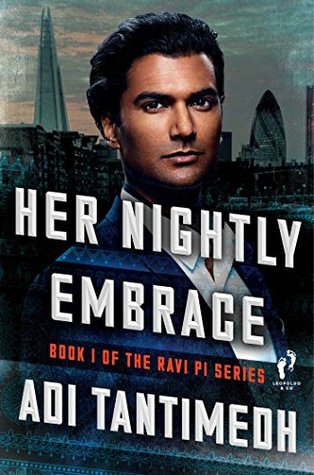
Her Nightly Embrace, by Adi Tantimedh*

hernightlyembraceI was invited to read and review this title by Net Galley and Atria Books. I thank them for the opportunity.  The first two chapters showed signs of promise, but in the end, this book is poorly written and for most, it will also be offensive. I can’t recommend this title. That said, it’s about to become a television program, so perhaps you will enjoy it more than I do. But I have to call them as I see them, and if they give this writer a host of awards, I will still say this book is worth one star and nothing else.

Ravi Singh is our protagonist. He has dropped out of a program of religious studies, to his father’s profound disappointment, and become a detective. He had something of a breakdown, and under stress he sees Hindu Gods that no one else can see. An added pressure is financial; he has bills to pay, and his mother has racked up some gambling debts for which she may be harmed if not paid soon. I warmed to the unlikely loan shark, and I thought this was going to be a fun read. And if it had been well written, it would have been.

In other reviews, I have occasionally noted the way in which a tired, overused plot device may become brand new and almost magical in the hands of a capable writer. This one works the other way around. It’s a unique, if somewhat gimmicky idea, but the author will have to develop a vocabulary before I can enjoy his work.

Profanity has never been a hot button for me. I’ve been known to toss the “f” word into my own reviews when feeling particularly warmly. Unfortunately, Tantimedh uses the word the way I’ve heard teenagers do it; when someone is too lazy to consider what word might be interesting and hasn’t been overused yet, the “f” word can become noun, verb, adjective, and interjection. Everything, everything, everything in this book is said, by either narrator or in dialogue, to be “fucked up”.  By the 40% mark I was so distracted, and it was so obvious that I wasn’t going to engage with the text as I had hoped, that I started keeping track to see whether my perception was accurate. Was I being snarky, or was that word—and a few other similar ones, especially the mother-f word—all over the place? And as I started highlighting, I was amazed to find it on almost every page. Some pages were miraculously free of it, but then there’d be another page where I found it twice, or thrice. At this point I gave myself permission to skip to 80% and see whether something wonderful would happen at the end to redeem this thing. It’s been known to happen; just not here.

I’ve only panned a title I was invited to review once before, and that was because of ugly racist references throughout the text. I’m generally a generous reviewer. But suddenly I felt as if I were before a class of eighth graders once more, explaining that not only will profanity offend some readers, but when it’s overused, it’s often because the writer doesn’t want to do the work to find a more specific or eloquent term.

Whether the issue is due to a translation issue—I didn’t check to see if this was published in something other than English originally—or laziness, or a lack of facility as a writer is moot. The end result is the same.  This is bilge. Save your money.

The Big Book of Christmas Mysteries, edited by Otto Penzler*****

TheBigBookofXmasNote to the reader: I originally posted this when my blog was just a few months old, and I was still struggling with basic issues, such as how to insert the book cover into the text. Now the holiday season is here again, and I am running my review–with some basic technical adjustments–one more time, because in the past two years, I haven’t found a Christmas book I like better than this one. It’s the only book I’ve found since I’ve been writing reviews that I found worth actually buying not just one but two copies at full price to give as gifts. For those that love Christmas stories and mysteries, this one’s for you!

I received this wonderful collection last year as an ARC from the “first read” program via the Goodreads.com giveaways. At the time, I didn’t have a blog; I reviewed it on Goodreads and because I liked it so well, I also reviewed it on Amazon. Then, while I was on the site, I bought two copies to give as gifts. I have never done that with an ARC before or since (so far), but it is so wonderful that I wanted others to have it, and I wasn’t willing to share mine.

Now the season is upon us. This blog will be punctuated by worthwhile Christmas books of a secular variety. I guess it is a typical retired-teacher behavior to decorate my home with brightly jacketed Christmas books when others are getting out their craft supplies and hot glue guns. At any rate, if you buy just one Christmas book for yourself or someone else, and if the reader enjoys mysteries, this is the best you will find.

The stories are organized according to category in a format and layout that is congenial all by itself. There are ten sections, starting with “A Traditional Christmas”, with the first entry being one by Agatha Christie; it is a story that has aged well, and I don’t remember having read it even though I thought I’d read everything by that writer. There are a few more, and range from just a few pages, double columns on each page, to 25 or 30 pp. Then we move on to “A Funny Little Christmas”. The first there is a story by the late great Donald Westlake, and I gobbled it up and then felt bad that I hadn’t saved that story for last, because I adore his work and he’s gone and can’t write anything more. But I perked up when I noted that yet another section, “A Modern Little Christmas”, has an unread (by me) story by Ed McBain. There are many others. The final section, “A Classic Little Christmas”, bookends the anthology neatly by finishing with Dame Agatha. All told there must be about sixty stories, maybe more.

The anthology, edited by the brilliant and acclaimed Otto Penzler, is billed as having a number of rare or never-published short stories, and I think it’s a true claim. There are many mystery writers I’ve read and enjoyed here, and others I had never even heard of, but found immensely entertaining. I haven’t skipped any yet, but even if I find something I don’t care to read, the book is worth owning. I know that already. It is also billed as an anthology to warm the heart of any grinch, and indeed, there has been at least one story with a satisfyingly creepy ending.

One of the charming things about anthologies is that one can read a single story in a sitting and not feel too bad when it’s time to put the bookmark in and go get something done. Then it waits there to greet us as we return from executing less pleasurable tasks, a reward that invites us to sit down, curl up with good cup of coffee or the dog or both and have a cozy read. It also makes the book a lovely thing to keep where guests can access it, because they can enjoy it even if they haven’t time to read more than a story or two in between other activities.

…but I’m keeping you. You could be reaching for your car keys, your bus pass, or even better, going to another window to find this book online and order it. Once you see it, you will most likely feel as I do…unwilling to part with your own copy, yet yearning to get at least one more for somebody else! Get the plastic out and do it right away.