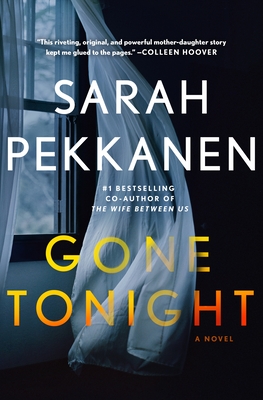
Gone Tonight, by Sarah Pekkanen*****

I’ve been reading and enjoying Sarah Pekkanen’s novels for years now, but Gone Tonight is far and away the best of the bunch. My thanks go to Net Galley, Macmillan Audio and St. Martin’s Press for the invitation to read and review. This book will be available to the public August 1, 2023. If you love psychological fiction or thrillers, you should order it now.

In her previous thrillers—the ones I’ve read, at least—there is similarity. She’s written about women ganging up on one woman, and love triangles, or what appear to be love triangles. This one is different, and it’s better. Here we have just two characters, mother Ruth and her young adult daughter Catherine. The unseen character is James, Catherine’s biological father. Throughout the story, Ruth is vigilant, always watchful. She’s afraid she’s being stalked, or investigated, or otherwise watched. Ruth isn’t merely careful; she keeps a bug-out bag ready for each of them, varies her routine to where she really doesn’t have one. She doesn’t take the same exact route to any of the places she frequents regularly. To see and hear this character, one would think that the CIA, the Mafia, and all of the cartels were out to get her and kill her.

Early in the book, Ruth provides Catherine with some hard news: she has early onset Alzheimer’s. I tell you this in particular, because when I saw it, my eyes glazed over with boredom and I thought that this thriller wasn’t going to thrill me at all. I nearly slid the book onto the bottom of my stack, and that would have been a terrible mistake, because this is *not* an Alzheimer’s story.

Catherine has never met any of her relatives; Ruth lies to keep her from investigating them. But now Catherine is an intelligent adult, and there is the internet. It’s mighty hard to keep a secret these days, and that’s rough for Ruth, because she’s got a lot of them, some bigger than others. As Catherine digs, she is surprised, and this makes her dig even harder. She keeps finding things, and Ruth keeps changing her explanations. It isn’t long before Catherine realizes she’s been lied to, and she stops telling Ruth what she discovers.

The format Pekkanen uses is an effective one, and it’s easy to follow. She changes the point of view in the standard way from one to the other and back with both sides told in the first person, but the tricky part is how to provide Ruth’s narrative. Catherine can give us her first person narrative and we think nothing of it, but Ruth talks to no one except her daughter, and even so, she lies to her daughter all the damn time, so under what circumstances will she spill her guts to us? The solution isn’t all that original, but it’s effective and reasonably believable. Ruth has a secret diary that she’s writing for Catherine to have when Ruth is gone. It requires me to overlook the unlikelihood of someone as obsessively private as Ruth sitting down and documenting the whole shooting match, including names and dates in writing, but this is such a fun book that I set my momentary disbelief aside and keep reading, because I have to know what happens next.

Once we are past the Alzheimer’s passage, my attention is rapt, but friend, the last ten percent of Gone Tonight is one for the ages! I rarely say this, but this creepy little novel would make an amazing movie or miniseries.

Actor Kate Mara reads the audio version, and she does a fine job. Highly recommended!

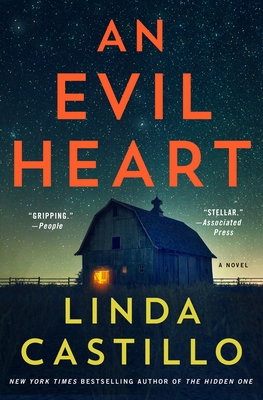
An Evil Heart, by Linda Castillo****

Four stars for the printed version.

Although An Evil Heart is the fifteenth entry in the Kate Burkholder series, it is my first, and also the first time I have read a book by Linda Castillo. I came to this one on the advice of Goodreads friends, and they weren’t wrong. My thanks go to Net Galley, Macmillan Audio, and St. Martin’s Press for the review copies. This book is available to buy now.

Our story is set in the fictitious town of Painter’s Mill, Ohio, where the Amish make up about a third of the population. Kate Burkholder, the chief of police here, is preparing for her wedding when a call comes in about a bizarre murder. A young Amish man, Aden Karn, has been shot with a crossbow and left to die. This would be unusual anywhere, but for the peaceable Amish, it is a tremendous blow. Who would do such a thing? And then there’s another murder as well. Are they linked, and if so, how?

Of course, things are not what they seem. Eventually, Emily Byler, Aden’s girlfriend, comes in to the station accompanied by both of her parents. Emily has finally confessed the horrible deeds that Aden has visited upon her. As the girl, burdened by “a dark mix of horror, shame, and grief,” buries her face in her mother’s shoulder, her mother says “Let me tell you about Aden Karn. The devil whispered his name and Aden Karn took his hand and went.”

But Emily didn’t kill Aden, so the case is far from being solved; if anything, it’s become more complex. Now Kate wonders whether Aden did such things to other girls as well.

At the outset I listen to the audio version of this book, and friend, it’s dreadful. For awhile I wonder whether it’s read by an A.I., because the sound is choppy, the words cut off in a way that suggests it’s not the fault of any narrator. But as I reach the 20th percentile, I realize that actually, the reader is not doing well, either. When it comes to voicing the male characters, the narrator sounds amateurish, and I have never said this about a narrator before. I begin to dread opening this book again, and that’s when I abandon the audio entirely and settle in with the digital review copy instead. It is the right thing to do. Castillo is a good author with a poor narrator, and I hope the glitches in the sound quality have been dealt with now that it’s publication day.

The ending is somewhat predictable, but not until the last quarter or so of the book. I would cheerfully read further entries into this series, and can tell you from experience that you can jump in right now without concerning yourself over the first 14 books if you choose. I recommend the printed version of this book to all that love the genre.

Unnatural History, by Jonathan Kellerman****

Unnatural History is the 38th entry in the wildly successful Alex Delaware series. I began reading it soon after the first volume was published; When the Bough Breaks came out in 1985, so the series has been going strong for close to forty years, and very well may continue for many more. My thanks go to Net Galley and Random House Ballantine for the review copy. This book is for sale now.

For the uninitiated, Delaware is a child psychologist; Kellerman is also a child psychologist, and his earlier books incorporated his area of expertise, placing him in a subgenre all his own. I’ve wished many a time that he would write more books along these lines, but he hasn’t done a lot of it lately, and in this book,  there are only glimpses of it. Nevertheless, the story held my attention.

I’m not giving you much of the plot, because there’s a synopsis for that, but in large strokes, the story is about the murder of the son of one of the world’s wealthiest men. He’s an odd duck, not terribly bright; his mother is dead, and his father is a hands-off parent, to say the very least. Our victim has unlimited access to money, and that’s about it. He makes a splash in the art world by photographing homeless people in costumes that reflect their deepest dreams. Find a derelict street person, and find out what they always wanted to be. A pilot? A surgeon? A ballerina? Offer them the chance to be photographed as if that’s what they are now, and give them a juicy wad of cash for their trouble; then send them back to the streets where they came from.

The family structure for this strange young artist is truly bizarre; the father marries, and he fathers a child. One child, no more. Then, a couple years later, he divorces his wife and does the same thing again. The children of these unions are never introduced to one another.

Thus, Milo has plenty of meaty material to work with, and with such strange circumstances, Alex is tapped to analyze the participants.

Delaware works part time as a kiddie shrink, often consulting when there is a court case involving insurance claims or divorce. However, he still has plenty of time to work for the Los Angeles Police Department, consulting on cases where a psychologist’s input is valuable. His BFF, Milo Sturgis, is a homicide detective, spurned by others in the department because of his sexual orientation. Often as not, Delaware ends up riding along as an unofficial partner.

This aspect of the series—the almost-a-cop—is usually where things start to slip a little, when anything does. I want to buy the premise, and so I can go along with it as long as it doesn’t become too obviously unrealistic. We all want to be entertained, right? So when Alex trots out to the patrol car and slides in beside Milo, I smile and nod, and I push away the little skeptic within me that says, “But really…?”

There have been a few Delaware books that have gone sideways for me for that reason, books where Delaware puts on his Kevlar vest and packs a revolver. I am happy to say that this isn’t one of them. In fact, the manner in which these details are dealt with is one of its strengths. First of all, there are times when Milo wants Alex to go with him, but Alex is busy. He has to be in court that morning. Thank you! Then later on, toward the climax, there’s a situation that (no spoilers) shakes out in a way I find the most believable of anything Kellerman has written. It’s satisfying, without sacrificing the fun of the story.

The whodunit at the end might be the nicest touch of all.

I recommend this mystery to Kellerman’s faithful readers, and to those that love the genre.

Everyone in My Family has Killed Someone, by Benjamin Stephenson****

When life gets you down, it’s time to kick back and relax with a nice little book about multiple murders. Benjamin Stevenson’s nifty little mystery is just the ticket. This book is for sale now.

My thanks go to Net Galley and Random House for the review copy.

Once in a while, a novelist will disarm his audience by speaking to them directly; this is known as breaking the fourth wall. Stevenson doesn’t just chip a corner of plaster; he comes in with a wrecking ball, because that’s just the kind of writer he is. The product is as funny as the title. Each chapter is devoted to a family member, and some of them get more than one.

The premise is this: narrator Ernest Cunningham is invited to a family reunion at an out of the way mountain lodge, a ski resort in the dead of winter. The event is timed to coincide with Ernest’s brother, Michael’s, release from prison, where he was sent for…well. You know. And as is true with all families, there’s all kinds of baggage, both literal and figurative; there are grudges, guilt, and oh yes, secrets. So many secrets!

The first body turns up in less than twenty-four hours. Is there a mass murderer at large, perhaps the one in the news dubbed “The Black Tongue?” If so, is s/he a Cunningham?

The whole story is told in a jocular, familiar tone, explaining to the reader what the rules are when writing a murder mystery. He assures us that he is a thoroughly reliable narrator, which immediately makes us wonder, because if so, why bring it up? Most narrators are reliable. So…?

I enjoy reading this thing, and am impressed at how well the author juggles a sizeable collection of characters. It doesn’t take me long to straighten out who everyone is, and this may be because we are apprised of who is annoyed with whom over what, fairly quickly. When he brings in reasons why certain people avoid each other, it helps me recall who they are.

There are two things I would change if I could. The book would be even funnier if he cut back on the side remarks to the reader long enough to let us forget he’s doing it; then, when it surfaced again, it would get more laughs. I note that toward the end, he tells us—in another side reference—that his editor has suggested he pare back some of the chatty parts, and that he isn’t going to do it. That makes me laugh too, because I have been harboring the same notion.

The other thing that I’d change is a detail that distracts me. The author refers early on, and then another time later, to a plot hole big enough to drive a truck through, but he never tells us what it is; possibly the detail that distracts me is the thing he refers to. Early on in the story—so probably not a spoiler—Ernest is badly injured, to the point where one of his hands isn’t usable. Yet throughout the story, when he could go to a hospital, he doesn’t do so, and he doesn’t even address the possibility. People come; people go. Yet there’s Ernest, with an oven mitt stuck over one hand to protect it, and nobody suggests he hop into town and have it looked at. Toward the end of the story there’s a general reference to the Cunningham stubbornness preventing family members from leaving the reunion, but it doesn’t hold water with me.

Nevertheless, this is a fun book. While I was reading it, I was reading several others, but this one became the go-to at lunchtime and whenever I had a spare minute, and so I recommend this book to those looking for a light, amusing read.

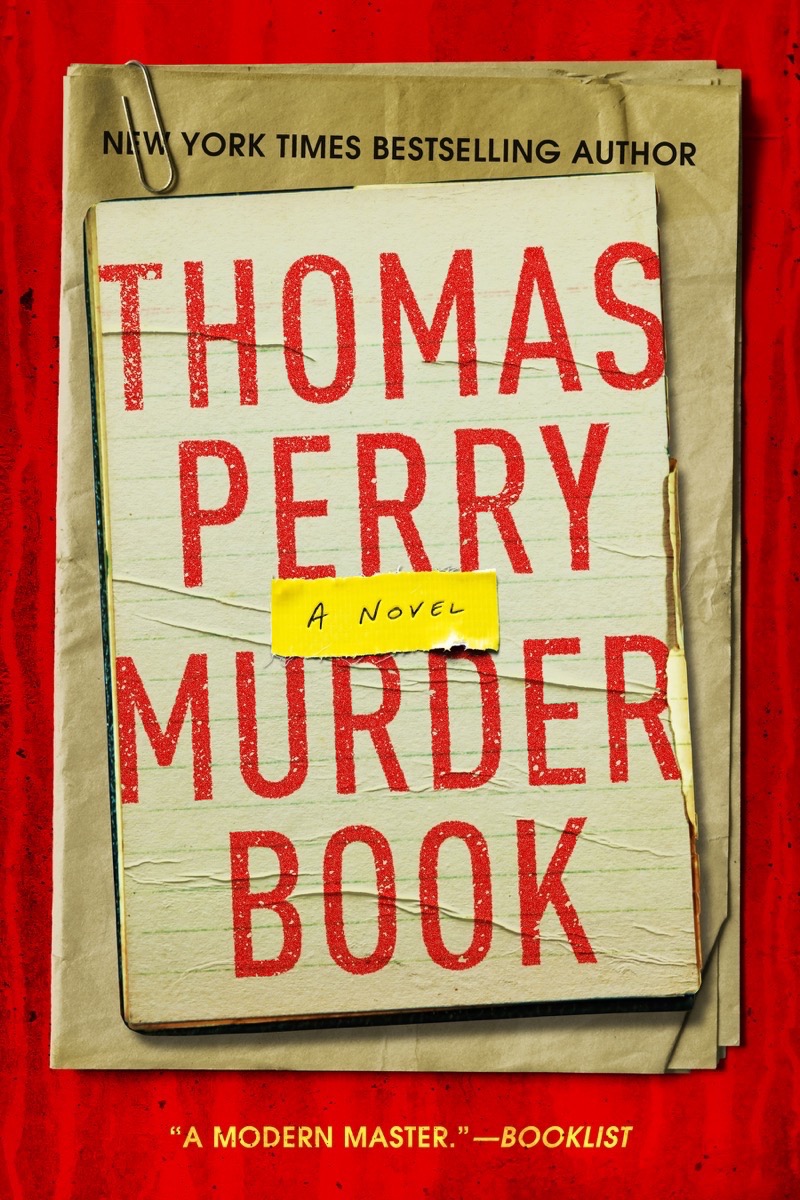
Murder Book, by Thomas Perry*****

Harry Duncan is a former cop, now a private investigator. His ex-wife, Ellen, is the U.S. Attorney for the region, and she asks him to check out a small town that appears to have a racketeering problem. Is it serious enough to warrant the attention of the FBI? Harry agrees to explore the situation, which turns out to be far more serious than either of them imagined.

My thanks go to Net Galley and Random House for the review copy. This high octane thriller is for sale now.

Perry’s feet have hardly hit the ground in this tiny Indiana backwater before he discovers a protection racket. A local businesswoman is determined not to pay; how can a bar or restaurant pay $300 daily and still stay open? The profit margin just doesn’t allow for it. And the thugs know that. But let’s not get ahead of ourselves. Rather than give anything away, I’ll just say that there’s more to this than meets the eye in this tiny, out of the way burg.

Perry is king when it comes to details involving stealth and unobtrusive investigation. Whereas a cop cannot use the unorthodox (and okay, illegal) methods that Duncan employs, a consultant can and does, or at least, he can and does in this story.

And if one were to criticize this novel, that’s the soft spot—because almost nothing about this tale is realistic. It’s so much fun to read, though, that by the time I thought, “Wait a minute…” the rest of my thoughts shushed my inner cynic as if it were a noisy jerk in the back row at a movie theater.

Highly recommended.

Lightning Strike, by William Kent Krueger*****

Lightning Strike is the prequel to William Kent Krueger’s successful, long-running mystery series based on a Minnesota sheriff, Cork O’Connor. This is my introduction to the series; my introduction to this author came in 2019, when I read and reviewed This Tender Land.  I read this free and early, thanks to Net Galley and Atria Books. It will be available to the public Tuesday, August 24, 2021.

In the prequel, Cork is twelve, and he’s on a camping expedition with his friend Jorge when they come across a body hanging off the maple tree at Lightning Strike. What’s worse, it’s someone they know; the corpse is that of Big John Manydeeds, the uncle of a close friend. Cork’s father, Liam, is the sheriff, and although he’s been told to let the adults investigate this horrific event, Cork keeps coming up with useful bits of information.

Seems he has a knack.

One of the most admirable aspects of Krueger’s writing is the way he folds his setting, characters, and plot seamlessly to create an atmospheric stew that’s impossible to look away from. The story takes place in the far northern reaches of Minnesota in (fictitious) Tamarack County, near Iron Lake and the iron range, as well as the Ojibwe (Chippewa) Indian Reservation, and the tension and conflict between tribal members, which include Cork’s mother and grandmother, toward Caucasians, which include Liam, are a central feature of this mystery. Tribal members insist that Big John would never have taken his own life, and even had he done so, he would never done it at this sacred location. At first they aren’t taken seriously, but as events unfold, it becomes increasingly clear that they are right. This was no suicide.

The key suspect in Big John’s murder proves to be the town’s wealthiest citizen, a tightfisted, overtly racist, elderly Scotsman that owns practically everything. He’s a suspect too soon to be the actual killer, I figure, and I think I can see where the story is headed, but without giving anything away, I have to tell you, Krueger introduces all sorts of twists and turns I don’t see coming, and they aren’t far-fetched ones, either.

There is dark foreshadowing all over the place, and the tension and outrage that exists between the tribe and law enforcement—well, the sheriff, really—grow to ominous proportions. Liam insists on examining facts and hard evidence; the Ojibwe are eager to include portents and messages from the great beyond. They want that nasty rich guy arrested now, if not sooner, and when Liam tells them that it doesn’t work that way because circumstantial evidence isn’t enough, that hearsay can’t win a conviction, they scoff and point out that when the suspect is Ojibwe, those things are always more than adequate. And again, they have a point. A local business owner who is Ojibwe tells him, “Sheriff, you better believe every Shinnob on the rez is watching you right now. Every step you take.”

While Liam is busy with his work, nobody is paying much attention to the boys; Cork, Jorge, and their friend Billy Downwind, who is related to Big John, poke around some more, and what they unearth is both shocking and dangerous.

Lightning Strike owned me until it was done, and though I rarely do this, I’m headed to the Seattle Bibliocommons to find the next book, which is technically the first in the series, because for this series and this writer, once cannot possibly be enough. Highly recommended!

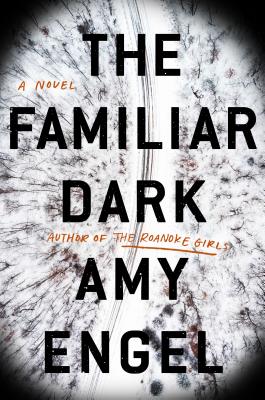
The Familiar Dark, by Amy Engel*****

When it comes down to it, some people just have it coming to them.

Amy Engel is the author of The Roanoke Girls, a shocking thriller that proves she is a force to be reckoned with. The Familiar Dark is even better. My thanks go to Net Galley and Random House Dutton for the review copy. It’s for sale now, and you should get a copy to help chase away your cabin fever.

Eve Taggart was raised poorer than poor in a ripped up trailer in Barren Springs, Missouri; it’s “a slippery part of the world. People dart in and out like minnows in a shadowy pool…Folks here are hard to pin down, even harder to catch…It’s a place for people who don’t want to be found.”  Her mother is an addict with a mercurial temper, and so when Eve gives birth to Junie, she resolves to parent differently from her mama, and to never take Junie to visit her. The more space there is between her present and her past, the better off Junie will be.

But when Junie and her best friend, Izzy are found in a public park with their 12-year-old throats slit, everything changes. Without Junie to provide for, all of the social conventions that Eve has so carefully nurtured, all of the tentative connections she has made with mainstream members of the community are gone in an instant. Eve’s older brother Cal, a cop, tries to provide a buffer between Eve and the town, between Eve and their mother, and between Eve and the disastrous errors she makes as a result of her grief; none of it does any good. And Cal is sitting on a secret of his own.

I am generally a reader that has between six and twelve books going at any given time, but once I was about a third of the way into this one, I read nothing else. Instead of asking myself which book I’d like to read right now, I knew exactly. The suspense is built numerous ways, by foreshadowing, by the little hints given by others in her tiny town, but there’s more to it than that. Part of it is Engel’s unusually vivid word smithery and the frank, unsentimental dialogue that moves it forward. But the meatiest part of this story is in the pathological family triangle that—resist it though she has—forms most of Eve’s world. The further we get into the story, the more layers are peeled away and the more we learn about Eve and mama, mama and Cal, and Eve and Cal. We learn some secrets about Junie that poor Eve didn’t know, but these are almost secondary as they reveal more about the three adults. It is mesmerizing.

Eve thinks she has nothing left to live for now that Junie is gone, but Mama, who’s been drawn to the killing like a vulture to roadkill, assures her she is mistaken. What’s left is vengeance. This resonates with Eve. Pulled into a press conference in which she doesn’t want to participate, standing alongside the other bereaved parents, people that are well groomed and whose social skills make them vastly more sympathetic figures to the public than she will ever be, Eve decides to cut to the chase. After the other two plead for possible witnesses to call in tips to the local cops,

“I pointed out at the cameras, stabbing my finger into the air…’I’m going to find you, you sick fuck. And I’m going to tear you apart.’

“I thought about all the press conferences I’d seen over the years, parents trotted out for missing kids, killed kids, abused kids. Everyone feels sorry for those parents, those mothers, until they don’t. Until the mothers don’t cry enough or cry too much. Until the mothers are too put-together or not put-together enough. Until the mother are angry. Because that’s the one thing women are never, ever allowed to be. We can be sad, distraught, confused, pleading, forgiving. But not furious. Fury is reserved for other people. The worst thing you can be is an angry woman, an angry mother.”

Does this ring as true to you as it does to me? Sooner or later, the mother always gets the blame. And so now I am still riveted and I am nodding. Uh huh. That’s right, Eve. Tell it!

When a novel is as outstanding as this one is, I almost hate to read the last fifteen or twenty percent, because often as not, that’s where it comes undone. Either the solution doesn’t hold water, or a hard cold tale of murder and revenge takes on a sudden sentimentality that doesn’t match the rest of the book; in these I sometimes picture editors and publicists urging the author to provide a feel-good ending, and the author ultimately bending. As I progress, I have figured out what the poignantly sweet ending to this one will likely be, if Engel goes in that direction.

But she doesn’t.

Instead, this story is one of badass female bonding gone dark, dark, and darker. Oh hey. The title.

Highly recommended.

Dead Land, by Sara Paretsky*****

Detective Vic Warshawski was born in 1982, a time when a woman advocating for herself, or another woman, or women on the whole were few and far between. Such a woman often spoke softly, hesitantly, and to reassure the listener that she wasn’t stark raving mad, she might begin by saying, “I’m not a feminist or anything, but…” And so for the lonely few of us that were uncloseted, audacious feminists, this bold, brazen, unapologetic character was inspirational. Vic is fictional, but Paretsky is not. It was leading lights such as hers that made me feel less alone. I have loved her from then, to now.

Paretsky is no longer a young woman. I know this because I am a grandmother myself, and she is older than I am. For her readers that wonder if she’s still got it, I have great news. She’s better than ever.

By now I should have thanked William Morrow, Net Galley, and Edelweiss Books for the review copies. You can get this book April 21, 2020.

Victoria’s young goddaughter, Bernie Fouchard appears in an earlier story, and now she returns. Bernie’s youthful passion and impetuous disposition counter Vic’s experience and more measured responses. I liked Bernie when she was introduced, and am glad she is back. Chicago’s shady politicians are about to quietly sell a prime chunk of the city’s park lands to developers; the corrupt nature of the deal makes it essential that the whole thing be done fast and with as little publicity or public input as possible. Bernie and a handful of others learn of it, and they protest at a meeting at which the city fathers had hoped to slide this oily project through. There are arrests, and soon afterward, Bernie’s boyfriend is murdered.  

At the same time, Bernie tries to help a homeless singer named Lydia Zamir. Zamir is brilliant and was once very famous, but everything crumbled around the time that her lover was shot and killed; she’s been living under a bridge, filthy, disoriented, playing her music on a child’s toy piano. Now Lydia is missing. Lydia’s champion has been a man named Coop, and Coop is missing too. Before pulling a bunker, Coop deposits his dog outside Vic’s apartment, earning her the enmity of neighbors that are already up in arms over the barking of Vic’s own dogs when she is gone. Now Vic has every reason to help find Coop, Lydia, and the murderer. At the same time the reader must wonder how the sleazy deal, the murder, and the disappearances are connected. The pacing is urgent and my interest never flags; the haunting mental image of Lydia and her small, battered piano tug at my social conscience, all the more so as the world is hurtled into quarantine.

Long-running characters Lottie and Max, who are like parents to Vic, and newspaperman Murray, a close friend of Vic’s, return here, and I love them all. No doubt this colors my response as well. I have known these characters longer than my husband of thirty years; at one point I realized that somewhere along the line, I had separated the other books I was reading (some of them quite good) from this one. I had my books-to-read category, but I had mentally shifted this story into the same category as my family business. I should check on my sister, who’s been ill; I wanted to set a lunch date with one of my kids; and I should check and see whether Vic is having any luck finding…oh hey. Wait a minute.

Can you read this story as a stand-alone? You sure can. However, this bad-ass, hardboiled Chicago detective is an addictive character; once you’ve read it, you’re going to want to go back and get the other 21 in the series. I swear it. You probably won’t experience the nostalgia that I do, but a damn good read is a damn good read, any way you slice it.

Highly recommended.

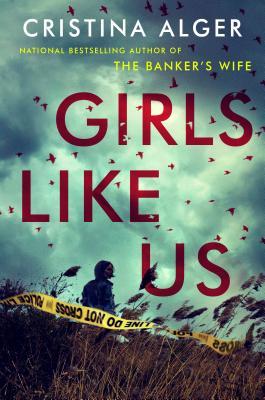
Girls Like Us, by Cristina Alger***-****

I received a review copy of this book from Net Galley and Putnam Penguin last summer. Since I received it after the publication date, I moved it to the back burner in order to prioritize galleys whose publication dates could still be met. January came, and I still hadn’t opened the book. Deeply ashamed, I checked out the audio version from Seattle Bibliocommons and listened to it in the evenings while preparing dinner. The audio version is three stars, but I suspect that if I had stuck to the digital review copy, it might have been closer to four, so I am rounding my rating upward.

FBI agent Nell Flynn, our protagonist, returns home after ten years away in order to bury her father and deal with his estate. She and her dad were estranged, and her mother died when she was a child; she has no siblings; she is also dealing with post-traumatic stress disorder, the fallout from an earlier case. I assumed incorrectly that this earlier case must mean that Nell Flynn either had, or was about to have her own series, yet no mention is made of this; as far as I can tell the PTSD has nothing, nothing, nothing to do with any other aspect of the story. Her boss urges her to seek treatment; she doesn’t want to because she’s hard-boiled, and yada yada. Moving on.

The body of a young woman is found, and then there’s another; since she happens to be visiting Suffolk County, her father’s partner asks Nell to lend a hand. She is recruited as a consultant, but she gets the sense that the local veterans don’t want her to dig deeply. Her father’s partner is a relative newbie, not part of the old boys’ network, and so she and he work together to try to solve the killings, but she is obstructed at every turn. Is there a cover-up taking place, and if so, is it because her father was culpable? First one thing and then another makes her wonder whether he might have killed them, and while she is at it, she also wonders if he had a hand in her own mother’s death many years ago, when she was quite small.

The thing that makes this story unique is the fact that the cop is investigating her own dead father. I also like the way the author deals with the mystery woman that her father’s will includes. I thought I saw how that thread was going to play out, and I was not even close to being right. I like Alger’s subtlety here.  I also like the medical examiner, who is female too.

The main challenge for me was as a listener. The reader that performed the audio version has a painfully wooden delivery and pronounces a couple of fairly common words differently from anyone else that I’ve heard, and each time she said them I was distracted away from the story line. The way Nell’s father’s old friend, Dorsey, is voiced sounds like a bad John Wayne imitation. So, should you read this book? If you enjoy crime fiction that’s character based, particularly with a female cop or detective, you could do worse. I wouldn’t pay full jacket price for it, though, and I don’t recommend the audio version.

The Museum of Desire, by Jonathan Kellerman****

I’ve been reading the Alex Delaware mysteries since Kellerman wrote the first in the 1980s; The Museum of Desire is the 35th installment in a successful, long-running series. Thanks go to Net Galley and Random House Ballantine for the review copy; this book is for sale now.

Kellerman was a child psychologist before he became an author and he brings his knowledge of children and families when he creates characters and situations. This is a reliably strong mystery series and I always smile when Alex’s BFF, Detective Milo Sturgis, barrels into Alex’s kitchen and starts eating his food. I feel as if I am receiving a visit from an old friend also.

The premise here is more shocking than most, and I find myself a bit squeamish when reading it. In reviewing the others he’s written, however, I can see that this isn’t a lot more extreme than usual, and so I conclude that perhaps I am more sensitive than I used to be. Those with doubts should read the promotional blurb carefully before making a purchase.

That said, the dialogue here is first rate, and pacing is brisk, as always.  Kellerman maintains credulity deftly by avoiding having Delaware tote a gun or tackle bad guys. In real life a kiddy shrink would be in his office, in the police station, or in court, period. But that’s dull stuff, and so the author has to strike a balance, creating fictional situations that don’t strain the reader’s ability to believe. He doesn’t wear a Kevlar vest or carry out other tasks that are clearly the work of on-duty cops; he provides his professional insights and does some extracurricular research, but the latter is the sort that a semi-retired professional might choose to do for a good friend. I had no trouble engaging with the story.

If I could change one thing, I would include more of the affluent, troubled teenager. Crispin is an interesting kid, but he pops in and out of the story in two very brief spots. Kellerman’s strongest suit is developing abnormal child characters, and I think this story would be more compelling if it had more of this bizarro kid in it.

One way or another, this is a solid entry in an already solid series, and I recommend it to you.