
People talk about having an angel on one shoulder and a devil on the other. I had a pair of imaginary bill collectors, so no matter which way I turned, there was somebody to remind me I needed money. That’s how I ended up on a train at four o’clock in the morning with my nephew and a hundred pounds of weed.

Bryn Greenwood met acclaim with All the Ugly and Wonderful Things, which I also read and reviewed, and I liked it a lot, but The Reckless Oath We Made is special, possibly the best novel we’ll see in 2019. The charm of the narrative voice is just as strong as the last if not more so, but there’s greater character development. It’s quirky and groundbreaking, and I will love this story until the day I die. My thanks go to Net Galley and Putnam for the review copy. You can buy it now.
Zhorzha—you can call her Zee—is in a state of perpetual crisis. Her father is in prison for robbery, and her mother has fallen apart, become a hoarder, massively obese, and agoraphobic to boot. At age 12, Zee was forced to leave home, and has been sofa cruising ever since. Recently she’s been staying with her sister LaReigne, but now LaReigne has been kidnapped. Zee and her nephew Marcus are stranded with nobody left to call for a ride; then her stalker steps forward and offers them a lift, and she takes it.
It’s the beginning of something beautiful.
Gentry has been following Zee for years; he saw her at physical therapy when she was recovering from a serious accident, and the voices in his head told him that he must be her champion. He doesn’t harass her, but he is always there. When all hell breaks loose, Gentry transports her to her mother’s house, but it’s even worse there. She is humiliated to have him—or anyone—see what kind of squalor her mother has chosen, but Gentry sees her mother entirely differently, and since his narrative is peppered alternately with Zee’s and occasional glimpses of side characters’ perspectives, he tells us:
There, in the inner chamber, reclined upon a throne of red leather that scarce contained her serpentine hugeness, was the dragon Lady Zhorzha called Mother. My lady was blessed with a great mane of fire that ne comb ne blade might tame. Mayhap in the dragon’s youth, she had worn such a mantle, but in her age, her hairs weren grayed.
Fearless, Marcus approached the throne and flung himself upon the lady dragon. For a time, there was kissing and lamenting, for they weren greatly distressed with the fate of my lady’s sister…I would go upon my knee, but the dragon’s hoard was too close upon her.
At one point someone asks Zee whether she talks like Gentry too, and she replies, “Honestly, I don’t always understand what he says. I got a C in English in high school, and we never got to Shakespeare. I wasn’t in the advanced class.”
In fact, the juxtaposition of Gentry’s old world speech and Zee’s contemporary, frank responses that keep the story hopping. I laughed out loud several times when we moved from his speech to hers, for example:
Lady Zhorzha! Art’ou well?
Oh, thank fuck, Gentry. Yes. We’re okay.
But as much as I love Gentry, I love Zee harder. Zee is utterly believable, and she is unlike any other character I have read anywhere. She explains, when she’s asked whether she goes hunting with Gentry, that she wouldn’t know how; she comes from generations of “citified white trash whose main food-related struggle has to do with “opening dented cans of off-brand Spam from the food bank.”
Zee is a large woman, and I am so heartily tired of tiny-firecracker female protagonists that I am cheered tremendously. She’s nearly six feet tall, and her uncle says she is “Built like she could hunt bear with a stick.” When she is leaving the emergency room after a scare involving her mother, a staff member advises Zee to lose weight herself. One of Gentry’s friends notes that “Honestly, if she dropped fifty or sixty pounds, she would be pretty hot.”
And the thing I appreciate the most about this is that her weight not our central problem. It isn’t a problem at all. Zee is a romantic heroine who is fat, but this is an incidental part of her character. The problem is the kidnapping, and it’s complicated by all of the other challenges faced by poor people, challenges that Zee has to face without much of a tool kit; but between the kidnapping and the point when LaReigne is found, other life-changing events take place, and the Zhorzha we see at the story’s end is both wiser and happier than she is at the outset.
Greenwood doesn’t just avoid stereotypes in recounting Zee’s plight; she knocks the knees from beneath them and gives us breathing human beings and real world plot points instead, and she does it without being obvious about it. This is no manifesto; it’s more like a magnificent modern-day fairytale.
Take Gentry again, for example. Gentry is autistic, but he is not friendless, and he has some mad skills that take bullies unawares. Also? Gentry is adopted. He is white; his adoptive mother is Black. Again, this is incidental to the story, but readers cannot miss it; there’s a very brief spot that brings it front and center, and I cheer when I see it.
Those that read my reviews know that I seldom gush, but this story is perfect in so many ways that I cannot help myself. By this time next year, I will have read roughly 140 more books, but I will still remember Zee, and I will still remember Gentry. This is among the sweetest stories of 2019, a new favorite.
I highly recommend this book to everyone that has the literacy skills and stamina to brave Gentry’s prose. Get it at full price or discounted, from the library or stolen. You won’t be sorry.

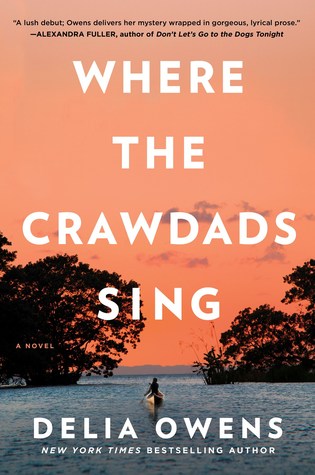 Kya Clark lives with her family in a shack deep in a North Carolina marsh. The year is 1969. They are miserably poor, but Kya’s mother tells her it will be alright, as long as the women of the family stick together. But then one day, she leaves. Older brother Jodie tells Kya that Ma will be back, because it isn’t in a mother to leave her children, but Kya isn’t so sure. Ma is wearing her alligator heels, and she doesn’t turn midway and wave like she always has. And one by one, everyone in her family leaves, and they don’t return. Kya is not even old enough to enter first grade, and she is alone.
 3.5 stars, rounded upward.
 Irish novelists are rocking the publishing world this year, and Norton’s debut novel is among the best of them. My great thanks go to Net Galley and Atria Books, who provided me a free and early read in exchange for this honest review. You should get it and read it. Atria will release it August 1, 2017.
 Amish Guys Don’t Call is funny, absorbing, and ultimately lifting. Dodds has a great heart for teenagers, and this title is one that should grace every high school and middle school library, and will also attract parents and teachers of adolescents. I read it free and early thanks to Net Galley and Blue Moon Publishers. This book will be available to everyone June 13, 2017.
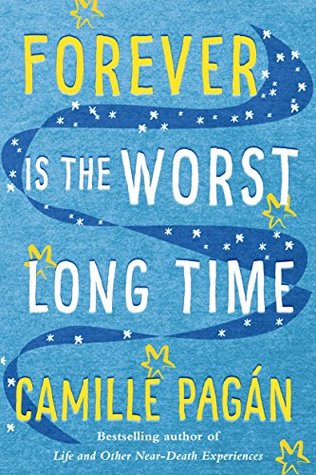 Camille Pagan is the author Life and Other Near Death Experiences. Thank you Net Galley and Lake Union Publishing for the DRC, which I received in exchange for an honest review. This title is for sale February 7, 2017.
 Always, Sarah Jio’s much anticipated new release, takes on the homelessness epidemic using the powerful medium of fiction. I received my copy in advance in exchange for an honest review; thank you Net Galley and Random House Ballantine for the DRC. This title is available to the public today, and if you have enjoyed Jio’s other novels, I am confident you’ll like this one too.
 Camille Pagan is the author Life and Other Near Death Experiences. Thank you Net Galley and Lake Union Publishing for the DRC, which I received in exchange for an honest review. This title is for sale February 7, 2017.
