The Sorcerer of Pyongyang, by Marcel Theroux*****

“How did someone created by one reality begin to operate by the rules of another?”

The Sorcerer of Pyongyang is an excellent work of literary fiction by novelist Marcel Theroux. This is the first time I’ve read his work, but it will not be the last. My thanks go to Net Galley and Atria Books for the review copy; this book is for sale now.

I am drawn to this novel initially because of its setting. Nobody sets a book in North Korea! I am fascinated. Then I learn that the author is the son of Paul Theroux, the veteran travel journalist whose work, by chance, I have only just recently found and read. So there are two reasons for me to start this book, but once I begin, I realize that in the future, I will read whatever this author writes, regardless of where it’s set or who his relatives are.

The author’s notes indicate that Theroux has experience in North Korea, and this informs his work here. This book, remarkably enough, is based on a true story.

Our protagonist is Jun-su, a child growing up in poverty in rural North Korea. He and his parents believe the official explanation for the widespread poverty and malnutrition, which is that the blockade imposed by the United States and other Western nations has created the situation. Children in Jun-su’s class sometimes fall asleep at their desks, because they are starving. Part of the school day is also spent doing hard labor for the State. It doesn’t occur to Jun-su, or to anyone he knows, to question the misery imposed upon him, because it’s happening to everyone in the village, and they don’t go anywhere or see anyone outside it, so they assume the whole nation is suffering in the same manner.

Then comes the day when Jun-su falls ill with rheumatic fever. He misses a lot of school, and his teacher, Kang, visits him at home, bringing acupuncture needles to help with the pain. It is during this time that he is introduced to a game his teacher calls “The House of Possibility,” but which is actually Dungeons and Dragons. This game will be both a blessing and a curse to Jun-su for the rest of his life.

Because the illness permanently damages his heart, Jun-su cannot participate in labor with his classmates, and so instead, he becomes a poet, and he wins a contest and briefly meets the Dear Leader. He is sent to study at an elite institution far from home, and his eyes are opened in a number of ways. Soon he sees that not only is not every North Korean impoverished, but some live lives of unimaginable luxury. The corruption has been part of his entire life, but he can only just now see that.

Theroux does a fine job of developing Jun-su, but he does an even better one with setting. We can see what a hall of mirrors is involved in living in a Stalinist nation, where no civil liberties exist and unspoken, unwritten rules prevail alongside those that are codified. For example, the Dear Leader is so exalted that a person can be in big trouble if their home burns down and they don’t rescue his portrait (and that portrait WILL be hanging in the house,) and likewise, someone that sells hot food had better be sure there are no pictures of the Dear Leader in the newspaper he uses to wrap fish.

My one concern is that the story might degenerate into an anti-Communist diatribe, but that doesn’t happen. This is an outstanding novel, and I wholeheartedly recommend it to you.

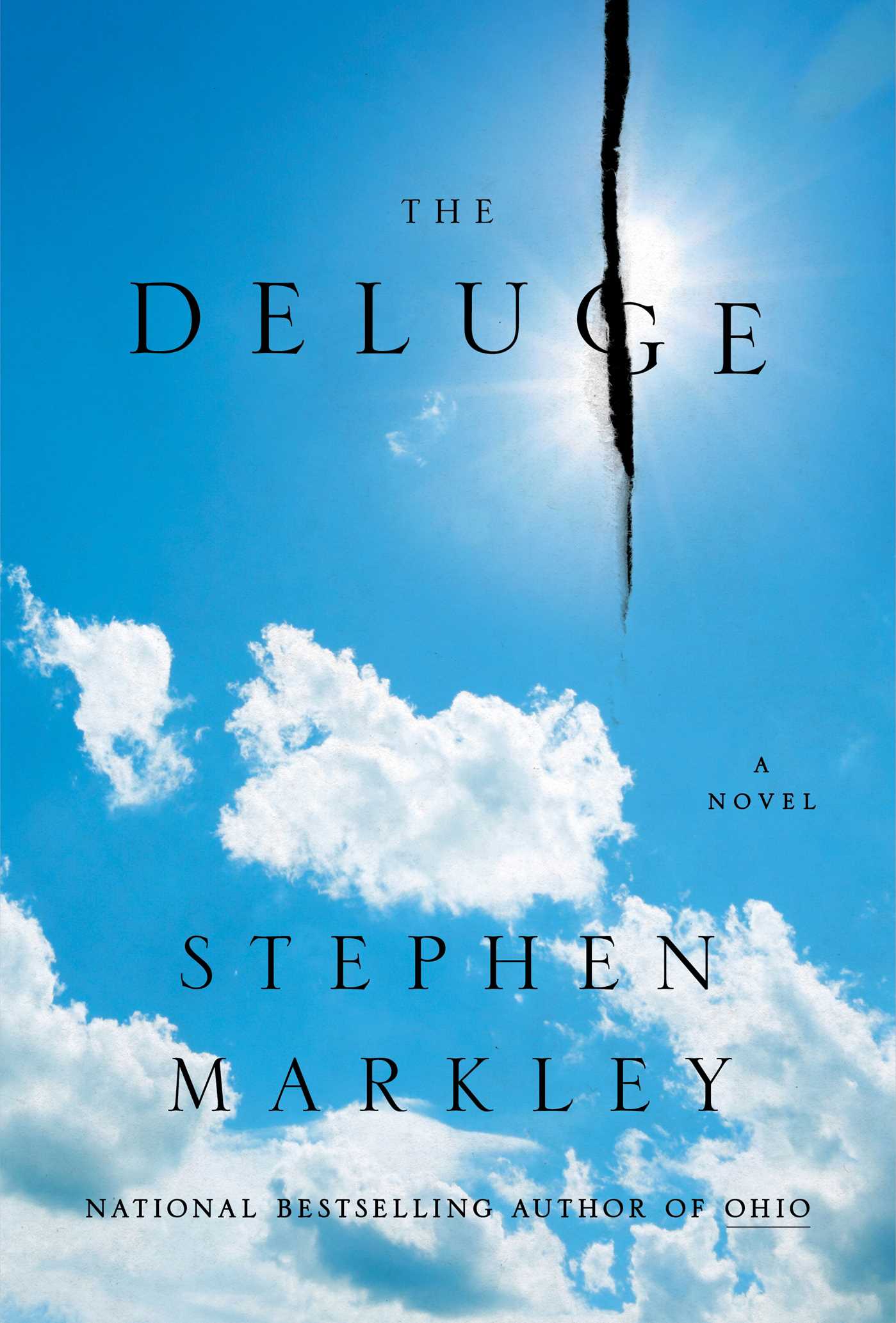
The Deluge, by Stephen Markley**

Markley’s debut novel, Ohio, came out in 2018, and it was one of the year’s best that I promoted at the end of the year. I loved it so much that I was convinced that anything this author wrote would be golden. So when Simon and Schuster invited me to read and review his next book, The Deluge, I was delighted. But although I am grateful to the publisher and Net Galley for including me, I cannot bring myself to finish this thing. I suspect Markley may have bitten off more than he can chew, because it’s kind of a mess.

To be fair, I have only read the first twenty percent, but since the book is 900 pages in length, that’s a chunk.  After all of that, I can’t even keep the characters straight, let alone bond with them. One character, Kate, seems to hold the most promise, but just as I begin to develop interest, we transition to a different character—or news article, or whatever—in a manner that feels abrupt and jerky. Some of these characters appear more than once, and other may have, but I’m not even sure of it. There’s one horrifying rapist that speaks to the reader intimately and in the second person, and he gives me the heebie-jeebies so badly that I am glad to move on to someone else. That guy—whatever his name is—and Kate are the only two I can identify, sort of. I’m a language arts teacher. Good luck to everybody else.

I do understand that the overall message has to do with the environmental ruin that is marching toward us at an alarming pace. Markley isn’t wrong to sound the alarm, although it may in large part be a case of preaching to the choir; the most concerned among us are probably the most likely to read this book. At the same time, some of us have been following this horrifying debacle since the ‘70s, or the ‘80s, and when one is already virtually hyperventilating with alarm over this issue, reading this novel doesn’t do much good.

But more to the point, fiction is an excellent medium to promote an urgent political cause, but it’s only effective when the other story elements are outstanding. When the format doesn’t do justice to the characters or provide clarity to the reader, the effort is wasted.

I read other reviews saying that if one patiently reads the chaotic scramble at the beginning, eventually it will all come together and make sense, but honestly, if nothing makes sense two hundred pages in, then you can stick a fork in me, cause I’m done.

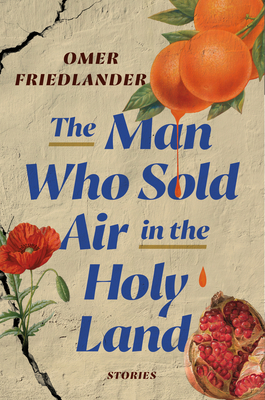
The Man Who Sold Air in the Holy Land***-****

The Man Who Sold Air in the Holy Land marks the debut of a talented writer. Omer Friedlander’s short story collection has already made reviewers sit up and take notice. My thanks go to Random House and Net Galley for the invitation to read and review. This collection is for sale now.

All of Friedlander’s stories are set in Israel, and all of them evoke their setting in a way that is fresh and immediate. My favorite stories are the title story; High Heels (except for the ending; more on that in a minute,) and Alte Sachen.

Here’s my issue with these stories, and it’s true of nearly all of them: the author uses endings that don’t feel like endings, leaving the reader to figure out for herself what happens. This is particularly painful when a story builds in a most suspenseful manner and then ends on a cliff hanger.

I don’t think so.

I understand that this is considered a valid choice in literary fiction, but I doubt it will ever become a popular one. When an author leaves the rarified world of literary journals and writers’ groups and opens his work up to a general readership, adjustments need to be made.

The sweetness of a well-built story that culminates in tremendous frustration when the end is left dangling finally got the better of me, and I didn’t read the last story.

Now you know; if you want it, go get it.

Mecca, by Susan Straight*****

Susan Straight is a force to be reckoned with. I knew this after I finished reading I Been in Sorrow’s Kitchen and Licked Out All the Pots after it came out in 1992, and after I sought out, bought, and read everything else she’d written that was available. When I discovered that her new novel, Mecca, was available on Net Galley, I leapt on it. My thanks go to Net Galley and to Farrar, Strauss, and Giroux for the review copy. This book is for sale now.

Mecca, an ironic title if ever there was one, is a story of race, class, and gender, and the way that they play into the “Justice” system in California. Add a generous seasoning of climate change and its horrific effects in dry, dry Southern California, and a fistful of opioid addiction, and you have a heady mix indeed. But these are all well worn ground at this point, and this book is exceptional, not because it examines complex current events, but because of Straight’s facility in building visceral characters we care about, and launching them into this maelstrom in a way that makes it impossible to forget.

We begin with Johnny Frias, an American citizen of Latino heritage. As a rookie and while off duty, he kills a man that is raping and about to murder a woman named Bunny. He panics and gets rid of the body without reporting what’s happened. Frias is on the highway patrol, and he takes all sorts of racist crap all day every day. But his family relies on him, and when push comes to shove, he loves his home and takes pride in keeping it safe.

Ximena works as a maid at a hotel for women that have had plastic surgery. One day she is cleaning a room and finds a baby! What to do? She can’t call the authorities; she’d be blamed, jailed, deported, or who knows what. She does the best thing she can think of, and of course, there’s blowback anyway.

And when a young Black man, a good student with loads of promise that has never been in any trouble at school, or with the law, is killed because the cops see his phone fall out of the car and decide it’s a gun…?

I find this story interesting from the beginning, but it really kicks into gear in a big way at roughly the forty percent mark. From that point forward, it owns me.

As should be evident from what I’ve said so far, this story is loaded with triggers. You know what you can read, and what you can’t. For those of us that can: Straight’s gift is in her ability to tell these stories naturally, and to develop these characters so completely that they almost feel like family. It is through caring about her characters that we are drawn into the events that take place around them, and the things that happen to them.

This is a complex novel with many moving parts and connections. I read part of this using the audio version, which I checked out from Seattle Bibliocommons. But whereas the narrators do a fine job, I find it easier to keep track of the characters and threads when I can see it in print. If you are someone that can’t understand a story well until you’ve heard it, go for the audio, or best of all, get both.

Highly recommended.

The Ogress and the Orphans, by Kelly Barnhill*****

This book is not at all what I expected; it’s much better than that. My thanks go to Net Galley and Algonquin Young Readers for the invitation to read and review. This book is for sale now.

This lovely story is told in the second person omniscient, and we cannot tell, until the end, who the narrator is. Our setting is the sweet (fictitious) village of Stone-in-the-Glen, and it’s told in linear fashion. Because its telling is straightforward, with no changes in point of view or time period, and no heart-hammering suspense, it is ideal for bedtime reading. It’s marketed as a children’s book, and here I disagree, in part anyway. The vocabulary is too advanced for an early reader, but would serve well as a story to read aloud to students in upper elementary classes, or as a read-alone for the gifted child. There is no sexual content, drugs, or bad language.

Because I believed this was going to be a children’s book, I thought I’d whisk through it in no time and review it the same week I started, but I sensed immediately, once I’d begun, that this was not that kind of story. Its length, density of page and paragraph, and content call for a more leisurely pace, but also, it’s just too good to rush through. I am a sucker for excellent alliterative language (see what I did there?) and Barnhill is a champion in this regard. I found myself going back a page or two to reread, highlighting the best passages for no reason but my own pleasure.

The plot is easily summarized. The lovely little village is friendly and flourishing until the town library, which has magical powers, burns down. Without benefit of the library, villagers keep to themselves, and they become secretive and greedy. The mayor could help, but chooses not to do so. He’s a real piece of, um, work.

The orphanage in particular is in dire straits. They haven’t been getting their promised funding lately, and the place is starting to fall apart. The children are hungry. Were it not for the largesse of an anonymous donor, one that leaves big boxes of vegetables at the gate for them to find in the morning, they would starve.

The Ogress is their benefactor. We know this early on, so I don’t consider it a spoiler. However, due to the misconceptions of the villagers, which the mayor feeds shamelessly, the Ogress soon becomes a scapegoat. These two problems—local poverty, and the hostility toward the one among them that is different—form the basis of the story.

As to the allegory, which is dropped in midway through in a fairly heavy-handed manner, I am of two minds. On the one hand, my philosophy is similar to the author’s, and so I snicker when I see what she’s doing here. On the other hand, this is exactly the book one reaches for when one has had enough, enough, enough of current events and the outside world, and allegory becomes something of a distraction. When I see who the mayor represents, I start eyeing the other characters. Does the Ogress represent someone in the real world as well? What else am I missing? These musings are more likely to lodge themselves in the mind of a language arts teacher; I recognize that. But my preference would be to either turn the whole thing into a piece of political satire and own it, or to leave it alone and have a sweet story devoid of political content, one that readers on both ends of the political spectrum can enjoy—maybe even enjoy together.

These minor issues aside, I love this story. It’s my first taste of Barnhill’s writing, but it surely won’t be the last. Highly recommended.

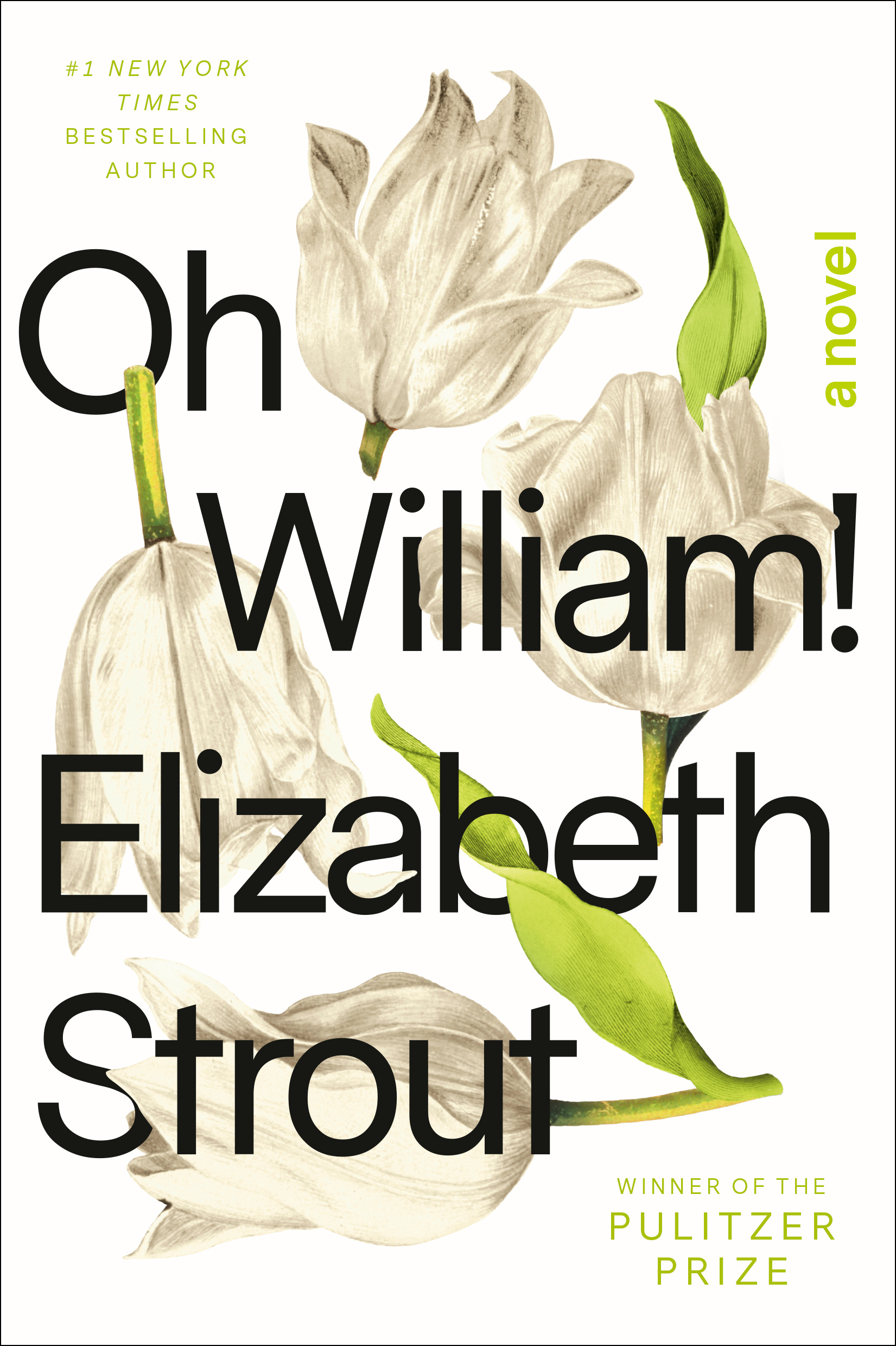
Oh William! by Elizabeth Strout*****

Nobody writes more convincing characters than Pulitzer winner Elizabeth Strout. In her most recent novel, Oh William!, she brings back Lucy Barton, the protagonist in My Name is Lucy Barton and Anything Is Possible.  My thanks go to Net Galley and Random House for the invitation to read and review; this book is for sale now.

Reading Strout is a mixed blessing. On the one hand, it’s a glorious thing to read writing this strong. On the other, poor Lucy Barton has endured a tremendous amount of pain, and Strout’s skill enables her to communicate every inch of Lucy’s pain and suffering to the reader. I wasn’t sure if I was up for it, but now I am glad I read it, because in this installation, most of her dreadful early years are left in the past, where they belong, and she is a successful novelist that can afford to provide for herself and when necessary, her adult daughters.

The premise is that Lucy’s ex-husband, William, has once again been left by his most recent wife; this is what happens when a man can’t keep his zipper shut. But he has taken an ancestry test, and he’s discovered that he has a half-sister that lives in Maine. His mother is dead, so there’s no asking her about this. Should he contact this sister? Well, probably not. But he’s curious. Should he? Maybe. Well, no. Unless.

Lucy is recently widowed, and she is hurting. Her second and last husband, David, was a wonderful man, and it was a terrific marriage. She misses him terribly. But she has remained friendly with William; after all, they had two daughters together, and so there are occasions. William calls Lucy to ask her advice about the half-sister, and later, he wonders if she’d drive with him to Maine. He’s not sure what to do.

I am always astonished at people that can divorce, yet remain so friendly. It’s hard enough to be courteous on occasions involving children and grandchildren; to be chummy enough to chat on the phone, to seek each other’s advice, to go on a road trip together, for heaven’s sake, seems to me like a tremendous gift. At any rate, Lucy and William are friendly, and she agrees to go with him to scope out the land of his forefathers, and do a little recon on Louise, the secret sister.

The magic of Strout’s prose is in her sterling character development. Earlier here, I was discussing how amazing it is that Lucy and William are on such good terms; these are fictional characters, but to me, they have become flesh. Lucy’s first person narrative is so intimate that I feel as if I am talking with an old friend over coffee.

If I could change one thing, I’d tone down a couple of Lucy’s mannerisms. The title, Oh William!, is used so frequently in the narrative that by the last quarter of the book I want to say, Yes, okay, I get it already. The other one is “What I mean is…,” and “…is what I was thinking.” These are legitimate devices that contribute to the writer’s voice, but I would use them less often.

Because I had fallen behind–or more truthfully, I had been avoiding this galley because I expected it to be grim—I checked out the audio version from Seattle Bibliocommons. Kimberly Farr is an exceptional reader, and for that reason I recommend the audio book over the print, although both are excellent.

Highly recommended to those that treasure fine literary fiction.  

The Eternal Audience of One, by Remy Ngamije*****

“Life is not hard in Windhoek, but it is not easy, either. The poor are either falling behind or falling pregnant. The rich refuse to send the elevator back down when they reach the top. And since cities require a sturdy foundation of tolerated inequalities, Windhoek is like many other big places in the world. It is a haven for more, but a place of less. If you are not politically connected or from old white money, then the best thing to be is a tourist. The city and the country fawn over tourists. The country’s economy does, too. That is when it is not digging itself poor.

That is Windhoek. The best thing to do in the city is arrive and leave.”

And now, raise your hand if you find yourself wondering where Windhoek is. Don’t be shy. You’ll have plenty of company…ah. Yes. I applaud your bravery, being the first. And you, and you…and you in the back. Anyone else? That’s what I thought. Look around. Almost all of you. So now, I’ll relieve your discomfort and tell you, it’s in Namibia. Our protagonist, Seraphim, and his family must relocate there during the upheaval in their native Rwanda. This is his story, told in the first person.

My thanks go to Net Galley and Gallery Books for the review copy. This book is available to the public now.

Seraphim’s parents are strivers, working industriously to ensure that he and his siblings will have excellent educations and better lives. As a young man, he works hard and is fiercely competitive in school, but once he is at university in Cape Town, he becomes a party animal, using Cliffs Notes to dodge the assigned reading and embarking on booze fueled, all night romps. Ultimately, this is a coming of age story in a different time and place than that which most Western readers are accustomed to. And oh, my friend, if you are going to spread your wings and stretch your global literacy just a teensy bit, then this is one painless way to do it.

Once he’s inside South Africa, Sera deals with Apartheid, and during the course of his education, is advised by a wise friend, who tells him that if you want decent notes, you must befriend BWGs. These are Benevolent White Girls, and they seem to know some sort of educational code that young Black men have somehow been shut out of. There’s a funny passage about how to tell if a Caucasian is the sort one can hang out with, and to explain the difference in his own social class growing up, in contrast to others in his social group, he describes a problem with desks. There are fifty children in the class, he says, and not everyone can have a desk. Little Sera gets busy, and eventually is able to rise from chair number 50, to chair number three. Then, after a struggle with Gina and Hasham, the first and second place students, he rises to the first chair, first desk. When a friend asks what became of Gina and Hasham, Sera shrugs with his characteristic cocky arrogance, and he tells him, “I like to think they married and had second and third place children.”

Part of what I love is the way the voice here sounds like young men in their late teens and early twenties, here, there, or probably just about anywhere. In my experience, his demographic is the most hilarious of any in real life, and it comes shining through here, full of irreverent wit.

The narrative isn’t linear, and there’s some creative jumping around that, when combined with the internal discussions the narrator calls “The Council of the Seraphims,” can be difficult to keep up with. Don’t try to read the second half of this novel after you’ve taken your sleeping pill.

All told, this is a brainy, hilarious work, which is perhaps why Ngamije is being compared to Chabon and Zadie Smith.  He resembles neither, apart from being very literate and extremely funny. In fact, this book is worth reading just for the snarky texts sent by Sera and his friends; their handles crack me up even before I see what they have to say. Highly recommended, even at full price.

All the Little Hopes, by Leah Weiss*****

Recently, I read and reviewed Weiss’s debut novel, If the Creek Don’t Rise, which was delightful. This year’s novel, All the Little Hopes, is better still. My thanks go to Net Galley and Sourcebooks Landmark for the review copy.

Weiss’s story is of two girls born in different parts of North Carolina, both geographically and culturally, and of how they come together and ultimately, become each other’s family. The novels I love best provide a resonant setting, an original plot, and compelling character development; these three elements don’t compete for the reader’s attention, but rather, each of them serves to develop and reinforce the others. That’s what I find here.

Our story takes place in the 1940s, during World War II. The narrative comes to us in the first person, with the point of view alternating between the girls; we begin with Lucy. Her father is a farmer, and by far his biggest crop is honey. As the story opens, government men come to visit, and they want to buy all of his honey for the war effort. Lucy’s eldest sibling and brother-in-law have both gone to serve in the military, and there’s an emotional scene after the government men leave, because they’ve given permission for both sons to return home to help with the honey. Lucy’s mother pleads with her father to write to them and order them home at once; he stands firm, saying that the choice must be their own. Now we begin seeing how conflict plays out in this family, and how the various relationships work. But all of it is done through the plot, so that we aren’t slowed down by a bunch of emo for its own sake.

Bert, whose given name is Allie Bert, lives in the mountains, and her family has far fewer resources than Lucy’s. Her story unfolds with the death of her mother in childbirth, along with the baby. Her father sends her to live with his sister, Violet, who is expecting a baby of her own. He suggests that Violet will need household help, and Bert can provide it; he doesn’t know that Violet has gone stark, raving mad. When Bert arrives, Violet is behaving irrationally and at times, violently. She locks Bert out of the house in a storm, and the nearest house is that of the Brown family. And so it begins.

One of the most critical aspects of this book’s success is Weiss’s facility in drawing the girls, who are just beginning adolescence. At the outset, we learn that Lucy takes pride in her advanced vocabulary. I groan, because this is often a device that amateurs use to try to gloss over their lack of knowledge relating to adolescents’ development. Make the girl smart, they figure, and then they will have license to write her as if she were an adult. Not so here! These girls are girls. Though it’s not an essential part of the plot, one of my favorite moments is when the girls are locked in a bitter, long-lasting quarrel over whether Nancy Drew is a real person. Bert says she is not; Lucy is sure she is. This isn’t silly to them. It’s a bitter thing. Further into the book, Lucy realizes that it’s more important to be understood, than to use the most advanced word she can come up with. And so my estimation of Weiss rises even higher.

When someone comes from truly devastating poverty, the few things that they own take on great importance. Bert arrives with a treasure box, and in it, she keeps things that may seem inconsequential, but that mean the world to her. And Bert is also light-fingered. After meeting Lucy’s mother, who is one of the nicest people she’s met in her life, she pockets a loose button that Mama means to sew back onto a garment. Bert wants this button fiercely, because Mama has touched it. Later—much later—she confesses this to Lucy, and then to Mama, and is flabbergasted when there is no harsh punishment. She explains to a neighbor,

“Mama says sometimes stealing is necessary, but that don’t make a lick of sense. Stealing’s a crime. Back home, there ain’t two ways bout stealing. You get a whipping. You get sent to your room with no supper. No breakfast the next day neither. Stealing is a sin against the Lord Jesus, so salt gets put on the floor, and you get on your knees on that salt and stay there till you cry out and your knees bleed, till you fall over and Pa says that’s enough.”  

One feature of the story is when Nazi prisoners of war are housed nearby, and they become available as labor. At first locals fear them, but then they get to know some of them, and they discover that like themselves, the prisoners play marbles. Gradually, the rules about avoiding the prisoners relaxes to where the girls are allowed to play marbles with them sometimes. “We tread close to the sin of pride when it comes to marbles. I don’t think we can help ourselves.” And now I am veering toward an eyeroll, because (yes, I’ll say it again,) writers are awfully quick to find humanity in Caucasian enemies, whereas we know the story would have been very different had these prisoners been Japanese. BUT, as my eyes narrow and my frown lines deepen, another development occurs that reminds us that these men aren’t really our friends. Again, my admiration increases.

Weiss’s last book was a delight for the first eighty-percent, but it faltered at the end, and so I was eager to see whether this novel stands up all the way through. I love the ending!

You can get this book now, and if you love excellent historical fiction, excellent Southern fiction, or excellent literature in general, you should get it sooner rather than later. If you’re stone cold broke, get on the list at your local library. This is one of the year’s best, hands down.

Pickard County Atlas, by Chris Harding Thornton*****

What a way to start off the new year! Chris Harding Thornton has written one of those debut novels, the sort that makes an author reluctant to publish a second book, lest it fail to live up to the first. Lucky me, I read it free; thanks go to Net Galley and Farrar, Strauss and Giroux. It’s for sale tomorrow, and those that love excellent working class fiction should get a copy right away.

The setting is rural Nebraska, for a single week in 1978. It’s one of those tiny towns where not only does everyone know everyone else, but also just about every single thing that has happened in the lives of everyone else. Or at least they think they do; gossip takes on a life of its own. We have three protagonists, and their points of view alternate, always in the third person omniscient. Harley Jensen, the deputy sheriff, opens the story; then we meet Pam Reddick, a miserable, trapped, 24 year old housewife living in a singlewide trailer with her baby and a husband who’s always working; and Rick, the man Pam is married to, who works for his father, buying and renovating old mobile homes. Now there’s a job for you.

Both of the men, Harley and Rick, are leading lives of avoidance. As a child, Harley found his mother on the kitchen floor after she blew her own face away with a shotgun. The table was set, and the gravy was just beginning to form a skin on top. Gravy boat; bare, dirty feet facing the door after she fell over; cane bottom chair, shotgun, and…yeah. So now Harley is middle aged, single, childless; he maintains a careful distance emotionally from everyone. He does his job, but he’s no Joe Friday. He maintains a stoic, lowkey demeanor most of the time, putting one foot in front of the other, so that people won’t look at him with pity, which is intolerable:

People evidently needed that. They needed to know that you could overcome a thing like what happened here and keep going. That or you were just broken—more broken than they’d ever be.  That worked fine, too. The one thing they couldn’t abide was that you just lived with it. You drank and slept and did laundry with it. You waited at the DMV and clocked in and out with it.

The opening scene in which we meet Harley finds him driving his usual patrol, eager to pass the last homestead he routinely checks for prowlers, vandals, or partiers. It is his parents’ home, now derelict and unsaleable. He prefers to zip past it, but he can’t today because there’s a truck down there. Turns out to be Paul Reddick, the wily, sociopathic brother of Rick, whom we’ve yet to meet. This scene is as tense and still as the air right before the tornado hits. It’s suffused with dread, and we don’t fully understand why yet. It sets the tone for the rest of the story.

Pam Reddick is too young to be so bitter, but it isn’t stopping her. She doesn’t love her husband, and if she ever did, we don’t see evidence of it. They are married because of Anna, their now-three-year-old daughter. This fact gives me pause, since Roe v. Wade came down in 1973; abortion is legal. But then I realize, first, that the Supreme Court made a ruling, but it didn’t furnish clinics, and an out-of-the-way place like Pickard County may never have had access. Pam and Rick have so little money that a trip to the nearest clinic and the payment for the procedure was about as likely as an all expense paid trip to Europe. No, she’d have that baby all right. And she has. But she has no enthusiasm for parenting or her daughter, who looks just like her daddy. Pam goes through the barest motions of motherhood, and only that much because her mother and her mother’s friends always seem to be watching.

 Rick, on the other hand, is a guy you can’t help but feel sorry for. The entire Reddick family is a mess. Their father, who is a shyster, has more or less abandoned their mother, who has mental health problems, the severity of which depends on who is talking. The whole town knows about the night when, following the murder of her eldest son, she was seen in the backyard, stark naked, burning clothing in a barrel. His younger brother, Paul, whom we met earlier with Harley, uses street drugs and steals his mother’s prescriptions; he’s been in and out of trouble most of his life. Worse still, perhaps, is the fact—and it isn’t spelled out for us, but as the narrative unfolds, it becomes evident—that Paul is smarter than Rick. Nobody tells us Rick is stupid; rather, his inner monologue fixates on the mundane and tends to turn in circles. And here, we can see also that poor Rick loves Pam and Anna deeply, and considers them the very best part of his young life; he counsels Paul to settle down, find someone like Pam so that he can have a good life, too. And while Rick knows that Pam is unhappy, he tells himself that she’s mad about nothing, that she’ll settle down. He’s working hard, and we can see that; the guy is a slob, but he’s industrious, on his back in the dirt ripping fiberglass out of an old trailer, stripping wallpaper, replacing pipes. And when he goes home, exhausted and reeking, his feet are sore and itching, and the thing he finds most soothing, and which makes Pam crazy, is rubbing his feet on the radiator until pieces of dead skin come off in strips, which he of course doesn’t clean up.

At this point, I’m ready to get my purse out and give Pam some get-away cash. I couldn’t live that way, either. The worst of it is that Rick is already doing his very best.

The plot unfolds like a burning tumbleweed descending a dry hillside, and it is masterfully written. Much of its brilliance lies in what is not said. There are probably half a dozen themes that bear study, for those so inclined. The violence and poverty are obvious, but more insidious is the way this county chews up the women that live there.

Another admirable aspect of the narrative is the restraint with which cultural artifacts are placed. We aren’t barraged with the headlines of 1978, or its music or movie actors. Thornton doesn’t take cheap shortcuts. Yet there are occasional subtle reminders: the television’s rabbit ears that have to be adjusted to get a decent picture; the Corelle casserole dish.

So, is this book worth your hard-earned money? If you haven’t figured that out by now, you’re no brighter than poor Rick. Go get this book now. Your own troubles will all look smaller when you’re done.

Bestiary, by K-Ming Chang

It’s the best of books, but it’s the worst of books. K-Ming Chang has made her mark on modern literature, and her debut novel, Bestiary, has already made a number of prestigious lists. My thanks go to Net Galley and Random House for the invitation to read and review; sadly, its twisted edginess is too intense for me.

This much-buzzed-about book is for sale now.

How many triggers are packed into this one little book? All of them. Every trigger you can possibly think of, plus she may have made a few more up on the spot. There is violence a-plenty here, and the graphic child abuse and elder abuse provide such visceral imagery that I may never get it out of my head. I abandoned this book faster than just about any I can recall, and although I was certain it was the right thing to do for myself, I nevertheless experienced a twinge of regret along with it, because it is obvious from the first page that this author can write.

My gut hunch is that younger adult readers with cast-iron stomachs and level dispositions will be the most appreciative demographic for this one, but wimps like me will need to give it a pass. It is to the former that this book is recommended.