
The Forgotten Girls, by Monica Potts***

My thanks go to Net Galley and Random House for inviting me to read and review The Forgotten Girls, by Monica Potts. I generally enjoy reading books that focus on the working class, and so I thought this would be a good fit. And it might have been, had it been better written.

In broad contours, it’s a memoir that examines the lives of Potts and her best friend, Darci, both of whom grow up in a tiny, isolated town in the Ozark Mountains. The community is long on religion and red hats, and short on jobs, opportunity, ambition, and encouragement for girls to make something of themselves. Nevertheless, Monica, whose mother has raised her with the expectation that she complete her high school education, go to college, and then live somewhere else where there are more possibilities, has done all of those things, while Darci, who is every bit as talented and has just as much potential, is raised by a dithering mother that lets her do whatever she chooses because she dislikes conflict, and who has no expectation that her daughter will make a better life for herself, since she herself did not.

Okay.

Potts wonders why she made it out of there and Darci didn’t, and yet I’m not seeing the mystery, nor anything that’s all that different from what’s happening all over the country. And indeed, part of the time, Potts discusses this fact, that it is happening in many places that lack resources and that don’t prioritize education. And so, sometimes the story seems to be a sociological study that uses Monica and Darci as examples, and at other times there is so much anguished self-flagellation that I find myself wondering why she thinks the public needs to hear about her friend’s failure to thrive, and whether this isn’t mostly therapeutic writing for the author’s own benefit.

In other words, the book seems like a lengthy treatise in search of a thesis. We wander in and out of both girls’ lives, with a good deal of attention paid to the death of Potts’s sister, but there’s no real direction or clear purpose that I can find.

In the back of my mind, I can hear choruses of other readers asking whether this situation is considered special because it’s about white girls. Nobody makes a fuss when girls in rural areas that are Black or of Latinx heritage fall through the cracks; hell, it’s been happening for more than a hundred years.

Many other reviewers seem to find merit here, but I confess I don’t see much. If you choose to read this one, I suggest getting it free or cheap.
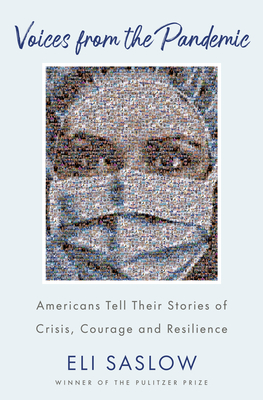
Voices from the Pandemic, by Eli Saslow****

Eli Saslow is the journalist that wrote Rising Out of Hatred, the story of former White Supremacist Derek Black, in 2018. When I was offered the chance to read and review his new book, Voices from the Pandemic, I jumped on it, because I like this author a lot. Once I had it, I avoided it like the plague (pardon the reference) for a couple months, wondering just what I had been thinking, to sign on for something like this. In the end, I am glad to have read it.

My thanks go to Doubleday and Net Galley for the review copy.

Saslow tells us in the introduction that he expected to become depressed, perhaps numbed, by all of these interviews, but ultimately was galvanized by “their empathy, their insight, their candor and emotional courage.” Fair enough, but an awful lot of these stories are gut-wrenching. For whatever reason, he chooses to start with some of the most horrific ones, but as we work our way into the book, there are several that are not about the excruciating, grim death of a loved one, but are interesting for different reasons. There are stories of essential workers, of coroners, and medical professionals. One that has stayed with me is that of a middle aged man, ex-military, who is finally compelled, when everyone in the household loses their livelihoods, to visit a food bank. He gets there two hours before it opens to be on the safe side, and discovers that there’s already a huge, hours-long line.

My favorite story is that of Bruce MacGillis, a wily old man that barricades himself in his room in his nursing home, lets nobody in, throws open his windows in subfreezing weather, and stuffs towels underneath the doorway to keep out other people’s germs. He ends up being one of two residents that are spared, out of eighty-nine residents. (My notes say, “Hell yeah!”) On December 28, he lets a nurse come in to administer his vaccine. I hope that man lives to be a hundred.

There are some stories by vaccine deniers, mask avoiders, included here, but if you are among them, you probably won’t enjoy this book. It leans heavily toward science, and away from conspiracy theories.

After I’d procrastinated reading this thing, I checked out the audio version at Seattle Bibliocommons to give myself a leg up. I thought it might be easier to hear these stories while I was also engaged in some other task, so I fired it up while I was slicing bell peppers and marinating meat. If anything, it was worse that way. Well—to be fair—worse, and also better. There’s a separate reader for each story, and the hard ones are read with such searing emotion that it makes them all the worse. The saving grace is that each person’s story is concisely told, so there was only one time that I hit the stop button and fast-forwarded to the next one. At the outset, I only listened for a few minutes at a go, and then turned to listen to another book, something light and fictional, to restore my mood. By the second half, I no longer needed to do that.

The book only covers the 2020 portion of the pandemic, but I’m not sure it would sound much different had he waited to include the whole horrible thing. (It will be over someday…won’t it?) Recommended, for those that can do this.