
My Documents, by Kevin Nguyen***-****

3.5 stars, rounded upwards.

My Documents is the sophomore novel of author Kevin Nguyen. This story reimagines the internment of Japanese-American citizens during World War II, asking instead, what if it was happening now, and what if those imprisoned were of Vietnamese descent?

My thanks go to Random House and NetGalley for the invitation to read and review. This book is available to the public now.

Our protagonists are four young people, all of whom are cousins with the same last name as the author. Ursula is an ambitious journalist living in Manhattan; Jen attends New York University, partly because she hopes to connect more often with Ursula. Alvin is an engineering intern at Google; Duncan is still in high school. When the internment comes, Ursula and Alvin are spared, but Jen and Duncan are forced into a concentration camp.

This book is imaginative, and I liked the characters. We see how the internment affects those that are imprisoned, but also how their internment affects Ursula and Alvin on the outside; ultimately, of course, the family’s dynamics are altered forever.

The humor that is highlighted in the synopsis failed to materialize for me. There was the odd chuckle or two, but no more than I would expect to find in any novel.  This is pretty common. However, I found myself feeling a bit cheated at the end, because there was so much more that could have been done here. I felt as if a real statement could have been made, but the opportunity was squandered.

Nevertheless, I see Nguyen as a promising author, and one whose work I will continue to follow.
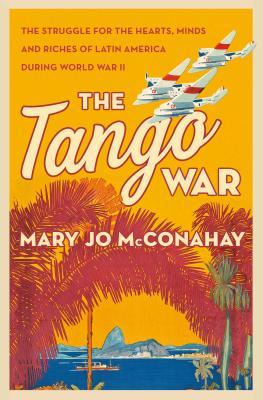
The Tango War, by Mary Jo McConahay****

TheTangoWarI read my copy free and early, thanks to Net Galley and St. Martin’s Press. This book is for sale now.

This meaty little nugget is one of a kind. I had sworn off World War II, both fictional and historical, because so much information gets repeated; you can only read so much about the most visceral parts of this conflict before your worldview darkens. I am out of the classroom and had promised myself a chance to stop and smell the roses in my retirement years. But then there’s this.

Firstly, there’s nothing about the Holocaust to speak of here. That was a draw card, because I am done with that most searing of horrors for awhile. Instead, she writes about Latin America during the war—and I knew nothing, nothing, nothing about any of this. I was aware that there were some nations down there that are reputed to have flirted with the fascists, and even then, I wasn’t sure it that was the truth or a myth.

The book is broken down, not by relevant Latin American countries, but by subtopics, and this is both more analytical and more interesting than if she’d done it the obvious way. Who knew that there was a model city established inside of the Amazon in an effort to rope more employees—well, slaves—into harvesting rubber for the war? Who knew that vast amounts of South American petroleum ran the trucks and tanks that rolled over Europe? Perhaps most appallingly—who knew that Japanese expatriates and their families, born and raised in Peru and other locations in Latin America,  were kidnapped in a down-low deal between the US and the governments of the affected nations so that the US could intern them, then use them for prisoner swaps?

There are enough weird-but-true facts here to cross your eyes, and the author has her documentation at the ready.  A fifth star is denied because of what isn’t here; why portray United Fruit as upstanding patriots? Many of us know this corporation was a sinister entity with its roots tangled deeply in the CIA. Lots of Guatemalans have plenty to say about United Fruit.  More directly related here is the brief, friendly reference to Disney as a WWII patriot, and yet many of us know how warmly Uncle Walt regarded Hitler: the catch-phrase “Mauschwitz” says it all.  Partial truths make me wonder what else I am missing as I read this.

With that one caveat, this book is recommended to you. The citations are thorough and the text is written free of technical terms that might hamper a wide readership.  Read it critically, but do read it.