The Fisherman’s Gift, by Julia R. Kelly*****

“Why is it, she asks herself, that we only ever remember the things we did wrong?”

Julia R. Kelly’s novel The Fisherman’s Gift tells a luminous tale of long ago, and it is one of the year’s best. My thanks go to NetGalley and Simon and Schuster for the invitation to read and review. This book is for sale now.

Dorothy lives alone in Skerry, a tiny Scottish fishing village, in the year 1900. She is an outsider, having moved here to teach the children; she marries and has a child, but when the child is tragically drowned, her husband leaves her, and now her life is one of solitude and regret.  Then a little boy washes up, a shipwreck victim, and Joseph, a fisherman that shares a past with Dorothy, brings him to the village; it is Dorothy that takes care of him, and every day, he seems more like her own lost boy. She wonders from time to time whether God has sent him back to her.

This is a beautifully written novel, glorious not only for what is said, but for what isn’t. Kelly crafts every character in the story with nuance, and so there are no bad people, and also no perfect ones. The entire book is written in third person omniscient, so we get a peek into one character’s thoughts, and then another’s. Sometimes this can be frustrating, because I want to climb onto the page and explain to one of them or another that what they’re thinking is wrong, and can’t they see that they have misunderstood a person, or an event? But when I yearn to do this, it’s because I believe every single word about every single character.

It’s a bittersweet tale to be sure, but readers can rest assured that Kelly won’t burn everything to the ground.

To those that love historical fiction, and to those that enjoy a good love story, I highly recommend this sweet story.

Through an Open Window, by Pamela Terry*****

“When you’re the last one with memories it’s like trying to hold on to hot sand.”

Author Pamela Terry never misses. Her debut, The Sweet Taste of Muscadines, forged such an emotional connection in me that if someone had told me they didn’t like it, I might not have cared for them as much as before. The same held true for her next work, When the Moon Turns Blue, which was every bit as good if not better. And now, with her new novel, Through an Open Window, I know that I will follow this author anywhere.

My thanks go to NetGalley and Ballantine Books for the invitation to read and review. This book will be for sale August 19, 2025. If you are female and have a beating heart, you should get it and read it.

We open with a scene from 1956. The local sheriff rescues two small children from a scene of horrific carnage; the baby girl is surrendered to the social worker before they find the little boy. The sheriff and his wife have been unable to have children, and want them so badly that instead of reporting the boy also, he takes him home and they keep him.

Cut forward now to the fictional town of Wesleyan, Georgia. A family is grieving the loss of its patriarch, Lawrence Elliot. His widow, Margaret is the first to receive a visitation—not from Lawrence, but from Great-Aunt Edith, who has been dead for years. Aunt Edith wants her to know something. And in fact, other family members will also see her at various times, in various places, but it’s not the sort of thing one shares with others. But Edith isn’t leaving until her message is received and understood.

As we see Margaret and her three adult children cope in different ways, we also see the interplay of their relationships to each other. This story is loaded with character development, and I believe each and every one, even Jubal, the rescued Clumber Spaniel that comes to live with Margaret. (I had never heard of this breed before, and now I kind of want one. Someone stop me!)

Events roll forward, and slowly we learn what it is that Edith is trying to convey, as the family does, and we find the tie-in to the prelude. It’s done brilliantly! Along the way, the author’s voice comes through in undeniable word smithery that forces me to highlight way, way too many passages to quote here. I experience the entire gamut of emotion, and when I near the ending, I am torn, wanting to read more slowly so that the book won’t end, but also needing desperately to know what is coming next.

The only possible improvement would be if Terry could write, and write up to the standard she has established, as fast as I can read, because I cannot wait for her next novel! She has become a favorite author, one I’d pay to read if I couldn’t do it free of charge. Highly recommended.

The Love Elixir of Augusta Stern*****

Augusta Stern is about to turn eighty, and she’s being forced into retirement, darn it. Her beloved niece persuades her to leave New York and spend what remain of her golden years in a Florida seniors’ community. From there, a wave of surprising events unfolds, changing Augusta’s life.

My thanks go to NetGalley and St. Martin’s Press for the invitation to read and review. This book is for sale now.

Loigman’s debut novel came in 2016, and as of now, she’s published three more. Every single one is golden. This author writes with warmth and intentionality, and although the first was wonderful, each subsequent one has been better than the last. And so, although I have gone on to read other novels by other authors since I finished this one, this is the one I’m still thinking about.

You see, in 1922, Augusta’s mother became gravely ill. Try though they might, neither the doctors nor her pharmacist father were able to help her, and she died. Augusta, her sister, and her father were all plunged into a dark and terrible place without her.  Great Aunt Esther showed up to run the household, and she brought with her a case full of herbs and tinctures; Esther was an apothecary. Her methods, which were sometimes unconventional, put her at odds with her nephew, but they got results, sometimes where conventional medicine had failed. Soon Augusta was spending her hours after school helping her father in the pharmacy, and sneaking out of bed in the middle of the night to observe Esther devising natural concoctions of her own. Esther declared Augusta to be her heir; she had a loving heart and a healer’s instincts.

Her social life was very limited, absorbed as she was with the family business, but the brightest spot in her day was when Irving Ripken, her father’s delivery boy, came to work. Often, they would talk as they worked; in time, they fell in love. Imagine her horror, then, when he abruptly married someone else and moved to Chicago! Augusta never recovered from the blow, and so she has never married.

Now, imagine her astonishment when sixty years later in Rallentando Springs, Irving shows up at the pool!

Much of what follows is what a reader might expect, but the details and character development take the story to a higher plane, and as we follow it, we also see the events of 1922, and these enable us to understand these characters and what drives them. There’s an unusually clever twist at the end, and it’s one that I absolutely do not see coming.

Ordinarily I would include ways in which the novel fell short or could be improved, but that’s impossible in this case. Loigman has spun magic for us from start to finish, and all I can do is bow in appreciation, and recommend this novel to you.

After Annie, by Anna Quindlen*****

After Annie tells the story of a family that is changed by the sudden death of the mother, a woman still in her thirties. My thanks go to NetGalley and Random House for the invitation to read and review. This book will be available to the public Tuesday, February 27, 2024.

I’ve read a number of books by this author, and I have come to notice a pattern. I read the synopsis, like the sentence I used to begin this review. I see what it’s about and shrug. Doesn’t sound like it would be all that special, but hey, it’s Quindlen, and I have liked her work before, so let’s give it a shot. After all, in past novels, the topics also didn’t seem engaging at the outset. One novel is about a family being forced to relocate due to eminent domain; another has to do with parking spaces in New York City. There’s a memoir about grandparenting, and another about—I kid you not—her dog. Nothing here seems all that appealing.

Yet in some ways, it is the very ordinariness of her subjects that draws us in. So many of us have had to move when we didn’t want to, and so we fought it; or we became so angry with a neighbor’s thoughtlessness that we fantasized about terrible revenge; or we dealt with a death that came out of the blue, striking down someone that was perfectly healthy, or that seemed to be. If we haven’t done any of these things, chances are excellent that someone else we care about has. By tapping into every day experiences and crises of various sizes, Quindlen finds commonalities.

But perhaps the most important feature of her books, particularly her novels, is the way that she crafts characters that are so visceral we would know them if we saw them on the street. Young Ali, the daughter who’s just beginning middle school, yet suddenly finds herself burdened by all of the things her mother did for the family, from child care to meals to housework, is so real to me that I nearly climb inside of her skin, and when Annie’s best buddy tries to tell Bill, Annie’s husband, Ali’s dad, that this isn’t okay and he blows her off, I want to cry out. We can see that he’s behaving selfishly, whether he knows it or not, because he is so poleaxed with grief. It’s hard to prepare a meal when you can’t stop crying. Hell, Bill can hardly go into the kitchen, because that’s where she died.

Grief was like spring, maybe. You thought you were getting out from under it, and then it came roaring back. And getting out from under it felt like forgetting, and forgetting felt like treason.

I began reading this story because I like the author, but it also serves as a grief book. I found this out when my sister died about halfway through. Unlike Annie, my sister was not in the prime of her life, nor was her death unexpected. She’d been horribly ill and in great pain for years on end. Her death was a relief, ending her pain, and ending the anguish of others that had been constantly seeing her that way, helpless to improve her life in any way. So I am not poleaxed like poor Bill. She didn’t leave behind a houseful of small children and a middle schooler trying to pick up all of the pieces. She didn’t have a six year old who would explain to everyone that his mommy wouldn’t be dead anymore once she came home from the hospital. But what I am saying is that I find this book more soothing than I would have guessed. If you or someone near to you is dealing with loss, After Annie may help you too.

Highly recommended.

When the Moon Turns Blue, by Pamela Terry*****

Once in a while the odd thing happens,

Once in a while the dream comes true,

And the whole pattern of life is altered,

Once in a while the moon turns blue.

The tiny Georgia hamlet of Wesleyan is preparing to bury one of its own, and Mother Nature is preparing to cover the entire town in ice. But nobody—well, almost nobody—knows that a source of local tension is about to go nuclear, as someone is planning to topple and destroy the statue of a Confederate general in the park inside the boundaries of Old Man Griffin’s land. “The fight was just getting going good, and now somebody’s declawed the cat.”

This riveting, curiously charming and sometimes hilarious novel is the second by Pamela Terry, whose outstanding debut novel was The Sweet Taste of Muscadines. This one may be even better. My thanks go to Net Galley and Random House Ballantine for the invitation to read and review. This book is for sale now.

With the death of Harry Cline, we find ourselves at his funeral, a massively attended affair. But his wife, Marietta, develops a disabling, blinding migraine, and although they have been on the outs for years, Butter, her (former) best friend, comes to the rescue. By the time they’ve snuck out the side door of the church, we already know at least a little about both women, and now we want to know everything.

With just two novels published, Terry has already proven herself to be among the best authors when it comes to character development. Soon we’ll meet others—Marietta’s obnoxious brother, Macon and his beleaguered wife Glinda, who will have a large part in this story and is one of my favorite characters, as well as a host of others, who have smaller roles but are each so unmistakably established that it’s no work at all to keep track of them. But perhaps her finest achievement here is in creating a masterpiece that is ultimately a feel good book, despite the use of a red hot real world controversy within its pages.

I generally read several books at a time, and this one is the one that I saved for bedtime, because I wanted to be able to read it uninterrupted, and it is the one I wanted in my head when dreams came. It didn’t let me down.

This inspirational work of Southern fiction stands shoulder to shoulder with the finest classics, To Kill a Mockingbird and Fried Green Tomatoes. I wholeheartedly recommend it to you.

When the Stars Go Dark, by Paula McClain***-****

I have never read Paula McClain’s work before, but a number of Goodreads friends expressed enthusiasm about her novels, so I decided to see what the excitement was about. I came away a little underwhelmed, but nevertheless, thanks go to Net Galley and Random House Ballantine for the review copy. This book is for sale now.

Our protagonist is Anna Hart, and she’s a missing persons detective in San Francisco. A tragedy has sent her running off to lick her wounds, and the bulk of the story is dark and brooding in tone. Then a missing persons case appears that bears striking similarity to one she was confronted with many years ago, and she becomes a dog on the hunt. There’s a bit of magical realism sprinkled in, things she “just knows” that help her solve the case.

Here is a note I wrote during the first half of the book, and it effectively sums up how I felt for most of the story:

“This is one of those stories where the first person narrator bobs and weaves, trying to tell us a few things while withholding all sorts of important, motivating events in her past. It’s getting tiresome, and I want her to just fucking spit it out so that we can move on.”

I suspect that if McClain had used a lighter hand with the veiled references, mentioning them less frequently and then returning to them later, I might have had a more charitable viewpoint.

As it stands, I wouldn’t call this a bad novel, just not a great one. If you are a fan of her earlier work, you may love this book just as much. But if you haven’t read McClain before and are about to lay down your money for just one book within this genre, I advise you to choose something else.

Every Cloak Rolled in Blood, by James Lee Burke***-****

James Lee Burke is an icon, a Grand Master who’s written mystery novels, along with the occasional work of historical fiction, since the 1960s. Now he is 85 years old, and he recently lost his beloved daughter, Pamala. This novel is a tribute to her.

My thanks to go Net Galley and Simon and Schuster for the invitation to read and review. This book is for sale now.

Every Cloak Rolled in Blood is the fourth in the Holland Family saga. Our protagonist is Aaron Broussard. He is an 85 year old novelist who has recently lost his daughter, Fannie Mae. He feels a “loneliness that is almost unbearable.” He tells us,

“I will not accept my daughter’s death. I will find a way to pull her back through the veil or untether myself and lie down in the bottom of a boat that has no oars and float down the Columbia and into the Pacific, where she will be waiting for me somewhere behind the sun.”

There’s a horrifying passage in which he places the barrel of his gun in his mouth; but he doesn’t go through with it, and later tells us that he believes he will not be permitted to join her if he leaves this world by his own hand.

The story commences with a young man vandalizing Aaron’s barn. Aaron recalls some local cops being unnecessarily nasty to Fannie Mae, so instead of turning the boy over to the cops, he makes a deal with him to have the kid work off the damage. There are other remarks laced in here and there that give a nod to our current national state of affairs regarding police brutality, and I appreciate these.

In fact, the story is laced with a number of social justice issues, and Burke is, as usual, on the side of the angels each time; foremost is the horrific manner in which indigenous people of the Northern Rockies have been treated by the U.S. government, and continue to be.

Over his last few novels, Burke has increased the amount of supernatural content in his work. For decades this aspect of his work was muted, smoldering as a part of the general ambience of the story. He’s always used the occasional Biblical reference, occasionally also borrowing from Greek mythology. In A Private Cathedral, a recent Robicheaux novel—the series that has met with the greatest public acclaim and for good reason—he included a scene that could not be perceived as anything other than supernatural. In fact, it is one in which both the protagonist and his lovable sidekick, Clete Purcel, witness the same event, so there can be no supposing it’s all in the protagonist’s head. It was brilliantly conceived and executed. Unfortunately, this book is not of the same caliber.

I wrestled a great deal with my rating and review; a large part of me thought that when a beloved novelist is in his eighties and has recently lost a child, I should just give him the five stars. Yet another part of me, the part that won the internal debate, feels that to do so is unworthy of the respect this author has earned. It would be patronizing to say this is a great book when I am so ambivalent about it. So I’m playing it straight here. The supernatural aspect, as it is used here, overwhelms this story and damages it organizationally. It also causes the pacing to lag a bit. It’s not a terrible book, but it’s not up to Burke’s usual standard.

But the aspect that bothers me most is the way the younger women in the story—not just one, mind you, but two—cannot wait, apparently, to get Aaron in the sack. Sister Ginny isn’t a good person, but she tries to seduce him anyway. Ruby Spotted Horse is a good, honorable woman, that rarest of all things: an ethical cop. She’s in her thirties, but when Aaron comes onto her, she doesn’t even hesitate. We learn that she was raising her niece, who died, and there’s a clumsy passage in which Aaron wonders aloud if Ruby is really up for a relationship with him given his age, but she assures him that they are bound together by their mutual losses.

Right. Whatever.

There are many lovely moments in this novel, all of them owned by Fannie Mae. There is such clear, obvious affection in the descriptions that I am a little surprised the pages don’t glow.

The denouement, a mighty struggle involving the living and the dead, leaves me shaking my head, though. And when one of the latter, an evil spirit representing a horrible cavalry officer that once lived and killed in the vicinity, tells Aaron, “Pardon me for saying this, but you’re not the good father you think you are,” I want to sit right down and cry.

This book is recommended to diehard Burke fans, and to anyone that needs a grief book.

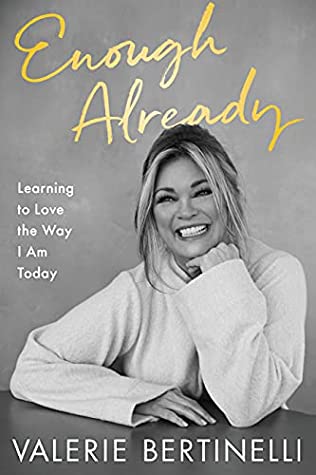
Enough Already! by Valerie Bertinelli***-****

3.5 stars, rounded up. Valerie Bertinelli rose to fame as a child actor, and as a child I watched her show, “One Day at a Time,” together with my parents. I admired and envied her, and when my mother enthused how darling, how pretty, how adorable she was, I also resented her just a teeny bit, the way we tended to resent the homecoming queen or student body president. When I saw, recently, that she’d written a memoir, I was all in. My thanks go to Net Galley and Harper Collins for the review copy. This book will be available to the public Tuesday, January 18, 2022.

For me, this is more of a three star read, but I choose to bump the rating up to four stars because there were several barn-sized hints that I should have noticed before I began reading, yet blew obliviously past. First, I didn’t get the memo that Bertinelli has written diet books and cookbooks, and has won Emmy Awards for a cooking show on the Food Network. All of these things should have given me pause, because although I do like Bertinelli’s earlier work, I never watch food programs on television. If I want to learn more about food, I’ll buy a cookbook or a diet book, but I don’t need it on my TV or any other streaming devices, and I also (giant clue number two) hate mixing recipes and cooking tips into a novel or memoir.

Yikes!

So, whereas I believed I would be reading a memoir suffused with feminist mojo that makes the author ready to turn the page on body shaming and chronic dieting, instead, I got a recipe, right up front. Pffft.  And as a woman who’s lived in plus-sized fashions for decades, I find it hard to get excited about Bertinelli’s brave decision to stop losing the same ten pounds, over and over. Ten pounds? Oh please. I guess maybe actors and models go into crisis over ten extra pounds, and feel tremendously brave about deciding to own them, but where I live, ten pounds is nothing.

When I was in third grade, my teacher said that those of us that roll our eyes stand in danger of having them get stuck up there. Since there’s no way not to do that while reading this thing, we’ll call mine a case study. If they get stuck, I’ll report back. In Braille.

As the memoir continues, I find that more than anything, this is Bertinelli’s grief book. She and her ex-husband, Eddie Van Halen, have remained unusually close in the years since their divorce, and this book is almost more about him and their son Wolfie than it is about her. I never enjoyed Van Halen’s music, which I found to contain more heavy metal than I am geared for; since I have this memoir, I figure I should take myself to cyberspace and find out whether growing older has changed my tastes. As it turns out, nope, it hasn’t. Still not a Van Halen fan.

And lastly, the narrative comes with all sorts of red flags when she talks about the warm relationship she and Eddie have continued to share—because, you know, they are both (full grown) Wolfie’s parents. When it becomes clear that he will lose his fight with cancer, she and he nip out of whatever family party they are attending to go sit in someone’s car and confess their love to one another—despite the fact that they have both remarried. (Imagine I’ve written that last bit in 24 point font, bolded, red.) The hell? I know that Hollywood types sometimes do things a bit differently, but…? And so, once more I travel through cyberspace to track down Bertinelli’s current husband, who is scarcely even mentioned in this emo memoir. I find an image; oh, so that’s him! And yup, at just about the same time the book was in the publication pipeline, the marriage crashed to a halt, with Bertinelli fuming about how she refuses to be “shamed” for how she grieves. Uh, okay. Her grief is her grief, but if I was that fellow, I’d feel as if my marriage was a party to which I hadn’t been invited. And if it was hard to play second fiddle to the famed guitarist when he was alive, I can’t even imagine how anybody can compete with him now that he’s dead. So. For those diehard fans of hers, of Van Halen’s, or of the food programming to which her career has been directed in recent years, this might be a great read for you. As for me, I came away feeling awkward and uncomfortable. If, knowing all these things, you are still interested, then go for it; but if you’re not so sure, either give it a miss, or read it cheap or free.

The Guncle, by Steven Rowley*****

How do you spell instant parenthood? It’s the last thing GUP—the appellation bestowed on Gay Uncle Patrick—expected, and the transition is hilariously rocky. My thanks go to Net Galley and Putnam Penguin for the review copy; this book is for sale now.

Patrick’s whole life appears to be on hold. He was on television for a good long while, and so both fame and fortune are his. He doesn’t actually have to do anything, and since the demise of his beloved partner, he hasn’t wanted to. Then one of his closest friends, Sarah, who had been his college roommate, dies, and everything changes.

Grant and Maisie, Sarah’s children, are six and nine years old respectively. When the memorial service concludes, Patrick is blindsided by Joe, Sarah’s husband. While she was on her deathbed, she made Joe promise that when she was gone, he’d go into rehab—but of course, someone has to take the children. Joe wants that someone to be Patrick.

The humor is ribald at times, but never over-the-top. Patrick knows nothing about children. Nothing! In a daze, he returns home with his charges in tow, and he has to learn on the job. Maisie is at a somewhat bossy age and is only too happy to tell him what to do and how to do it, and oh is it fun to watch. As the fog lifts, Patrick begins making small changes to create a more child-friendly space, but mostly, he embraces his unconventional situation. There’s a Christmas celebration in the middle of summer; there’s a party. And as he steps up to his new role, he realizes that he should return to work; he has heirs now, after all.

Aunt Clara arrives, and she demands the children return with her. She knows how to do this. She frowns on nearly every aspect of Patrick’s life. But Patrick is amazed to realize he is willing to fight to hang onto them.

Some may be surprised to find a book like this earning a five star rating; it’s not serious literature. It’s fun; it’s fluffy. But this reviewer rates each book on its excellence compared to others of its genre. As a humorous novel, it shines. As a feel-good book, it’s terrific. As beach reads go, what can be better?

Perhaps it’s indicative of Rowley’s skill that I have found myself writing review notes in his voice. This doesn’t happen often. But as for you? You should get this book and read it, because all of us need a mood elevator, and in that respect, it’s a bargain. Highly recommended!

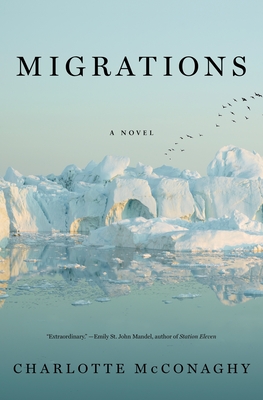
Migrations, by Charlotte McConaghy****

My thanks go to Net Galley and Flatiron Books for the review copy. I alternated my digital copy with the audio version I found at Seattle Bibliocommons; the reader does a fine job, and so if you want this book, you can’t go wrong in terms of print versus sound.

This is either exactly the right time to read this book, or exactly the wrong time.

Franny Stone has never been happy staying in one place, and now, when the walls are about to close in on her, she decides that one final voyage is in order. The Artic terns are about to make one final migration, and she means to go with them. Posing as a marine biologist, she persuades a fishing crew to take her along; she has the data to follow the terns, and the terns are following the fish. It’s in everyone’s best interest to work together here, now that so many species are extinct and the fish are so scarce. Once in motion, however, few things go according to plan.

The setting is the future, at a time when humanity has depleted most of the world’s wildlife. It is bleak, bleak, bleak.

Much of the story revolves around Franny’s character, and since we know from the get-go that she doesn’t intend to return alive once this trip is done, there are two questions that keep me turning the pages. I want to know why she wants to die, and of course, whether she does. The reason for her morbid plans is spooled out to us in small bits; whether she dies at the end is something the reader must learn for herself.

As for me, I had huge expectations by the time I began reading, because this novel shot up to bestseller level almost overnight. Perhaps that’s why I felt a trifle let down when it was done. It’s a good story, but I wouldn’t call it one of the year’s finest. Certainly, there is moral gravitas behind it, and yet those most likely to read it are not climate change deniers. For me to have loved this story, I would have needed more hope and less utter despair. When a story starts sad and ends sad, the little places in which it is slightly less sad aren’t enough to bond me to the narrative.

On the other hand, I am just one reviewer. There are a whole lot of readers out there getting all the feels and loving them. I recommend this story to anyone looking for a catalyst for a good ugly cry.