Pretty Ugly, by Kirkus Butler ****

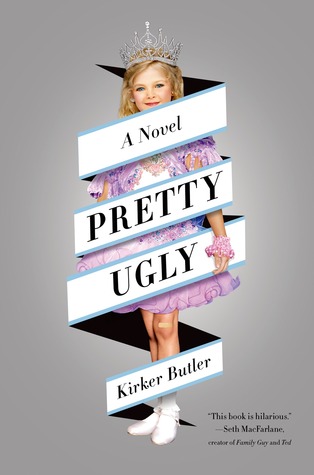
prettyuglyIt’s vulgar, utterly tasteless, and very, very funny. Pretty Ugly, by Kirker Butler, a man who is no stranger to edgy comedy, skewers a whole herd of sacred cows within the confines of its humble two covers. Just be ready!

Thank you and thank you again to St. Martins Press and Net Galley for the DRC.

The Millers are a good Christian family. Naturally, they would never send their children to public schools; instead, they are home-schooled by grandma Joan, who receives personal messages from Jesus, with whom she has a personal relationship. Papa Ray is never home; he works as a nurse, popping whatever narcotics and other prescription meds happen to be lying around, treating them as his own personal escapist lottery.

Miranda, now a mother, was once a beauty queen herself, and she’s made daughter Bailey into the family’s own teensy beauty queen industry. Hey, who doesn’t love a good kiddie pageant?

“Fifty scantily clad prepubescent girls scampered about like the main attraction in a Bangkok coffee shop: sexy children marketed as wholesome family entertainment. The room reeked of anxiety, tanner, and schadenfreude.”

Ray has found every conceivable way to avoid going home. He’s taken a second job as a hospice nurse, working five nights weekly, imbibing his patients’ pain medications and waiting for them to die so he can put another notch on his belt.

And now there’s Courtney.

This won’t be a novel to everyone’s taste, but if you lean slightly to the left and like your humor dark, Butler’s soon-to-be-released gem may be right up your alley!  Watch for it in bookstores at the end of March 2015.

Alexander’s Bridge, by Willa Cather ****

alexandersbridgeYour reviewer is presently finishing up a couple of ARC’s; meanwhile, let’s look at a classic that has kept its appeal over the years. There’s nobody who writes like Willa Cather.

Alexander is an architect who designs bridges. Right now he has two problem bridges. One is in Canada. Stunning, innovative, and unusual, it draws a great deal of publicity. The problem is that it’s flawed. In fact, as he comes to realize with horror, it isn’t actually safe.

The other problem is his relationship bridge; he has two women, one of whom he is married to in the USA, the other in London. That great big pond isn’t quite large enough to keep the two sides of his life from banging into one another. He loves both and doesn’t want to lose either of them, but he is essentially a monogamous person, and he doesn’t feel so good. He’s cheating on his wife and she doesn’t know about it; he keeps meaning to end it with Hilda, but when he sees her, he can’t.

The whole thing is resolved in a manner both brilliant and unanticipated until it is upon us. A novella rather than a novel, but quite well done. I do love Cather’s work!

All the Time in the World: New and Selected Stories, by E.L. Doctorow *****

allthetimeinWhen I was a kid, I often bore the distinction of being the second-smartest kid in the class. You’d think it would be an honor, but then, how often do we watch silver medalists at the Olympics stand ashamed, tears streaming, because they were not the very, very best? And so as I read these gob-smackingly brilliant short stories by Doctorow, I know exactly who he would have been in my life. He would have been that smartest kid, that gold medalist. I could never even touch his writing ability with anything I produced.

Back when I was that second-smartest student, I would have burned with envy at Doctorow’s brilliance, but now I can only bow in awe. What talent—and what a work ethic! He has produced prodigious prose over his lifetime, and I don’t think he has ever published anything that wasn’t top drawer work.

Here’s his author blurb, lifted from Goodreads.com:

“Among his honors are the National Book Award, three National Book Critics Circle Awards, two PEN Faulkner Awards, The Edith Wharton Citation for Fiction, and the presidentially conferred National Humanities Medal. In 2009 he was short listed for the Man Booker International Prize honoring a writer’s lifetime achievement in fiction, and in 2012 he won the PEN Saul Bellow Award given to an author whose “scale of achievement over a sustained career places him in the highest rank of American Literature.” In 2013 the American Academy of Arts and Letters awarded him the Gold Medal for Fiction.”

I rest my case, at least in terms of the author’s overall prowess. And no friends, I did not read this as an ARC; I don’t think Doctorow even needs people like me reviewing him, but I do so because it brings me joy. I ferreted this hardcover treasure from among the stacks at my favorite Seattle used book store, Magus Books, in the University of Washington neighborhood. I considered the used-book price a steal, and have enjoyed all of the stories included here.

One section is devoted to “Liner Notes”, and this one is from the liner notes to Billy Bathgate (also highly recommended). He describes a fugue state in which he is walking, yet dreaming:

“…it walks me through the underworld of the dreaming masses, where this pudgy demon of truth, W.C. Fields, with his dirty top hat, his run-down elegance of manners, his drunken scrollwork of a personality, presides over the technology of our souls…the clown won’t go away, you see…leading him through the window over the great landscape of the underworld that looks so beautiful from the window of this safe house and showing him what it really is. And he sees the bubbling sulfur pits of intentions, and the slake mountain of ideals, and great gray ash as far as he can see, the ashes of innocence creased by rivers of blood.”

Not everything he writes is in this flowery style, lest it exhaust us; instead, he intersperses it with other brilliantly funny work. “A House on the Plains” is dry wit at its best. Earle and his mother roam from one town to another, and gradually we come to understand why they have to keep moving. In one location, Earle is to call his mother “Aunt Dora”, and his mother has really outdone herself. Earle is used to a certain level of weirdness, but he can’t help inquiring, in the wake of her many troubling preparations for what is to come, “Aunt Dora, I said, what are we up to here?” (The author uses no quotation marks in this story, but it won’t muddy the meaning at all…and he makes up for it with his grammar police references in the final story, for which the book is titled.)

“Walter John Harmon” was one of my favorites; it features a religious cult, and is so wry and cutting that it made me laugh out loud in places.

The final piece, in which the writer makes better use of repetition as figurative language than anyone I have ever read before, is the coup de grace, and one can see why it is placed last; it leaves one holding the book with the sure and certain knowledge that it cannot be given away to a friend or relative, but must be nested softly back on the shelf. In my case, it will go in a small section of novels written by this remarkable word smith.

Has it just been published? Oh no no no. You will have to work to find it as I did. Well, of course you could check with various online retailers, and likely you would find a copy more easily than my breathless treasure hunt in the back stacks at Magus.

But if you love and respect good writing, you will do yourself a favor if you get a hold of it, one way or another, and dive in as soon as you can offer your complete attention.

The Given World, by Marian Palaia ****

thegivenworldThree and a half stars, rounded up. Thank you thrice to Net Galley, Edelweiss Books, and Simon and Schuster for the ARCs. This novel, which has generated a fair amount of buzz, comes out in spring of 2015.

The story takes place about fifty years ago in the western USA. Riley’s brother has been sent to fight in Vietnam, and Riley has gone to pieces without him. She takes every drug known to humanity, or nearly so, including alcohol, and in liberal doses, too. When her lover goes to Vietnam too, she dumps the baby on her parents in Montana and takes off in her car. She has always wanted to see the ocean. And see it she does; all that water, all those bridges. Many times she considers jumping, and the only thing that tells us she won’t is that the story is told in the first person. Her self-destructive impulses are in high gear, though; she doesn’t jump, but she dares fate to take her out in about every other imaginable way.

In a narrative that is strangely disjointed—possibly deliberately so on the author’s part, given all those drugs—she travels to Vietnam, where her brother has been listed as Missing In Action. Though most of those whose remains go unreturned are, according to the Pentagon, people who died over water, she is obsessed with the notion of him burrowing into a tunnel somewhere and just not coming back out. She goes there to see if she can ferret out his remains.

Here, I confess that a half star fell off my rating by the stereotype she assigned the people of Vietnam. The war came, and all they probably wanted to do was go back to farming their rice paddies, she says. And I find myself wondering why so many people who are not Vietnamese have such a rough time envisioning the Vietnamese, or at least a portion of them, as intelligent, political thinkers. After all, they gave just about everything they had, right down to their children and their jungles, in order to repel the invaders who came to tell them what kind of government they ought to have. They farmed out of the fucking CRATERS. Go ahead and tell me that all that was in their heads was rice. I dare you.

Ahem. Moving on.

Inevitably, Riley returns, and though I don’t want to spoil the rest of the story, she encounters more loss. Rivers of loss; oceans of loss; entire mountain ranges of loss. This is a really sad story, and if you are in need of a good hearty cry, this book just might do it for you. Think of San Francisco in the 1980’s. It was a rough time; lots of us lost people then.

At times I had difficulty figuring out the character’s motivation. Is she just so deep into her grief that she can’t come up with a plan? Has she been overtaken by some mental illness? Is she alcoholic? Or is she passively trying to avoid the pain? I suspect it’s the latter, but I am never quite sure. Maybe the ambiguity was intentional.

Time shifts, and Riley has reason to return to Montana. Will she stay once she is home, or will she return to San Francisco? One thing is certain; she won’t get on an airplane. Instead, she takes the Coast Starlight train northeast, across the California line into Oregon.

This is one of those little quirks that is bound to come up once a novel hits a certain number of readers. I too have taken the Coast Starlight, and I have also sent many loved ones on it. The Coast Starlight is a train that goes through from San Francisco (and maybe further south for all I know), to Portland, Oregon (my hometown), to Seattle. And it’s a lesson to writers everywhere: if you are going to describe an actual place, be sure you know what you are talking about.

Riley’s narrative explains that when she got off the train in Portland in that big old station (so far so good; it’s huge and historical, a glorious place), she wants to walk around the neighborhood, but unfortunately, the station is surrounded on all sides by freeways.

Whoopsie! The station is located in Chinatown. It is chock full of tourists at all but the grimmest time of year, and Portlanders take a great deal of pride in its rich heritage. Like San Francisco, Portland attracted large Chinese immigrant populations during the boom period of railroad building. It’s true that there are freeways on two sides of it; one of them parallels the river. But that train station is a long way from being some island in the middle of a bunch of concrete and girders. Not so much.

For those of you focused solely on the story line and character development, I think this will be about a three or four star read, depending upon how stringent your own personal rating guidelines are. I am glad I had the chance to read it; I just wish I understood where it was going and what the writer intended.

Pleasantville, by Attica Locke *****

pleasantvilleJay Porter has a full plate, and so his legal career has been set on cruise control. Money is the least of his worries; he is successful, and has won a very large case, though it hasn’t paid yet. No, his issues have to do with family, and with grieving. And with grieving. And with grieving. His wife Bernie died young and fast due to an illness that she knew she had, but had chosen not to share. She pushed him to follow through on his enormous case against the oil company that had sickened, even killed people in their own close-knit, middle class African-American suburb outside Houston, Texas. It was important to everyone that the families affected experienced justice. But now he wishes he had spent more time by his wife’s bedside and less in the courtroom. His self-hatred for the time spent away from his wife and two children during that final crisis has left him determined not to set foot in another court room. Not ever.

And so this sequel to Black Water Rising, the red-hot hit by this author, starts out ominously, as a vulnerable teen waiting at a bus stop wonders whether she should run from the car that is watching her, even though she is so far from home that she doesn’t know how to get back, or wait for that bus. Next thing we know, she’s been murdered.

But Jay Porter is still too caught up in his own personal situation to pay much attention at first. Bernie’s sister Evelyn helped him get Bernie’s clothes packed up and moved out, but he can’t look at her car. Can’t look. And the holidays coming around the corner, all the gut-punching emotion with which they are fraught, that stinks too.

At this point, I should let you know that you can’t read this yet. It won’t come out till April, but I got my ARC from edelweiss books a week ago, and I’ve been reading it obsessively, so now is the time to review it. I will post this again when the book comes out, but for now, you can pre-order it, or put it on your Christmas list. After the holidays have come, gone, been cleaned up and winter survived, wouldn’t it be nice to come home and find this heart-pounding thriller waiting in the mailbox to make your weekend better? And what a story it is!

And so, back to Jay Porter. Porter is holding Cole Oil to the award the courts granted to the many citizens he represented. His fee, 20 million dollars, will be enough for him to retire on. He can send his secretary into the retirement she longs for, and he can put his feet up and be a father to his kids. But oh, how he wishes Bernie could be there.

Meanwhile, his friends and neighbors are growing agitated about Alicia Nowell’s disappearance. She is the third girl from the community to go missing in the past few years. The first two were kept alive for a few days; their bodies were found on day 6, and the coroner ruled they had been dead for only 24 hours or less. So they figure that girl is out there, alive, somewhere. Volunteer crews are searching fields after the cops have been there, squaring off grids in professional fashion while others knock on doors, try to get information that the local cop shop hasn’t found. And in the midst of a mayoral race, hay is being made by the opponent of the traditional Black candidate. Because the neighborhood has been slowly, insidiously (to some) changing since the death of Jim Crow. Now young Black kids from strong families don’t have to live in Pleasantville to find a good house. They can move wherever they want. That’s good, right? But Latino families looking for good schools and good housing find reception that is sometimes tense as they ease into town, and the old guard realizes they may no longer be a unified force politically.

Disbelief and horror take hold when the grandson of the community’s most venerated elder is arrested for the murder of Alicia Nowell. Assuming that an error has been made and without a second thought, Jay, who by coincidence happens to be at the police station while Neal Hathorne is being questioned, strides into the interrogation room and announces that he is Neal’s attorney. He has no idea what a firestorm he has unleashed upon himself, and upon his family.

I am retired, and have the luxury of several hours of designated reading time every evening. It’s pretty sweet. But this book caught me by the hair and made me stay with it, modifying my schedule so I could see just what the hell is happening here. My e-reader followed me down to the kitchen. It followed me into the laundry room. I was cranky when the phone rang and interrupted my time with Jay. Because after all, we had to get him out of this mess, and what the hell is going on with his daughter Ellie? Good thing he is being a careful father so that we won’t have to deal with that old, hackneyed now-they’re-after-his-own-kid plot line. Jay is smart enough to realize his daughter fits the profile of the kidnapped and murdered girls, and he is looking out for his girl. We respect him for it, and I nodded with approval at the e-reader as I fed the dog, went out to get the mail. I broke or spilled things four times because I wasn’t looking at what I was doing; I was reading this book, because the book couldn’t wait.

If Locke’s fingernail-biter of a tale reminds me of the style of any other writer, it is of James Lee Burke, now an octogenarian who is unlikely to write much more. And although only Locke knows whether it is intended as a nod to that bayou living legend, she names the bereaved parents Robicheaux. I rather liked the touch, if that’s what it was.

So whether you order this book, request it as a gift, or buy it when it comes out, consider it a must read. This book is already creating a buzz six months prior to publication, and it is going to be a monster. Don’t let yourself be left out!

A Painted House, by John Grisham*****

apaintedhouseGrisham has written a wonderfully refreshing book. He is a fine writer, and I think he dwelt a bit too long and too timidly in the familiar swimming hole of the legal thriller. This is a really strong, well-written novel, steeped in the deep South (USA) in the 1950’s. For those of us up north who heard in school that the cotton weevil ended cotton farming soon after the end of the Civil War, Grisham has news. The protagonist and narrator is a seven year old boy named Luke Chandler. He is wise beyond his years, but I bought the premise for two reasons. First, it is discreetly revealed up front that he is academically talented, and so having him able to analyze things that an average 7 year old cannot, becomes believable. Second, he has no siblings, but has been raised in an all-adult household, a big frame house (NOT painted) that somehow houses himself, his parents, and his paternal grandparents. His “buddy” is 12 years older than himself. Uncle Ricky is his father’s younger brother, and is fighting in Korea, and anxiety over his well-being filters in and out of the myriad other anxieties that went with cotton farming. Though the Great Depression officially ended with WWII, small farmers (80 acres plus “the garden”, which is vastly larger than any ordinary suburban garden) in the deep south are living decades behind those in cities. They have water from a pump out front, and an outhouse. There is electricity, convenient but expensive. There is no telephone. The latter is viewed with cheer; it gives neighbors permission to visit one another without advance notice or an appointment, and there is a tacit understanding that this will happen mostly in the off-season. Winters are for rest and hospitality; summers are for work. And they ALL work. The two men haul huge cotton bags along with the workers they’ve hired, and they bring in 100 pounds of cotton off their own backs every blessed day, rising at 4, finishing at dark. It is a grueling existence. The women, including the grandmother, spend less time in the fields due to domestic chores. (There is no washing machine). But once they have cleaned up the breakfast dishes, they too are out in the field, leaving earlier than the men to cook a hearty lunch. There is often a break afterward due to the incredible heat and humidity, but because of the ever-present fear of rain, a very real fear, given that their farm is “bottom land” fronting the river, they are out again as soon as humanly possible. The seven year old, whom modern mothers would be taking for play dates and curling up to read with, is expected to haul 50 pounds of cotton daily also. Interestingly however, despite the family’s immense debt burden, he is paid the same wage as the other workers, and may dispense with the money as he sees fit. The two most striking features of this time, place, and way of living that struck me were the stratification of classes and subclasses, and for all the hail-well-met hospitality, a deep sense of privacy, and the need to keep secrets. At first, our young protagonist is weighted with one or two sworn secrets, and they are fairly benign. Later, however, he is beset by some whoppers, ones that could cost someone a life. Beyond this point are spoilers. If you have not read the book and think you may want to, stop here. If you have read it and want to compare notes, keep going.

The social levels are deep and intrenched. The most respected are the small business owners in town, preachers, and the farmers who own land, no matter how heavily indebted they may be. Those next were families like our protagonists, renters. Again, their debt level might be heavy, their clothing worn and not abundant, but they could hold their heads high, be church deacons, and be well regarded socially. After that, there is a large drop. On a similar social par, yet treated differently to an extent, are the hill people (very rarely are they referred to as “hillbillies”) who come down to pick cotton for a summer wage. They are not respected, but they are treated with a certain level of deference, nevertheless, because if they leave, the cotton may not all get harvested, and it is essential that every possible bole be brought from the immense cotton bushes to the truck. Workers are paid according to the amount they pick in weight. They can get away with a certain amount of disrespectful talk and obnoxious behavior because it will be hard to replace them once harvest season has begun.

On a social par with hill people, but considered more of a community responsibility, are the sharecroppers. Sharecroppers are considered to be above Mexicans only. (There do not appear to be Black people, at the time referred to as ‘Negroes’, in this town or its surrounding community). One does not interact socially with them; they are wage-slaves, forced to give most of their crop to the landowner, and often suffering from malnutrition. They are described as thin and dirty. They are so demoralized that no real attempt is made to teach their children manners, and any discipline meted out is so extreme that it would earn them a trip from a social worker today (assuming someone told; it might be the local “secret”, though nothing to that effect is said; it is considered typical sharecropper behavior). It is considered “Christian duty” to feed extra vegetables from the garden to the sharecropper’s family, and the giving is done in such a way as to protect, to the extent possible, the pride of the recipients.

The local sheriff, known as Stick, has no respect from anyone. This appears to be because he DOES NOT WORK. The work ethic in this town goes wide and deep. While respectable people are in the fields breaking their backs from sun-up till sundown, the sheriff “takes naps in that patrol car” and comes around “nosing into things” when a crime has been committed. In point of fact, two murders take place more or less under his nose, and no one, not ANYONE will give him the full story. Luke is witness to both murders. They are SECRETS. Later, when he finally confides in his grandfather at a time when knowing the facts will not mean economic ruin for the family, he is told that he “did the right thing” in keeping his mouth closed. “Are you gonna tell Gran?” he asks his grandpa. “Nope.”

Mexicans, even those who have far better manners and are far more tidy when they depart the Chandler farm, who do as they are told (with one singular exception, and even he was sorely provoked) are on the bottom of the social heap, and racism is not veiled, it is right out there in the open. “The Mexicans” are provided for well, just as the hill people are. They are given lodgings in the barn, and Kathleen, Luke’s mother, has been campaigning for them to be brought in for picking season in a bus, not heaped on the back of trucks where they will become parched and sunburned. She puts out quilts and pillows in the well-swept loft, and takes them big baskets of vegetables “that they like” from her garden, and introduces these as part of the wage package, so that they will not feel they are accepting charity; her decency is above that of most white folks. But they are Mexicans, and when one of the hill people, a 17-year-old named Tally who has told Luke she’d like to go north and never pick cotton and see real snow, runs away to marry one of them, the whole Chandler family feels sorrow for the degradation to which the hill people have been submitted. The hill people’s head of household even suggests his daughter has been kidnapped, until a letter is found from his daughter, at which point the pretense implodes and the reality, that his daughter genuinely fell in love with someone with dark skin, is laid bare. The word “humiliation” is used repeatedly.

The hill people, though they work for a wage and are poorly clad, actually enjoy a higher standard of living than the farmers do. One of them, Hank, who bullies young Luke in unconscionable ways that he keeps “secret” so his father will not have to dismiss him and lose the whole family’s labor, brags endlessly about how his family has a car and a painted house. It is the disabled family member who takes pity on them, and together with funds earned by Tally, secretly begins to paint their house white.

Kathleen Chandler accompanies Gran more than usual to visit the sharecropping Latcher family with vegetables these days. They have been enlisted by the local church ladies, who want to know the Latchers’ secret. It is rumored that their fifteen year old daughter has become pregnant, and as the Latchers’ nearest neighbors, they have been deputized to learn the truth. Gossip is not viewed as unchristian, but is almost the only form of recreation available in this insular community. But the girl is kept deep inside the house, and Darla,the Latcher family’s mother, is lightning-quick at greeting them on the porch so that they can’t come inside. Ultimately, the secret is made manifest when the truth of Libby’s pregnancy is doubled with another, closer-to-home truth: Ricky, the 19-year-old who is away fighting in Korea, is the baby’s father. It is of course only Libby’s word…except for the fact that both Chandler women say that the baby boy looks just like Ricky. Again, Luke forsees humiliation and public shunning as real possibilities. NO ONE is supposed to even socialize with a sharecropping family unless they, too, are sharecroppers.

Then there is the house. It had been secretly painted in a back corner. About half the farmers had painted houses and half did not, so until now, having an unpainted house meant no embarrassment locally. Now, however, a house that is partly painted is just not acceptable. Because rain has ruined the crop and left his parents destitute, Luke gives up his dream of a Cardinals jacket to wear to school when it starts close to Christmas, and instead invests his own money in paint and brushes. Once more, Tally kicks in and buys more too, and hill people, Chandlers, and Mexicans all paint 3 sides of the family home. The Mexicans display gratitude this way because they know other farm families do not always show respect by offering bedding, clean sleeping quarters, a fan, and vegetables. They can’t pick because the crops are flooded, and while Eli Chandler, the patriarch, seeks employment for them elsewhere, they burn off the boredom by helping Luke, side by side. He begins to perceive that the Mexicans are real people.

Later, when the rains come harder, the Latchers are in danger of drowning. Eli and Luke’s father take him with them to rescue all eleven Latchers, and temporarily house them in the barn. Though Gran insists that they have enough to feed everyone in their own family and the Latchers too for the next 6 months, Luke isn’t so sure. Gran is doubling the food in her mind, but the Latchers have twice as many family members, including Ricky’s baby, who will only stop crying for the ultimate, unheard of luxury of store-bought vanilla ice cream.

Kathleen Chandler, the mama, has the final word, at least when it comes to Luke’s future. All along, she has told him he will NOT become a farmer. She has shared the home and kitchen of her in-laws with decency and grace for seven years or more; one year, Luke’s father went north to Flint, Michigan and worked in an auto plant long enough to cover all or most of the debt incurred, and then brought it home. Kathleen has gone to work on her husband. She wants to go to Michigan, for him to go to work in the plant (where his obnoxious but helpful brother has a job waiting for him), and leave the cotton fields, the dirt, and the poverty behind forever. They will have indoor plumbing, drive a car (“unheard of” in their tiny community, where everyone owns a truck for farming), and maybe even have a television set. And this is the most fascinating to me of all: ultimately, the second-most powerless person on the surface, after Luke only, is the one who determines her family’s fate. In the home of her in-laws, she has little to say and is occasionally overruled even in the discipline of her own child (though she usually prevails in that venue, as well as the vegetable garden, which will keep Gran, Grandpa and the Latcher family from starvation after they leave for Michigan). In the end, Luke states, the “final word” in what will happen to his smaller family–himself, his father, his pregnant mother (but that’s a secret)–will be up to his mother. His mother is the one who persuades his father that the time to break loose has come. They leave behind a painted house, with only a few boards at the top left undone when the paint and money ran out. His grandparents promise that when he “comes home”, those boards will be white, but Luke understands that he will never live in the painted house in the Arkansas hinterland again.

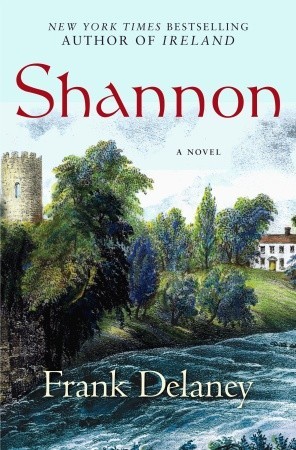
Shannon, by Frank Delaney *****

 shannon

Frank Delaney has done it again.

There are some writers that have such a gift for spinning a compelling tale while seamlessly weaving in subplots that the rest of us can but applaud. He’s clearly one of them. I was spellbound by his Ireland, but there are a lot of people with one remarkable book in them. I was surprised again, then, at how good Tipperary was. Now this.

Everything I’ve read by Delaney thus far (including Shannon) is set in some part of Ireland for most of the novel. He favors the period when the whole world is changing–World War I is either imminent, taking place, or we’re in the aftermath; Ireland struggles for her own freedom, and he doesn’t gloss over the errors and tragedies that go with this struggle–and I mentally note that it’s also the period of the Russian Revolution. He’s done a whole lot of research so that he can provide his novels with a rich, accurate background. His target audience is one with an interest in Irish history, but he is never dry, never lapses into the lecture-like style that I’ve seen in some writers who are specialists in a given academic area use when the narrative aims at their area of expertise. It’s riveting clean through. The people, whatever their station in life (we have several members of the Catholic clergy and a nurse foremost) are individuals first.

If you have a strong anti-Catholic bias, you may not like this story. There are some Catholic bad guys, for sure, though they aren’t two-dimensional ones, but you won’t see the pedophiles that have been the sole focus of the mainstream US press where Catholics are concerned. Rather, there are those who are corrupt ladder-climbers; there’s (oh my god) an assassin; and the protagonist, Robert Shannon, who is recovering from PTSD, then known as “shell shock”.

Altogether, I found it nearly magical. I will read anything that Delaney writes at this point; he’s that good!

The Handsome Man’s DeLuxe Cafe, by Alexander McCall Smith *****

thehandsomemansWithin the genre of the cozy mystery, this long-running series by Alexander McCall Smith reigns supreme. The magic is as much due to the cast of engaging secondary characters as it is to Precious Ramotswe herself. The Handsome Man’s DeLuxe Cafe is no exception. It comes out October 28; thanks to the publisher and edelweiss books for the chance to read and review it.

On the very first page, Mr. JLB Matekoni entered and I smiled. I don’t mean inwardly; I mean my face broadened into the kind of contented crease that lowers our blood pressure and would, were we cats and not people, cause us to purr. I snuggled deeper into my blankets and got ready for a splendid evening. And another. And another.

Smith creates each new entry in his series by either adding a new setting to Gabarone, where our protagonist lives and works, or by bringing in new people, and often, as here, he does both. And often he sets up two different problems, one a professional challenge for the #1 Ladies Detective Agency, and another a personal crisis for someone among the regular cast of characters. Sometimes the two dovetail neatly at the end, but he doesn’t do this all the time, lest the result become formulaic and lose its magic. And in this instance, having become momentarily guarded by a silly story that was a little over the top rather than charming (the lion story), I was therefore watching to see whether the problem regarding Mma Makutsi’s cafe would be resolved within the amnesia-client’s family.

But our writer didn’t do that. And this is why the series is so successful.

One more skillful and enjoyable protocol of Smith’s is that he introduces recurring characters very briefly, and it never jars the faithful reader who has gone through the entire series into wanting to say, “Oh, come on, come on, I know this already.” Rather, he injects it naturally into the narrative so that the familiar reader will nod happily and think, ‘Oh yes, I do remember. So dear Mma Potokwane is still at it, isn’t she? And it’s true. She does have a remarkable work ethic.’

Violet is in danger of becoming too great a stereotypic anti-hero, but it hasn’t happened yet. The author could just choose to drop her, but his habit is to continually point to the common humanity of all, and it wouldn’t surprise me if Violet were to have perhaps just one decent moment before being returned to her regular place as the exception-to-basic-goodness-among-us-all. But that is conjecture.

I read 6 to 8 books at a go, and yet, having quickly absorbed this delightful mystery, I am already anticipating the next in the series. This, ultimately, is the mark of entertaining literature.

My thanks to edelweiss review copies for the opportunity to advance-read and review this delightful story.

The Rule of the Bone, by Russell Banks *****

RuleofBoneBooks by Banks never disappoint. His writing is as harsh and beautiful as a New England winter. Rule of the Bone speaks with a social conscience that cannot be ignored or denied. The voice he uses carries credibility and authority characteristic of the seasoned master of fiction the writer has become.

This story is told in the first person. The protagonist is what those of us who work with poor kids refer to as a “throw-away”, those who don’t run away from home but are simply not welcome there anymore at an early age. Often, as is the case with the fourteen year old boy who renames himself Bone, it is a step-parent who in one way or another initiates the departure of a child who is far too young to make his own way in the world, and the birth parent who is passive and therefore complicit. Without job skills, social or interviewing skills, or any knowledge of how the social welfare system works apart from the fact that it doesn’t, he becomes a feral child, finding indoor shelter wherever he can: hiding in a custodial closet when the mall shuts down for the night; crashing with a biker gang that is dangerous and unpredictable but who tolerate his presence most days because he can find weed for them; and in an abandoned school bus.

Twice he tries to initiate a reconciliation with his mother and stepfather; twice he is spurned. His grandmother is no better. It is appalling, but also realistic. These kids are out there, and I am glad Banks put that fact in front of us. The protagonist points out that once he has been busted and released into the custody of his parents with the stipulation that he remain with them, and once they tell him to get gone (again), his way out of jail is to avoid parents, cops, and school, because each one of them will call another one of them in an effort to pass him to someone else. And the horrible truth is that he is right.

Our unlikely hero realizes that in his quest for survival, he has never actually learned what is right and wrong. None of his parents (mother, departed father, stepfather) has demonstrated any sort of consistent moral code, and he is cast adrift not only materially, but also in terms of his emotional growth and the development of his character. He finds it in a really unlikely place.

Like nearly everything Banks writes, Rule of the Bone is deeply disturbing in places and full of loss and anger. I have struggled with this when reading other books by this writer. Disturbing books are all the more disturbing when they are so well done that we cannot look away.

To other readers who have noted this (in reference to some of the other reviews I have read), I would advise that if you can’t take it, don’t read it. There’s no law saying you have to read this writer. Particularly if you have recently dealt with loss and are tender around the edges, go find another novelist. If you need a feel-good book, there are plenty of them out there.

For myself, I resolved my conflict of wanting to read one of America’s finest novelists versus wanting to avoid the abyss of depression they often inspire, by reading multiple books at a time. I move from Banks, to a nonfiction title, to a cozy feel good title, then back to Banks. Of course, there comes a point in the plot where Rule of the Bone can’t be put down, which is one more way we know it’s excellent literature. At that point, it’s time to dive in and finish.

I’m glad I chose to return to this man’s work. The tone is bleak, and yet in this case, it also carries with it a poignant sense of hope and yearning. Highly recommended.

The Honk and Holler Opening Soon, by Billie Letts ****

The Honk and HollerThis is a bittersweet story about quirky yet ordinary characters in a little out-of-the-way place in Oklahoma. The point of view swings from one perspective to another. MollyO is protective of the cafe’s owner, a complicated man who was rendered paraplegic in Vietnam. She longs for her daughter, Brenda, a runaway, to come home and stay. Bui is living covertly in a nearby church. He comes to work at the cafe. I watched this character unfold particularly carefully. I live in an area where there are a lot of Vietnamese immigrants, and I watched for stereotyping or assumptions on the part of the writer. In the end, though, Bui rang true to me, an endearingly familiar sounding man with a really good heart. And then the list continues.

I don’t like small towns; I prefer large northern metropolitan cities. I do like to read novels featuring working class protagonists, though, and I think it was this feature, believably rendered without undue sentimentality, that worked for me. I have older family members who lived in Oklahoma before I was born, and this novel evoked a strong pull on them, a sense of place nearly tangible to them.

If four and a half stars were possible, I’d give them here. Read it if you enjoy good fiction with strongly drawn characters.