I Am Crying All Inside and Other Stories: The Complete Short Fiction of Clifford D. Simak*****

iamcryingallinsideClifford D. Simak is a science fiction legend. Before his 55-year career was done, he earned 3 Hugo Awards, the Nebula Award, and was named Grand Master by the Science Fiction and Fantasy Writers of America. I scored big when Open Road Media and Net Galley invited me to read and review this wonderful collection. It is available for purchase digitally now, and will be released October 20.
The fact is, I miss old-school science fiction writing, the fun stuff that is the product of a fertile imagination but requires no knowledge of programming code or other technological wizardry. What’s more, the quality offered in this collection is not only excellent, but evenly so. Common themes tend toward robots with complex feelings, sentient plants, and time travel, but there is no sense of sameness otherwise. Sometimes we are on a far-flung planet; sometimes we are back on planet Earth after it’s been wrecked to where anyone with any gumption has up and left, with only sorry-ass losers remaining. The common factor among all of these stories, in fact, is Simak’s ability to engage the reader.
Given the strangeness of the worlds science fiction and fantasy writers create, one would expect to feel intellectually curious about what the writer has cooked up, but what astonishes me every time I read really strong science fiction is the way the writer manages to work our emotions, causing a lump to form in one’s throat over something that could not possibly happen. By creating an alien setting in which a human, or human-like thought and emotion is present, a sneaking affection is created, and before you know it, there you are practically weeping over the poignant scenario that’s before you. The hook isn’t sentimental or maudlin, and that is why it is so successful. The subtlety is powerful, and we are connected to characters that not only don’t exist, but could never exist in the way the author has laid it out. And so, if Stephen King is drawn to things that go bump in the dark and binds our emotions to oddities in that genre, so has Simak laid our feelings bare using distant, fictional moons in solar systems that don’t exist. It’s a hell of a gift.
Every time I read a short story and decided that I had a new favorite, I looked back over the earlier ones—they were all so strong!—and then read on, and found myself uncharacteristically unable to choose one over the others. There isn’t a weak one in the batch; all are outstanding.
At one point I was ready to knock half a star off over the one-time use of the “N” word in one short story written in the first half of the twentieth century, but then there were all sorts of references to racial purity within the context of the story (alien races) that convinced me that he had an agenda when he did so, and not necessarily a bad one. If it were up to me, I’d leave the word out, but given its purpose here, one could argue for its inclusion.
But it’s worth being warned that it’s there. Nobody likes that kind of surprise.
The only other bad news here is that Simak is dead.
The good news is that over his prodigious career, he wrote enough material to fill 13 more collections beside this one, and if permitted, I will read and review every single one of them.
Highly recommended to anyone that loves old school sci fi.

The Eight, by Katherine Neville****

theeight Katherine Neville is one of those people that does everything well. She’s been a model, a computer wiz, a photographer, and she’s also an impressive author. I was lucky enough to read this first in the series since Open Road Integrated Media has just re- published it digitally. Thank you to them, and to Net Galley, for permitting me a free copy in exchange for my review. This book was released Tuesday, and is for sale now.

Our protagonist, Cat Velis, lives in New York; the time is 1970, at the height of the Vietnam War. Cat lives in New York City and works for Con Edison. Since she has refused to do something illegal for her boss, who is engaged in some sidelines back-scratching with a client, she is being shipped off to Algeria. Before she can pack, however, a fortune teller warns her that she is in great danger. She scoffs, but less than a week and two corpses later, her irritation has turned to fear. She calls in her mentor, a mysterious man that seems to travel Gandalf-like, practically appearing in thin air. He comes and talks to her in much the same way as the fortune teller did, but he also tells her that she has to go to Algeria and fulfill her destiny.

Transposed with this story is a tale that takes place around the time of the French Revolution. The Montglane Abbey is closing its doors because of the Bill of Seizure. Buried beneath its floor for centuries was a legendary chess set whose worth is beyond anyone’s wildest dreams. Composed of huge gems, gold, and silver, it is all the more valuable for a formula that its individual parts, when put together, have etched on their undersides. Is it a secret weapon? Is it a supernatural curse that is activated when the pieces are together? The Abbess only knows that she must separate the pieces and get them out of France, along with herself. She takes herself to Russia, to her closest friend, who is Catherine the Great. From there, the parallel story to Cat’s unfurls itself. Eventually the two part of the story come together.

Here’s a clip of the author discussing her novel, and the life experiences that shaped it:

This is ordinarily not the sort of historical fiction that attracts me; there are really well-developed, highly sympathetic royal characters, and then there are the savage, dirty masses. It grates. While it’s true that the French working class and peasantry really did tear royals from their splendid carriages and either kill them on the spot or take them off to the Jacobins to be killed later, Neville paints the royals in such an idealized fashion that the reader, if not already informed, might wonder indeed just why the masses would do such a thing? Unless, of course, it’s in their inferior DNA. I ground my teeth and read on.

Add a reference to the Freemasons and the number 666, and I was ready to hurl my kindle across the room! But I had an obligation to the publisher, and so I persevered, and I am glad I did, because what Neville does with the plot is quite cunning. If one were going to chart the book into a grid, it would correlate with the grid that is part of the story itself. And if this makes no sense whatsoever to you, all I can tell you is that you have to read the book and watch closely. Watch for the patterns; this is actually slick as hell! And so in the end, I was glad I had seen it through. Though maybe more famous people are worked into one novel than is natural, the elegance of the plot itself (and the chess detail), rather than historical veracity or character development, is what sustains this substantial work.

The reader’s understanding of this hyper-literate story will be aided by knowledge of chess. In fact, I found myself taking a few notes, though I haven’t played in years! Those unschooled in chess can also enjoy the book, but I do not recommend this book to anyone for whom English is not the mother tongue. The vocabulary and historical references will be so much work for you that you won’t enjoy it.

But I did.

Recommended to those that appreciate symmetry and precision in a novel.

Everybody Rise: a Novel, by Stephanie Clifford****

everybodyriseAll Evelyn has ever wanted is to please her mother; all Barbara, Evelyn’s mother, has ever wanted is for Evelyn to be accepted into elite Eastern society. Barbara doesn’t care whether Evelyn is well read, but she had sure as hell better know which spoon to use, and what to wear to every occasion…and most of all, she had better know “everybody who’s anybody”. In other words, Clifford’s skewer of high society hits the mark in ways both wry and hilarious. This terribly amusing little tale goes on sale August 18—oh wait, was my rhyme a trifle tacky? Anyway, you can buy it soon, or you can order it in advance, but I was lucky and got a copy free from Net Galley and St. Martin’s Press for this humble review. Thank you to both of them.

Evelyn’s parents want different things, and it’s just her luck—she is their only child, so all their expectations fall on her shoulders. Her father, an attorney with egalitarian notions and a folksy Southern manner, is often out of town, working for the clients he represents and sticking it to the big pharmaceutical companies. So most of the time, it’s Evelyn and her mother. And her mother is relentless in her need for social stature.

Evelyn is sent to Sheffield Boarding School, which should provide some relief, but her mother obtains a copy of the student directory, and has tracked the social value of every child there. Evelyn is friends with Charlotte, a young woman of high ideals and great loyalty, but she has pigtails, a social no-no, and the wrong damn family. Evelyn is conflicted, because she is close to Charlotte, but her mother wants her to drop her. Her mother has chosen the people Evelyn should cultivate. Imagine!

Over the course of time, Evelyn manages to worm her way into the upper reaches of the social echelon, but she can’t financially afford the lifestyle she is expected to lead. And worst of all, she comes to realize, once she is rubbing elbows with the cream of society, that her mother is actually pretty embarrassing. Her mother does not have as much upper-crust social sense as she thinks she does.

She’d better avoid her.

You may think I have spoiled the surprises, but you haven’t heard the half of it. There are so many choice bits along the way, and then the ending is something else entirely. At times I felt that I was watching a train wreck I was incapable of stopping, but the thing is, I really liked watching it, and the ending, which seems obvious as it approaches, is a surprise after all.

If you’re heading for the beach this August, or just need entertainment for a good long holiday weekend with the air conditioner cranked and a nice drink ready to hand, this is a gift you should get for yourself. It’s absorbing and vastly entertaining.

Off and Running, by Philip Reed****

offandrunningOff and Running is a comic caper set around Y2K. Jack is a writer looking for his lucky break; Walt is an old man, a beloved American icon who hasn’t published a memoir yet. Garrett is Walt’s ill-begotten, bad-tempered adult son, the worst celebrity brat imaginable. Reed tosses them all into his literary blender and what comes out is both hilarious and at times, genuinely suspenseful as well. Thank you once more to Brash Books and Net Galley for permitting me a sneak peek; this amusing tale will be for sale in August.

Jack has had one project after another not work out. His wife, Sarah, has had it with him, and wants him to go out and get a real job. Every day she schleps out to her full time job, coming home tired and ill tempered, and she doesn’t want to hear anymore about how Jack’s latest book proposal will make money for sure. She has a change of heart when Jack’s agent sends him out to see the venerated, universally loved comedian, Walt Stuckey. Walt is choosey about who he sees and what he talks about, but over time, Jack builds a genuine rapport with him. They become friends, and Jack is accepted as Walt’s biographer. Just as Walt invites Jack and Sarah to come stay the weekend with him and his girlfriend, Mary, the unthinkable happens: Walt has a stroke. The son-from-hell Walt loves but has been unable to develop a positive relationship with takes charge. Walt is held virtually a prisoner, and it soon becomes clear that Garrett does not really want Walt to recover. He wants Walt’s financial empire, and he will be the executor of Walt’s estate when he goes.

So the first thing Garrett does is to isolate Walt. Since his own memoir is the one thing Walt is truly excited about and could give him reason to live, Garrett uses his power-of-attorney privilege to fire Jack and cancel the memoir. Mary isn’t having any of it, and once he thinks about it, neither is Jack. Jack is determined to finish this book. It’s what Walt wants, too. And most of all, Jack wants to know why the reference to Bebe Rebozo in Walt’s comedy routine caused his over the top hit comedy show, which was “funnier ‘n hell”, to be cancelled without a moment’s warning. He’ll find out, or die trying.

So Jack and Mary launch a rescue mission to free Walt from his rotten son-turned-captor, and the result is alternately suspenseful and hilarious.

There are several events in the book that strain credulity, but it’s okay, because this is not literary fiction; this is a caper. I couldn’t wait to see how it ended, and I was sorry when it did. A considerable portion of the story is set in Death Valley, and the heat, the inescapable sun, the gritty sand were all so palpable that I nearly resolved never to leave my cool damp domicile again.

We all need something ridiculous in our lives now and then. Humor relaxes us and puts our own worries into perspective. Do yourself a favor and order this book when it comes out digitally August 4. Then, you’ll be off and running!

A Grown-up Kind of Pretty: A Novel, by Joshilyn Jackson ****

agrownupkindofprettyMosey Slocumb’s mother, Liza, has had a stroke. It’s a good thing both of them live with Big. Big is the name given Ginny, mother of Liza, grandmother of Mosey. The ladies in the family tend to give birth early and unexpectedly; both Ginny and Liza had babies at fifteen. In the inner city, this happens so often that most folks don’t care, but in their tiny southern town, the judgments fall hard and fast. They are not welcome in the homes of their other relatives, nor even at church. They are “the ones who had been put out like bad cats. Outside, all Liza and I could hope for was the dark, ass end of Jesus,” according to Ginny.

The town does not only judge sins that have taken place; it also anticipates sin. Mosey is fifteen now. She can feel the eyes of her classmates, her teachers, and even Big and Liza keep her under close scrutiny. Although she is a virgin, she has taken to using home pregnancy tests…just in case.

All of this changes with the discovery of the silver box buried beneath the willow tree.

All that Ginny, Liza, and Mosey have, really, is each other, and when their family is threatened, all of them–even poor, damaged Liza–come out swinging.

This is a fun book once the early part is past, or at least that was my take on it. Jackson is a courageous writer, but some may find her style too abrasive to enjoy. She takes conventional religion apart, no doubt about it, and whereas I was fine with this, those that enjoy a family-like church relationship may easily be offended. So then, this is for the more leftward-leaning among us, yes?

Yes but no. There were several passages at the start of the book that also sounded a lot like life-begins-at-conception, and abortion-is-murder. It wasn’t said, but it was implied strongly enough to raise my hackles. Had I not already really enjoyed this writer’s later work (Between, Georgia), I think I might have slammed the book shut and tossed it onto the yard sale pile.

Even the most brilliant author must make sure that when she takes a stand, or two, or three, she has an audience left after those she has offended fall by the wayside.

That much said, I really enjoyed this story once I was past the initial rough patch. An engaging story, mostly, about three generations of women who stand by one another through whatever comes.

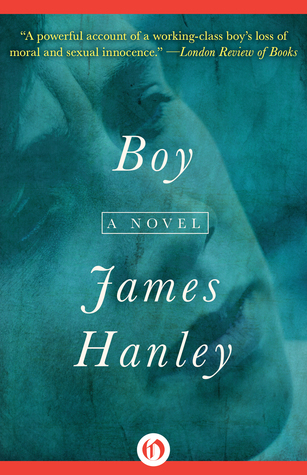
Boy: A Novel, by James Hanley ***-****

boy3.49 stars, and my thanks go to Net Galley and Open Road Integrated Media for the DRC. The digital version of this story became available yesterday, and you can get a copy of your own if you’d like.

Boy, a tragic story that reads like a hybrid between Dickens and Melville, was originally published in 1930, and ran into all sorts of censorship. There are passages that contain sex that would not even be considered erotica now, since they avoid much specificity, but for the bourgeoisie of that time period, it was way too much. The censorship fight was where my interest came from, because I don’t generally seek out tragedy. I wanted to see what all the fuss was about. Any time anyone tries to keep the printed word from being accessible, my curiosity is piqued.

Arthur Fearon is an academically talented student whose parents make him leave school at thirteen even though at the time, the legal drop-out age in Britain is fourteen. His father has been on strike and had no income for awhile, and is bad at bringing his paycheck home when he has one. An only child, his parents both look to Arthur to become the family bread winner. His father finds him a position on the docks, and Arthur hates it so much that he stows away on board a ship, with the notion that he will emigrate away from England, maybe land in the United States and get a fresh start. Young as he is,it never occurs to him to learn which ship is going where. The ship he hides on isn’t even headed that way.

Issues of child abuse and in particular the way this youngster is turned away by every adult from whom he seeks help are hard on the eyes and hard on the heart.

The writing style is one that may not work for a lot of people in 2015. This was written in more or less the same era as Upton Sinclair’s The Jungle, and it has a lot of stylistic similarities. Inner narratives run on for much longer than one might expect, because the reader of 80 years ago had a much greater attention span. There is a fair amount of repetition that was considered acceptable then but might not be appreciated by today’s readers.

One thing I can tell you for sure: if you are feeling sorry for yourself, this book will make all your own problems look like nothing at all. Just right for the reader that wants a good three-hanky novel.

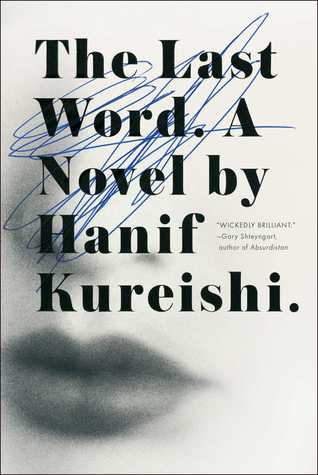
The Last Word: A Novel, by Hanif Kureishi *****

thelastwordKureishi is a writer of considerable renown. Here he has created a story that is not only savagely funny, but the closest I have seen to technically perfect. A million thanks to Net Galley and Scriber for the DRC.

This wonderful gem will be available for purchase March 10.

Kureishi chose the title partially because he had planned it to be his final novel; to see what he has to say about his book, go here:

That said, there are several other spins you could put on this title. I don’t want to blow the ending, but the title is much more wry than Kureishi lets on, although he does point out in the above interview that it’s partly about the awkward nature of the biographer’s work, and how one might feel about “…having your story told back to you by an idiot.”

Harry is either a biographer or a parasite, depending upon one’s point of view. He has been sent out to stay as a guest in Mamoon’s secluded home out in the back of beyond, to interview him and those who love him, those who hate him, and anybody else who has any good dirt on him. Says Rob, his publisher: “Extreme biography. That is your job.” The stakes are high: if Harry should fail on his mission, he will be doomed to the halls of academia. He could even be forced to teach creative writing.

Dear god; the humanity!

But Harry is up for the job. He needs the money; he wants a career. And when one considers the number of women Mamoon has left unhappy, it would seem that there is a great deal of material to be mined. So nervous though he is, he rolls up his sleeves and tiptoes out to conduct interviews and write some trash.

For awhile the plot sort of hums along, and then it appears to wander. If you are foolish enough to stop halfway through the book, you may come away unimpressed.

But Mamoon is not merely the passively uncooperative subject he appears to be. The man is sly as hell. In the end, what will each of them become, and more to the point, who will do a hatchet job on whom?

As the ending unfurled I could only drop my jaw in amazement. It was so damn smooth! How did Kureishi turn that whole thing around that way? I don’t want to ruin it for you, so I will only tell you to read this book when it becomes available in March, and prepare to bow at the feet of the master. He’s somewhere on that highly literary “sinking rock” known as Britain, and he’s a better writer than you are. Well, probably.

The Refuge, by Sue Henry ***-****

therefugeSue Henry has two series. One is about Iditarod participant Jessie Arnold. The other is about Maxie McNabb, a widow who travels during Alaska’s coldest season and sometimes at other times also, usually in her Winnebago, and usually in the company of her miniature dachshund, Stretch. As she makes her way around the USA, the reader picks up all sorts of minutiae about the culture, history, flora and fauna of various places in the United States. For those of us who are curious yet sedentary, it’s an added benefit to reading the story, and she works her discoveries in as a natural part of what her character learns, so it doesn’t have the false, abrupt quality of (my pet peeve among cozy mysteries) dropping recipes into stories. *Shudder!* The Refuge, which I obtained free of cost at the local library to lighten up an otherwise heavy-duty reading load, is a Maxie and Stretch book, the third in the series.

I was disappointed to see that Stretch was left out of this book, except for a brief bit at the end. Maxie goes to Hawaii to assist a friend-of-a-friend who is attempting to move herself and her belongings back to Alaska, her original home, from Hawaii. She is laid up with injuries and has two weeks to get out of her rented home. Since Maxie didn’t especially want to go to Hawaii, it seemed odd she would do this for someone that wasn’t a close friend, but she does so, and then finds herself stalked by a strange man, who becomes more menacing as time goes by.

The good thing about this story is that the tone is congenial and the pacing is about right for bedtime. It is interesting yet not so heart-stopping, as some thrillers are, as to affect one’s dreams or ability to go to sleep once the book is set aside.

Once her obligation to this irritating, helpless-behaving woman is dispatched, Maxie has a few days remaining before she can return to Alaska. (Once again, one cannot help wondering, since she yearns to return to her own home and hound, why she doesn’t simply go to the airport and inquire about an earlier flight, but whatever.) She decides to rent a camper and see more of the Big Island, and her sight-seeing adventures include a place known as The Refuge. Historically this was a place built behind a wall of “lava rock” and was considered a sacred place which, if a criminal guilty of a capital crime could reach it without being apprehended, he was considered safe and permitted to live out his days. So it was rather a clever place to have the criminals follow Maxie and her travel guide and companion, and for the showdown to unfold.

As you can probably tell, I would not pay full price for one of these books, and I won’t read the other series after having tried it once and been bored in the extreme by Iditarod details. (If you think this might be interesting try the books, but I have to say that I read one with the same notion and came away glazed.)

Nevertheless, when a low key interlude is needed, Maxie and Stretch (when he is included) fit the bill, at least for me.

Recommended for cozy mystery fans that are ready to buy the premise in return for a soothing bedtime story.

The 19th Wife, by David Ebershoff ****

19thwifeEbershoff is a strong story teller. In The 19th Wife, he weaves the stories of polygamy in and out of one another, often to hilarious result, and at other times thought provoking.

Ann Eliza Young was the 19th wife, at least according to some accounts, of Brigham Young, famous pioneer leader of The Church of Jesus Christ Latter Day Saints, referred to by members as LDS, and to most others as Mormons. Ann Eliza was a rebel, and she left Young, refusing to be stuck in a polygamous marriage. Ebershoff has used this real-life bit of history to create a fictional journal for her and other historical figures that played a role in her life, some of whom were real, and others who weren’t.

The formal prose that he uses in spinning her first person narrative, and that of others in her story, creates a startling juxtaposition with his present-day characters, chief among them Jordan Scott, one of the so-called lost boys who have been booted out of a current day polygamous sect in order to scale down the competition for young, nubile brides so that the old farts can have a greater supply of women. But the geezers didn’t really have to worry about Jordan taking their ladies, since he is gay. So honey, go from the formal speech of religious people in the 19th century, to that of a gay Californian in the year Y2K, and well there you go. The leaps that Habershoff depicts between their speech mannerisms almost have to make you laugh out loud.

I accidentally read this book twice, once around the time it came out, and then, having forgotten I’d already read it and given it away, I got another copy from the library and was almost done by the time deja vu struck.

Both times I read it (oh yes, I remember now) the story and dialogue were drop-dead funny at first, but by the end I just wanted to be done. Since I have a greater than average attention span and am generally fine with a really long book, I took a day to think about why the joy went out of this juicy novel toward the end.

There are two reasons, I think (though it is still a really good tale) that it loses steam. One is that Ebershoff goes from building situations for their hilarity, to trying to solve his character’s problems in a way that makes sense. My own opinion is that if he was starting with chaos–and the set-up is that Jordan’s mother has been framed for murdering his father, and he sets out to Utah in order to rescue her–then he should have stuck with chaos. It’s all outrageous in the beginning, but toward the end we seem to be veering toward a reasonable ending, at least in many ways, and a moral to the story that isn’t needed and is almost out of place.

The other reason is that the toxic waste that is polygamy isn’t something I want to steep in for very long. It’s a little like a trashy tabloid that momentarily excites our curiosity but leaves us feeling a little soiled if we flip through it for too long. For me, then, had this been wrapped up more quickly, the pacing would not have been lost and I could have emerged laughing as hard at the end as I was at the get-go.

All told: a fun romp that could have been even better.

The Mermaid Chair, by Sue Monk Kidd *****

themermaidchairJessie Sullivan has a twenty-year itch. She’s stifled, confined, and irritated by her husband, Hugh, a psychiatrist whose professional knowledge makes him automatically correct in any difference of opinion. When the phone call comes telling them that her mother has deliberately chopped off her own index finger, Hugh tells Jessie to go, and once gone, she finds herself unwilling to return home.

Jessie tells Hugh she has to take care of her mother, but the truth is that she has to take care of herself. And the other truth is that she has fallen madly, deeply in love with a monk who lives at the friary next door. And it’s mutual.

Beneath the surface of her romance, old family business percolates, heats, expands. And something is about to blow.

Merely telling you the outline of the plot fails to convey the magnitude of this writer’s magic. If you have read anything else by Sue Monk Kidd, you have at least an idea of what she’s capable of. A few writers are capable of speaking to the reader as if there is no other reader; the whole thing has been written for you, and you alone. It’s deep, and it’s personal.

In my retirement years I have been devouring books the way I once did bags of chips. Sometimes a few months later I look back at the list of books I have read, and have to get online and remind myself what some of them were even about.

Yet there are others that strike a chord so deep and true that years, decades may go by and I’ll still remember them almost as if I had just read them. And this is one of those; I know it already. I actually stopped breathing a few times, I was so struck by her prose.

It’s possible that this may appeal most to middle aged women and those who are older, since that is the gender and stage of life of the protagonist. Yet in some ways such labeling is unfair, because women often read and are spellbound by novels whose chief protagonist is male, so it seems as if the reverse should be true sometimes. All I know for sure is that it really worked for me.

My copy came from the local library, but if I had paid full jacket price for this little treasure, it would have been worth every penny.