Best Books of 2016: General Fiction

It’s not even a contest.

smallgreatthings

Enter a caption

Small Great Things, by Jodi Picoult*****

The Roanoke Girls, by Amy Engel*****

theroanokegirlsAmy Engel makes her debut as a writer of adult fiction with this title, having begun her career writing fiction for young adults. The Roanoke Girls is smoking hot, a barn burner of a book, diving into some of society’s deepest taboos and yanking them from the shadows into the bright rays of Kansas sunshine, where the story is set, for us to have a look at them. It’s not available to the public until March 7, 2017, and frankly I don’t know how you are going to wait that long. I received a DRC for this title from Net Galley and Crown Publishing for the purpose of a review.

Lane grows up in New York City, raised by a mother that shows no sign of warmth or affection, a woman that seems to either cry or sleepwalk through most hours of most days. When she hangs herself, Lane bitterly wonders what took her so long. But then a surprise comes with the social worker assigned to her case. It seems there are grandparents in Kansas, who not only are willing to have Lane, but that actually want her.

Soon Lane finds herself being driven up the private drive to Roanoke, the family manse, a rambling, welcoming hodgepodge of a house, complete with a same-age cousin waving with manic joy from the front porch. Allegra is spoiled, and now Lane will have all the same luxuries. The ostensible farm on which they live is more of a gentleman’s farm, as it happens; the real money comes from oil. And so Lane, who has scraped for every scrap of clothing and food alongside her struggling mother for 16 years, suddenly has the whole world at her beck and call. Allegra takes her to their grandfather’s study and shows her where all the credit cards are kept, and she assures her this is not something they are sneaking or stealing; it is assumed that if they want something, they can buy it.

It seems almost too good to be true…and it is.

There is so much simmering just below the surface, unspoken but thick and almost tangible. Take, for example, the portraits of the Roanoke girls that have gone before them, whose photographs line a main hallway. The collection begins with Grandfather’s sisters, continues with their daughters, the mothers and aunts of Lane and Allegra. What has become of all of them? Allegra explains:

“Roanoke girls never last long around here…In the end, we either run or we die.”

Lane’s picture isn’t included among those in the hallway, and she isn’t sure she wants it there. And as time goes by and the contours of the family’s pathology become clearer, Lane decides it’s time to save herself, and she hits the road, covering her tracks to the best of her ability. She stays away until ten years later, when her phone rings. Her grandfather tells her that Allegra has vanished; they need Lane to “come home” to help the family search for her.

Lane’s interaction with her grandfather is mesmerizing. When he calls her with the news of Allegra’s disappearance, the first thing she asks is how he got her number. Yet once she is back in the Roanoke house, she recognizes that

“…behind the secrets and the horrible truth, under the shame and anger that beat like a heart, there still lives a terrible kind of love.”

The fascinating, intimate narrative Engel weaves is a thing that can’t be taught. There’s no degree, no series of workshops that gives a voice such clear authority. She plays out the story’s thread in careful increments, and the bone-c hilling tone is heightened rather than lessened by the fact that we have a very good idea of exactly what happened to Allegra. I know whodunit halfway through the book, but it doesn’t matter. The author binds me to Lane’s story in a way that is completely undeniable, and I have to see this thing through with her. Toward the end of the book, instead of commenting to myself about aspects of the book or particularly compelling passages to quote, I’m engaging with the text itself. More than once my notebook simply says, “No.”

The reader should know that there are triggers all over the place. Those that are in a sensitive place may want to have someone else read the book first and tell you whether they recommend it to you. But for those that want a chiller of a mystery, and for those that care about women and the ways that society turns people into products for consumption, this is a must read. Or you could just read it because it’s brilliant, and no one else is writing anything like it.

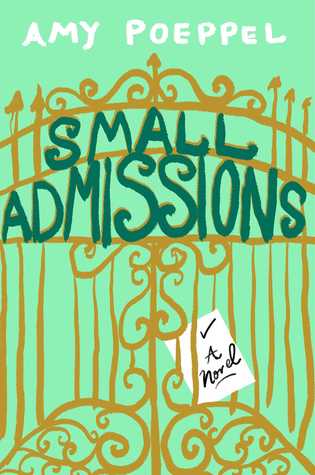
Small Admissions, by Amy Poeppel*****

smalladmissionsI received an advance reader’s copy of this darkly amusing novel from Net Galley and Atria Books. It’s funny as hell, and even more amusing to teachers, school counselors, and others that have dealt with high maintenance parents and the aura of entitlement they carry with them. I rate this title 4.5 stars and round upward.  It comes out December 27, 2016, just in time to chase away your post-holiday depression.

I sat on this book for more than three months, which is a rare thing for me.  I kept starting it, not liking it, and deciding to set it aside and look again with fresh eyes later. Finally November came, and I realized the book was not going to change; I’d given my word to the publisher I’d review it; it was time to suck it up and get the job done. And this is a little ironic all by itself, since that’s the position in which our protagonist found herself, but more on that in a minute.

The issue with the first part of the book is that it reads like a very lengthy introduction, steeped in character introduction and overlong inner narrative. After I had read—and loved—the rest of the book, I went back and reread that 15%. Was it just me? What was wrong with it? And once I had read the book and become familiar with all of the characters, it seemed perfectly fine. In fact, it seemed a lot like the voice-over at the beginning of a movie. Then I read the author’s biography, and discovered that this novel was first written as a play.

Suddenly, it all made sense.

Our protagonist is Kate, and she’s come undone. Her French boyfriend has dumped her:

“When he’d encouraged Kate to follow her heart, he hadn’t meant she should follow it to Paris.”

Meanwhile, upon departure she’s left her position at NYU.  She was studying anthropology, and now she isn’t, and her family doesn’t know what to do about it. Enter Angela, her sister, who moves heaven and Earth in order to get Kate’s life going again; once Kate’s out of the woods, Angela can’t stop maneuvering and controlling. She’s good at being a white knight, and she can’t give it up. We have Vicki and Chloe, her friends from college, and the old boyfriend from France lurking offstage.

The fun commences when Kate gets a job in the admissions department of a small, private secondary school. She’s misrepresented her skill set to get it, but she’s determined to give it a try:

“Kate viewed Hudson Day as an unknown culture that required her exploration.”

It’s time to start interviewing and selecting students, managing interviews with demanding, sometimes aggressive parents. I’ve taught honors students in a public secondary school, and I thought my experience took fortitude; Kate’s experience was similar to my own, but on steroids.

There are hilariously dysfunctional parents, kids whose folks don’t have a clue what they can do and what they can’t, and in the midst of it all, relationships among Kate’s nearest and dearest become unstuck and reconfigured in ways that mirror those Kate works with, and even Kate herself. I can’t tell you anymore, because it would ruin it for you, but this snarky romp is not to be missed. It’s cunning, wickedly bold humor at its finest.

Earth for Inspiration and Other Stories, by Clifford D. Simak*****

earthforinspirationClifford D. Simak wrote for decades during the mid-twentieth century.  His close friend, David W. Wixon, has undertaken, with Simak’s approval in his declining years, to collect all of the stories that were published in various magazines and anthologies beginning in the 1930’s and ending before the digital age was off the ground. This one is volume 9, and it’s an interesting hodgepodge of the very best—which is most of it—and the very worst, which is just two stories. Needless to say, I thought a lot about how I should rate such a collection.

Finally, I decided that price would be the deciding factor. If it was going to set you back twenty or thirty bucks, then I’d have to cut it down the middle and call it three stars, which would be sad but fair. However, I logged onto the big A and found it’s sold digitally for six bucks. At this price, you’re paying a buck each for six absolutely stellar short stories; there are three more good ones thrown in; and you can afford to skip the two stinkers. Given that factor, I’m rating this 4.5 stars, with just half a star gone for the two missable stories, which I’ll talk about in a moment.

Thank you Net Galley and Open Road Media for the DRC, the fifth Simak collection I have received from them. I sat on this one for a long time because I’d been reading a lot of his work, and was beginning to get grumpy at the similarities among some of them. Just how many different characters can a writer name “Doc” and remain credible? But then I realized that when Simak submitted his stories to various periodicals, names were about the least important aspect of his work, because he wrote them never dreaming that his writing would be important enough to appear in an entire series, back to back. Who knew he would become so successful?

During the 1940s and 1950s, as Wixon points out, science fiction was barely off the ground—pun intended—and Westerns were massively in style. I guess you could say they were the zombie apocalypse of their time; if a writer wanted to pay his rent without having to work a day job, he had to write some westerns. And since Wixon is publishing all of Simak’s stories rather than the best-of, he has to insert the few losers somewhere also.

So let’s just get the bad stuff over with so I can tell you what’s great here. The bad ones are sandwiched midway through the collection and appropriately flanked by good writing before and after. “Hellhound of the Cosmos” is bad enough that Wixon’s preface—a brief paragraph appearing before each story—says he “…will not try to excuse this story’s failings” by pointing out that Simak wrote it in 1931, at the very get-go of his career. Fine; don’t. But it’s a really dumb story, and I’d hate to see you use it as a yardstick by which to measure this man, who would become a Grand Master of sci fi. Read it or skip it, but this is not the story I recommend.

Further along we have “Good Nesters Are Dead Nesters”. This one is actively offensive, and if it were written today, I might well shoot down the entire collection because of it. But I know from the things I heard during my childhood that the language used here, while truly offensive, was also commonplace back then. The US was a lot whiter; the interstate was a new thing; satellite communication wasn’t yet dreamed of. People lived in isolated areas and got stupid ideas about what other people were like, largely due to stereotypes promoted in the news, on radio, and on black and white television.

So although I—married to an Asian immigrant—am as pissed as anyone about the singsong caricature of the Chinese cook, I also know this was a widely accepted way to regard people from China and Japan. As if that’s not terrible enough, a disabled person is referred to as a helpless, “twisted cripple”. Ohhh, no thank you. As you can imagine, I quickly gave myself permission to make a note and then skim till I reached the next story.

However, the stories that flank the collection, starting with the title story and ending with “Full Cycle”, are outstanding.  The latter is written in the 1950s, and reflects both the reality of a pair of Atomic bombs having been dropped in Japan eleven years before it was written, as well as the anti-communist hysteria so prevalent in the news. The idea is that all cities are decentralized, because a bomb might be dropped on a large urban center, but the USA is a very big place, and so small, mobile communities, all of them having traded their houses for trailers, is now the way Americans live. It’s very cleverly put together conceptually, and Amby, the protagonist, is so well drawn that at times, I wanted to weep for him.

“Honorable Opponent” has to do with a US planetary colony that has just been defeated by another planet’s military. The result took me entirely by surprise, and I think I’ll remember this story after I’ve read other science fiction by other authors. The same is true of “Carbon Copy”, a fine tale combining  science fiction, ruthless capitalism, and brilliant imagination. “Desertion” is another stellar story. If you want to read science fiction that makes your dreams sweet, read this one at bedtime. “Golden Bugs” is equally clever.

So for the price you pay, there is too much good writing here to turn your back on. My records tell me that over time I have read over 100 short story collections, which is about 90 more than I ever expected to read, and yet this one is outstanding among them. For those that love old school science fiction, this one, with the caveats mentioned, is highly recommended, and it’s available now.

Orphans of the Carnival, by Carol Birch****

“Julia hated thinking about money. There’d always been enough. Other people provided, but she had to work. She could sweep and wash and light fires, or she could sing and dance and let them look. Singing and dancing won all, hands down.”  orphansofthecarnival

Thank you to Net Galley and Doubleday for the DRC, which I received in exchange for this honest review. The book comes out Tuesday, November 8.

Orphans of the Carnival is a fictionalized account of the life of Julia Pastrana, a Paiute woman born in Latin America in the nineteenth century, a time in history when people born with serious birth defects have no surgical alternatives, and are viewed by many as having been cursed by God; often they find themselves, as Julia does at one point, as traveling circus acts, with their physical difference providing them with a means of making a living, however degrading, during a time when there is no medical alternative and no government safety net.

Her early life is spent as a servant and nurse to an elderly relative after her mother abandons her. Given the chance to perform—and be stared at—for a wage with room, board, and transportation thrown in, she chucks her broom, chamber pot, and scrub brush and hits the road with a circus.

Part of the allure in Julia’s performance is that she begins it completely covered, with a dress, long sleeves, and a veil covering her face; she sings and dances, saving the  big moment when her veil is lifted for the end of the act. In order to make a living largely based on the need of the public to see what she looks like, she cannot go out in public or be seen outside of the show, which makes for a lonely existence. But over the course of time, her circumstances change once she places her career in the hands of a manager named Theo Lent.

There are few remaining records existing of Pastrana, and so when Birch tells this story, most of it is invented. On the one hand, she has little information to work with, but on the other hand, she is also not constricted in her storytelling by a long list of historical details to be attended to. I love the wry way in which she wraps the whole thing up, particularly with regard to Theo, who even the scant available data demonstrates was a real piece of work. I won’t give you any more than that, because there are twists and turns that I didn’t see coming, and I don’t want to ruin it for you.

There’s also an alternate narrative that takes place in the present, involving a woman named Rose, a hoarder with a mysterious background. I think the story would work just as well and perhaps better without Rose, but this is a minor aspect of the overall story, and it also doesn’t detract much if at all from the main plot.

About halfway through the book I run a Google search for an image of Pastrana, and of course, Wikipedia doesn’t let me down. I am shocked, not by how horrible she looks, but by how normal she appears. She does have more body hair than most women, but there’s skin showing through; the appellate of “bear woman” is a tremendous exaggeration. She is born with an overly extended jaw line and a second row of teeth, two separate disorders; in addition, there’s another disorder that causes the excess body hair. But the response of the crowds seems overwrought, though it is undoubtedly what happened at the time; if the public, or a part of it, didn’t see Pastrana as truly unusual, she wouldn’t have made this her livelihood, because the crowds would not have come.

Why read this book? I was initially drawn by the cover, and then again by the unusual topic. In this troubled election period, I am more than ready to escape to a completely different time and place, and to be sure, Julia’s problems make others seem miniscule.

What keeps me interested once I commence is Birch’s writing. She knows how to drive a plot forward, and when to step back from the midway craziness and insert something wry and understated to make us smile slyly. I find myself wondering where she plans to take this or that aspect of the tale, and she never disappoints.

And Every Morning the Way Home Gets Longer and Longer, by Fredrik Backman****

 “When a star fades, it takes a long time for us to realize, as long as it takes for the last of its light to reach Earth…When a brain fades it takes a long time for the body to realize.”

andeverymorningthewayhome

Frederik Backman’s new novella provides us with a philosophical yet poignant glimpse of an elderly man trying to hang onto his memories, and the love of those that must say goodbye to him inch by inch. I received my DRC from Net Galley and Random House Alibi in exchange for this honest review.  This novella will be published November 1, 2016.

They say that each generation corrects for the one before it, rendering us more like our grandparents sometimes than our parents themselves. So it is with Noah and Grandpa. Grandpa calls his grandson “Noahnoah”, because he likes his grandson’s name twice as much as anyone else’s. Sometimes Noah’s father Ted comes to see Grandpa, and when he mentions Noah, Grandpa doesn’t know who that is. Sometimes Grandpa knows everyone; sometimes he doesn’t. Sometimes he mistakes one of them for the other.

But Grandpa—who has no other name in this book, having taken on the generic persona that Western society tends to give us as we grow very old—shares a special bond with his grandson, and it is his grandson that comes to him, still, with questions about life and the universe.

Grandma is no longer living, but theirs was a happy marriage despite their dispute about God and the afterlife.  Noah says to his grandfather, “’Grandma believed in God, but you don’t. Do you still get to go to Heaven if you die?’”

Grandpa tells him, “’Only if I’m wrong.’”

The years pass. As usual, Grandpa wants to know about school, but he has forgotten that Noahnoah isn’t a student anymore; he’s become the teacher. On the other hand, school is better than ever now. And so it goes.

This story is brief, and I read it in just a couple of sittings. Despite the cover art, it isn’t necessarily a book for children.  It’s a wonderful story in that it shows us a gentle way of dealing with aging—which can be so hard to do, particularly if Alzheimer’s makes the elderly sufferer angry with no reason—and it also helps us learn to let go. For some, this might be a good grief story. For others that had to let go without being able to be with the beloved family member much in their final years, it might be painful, because the grandson and father both spend time with this man as he declines.

I can see ways in which this story might help a YA reader with not only a strong literacy level, but the ability to think abstractly, cope with Alzheimer’s or another form of dementia in an elderly relative that means a lot to them, but I would advise the parent or guardian to read it first, and then decide. There’s no sex, no profanity; just pleasure, love, joy, and aching sorrow.

Titles You’ll See Here Soon

The last time I put up a preview page, it was in the midst of household chaos, and I made the post by way of apology for not having a review to put up. I was surprised by the positive feedback I got, and so today, even though I have recently posted a review and will have more soon, I thought I’d show you what’s next. There are some repeats from my last preview that I haven’t done yet, but I’m happy to say most of those are done. Here’s what you can look for between now and Thanksgiving, barring catastrophe:


Fidelity, by Jan Fedarcyk***-****

fidelityRetired FBI agent Jan Fedarcyk makes her debut with this intense spy novel, and it is bound to keep the reader guessing and turning pages deep into the night. Thanks go to Simon and Schuster and Net Galley for the DRC, which I received for review purposes. I rate this story with 3.5 stars and round it upward.

The selling point for the new reader of what is destined to become the Kay Malloy series, is that the author has spent 25 years in the FBI and knows what she’s talking about. Though she reminds the reader that a lot of the FBI agent’s job is done at a desk sifting through endless forms to fill out and reports to write and not much of what we see on TV, we also know that she can spot an implausible situation a mile away and not go there or do that.

So the initial question that came to me was whether someone that’s worked for the Feds for a quarter century still has enough imagination left to write interesting fiction, and now I can tell you straight up that Fedarcyk does, and she can, and she did. I like the level of complexity, which is literate without being impossible to follow. The reader will want to give her story full attention; nobody can watch television and read this book during the ads. It’s well paced and the suspense is built in a masterful manner.

Characterization comes up a little short, and I can imagine that this will be her key focus in writing future books in the series. Kay is so darn perfect, and I never feel I know her deeply, despite the discussion of her past and how she is motivated by it. We see her tempted to use her position for a very small, somewhat justifiable personal reason briefly, but she is nonetheless something of a cardboard hero all the way through. Likewise, the Russian spies are big, blocky bad guys, thugs that drink Vodka. The spy novel tradition has been honored, but I would like to see more layers to these characters as we move forward. The ending, while it surprises me to some extent, is not one that the reader had a reasonable chance of guessing, but to some extent that’s true of a lot of espionage thrillers.  What might be really cool would be to see an espionage version of Kay’s own Moriarty come into play.

As is always the case for me when I read espionage thrillers, police procedurals, and other novels that involve heroic cops, I have to construct a mental barricade between what I see in real life and what I am willing to believe when I read fiction. One of Fedarcyk’s characters snorts in derision about the time when people were willing to die for Marxism, and I have news: some of us still would. But for a fun ride, I am delighted to suspend reality and buy the premise until the book is done.

One area where I struggled—and to be honest, I don’t know whether anyone else will or not—was with two characters, first Luis, whose last name isn’t used very much, and then Torres, whose first name doesn’t get used much either. This reviewer has taught more than one student named Luis Torres, so this may factor into my confusion about 75% of the way through the story when I realize that these have to be two separate people, but for awhile I am convinced that Uncle Luis Torres has mentored her into the field, and so when the story arc is near its peak, I have to go back and reread some of the novel to be certain I knew who is who. Luis is the uncle; Torres is the agent and mentor; they’re two separate guys.

All told, this is a promising start to what is sure to be an engaging series. The world needs to see more strong women in fiction, and so I welcome Kay Malloy and look forward to seeing future installments. A fine debut, and it’s for sale now.

The Girl from Venice, by Martin Cruz Smith*****

thegirlfromvMartin Cruz Smith is the best-selling author of Gorky Park and the Arkady Renko series. His new stand alone novel, The Girl from Venice, shows he hasn’t lost his magic, and it quickly became my favorite DRC once I began reading it. Thanks go to Simon and Schuster and Net Galley, from whom I received an advance copy in exchange for an honest review. You can get this book today.

Cenzo Vianello is a fisherman from the tiny village of Pellestrina, an ancient place steeped in tradition. He once had two brothers, but now has only one; Hugo died in Mussolini’s Africa campaign, and his remaining brother Giorgio is a movie star as well as an influential member of the Fascist government. Cenzo detests him for his politics, but even more for having stolen his wife Gina, who died when a bomb fell on the movie set to which Giorgio had escorted her.

All of this is background, complex and deliciously ambiguous in many aspects. It is within this context that Cenzo finds the girl, Giulia, floating like a corpse in the lagoon. To his surprise, he finds she is alive. She is Jewish, from a wealthy family and on the run. She figures that if the poet Byron could cross that lagoon, then so can she. Cenzo hates to spoil her dream, but he tells her this is a dangerous plan, and for many reasons. He develops a plan for her rescue, but later finds he is ambivalent about having turned her over to someone else. Is she safe? Does she remember him? Who can he trust, and who not?

One must, after all, be careful who one embraces.

“The trouble was the war. It should be over. Instead, the Americans were taking forever while Mussolini ruled a puppet state and the Germans, like decapitated ants, went on fighting.”

 When one fears defeat, one may become desperate; in some ways, the Fascists now have little to lose, and so their behavior becomes more extreme. There are partisans that oppose the Fascists, but it’s difficult to be sure who is sincere, and who is a double agent.

Part of the suspense inherent in successful spy novels is the feeling of looking over your shoulder, wary of everyone all the time. The relationship between Cenzo and Giorgio is particularly well developed and is intertwined with this aspect of the story; we never know whether one of them is going to kill the other, and when Giorgio says he will help Cenzo, we wonder whether he is helping lead him into a trap.

Although Giulia provides us with a premise and a scaffold for the story, not to mention a really beautiful book jacket, hers is not the character we see developed. The characters that are meaty and interesting are the brothers.

That being said, Smith should get credit for including an interesting female side character in Maria, the wife of the consul of Argentina, a woman with shadowy business and motive. Maria isn’t there to seduce anyone, not really; she’s also not a victim. In a field riddled with endemic sexism, I was happy to see this progressive element, and was fascinated by the brief, spectral appearance of her husband from his sickbed.

This story is a page-turner, an unmissable tale that will keep your light burning late and distract you from your daily pursuits until it’s over.  Don’t miss this one.

The Birthday Boys, by Beryl Bainbridge**

thebirthdayboysThe Birthday Boys is a fictionalized account of the Scott expedition’s travel to Antarctica in 1910. It’s told sequentially through the perspectives of five men that participate, each picking up where the last has left off and of course, also including some personal reflections and memories to make them more real to us. I was invited to read and review this novel based on my enjoyment of the book Ice Brothers, which was also a maritime tale (and is reviewed here: https://seattlebookmamablog.org/2015/01/03/ice-brothers-by-sloan-wilson/ ). Thank you to Net Galley and Open Road Media, but this isn’t my book. I pushed myself all the way through it hoping for some redeeming aspect of it to pop up at the end, but it only gets worse as it goes, at least from my perspective.

Our story begins in Cardiff, and the men and The Owner (always capitalized) are eager to get started before the Antarctic winter sets in, so they pass their whaler off as a yacht in order to prevent safety regulations from slowing them down. They understand they are sailing across the world in a leaky tub, but one of them is too unprincipled to care, and the others are so darn young. In fact, wouldn’t reaching the destination on one’s twenty-first birthday be the best gift ever? Hence the title.

At the outset, I struggled a bit with some of the technical terms, looking up “plimsol line” and a couple of others, but by the 15% mark I had my legs under me, so to speak, and felt more confident. Soon thereafter, however, the nasty references to gender and race came into it. I looked back at the copyright; since this author, highly respected in the UK and winner of awards, was born in 1932, might this be a digital release of a very old book? But not so much: the original copyright date was 1991. Perhaps Dame Bainbridge felt that ugly racist terms might provide some flavor here. Likewise, the women included here, generally wives of the men involved that were tucked safely away at the base camp, were carping or hysterical, squabbled with one another, and Mrs. Scott, the only woman with any character at all according to the narrative, kept insisting that she hated women.

Whoa.

The plot is rugged and gruesome. If not for the issues just mentioned, I might compare the writing to that of Jack London, fascinating for those that love the adrenaline rush of life-or-death adventures, but too grisly for me. There’s some good work with figurative language and at times the scenes are tremendously visceral. Yet at times the pace actually plods along rather slowly for a book of its kind, and so I find myself wondering how this writer managed to be recognized by the queen; that is true, at least, until I find the following passage:

“It’s difficult for a man to know where he fits in any more. All the things we were taught to believe in, love of country, of Empire, of devotion to duty, are being held up to ridicule. The validity of the class system, the motives of respectable, educated men are now as much under the scrutiny of the magnifying glass…”

Well, perish the thought!

If not for the racism and sexism I’d call this a three star read. If an Antarctic expedition thrills you and you have the stomach for the…never mind. I can’t finish that sentence without scrunching up my face and squinting, so let’s go with the bare truth: I don’t recommend this book to anybody.