Patricia Wants to Cuddle: The Audio Version, by Samantha Allen and a host of excellent narrators

Note: after hearing the audio version, I changed my rating to 5 stars. 5 stars shouldn’t be reserved for Shakespeare, for Toni Morrison, for Elizabeth Strout. 5 stars means the book is among the very best in its genre; Patricia Wants to Cuddle is among the best humorous novels being published this century.

A further note: this is the first time I can recall an audio book making a narrative easier to follow rather than harder. The presence of multiple, very skilled readers (Cindy Kay, Justis Bolding, Laura Knight Keating, Susan Bennett, and Jasmin Walker) makes it easier to tell the Catch contestants apart.

It is great to encounter my favorite parts a second time; within the last twenty percent of the book, the figurative language involving a weathervane and a turkey absolutely slay me.

Below is my original review.
________________________________________

“You have to watch out for the quiet ones.”

I had an ugly upper respiratory flu, and this excellent novel was exactly what the doctor ordered. My thanks go to Net Galley, Recorded Books, and Zando Publishing for the review copy. Patricia Wants to Cuddle will be available to the public Tuesday, June 28.

As the story begins, we are midway through filming “The Catch,” which is a reality television show similar to “The Bachelor.” Our cast includes the four lucky women to have made it this far; producer Casey; a handful of crew members; and oh dear, Jeremy, a scuzz bucket if ever there was one. Jeremy is this season’s catch. We also have a handful of locals, since we are filming on location; included is a bashful cryptid in the woods, a lonely creature that reacts very badly to stressful situations. As you may guess, Patricia is that cryptid.

These people are on Otter Island, a fictional addition to the San Juan Islands off the coast of Washington State. Think deep woods, rain, and glamping. And…what the hell was that, just now? Too big to be a bear. And why are the sheep so agitated?

Baaaaa.

The contestants are mostly not interested in love; they are interested in publicity, for various reasons of their own. The shooting schedule leaves them sleep deprived on an almost permanent basis, and so given the premise of the show—competition, not cooperation—it doesn’t take long for the women to turn on one another.

Samantha Allen is new to me, but she’s on my radar now. This story is snicker-worthy at the outset, and by the time we reach the climax, I am howling with laughter. Part of the joy comes from the plot and pacing, but the biggest laughs for me are those that combine these outrageous events with some of the funniest figurative language I have ever read. In fact, were I to rate this story solely on its humor, without rating the more traditional elements such as character development, this would be a five star read.

This book will appeal most to those that lean to the left.

Recommended to those that love darkly hilarious fiction.

The It Girl, by Ruth Ware****

Ruth Ware’s novels are one more reason to look forward to summer. I’ve read four of her mysteries, and this is among my favorites. My thanks go to Net Galley and Gallery Press for the review copy. This book is for sale today.

Our protagonist is Hannah, and the setting is England with alternate time periods about ten years apart. In the past, we are in Oxford, where Hannah is a poor-girl-making-good. Today she works in a bookstore, is married to Will, whom she met in school, and she’s pregnant with their first child.

Hannah doesn’t graduate from Oxford; she is too traumatized by the murder of her roommate, who was also her best friend, and whom she found that night. The flashback scenes—not only the night of the murder, but the close friendships that she developed there, along with her relationship with Will, and an assortment of memories, some of them good ones—are so well depicted that I feel as if I am there with her. The group in which she travels consists of herself, Will—who was her roommate April’s boyfriend at the outset—along with Emily, Ryan, and Hugh. These last three aren’t as intimately developed, but that doesn’t matter much, because the two that count for the most in terms of her memories are Hannah herself and April. I feel as though I could pick either of them out of a crowd.

April comes from a ruling class family, and she tells other students that she has been admitted largely due to her family’s money. Eventually Hannah realizes that this isn’t entirely true; yes, her family is rich, and they’ve been generous with the school, but April is also a highly capable student and a diligent one. In fact, April seems to be very everything; today we might say that April is a lot, that she sometimes sucks all the air out of the room. She’s effusive, she’s generous, and she’s given to pulling pranks that are nasty enough to cross a line. Perhaps it’s true that opposites attract, because though Hannah is a more low-key person from a working class household, the two of them bond immediately, and Hannah considers her friendship with April more important than her attraction to Will.

The night April is murdered, Hannah and Hugh see a security guard leaving their building. He’s not supposed to be there, but he is a sleaze bucket, that guy, sometimes using his passkey to enter Hannah and April’s room, and who knows what he was doing this time? When April’s body is discovered, freshly killed, it doesn’t take long before Neville, the creepy security guard, to be arrested, convicted, and put away for life. (A note: there are a lot of Britishisms here that I had to look up. Apparently, a security guard is called a proctor, at least at Oxford.)

Now, in the present day, a friend of Ryan’s that is also a journalist contacts Hannah. All of the students in their group have been overwhelmed by press requests since the murder, and usually, they avoid them like the plague, but Ryan thinks this pal of his is onto something. The friend, Durant, believes that Neville, who has died in prison, was innocent. Now Hannah is moving heaven and earth to find out whether her evidence has sent the wrong person to prison. But who might have done it? Not Hugh, since he entered with her that night; what about the others in their group, including her own husband?

I must confess that I have a bit of trouble accepting Hannah’s sense of mission, and the extent to which she pursues it. This man was not exactly a pillar of rectitude; today he might have been fired or even charged for his misbehavior toward the girls he was supposed to be protecting. And the fact is, he’s dead. He’s never coming back, no matter what Hannah’s amateur detective work reveals. Why upset the apple cart like this, especially when she considers her own husband might be implicated? But she is pregnant, and I know from experience that when our hormones are jumping, we can sometimes have over-the-top reactions. So okay. I guess.

The other thing that gives me pause is Will’s puppyish devotion. During the last half of the book, Hannah does something that I would think would be a marriage ender. That toothpaste is never going back into the tube. Why does Will come panting back to her? This one is harder to accept.

Nevertheless, I was riveted. By the forty percent mark it was impossible for me to read anything except this book until the last page was turned, and so I recommend it to you.

Unlikely Animals, by Annie Hartnett*****

There are indifferent writers; good writers; outstanding writers; and then there are writers like Hartnett, that leave me with my jaw dropped down to my knees, thinking that I like to write, and you probably do, too, but friend, neither one of us will ever write like this. Not ever.

My thanks go to Net Galley and Random House Ballantine for the review copy.

Emma Starling is our protagonist, and she was born with healing powers in her hands. She went away to medical school, but was expelled for reasons that we don’t understand until later, and her healing touch is gone. She has quietly left school without telling a soul back home. She hasn’t even returned for a visit, but now she has been summoned unequivocally; her father is dying, and her mama wants her to come home. NOW.

There are enough points of view in this story to make your head spin. We have the graveyard crowd, for example, and since Everton, New Hampshire is such a tiny town, everybody knows everybody, dead or alive. When I first see that the dead are discussing the affairs of the living, I am dismayed, because the legendary Fannie Farmer has already done this in The Whole Town’s Talking. But soon it becomes obvious that this story isn’t derivative in the least; Hartnett takes this device and uses it in a different way, and it doesn’t dominate the story as Flagg’s does; these characters are there to provide a slightly more objective perspective than those that still live.

There are several points of view from among the living, too. And there are references throughout to the writings of Harold Baines, a naturalist instrumental in shaping the town and in particular, the iconic yet bizarre Corbin Park, which is open only to a chosen few. There are points of view offered from the critters as well; not all of the critters are real, however. And at the EXACT moment when I begin to think that the author should have pared this thing down, for heaven’s sake, because the organization appears to be all over the place, the narrative explains that “A good story doesn’t always follow an arrow, sometimes it meanders a little instead, so we hope you’ll excuse this tangent…It might seem unrelated, but sometimes a minor character doesn’t become important until later…The lives of the living often get tangled up in unexpected ways, especially in a town as small as ours, even when a ten-foot electrified fence splits it up.”

I howled, because it felt as if the author had read my mind!

An important plot point is the disappearance of Crystal Nash. Crystal was Emma’s best friend, and had lived with the Starling family as sort of an informal foster child. Crystal developed an addiction and disappeared; Emma and Crystal had had a falling out, and Emma tries not to think about her too much now. Clive, Emma’s father, seldom thinks about anybody else. He’s turned over every rock; slapped a poster on every telephone pole.

To say the least, it’s an interesting homecoming for Emma.

As if the many points of view don’t make for a complex enough story, Hartnett takes us back in time—sometimes just a few years, at other times, way back in the past—and I am awestruck at the way she pulls all of it together at the end, with no loose ends hanging. At the outset I had been sure that this story should have been streamlined, but at the end, when I look back to see what, if anything, could be cut without detracting from the story, there is nothing that’s superfluous. Not one thing. All of these odd bits and pieces are essential to the story she is telling; “meandering,” indeed.

Because I had fallen behind in my reading, I checked out the audio version from Seattle Bibliocommons, and it is brilliantly performed. Usually a story this complicated doesn’t work for me as an audiobook, but this one is outstanding and not hard to follow (although I did go back over the DRC for some quotes.)  Mark Bramhall and Kirby Heyborne do an exceptional job as narrators.

This is undoubtedly one of the finest novels we’ll see in 2022. Highly recommended in whatever format makes your heart happy.

An Honest Lie, by Tarryn Fisher**

Nope.

An Honest Lie is a thriller by Tarryn Fisher. Thanks go to Harper Collins for the review copies; I wish I had something good to say, but the truth is, this is one of the worst written novels I have seen in my many years of reviewing and blogging.

Our protagonist is Rainy, although we learn that her given name is Summer; she fled a terrifying cult earlier, and she changed her name to make herself harder to find. Now she is living in an upscale home on a mountain in eastern Washington State with her boyfriend; her boyfriend is trying to integrate her into his friends’ group, and has pressured her into going on a “girls’ trip” to Vegas while he is travelling on business. She goes, though only because she sees no way out. He bought her a ticket; she should be a good sport.

The story changes point of view from present, to past, etcetera, and we see the cult where she was more or less imprisoned in the Nevada desert during her childhood. However, adult Rainy doesn’t develop much, at least during the initial sixty percent, which is as far as I am willing to read. Fisher has wrapped Rainy’s character and the suspenseful aspects of the story together to such an extent that she can’t let us see much of the character without giving away plot points that she is saving for later. Consequently, I get tired of Rainy’s whiney anxiety fairly early in the book. But that’s not what limits this story to a two star rating.

Here’s the insurmountable problem. As noted, Rainy is an anxious mess, and the mere idea of setting foot in Nevada nearly undoes her. When they get to their swank hotel, the women discover that all of the bedrooms but one has a gorgeous desert view; the last one, the one with the view of the parking lot, is the one Rainy requests, because just looking out the window and seeing the desert is triggering for her.

And yet, somewhere shy of the fifty percent mark, Rainy hops into a cab and pays the driver to take her to the little town closest to the compound from which she escaped, and suddenly she’s playing detective, asking questions and snooping around. And reader, there is no development that explains this; there’s no aha moment where she gathers her wits and develops a plan of some sort. We aren’t even all that clear what it is that she hopes to achieve, out there in the scary, triggering desert all by her lonesome. Our protagonist goes from I-can’t-look-at-the-desert-or-I’ll-have-an-anxiety-attack-and-nightmares, to I-think-I’ll-go-see-the-place-and-maybe-seek-vengeance with no segue way, no clear goal, even.

If I were to guess, I’d say maybe the author changed a whole section of the story during the latter stages, and the sequencing and character’s motivation got messed up due to sloppy editing, but I don’t really know what went so badly wrong. It isn’t my job to know why this book is a train wreck. Whatever the reason, the result is an insult to the reader’s intelligence. I feel this way, and I got to read it free. How might others feel once they’ve shelled out the purchase price?

This book is for sale now, but I don’t recommend it to you.

Patricia Wants to Cuddle****-*****

“You have to watch out for the quiet ones.”

I had an ugly upper respiratory flu, and this excellent novel was exactly what the doctor ordered. My thanks go to Net Galley and Zando Publishing for the review copy. Patricia Wants to Cuddle will be available to the public Tuesday, June 28.

As the story begins, we are midway through filming “The Catch,” which is a reality television show similar to “The Bachelor.” Our cast includes the four lucky women to have made it this far; producer Casey; a handful of crew members; and oh dear, Jeremy, a scuzz bucket if ever there was one. Jeremy is this season’s catch. We also have a handful of locals, since we are filming on location; included is a bashful cryptid in the woods, a lonely creature that reacts very badly to stressful situations. As you may guess, Patricia is that cryptid.

These people are on Otter Island, a fictional addition to the San Juan Islands off the coast of Washington State. Think deep woods, rain, and glamping. And…what the hell was that, just now? Too big to be a bear. And why are the sheep so agitated?

Baaaaa.

The contestants are mostly not interested in love; they are interested in publicity, for various reasons of their own. The shooting schedule leaves them sleep deprived on an almost permanent basis, and so given the premise of the show—competition, not cooperation—it doesn’t take long for the women to turn on one another.

Samantha Allen is new to me, but she’s on my radar now. This story is snicker-worthy at the outset, and by the time we reach the climax, I am howling with laughter. Part of the joy comes from the plot and pacing, but the biggest laughs for me are those that combine these outrageous events with some of the funniest figurative language I have ever read. In fact, were I to rate this story solely on its humor, without rating the more traditional elements such as character development, this would be a five star read.

This book will appeal most to those that lean to the left.

Recommended to those that love darkly hilarious fiction.

Favorites From the First Half

From January to June, here are the ones I love best.

Black Cloud Rising, by David Wright Falade*****

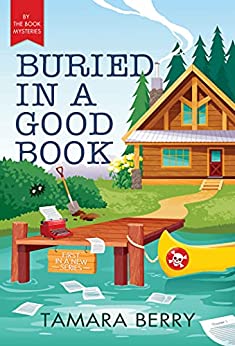
Buried in a Good Book, by Tamara Berry****-*****

4.5 rounded upward.

I’ve been enjoying Berry’s Eleanor Wilde series, which I read and reviewed from the first book forward; when I found this one, Buried in a Good Book, the start of a brand new series, I was all in. My thanks go to Net Galley and Poisoned Pen Press for the review copy.

I’m a bit skeptical of novels that feature the words book, library, reading, bookstore and such because obviously, potential buyers are likely to get all warm and fuzzy-feeling just seeing the title. It’s a soft landing, that’s for sure, marketing books and book-related topics to booklovers; and then I wonder if the author is just too lazy to take on something more challenging. But every time Berry embraces the obvious, it turns out to be with her tongue planted firmly in her cheek, and by the end of the book I am laughing out loud. That holds true for this one as well.

Tess Harrow is newly divorced, and her adolescent daughter, Gertrude is heartbroken, because her father has more or less ghosted on her. When an elderly relative dies and leaves his cabin and his hardware store to Tess, it seems like an omen. She’ll get her girl out of Seattle and the heartbreak she’s experienced there; get off the grid, more or less, and enjoy Nature. Yikes.

Be careful what you wish for!

The day is nearly over when they pull up to the cabin, a fixer if ever there was one; Tess knew it might be rugged, but she didn’t know that the lovely little pond out back would be fully stocked with body parts, too. And whereas some might be daunted by such an occurrence, she looks at all of it as excellent material for her next bestselling thriller.

This novel is different from the Ellie Wilde mysteries in that we are more than half into it before the author moves in for the laughs. Just as I conclude that this time Berry is playing it straight, something happens—no, I will NOT tell you what—and I am guffawing and snorting, neither of which is becoming while one is eating lunch, but it simply cannot be helped. Berry is a sly one, all right. My notes say, “I never knew metacognition could be so damn funny.”

I enjoy everything she does here, and the fact that it’s set in my own stomping grounds of Washington State makes me love it all the better. Recommended to any reader that is ready for a good story and a good laugh. It’s for sale now.

The Book Woman’s Daughter, by Kim Michele Richardson****

Kim Michele Richardson broke new ground in 2019 with her blockbuster novel, The Book Woman of Troublesome Creek, which features an oppressed minority in Appalachia. In the early years of the 1900s, and possibly before, tucked into the hills and hollers of rural Kentucky were a small number of people that had blue skin. This first novel featured Cussy Mary Carter, a Blue woman that worked as a pack horse librarian as part of the WPA, a new government agency created by the FDR administration. In this sequel, it is her daughter, Honey Mary Angeline Lovett that joins this organization and in doing so, struggles toward emancipation when her parents are jailed for violating the miscegenation laws existing at the time.

My thanks go to Net Galley and Sourcebooks for the review copy.

When her parents are jailed for having intermarried—with “Blues” considered colored—Honey Lovett is sent to live with Retta, an elderly woman that has been like a grandmother to Honey. Returning to the area where she was born, Honey—who is also Blue, but only on her feet and hands, particularly when she is distressed—collides with many of the same biases and legal obstacles that her mother faced.

This sequel features more women that occupy nontraditional occupations; in her notes, Richardson says that she wanted to “explore themes of sisterhood.” The sentiment is a welcome one to this feminist Boomer; at the same time, it’s important to recognize that until the outbreak of the second world war, women seldom occupied positions with the government (our protagonist, plus her friend Pearl, who works for the Forestry Department as a fire lookout,) and as miners (another woman friend, who is harassed relentlessly.)  For there to be three such women inside such a sparsely populated area would have been unusual. That said, I like the character of Pearl a lot, and providing Honey with a friend and peer gives the author more opportunities to flesh out her protagonist.  

The novel’s greatest strengths are in the research behind it, the concept—informing readers about the existence and victimization of the Blues—and in the general setting of the time and place. Richardson knows her field.

Once again, I enjoy the return of Junia, the mule that I confess was my favorite character in the last book, as well as Tommy the Rooster, who is new. Another strength is that Honey is depicted in a more even and credible fashion than Cussy Mary, who was too saintly to be entirely believable.

However, I would still like to see some nuance in characters. There is a wide cast of characters here, but every single one is either a good guy—one that never does anything wrong—or a bad guy that never does anything good. This is a failing that would take the novel down, in my eyes, if not for the fact that Richardson has pioneered this particular time, setting, and topic. Even when a novel is primarily driven by setting, as this one is, the main characters need to be rounded out.

This book is for sale now.

Every Cloak Rolled in Blood, by James Lee Burke***-****

James Lee Burke is an icon, a Grand Master who’s written mystery novels, along with the occasional work of historical fiction, since the 1960s. Now he is 85 years old, and he recently lost his beloved daughter, Pamala. This novel is a tribute to her.

My thanks to go Net Galley and Simon and Schuster for the invitation to read and review. This book is for sale now.

Every Cloak Rolled in Blood is the fourth in the Holland Family saga. Our protagonist is Aaron Broussard. He is an 85 year old novelist who has recently lost his daughter, Fannie Mae. He feels a “loneliness that is almost unbearable.” He tells us,

“I will not accept my daughter’s death. I will find a way to pull her back through the veil or untether myself and lie down in the bottom of a boat that has no oars and float down the Columbia and into the Pacific, where she will be waiting for me somewhere behind the sun.”

There’s a horrifying passage in which he places the barrel of his gun in his mouth; but he doesn’t go through with it, and later tells us that he believes he will not be permitted to join her if he leaves this world by his own hand.

The story commences with a young man vandalizing Aaron’s barn. Aaron recalls some local cops being unnecessarily nasty to Fannie Mae, so instead of turning the boy over to the cops, he makes a deal with him to have the kid work off the damage. There are other remarks laced in here and there that give a nod to our current national state of affairs regarding police brutality, and I appreciate these.

In fact, the story is laced with a number of social justice issues, and Burke is, as usual, on the side of the angels each time; foremost is the horrific manner in which indigenous people of the Northern Rockies have been treated by the U.S. government, and continue to be.

Over his last few novels, Burke has increased the amount of supernatural content in his work. For decades this aspect of his work was muted, smoldering as a part of the general ambience of the story. He’s always used the occasional Biblical reference, occasionally also borrowing from Greek mythology. In A Private Cathedral, a recent Robicheaux novel—the series that has met with the greatest public acclaim and for good reason—he included a scene that could not be perceived as anything other than supernatural. In fact, it is one in which both the protagonist and his lovable sidekick, Clete Purcel, witness the same event, so there can be no supposing it’s all in the protagonist’s head. It was brilliantly conceived and executed. Unfortunately, this book is not of the same caliber.

I wrestled a great deal with my rating and review; a large part of me thought that when a beloved novelist is in his eighties and has recently lost a child, I should just give him the five stars. Yet another part of me, the part that won the internal debate, feels that to do so is unworthy of the respect this author has earned. It would be patronizing to say this is a great book when I am so ambivalent about it. So I’m playing it straight here. The supernatural aspect, as it is used here, overwhelms this story and damages it organizationally. It also causes the pacing to lag a bit. It’s not a terrible book, but it’s not up to Burke’s usual standard.

But the aspect that bothers me most is the way the younger women in the story—not just one, mind you, but two—cannot wait, apparently, to get Aaron in the sack. Sister Ginny isn’t a good person, but she tries to seduce him anyway. Ruby Spotted Horse is a good, honorable woman, that rarest of all things: an ethical cop. She’s in her thirties, but when Aaron comes onto her, she doesn’t even hesitate. We learn that she was raising her niece, who died, and there’s a clumsy passage in which Aaron wonders aloud if Ruby is really up for a relationship with him given his age, but she assures him that they are bound together by their mutual losses.

Right. Whatever.

There are many lovely moments in this novel, all of them owned by Fannie Mae. There is such clear, obvious affection in the descriptions that I am a little surprised the pages don’t glow.

The denouement, a mighty struggle involving the living and the dead, leaves me shaking my head, though. And when one of the latter, an evil spirit representing a horrible cavalry officer that once lived and killed in the vicinity, tells Aaron, “Pardon me for saying this, but you’re not the good father you think you are,” I want to sit right down and cry.

This book is recommended to diehard Burke fans, and to anyone that needs a grief book.

The Patron Saint of Second Chances, by Christine Simon****

“The Lord works in mysterious ways.”

Signor Speranza is in a jam. The entire system of pipes that the village of Palmetto depends upon for its water must be replaced, and it’s going to cost a small fortune. Speranza is the self-appointed major, so it’s up to him to solve this problem; but no one has any money, least of all himself, a struggling vacuum cleaner repairman. He cooks up a wild pretext to draw attention and money: a big motion picture will be filmed here, and Dante Rinaldi, the red hot movie star of young women’s dreams, will be in it.

My thanks go to Net Galley and Atria Books for the invitation to read and review, and to Seattle Bibliocommons for the audio version that I relied upon to catch me up once I fell behind. This wonderful feel-good novel is for sale now.

At the outset, there is a certain amount of cringe humor involved, and that’s never been my favorite. I wait to see which way the wind will blow, and soon I am cracking up, snickering as I transplant my tomato plants and listen to the audio. Later, when I catch up with the digital review copy, it’s obvious that cringe humor isn’t the main tool in play here.

Over and over again, Speranza and his little town face certain doom; without money for the plumbing, they must all move somewhere else. He’s caught in a lie; then, just as he escapes that trap, another presents itself. He’s not much of a problem solver, and so he turns to every obscure patron saint you can imagine to get him out of this mess. He lights a candle here or there, and before you know it, some random seeming bit of luck comes out of nowhere. But then some other misfortune occurs, and he’s forced to scramble some more. Add into this disorder a young granddaughter, a thuggish butcher with fifteen intimidating sons, and a puppy that’s not yet housebroken, and the chaos is complete.

Ultimately, this is a lovely tale of loyalty and imagination prevailing against terrible odds and an uncaring bureaucracy. This is Christine Simon’s debut novel, and if this is just the beginning, I can’t wait to see what she writes next.  I also want to give a special shout out to Tim Francis, who voices the narrative in the audio version. He is the first reader I’ve heard that can speak English with an Italian accent without sounding like Count Dracula. I greatly enjoyed his interpretation of this splendid little book.

Recommended to anyone that needs a wider smile and a spring in their step.