The Furies, by John Connolly*****

The Furies is #20 in the Charlie Parker detective series, by John Connolly. Several entries ago, Connolly began introducing supernatural elements so that each novel now is either a detective story laced with elements of horror, or else a true hybrid. Friends, nobody does this better than Connolly. Nobody.

My thanks go to Atria Books and Net Galley for the review copy. This book is for sale now.

This particular book is singular in that it is a pair of novellas in one volume, but they share the same characters, and flow so smoothly that I forget, at times, that it’s two different stories. Each of them has women that are either at risk of death or grave bodily harm, or that appear to be. The characters are brilliantly crafted; some are old favorites that Connolly’s faithful readers will recognize. We have Angel and Louis, not much, but enough to satisfy; the Fulci Brothers return, and these guys make me laugh out loud. (Notice that I don’t say that Connolly makes me laugh. I believe the characters enough that most of the time, my readerly relationship isn’t with the author, but with the characters themselves.) And we have some brand new baddies as well.

I won’t even tell you about all of the ne’er-do-wells that frequent these pages, because there are a host of them, but the most memorable and salient are Raum Buker, a career criminal, and Bobby Wadlin, an opportunistic slumlord who runs a boardinghouse for the formerly incarcerated. Let’s take a look at Raum:

“There are men who are born into this world blighted, men who are blighted by the world, and men who are intent upon blighting themselves and the world along with them. Raum Buker somehow contrived to be all three in one person, like a toxic, inverted deity….Raum became his own worst enemy by election, and decided by extension to become the worst enemy of a lot of other people, too….Gradually, like fecal matter flowing down a drain, gravity brought Raum to Portland. He kept company with men whom others avoided, and women who were too foolish, desperate, or worn down by abuse to make better life choices.”

Unfortunately for Raum, he has obtained, extralegally, of course, a rare coin that is also a supernatural talisman. It’s a bit like the ring that Bilbo Baggins and Gollum vie for in The Hobbit, but the coin is loose in modern society among humans during the pandemic.

Bobby Wadlin runs The Braycott Arms where Raum lives, along with some other questionable people. Wadlin is too lazy to be truly evil; he inherited this pile from his late daddy, and he rents rooms to former convicts because they are the least likely to make a fuss over repairs and such that most people expect from their rental lodgings. Wadlin sits behind the front desk during most of his waking hours and sometimes other hours, too, watching endless Westerns on his little television. When things start to go sideways, he turns to an herbal product that is named in the book, and as I read, I became sold on its anti-anxiety attributes and bought some for myself. It works, too! As long as it doesn’t turn me into Bobby Wadlin, I’ll be okay.

There are small but important ways in which Connolly’s skill sets him apart from other writers. An essential component is his timing. Less experienced and analytical authors might create an amusing character or situation, and it’s funny, and then it’s over. For others, they know they’ve struck gold, so then they beat it to death to where it’s stale and loses its magic. Connolly seems to know precisely at what point to bring back the humorous bits for maximum effect. He lets us forget all about that hysterical situation or person back there, earlier in the novel, and so when he brings it out again, the hilarity hits us right in the funny bone. There’s never a wasted word, with everything carefully measured and edited down for maximum effect.

If there is one area in which this author might improve, it’s in the way he writes female characters. When I finish a Parker novel, it’s always the men that I remember. Connolly demonstrates tremendous respect for women, but he doesn’t fully develop any of them. There it is, a challenge.

Nonetheless, The Furies is brilliant and entertaining, and I recommend it enthusiastically to you.  

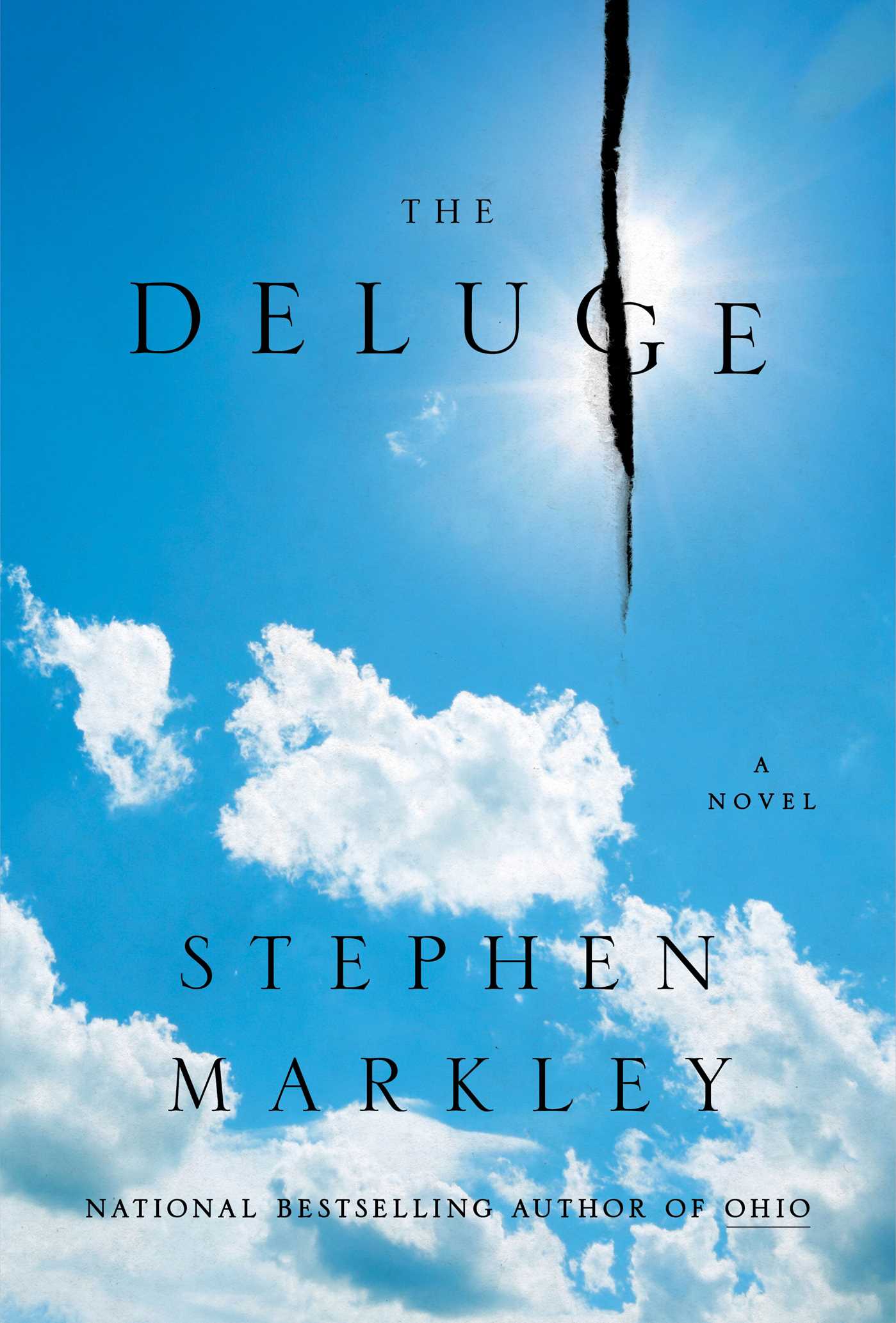
The Deluge, by Stephen Markley**

Markley’s debut novel, Ohio, came out in 2018, and it was one of the year’s best that I promoted at the end of the year. I loved it so much that I was convinced that anything this author wrote would be golden. So when Simon and Schuster invited me to read and review his next book, The Deluge, I was delighted. But although I am grateful to the publisher and Net Galley for including me, I cannot bring myself to finish this thing. I suspect Markley may have bitten off more than he can chew, because it’s kind of a mess.

To be fair, I have only read the first twenty percent, but since the book is 900 pages in length, that’s a chunk.  After all of that, I can’t even keep the characters straight, let alone bond with them. One character, Kate, seems to hold the most promise, but just as I begin to develop interest, we transition to a different character—or news article, or whatever—in a manner that feels abrupt and jerky. Some of these characters appear more than once, and other may have, but I’m not even sure of it. There’s one horrifying rapist that speaks to the reader intimately and in the second person, and he gives me the heebie-jeebies so badly that I am glad to move on to someone else. That guy—whatever his name is—and Kate are the only two I can identify, sort of. I’m a language arts teacher. Good luck to everybody else.

I do understand that the overall message has to do with the environmental ruin that is marching toward us at an alarming pace. Markley isn’t wrong to sound the alarm, although it may in large part be a case of preaching to the choir; the most concerned among us are probably the most likely to read this book. At the same time, some of us have been following this horrifying debacle since the ‘70s, or the ‘80s, and when one is already virtually hyperventilating with alarm over this issue, reading this novel doesn’t do much good.

But more to the point, fiction is an excellent medium to promote an urgent political cause, but it’s only effective when the other story elements are outstanding. When the format doesn’t do justice to the characters or provide clarity to the reader, the effort is wasted.

I read other reviews saying that if one patiently reads the chaotic scramble at the beginning, eventually it will all come together and make sense, but honestly, if nothing makes sense two hundred pages in, then you can stick a fork in me, cause I’m done.

Murder Book, by Thomas Perry*****

Harry Duncan is a former cop, now a private investigator. His ex-wife, Ellen, is the U.S. Attorney for the region, and she asks him to check out a small town that appears to have a racketeering problem. Is it serious enough to warrant the attention of the FBI? Harry agrees to explore the situation, which turns out to be far more serious than either of them imagined.

My thanks go to Net Galley and Random House for the review copy. This high octane thriller is for sale now.

Perry’s feet have hardly hit the ground in this tiny Indiana backwater before he discovers a protection racket. A local businesswoman is determined not to pay; how can a bar or restaurant pay $300 daily and still stay open? The profit margin just doesn’t allow for it. And the thugs know that. But let’s not get ahead of ourselves. Rather than give anything away, I’ll just say that there’s more to this than meets the eye in this tiny, out of the way burg.

Perry is king when it comes to details involving stealth and unobtrusive investigation. Whereas a cop cannot use the unorthodox (and okay, illegal) methods that Duncan employs, a consultant can and does, or at least, he can and does in this story.

And if one were to criticize this novel, that’s the soft spot—because almost nothing about this tale is realistic. It’s so much fun to read, though, that by the time I thought, “Wait a minute…” the rest of my thoughts shushed my inner cynic as if it were a noisy jerk in the back row at a movie theater.

Highly recommended.

Earl, Honey, by D.S. Getson*****

“Ever since Pa hit him in the head with the two-by-four, Earl had lived with blinders.”

If you can read that opening line and not be curious about what comes after it, check your pulse, because there’s a good chance you are already dead. As for me, I was drawn to it immediately, and I thank Net Galley and Matador Publishing for the review copy. This book is for sale now.

When we meet Earl, the year is 1921 (although occasionally, we skip forward to 1970.) Earl is in the courthouse watching his father’s trial:

‘I di’nt fornicate with no donkey. Es ist eine dirty lie!’ From the back of the darkly paneled room, he feels his pa’s rage like a ground tremor rippling its way through the crowd the crowd to the spot where he sits, surrounded by family. Well, except for Rose. She’s up front in a special seat…

‘And what about the other charge, Mr. Hahn? Is it true your daughter, Rose, is carrying your child?’

Boom. So right in the first chapter, you can plainly see that if you are someone that needs to know about triggers before reading a novel, this may not be your book. And that’s a shame, because the quality of the writing is phenomenal, from the riveting opening line, all the way to the last.

Earl’s pa does, in fact, go to jail; even if he wasn’t guilty as sin (and of it,) which he clearly is, everyone in town hates him with an abiding passion, most of all his wife and ten children.

“There wasn’t a man within a hundred miles of Sampson County who would stand up for Reinhardt Hahn.”

It is unusual for me to include so many quotes in a review, but as you can see, the writing is so clear, strong, and resonant that I cannot do it justice any other way.

As the title and first line suggest, the story is Earl’s, and we follow him through the remainder of his childhood and adolescence. At its end, I am thunderstruck when I read the author’s note explaining that the whole story is based on the truth. Earl was her grandmother’s brother; Reinhardt Hahn, or “Pa,” was her great-grandfather.

Friends, this is easily one of the best novels to come out of 2022, and I am convinced that the only reason it isn’t parked on the New York Times bestseller list is because it was self-published, and therefore it didn’t receive the kind of publicity that a major publisher could have provided.

I won’t say more; to do that, I’d have to fish out some more quotes, and they are even better when read in context. Highly recommended; D.S. Getson is an author to watch.

Mad Honey, by Jodi Picoult and Jennifer Finney Boylan*****

Mad Honey is the joint endeavor of bestselling author Jodi Picoult and Jennifer Finney Boylan. My thanks go to Net Galley and Random House Ballantine for the invitation to read and review.  This book is for sale now, and I recommend it to you.

The hallmarks of Picoult’s work are immediately evident. She frames her story around a particular area of interest, and so when one of our main characters, Olivia, is a bee keeper, I figure I am in for an education with regard to bees and honey; I am not wrong. Of late, Picoult has also used some of her fiction to promote social justice causes, and that’s here, too; I did a quick search on Boylan, her co-author, and learned that Boylan is one of the first transgendered Americans to write a bestseller, and this is the other focal part of Mad Honey, which features a trans character.

We have Olivia, then, the bee keeper, and her son, Asher, who is the light of her life. She took Asher and fled an abusive marriage, and enjoys her new life. She is close to Asher, and they talk openly and often; yet, there are things that Asher isn’t telling his mother, and she doesn’t see that.

Then there’s a new girl in town, Lily Campanello, a cellist, and Asher falls for her. Later, Lily is found dead, and suspicion falls on Asher. Olivia stands behind her son, and yet a corner of her mind has doubts. What if, when push comes to shove, Asher is his father’s son after all?

It’s tricky to write fiction that focuses on a controversial topic, and the critical ingredient is characterization. If the characters feel real to us, the story flows and the message becomes an integral part of their lives. We can’t reject the theme without rejecting the character. But it would take a true Grinch to step away from Olivia, Asher, and Lily. I want what’s best for the characters, and so I’m not focused on the authors and what they have chosen to discuss within this framework, but on the story. The writing flows like melted butter, smooth and inviting, and later, the suspense ratchets up almost unbearably, and I have to know what becomes of Olivia and Asher.

Because I am a bit behind, I check out the audio version of this novel at Seattle Bibliocommons.  There are multiple narrators, but the one that resonates most for me is the reader voicing Lily. I say this, despite the fact that she butchers the pronunciation of place names in the Pacific Northwest. Eugene, Oregon is not hard to say. Siuslaw and Willamette are trickier, but there’s only one pronunciation for each, and the reader should have done due diligence.

And now that I’ve said this, I can urge you to get this book and read it. For those unfamiliar with trans people, there’s some good information, and the story is a compelling one. There’s a twist at the end, and I would probably have left that out, as it doesn’t add much, although I can also see the reason it is included. Nevertheless, this is a story worth your time and money, whether as an audiobook or in print.

Now Is Not the Time to Panic! by Kevin Wilson****-*****

Now is Not the Time to Panic is, according to its author, Kevin Wilson, “a book about friendship, about memory, and about what it means to hold on to the person who we were, even as we become someone else. It’s about the ways in which art is the door that lets us walk into a new life, one that never seemed possible.”

Frankie is kind of a quirky kid, friendless and grieving her parents’ divorce and her father’s abandonment of his kids. She has nothing but time this summer, and so when Zeke, an even quirkier new kid, moves into the tiny town of Coalfield, Tennessee, the two are drawn together.

My thanks go to Net Galley and Ecco Publishing for the review copy. This book is for sale now.

Frankie invites Zeke over one day; her dad has flown the coop, and her mom is at work, so in order to make it clear that she hasn’t invited him over for carnal purposes, Frankie talks to him about her love of writing. Zeke says that he likes to draw, and so together, they make a poster. The words are Frankie’s, and they are indeed well written for a kid of sixteen years: “The edge is a shantytown filled with gold seekers. We are fugitives, and the law is skinny with hunger for us.” Zeke fills in the rest of the page with his artwork, and for good measure, they prick their fingers and comingle their blood on the poster. Then they dig out an old photocopy machine in Frankie’s garage, and make copies with which to furtively festoon the whole town. (After all, Coalfield isn’t a big place.) They don’t tell anyone it’s theirs, and enjoy the reactions to their guerilla art as sly observers.

The two teens share a lot in common. Both are outsiders; both are creatives; and both are living through the implosions of their families, with fathers that cheat and then leave, and mothers that are beside themselves with anger and shame.

Once the posters become noticed around town, rumors begin, and then copycats come along and make improvements, sometimes. There’s a hysterical piece in the local paper suggesting that their work is Satanic. Frankie and Zeke don’t say one word to anyone. They watch and they listen; they talk about it only with each other.

The crafting of these two characters, and their relationship, is well done, and I ache for both of these kids. The only time I see character slip is with regard to Frankie’s attitude toward sex. Her dispassionate take on it—she isn’t sure she really wants to, but maybe she should just do it and get it over with? Is not a mindset I’ve ever seen in a teenage girl, and believe me, I’ve known plenty of quirky ones. No, that’s a male attitude, and I suspect that Wilson would do better to use male protagonists, or else run his female ones by several very honest females in his chosen field, prior to publication.

As the summer goes on, I keep expecting the two to launch another joint project, but they don’t. She does some writing, and he draws, but there is no sequel, no follow-up. The poster is the poster. Shantytown, gold seekers, fugitives, hunger. Boom. That’s it. But years into the future, Frankie is still putting these damn things up. The heck…? I believe this of her; she is one strange person. Zeke’s mental health deteriorates that summer, and where that goes is completely credible. Those that work in the field will recognize Zeke, who is by far the better drawn of the two main characters.

This fascinating novel can be enjoyed by young adult audiences, because both of the protagonists are teenagers; however, this is also fiction that can be enjoyed by anybody. If you don’t read YA—and the truth is, I don’t, not anymore—you can still appreciate this one, and I recommend it to you.

On Spine of Death, by Tamara Berry****

The By the Book mystery series began earlier this year with Buried in a Good Book, and I knew right away the series was going to be a winner Author Tamara Berry is on a roll, with On Spine of Death, the second in the series, already on the shelves. Tess Harrow is our protagonist, and her teenaged daughter, Gertrude, helps more than she hinders, while also keeping us entertained.

The premise here is that while renovating and remodeling her late grandfather’s hardware store, multiple sets of human remains are unearthed. It’s hard enough to be accepted into a small town, but now half of its denizens are convinced that her granddad was a serial killer! Now Tess is on a mission to find out whose bones those are, and how they got there.

There are tropes here that usually make me cranky. We’ve got the hot-for-sheriff trope, and the must-clear-my-name (or that of a loved one) trope, but it’s testament to Berry’s authorial chops that I don’t think about either of them much until the book is over. Her droll humor and nicely turned out characters keep the pages turning. This is a series that doesn’t take itself too seriously, and that’s just what I need sometimes.

I recommend this clever little cozy mystery to anyone needing a break from the world around us, along with a good chuckle, and I look forward to the next in the series.

The Night Ship, by Jess Kidd****

Jess Kidd can write. I read and reviewed her debut novel, Himself, which I loved so much that I bought a copy to give as a gift; I called it “Sly as hell and fall-down-laughing funny.” I have read and reviewed her others as well:  Mr. Flood’s Last Resort (The Hoarder in Britain,) and Things in Jars. Her most recent novel, The Night Ship, is technically as good or better than any before, but I love it less, largely because of the expectations I brought to it, based on the other three before it. I’ll explain that momentarily.

My thanks go to Net Galley and Atria Books for the review copy. This book is for sale now.

The Night Ship is based on a true story, the sinking of the famous ship, the Batavia, in 1629. Our protagonist is Mayken, a child whose mother has died; she is being sent to her father in the company of her elderly nurse maid.  When the ship goes down, she is marooned on an island near Australia.

Over three hundred years later in 1989, a boy named Gil has also lost his mother, and is sent to live on the same island with his cantankerous grandfather. There isn’t much to do there, and he finds his imagination is captured by the tales of a shipwreck that occurred here hundreds of years ago.

The way that Kidd braids the stories of these two children into one well crafted novel is admirable. They are separate, and yet together, and the nearer we get to the conclusion, the more commonalities reveal themselves. Clearly, Kidd is at the height of her craft—so far, at least. Goodness knows what else she’s got up her sleeve. Her eccentricity and her appreciation of working class struggle sets her in a class beyond most authors.

And yet. When I read her debut novel, she captured my whole heart. I couldn’t stop talking about it, the way her adroit word smithery combined with a hilarious tale of sheer, spun magic. It remains a favorite of mine some five years and hundreds of novels later. And when the next, Mr. Flood, came out it wasn’t quite as magical, yet really, nothing else could be, and it was still vastly superior to what anyone else was writing, and I adored it. And the next one after it, while not as humorous, was wonderfully dark, and the ending made me smile. The author’s message was rock solid.

Every single one of her previous novels had an uplifting quality, and when I read the last page, I was smiling. And so I began to feel that I could count on Kidd to raise my spirits. In fact, I rationed this story out to myself, and when, given my penchant for reading multiple books at a time, I found myself buried in dark works—in one, I was freezing and bloody in the Ardennes Forest during World War II; in another, the devil had possessed a psychiatrist in a high security asylum; add into the mix a bio of a falsely accused prisoner in the U.S. that lost his entire youth before he was exonerated, and another young man being ‘re-educated’ in a North Korean prison camp; I figured I needed a good dose of Jess Kidd right now. Now. This instant!

And so I got her book, and then the ship went down.

So, I didn’t get what I wanted from this novel, but it had more to do with my own expectations than with any defect in the quality of her writing. Still, I cannot help feeling a trifle disappointed.

If you’re ready to go dark, this is your book. If you just love good writing, this is your book, too. But if you need a feel-good book to lighten your heart, get her debut novel.

Back to the Garden, by Laurie R. King*****

Laurie R. King is best known for her Mary Russell and Sherlock Holmes historical detective novels, but I have long preferred her contemporary mysteries. Back to the Garden is her latest of these, and it is excellent. My thanks go to Net Galley and Random House Ballantine for the review copy. This book is for sale now.

Our protagonist is Raquel Liang, a detective based in San Francisco. When a long-dead body is found in the garden of the Gardener Estate—a famous mansion and grounds that sound faintly reminiscent of Hearst Castle—Liang, who is working on a task force to find and identify victims of serial killer Michael Johnston, becomes involved in the case.

Rob Gardener is the heir to the estate, and he had clashed often and bitterly with his grandfather before his demise in the 1970s. Upon learning of his windfall, Gardener turned the manse into a commune, with murals on the walls of what were once imposing, grandiose rooms and vegetable gardens where more formal floral ones previously stood. Now the place is being restored, and as gardeners work to clear a thicket of overgrown hedge, a huge statue topples over, exposing the bones of someone long interred there.

Meanwhile, in a hospital in the big city, convicted serial murderer Michael Johnston lies dying. During the same period that the commune reigned, Johnston was spiriting girls and young women off so that he could murder them. Improved technology has provided a number of leads, but the window in which the cops can extract information from the old bastard is rapidly closing. Liang suspects that the body found on the estate, which dates back to the same time that Johnston was slaying women in the area, may be one of his, and so she makes frequent visits to learn as much about the place and its residents, past and present, as possible.

The intriguing bit about this mystery is that the members of the commune, other than Rob himself, didn’t use their birth names, and it makes them tricky to trace. With names like Meadow, Pig, and Daisy, they could be just about anybody. Is one of them the body beneath the statue?

King does a fine job of segueing from past to present and back again, and of juggling a moderately large number of characters. As I read, I never have to flip back to be reminded of who someone is. The reader should know, however, that this is not a thriller. It isn’t written in a way to grab you by the hair and make your pulse pound. The pace is a bit more laid back, but for some of us, that is a pleasure. I never lost interest, and I could read this thing while eating my lunch without gagging.

There’s a good deal of period nostalgia, and so I suspect that the greatest appeal will be to Boomers.

Highly recommended.

The Devil Aspect, by Craig Russell

3.5 stars, rounded upward. I read this creepy tale during the last half of October, and it is indeed a good way to get into the Halloween spirit. I am disgracefully late with my review—3.5 years late, as it happens—but I do thank Net Galley and Doubleday for the review copy. This book is, of course, for sale now.

Here is what drew me in. This is horror of the old school variety, with gothic towers and half a dozen criminally insane inmates. It’s set in Czechoslovakia, which I seldom see. The flavor, overall, is similar to the stories we told as children around campfires or late at night during slumber parties. Of course, it has a more adult approach, but even so, this is classic horror.

Our protagonists are Viktor Kusarek, a Jungian psychiatrist who comes to the asylum to conduct experiments on the patients, or inmates, in order to prove a theory, and police chief Lukas Smolak, who is pursuing a serial killer that is running amok in Prague.

This is a story that is more about the journey than the destination, though perhaps not intentionally so. Hearing about each of the six savage killers as Viktor interviews them is vastly entertaining. There’s one spot about a third of the way in, where a patient, partially sedated, is explaining that he is innocent, and also that a guest sorely provoked him. Always so critical! He was determined to impress her with his cooking, and indeed, the longer he worked at the stove, the more reasonable she became. Viktor points out that the guest had stopped complaining because he had her head in the skillet. I laughed out loud! The middle of this novel is unmissable.

There are three things I would change. First, the book is a little overlong, and could bear some tightening. Second, the whole Nazi menace has nothing to do with the problem or its resolution. It seems more like window dressing than anything else, but it doesn’t add a thing to the story. If I were the editor, I would cut that part of it out and voila, some of the tightening would be achieved. And third, the ending is so, so predictable. I stuck with the story until around the 85 percent mark, at which point I figured all hope of an ending other than what I expected was pretty much gone. At that point I skipped to the end. Yup. There it was. I would have liked a less formulaic ending.

Still and all, fans of old fashioned horror could do a lot worse. If this sounds like your kind of book after everything I have said, then go for it. I am old and cranky, and what seems obvious to me might seem new and clever to those that haven’t read many books of this ilk. And one way or the other, getting there is a lot of fun.