
A Time of Torment, by John Connolly*****

ATimeofTormentI had never read anything by John Connolly before, but this eerie thriller has made a forever-fan of me. Thanks go to Net Galley and Atria books for the invitation to read and review.  Connolly cooks together a hair-raising thriller with a handful of horror, a smidge of fantasy and a dash of magical realism; the resulting brew is one that nobody else could possibly cook up. For those that write, reading this dark redemption tale is likely to produce both admiration and despair, because this novel is born of a talent that no creative writing workshop will ever be able to produce. You may write, and I may write, but nobody else will ever, ever be able to write like Connolly.

Our story is part of the Charlie Parker series, but I have not read any of the others and found I was able to hop into this story as a single read with no difficulty. Connolly provides just enough background to catch us up without dragging us through the book using promotional paragraphs some lesser authors might indulge in. I suspect not enough is repeated here to annoy his faithful readers.

Parker is a private detective that has been through a triple-death experience and come out the other end, but not unchanged. He’s hard enough to confront the ugliest nemesis, and it’s a good thing, because soon a trail of corpses will persuade him to leave his home in Maine for the dark place that is Plassey County, West Virginia.

The people of Plassey County have learned over the years—and centuries—to leave The Cut alone. Evil things are brewing there; it is there that the Dead King waits in an ancient building, and it is there that Oberon and Cassander struggle for dominance of this insular, cult-like community.  After all, “…the Cut looks after its own.”

This is a high voltage, hyperliterate read. Your middle-schoolers can’t read this, and it is so infused with violence that I’m not sure you’d want them to have it. But though I sometimes am put off from gory prose, I found that Connolly measured out these passages in small enough batches that my “ick” threshold, that little voice inside that tells me when a story isn’t fun anymore, wasn’t tripped. Spare but strong spots of irony and humor help lighten things up before they get dark, dark, dark again.

If I were to compare Connolly to any other writer, it would be James Lee Burke. The similarities that exist are a brilliant capacity to craft character, and the use of strongly resonant setting to reinforce character and move the story forward. The small but potent religious references are also similar. I highlighted the characters that were introduced throughout the course of this novel and found more than two dozen of them, and yet at the end of the book I still knew who each of them was without having to go back and reread. Connolly draws characters so real that by the time the book is done, the reader knows them as if they were family; yet thank goodness they aren’t.  This reviewer particularly enjoyed Parker’s assistants, Angel and Louis, as well as side characters Perry Lutter and Odell Watson.

Throughout the story, the pacing is swift and the plot absorbing. There is never a word that could be cut from the text and have the same result. If anything, the spare prose creates a sense of tension not only for that which is said, but also for that which is not.

This creepy tale was released this week, so you can have it to curl up with over the weekend if you’re quick about it. But before you commence, you’ll want to make sure that all the lights in your home are burning, and that all your doors and windows are locked.

Highly recommended.

Salvation Lake, by G.M. Ford*****

salvationlakeFord is the rightful heir to the late great Donald Westlake, a writer of monstrously amusing mysteries full of quirky sidekicks and kick-ass, zesty dialogue. There’s nobody like him in Seattle or anywhere else. I gobbled up the DRC when it became available via Net Galley and publishers Thomas and Mercer,  so I read this free in exchange for an honest review. But I’ll tell you a secret: if I’d had to, I’d have paid for this one had it been necessary. And so should you. It’s for sale today, and you can get it digitally at a bargain rate.

But back to our story.  We open at a bar called the Eastlake Zoo. The band of misfits to which detective Leo Waterman is tied through bonds of family history and quixotic affection are rocking the house in “well-lubricated amiability”. In fact, there’s a story being told right as we begin, and if it doesn’t hook you, check your pulse, because you’re probably dead. Here:

“Red Lopez was a spitter. When Red told a story, it was best to get yourself alee of

something waterproof, lest you end up looking like you’d been run through the

Elephant Car Wash.

‘So we was comin’ down Yesler,’ Red gushed. “Me and George and Ralphie.’

Everyone had found cover, except the guy they called Frenchie, who was so tanked

he  probably  thought it was raining inside the Eastlake Zoo…”


Right?

As it happens, Waterman, who’s inherited his old man’s ill-gotten wealth, has been lying low and enjoying the good life, but now his late father’s hideously distinctive overcoat has been found on a corpse, and  Timothy Eagen of the Seattle Police Department want to talk to Leo. Now.  There’s bad blood between them:

“…he hated my big ass the way Ahab hated that whale…Eagen was a skinny little turd with a salt-and-pepper comb-over pasted across his pate like a sleeping hamster.”

Since SPD has been under the eye of the Feds lately, Eagen can’t give full rein to his attack-Chihuahua impulses. SPD needs to provide “the kind [of law enforcement] that doesn’t look like Ferguson, Missouri or Staten Island, New York.” So Waterman doesn’t get shaken down or tossed into a cell, but his curiosity is piqued, and since he has no paying job and time on his hands, he finds himself checking into a few things. One thing leads to another.

What relationship does the victim, known as the Preacher, have to Mount Zion Industries, whose pamphlet is found among his effects? Before we know it, Leo is off and running, checking out Salvation Lake, located at the end of Redemption Road. Events tumble one upon the next, and I found that instead of reading in my bed that evening, as is my usual bedtime custom, I was reading on it, bolt upright and clicking the kindle to go a little faster please.

Waterman may have come into money midway through life, but his perspective is a working class perspective. His take on the city’s thousands of homeless denizens and the relationship that cops have to those in need strike a sure clear note that must surely resonate with anyone that’s been paying any attention at all.

Meanwhile, Salvation Lake is written with warp speed pacing, sharp insight, authority, and the kind of wit that can only come from a writer that has tremendous heart.

Don’t miss it. Get it now.

The Black Glove, by Geoffrey Miller*****

The Black GloveThe place is Hollywood, California; the time is 1980. Terry Traven is a private detective specializing in finding the runaway children of the wealthy. He is offered a job that appears to be more of the same; a local mogul’s son has disappeared, and Dad wants him found. But then the disappearance turns out to be a kidnapping, and the kidnapping turns out to be a murder, at which point all hell breaks loose. This story is fast-paced and though it’s set a generation or two ago, the issues with police brutality—otherwise known as “the black glove”—make it more socially relevant than your average piece of crime fiction. There are other components that will sit well with those with an eye for social justice, too. Thank you Brash Books Priority Reviewer’s Circle for the DRC, which I received in exchange for a fair and honest review. This book is available for sale right now.
The beginning of the book doesn’t appear to be auspicious. A guy walks into Traven’s office and presents him with a dossier that tells him all about himself, at least in the words of intelligence sources. The dossier is too lengthy–we see every word, pages and pages of italicized material– and is clearly a fast, easy way for the author to introduce us to the character. I was prepared to be let down.

Once we get past that sloppy introduction, however, the story is complex and fast paced enough to remind me of James Lee Burke’s detective series. Toss in some quirky names, like Senator Suspenders and a punk rock band called The Dead Cherries, and add a whole lot of action. And yet somehow we find ourselves discussing issues of race, gender, and gay rights without slowing the pace at all. I almost always take off at least a star for the use of the “n” word, but the way it is used here isn’t just some cheap stunt to show us that a bad guy is really rotten or ignorant; instead, the characters manage to embark on an abbreviated discussion of race and white privilege without ever becoming preachy or distracting from the main thread.  Some of it is very indirect, and it took me awhile to get a handle on it. In other places, it’s crystal clear, as when the visiting room at the jail is “gas chamber green…a cruelly subtle reminder to the inmate of his loss of freedom.”

The story’s subscript demonstrates how women and people of color are sometimes so overwhelmed by the racism and sexism that is inherent in US culture—and even more so when this novel was written than now—that we find ourselves internalizing that hatred. Likewise gay men, lesbians, and bisexuals; those from the Boomer generation will recall just how difficult this time period was for anyone that wasn’t straight.  And given that Miller wrote this during that time, I consider this story to be courageously written, a gutsy story by a writer unafraid to take a hard look at a controversial topic.

In fact, Brash Books hasn’t introduced a detective this brainy and complex, yet entertaining since they brought out Barbara Neely’s Blanche White series. What a tremendous find! I wish there was a whole series with this detective.

Meanwhile chances are excellent that you haven’t read this book yet, and if you lean left and enjoy a good detective novel, this is one you should scoop up right away.  It’s strong fiction with a progressive thread running through it. Don’t miss out.

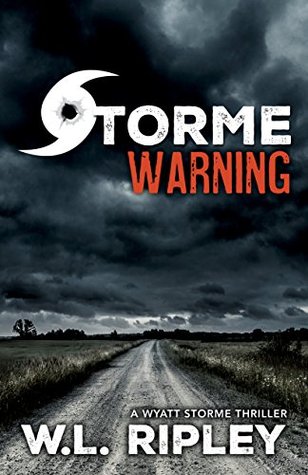
Storme Warning, by WL Ripley****

stormewarningStorme Warning is the fourth and thus far final installment in a terrific series. I have read three, and will read the fourth if I can find it. The snappy patter and nonstop action and suspense make it hard to put down once you’ve begun. I rate it 4.49 stars, and thank Brash Books Priority Readers Circle for providing me with this DRC in exchange for an honest review. The book is available for purchase right now.

Wyatt Storme is retired from football. He divides his time between his cabin in Missouri and another cabin in Colorado; this story takes place in Missouri. He owns a considerable piece of land because after having the press follow him hither and yon for the duration of his NFL career, he craves simplicity and solitude. “Reclusive”, as his best friend Chick explains to an outsider.

Because all of a sudden, Wyatt’s land is chock full of outsiders. Hollywood director Geoffrey Salinger wants to shoot his hot new movie on location; his star has received death threats, and Chick has been tapped as bodyguard. Wyatt doesn’t like it much, but Chick wants the work, so he agrees to tolerate the intrusion, but he sets terms in a way that provide him with an unusual amount of control over industry hotshots that aren’t accustomed to leaving the driver’s seat. Combine this scenario with the smart, snappy patter between Wyatt and Chick; throw some 70’s song lyrics into the narrative as if they are merely part of the story; add some mobsters from out of town; and you have a really fun, fast-paced story.

The final .51 star is denied because of the way the author deals with race. He means well to be sure. But racist terms that are sprinkled in an almost nonstop stream throughout the book are going to make this a prohibitively painful book for most African-American readers. It’s true that Ripley uses the “n” word and other slurs (against other races also, but mostly Black folk) to determine who is a bad guy, but when one is close enough to the heat those terms create, all the fun stops as soon as the word appears. It’s like finding a rattlesnake in the cookie jar; you’re having a good time, expecting good things to continue happening, and then, bam, there it is.

Depending on who you are, it’s enough to take your breath away.

To be sure, I don’t know what it is like to be a person of color; I am not one. But for many years I have been the only Caucasian person in my house, with others here being either Asian, Black, or mixed, and I do know what it is to be the wife and mother of people that don’t enjoy white privilege. The “n” word and others like it are serious, serious things. And insult is added to injury by having the African-American character unable to enter a scene without race issues being the first to fall from his lips. Most Black people don’t really want to engage white people in discussions of race unless it’s in a formal political setting, and even then, it’s more comfortable to talk to another person of color, or a room that is mostly people of color. But LeBeau is clearly in this story for no purpose other than to be the Black character. He isn’t developed, and what is worse, he isn’t capable of much that is positive. As with the Black girl in the brief restaurant scene, a white guy has to come to the rescue. To depict all characters of color as victims and set them up to be saved every stinking time by Caucasian characters is inexcusable. (LeBeau tries to carry off a rescue once, but it doesn’t work out, and Chick emerges the hero once more.)

Should the writer continue the series, I recommend that he simply use white folks, if that’s his comfort zone, or include multiple people of color and develop them. Give them characteristics beyond coming into the room and making readers aware they aren’t white. And don’t diminish them by making them unable to stand up for themselves or others. I further recommend not using that word, ever again. It’s cheap and easy, but it costs some readers dearly. I would not give this book to my son to read. The pain would outweigh the enjoyment; in fact, I guarantee he wouldn’t finish it. There are more subtle yet unmistakable ways to demonstrate that a character is racist, if that is a key goal. There are other ways just to show that a character is a bad guy, too.

Hollywood and television have learned how to create actual characters of color, as opposed to casting someone to “be the Black guy”. Ripley has skill enough to do the same.

I’ve given the downside of this novel more space than the 90 percent that I enjoyed, but I have done so because no other reviewer I’ve seen so far has addressed it, and someone has to do it.

With the single clear caveat provided here, this fast-paced, mostly-funny detective story is recommended .

Clawback, by JA Jance*****

clawbackI’m a long time reader of novels by JA Jance, but until I read this new release, I would have told you that her Arizona series are second string efforts compared to the JP Beaumont titles set in Seattle. Not anymore! Thank you to Net Galley and Touchstone Publishers for the DRC, which I read in exchange for an honest review. The book will be available to the public March 8.
Ali Reynolds is our protagonist. Her parents have retired, investing their lifelong savings with a company that turns out to be involved in a Ponzi scheme. Ali’s father goes to see his investment agent, who has also been a close friend for decades, and finds him dying. In attempting to revive him and another person, Dad gets the victims’ blood all over himself, and so he is suspected of murder when he calls 911. In an effort to help clear her father, Ali, along with her parents and those with whom she works at High Noon, unravels one layer after another of deception and danger.

Those that read my reviews know that I am always sensitive to the subtext. In addition to telling a well woven, technically savvy tale of suspense, Jance is brilliant here in the way she crafts her female characters. She takes apart almost every conceivable stereotype without pausing the story’s pace or becoming preachy or conspicuous. As the mother of a half-Asian daughter, I particularly appreciated the development of Cami. But even for those that don’t care much about social issues as reflected in text, it’s a tightly wound tale that will leave any reader leaning forward in their easy chair, straining to get to that last page and the denouement.

Besides enjoying the mystery, I also learned some things. I had never heard of a “clawback”, a terrible law that has to do with penalties that are assessed victims of Ponzi schemes, and I had also never heard of a “Silver alert”. I read a lot of nonfiction, but Jance’s new book is a great reminder that we can learn things from fiction too, and it’s often more fun that way.

Highly recommended to everyone.

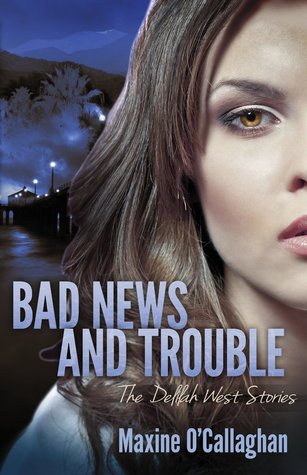
Bad News and Trouble, by Maxine O’Callaghan****

badnewsandtrouble.jpgI am always on the lookout for a new, well written female detective series. There are some Grand Masters out there that I adore, but the problem is that I can read faster than they can write. So when I was given the opportunity to check out Delilah West, a sleuth whose stories originated during the latter half of the 20th century, I jumped on it, and I am so glad I did. Thank you, Brash Books Priority Reviewers Circle, for the free DRC. This book is available for sale now.

Delilah West may be cozy at times, but she is never cutesy or smarmy, and “never pert”. She never wonders why she didn’t bring her gun, because she always has the sense to have it with her. In Bad News and Trouble, we are treated to seven short stories, each of which is a separate case that Delilah describes to us. The suspense is thick, but now and then the feverish pace slackens just long enough to bring a good, hearty guffaw from the reader. Each episode is set primarily in California. She is a lone wolf, independent and smart as hell. She knows how to get things done, and she never has to call on a big strong man to save her personal ass. Believe it.

My favorite among the stories is second to the last, “Going to the Dogs”, a case in which a client is convinced that someone out there is trying to steal one of her dogs. I won’t give away the goods, but I will tell you that it kept me on the edge of my seat, made me laugh out loud more than once, and the ending was unusually satisfying.

You’ll have to excuse me now. Brash has more Delilah West stories on tap, and I am going to go find them. You should do the same.

Angels Burning, by Tawni O’Dell*****

angelsburningTawni O’Dell is an experienced writer, but she is new to me. I was attracted to her working class setting and protagonist Dove Carnahan, the fifty year old police chief in a tiny Pennsylvanian coal town. I received this galley free for an honest review thanks to Net Galley and Gallery Threshold Pocket Books, and I liked it so much that now the rest of her work, some of which has been featured in the Oprah Book Club, is on my to-read list. Dispensing hilarity and palpable real life truths in equal measure, O’Dell is a keeper.
The strong characterization and the stirring immediacy of this storyline had me at hello. O’Dell’s genius and deft skill are shown by her capacity to develop her small town characters into flesh, bone, and sinew. We know Dove as if she were in front of us; we know her sister Neely; we even know Neely’s dogs.

In her 27 years in law enforcement, Dove has never had to deal with a murder before, and this one is particularly nasty. Camio Truly was just 17 years old when someone smashed her head in, dropped her down a sink hole and set fire to her body. Naturally, this murder isn’t Carnahan’s job; of course not. She has two deputies, one office worker and a busted vending machine. No, the larger and better funded neighboring cop department will deal with this problem. Yet in such a small town, every problem leads into every other problem, so she’s up to her neck in it in no time anyway.

The victim was one of many children in the Truly family. The Trulys are local rednecks whose days run into one another lulled by a steady dose of television viewing. The baby’s bottle has something brown and fizzy in it. Since the narrative is in the first person, Dove tells us herself:

“I marvel as I always do at this very specific kind of American poverty. The Trulys by most people’s standards would be considered poor, yet they were able to buy everything here that has ended up as trash in their front yard. They have a $3,000 TV and the latest phones, and I can’t imagine what they spend monthly on beer and cigarettes, but they couldn’t afford a laptop for their daughter to help her with her schoolwork or a copy of Psychology for Dummies.”

O’Dell gets some good ones in at the expense of this generally ambition-free family, but she also avoids turning them into a caricature. Eldest son Eddie lives away from the family home now, and when she talks to him about his last visit from Camio, she recognizes Eddie’s own traumatic past, which includes the deaths of two brothers and the horrors of Vietnam.

And in her interrogation of Shawna, the perpetually neglectful mother of the Truly brood, she throws us some surprises, establishing dignity and gravitas for this woman stoically enduring disappointment, heartbreak, and perpetual discouragement.

Interwoven into the murder mystery are two subplots that are more important than they appear. One is that her brother Champ, who’s been gone for twenty years, suddenly surfaces with a son; the other is that the man that spent a long stretch in jail for the murder of Dove and Neely’s mother is out of prison and harassing Dove endlessly, claiming that she sent him to prison knowing that he was not guilty.

Put it all together and it’s so much more than the sum of its parts. In fact, it’s pure gold. Janet Evanovich may have to move over and save a stool for a new regular at the Sassy Murder Writers’ Saloon. This title is super smart and the pages turn rapidly, leaving the reader with a sense of loss when it’s over. Whether you buy it for a beach trip or to curl up by the fire, this one’s a must-read, and it comes out January 5, 2016.

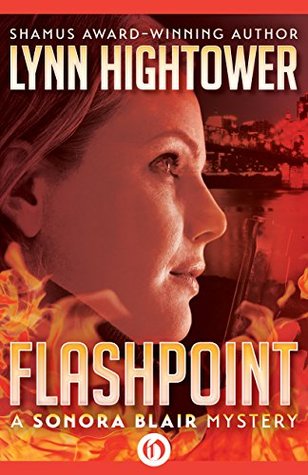
Flashpoint, by Lynn Hightower*****

flashpoint“Anybody talk to a doctor?”
“Guy came out of emergency and talked to the brother.”
“Hear what he said?”
“Just that they were very concerned with Mark’s condition, and were doing all they could.”
“Shit. Mark won’t make it then. They’re already hanging the crepe.”

Sonora Blair is one of the most kick-ass female detectives to hit the shelves in a very long time. Lucky me, I read it free, thanks to Net Galley and Open Road Integrated Media. The original publication date was 1995, and so the initial publishers must have dropped the ball big-time when it came to promotion, because I know this is the kind of story that resonates with large numbers of people, especially women. And I am glad to see it being resold by Open Road, because they know how to do the job right.

So back to Sonora. No wait, let’s go back to Hightower first. What a total bad-ass when it comes to setting! I loved seeing her enter the home where her children were asleep, and the explosion of naked Barbie doll parts in her daughter’s room. I loved the moment when her elderly dog had an accident in the living room, and she was so distracted by the hundred other things, personal and professional, all colliding at once, that it was not even the first thing she took care of once she found it.

So we have two interesting threads here. One is the problem. A killer out there has murdered a man by handcuffing him to the steering wheel of a vehicle and setting fire to it…and him. It’s grisly business, but Hightower doesn’t overwork the detail to where it triggers my “ick” button; in other words, although it’s terrible, it is never so terrible that I just don’t want to read it anymore. And the problem just becomes thornier and trickier the longer she works on it. Clues drop here and there, and the stakes go up.

The other thread is Blair’s personal life, and the problems she faces in dealing with home and work. It sounds like a tired old song when I put it that way, but like any really skillful writing, it sounds brand new when the author rubs her own brand of English on it and sends it spinning.

After having read several hundred mystery, crime fiction, police procedural, and thriller novels—okay, if I had starting keeping track sooner, I know it would be well over a thousand—there are a handful of devices that are so frequently used that my eyes auto-roll when I see them utilized. I was watching for them. But Blair never gets tossed into the trunk of anybody’s car; she never gets the phone call saying the killer has her kids; there is never a moment when we realize she has been framed for the killing herself, and has to solve it to save her own butt. I’m not saying a great writer can’t get away with any of those; there are some Grand Masters out there that have done it and before my eyes could make the full roll, they were glued back to the page. But once someone reaches into that worn, soiled bag of tricks, it becomes a lot harder to engage me, and I was delighted that Blair never went there.

Her facility with setting is consistently brilliant throughout the book.

One tiny odd bit: for the first chapter or two, I was convinced that Blair was African-American. When she turned up blonde later, I had to mentally reinvent her. It didn’t take long though, because I was riveted and had to get back to the story.

For fans of outstanding detective fiction, this is a must-read. Order it now for yourself, or as a gift for someone you know will love it.

For the Dignified Dead, by Michael Genelin****

forthedignifieddeadThere’s a murderer on the loose, one that has killed across international boundaries. The weapon of choice? An ice pick. Happily, the case is assigned to total bad-ass Commander Jana Matinova, the best new female detective I’ve seen in emerge in crime fiction in decades. Thank you to Net Galley and Brash Books for the DRC. This title will be available for purchase November 3.

Part of what initially attracted me to this novel was the setting. Though Matinova finds herself crossing into various parts of central Europe, she is based in Slovakia, a country not even on my personal radar. By way of apology, I will point out that for most of my life, a giant swath of Europe and Asia was designated as USSR, and the satellite states lined up like faithful guardians around its perimeter included Yugoslavia and Czechoslovakia, both of which have been carved into different nations since the Stalinist realm crumbled. So I thought I’d learn a little bit about the contemporary contours of central Europe in the most enjoyable way possible—through fiction.

Genelin doesn’t disappoint. Along with Matinova, we have a collection of other cops, some of whom garnered truly fetching descriptions, such as this one: “With his thinning hair and lopsided smile he looked like a harmless, slightly unkempt beagle without its long ears.”

In addition we have the sinister Koba, a master criminal that Matinova considers akin, perhaps, to Holmes’s Moriarty. Koba’s role in Genelin’s story is complex and fascinating.

But most of all, I appreciated the development of Jana Matinova, both for her silver-bullet speed and cleverness, and also for that which is not included. We never hear about her hair, makeup, or her figure; we don’t need to know anything about her love life, and if she experiences any ambivalence about her lack of a domestic life, we don’t hear about it. In fact, Genelin treats his protagonist just as he would a male protagonist.

Now isn’t that a breath of fresh air?

The fifth star, which I would have loved to be able to add to this engaging story, is denied because of problematic passages that popped up often enough to warrant ten different notations in my kindle: “Too wordy! Tighten it up!” It seemed either as if there were two writers, one more capable than the other, co-writing the novel, or as if someone whose mother tongue is not English was struggling to say what needed saying. I noticed this was most frequent during passages of narrative, and less likely to occur during dialogue. Whatever it is, it could benefit greatly from either some rewritten passages or strong editing. But every time I found my eyes jerking through one of these verbose areas in the text, sooner or later we would come out slick as a whistle, and everything would commence to flow again. I don’t think a published text has ever confused me so much in this regard.

That being said, I would cheerfully read other books in this series given the opportunity. Because when push comes to shove, Commander Jana Matinova is a champ!

Pop Goes the Weasel, by M.J. Arlidge***

popgoestheweaselPop Goes the Weasel is the second in a detective series featuring Helen Grace. Thank you to Net Galley and Random House-Penguin for the DRC. The title goes up for sale October 6.

Arlidge is an experienced, confident writer. The opening of the book is among the best openers I have seen for quite awhile:

“The fog crept in from the sea, suffocating the city. It descended like an invading army, consuming landmarks, choking out the moonlight, rendering Southampton a strange and unnerving place.”

The tone is thus set for a grisly murder mystery, the perfect mood for an October read.

The premise here is that someone is murdering men that seek the services of prostitutes, and their slayer doesn’t merely kill the men, but eviscerates them without the courtesy of killing them first. Well, this may not be exactly evisceration: they aren’t removing their digestive tracts, but rather their hearts. And while I read that description before requesting this DRC, I should have dwelt on it a moment or two longer, because this particular story really passed my “ick” threshold, and it was my own fault for not being more careful in reading the promotional description.

That said, although it was a bit much for me, it probably won’t be for you, not if you watch a lot of cop shows on television or view a lot of adrenaline-pumping movies that feature violence. That said, I would also steer away anyone who has recently had a death in the family. The descriptions of the cadavers were so explicit that you may find your mind making leaps you didn’t count on.

Grace’s situation is linked to things that happened in Arlidge’s first in the series, and they are referred to often. You may be better off reading these in order. I didn’t read the first, and although I was able to keep up just fine in terms of following plot and character motivation, I felt a little as if I were a guest at someone else’s family dinner. There were so many little undercurrents that referred to Grace’s earlier experiences, as well as those of Charlie, another cop who’d been in the previous story as well, that I felt a bit left out. I also had difficulty, for the first half of the story, keeping Helen and Charlie distinct from one another, and this part I chalk up to the author’s failure to adequately describe each of them. Whether it is the first or tenth in a series, the author has an obligation to provide a clear picture of the protagonist as well as other important characters. That didn’t happen here. Eventually I understood the motivations of each, as well as a good deal of Helen Grace’s internal characteristics, but I never was able to form enough of a mental picture of their appearances to make a mental movie. At times, I felt as if the explicit gore and sex were substitutions for character development. The plot itself was a trifle formulaic.

For those that read the first in the series and enjoyed it, this second in the series is bound to please. It is to those readers that I recommend this mystery.