
What happened? I used to absolutely love novels by Carl Hiaasen. In his most recent release, Fever Beach, we see a conflict between good—in the person of our main character, Viva Morales—and evil, played by a variety of Proud Boys wannabees and other undesirables. The good person is always good; the bad guys have no redeeming qualities. Only Viva’s ex-husband is a dynamic character.

Still, my thanks go to Doubleday and NetGalley for the review copy. This book is for sale now.
As I read, I keep reminding myself that this is not a book I’m supposed to take too seriously, to lighten up and just roll with it. I certainly used to do so when reading Hiaasen’s work. But perhaps because of the stereotyping and complete lack of nuance, what might otherwise have seemed droll and satirical, instead comes across like a whole lot of cheap shots fired off the bow.
Mind you, I am certainly not a fan of ultraright organizations, and the rising tide of bigotry, fascist ideology and anti-Semitism concerns me greatly. But in an already highly polarized nation and world, all I can think as I read is that this story isn’t helping. It is the snobbery and elitism of the highly educated that has driven a large number of folks into the arms of extreme right; some intelligently reject the elitism and cancel culture consciously, but they aren’t in this book. In real life, those that are poorly educated and/or intellectually handicapped, as the bad guys in this book are, would in most cases give their right arms to wake up “clever” like Viva. It strikes me as counterproductive to write a book that makes fun of right-wing intolerance, while practicing intolerance from a different angle.
Back in the day, before anyone judged anyone else by the color of their hat, I used to roar with laughter at this author’s work. Did it change, or did I? I would like to think it is the former.
I rated this book 2.5 stars and have rounded it upward, more from a fondness of his early novels than anything else. I do recall reading another of his more recent books—not for review, but just because I felt like it—and saw some of the same problems, so I will tell you that this book will probably work for you if you enjoyed his last one. Apart from that, I cannot recommend it.
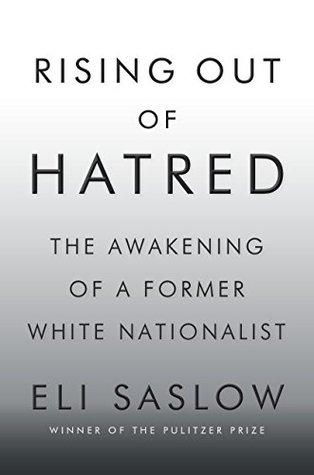 Derek Black was the heir apparent to the White Supremacist throne, godson of David Duke, and the son of the founder of the largest hate site in the U.S. This gripping biography tells the story of his transformation, from racist wunderkind to social justice proponent. Thanks go to Net Galley and Doubleday for the review copy. This book is for sale now.
 Seattle Book Mama