
 The Man Who Cried I Am was originally published during the turmoil of the late 1960’s, in the throes of the Civil Rights and antiwar movements, and following the assassinations of President Kennedy, his brother Bobby, Martin Luther King Junior, and Malcolm X. Now we find ourselves in the midst of a long-overdue second civil rights movement, and this title is published again. We can read it digitally thanks to Open Road Integrated Media. I was invited to read it by them and the fine people at Net Galley. I read it free in exchange for an honest review. It is available for purchase now.
The story is a fictionalized account of the life of writer Richard Wright, one of the giants within African-American literature. I am ashamed to say that although I did pick up a copy of both Native Son and Black Boy, his two most famous books, they were still perched on my to-read pile when this invitation rolled in. I found myself perusing this meaty material without knowing anything about Wright himself, apart from his legendary stature and his occupation. I wanted to be able to give my readers a strong critical analysis of this novel, but I have really struggled with it. I found myself having to do a Wiki search in order to figure out whether Max Reddick or Harry Ames was supposed to be Wright. It’s embarrassing. I will read it over again and try to publish something more useful than this review in the future, but I promised to publish my thoughts on the book no later than today—a week following its release—and so I’m going to tell you what I can.
As literary fiction, it’s strong. Ames, who is Wright, as it turns out, and Reddick, who is James Baldwin fictionalized, go on an Odyssey all their own, leaving the USA and its myriad racial issues behind for Europe. A number of other historical luminaries are recognizable in its pages by different names, in addition to those called by their real names, such as Dewy and Truman, and philosopher Camus. The time period spans from post-World War II to the Civil Rights movement.
So many social issues are embraced here that I found myself making far more notes and highlighting more quotes than I can use. The debate unfolds as to how the Communist Party USA treats artists, as opposed to workers, and even touches briefly on the assassination of Trotsky at the hands of a Stalinist agent. Discrimination against African-American (then referred to as Negro) soldiers in the Buffaloes is part of Reddick’s inner narrative. Black Pride had not yet had its day, and Black men often coveted relationships with Caucasian women, partly, as Malcolm X later pointed out, from self-hatred, partly as a social status symbol, and occasionally for the practical material benefits of marrying into, or becoming aligned with, a woman that had access to money. But this was also a double-edged sword, because the women’s movement hadn’t occurred yet either, and women were supposed to stay home and have babies while their men went off to work.
The whole thing is very complicated.
In this time prior to the 1973 Roe vs. Wade decision that made abortion legal for American women, an unwanted pregnancy is dispatched by a doctor who is supposed to be quite good and risk free, but of course, the procedure is not legal, and there are no emergency facilities available. One of the characters loses the woman he loves when she bleeds to death after a back-alley abortion. This is not intended to be the primary focus of the book, but it’s huge to me, and so it stayed with me.
Be aware that there are scores of ugly racist terms, used for the purpose of highlighting racism, as well as sexist terms and references to gay men as the f-word. All references are either there because of the time period in which the story is set or for the purpose of defining the struggle of the Black man in America, but readers have a right to know and to brace themselves. There are descriptions of the atrocities visited upon European Jews during the war, as well as references to their struggle in the USA, primarily New York City; again, there are some ugly terms used.
Should you read this title? Not at the beach. This excellent novel is for the serious student of African-American history and for the history student focused on social justice. It’s more than worth your while, and I will re-read it myself after I have read Wright’s work. Just understand that there are many, many historical references that will make you reach for Google. The story was written during a time when the average reader had most of these things—from clothing styles such as zoot suits and pegged pants, to offhand references to the cigarette jingles that once punctuated our radio and television broadcasts as frequently as Coke and Pepsi do now, to slang terms whose use is either gone or worse, changed to mean something else. For example, if someone is high, they haven’t been using street drugs; they are drunk. None of these things is explained to the reader. We must have them stored in our memories; search for the meanings of unfamiliar references; or attempt to understand the text without knowing them.
I consider this literature to be accessible only to those that read at college level.
Highly recommended for those that take African-American literature and history seriously, and whose reading ability is well above average.
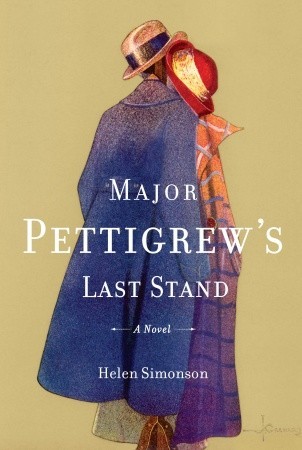 Had this story not received such wide acclaim and been made into a movie (which I’ve yet to see, but I watched the Oscars), I would probably never have gone near it. I like working class protagonists, and I don’t read many romances, because often as not, they are corny, soft porn, or both. But I saw it at the library and decided to give it a try, and I quickly remembered, upon reading it, that some rules are made to be broken. So even if you usually don’t read romances, and even if a retired British pensioner is not your idea of an interesting protagonist, this should be the exception to the rule.
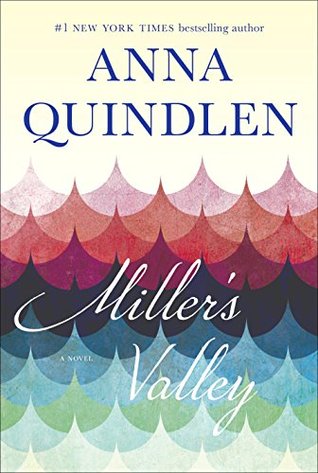 Miller’s Valley is an intimate, poignant story so personal that it is hard to remember that it’s fiction rather than a memoir. Thanks to Net Galley and Random House for the DRC. Though I usually read several DRC’s at a time, this was the one I saved for the end of the day, for that time when the phone stops ringing, the dogs quit barking, the family doesn’t need my attention, and there’s nobody at the front door. During those deep, silent hours I immersed myself into the life of Mimi Miller, hypnotized as if my best friend were perched on the bed spilling out her secrets.
 Oh my stars. Keillor is at his finest here. I’ve never read anything funnier. Every now and then I permit myself to read a title that isn’t a new release but that I’ve been considering reading for a long time. This is one of those.
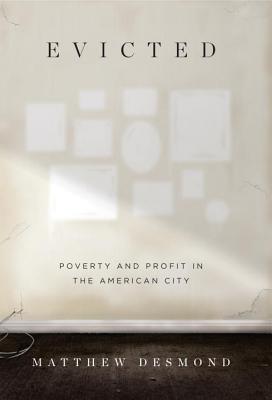 I was cruising for something new to read, something that wasn’t yet another mystery or thriller. I ran across this title and requested it from Net Galley, then asked myself what I had been thinking! Who wants to read an entire book about eviction? What a grim prospect. I was even more surprised, then, when I opened it and couldn’t put it down. Desmond approaches his subject in a way that makes it not only readable but compelling. Thanks go to the people at Crown Publishing and Penguin Random House for approving my request for a DRC. This book is available to the public March 1.
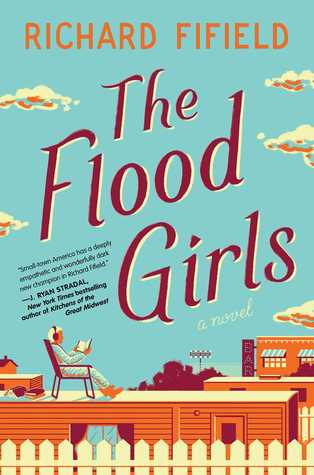 If Fannie Flagg worries that she has no heir, she can relax; Richard Fifield is here. The Flood Girls is his brilliant debut, and you have to read it! Fifield will cut out your heart and feed it to you with a rusty spoon, and he’ll make you like it, too. Hell, he’ll even make you laugh through it. I got the DRC free via Net Galley and Gallery Books in exchange for an honest review, and I’m going to read it a second time before I archive it as I am supposed to. This is only the second time I have done so after hundreds of galleys have come my way; that should give you a measure of how impressed I am with this title.
 Sarah and Jack Quinlan are called to his family’s home in Penny Gate, Iowa when Jack’s aunt is in a serious accident. Julia is not just any aunt; she has been his surrogate mother following the death of both his parents in a car accident. At least, that’s what he tells Sarah. But as she soon finds out, she has been misled about Jack’s early life; in fact, she’s been lied to. What she has to find out on her own is where the lies end and the truth begins.
 In 2015, I reviewed Storme Front, the second of four books in the Wyatt Storme series. I loved it and rated it 5 stars. Given the opportunity to read and review this first in the series, thanks to Brash Books Priority Reviewers Circle, I didn’t have to think twice. Thank you to Brash for the DRC, which I read free in exchange for this review.
 I confess that I am a big fan of Burke’s. He’s written a prodigious number of novels over the past fifty years, and I have read almost all of them. This is why, although I get nearly all of my books free prior to publication, I put this title on my Christmas wish list when I wasn’t given access to a galley. Perhaps because my spouse paid full jacket price for it, I am holding it to a higher standard than I usually do. This book is either a three star or four star read, depending on whether we factor in the dollars. Let’s call it 3.5 and round it up. It seems like a shame to 3-star a writer who is so talented and has contributed so much to American literature.
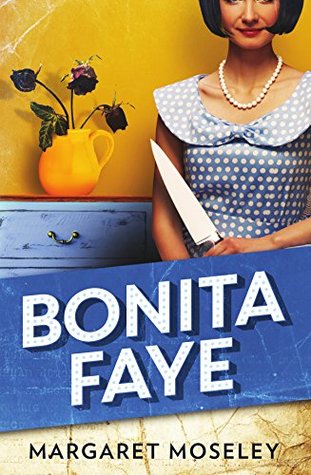 Brash Books has a new release, and it’s exactly the kind of novel you’d want to take to a warm sandy beach, or perhaps just to curl up with while the snow falls. I was permitted an advance glimpse, courtesy of Brash Books Priority Reviewers Circle. It was originally published in 1997, but due to be released again February 23, 2016. You’re in for a good time with this one.
 Seattle Book Mama