Folly, by Laurie R King *****

follyWhoa Nellie! King is one of my favorite authors, and I like her best when she gets away from the Holmes’ wife series and into strong contemporary fiction like this.

Rae Newborn is our protagonist, and she’s been having some mental health issues. She takes herself off to do a project on a remote island, property owned by her uncle. She has a feeling she is watched all the time, and so she is glad she is somewhere that she knows she has all to herself. Who the hell would come all the way out here? There’s no ferry service. You’d have to go to a lot of effort to get there, and there’s really nothing on the island beyond her uncle’s house, which needs a lot of work.

Unfortunately, that creepy feeling intensifies once she is on the island.

I started reading and an invisible hand reached out of the pages, grabbed me by my shirt’s front and yanked me in. I was on that island, and let me tell you, it got smaller, and smaller, and smaller…heart-pounding and absorbing, I could not stop till it was done.

I gave it to a friend to read when I was finished. When she had finished it, she asked me not to give her any others by this writer, because it was so adrenaline-pounding that “it was a little much for me.” And it is a lot. It is a psychological thriller by a master of the genre.

Often by now I acknowledge whoever gave me the galley to read free, but not this time. I bought this book at cover price from my own pocket, and I am telling you, it was worth every cent.

If you have a low threshold for really gripping prose, (or if, like my friend, you have recently experienced a loss and are tender around the edges), get something a little bit tamer. But if, like me, your favorite roller coasters are between book covers, this one is for you. Brilliantly plotted with a story line that accelerates and whips you around until it’s over.

Pleasantville, by Attica Locke *****

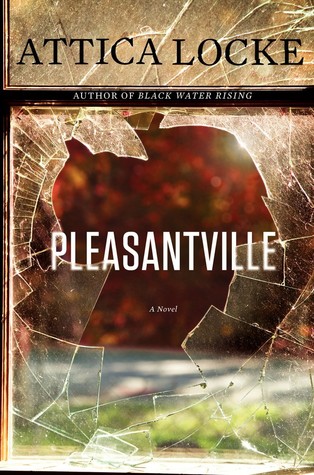
pleasantvilleJay Porter has a full plate, and so his legal career has been set on cruise control. Money is the least of his worries; he is successful, and has won a very large case, though it hasn’t paid yet. No, his issues have to do with family, and with grieving. And with grieving. And with grieving. His wife Bernie died young and fast due to an illness that she knew she had, but had chosen not to share. She pushed him to follow through on his enormous case against the oil company that had sickened, even killed people in their own close-knit, middle class African-American suburb outside Houston, Texas. It was important to everyone that the families affected experienced justice. But now he wishes he had spent more time by his wife’s bedside and less in the courtroom. His self-hatred for the time spent away from his wife and two children during that final crisis has left him determined not to set foot in another court room. Not ever.

And so this sequel to Black Water Rising, the red-hot hit by this author, starts out ominously, as a vulnerable teen waiting at a bus stop wonders whether she should run from the car that is watching her, even though she is so far from home that she doesn’t know how to get back, or wait for that bus. Next thing we know, she’s been murdered.

But Jay Porter is still too caught up in his own personal situation to pay much attention at first. Bernie’s sister Evelyn helped him get Bernie’s clothes packed up and moved out, but he can’t look at her car. Can’t look. And the holidays coming around the corner, all the gut-punching emotion with which they are fraught, that stinks too.

At this point, I should let you know that you can’t read this yet. It won’t come out till April, but I got my ARC from edelweiss books a week ago, and I’ve been reading it obsessively, so now is the time to review it. I will post this again when the book comes out, but for now, you can pre-order it, or put it on your Christmas list. After the holidays have come, gone, been cleaned up and winter survived, wouldn’t it be nice to come home and find this heart-pounding thriller waiting in the mailbox to make your weekend better? And what a story it is!

And so, back to Jay Porter. Porter is holding Cole Oil to the award the courts granted to the many citizens he represented. His fee, 20 million dollars, will be enough for him to retire on. He can send his secretary into the retirement she longs for, and he can put his feet up and be a father to his kids. But oh, how he wishes Bernie could be there.

Meanwhile, his friends and neighbors are growing agitated about Alicia Nowell’s disappearance. She is the third girl from the community to go missing in the past few years. The first two were kept alive for a few days; their bodies were found on day 6, and the coroner ruled they had been dead for only 24 hours or less. So they figure that girl is out there, alive, somewhere. Volunteer crews are searching fields after the cops have been there, squaring off grids in professional fashion while others knock on doors, try to get information that the local cop shop hasn’t found. And in the midst of a mayoral race, hay is being made by the opponent of the traditional Black candidate. Because the neighborhood has been slowly, insidiously (to some) changing since the death of Jim Crow. Now young Black kids from strong families don’t have to live in Pleasantville to find a good house. They can move wherever they want. That’s good, right? But Latino families looking for good schools and good housing find reception that is sometimes tense as they ease into town, and the old guard realizes they may no longer be a unified force politically.

Disbelief and horror take hold when the grandson of the community’s most venerated elder is arrested for the murder of Alicia Nowell. Assuming that an error has been made and without a second thought, Jay, who by coincidence happens to be at the police station while Neal Hathorne is being questioned, strides into the interrogation room and announces that he is Neal’s attorney. He has no idea what a firestorm he has unleashed upon himself, and upon his family.

I am retired, and have the luxury of several hours of designated reading time every evening. It’s pretty sweet. But this book caught me by the hair and made me stay with it, modifying my schedule so I could see just what the hell is happening here. My e-reader followed me down to the kitchen. It followed me into the laundry room. I was cranky when the phone rang and interrupted my time with Jay. Because after all, we had to get him out of this mess, and what the hell is going on with his daughter Ellie? Good thing he is being a careful father so that we won’t have to deal with that old, hackneyed now-they’re-after-his-own-kid plot line. Jay is smart enough to realize his daughter fits the profile of the kidnapped and murdered girls, and he is looking out for his girl. We respect him for it, and I nodded with approval at the e-reader as I fed the dog, went out to get the mail. I broke or spilled things four times because I wasn’t looking at what I was doing; I was reading this book, because the book couldn’t wait.

If Locke’s fingernail-biter of a tale reminds me of the style of any other writer, it is of James Lee Burke, now an octogenarian who is unlikely to write much more. And although only Locke knows whether it is intended as a nod to that bayou living legend, she names the bereaved parents Robicheaux. I rather liked the touch, if that’s what it was.

So whether you order this book, request it as a gift, or buy it when it comes out, consider it a must read. This book is already creating a buzz six months prior to publication, and it is going to be a monster. Don’t let yourself be left out!

“Why Are All The Black Kids Sitting Together in the Cafeteria?”: A Psychologist Explains the Development of Racial Identity, by Beverly Daniel Tatum *****

whyare all the black kidsThis is a wonderful volume, legendary and still current after over a decade, both for teachers and parents of Black youth. It’s not a bad read for everyone else either. For those who have felt uneasy watching African-American students group together (this is written for a US audience, but I suspect the principles apply in almost every developed nation with any sizable dark-skinned and disenfranchised population), take heart. It’s good for them to do that, at least for awhile.

I am retired from teaching now, but I can recall uneasily wondering, at first, whether I was doing something wrong when my Black kids would all land together in the same work group, when my students did group work and chose who they’d work with. Was I creating a little Apartheid in my classroom without knowing it? Were my Caucasian students making my Black students uncomfortable? What was I doing wrong?

I got a clue from two places, and they were both at home. I noticed that my then-teenage son, who is Black, mostly hung out with other Black kids. When I married my husband, who is a Japanese citizen, he asked me to look for a house in a heavily Asian area, and if I couldn’t find one, to go to the Black community rather than an all-white neighborhood. So by the time I read this book, I had the pieces, and Tatum helped me put them in the right places for a better picture. I breathed a lot easier after I read her book.

Turns out that when Black kids have what Tatum calls an “immersion experience” it improves their self esteem. They need, for awhile at least, to be around kids who look like them. It’s a healthy thing for them to do. If you are Caucasian, it isn’t about you. You aren’t being rejected; its just that African-American kids (or sometimes it’s all dark-skinned kids, with a subtle but distinct shift somewhere along the pigment gradation line) need each other. And if you are a teacher who isn’t African-American, it isn’t that you have created an unhealthy classroom atmosphere, as long as you are providing choices.

But as much as I enjoyed teaching, my family is where my heart is, and so I paid closer attention to this phenomenon when the family from two states gathered, which we do about once a year, sometimes more. At whole family gatherings, I have noticed that in our multiracial family, all the African-American kids clump together, usually sooner rather than later. Cousins from three different families converge into a block, walking away from their paler sibs. There’s an age gap of about a decade, but it doesn’t matter.

There’s nothing exclusionary or unfriendly about it; others who join them are greeted warmly, and sometimes the working class Caucasian siblings land over there with them sooner or later, as the professional Caucasian siblings merge with the older white folk. It’s almost eerie. It is as if there were a magnetic force field that calls only to pigmentation.

Tatum makes sense of all this. She lets us know that this is normal, and that it’s not only okay, it’s great.

This book is a classic must-read for teachers for all the right reasons. Parents of Black kids may benefit, and anyone else out there who worries or feels excluded may enjoy having the mystery erased. If you’re not Black, it’s not about you. Relax. And if you are African-American, maybe you already knew, at some level, but still might like to see what an African-American academic has discovered over the course of her research.

Interesting and extremely useful to a lot of folks on a lot of levels.

A Penny for the Hangman, by Tom Savage *****

a penny for the hangmanTom Savage is not new to the scary-book biz, but he was new to me. Maybe that is why I fell for the formulaic-looking beginning to this book. Ho hum. Been there, read that. Since it was obviously a fast read, I figured I would get it over with, write my review, poor fellow, and move on.

That was my mistake.

Here’s the premise: Karen Tyler is a journalist just looking for the meaty, headline-grabbing story that will launch her career. Her editor isn’t giving her much to work with. Then comes the phantom phone call. It relates to an infamous historical murder, and it is too tempting for a journalist with any kind of moxie to walk away from.

See, many years ago, a pair of juvenile delinquents had murdered their entire household. It was an unthinkable killing spree. One of the youngsters was found at the scene of the crime; the other had painted himself in the blood of his family (and that of an innocent servant who was in the way) and made a break for it. The coast guard picked him up. Both boys went away to serve long sentences; when they were released, neither was young anymore.

Tyler, our journalist, gets a phone call from one of the two killers, and he offers her an exclusive interview, swears there is more to the story than anyone knew. He will even pay her plane fare to St. Thomas, adding a free tropical vacation to his offer.

We, the readers, chant that same refrain we have chanted during so many scary books and movies: Don’t do it! Don’t get on that plane! Don’t get on that boat! Don’t go to that island! It’s a trap!

To reinforce our fears, the narrative is punctuated with journal entries by various characters in the story. And oh my my my, it sure doesn’t look good for our gutsy but perhaps imprudent reporter.

But nothing, no nothing, is the way it seems. I caught onto one plot trick, but then by the time I caught on, Savage had pretty much given me all the puzzle pieces, and it wasn’t a major plot point that I sleuthed out, it was fairly incidental. Savage is a magician with story, and he has more hidden up his sleeve than any reader can possibly guess!

So for Halloween this year, give yourself a gift that will keep those shadows jumping on the wall as you read in your favorite book by the fire…or the space heater…or…well, you get the idea. This story, which will be released October 7, has more twists, turns, uphill battles and plunges than Space Mountain, and more bodies than a slasher flick (but without the excessive gore, at least on my own personal ick-meter).

Thank you and thank you again to Net Galley and Random House for treating me to Savage’s work. His most successful book before this one, they say, is Valentine, and it goes onto my to-read shelf.

Why do we read these terrifying tales with blood on the stones and body parts in places they don’t belong? I think it is because they make us feel so much safer and more secure in our own little nooks and crannies. When there’s a killer thundering around every corner, it makes our own problems seem so small.

If you are in need of that sort of pick-me-up, or if you just adore a book in which things and people unknown lurk in the shadows—or not—well maybe so, actually—then you just have to get Savage’s book. If you aren’t up for reading it all by yourself, then you can read it with your friend or partner, and it will be twice the thrill.

Highly recommended!

<a href=”http://www.bloglovin.com/blog/12600025/?claim=fjx83bc4xez”>Follow my blog with Bloglovin</a>

Cosby: His Life and Times, by Mark Whitaker *****

Now that it’s on the shelves where you can buy a copy, I thought I’d post this one more time.

seattlebookmama's avatarSeattle Book Mama

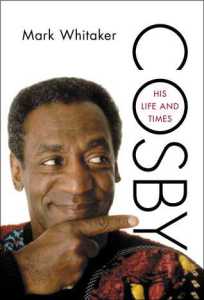
In the lateCosby twentieth century, Americans trusted “God, Walter Cronkite, and Bill Cosby”. Cosby is an icon, and Mark Whitaker is his biographer, author of the first comprehensive biography of the great comedian, actor, author and humanist. I have admired Bill Cosby my entire life, and it was an honor to be able to advance-read this well written, thoroughly documented biography. Kudos to Whitaker for a job well done.
Cosby grew up really poor, the child of a man his friends later described as a “wino” and a hard-working, ambitious mother who valued education. His teachers could tell he was very bright, but he had no interest in school work during his formative years, enjoying sports, friends, and jazz music more than academia. He would later change his mind. His college degree and graduate work were done legitimately; he respected education too much to ever accept an honorary degree anywhere…

View original post 907 more words

Hardcastle, by John Yount ****

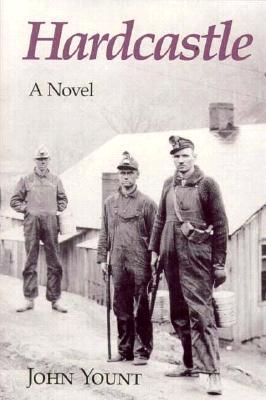
hardcastleThis hauntingly evocative Depression-era novel centers around a coal battle near Harlan, Kentucky. Our protagonist is Bill Music (originally Musik, before the Ellis Island people decided to yank the German element from the family name). Music has gone from his family’s bare-dirt farm in Virginia to seek his fortune in Chicago. He worked his way through a nine month electrician’s certification program, did hard labor to support himself, and just when he was ready to go on home, he was robbed. His attackers even found the $20 hidden in his shoe, since they took his shoes also. Barefoot, broke and hungry, he joins throngs of other down-and-out Americans by jumping a freight train toward home. The third day on an empty stomach, he sees a farm with piglets in the back yard and crazed from hunger, leaps from the train with no thought how he’ll get back on one. A twenty mile, post-piglet walk leads him to Hardcastle, a mining town filled with impoverished, bitter miners on the brink of unionization.

Regis Patoff may be my favorite character in Yount’s story. The name itself is great; I will leave the reader to uncover its origin, one of the few humorous moments in the story. Patoff offers Music the heart-stopping salary of three bucks a day, more than he used to make in a whole week, to be a mine guard. He deceives Music by telling him that the mine is too small to attract union drama anyway, and so he will be paid this handsome amount to routinely trudge around the property at night three times a week.

When something looks too good to be true, it generally is.

Music moves in with Regis and his mother, the wonderfully drawn Ella Bone, who takes to him as a second son. When all hell breaks loose, Music is in too deep to walk away. Winter is coming; he has been away so long that he can no longer imagine the faces of his parents or siblings, but Regis, Ella, and his beloved Merlee are right there in front of him. He stays.

The reader should expect to deal with a certain amount of Appalachian/country dialect. If English is your second language, you will want an e-reader for definitions, or a native English speaker to guide you through some of the vernacular.

For me, however, it created an immediate bond. Two generations ago, my father’s people were miners; they were comfortably ensconced in more lucrative, less dangerous work by the time I was born. Until I read Yount’s novel, I was unaware of how many cultural artifacts had leeched into my own childhood from the mines of the Depression era. Immediately a little girl calls her grandfather “Pappaw”, and I found myself missing my own Pappaw, who died in 1977. One of the main characters calls out the greeting, not hello but “Hydee!” and I can hear my father’s voice, gone 35 years, as clear as day. When you read the word “victuals”, hear it as “vittles”, and it means food, usually a good meal. And so it went.Somewhere along the way I realized I had flagged so many terms I hadn’t heard for ages that those reading my review would not want to march through all of them with me, so I will leave off here and continue with the story.

For me, this was a page-turner. The last star fell off the review during the last ten percent of the story, when some historical inaccuracies too great to dismiss as mere story-telling devices came up. The greatest was the depiction of the United Mine Workers as a union made up entirely of communists. And given that contemporary working class history is my field of expertise, it really grated. For those who want the truth, here it is:

During the early years of American union struggle, most industrial unions banned anyone who was not Caucasian; who was not an American citizen; or who was a communist from their ranks. The UMW refused to let its ranks be decimated by these distinctions, believing in solidarity. So yes, people who were communists and said so openly were allowed to join, and if the ranks voted them into leadership, they were allowed to take their posts. The union did not yield to red-baiting. There were white folks in the union who didn’t think people of color should be allowed in, but the UMW pointed out that solidarity was the best way to keep workers all on the side that would fight for their interests.

Yount correctly depicts the UMW as inclusive of every ethnicity, race, and nationality, but it incorrectly paints the UMW as a communist union, to the extent that in order to stay in the union, members were ultimately expected to renounce their Christian beliefs and take up little red flags. It is preposterous. When it came into the story, I expected some other thing to happen in order to undo the incorrectness of it, but he left it lay there, the dead elephant in the room. It really got in the way of the story. It was just stupid, and I did a complete 180 from being really entertained and enjoying the story and its characters, trying to determine what would happen in the future to the main surviving players, to being aggravated at the lie on which the resolution of the tale hinges. I also didn’t like the implication that mine workers were dumb enough to be led around by the nose without having known who was leading them. Many of them (including my grandfather) had a low or nonexistent literacy level, but that didn’t make them stupid, just poor.

For other readers, the whole story may be entirely enjoyable. The characterizations are endearing, the setting palpable. When Yount brought winter, my feet got cold. His writing is really strong.

But watch the history. Changing major historical events and realities through fiction is a dangerous thing, because when emotion runs high, people bond to what’s in the text, and if they have no reason to believe otherwise, they assume they are getting the truth, or the mostly-truth. And this author hasn’t merely tampered with some minor realities for the sake of a good story; he has stood the historical record on its head.

Lincoln and the Power of the Press: the War for Public Opinion, by Harold Holzer ****

Once more.

seattlebookmama's avatarSeattle Book Mama

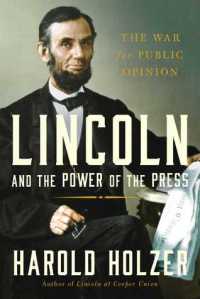
lincoln and the pressThis book is for the serious reader. Well researched and creatively conceived, it traces the influence of the newspaper on young Lincoln, and then follows its role in his emergence as a politician, as a contender for the presidency, and later the complicated relationship between Lincoln and the press during the American Civil War. It raises thorny, thoughtful issues regarding censorship; when do we hold the First Amendment dearest above all, and when may its authority be abrogated for the security and integrity of the Union?

It starts a bit slow, and I began wondering whether this would be one of those rare books that I skim and then review, as opposed to reading every word. Still…LINCOLN. I stayed the course and was rewarded. Just be aware that the narrative doesn’t really wake up until about the 30 percent mark.

Lincoln had amazingly little formal schooling. Though this was common…

View original post 867 more words

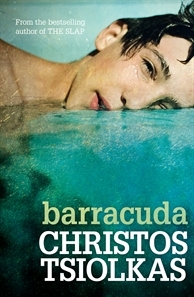
Barracuda, by Christos Tsiolkos*****

barracudaDanny Kelly is a swimming prodigy, and he is elevated beyond his humble working class origins by a sports scholarship. When he is in the water, he can fly. The water parts for him. His coach believes, and he himself is certain, that he is the strongest, fastest, best swimmer in Australia and perhaps the world. No one can beat him. His teammates nickname him “Barracuda”.

My thanks go to edelweiss books and above the treeline for the free peek.

The “golden boys” from the privileged classes live in the dormitory and come from all over the nation. The tuition renders it an exclusive place, one where the very wealthy can send their silver-spoon-fed young men without worry that they will consort with the wrong friends or marry below their station. Danny is twice-over alienated, because not only does he go home to his own little two-parent, two-wage-earner bungalow while his classmates head to the dorms, but he is gay. When some of his friends pair off into heterosexual couples, he keeps his own sexuality close to his vest. After all, he isn’t primarily gay; he is primarily a swimmer. He is stronger, faster, and better.

Early in the story the narrative breaks from present to past to in between, and so we know that right now he is an adult who works with brain-damaged adults. Between his youthful dream of an Olympic gold medal—at least one—and the present, he has been sent to prison for nearly killing a man. We are fed the pieces in small servings, and because we bond so immediately with the protagonist, it is agonizing as we slowly fill in the missing puzzle parts. What happened? What in the world happened?

It’s really dark out there. In fact, the cowardly reader in me was ready to jump ship and abandon the novel, given that it was so early in the story and yet things had already gone so wrong, but I couldn’t look away. This was up there with The Thornbirds for me. I can’t believe this book hasn’t been heaped with awards. My only possible explanation is that it is too edgy for the wider world; if so, it’s a shame. Tsiolkos deserves renown for what he has achieved here.

Another reviewer has noted the prolific use of the c*** word, one I could cheerfully see lost to the English language forever and always. The general use of profanity is consistent with the book’s harshness and although it makes it a more painful read, the discomfort we feel is part of the author’s design, and appropriate. Nevertheless, I wish he had chosen just about any word other than that one. Even with it, though, Barracuda is a strong, strong novel.

Dan’s journey is a rough one. In prison and out, words fail him, and he is constantly misunderstood. He lives for routine and is happy with menial labor after prison, but the entire family’s hopes and dreams have been fastened to him for so long that they can’t drop their high expectations. He finds himself avoiding his family because the weight of his failure and what it has done to the family who sacrificed for him is unbearable. He is still so angry, and there are important aspects of his life he has to resolve before it can be different. I’m trying to avoid spoilers here, because you have to read this book.

Danny’s family is so complex and so well-developed that I felt as if they were right here in the room with me. Of particular significance is the relationship that unfolds between himself and his cousin Dennis. The dignity of the story as it approaches its climax is breathtaking. Don’t assume anything here. There is no book like this one, at least not that I have found or heard of, and I have had my ear to the ground.

My one criticism is that the last chapter is superfluous. The story is over at the end of the second-to-last chapter, and that is where it should have stopped.
When all is said and done, we learn by following Dan Kelly’s life that there is more than one kind of victory, and there is more than one way to become a hero. Barracuda is a stellar novel by a talented writer; I’ll be on the lookout for more of his work. As for you, do yourself a favor and get this book.

America’s Revolutionary Heritage: Marxist Essays, by George Novack (editor)*****

americasrevheritageMany of the books I review here came to me as free advance copies. Not so for this often overlooked but meaty set of historical essays, for which I happily paid full jacket price. In fact, at one point I had a second, battered copy in my classroom, in the personal collection behind my desk alongside my second, battered copy of Battle Cry of Freedom. I used both more often than my other resources in preparing lectures.

This book is exactly what it says it is. It examines, chapter by chapter, revolutions as seen from an economic perspective, and from the point of view of the working class.

The American Civil War, my primary area of historical interest, was caused, says Novak, by two economic systems that had become mutually exclusive and incompatible–the feudal system of slavery (with a tiny minority of Caucasian power brokers ruling over the Black, poor white and racially mixed farmers of the still agrarian south), and the newly industrialized, capitalist north. The north needed to expand in order for capitalism to survive, but the southern aristocracy had ruined its own land with the nutritionally hungry yet profitable cotton crop. And the border states had taken up a trade seen nowhere before in the history of the world: the deliberate and planned mating of human beings so that their enslaved children might be physically strong, and bring higher prices.

Every chapter of this book covers a different aspect of revolution in the United States, but I recall the American Civil War strongest because it was my field for a number of years.

Whether or not you consider yourself a Marxist, if you are interested in American history, this well-documented series of scholarly essays is clear and thought-provoking, and well worth your time.

Available from Pathfinder Press.