Rhode Island Red, by Charlotte Carter *****

rhodeislandredNanette Hayes is a musician working the streets of New York. She doesn’t intend to become a sleuth, but when a Caucasian cop follows you home and is murdered in your front hallway, it’s hard not to get involved. And that’s only for starters! This savvy, sassy detective novel, the first in the series, will be released January 27, and you won’t want to miss it! My great thanks go to Net Galley and Open Road Media for the DRC.

I was initially drawn to this series by the cover, which is unusual in that it actually appears the artist knows what is in the book. I was looking for urban and gritty, and at first was taken aback when I got urbane and French instead. I have never been to France and don’t like jazz music, so most of the cultural references weren’t useful to my understanding of the character or her story.

But a good writer can pull in anybody from anywhere, just about, and that’s what happened here. Somewhere between the 20 and 30 percent mark, I felt the pace of the story quicken and deepen, and I was hooked. By the story’s last half, I was making notations so that I would not forget particular bits of linguistic and story-arc genius that showed as Carter’s tale unfolded.

Hayes is artistic, “self-involved, mercurial, emotionally unstable”, and she’s a chronic liar to boot, especially when speaking to her mother. But the tough stuff only runs so deep: her conscience, that smaller inner voice that she has named “Ernestine”, tells her to do the right thing, even when the reader is mentally screaming for her to go with naked self interest. Doing what seems to be right doesn’t always pay off, though, and before she knows it, everything has gone to the dogs.

As the bodies pile up, Carter uses a subtle, muted kind of House-That-Jack-Built method to build tension and focus the reader, repeating questions and issues and sometimes adding one more to what was there before. I have never seen it done quite this way, and it is fiendishly effective. Her use of figurative language is among the strongest in the genre, and all of this caused me to wonder why she was passed over for an Edgar the first time this was released. It must have been poor marketing, because the writing is certainly worthy.

This is about to be re-released January 27. If you enjoy a good mystery story, do yourself a favor and order a copy. Even if it costs you a good night’s sleep, you’ll be glad you did.

The Burying Ground, by Janet Kellough ****

theburyinggroundThis is the fourth book in Kellough’s Thaddeus Lewis series, but it was brand new to me, and I was able to follow the story quite well as a stand-alone. My thanks go to Net Galley and Dundurn Group for the DRC. This book comes out in early August, and I will run my review a second time on my blog then to remind readers that it’s available.

Kellough has merged two enjoyable genres, mystery or detective fiction and historical fiction, and added a splash of social justice–the sort that slides into the story neatly and without preaching. Lots of different story threads eventually braid together elegantly into an ending that satisfies deeply.

The settings are Montreal close to the time of the Industrial Revolution, and outside of Montreal in a village called Yorke. Our protagonists are Thaddeus Lewis, a Methodist Episcopal preacher who travels the circuit, and his son Luke, a physician who serves as the junior partner to a taciturn elderly doctor named Christie. At times Luke has his hands full; there’s a typhus outbreak, but it seems to be a mystery in itself why some entire households are spared while others are consumed and nearly none left standing. But no worries; that is not our only mystery, nor our chief one.

The primary mystery is that of the grave robbers. The sexton for the local cemetery, The Burying Ground, Morgan Spicer, has interrupted robbers who dig up the interred, but leave the body. Yet there are also some caskets that have two bodies in them. What’s up with that? An invigorating combination of red herrings mixed with interesting historical minutiae spice up the tale as it unfolds.

What’s up with the overly eager woman who resorts to a form of blackmail to lure eligible bachelors into her parlor? Why isn’t the local law protecting local Black folk from marauding American slave catchers looking to put them on the auction block back in the States?

Kellough tosses it up all up and keeps us on our toes. And now that I have enjoyed her work, I will look for opportunities to read the other three novels in her series.

Watch for this title, on sale this summer.

The Mermaid Chair, by Sue Monk Kidd *****

themermaidchairJessie Sullivan has a twenty-year itch. She’s stifled, confined, and irritated by her husband, Hugh, a psychiatrist whose professional knowledge makes him automatically correct in any difference of opinion. When the phone call comes telling them that her mother has deliberately chopped off her own index finger, Hugh tells Jessie to go, and once gone, she finds herself unwilling to return home.

Jessie tells Hugh she has to take care of her mother, but the truth is that she has to take care of herself. And the other truth is that she has fallen madly, deeply in love with a monk who lives at the friary next door. And it’s mutual.

Beneath the surface of her romance, old family business percolates, heats, expands. And something is about to blow.

Merely telling you the outline of the plot fails to convey the magnitude of this writer’s magic. If you have read anything else by Sue Monk Kidd, you have at least an idea of what she’s capable of. A few writers are capable of speaking to the reader as if there is no other reader; the whole thing has been written for you, and you alone. It’s deep, and it’s personal.

In my retirement years I have been devouring books the way I once did bags of chips. Sometimes a few months later I look back at the list of books I have read, and have to get online and remind myself what some of them were even about.

Yet there are others that strike a chord so deep and true that years, decades may go by and I’ll still remember them almost as if I had just read them. And this is one of those; I know it already. I actually stopped breathing a few times, I was so struck by her prose.

It’s possible that this may appeal most to middle aged women and those who are older, since that is the gender and stage of life of the protagonist. Yet in some ways such labeling is unfair, because women often read and are spellbound by novels whose chief protagonist is male, so it seems as if the reverse should be true sometimes. All I know for sure is that it really worked for me.

My copy came from the local library, but if I had paid full jacket price for this little treasure, it would have been worth every penny.

Pretty Ugly, by Kirkus Butler ****

prettyuglyIt’s vulgar, utterly tasteless, and very, very funny. Pretty Ugly, by Kirker Butler, a man who is no stranger to edgy comedy, skewers a whole herd of sacred cows within the confines of its humble two covers. Just be ready!

Thank you and thank you again to St. Martins Press and Net Galley for the DRC.

The Millers are a good Christian family. Naturally, they would never send their children to public schools; instead, they are home-schooled by grandma Joan, who receives personal messages from Jesus, with whom she has a personal relationship. Papa Ray is never home; he works as a nurse, popping whatever narcotics and other prescription meds happen to be lying around, treating them as his own personal escapist lottery.

Miranda, now a mother, was once a beauty queen herself, and she’s made daughter Bailey into the family’s own teensy beauty queen industry. Hey, who doesn’t love a good kiddie pageant?

“Fifty scantily clad prepubescent girls scampered about like the main attraction in a Bangkok coffee shop: sexy children marketed as wholesome family entertainment. The room reeked of anxiety, tanner, and schadenfreude.”

Ray has found every conceivable way to avoid going home. He’s taken a second job as a hospice nurse, working five nights weekly, imbibing his patients’ pain medications and waiting for them to die so he can put another notch on his belt.

And now there’s Courtney.

This won’t be a novel to everyone’s taste, but if you lean slightly to the left and like your humor dark, Butler’s soon-to-be-released gem may be right up your alley!  Watch for it in bookstores at the end of March 2015.

Long Way Down, by Michael Sears ***-****

longwaydownMichael Sears’ Wall Street spy thriller is an interesting and enjoyable read; 3.5 stars. Thank you to Putnam Adult Books, Above the Treeline, and Edelweiss books for the ARC. This book will become available in early February.

Jason has gone to prison for insider trading, and now he’s out. In reading this first person narrative, I learned a few basics about the capitalist market system, including the definition of an insider trade. In years gone by, I always told my students that there was never going to be a time when they felt they had accidentally gained too many (legal) skills or learned too much, and so I took that advice, Marxist though I am, and looked on with interest.

That said, the protagonist was only mildly sympathetic to me. The development of the character via his child, a first grader with autism (specifically Asperger’s Syndrome) made him more real and more likable. The writer injected just enough of this aspect of his character’s life to help shape his character, without permitting it to become a diversion. I was also very grateful that he didn’t take the cheap-way-out many mystery and thriller writers take, in having a bad guy kidnap, scare, or hurt the child. When the time came that it could be a threat, our affluent business consultant took his son and the nanny and flew them to the tropics, out of harm’s way.

And yet this is where an obstacle presented itself. Because he went to jail with a tidy sum salted away in an off-shore bank, our protagonist has far more money than many of us will ever see, even over the course of our lifespans. I was distracted by the number of coats he destroyed and then threw away, gave away, or just left lying somewhere. Cars, wardrobes…one can understand how anyone would do such a thing if his life was on the line; there’s surely no coat I’d die for. But it came to a head for me when the narration whined about the flight to Washington D.C. being too long, even for those in first class. I weep for you, I wanted to respond. Try flying from the West Coast to DC on the red-eye flight. Fly coach. Stand in the sun for six hours waiting for your part of the human chain to start marching and chanting; then repeat the red-eye flight home, and then go to work. Don’t snivvle over the hardship faced by first class passengers. And for heaven’s sake, don’t tell me about how the first class passengers look down their noses at business class.

It was telling that on his many airline flights, our fancy man never even mentioned flying coach as an option.

The story line follows our protagonist as he seeks to defend the man he’s working for when the latter is suspected of murder. All sorts of chase scenes, internet hacking, ducking into doorways, hiding, chasing, and fighting abound. And I have to say it kept my attention. The writer’s environmental concern is well integrated into the character’s narrative most of the time, but there is a scene at the end where it feels as if a public service announcement has been interjected. You’ll know it when you hit it.

Would I read more of Sears’s work? I most likely would, if I could find it at the library or used bookstore. I think he falls into the category of second-tier writers on my wish list: I would prefer to read his work to that of an unknown writer’s, but I also wouldn’t pay full jacket price for his work, or put it on my Mother’s Day wish list.

For those who enjoy a fictional romp among those with money and privilege, though, this will be a surefire hit.

Alexander’s Bridge, by Willa Cather ****

alexandersbridgeYour reviewer is presently finishing up a couple of ARC’s; meanwhile, let’s look at a classic that has kept its appeal over the years. There’s nobody who writes like Willa Cather.

Alexander is an architect who designs bridges. Right now he has two problem bridges. One is in Canada. Stunning, innovative, and unusual, it draws a great deal of publicity. The problem is that it’s flawed. In fact, as he comes to realize with horror, it isn’t actually safe.

The other problem is his relationship bridge; he has two women, one of whom he is married to in the USA, the other in London. That great big pond isn’t quite large enough to keep the two sides of his life from banging into one another. He loves both and doesn’t want to lose either of them, but he is essentially a monogamous person, and he doesn’t feel so good. He’s cheating on his wife and she doesn’t know about it; he keeps meaning to end it with Hilda, but when he sees her, he can’t.

The whole thing is resolved in a manner both brilliant and unanticipated until it is upon us. A novella rather than a novel, but quite well done. I do love Cather’s work!

Lucy Stone: An Unapologetic Life, by Sally McMillen ****

lucystonealifeThis well-documented, balanced yet sympathetic biography serves to advocate for the inclusion of Lucy Stone among the statues of great Americans at the Capitol rotunda in Washington DC. Currently there is a suffragist statue that includes Stanton, Cady, and Mott. McMillen makes a strong case that Stone should be there as well.

Thank you to Oxford and Net Galley for the ARC. The book will be available at the end of January.

The history of the American feminist movement is a cause near and dear to this reviewer’s heart. I have studied it, taught it, and lived it. I have marched on that Capitol numerous times in defense of the right of women’s reproductive freedom, despite the fact that most of my life has been on the West Coast of the USA, and that is one long ride. And so, having recently veered out of my historical comfort zone, here I found myself right back in it. And most of the information in this book, while useful, is not new to me.

The reader should know that although there is extraneous material that ought to be edited out, it is all at the beginning of the book. If you are interested in the history of the suffrage movement and/or American feminist history in general, get a copy of this book, and don’t be discouraged by the initial ten percent. It does get better. It probably won’t change the statues in DC., but regardless, what McMillen imparts here is (for the last 90%)thorough, well documented, scholarly, and unflinching when less attractive issues arrive (such as the race-baiting, anti-immigrant speech-making, and the squabbling after the split in the organization occurred).

Stone was a remarkable woman, strong, charismatic, and imbued with many ideas that were well ahead of her time. Unlike most of the women who participated in and lead the women’s movement of the nineteenth century, her own origins were not petit bourgeois, or middle class. She was born into a farm family that struggled financially, and still she attended Oberlin College, the first in the nation to accept women and permit them to attend college with men. Her education was not a gift doled out from parental largesse; she taught school in order to pay her way. (Her father relented when she was a senior and paid for the last year).There were a number of restrictions on women there that seem ridiculous now and that Stone fought against and sometimes won. Her steely determination, keen intelligence, and personal magnetism led her to be the first woman to enter the then-popular public speaking circuit.

In these days before the American Civil War and after the Industrial Revolution, there was of course no media beyond the printed word. Many people were hungry for new information and ideas, but books were very expensive and newspapers, though plentiful, were often incorrect and for many, insufficient. (This paragraph is not in the book; this is me speaking.) So it isn’t really surprising that those who had the time and the means would turn up to hear speakers on important issues of the day.

Many were shocked, McMillen tells us, to hear that a woman, a single, unescorted woman, had taken this path. Stone was considered a radical, but her musical, sweet-sounding voice and her petite countenance, which she deliberately dressed in black silk and lace to take off the edge, took many off guard, and newspaper reviews were often quite favorable. Over the course of time she became famous. She proposed things suggested by no one else, such as the advantage of a woman’s remaining single so that she could keep her own money and property rather than to turn it all over to her husband, as the law required should she wed. Further, she suggested, the law ought to be changed so that such a choice need not be necessary.

Later she met Susan B Anthony, and the two were, for a time, close friends, addressing one another by their first names at a time when only the most intimate of acquaintances did so. And just as their political agreement formed the basis for what appeared to be an unshakeable friendship, so it would later cause a rift, not only personally, but in the movement itself.

For those interested in women’s history, American history, contemporary history, or Stone herself, consider this a must-read. Skim through the extraneous bits at the beginning and once the narrative truly takes wing, it will keep your attention.

Flesh and Blood: A Scarpetta Novel, by Patricia Cornwell *****

fleshandbloodOnce I finally polished off Napoleon, I permitted myself to dive into the treasure trove of lovely brand new books that Santa brought. This little gem was right at the top of my “wanna” list. At this point, while she may be picking up some new readers, Cornwell is largely banking on her substantial fan base. Once more I found myself reflecting on what makes her novels so successful.

Because as she pointed out during an interview awhile back, this is completely unrealistic. Sure, she has carefully followed the procedures and science that govern what a forensic coroner does on the job; yet if she were entirely realistic, it would make for dull reading. A forensic coroner does not visit crime scenes, chase bad guys, partner with cops. She is no more likely than anyone else to be stalked, harassed, or threatened, nor would her family members be. (Although if it helps us here, we can accept that all of these things could happen to just about anybody.) Surely, she would not repeatedly engage in shoot-outs, pack a firearm, or be kidnapped repeatedly.

So what is it that keeps the reader coming back?

For me, it’s all about character development. Not only Kay, but also Marino, Lucy, and to a lesser degree Benton (whom she fleshes out a bit more here) seem almost as real to me as seldom-seen relatives about whom I hear stories second or third-hand. And the fact is, by the time we find ourselves reading #22 in a series, we have bought the premise, and she would have to mess it up pretty badly to shake us loose. Needless to say, that did not happen here!

In turns I read for hours on end, ignoring my family (and my blog); then I would realize how much of the book I had read, and I would parcel it out to myself in chunks to make it last longer. Finally I just had to know how it ended.

We start with six shiny pennies on the stone wall that surrounds Kay and Benton’s Boston home. They are about to leave for a vacation, but of course that won’t happen now. Because there’s something about those pennies. For one thing, though all are dated 1981–the year Lucy was born, and this hooked me even more, since my eldest son was also born that year–they have all been polished in a tumbler of some sort. They’re all lined up exactly evenly on the fence. And wouldn’t you know it, a serial killer appears to be loose, and he is using an unusual sort of copper bullets to do his dirty work.

I won’t ruin the rest for you.

Should you pay full jacket price for this book? I guess that depends on how much money you have, and whether you have read the rest in the series. I can tell you that popular series like this one often create a year-long back-up in the Seattle Library system.

If you haven’t read anything else by Cornwell, then go to the library or used bookstore, if this sounds like something you would like, and start with #1. That’s a cheap, easy way to get your feet wet.

But if you have read the other 21 with the same avid ferocity I have, you should probably just get a copy now. If the nearly thirty bucks it will run you is too rich for your budget right now, wait a bit; the hard cover price will drop dramatically when it goes to paperback, and we know it will.

Great escapist fun!

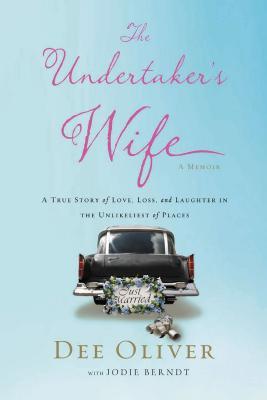
The Undertaker’s Wife: A True Story of Love, Loss, and Laughter in the Unlikeliest of Places, by Dee Oliver and Jodie Berndt***-****

theundertakerswife 3.5 stars. This interesting, accessible memoir will be published in March of this year. My gratitude goes to Net Galley and Zondervan Press for providing me with an ARC.

Dee Oliver grows up in a rarified atmosphere in Virginia Beach, where her parents own an oceanfront home. After completing her degree from a private college, she enjoys life and a series of part-time jobs that entail no serious commitment or career potential, supported by her parents. Eventually she is given a very Southern, Caucasian type of ultimatum: find a real job in which you can support yourself, or find someone to marry. It is understood, in this world in which debutante season actually exists, that the spouse in question will be a man, and that he will be a person of substance. A doctor is preferable, but instead, Dee marries a doctor to the dead, the co-owner of a funeral home.

Life is definitely different now. Dee and Johnnie, her newly betrothed, cannot travel for any length of time, since people don’t make appointments before dying and he could be needed any time. Their honeymoon is a three-way party: just the two newlyweds and the corpse in the rear of the car, being transported, by happy coincidence, to their honeymoon destination.

Their daughters grow up playing tag among tombstones and jumping rope with the velvet rope that keeps the mourners in line.

The one thing that surely does not change is her standard of living. Most of her friends, she tells us, would have to call the painters themselves. How fortunate that Johnnie understood that she needed the advice of a decorator, who would then call the painters personally!

This is a quick, almost flirty read as it begins, but because I make it a point (almost) never to read books by or about affluent people, I almost tossed the book down unfinished. But I knew that something about it had made me request this ARC, and so before throwing my hands up and abandoning ship, I went back to reread the synopsis. It was a good thing I did, because it gave me hope (as Christians like to say) of better things to come.

You see, Johnnie’s occupation taught him how to console and advise the bereaved, but it didn’t take him out of his state of denial about his own mortality. Dee packed him healthy lunches which he threw away, and bought him a gym membership which he never used. It caught up to him in his early fifties, in a sudden and final way.

As half owner of a funeral home, Dee realized that she should go back to school and get the credential necessary to do Johnnie’s job. However, once it was time for her internship, she whacked her well-coiffed head smack on the glass ceiling. No way, no how would her brother-in-law allow her to do such a thing.

It was at this point that Dee received one of life’s more valuable gifts: a new perspective. Riddick’s funeral home is in the African-American section of town, and its owner is not just a man of business, he is a man of the community. It is there that she was able to intern, and the results are really funny, because the area where she lives is exclusively pale, and Riddick’s funeral parlor is in an entirely Black area. Said one visitor, after enquiring whether she was a member of the press, and being told otherwise:

“ ‘So,’ he said slowly, chewing this piece of news the way a child might process his first lima bean. He wasn’t sure whether or not to accept it. ‘So what we got here is a white woman working in a black funeral home.’
‘Yes sir. That’s exactly what you got.’
‘Well, then,’ he concluded, ‘I guess you have overcome too.’ And with that, he tipped his hat to me and walked away.”

Along with her own unique story, Oliver provides us with a good deal of sound advice to follow now, while we are alive. Did you realize that if you die without a will, up to seventy percent of what you own may be taken as taxes? I don’t know whether this applies to those of us in humbler tax brackets than those in her milieu; Oliver did not specify. Either way, though, the point is made that those of us who are married and have divided the responsibilities of married life still need to be aware of a lot of nuts-and-bolts issues that it’s easy to ignore until someone has died.

Here, nobody knows better than Oliver. She has taken care of the dead, advised the bereaved, and she has been widowed. She really does know.

Everyone who writes a memoir is entitled to tell her own story with her own voice. Nevertheless, the class and religious biases here grated and could be toned down. She tells us that we need a “team” to be on to get us through the good times and the bad ones, and here are the teams she recognizes: Baptists, Catholics, Lutherans, Presbyterians, Episcopalians, and nondenominational …it isn’t going to get any more diverse in her world. Jews, Muslims, Hindus, Buddhists, and especially Atheists like me are going to “the other place”, as she describes it earlier in the text, since we have not asked Jesus into our hearts. There’s not a lot of wiggle-room in Oliver’s somewhat limited sphere. Your team may not even exist in her universe.

So should you read this book? I vote that you ought to. Most of this memoir is either light and amusing, or full of down-to-earth, practical advice we can use. Ditch what you can’t use; for example, if you work in construction all day and come home to an empty house, her earnest suggestion that rather than marry too soon after bereavement, you “hire a housekeeper” may not be a real world option for you. But eighty or ninety percent of her recommendations should work for everyone, and if the Bible verses don’t work for you, you can skim past most of them as I did.

The real question is whether you should shell out full jacket price for this book, and that question is a very individual one. If your lifestyle is similar to that of the author, then get one for yourself, and another copy for your BFF. If you’re married, get one for your honey, too.

If not, you may want to pick up a copy less expensively later on, or check it out from your local library if it becomes available there.

Either way, the sobering message to tuck important information where your loved ones can get to it is worth its weight in gold.

All That Glitters, by Michael Murphy*****

Reblogging given its release!

seattlebookmama's avatarSeattle Book Mama

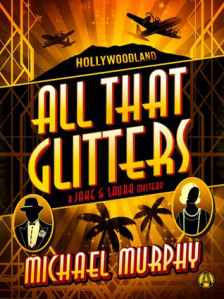
allthatglittersThis was a quick read, and a fun one. Don’t be left out in the dark when it hits the shelves in January!

Jake Donovan and Laura Wilson have left the Big Apple in their dust and gone to Hollywood, where Laura is about to enter a new phase of her career with a lead role in one of the new talking pictures. All That Glitters, the new episode of Michael Murphy’s Jake and Laura series, a cozy mystery  if ever there was one, is full of Depression-era flavor, complete with celebrities from the time and place in which is it set. The writing is tight and sassy. Murphy has penned a winner! My thanks go to Net Galley and Alibi Publishers for the ARC.

Jake has promised Laura that his risky gumshoe days are over; he is a novelist now, a new leaf turned over for the woman he…

View original post 169 more words