Careless Love: The Unmaking of Elvis Presley, by Peter Guralnick *****

CarelessloveThis is the second volume of the definitive biography of Elvis Presley, renowned as the king of rock and roll. The first volume is Last Train to Memphis: The Rise of Elvis Presley, which I have also reviewed. Biographer Guralnick spent 11 years with Presley, and he conducted hundreds of interviews in order to create a fond but balanced portrait of this key figure in American musical history. If you are going to read an Elvis bio, this is the one.

I came to read this through a combination of opportunity combined with respect for that historical role of this legendary musical figure. I was born too late to be much of an Elvis fan; he was falling fast as I was coming of age. By the time I was old enough to really hone my musical tastes, he had become a caricature who was mocked by stand up comedians. It was only recently, when I ran across the first volume in a used bookstore that I began to take a serious look at his career. I had read over 300 biographies and memoirs, and it seemed to me that anyone that takes contemporary musical history seriously ought to at least have a look at it, and so I did. I was amazed to find that before his tragic decline and death, he had enjoyed two decades of unparalleled success, outselling even The Beatles at one point. The first volume chronicled his rise to fame, and it was a lot more fun to read. This one is a like reading about the Titanic; it’s too huge to be ignored, but you know it isn’t going to end well.

Whenever I read a music bio, particularly of someone I did not follow closely, I get online and find the songs that are mentioned most often. As I read this one I moved from the book to my desktop and back again, checking out some of his work on YouTube…and I actually purchased one song, because it was catchy.

This volume takes up the life of our musician following his service during World War II. In Germany, he had met Priscilla Beaulieu, who was still in high school. Elvis was, for all his celebrity, not a real mature fellow, and she was just what he needed. He enjoyed her company while being careful not to break any US or military laws, nor damage either of their reputations. He wondered whether the American public would have forgotten him when he came back to the States, but thanks to the Colonel, his non-military manager who adopted the nickname for fun, he was very much in the mind of America’s teens.

“Colonel” Tom Parker was a real piece of work, a cold, calculating capitalist who would shove paperwork under the nose of Elvis’s grieving father the very day Elvis was buried lest the licensing of his image and music be usurped. Guralnick also gives a fair amount of detail to this old-school huckster, who nevertheless helped keep Presley’s musical career afloat for decades.

Elvis’s descent into the world of addiction and depression is a terrible thing to read about. Following the death of his mother, Gladys, who was the center of Elvis’s life, he struggled with insomnia. Though Guralnick never actually says as much, I got the feeling that he was afraid of the dark, and afraid of death. At night he always had a good-sized crowd of good ol’ boys ready to hang out with him at Graceland, rent the nearby movie theater during its off-hours for their private enjoyment, or enjoy the local entertainment when he traveled. Only when the sun rose did he sleep. And like so many celebrities that rose to fame before adulthood, he soon sank into a dark place where he had to travel with his pet physician, who would feed him Demerol and numerous other heavy-duty, hospital-grade drugs when there was nothing the matter with him that a decent diet and some exercise could not probably have cured, at first anyway.

The last years of Presley’s life were strange, and before he left us they became stranger. He did a lot of things commonly associated with bipolar disorder (my term, not the author’s): he couldn’t just buy a fancy car for his wife or girlfriend, but had to buy one for each of the guys, and then another for their wives. He bought houses for himself, and then he bought houses for others. He bought diamonds for himself, and each of the closer members of his entourage was given a giant diamond custom-set into a pendant with “TCB”, for “Taking Care of Business”, with his own signature lightning bolt all spelled out in smaller diamonds. He needed a ranch, so he needed a horse; then each of the guys needed a horse; they each needed a mobile home on the ranch and a truck to drive while they were there…and so it went. Vernon, Elvis’s father, was in charge of paying the bills, but when Elvis’s spending spun out of control, Elvis didn’t want to hear what his father had to say about it. He knew he was making money hand over fist, and the notion that he might truly go broke didn’t compute. Toward the end, as his life became more desperate, he decided he needed an airplane, customized inside so he could sleep while on board, and then he decided to buy one for the Colonel too.

It wasn’t just his spending that was bizarre. He developed a fixation on law enforcement, and he wanted to be a special private agent for the government so that he could turn in celebrities that used illegal drugs. (The irony would have been entirely lost on him, even had anyone had the guts to point it out.) He wanted a meeting with J. Edgar Hoover, and sent him an obsequious letter calling him the country’s greatest American. It didn’t work. He collected cop badges from departments in the cities where he performed; a few turned him down, but usually he could get them to give him one by cranking up the pressure while turning on the charm…and of course, as always, he gave a lot of gifts.

Then he decided to go to Washington D.C., and a desperate President Nixon, who had been spurned by nearly every celebrity musician and actor he’d ever had his people approach, invited him in and got him the badge he wanted.

But then, what’s a badge without the gun? Presley’s gun collection, together with his unsafe habits, sometimes firing a gun while he was personally loaded with a bellyful of narcotics just to get people’s attention in his home, frightened away the women that were in his life during and following his marriage to Priscilla and the birth of his daughter, Lisa Marie.

It just makes you want to sit down and cry.

The one time I visited New York City, I got a garrulous cab driver and asked if he had driven for celebrities. Indeed he had. There were some that were very rude to him, but he said Elvis Presley was a really respectful man, a true pleasure to drive around.

If you have never heard this legendary man’s music, get on YouTube or the streaming source of your choice and check out some of his work. Musically he was a genius, perhaps a savant, and that remained true for over a decade after he had served in the military. His place in musical history cannot be contested.

If you have a strong interest in music history and/or biographies, get this book, together with its companion mentioned above. It may be out of print, but used copies are not hard to come by. And keep a box of tissues nearby; this is one of the saddest endings you can imagine. A great legacy in spite of everything, and a tremendous tragedy.
The Expats, by Chris Pavone *****

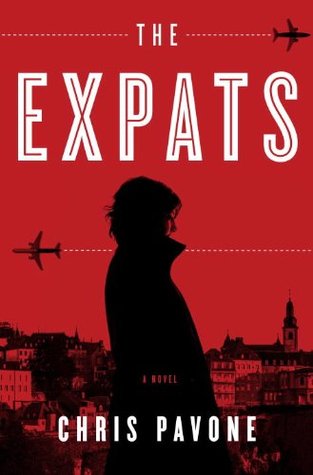
theexpatsChris Pavone spins one fine espionage thriller. I was introduced to his work when I read a galley of The Accident, the white-knuckle suspense story that follows this one. I was sufficiently impressed that I checked to see what else he had written. This first effort, which I borrowed from the Seattle Public Library, earned him the Edgar Award and a number of other kudos also. It’s a real page-turner.

Katherine is a mother of two young boys, and although her husband doesn’t know it, she works for the CIA; she has told him she is a government employee, and that she sits around all day writing position papers. She never inquires too closely into the life he led before he met her because she is afraid of the quid pro quo that must surely follow such questioning. The consequence is that she has been married for years to a man she doesn’t really know all that well. But he and the boys are really all she has; she has no other family to speak of.

She’s sitting on a mountain of unspoken experience. She has killed more people than she cares to remember. The reader is fed tiny shards of her memories in gradually increasing tidbits, and it is very effective in building toward the conclusion.

Her spouse Dexter, meanwhile, springs the surprise on her one evening: his work requires him to move from Washington D.C. to the tiny European secret-banking center Luxembourg. He works in I.T. in the banking industry as a security consultant, preventing hackers from thieving the bank’s massive resources. That’s what he tells her, anyway.

Relieved in a way, Katherine quits her job. The CIA doesn’t lift her cover, but they let her go little by little. Now she can finally focus on her sons, on her home, on her marriage…and so she sets up housekeeping in Luxembourg, enrolls the boys in school, enrolls herself in cooking classes during the day…and is bored out of her mind.

It was easy to buy the scenario as Pavone presents it, because it all figures. Who would join the CIA but a real adrenaline junkie? And what woman that has stalked other people, killed people, dodged those that stalked her or that sought retribution…what woman in such circumstances would not be bored out of her mind by cooking classes and shopping for area rugs and shower caddies?

It isn’t made easier by the fact that Dexter is always at work; that’s what he says, anyway. He is at work, on the road, in a meeting all the goddamn time. He spends an awful lot of time with Bill, another American expatriate, whose wife Julia seems a little too friendly to be true.

So is she merely acting like a CIA employee, governed by auto-suspicion? Or are these people setting off her spook-dar for a more substantial reason? And just what the hell is really up with Dexter? You would think the guy could show up for Thanksgiving dinner, for heaven’s sake!

If you have never read anything by Pavone, read this book first, and if you like it as much as I did, get The Accident second. Each is a stand-alone novel; they aren’t a series or sequential. But the second book is just a tiny bit better than this one, and I found myself slightly let down by an ending that seemed slightly too tidy. And in truth, I don’t think I’d have felt that way if I hadn’t already read something of his that is even better. In other words, judged against other thrillers written by other writers, this one is a sure-fire five star novel. Judged against Pavone’s subsequent work, the score shrinks a tiny bit.

The best part of all may have been the afterword. I always wondered about the research that went into writing spy thrillers. How the hell does anyone find out anything about the CIA, unless they are employed there and sworn not to tell? And Pavone tells us how he did it: he made it up. And that’s why it’s called fiction.

Guaranteed to absorb your attention for a long weekend and make all your own troubles look small.

Harvey Kurtzman: The Man Who Created Mad and Revolutionized Humor in America, by Bill Schelly ***-****

HarveykurtzmanKurtzman was a comic genius who was ahead of his time. He created MAD magazine and also left his mark in comic book history and in men’s magazines such as Playboy. My great thanks go to Edelweiss, Above the Treeline and the publishers for the DRC.

Schelly, another MAD alum, has fastidiously documented every aspect of this biography. It begins with Kurtzman’s birth to parents active in the Communist Party USA and the International Workers of the World. Kurtzman himself was not a Communist, but opposed racism and was a progressive thinker. He was educated at a public art school in New York City that was funded by the Works Progress Administration, which is where he learned lettering skills that would stand him in good stead in the comics industry.

MAD was a creature of its time, and Schelly suggests that even comics, which were frowned upon by the older generation, were a tool that young people used to break free of the repressive society of the 1950s. Kurtzman created war comics and horror comics for EC, and maintained a furious work ethic. His humor entries began as “Look Here!”, a single page of filler, and then grew when comics began to wane under the government’s newly devised Comic Code, which was itself a blow to the First Amendment and drove a number of comics out of business. In fact, MAD began as a comic also, but went to magazine format in order to break free of code restrictions. It never applied for code approval, and was a breath of fresh air and gut-splitting humor to those of us that grew up reading it. Unfortunately, he and Bill Gaines, the publisher, came to a parting of the way after the magazine’s first year had ended, so although his signature still graces the cover of every subsequent issue because of the continued use of his cover art, those seeking a biography of MAD Magazine (and I confess I was) are not going to get much of it.

Multiple examples of Kurtzman’s work (signed “Kurtz” with a stick-figure man following) are given full page space in this volume. My advice to you is that if you read it, you don’t buy it digitally. There is so much detail that as the text suggests, one needs a microscope to get it all at full size. Of course, mine was free, and reading it digitally was still a privilege in such a case. If you’re going to pony up the money, try to get it on paper. I think you’ll enjoy it more.

I confess I was personally never interested in comics, and Playboy magazine is a hot-button subject, and so I skimmed that portion of the biography.

Kurtzman was diagnosed with Parkinson’s in his late 50’s and then cancer as well. He died at 68 and was cremated.

Reading Schelly’s biography made me crave a coffee-table volume of MAD Magazine art. I kept a copy of this subversive little periodical tucked inside my biology text book in middle school. I ask you to imagine MAD Magazine and Watergate. I wish I had saved every issue, but I passed them on to friends, which is also a great thing to do.

MAD as we knew it is moribund. It was taken over–if I remember correctly, by the TIME people, but certainly by a big-business press–and it has been shrunk, commercialized and sanitized to where it’s no longer interesting. The work of Kurtzman, Schelly, Jaffee, and the other MAD geniuses was what made it so brilliant.

For those with a strong interest in comic art history, highly recommended. For those interested in MAD history, recommended if you can find it at a discount or in a library.

Away, by Amy Bloom *****

away Lillian escapes a pogrom after seeing her husband and parents viciously murdered and her little girl has disappeared. She was told by a neighbor that her daughter had drowned in the river, and so she allowed herself to be herded onto a ship bound for New York.

“In the fifty-seven blocks of the Lower East Side, just that day in July 1924, there are a hundred and twelve candy shops, ninety-three butchers, seventy saloons, forty-three bakeries, and five hundred thousand Jews.”

Away, strong historical fiction by Amy Bloom, is in turns poignant, fascinating, wry, and wrenching. It’s a great book, but it won’t lift your flagging spirits. However, a couple of amusing moments had a Keillor-like tug to them, and they kept the tone light enough to engage me.

Things aren’t going all that well for Lillian, and maybe that is why, when a cousin arrives from the old country and tells her that her little girl is alive, Lillian makes plans to go get her. Nobody will give her boat fare, but a dear friend hatches an alternate plan: she can head west across North America, go north into Canada, and then island hop her way across the Bering Strait. It’s a terrible idea, but if it will bring Sophie back into Lillian’s waiting arms, she’ll do it. And so she’s off.

Bloom is strongest when she is building characters and describing setting. By the time the book is over and done, Lillian is so real that even though I have half a dozen books I am also reading, I think of her fondly from time to time as one might when a good friend or much-loved relative that has been to visit and then gone home again.

That said, I didn’t like it as well as her most recent work, Lucky Us, reviewed earlier and available in my archives. But that is faint condemnation, because the latter was one of the best works of fiction I have ever read.

If you like well written three-hanky stories and excellent historical fiction, you can’t go wrong with Bloom. If your pockets aren’t deep enough for impulsive book buying, check your public library; it’s where I found my copy.

Officer Elvis, by Gary Gusick *****

officerelvisThat was absolutely ridiculous…and just in the nick o’ time! Many thanks to Random House Alibi and Net Galley for the DRC. This second installment of the Darla Cavannah mystery series reads just fine as a stand-alone novel.

I like to read several books at a time, and it was getting a little dark out there. The Blitzkrieg had broken out in the master bathroom, with Hitler’s troops having overrun Belgium and Poland and on into France. On my e-reader, Bull Connor had sent huge attack dogs and fire hoses against the teenagers of Birmingham, and Dr. King already understood he would not make it out of the struggle alive. And by bizarre coincidence, Elvis was already perched on my nightstand. We were in the Vegas years, and Priscilla said that on the nights he wasn’t performing, the man just ate and took pills out of boredom. And downstairs, even my fiction and humor were looking a trifle grim.

In situations like that, some foot-stomping humor is not only welcome, but necessary. In Officer Elvis, someone has murdered an Elvis impersonator in Jackson, Mississippi. The case goes to Damn Yankee transplant Officer Darla Cavannah. “Damn Yankees were the ones who came to the South and stayed.” She is assisted by her newbie partner, Rita, who “…might be a licorice stick short in the judgment department, but she ain’t afraid of the devil.”

Darla doesn’t fit in well in Jackson, but she has to stay because her husband is the last doctor in the state that will help women who want to terminate a pregnancy. If he leaves, they lose their access. And as if we hadn’t irony enough, Darla and her spouse are trying to get pregnant…but who has time?

I will grant that my fondness for this ham-handed satire is assisted by my own Yankee urban snobbery; and yet, I did have an Aunt Sister and not one but two Uncle Brothers of whom I was quite fond, thank you very much, and so if you are a Southerner, you just might enjoy this as much as I did…bless your heart.

It was a quick read and extremely accessible.

Who doesn’t need a laugh? You get online now, and you order you a copy. It’s up for sale April 21.

It’s for your own good!

The Last Word: A Novel, by Hanif Kureishi *****

thelastwordKureishi is a writer of considerable renown. Here he has created a story that is not only savagely funny, but the closest I have seen to technically perfect. A million thanks to Net Galley and Scriber for the DRC.

This wonderful gem will be available for purchase March 10.

Kureishi chose the title partially because he had planned it to be his final novel; to see what he has to say about his book, go here:

That said, there are several other spins you could put on this title. I don’t want to blow the ending, but the title is much more wry than Kureishi lets on, although he does point out in the above interview that it’s partly about the awkward nature of the biographer’s work, and how one might feel about “…having your story told back to you by an idiot.”

Harry is either a biographer or a parasite, depending upon one’s point of view. He has been sent out to stay as a guest in Mamoon’s secluded home out in the back of beyond, to interview him and those who love him, those who hate him, and anybody else who has any good dirt on him. Says Rob, his publisher: “Extreme biography. That is your job.” The stakes are high: if Harry should fail on his mission, he will be doomed to the halls of academia. He could even be forced to teach creative writing.

Dear god; the humanity!

But Harry is up for the job. He needs the money; he wants a career. And when one considers the number of women Mamoon has left unhappy, it would seem that there is a great deal of material to be mined. So nervous though he is, he rolls up his sleeves and tiptoes out to conduct interviews and write some trash.

For awhile the plot sort of hums along, and then it appears to wander. If you are foolish enough to stop halfway through the book, you may come away unimpressed.

But Mamoon is not merely the passively uncooperative subject he appears to be. The man is sly as hell. In the end, what will each of them become, and more to the point, who will do a hatchet job on whom?

As the ending unfurled I could only drop my jaw in amazement. It was so damn smooth! How did Kureishi turn that whole thing around that way? I don’t want to ruin it for you, so I will only tell you to read this book when it becomes available in March, and prepare to bow at the feet of the master. He’s somewhere on that highly literary “sinking rock” known as Britain, and he’s a better writer than you are. Well, probably.

Book review One Mississippi Two Mississippi: Methodists, Murder, and the Struggle for Racial Justice in Neshoba County by Carol VR George ***-****

onemississippi I was drawn to this title because it deals with the Civil Rights movement. Fifty years have gone by since the pivotal events of that time, and now, as a second movement unfolds in response to the disproportionate jailing of African-Americans and out-of-control cop violence, it seemed like a good choice. I have no particular interest in Mississippi as opposed to any other part of the USA, and absolutely no interest in the Methodist church, but I was willing to slog through the various ins and outs of church history in order to find the nuggets that were salient to the political struggle. Thank you to Net Galley and Oxford University Press for the DRC. I’ve rated this book, which reads as if it was perhaps someone’s thesis at some point, a 3.5 for general interest levels, but for those with a particular interest in Methodist history or the history of Mississippi, I suspect it would rate five stars.
Methodists take great pride in having participated in the Underground Railroad prior to the American Civil War, and George takes the church to task for having failed so miserably in upholding this standard following Reconstruction. As Jim Crow laws became the rule of the south, Caucasian Methodists in Mississippi closed their doors to African-American worshippers, and the central church administration, after a certain amount of struggle, folded like a card table. Separate churches became the law of the land. Only in recent years has this changed, and even then, change has been slow.
Neshoba County is of particular interest to Civil Rights scholars because it is there that the Freedom Riders, in addition to countless local black voters that opened their homes to Civil Rights activists and helped run the Freedom School, were murdered by the Klan and the cops; it was opened in the (black) Longsdale Methodist church to assist black voters in running the gauntlet of red tape and assorted obstacles through which its citizens had to pass in order to use the power of the ballot. In contrast to Longsdale, the Neshoba County town of Philadelphia is overwhelmingly Caucasian, and its vicious racism, along with that of most of white Mississippi, was a tough nut to crack. There has been progress made, but much work yet to be done.
I was aghast to see that 96 percent of white Mississippians supported the continuation of Jim Crow laws, and it was because of their conspiracy to keep the Old South in entirely white hands that it was nearly impossible to bring the killers of the Civil Rights workers to justice. Only recently have its residents been open to change. The Choctaw Indians opened a casino in the area and in doing so created more jobs, and therefore more turnover in those that reside in Neshoba County, and this is partially responsible for recent progress.
Should you go out and spend money on the hard cover book? I guess this depends upon how deep your pockets are, and whether or not you are interested in the history of Mississippi and of Methodism. I am glad I read it, although the recently re-released biography of Dr. King is unquestionably the definitive story of the Civil Rights movement. Still, for those that have the time and interest to read more than one book on the topic, and I hope you do, you could do much worse than to read this interesting study. I’m glad I did.

The Devil Wears Prada, by Lauren Weisberger ****

thedevilwearsThe Devil Wears Prada is a fun, light read. By now many readers will have either seen or heard of the movie, and I had too. I tend to create mental pictures of fictional characters, sometimes using actors, and other times inserting the faces of people I have known in real life. In this case, I could not imagine anyone other than Meryl Streep as Miranda Priestly, the boss from hell.

Andrea Sachs has finished college and yearns to write for a big-name magazine, preferably The New Yorker. She stumbles across the opportunity to break into the publishing world as Priestly’s assistant at Runway, a fashion magazine. This is a job with a high rate of turnover, and one can see why from the moment the position commences. There is no such thing as off-the-clock time. Sachs is on call 24-7, often for such trifling things as a gift for Priestly’s snarky twin daughters, or the ubiquitous dry cleaning. If it rains, Sachs is blamed. If a flight is late, Priestly wonders why Sachs couldn’t anticipate this problem and deal with it. Sachs is constantly demeaned and belittled, and she puts up with it because of the immense amount of power Priestly represents in her chosen field.

Sachs watches her relationships flounder as she is constantly required to break personal engagements in order to leap whenever her phone buzzes. She keeps at it knowing that at the end of a year with Priestly, her career in print journalism will either be made or broken by her boss.

The book spins an over-the-top villain at the perfect place in time. The book was published in 2007, and this was a time when the First World had just begun to realize the downside that is inherent in the brave new world of satellite-based communications. People that used to enjoy going on vacation and walking away from their telephone now take it with them, and this is often either a plainly stated part of their job, or a better-safe-than-sorry aspect of damage control. I didn’t have to do this during my twenty years as a public school teacher; so far, teachers really can carve out a part of their time away from the classroom purely for personal privacy and enjoyment. However, my husband is in the tech field, and though work didn’t phone him while he was away, he constantly checked into his work e-mail via laptop computer, insisting that it was better to know if a crisis was unfolding so he could be prepared to meet it upon his return rather than being blindsided and unprepared.

The movie version of the story develops Priestly a bit more and keeps her character from being a cardboard cutout. Unfortunately, the book doesn’t do that. But then, this is not serious literature; this is a romp.

Though many modern professionals are married to their phones and other devices all the time, Weisberger has spun a tale that will make just about anyone gratefully reflect that their own job is better than that. So like horror stories, part of the joy in reading this fluffy beach read is in comparing one’s own life favorably to that of the protagonist.

If you have a generous book-buying budget and want a fun read to pack for your beach trip or an escapist weekend at home, this one is a great choice. If your budget is tighter, try your public library; that’s where I found my copy. Unless you have a schedule like Sachs’s, you likely won’t have difficulty finishing this one by its due date.

Great beach read; fluffy escapist novel.

Blanche Among the Talented Tenth: A Blanche White Mystery, by Barbara Neely ****

“Everybody in the country got color on the brain…white folks trying to brown themselves up and looking down on everything that ain’t white at the same time; black folks puttin’ each other down for being too black; brown folks trying to make sure nobody mistakes them for black; yellow folks trying to convince themselves they’re white.”

Timely? Why yes! So isn’t it interesting that this book was initially published in 1994?

My many thanks go to Net Galley and Brash Books for a fascinating DRC.

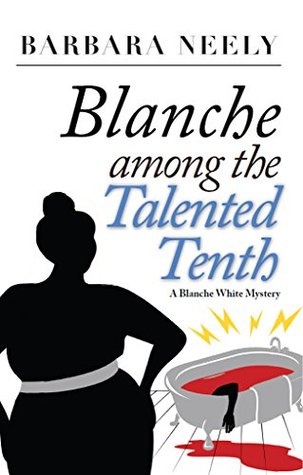
blancheamongThe Blanche White series is a mystery series, but Neely uses this approachable medium as a forum to discuss race, primarily the unspoken caste system that has developed about and among people of color in the United States.

In our story, Blanche is invited to visit a black resort on the coast of Maine. Her sister is dead, and Blanche is now a parent to her two children. This book is the second in the series, and we are told that during the first, Blanche had come away from a bad situation with a bundle of money that she dedicated to the excellent education of her two elementary-aged children. Now Taifa, her daughter, is anxious that she use a hair “relaxer” to straighten her ‘fro. It’s bad enough that Mama Blanche is eggplant-dark. Bad enough that she is not part of the black petit bourgeoisie, but a working class woman…a maid, no less! And so Taifa’s loyalty is divided; she wants to fit in with these pale, wealthy folk, but she also loves her Mama Blanche. Blanche in turn is torn. She doesn’t fry her hair, but she does have a conversation about it with the children.

Meanwhile we learn that a woman named Faith is dead, and it may not have been accidental. Like Agatha Christie’s Murder On the Orient Express, it seems just about everyone here has a reason to want Faith dead. That isn’t Blanche’s business, of course…until it is.

I do love a good mystery, and will cheerfully sit down to a tower of Blanche books if I can find them.
The cover is what drew me initially; I looked at the wide hips and thought this was surely my kind of woman.

But race is more than academically interesting for me; my own family is blended and my Caucasian children grown and gone, which has left me the only white person in the house. Most days I don’t think about it, but for years, planning the family vacation was both eye-opening and interesting. One child at home is Caucasian and Japanese; the other (was) African-American. We enjoyed Yellowstone, but heartily regret having been forced to stop for gas in the Idaho panhandle, an experience we will avoid in the future. Now my African-American son is grown and out of the house, but I will never look at the world the same way. It’s been a real education.

Surely anyone who looks at this book’s title understands that s/he is in for more than just a mystery story. The depth of analysis kept me flagging pages and rereading passages. I love the feminist spirit our hero embodies.

I did find it interesting that although skin, hair, and attitude were discussed freely, African immigrants never even made it into the discussion, let alone into the exclusive resort.

The social message somewhat dominates the plot, but the mystery is also a fun read. Highly recommended for those willing to confront today’s issues.

As for me, I loved the blend of story and message. Because really, until the United States deals with the escalating issue of racial inequality, particularly regarding African-Americans… I can’t breathe.

Home from the Hill, by William Humphrey *****

homefromthehillHome from the Hill, a National Book Award finalist about to be re-released, is the kind of story that lingers and affects the reader’s mood long after it is over. Upon completing the DRC, I felt a sense of loss that only comes with really splendid literature. So thank you Open Road Integrated Media, and thank you Net Galley for hooking me up. And if the spirit of the late, great author lingers among us, I want to thank him for tearing out my heart and feeding it to me with a spoon. It’s that good.

We know from the get-go that this one won’t end well. We think we are prepared for it. The people that live in that sleepy little Depression-era Texas town are a closed-mouthed lot, but the narrator is telling us things that the stranger in their midst doesn’t know. We know it’s a tragic tale because of this, but later we get so caught up in the magic being spun that we forget ourselves, and we cannot help hoping.

Boomer-gens like this reviewer may find colloquialisms and slang terms they had long forgotten; my own family, some of whom harkened from that neck of the woods, used them liberally some fifty years ago. Between this and the skillful use of setting and character, I felt as if I were sitting in the Captain’s den (though women are really not allowed there) listening to Chauncey spin his hunting stories, ones borne of longstanding oral tradition. I almost fell off the bed when I saw the word “larruping”. I had thought it was an onomatopoeia until I read it. I had forgotten the term entirely, but Humphrey brought it back, and I could hear it in my father’s voice, though he has been dead most of my life.

Ahem. The story. All right, let’s try this: what if Shakespeare had written Romeo and Juliet, but instead of his characters fantasizing and vowing not be Capulet or Montague, they had said, “Well of course, I am a Capulet, and you are a Montague, but we’ll give it time. They’ll come around.” But oh my my my, they would have been so very wrong. Nobody is going to do anything of the sort.

In a sense, Humphrey almost makes Shakespeare seem shallow, because the foundation of his tragic love story is this: we may love someone our families may not prefer, yet we are still what we came from. Even as we strive to be better people, different people than those who bore us and those that came before them, a piece of them remains at the core of what we are.

So although Theron wants to be someone better than his mother and certainly better than his father, it’s just not that simple. He is an independent, whole new person, with his own ideas, dreams, and resolutions…and he is still his father’s son. And he is still Hannah’s lad.

Libby loves her parents dearly, and when things go wrong, it is them she turns to. But of course, there is Theron. She loves him, and nobody else will really do. Surely, in a world made of fine people with the best of intentions, there ought to be a way?

Not so much.

I’ve read a few sad-sack reviews written by former literature students who have whined that they were required to read this in college. I want to smack those people upside the head and tell them to be grateful, and maybe go back and read it again.

All I know for sure is that it not only immersed me in another time and another place…it also reminded me of who I am.