Pleasantville, by Attica Locke *****

This is a really strong work of fiction, and I reviewed it a hundred years before it was due to be released. It will be on sale April 21, and so I am reblogging it today. Don’t miss it!

seattlebookmama's avatarSeattle Book Mama

pleasantvilleJay Porter has a full plate, and so his legal career has been set on cruise control. Money is the least of his worries; he is successful, and has won a very large case, though it hasn’t paid yet. No, his issues have to do with family, and with grieving. And with grieving. And with grieving. His wife Bernie died young and fast due to an illness that she knew she had, but had chosen not to share. She pushed him to follow through on his enormous case against the oil company that had sickened, even killed people in their own close-knit, middle class African-American suburb outside Houston, Texas. It was important to everyone that the families affected experienced justice. But now he wishes he had spent more time by his wife’s bedside and less in the courtroom. His self-hatred for the time spent away from his wife and two…

View original post 910 more words

Lost in the City, by Edward P. Jones *****

lostinthecityEdward P. Jones needs my review like Shakespeare needs my review. He is one of those literary luminaries whose work is timeless. Nobody can teach anyone to write like this. Either you have it, or you don’t. We are fortunate that he does.

This wasn’t a digital galley; it was a Christmas gift. That’s how much I like his writing. So I guess my purpose in reviewing someone this renowned is perhaps to draw attention to him for those that haven’t read his work yet.

I read this over the course of almost a month, short as it is, and I did it that way because it’s so painful. In this respect he is similar to Russell Banks: peerless, brilliant work that is also so sad that you just about have to sit down and cry when you finish. And because of this, I was glad to have a short story collection, because I could read a whole short story, put in the bookmark, then pick something else up for a little while to cheer myself up. Then when I was over it, I could pick it up and read another one a different day.

All the stories are set in Washington, DC, and all have to do with alienation and a sense of loss. I think the story I admire most is “His Mother’s House”, but all of them are strong.

The first book I read by this author was The Known World, which won the Pulitzer. Now I need to get a copy of All Aunt Hager’s Children.

We Install and Other Stories, by Harry Turtledove ****

weinstallScience fiction is a big house with a lot of rooms. Turtledove has managed to leave his calling card in almost all of them, and includes a couple of thought-provoking essays as well. Once again, I send hearty and heart-felt thanks to Net Galley and Open Road Integrated Media for permitting me to glimpse this collection in advance, and free of charge. It goes on sale in August of this year.

I used to read more science fiction than I do now; one reason is that a big branch of it has veered into tech-speak that requires more knowledge than I possess in that field. But another reason also occurred to me as I read these stories, sometimes voraciously and at other times more tentatively, and that is that sci fi requires a flexible mind, and as we get older, our brains don’t bend as readily. Now that I know it, I will require myself to read it more frequently, because they say to use it or lose it, and I’m not ready to surrender yet. I did find that there were too many characters and relationships introduced in too little time for me to keep up with “Down in the Bottomlands”. This one won the Hugo Award, so I am fairly sure the flaw is mine rather than his. Maybe those of you that are younger and more oriented toward this genre will find it more to your taste.

However, I loved “Hoxbomb”, a thought-provoking twist on the notion of computers having intelligence of their own. And I actually laughed out loud during parts of the first selection, “Father of the Groom”, and also “Birdwitching”. The temerity of “Under St. Peters” left me nearly breathless with admiration; the guy will end up on the Banned Books list for sure if this collection sells well.

Maybe most intriguing of all is the subgenre of alternate history. Turtledove’s essay made me want to roll up my sleeves and write again. How much fun could it be?

All told, this is a meaty collection that the sci fi lover should read when it’s possible to do so. I promise you’ll have a great time, and stretch your mental muscles in the process.

Memphis Ribs, by Gerald Duff ****

Memphis RibsIt’s tourist season in Memphis; the Mississippi Delta land is filling up with convention-goers and barbecue lovers. They’re fixing to parachute in a couple of whole hog carcasses, but not until after the Cotton Queen goes by on her float. And this being Delta country, the float really is a float; it is a barge made over, and she is much more concerned about keeping every hair exactly where it belongs than she is about finding out who killed Daddy the other night. Okay, actually she pretty much knows, and it was badly done. But damned if it’s going to spoil her special day. As for me, I just want to say thank you to Net Galley and Brash Books for the DRC. It’s been a dark but enjoyable viewing.

So let’s have a chat, just the two of us, about the best way to break into an ATM machine. Never tried it myself. I would never have thought to do it the Memphis way, so maybe it’s just as well I turned out to be more the sort to read and write things and less the criminal type. Because frankly, I never would have considered just ripping the thing off its moorings with a forklift and driving it away to where I could tear it apart in privacy. Franklin Saxon is more suited to this kind of activity. We’ll let him do it, or at least direct the hired help to do it. Well, for as long as he can, anyway; things don’t go well for him up the road a fair piece.

As for our local cops, JW Ragsdale just wants to get out of Memphis for a bit. It’s so humid, so crowded. The bugs alone will make you crazy. If he can launch an investigation that will take him out of town, preferably with a fishing pole and a six-pack in tow, he’ll be happy to fill out the paperwork saying he’s been on the job, been conducting critical interviews.

How sad for him, then, that he is so good at his work. One interview leads to another, and before you know it, the man is right in the thick of all sorts of drug smuggling, fraud, thievery and yes, oh yes…murder. It ain’t so much a holiday after all, and looky here, even the barbecue done turned rancid. It really isn’t his day.

The Bones family figures prominently; they’re employees of Franklin Saxon, recently bereaved son of Aires Saxon. The hard part is not sampling the merchandise.

“ ‘Shee-it,’ said Stone Job. ‘Shee-it. Merchandise. Why you call it that?’
“ ‘Fool, that’s what it is. That’s what we be buying and selling. Why you think we
done made a withdrawal from the ATM the other night?’”
“’To pay the white man the money for the rock. That’s why.’”
“’Right, you getting it. That be the Bones business…Free enterprise, motherfucker.’”

At first, with my political antennae always on alert regardless of genre, I was concerned about the negative depiction of African-Americans in the story. Were we going to veer toward stereotypes here? And what is up with the use of the word “honky”, which I hadn’t heard since the 1970’s?

But not to worry. This little tale treats everyone with equal irreverence. In fact, the very best, sickest humor, to my way of thinking, was the scene at the pork processing plant, when JW indulges in a little fantasy of his own regarding the speed-that-line-up foreman.

Trust me.

If you are squeamish, if you can’t deal with sick humor or gruesome interludes, give it a pass, already. It isn’t half as gross as most of what’s on television, but never mind; the point of dark humor is to enjoy it, and we want you to have a good time here.

If, however, you can read Janet Evanovich and The Onion and come away holding your sides, then this little goodie just might be up your alley. Originally published in 1999, it will be released in digital format May 5.

I recommend you read it separately from meal time, though.

Dr. Sleep, by Stephen King *****

Dr.SleepFirst of all, let’s give credit to a writer well past the age of official retirement, who not only writes a bad-ass, award-winning sequel to The Shining, but calls it #2 in the series and is obviously planning at least one more volume. I am not the first to salute Stephen King for his outstanding writing and his unstoppable imagination, but I do so anyway.

Next, let me get this off my chest: I’ve heard more than one person inquire whether they “have to” read The Shining in order to read Dr. Sleep. My admittedly caustic reply here is that if you are willing to read 600 pages of a complex novel and not entirely understand the multiple references he makes to the original novel, then go right on ahead. If it weren’t a series, he would not name it #2. Get it? Go. Read. The Shining. First. Or fuggeddaboudit.

One thing that always strikes me when I read King’s horror novels is that though they deal with seriously spooky material, at their foundation is a bedrock sense of decency. In fact, maybe they work better that way, because they remind us that there is something really excellent in the human spirit that is worth defending.

In this case, we have a group of oldsters that look like senior citizens, to the casual human observer, but who are actually over a hundred years old, and who live off the “steam” emitted by the death of young people that have The Shine. It’s much better if the young folks die slowly and painfully; there’s more steam to breathe in. They call themselves The True Knot. They travel in motor homes, roaming the country much of the year in search of…uh…sustenance.

Abra is thirteen years old, and her family has known for a long time, in an uneasy, back-of-the-mind way, that she has special abilities. It all started when she was an infant, and it freaked them out, but they loved their little daughter, and her uncanny abilities included reading the responses of others. And so, as she grew toward adolescence, she let them think she had outgrown The Shining, because they wanted it to be true.

But things have changed. Abra’s Shine is so powerful that Rose, the leader of the True, can sense her far, far away. Rose wants Abra’s steam, and she intends to have it.

But it cuts both ways, because Abra knows that Rose and her evil cadre have killed children, and she wants them to see justice. Not cop justice; you can’t take something like this to criminal court, even if cops will believe your story. No, she wants, if you’ll pardon the pun, True justice. But to get it, she’s going to need help, and Tony–the “ghostie” boy who once helped young Danny Torrence through a very rough spell at The Overlook Hotel in Colorado–can hook her up with the man he assisted, now a middle-aged hospice worker in New England. Dan helps those who have to pass to the other side. He eases their suffering, and he lets them go. But now it is more urgent that he help Abra, to defend her from the True, and avenge the deaths of the children they have murdered.

And within this tale we have the ultimate question about mortality. If I were going to guess, I would say King has made his peace, at least to some degree, with death, and maybe he even used his own writing to work through it. Because most of us that aren’t convinced that Jesus  or some other supernatural deity is there to provide us with a whole second, even better life have a somewhat panicky response to the notion of our own death. It’s so damn final.

But in an oblique way, King reminds us that when we leave, we make room for someone else to be born. If science could unlock a cure for death, find a way for the Boomer generation (or another) to stick around forever, the population of the Earth would grow too large for the newbies to thrive.

I don’t mean to frighten King’s readers–and those considering reading him who have not yet done so–into thinking this novel is some hectoring lecture. It isn’t. It is a tautly paced thriller with supernatural components. Nobody receives this many awards as a fix or a fluke. He earned them all.

Yet for those of us on the downhill slope of middle age and beyond, the underlying message resonates: at some point, we have to get off the merry-go-round and give someone else a turn.

Once in awhile people ask me to name my favorite Stephen King novel. It has been impossible for a long time, and just got even harder! All I can say to you is that if you have read The Shining, you just can’t miss this one. I found mine in a used bookstore, and it was still a bit pricey for me, but as a source of recreation, I knew it would be a great investment…and I was correct.

Brilliant!

A Slant of Light, by Jeffrey Lent *****

This title–one of the very best–comes out Tuesday, so I am reblogging it. And Happy Easter to you, for those who celebrate it.

seattlebookmama's avatarSeattle Book Mama

aslantoflightSome great novels are painterly, and we sink into them like a warm bath, lost in a wholly different time and place. Others are hair-on-fire page-turners that leave us unable to do one single thing until the book is done. Lent has managed to combine both kinds into one brilliant work, creating tangible characters and a setting that is nearly palpable as well. My thanks to Bloomsbury Publishers and Net Galley for the DRC. The book will be released in early April 2015.

The novel opens with a scene of horrible violence; think of The Shawshank Redemption, or of Deliverance. Then we walk the string back to see whence it all came, and we see it from a variety of perspectives. Only then can we move forward to the conclusion.

Malcolm Hopeton has fought in the American Civil War, and refused to buy his way out of his duty to…

View original post 344 more words

At the Water’s Edge, by Sara Gruen *****

This excellent novel was released March 31, so its review gets an encore.

seattlebookmama's avatarSeattle Book Mama

bythewatersedgeBy the author of Water for Elephants comes a gripping tale of cowardice,deception, love, and heroism. My great thanks go to Net Galley and Random House for the DRC. It was a quick read and a great deal of fun.

The setting: World War II, primarily on a remote Scottish island. The story: three spoiled, wealthy, entitled brats misbehave publicly and are sent away by their chagrined parents. Since their allowance has been cut and they have to get gone anyway, they decide it might be just the thing to track down the Loch Ness Monster; not only will it be heaps of fun, but Father will be so pleased. He always wanted proof it existed! And what war? When one is wealthy enough, one cannot possibly be in danger! Just haul out the cash and start bribing others. Nothing to it, really!

Now we’re cooking. We’re on a remote…

View original post 233 more words

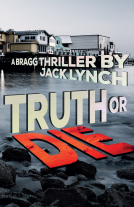
Truth or Die, by Jack Lynch *****

truthordie“These fellows in their cammies offering their guns for hire would know about things like T-ambushes, wind drift and long-range rifle fire, and maybe a boobie trap or two. I knew about close-in fire, street work and fear.”

Originally published under the title “Monterey”, this is the sixth installment in the Peter Bragg series, and the pace is as taut as piano wire. Don’t count on falling asleep just after you finish it; allow time for your heart to stop pounding and your blood pressure to ease up a bit. It’s an outstanding thriller that left me breathless.

It’s a shame the writer is no longer living and can’t write a bazillion more novels for us to enjoy; he could wiggle a finger and I would follow him anywhere. His series does not have to be read in order; this one is great as a stand-alone novel. And by now I am also supposed to have told you that thanks to Net Galley and the lovely fellows at Brash Books, I read this free as a DRC. Had it cost me actual dollars, it would have been well worth it.

Bragg is back in California where he belongs, and he’s spending some time with girlfriend Allison Stone. Whilst on vacation, however, an old friend of Bragg’s is widowed, and is a suspect in her husband’s murder. She’s not a very nice person; in fact, she’s a pain in the ass. But Bragg is convinced of her innocence, and she has even gone to her relatives, hat in hand, in order to come up with his fee. He’s in it now, and Bragg always plays to win.

Though it’s set in the 1980’s, the lack of technology (no satellites; when you are stuck out there alone, you are seriously alone!) and Bragg’s hard-boiled demeanor give this series a strong noir flavor. I appreciate a detective that knows he needs to have his gun handy. This is the USA, for heaven’s sake! Bad guys always pack heat. We retired school teachers can stay inside, lock the door, and let the dog guard our homes, but Bragg is chasing bad guys, and he goes in prepared. It’s a good thing he does.

When things start to heat up, he tells Allison that the situation has become dangerous, and she should hop a plane to San Francisco. He’ll take her to the airport himself. And she says she’s not doing that anymore; she needs to know what it’s like to live with his vocation. They’re getting serious; he wants her to marry him. Let’s find out right now what this whole thing is like.

Turns out, that’s a terrible idea.

Bragg is such a strong protagonist, and the way Lynch bounces his street-smart persona off the smug, wealthy folk that live in Carmel, Bel Sur, and other hoity-toity beauty spots is masterful. The climax made me want to stand up and cheer. What a total bad ass! Way to go.

The best news of all is that this little hummer was released digitally in February, so you can have it right now.

Don’t leave home without it!

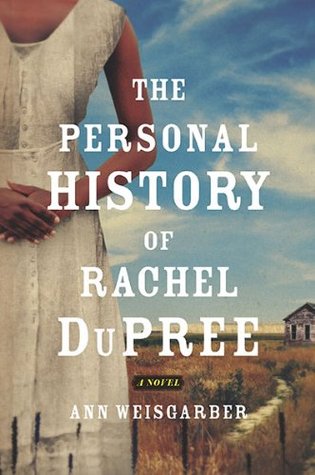
The Personal History of Rachel Dupree, by Ann Weisberger *****

thepersonalhistoryofracheldupreeRachel has married up. She used to be a hired girl working in the kitchen at Mrs. Dupree’s boarding house. Mrs. Dupree was forced into taking in boarders when  she was widowed, but she has done quite nicely for herself. She is among the cream of Chicago’s Negro community, and the women she entertains are light-skinned and at least four generations removed from slavery. Imagine her tremendous dismay when her only son, Isaac, comes home from fighting the Indian wars and announces that he is moving out to the Western territories to stake a claim and become a common farmer. “Rancher,” he reminds her. And if he marries a single woman who has also staked a claim, he will have twice as much land once they marry.

And so he stakes a claim on Rachel’s behalf, and she gets her heart’s desire: she gets to marry that handsome young officer. She becomes Rachel Dupree.

Roll the film forward about 14 years. Rachel is pregnant with her eighth child. The Badlands, “a country so backward and harsh that even Indians didn’t want it”, has had no rain for a long, long time. To get a little water, they have to tie one of their children to a plank and lower her on a rope to the bottom of the well. Liz doesn’t want to do it anymore. She has nightmares. There’s a snake down there, she says.

But their tongues are thick from lack of water. There is grit between their teeth. And they will lose the horses and their only milk cow if they don’t water them.

So at bedtime, Rachel tells her five surviving children to take just one sip of the water Liz brings up.

Are you spellbound, or are you horrified? I confess I was both. I live in the land of water. In Seattle there is moss growing on everyone’s front steps or porch, and if we aren’t careful, it will grow on our fences and our homes! Most of us don’t bother with umbrellas. We’re used to the fine mist that generally falls during the day. Most of the good hard rain falls at night, and it lulls us to sleep better than a lullaby. And yet, we send the kids to school carrying a water bottle anyway, because hydration is so important.

“Only a sip.”

I’m not the only one that doesn’t care for that. Rachel has about had enough of it, too. For one thing, there are no Negro families anywhere nearby. Isaac had told her that plenty of the men with whom he’d been enlisted had filed for homestead claims, but any that may have been nearby have gone on home. They can’t take it here. And actually? The white folk can’t stand it either. Every time someone goes home, Isaac buys their land. Every time there is a spare dollar, it does not go for a coat for the child who’s outgrowing hers; not even for fabric for Rachel to sew some new clothes. Rachel herself has a patched dress and a pair of work boots. What a contrast she makes from the finery she wore on her wedding day! And she is worried about their eldest daughter, Mary, who will be the right age to start dating soon.

The final straw is broken when Isaac buys out yet another departing neighbor–Rachel’s closest friend, too, as luck would have it–and there is no money at all. There is no money for winter provisions, even, and the kitchen garden died when the rain didn’t come. There is nothing, nothing, nothing. And his game plan is to work the gold mine in Lead, South Dakota, which is far enough away that he will be gone all winter, and she and the children will be left with a brand new baby and thousands of miles to ranch unassisted. And no food.

But hey, he believes in her. He’ll go hunting, maybe bag a bear together with his son, and between that and Rachel’s amazing know-how and steely determination, everything will turn out fine!

Not so much.

A strong subplot involves the local American Indian population. Homesteaders who are hungry, thirsty, and have almost nothing but the land on which they live and try to ranch are sometimes resentful of the “reservation Indians”, who have been stripped of their dignity and culture in exchange for free food, rent, and clothing (“free” being a relative term, of course). Isaac was one of the soldiers that subjugated those same Indians; when Rachel is alone on the ranch for days on end and Mrs. Fills the Pipe and her children pass by, Rachel craves company so desperately that she invites them to rest on her porch. She makes the very dead last of her chokeberry tea and serves it to Mrs. Fills the Pipe and her daughter.

“Our water?” said Liz. “You’re giving them our water?”

Liz had a point there; she was the one went down the well to get it. And yet, the good turn, though it upsets Isaac when he hears of it later, is not misplaced, and does not go unrewarded. And eventually Rachel thinks back to the things her hero, Ida B. Wells-Barnett, said in the Negro press (I use the term as the writer does, for historical purposes), she does not regret the gesture, except for the fact that she served them on the front porch when she should have invited them into her precious parlor.

I didn’t read this book as a galley, I got it at the local library. A galley led me to Weisberger, though. I read The Promise a year or two ago and decided that this writer was going on my to-read list. This makes two winners out of the two I have read. And on top of it all, Weisberger is a Caucasian writer (or appears to be; at any rate, she isn’t Black.) This is only the second writer I have encountered that could write a first-person fictional narrative in which she provides the voice of a Black woman, and does it creditably and with great dignity. I bow in awe.

And although I was already sold on the book and its author, the mention of Lead, South Dakota, nearly made me jump out of my skin. That is the tiny town where my late father was born, and its mine (gold but also iron ore) is where my late grandfather contracted the black lung disease that would eventually kill him. For those interested, it is pronounced “leed”. Maybe it’s too embarrassing to admit your home town is named after the mineral it produces, or maybe it’s a positive connotation, like leadership. My only visit there took place when I was a pre-schooler, and I have very few memories of it, all of them related to family rather than place.

Forgive the digression. All told, this is really strong historical fiction. If you want to read something a little different from most of the stuff that’s for sale; if you like stories of the homesteading movement; or if you want a story that features African-Americans in a positive light, this is your book. If you just want a great book to curl up with at night while the spring rains pass, this is your book too.

In short, highly recommended.

The Missing and the Dead, by Jack Lynch *****

themissingandthedeadJerry Lind is missing, which is especially strange, given that he knows he is about to inherit a small fortune. It seems unlikely that he would take off for a long time without letting someone know about it. He ought to be back by now. Moreover, the next people in line to inherit his share are also wondering if he is okay. Not that they hope he isn’t. Of course not! And at this point I have to break my narrative to let you know that I was fortunate enough to get this DRC free, courtesy of Net Galley and Brash Books. It was previously published in the 1980’s and is just now being released digitally.

Back to Jerry. No, never mind, forget him for a minute. Let’s talk about our assassin.

Our assassin is not getting any younger, and his wife is exhausted from all the moves. Every time he carries out a contract, they have to either abandon their stuff or get a truck, and over years and years of professional killing, it wears a woman down. She wants a garden. From now on, he needs to either make do with the significant amount he’s squirreled away from his successful if messy business, or he’s going to have to goddamn hide the bodies.

It’s the least he can do for her.

Peter Bragg is our man. Jerry’s sister hires him to go to Barracks Cove, where Jerry was supposed to be running a professional errand, and see if he can’t track him down. And Bragg goes in prepared. If you are sick of reading wussy narratives that give flimsy reasons for the intrepid sleuth not to carry a gun and make sure he has bullets, this is your guy, and this is your story. Has he ever fired that thing? Oh yes. But not just for practice…in the line of duty? Again, oh hell yes.

And it’s a good thing, as it turns out.

By the time the thing is over, a great deal of action has taken place, and though I am a six-to-eight book-at-a-time reader, the urgent, taut narrative (reminiscent somewhat of the Richard Stark detective novels from about the same period) grabbed me by the front of my shirt and held me there until the last page was turned.

It was nominated for an Edgar, and the clever juggling of setting and character development, along with a plot line that is unbelievably lean and compelling, will probably leave you wondering, as it did me, why he was denied and just who exactly did get it.

The consolation? If you have a kindle, you can read this book right now. Change the window on your screen and order it up. You’ll have an excellent weekend…if you can wait that long!