Wings in the Dark, by Michael Murphy ***-****

wingsinthedarkMichael Murphy’s Jake and Laura series is both engaging and interesting, the best blend of historical fiction and detective fiction I’ve seen in a long time. Until I got halfway through, it was headed for the land of five stars, and I am not sure how objectively I’ve been able to review it since that point. But I went with my gut, and ultimately, when it comes to fiction, that’s what every reader uses to judge a book. Thank you to Random House, Net Galley, and the author for permitting me a sneak peek; this title will be available to the public August 31.

Jake Donovan, our intrepid detective-turned-novelist, is working on his latest Blackie Doyle novel, but he takes a break from work to honeymoon with his bride, the famous actress Laura Wilson. He has sworn off detective work at her insistence, and has decided he likes being a novelist better, anyway. Fate intervenes, however, when Laura’s good friend, Amelia Earhart, finds a man dead near her plane.

It’s shaping up to be a really great story. At this point, I am noticing the level of historical detail, and thinking of this as potentially great classroom material. A number of public schools teach language arts and history in a block simply titled “Literacy”, and since so many young folks have reading skills that aren’t up to snuff, sometimes the best way to teach history is by partnering it with historical fiction. The book is clean enough that no one is going to race to the nearest school board meeting to complain; no explicit sex. The possibility is exciting, for teenagers and perhaps also for the author and publisher. There are some wonderful, positive depictions of women, who were active in non-traditional roles during this time period. What a great book for teens as well as adults!

It was then that I ran into the “J” word. Here, once I got past the slapped-out-of-nowhere feeling that racist terms generally evoke, I asked myself whether the historical circumstances of the novel merited the inclusion of this term in place of the correct term, “Japanese”. I also reminded myself that the rest of the book might be free of the term, and I could just push past it, as sometimes one must, and return to an appreciation of the story’s period flavor and nicely woven plot.

The problem here is that the word kept popping up in nonessential places, as if it were a bit of window dressing, and it was accompanied by some rather nasty language about that group. And again, it was a word used commonly during the time period by Caucasians and some others. For that matter, so was a lot of racially and ethnically derogatory language; even in the early 1960’s, I can recall hearing casual conversations peppered with anti-Black, anti-Jew, anti-Italian terms when nobody was angry; it was just the way some white folks talked without even thinking. But most writers today would not choose to evoke that part of history in their writing. The harm outweighs the usefulness. In Wings in the Dark, the only place that it might have been contextually useful is when General Patton enters and leaves again, spewing his trademark xenophobic profanity behind him. But neither Patton nor his profanity is really key to the story line, either.

I think about what I like to read; here on the west coast of the USA, most cities have a fairly hefty number of Asians and Pacific Islanders, and this was true of the district in which I taught history and literature until my recent retirement. I could never put this in their hands. What a terrible thing to do to them. And it’s a shame, because they would have enjoyed reading about Amelia Earhart. In fact, there is a magnet school dedicated to aviation and partnered with Boeing. Less the anti-Japanese slurs, they might have made great use of this book; with it, I could see students looking down and away; I could see parents coming to school or to board meetings looking for an explanation.

Apart from the term—which hit me harder than it will most Caucasian readers—this is a strong piece of fiction. The pacing, dialogue, and character development are all strong. There are red herrings that I nibbled on and was fooled by, and the ending is about right; at least I think it is. Again, I struggled with objectivity. But I think without the four places that hit my ouch-button, I would have enjoyed the second half of this novel as thoroughly as I enjoyed the first half.

Die for Me, by Jack Lynch *****

dieformePeter Bragg, old-school detective, gets a visit from someone he used to know. She’s working as a psychic now, and the spirits are restless indeed. Not only does she see disquieting visions of dead people that haven’t been discovered yet, but she also sees a threat that is closer and more personal. She fears she may become a victim as well. Thanks go to Brash Books and Net Galley for permitting me to read this via DRC; originally written in the latter part of the 20th century, they are being re-released digitally now.

I confess that a few times, in reading this absorbing novel, my BS meter started ticking. This detective apparently has no income, yet he is spending plenty and refuses to bill Marianne, the psychic with the unsettling news. And as the hillside is combed by legions of cops, I wondered where the cadaver dogs are. Couldn’t they just bring them out to the site, once it is found, and let them sniff up the bodies?

But as I may have mentioned before (and before, and before), a really good writer can make me believe anything, and a lousy one can’t sell me a thing. And the fact is, Lynch is a good writer. So I set aside my snarky moment of disbelief and dove in to see where this story was headed.

Ultimately, there are a surprising number of unquiet spirits resting in the hills near Sonoma. Who could have a grudge against this many people? Is it possible Marianne is involved in it somehow? The suggestion that one person may have been the intended victim and the rest merely killed as window dressing is quickly laid to rest. That’s not it. And just wait till you see what’s behind it all!

Well my friends, the world is full of crazy folks. Fortunately, it’s also full of mystery and detective novel mavens. And as I gnawed voraciously at this episode in the Bragg series, I found myself wishing Lynch were still among us so he could introduce us to a few more fictional nut bars.

Sadly, he isn’t, and he can’t, but the good news is that you can get this one. If you love a good detective novel, you should snap up the whole series. It’s hard to put down once you begin! And it’s available in August. I’ll bet you could order it now. By the time it comes, it will be a surprise, one you gave yourself.

Are you still here? Go! Get this story. You’ll be glad you did.

Memphis Ribs, by Gerald Duff ****

This monstrously funny tale will be available come Tuesday. Don’t be left out, hear?

seattlebookmama's avatarSeattle Book Mama

Memphis RibsIt’s tourist season in Memphis; the Mississippi Delta land is filling up with convention-goers and barbecue lovers. They’re fixing to parachute in a couple of whole hog carcasses, but not until after the Cotton Queen goes by on her float. And this being Delta country, the float really is a float; it is a barge made over, and she is much more concerned about keeping every hair exactly where it belongs than she is about finding out who killed Daddy the other night. Okay, actually she pretty much knows, and it was badly done. But damned if it’s going to spoil her special day. As for me, I just want to say thank you to Net Galley and Brash Books for the DRC. It’s been a dark but enjoyable viewing.

So let’s have a chat, just the two of us, about the best way to break into an ATM machine…

View original post 533 more words

I’d Walk with My Friends If I Could Find Them, by Jesse Goolsby ****

idwalkwithmyfriendsifThis fictional memoir chronicles the lives of three men who join the US armed services and wind up together in Afghanistan. It follows them after they leave, coming home but not home, alienated, injured in various ways both tangible and intangible. It’s an important book to read, given the current state of affairs and the ways in which the government denies us information regarding the US war in Asia. Thank you to Edelweiss Above the Treeline and Houghton Mifflin Harcourt for the DRC. It will be available to the public at the beginning of June.

Dax, Wintric, and Torres come from different parts of the country, but all are members of the American proletariat. Jobs and a future are not abundant in down-at-the-heels America, economically past its prime. Each of them comes to the service not out of a longing for glory or out of feverish patriotism, but pragmatically; where else can they find a job? Who else will train them, send them to school free?

Most of their time in uniform is mind-numbingly dull. But it only takes a few minutes, perhaps even a few seconds to rock someone’s life and forever change it.

All of them return, and no one is the same. Goolsby deserves credit for developing well crafted, if not necessarily likable, characters. The ambiguity as to some of their fates made me a little crazy at times, but that also demonstrates how much I was invested in the story. Interesting to me was the fact that I bonded a lot more with the women in their lives than with any of them. Yes, I am female, but I can’t count the number of male protagonists in other novels that I’ve bonded with. I think it comes down to culture; I have never been able to understand gun nuts (which is how at least one of them comes back), or with those who turn to violence as a necessary aspect of their domestic lives. And yet the story is written in such a way that it is entirely believable.

Although I generally prefer urban settings in my fiction, I appreciated the way the writer cut across stereotypes of California by setting Wintric in the Northeast part of the state, a rural area near Chico. I think a lot of people who have not been to California, or who have flown into a major city and then back out, fail to appreciate how much of it is rural or wilderness. The character of Kristen as a girl who never wants to go further from home than the giant redwoods—doesn’t even need to get as far away as the Pacific Ocean!—was a brilliant stroke.

I’d Walk With My Friends If I Could Find Them is not a cheerful book or an uplifting one; if you are inclined toward depression and decide to read this timely novel, find a second book that is humorous or heartwarming to alternate with this one. But for those of us here at home who see no film footage of this war, no news articles that show what takes place on the ground or even the coffins that are sent home thanks to the governmental news blackout, it is an important addition. Thoughtfully written, and recommended.

Survival in the Shadows: Seven Jews Hidden In Hitler’s Berlin, by Barbara Lovenheim *****

survivalintheshadowsAt one point I promised myself, no more Holocaust memoirs! I can’t change history, and I know enough. I am retired. Why make myself feel worse? But then this wonderful biography became available, thanks to Net Galley and Open Road Integrated Media; thank you to both of them for the free DRC. Not only was it worth delving back into this difficult period in history, but it kept me awake till 2 AM because I could not put it down unfinished. What a terrific story!
Many of those of us that have studied the Holocaust, whether for reasons of family and culture, historical interest, or something else, have maxed out on the horror, the numbers, the gut-wrenching details. This book isn’t more of that. Instead, it is the remarkable true story of Jewish Germans that found a way to conceal themselves, not only in Nazi-occupied Europe, but in Berlin itself. Within the belly of the beast, there were still some good people left. There were people that would house the Arndt family members; there were those who had no space or were too afraid to do that, but who would provide food; and there were those who took no active role, but were willing to see, and to say nothing. And perhaps more than anything, there were seven really smart people who were determined not to die, and who beat the odds by surviving till the Russians came in to rescue them.
Young people are often the quickest to respond appropriately when big changes occur quickly, and so it was with the Arndts. Dr. Arndt had grown up in Germany as a member of a respected family, and he was reluctant to give up on the German government as a source of justice and order. He had fought in World War I, and didn’t think his country would allow him or his loved ones to be hurt. Erich, his son, thought differently. Ultimately, it was the teenagers, Erich and Ruth, who persuaded their parents that they had to disappear. In fact, they tossed down an ultimatum: disappear, or we will disappear without you! To keep the family together, the doctor and his wife, Lina, complied with their children’s wishes, and it is a very good thing they did so.
Once Goebbels, the monstrous architect of Nazi Germany’s “final solution” to its Jewish scapegoats, declared Berlin to be completely free of Jews, a lot of Germans believed him. For most of them, it was not really an important issue; they were more concerned with paying their bills and finding food than with spying on the neighbors. The truth was that more than 5,000 Jews had slipped by the cops, soldiers, and members of the SS; of those, 1,600 managed to hide somewhere until the whole thing was over. However, this was the only family to emerge intact—not that no one in their family died, but that seven of them managed to ease themselves in and out of safe houses, factories, even basements and sheds, with the help of the doctor’s former patients and others who were willing to do the right thing.
It’s enough to give us faith in humanity, because there was a good deal of both real and perceived risk in doing so.
Wouldn’t you like to read some good news for a change? Lovenheim’s survival tale is fantastic. I was spellbound both by the bold, clever things done by the family members—especially the young folks—and by the inspirational actions and words of those that could not look away, who just had to help in spite of what could happen to them if they were caught.
Highly recommended, and recently released, this one is a real day-brightener. Get it right away. You’ll feel so much better if you do!

Mr. Mercedes, by Stephen King *****

mr mercedesI’ve loved Stephen King’s books since 1976, and his work gets better all the time. Mr. Mercedes marks his debut within the mystery and detective fiction genre. Retired detective Bill Hodges lives alone; his wife left him a long time ago, and his daughter is grown and flown, living an adult life that rarely includes him. He’s watching too many game shows and eating too much crap. Now and then he fondles his old weapon and contemplates putting it into his mouth and pulling the trigger.

His life changes dramatically when the social misfit and mass killer he had been tracking when he retired, sends him a love letter. Actually it’s a taunt. It is sent to him at his house, and so it feels even more personal. Because his life needs purpose and the Mercedes killer has provided it, he decides against contacting his old partner and letting the local cops take charge, at least not yet. At one point he reconsiders, but his former colleague is in the midst of an enormous celebration after having solved another difficult, long term case, and when it becomes clear that even if law enforcement were notified, it would not be available in a timely, sober fashion, Bill sets off on his own again, a lone cowboy in the contemporary Midwestern USA, aided only by his friendly yard helper and computer geek, along with a relative of one of the deceased persons from the Mercedes killing spree.

When I lay it out this way, it looks so implausible. You’ve got to be kidding, right? A retired cop and a couple of young civilians will somehow solve a mass murder, and their only edge is to be had from a taunting letter, followed up by a few more taunts online? No way.

But what excellent writers have taught me over the years is that a strong writer can make me believe anything, and a poor one can’t convince me of much. And indeed, if King has made me believe there are haunted cars, haunted dogs, and crazed clowns that live in the sewers, why then should he not convince me that this trio can solve a big-deal crime?

Of course he can!

I was fortunate enough to get this award-winning, coveted jewel of a book at the Seattle Public Library, my friends in literature, but if I had had to ask for it as a Mother’s Day gift, I was prepared to do so. And so should you, if you like a good mystery here and there. Especially here.

Because when Stephen King spins his web, all of us fly in to hear what he has to say. How can we do otherwise?

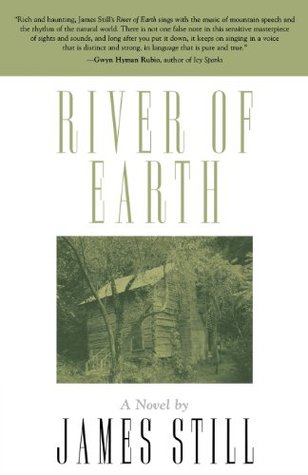
River of Earth, by James Still *****

riverofearthRiver of Earth, originally published in 1940, is a classic tale of Appalachian coal miners, dirt-poor, ever-proud people living deep in the mountains, crags and hollers, trying to scratch out a living, sometimes from pretty much nothing. How does one grow a crop if one has eaten the seeds to avoid starvation the winter before? And how does one survive as a miner when the days of available work shrink from five, to four, to two, to “Mine’s Closed”?

Initially, I was drawn to this book for two reasons. One is an interest in the early United Mine Workers, a stark, brutal organizing effort that is actually nowhere in this story. I got the book for Christmas upon my own request, and one might expect I’d be disappointed that no union shows up at all here.

And yet I wasn’t. Note that five star rating. My other reason for wanting to read it, is that one of my favorite authors mentions it in the text of one of his novels, and I wrote it down. And as I read this bittersweet tale of rural Caucasian poverty, I found something unexpected. I’ve been finding it more than one might think lately. I found ghosts and echoes of my own ancestors.

My grandfather was a miner; he died of black lung. But when a relative embarked on a genealogical expedition, I found that three of my four grandparents had roots in that same hardscrabble region, the part of Eastern Tennessee, Kentucky and Virginia where a body had to more or less guess, back in the 1700’s, which side of the state line he was on.

By 1940, when this book was published, my folks had cleared out of there, but I still heard little speech mannerisms, which cultural geographers call “cultural artifacts”, that had embedded themselves and dropped into the speech of my elders back in the day.

Alpha, usually referred to in the first-person narrative as “Mother”, has married down. She fell in love with Brack many years ago, and although there was at least one wealthy man that set his cap for her, she chose Brack instead. And she doesn’t complain about the family’s state of poverty, not even when there is so little food that she pretends to eat while the children have their supper so that they won’t realize she is making a single mouthful last an entire meal. No, Brack is the one she wanted, and he is what she’s got. She’d do it again, she says.

But oh, how she wants to settle on a little spot of land! At one point they have rented a farm that is humble, yet provides enough food that they can winter over without fear of starvation. It’s on a hilltop with a view, and it has access to woods nearby where in spring, wild salad greens can be picked. It’s all she wants. That, and for Baby Green to survive. He’s been feeling poorly, crying from hunger. Finally, one ugly winter when the food has nearly run out, she apologetically takes a little more food at table. She is ashamed to do it, but she knows the baby needs milk, and it’s the only way she’ll be able to feed him.

She loves that baby so.

Just a plot of land where she can grow things and settle into the house without constantly being required to pick up and move to the next coal town, a mining town which might or might not be hiring, and where the air will clog the children’s lungs and coat the inside of the house with fine black grit, no matter how many used tobacco plugs are stuffed into its cracks. She is sure that if her little family takes care of the earth, it will take care of them. It worked for her mother, and it will work for her family too…if only she can persuade Brack.

And she can’t. Brack is a miner. He believes he was destined to mine coal. And wouldn’t it be nice if his many hanger-on relations, those that come to visit and never leave, felt inclined to do the same? Or to help turn the ground, when they have some to turn? Or to do something other than eat more than anybody else and complain that the food isn’t good enough?

The reader has to admit that this is a wicked-hard dilemma. If one’s relatives are likely to starve if turned out of the house midwinter with nowhere to go, can one send them? But if one’s children are going hungry because the relatives are eating a lot of the food that was supposed to be theirs, can one continue to feed them? It’s a point of contention between Mother and Father. Father says he won’t turn his kin out; Mother says the children are too thin and hungry, and couldn’t his kin do a lick of work for once?

At one point Grandma needs help, but Mother can’t go to her, because the baby is ill. The food supply problem and the Grandma problem are partially solved by sending our narrator and protagonist, still elementary school aged, off to live with her and help her run her farm. Grandma is the embodiment of a work ethic. Rheumatic and 78 years old, she crawls down the rows of crops in order to harvest a few puny potatoes. She reflects on her married life, before her husband died, and her pride in having none of them shot to death, so common in these nail-tough hills:

 “Eight me and Boone brought into this world, and every one a wanted child. Four died    young, and natural. Three boys and one girl we raised. My boys were a mite stubheaded, as growing ones air. But nary a son I had pleasured himself with shooting off guns, a-rim-recking at Hardin Town and in the camps, a-playing at cards and mixing in knife scrapes, traipsing thar and yon, weaving drunk. Nor they never drew blood for doing’s sake, as I’ve got knowing of. Feisty though, and ready to fight fair fist if the other feller wanted it that a way. I allus said, times come when a feller’s got to fight. Come that time let him strike hard where it’ll do most good, a-measuring stick with stone, best battler win. The devil can’t be fit lessen you use fire.”

It occurred to me as I read it, although I could hear Grandma speak in that dialect in my head clear as day, that the dialect would wreck havoc upon the eyes and mind of someone with a mother tongue other than English. I handed it to my husband and pointed to a paragraph. He’s been in the USA for decades and speaks several languages, but he reluctantly told me that although he could understand it if I read it aloud with inflections where they belonged, it was really too much on the printed page.

With that sole caveat, I recommend this slim but magnificent story. The setting is nearly a character unto itself (although I had to get online to figure out what a paw-paw fruit was). The dialogue and its point and counterpoint, Mother advocating for the Earth, and Father advocating for dynamite and despoilment, is bound to resonate in this fragile ecological time.

But you could just read it because it is amazing literary fiction.

Officer Elvis, by Gary Gusick *****

Today! It’s for sale today! A little bird at Random House sent me a message, and I promised I would reblog this. If you haven’t bought it yet and would like to laugh your butt off, now is the time. I will also note that it is super-cheap if purchased digitally.

seattlebookmama's avatarSeattle Book Mama

officerelvisThat was absolutely ridiculous…and just in the nick o’ time! Many thanks to Random House Alibi and Net Galley for the DRC. This second installment of the Darla Cavannah mystery series reads just fine as a stand-alone novel.

I like to read several books at a time, and it was getting a little dark out there. The Blitzkrieg had broken out in the master bathroom, with Hitler’s troops having overrun Belgium and Poland and on into France. On my e-reader, Bull Connor had sent huge attack dogs and fire hoses against the teenagers of Birmingham, and Dr. King already understood he would not make it out of the struggle alive. And by bizarre coincidence, Elvis was already perched on my nightstand. We were in the Vegas years, and Priscilla said that on the nights he wasn’t performing, the man just ate and took pills out of boredom. And downstairs, even…

View original post 236 more words

The Sunlit Night, by Rebecca Dinerstein *****

thesunlitnightWhen was the last time I read something this poignant? No, it’s more than poignant. This novel is a real powerhouse, and my heartfelt thanks go to Net Galley and Bloomsbury, USA for letting me read it as a DRC. It affected me to the extent that I needed to let it steep in my mind for a few days after I read it, before I could review it. That’s always a good sign.

You see, Yasha has grown up without his mother, at least for most of his life. He, his father, and his mother all received much sought-after plane tickets to the USA from Russia. Not all were scheduled to depart at the same time, and not all of them did. And so Yasha and his father have lived above the bakery, and now and again they phone to see when Mama might be coming. It isn’t like she is dead or in jail. She just hasn’t come. She puts them off; she makes excuses. So Yasha helps his father run the bakery, rising early every day and jetting home from school promptly when the bell dismisses him. Season follows season,and year follows year;the loss grows deeper and stronger, as does his bond with his father, a flour-speckled, graying eccentric with the world’s kindest heart. His father is his life, and the place where his mother once was is a constant void. “No mother. No mother. No mother.” Unless you are made of brick or cement, you have to feel his pain.

I think the narrative that alternates here, that of Frances, who is destined to meet Yasha, is supposed to be equal in force, but to me she is an also-ran. The book is really about Yasha, and I am fine with that. Frances also hails from a family that is coming unstuck; her parents have given her and her sister notice that they need to get out of the tiny Manhattan apartment in which they grew up, because they are going to separate.

At the same time, Frances’s boyfriend, the man she loves so much that she has turned down a prestigious art fellowship in order to follow him to the ends of the earth, dumps her. Doesn’t even stay with her till she boards; he just leaves her there all by herself, hurt and stunned. He’s gone.

Yasha and Frances will meet at the top of the world, or the nearest possible place. It’s in Norway, not far from where the Sami hunt reindeer. In the summer, the sun never goes down.

Generally I am not a reader of romances. I am perhaps too cynical; I hear the violins starting up and slam the book shut. No schmaltz for me, thank you kindly. But once in awhile an amazing story comes along. Think of The Thornbirds; think of The Prince of Tides. The Sunlit Night is such a story, an exceptional story for which rules were meant to be broken.

It comes out in June, and you just have to read it. Don’t let yourself be left out.

College (Un)Bound: The Future of Higher Education and What It Means for Students, by Jeffrey J. Selingo ****

collegeunboundCollege Unbound is a thoughtful, informative, and nearly exhaustive look at the ways in which higher education may best serve today’s young learners. Thank you, Net Galley and Amazon Publishing for this extremely useful volume, which I received free in exchange for my review. It will be available for sale April 28.

It became available at an important time. My youngest child is a high school senior contemplating college; I am retired, and still paying off my own student loans. Selingo’s discussion of the worth of post-graduate education, whether it is better to attend a two year school or pony up for a pricy school that has a lot of perks and more financial aid available, and the ways in which higher education itself needs to change gained my full attention.

It seems that my own debt-ridden situation is not unusual. Now that not all student loans are subsidized by the government, many graduates exit the comforting, ivy-covered walls of higher learning saddled with 50k or more in student loans and no guarantee of future employment. Most at risk are those that excel in liberal arts, since today’s economy is more geared toward mathematics, technology, and hard sciences.

Selingo suggests, among other things, that higher education needs to unbundle, so that students can combine credits and experience from a variety of schools and other sources, such as on-the-job training, in order to receive their degree. He also points out that many students can get the best result for their dollar (or yours) with a one or two year certification program at a local community college or technical school, rather than paying out the big bucks for a 4 year or advanced degree.

As I read, I flagged nearly 100 passages that I thought were worth revisiting. There’s a lot of information here, and a lot of thoughtful ideas. Selingo has the experience to back his suggestions, and in addition to citing his sources in a conversational way for greater accessibility to text, Selingo has also spent many years in college administration and journalism, including the much-lauded US News and World Report guide to colleges.

One thing I watched for all the way through, as he discussed a wide variety of options, including online learning and experimental hybrid classes, was what he thought of alternative schools. At one point he used the term, but it turned out that he was referring, once again, to online and “unbundled” options. Given that the author discussed the need to avoid “dumbing down” curriculum for the sake of students-as-consumers (here, here!), and the need for critical thinking skills that would create better problem solvers once graduates hit the job market, I immediately thought of actual alternative schools such as Evergreen State College, Bennington, Eugene Lang, and Antioch, where students are not just taught rote content, but how to think more critically. My daughter attends a strong alternative high school, and all four of my other children went there too, turning down Seattle’s much-lauded AP program for highly capable students. I gained my teaching credential and advanced degree at one of these alternative colleges, and although the student loan debt is no joke, I was able to go directly from school to a job in a field where the average graduate in Washington State had to spend three or four years working in temporary or substitute positions while waiting for their break.

And so…what? And this is why the fifth star in my review is denied. Just like US News and World Report (now moribund save for its college guide), Selingo completely leaves alternative schools out of the picture. If he doesn’t like them, he should say that and explain why. If they are recommended, he should include that information.

My conclusion is that this is nevertheless a really good resource for parents of teens who are trying to decide what choices to offer their children after high school is over. The decision, says Selingo, is often not a rational one, and this resonates. How many parents go for the higher price tag because they feel nothing is too good for their son, their daughter? And yet, says Selingo, more expensive is not always better, and a rarefied atmosphere does not always produce the result anticipated by those who pay or borrow heavily. I’ve only scratched the surface of what he has to say. So although I do recommend also considering alternative education, when you find yourself facing that vast selection of college-shopping materials available, include this forward-looking volume in your collection.

Although most teenagers won’t likely read it, adults considering returning to school and facing the financial decisions for themselves, rather than their parents, should also give Selingo’s discussion your time and attention.

In order to get the best education at the best price for ourselves or our children, we must first learn about the schools and educational paths we are considering.