 It’s seldom that I find myself so ambivalent about a galley; I read this free thanks to Net Galley and Endeavor Press in exchange for an honest review. The writing skill is probably closer to a five; the respect level for women, people of color, and anyone that isn’t oriented straight as a bullet’s path is closer to a one. So those that are constantly inveighing about how tired they are of trying to be PC, here. This is for you. For those of us that have moved along, I am not so sure. This book was released digitally in January, 2016 and is now for sale.
I spent a good portion of this book confused, because it is billed as a new release, yet it really reads like a novel from the 1980s might. A little digging revealed that it was initially published in 1988, and this explains a good deal. Mainstream attitudes have come a long way since then, and so some re-released novels stand the test of time, whereas others should perhaps be consigned, as Trotsky put it, to “the dustbin of history”.
The story is set in Vancouver, British Columbia, and this is part of what made me want to read this mystery. I don’t see a lot of fiction set there, and I know the area, so I thought this would be fun. And setting is done well.
Then we have our sniper:
“The sniper sat in the orange plastic chair, hunched over a Lyman ‘All American’ turret press. His hands were large and strong. The thick blunt fingers, nails carefully painted with a glossy red polish, moved with precision and grace as he assembled the shiny brass cartridges, primers, powder and fat 500-grain copper-jacketed slugs.”
Our sniper, who must surely be a baddy if twisted enough to put on women’s clothing and makeup, is referred to as clown-faced and is always designated as “he”. In the 1980s that boat would float with most of book-buying North America. Now, not so much.
There is one victim after another, and the beginning is paced at breakneck speed, relaxing readers only to suddenly shock us repeatedly, so there’s a sort of emotional whiplash. There are two detectives in charge of the sniper shootings, and one is a woman. That’s unusual in the department, where women are routinely referred to in demeaning ways and where hard core porn kept in a file cabinet is just a thing the boys in blue do. None of this appears to be there to make a point about what women put up with, however; it seems to be injected for realism and urban grit. And though none of the cops is particularly brilliant, Parker, the female cop, is particularly incompetent, emptying an entire gun at close range without hitting the target even once.
Okay.
Bright spots come with particular scenes. The climax is brilliant, and I love the detail of the guard horse in front of the evidence room. The author is clearly talented, but every time I found myself engaging with the text and not thinking about anything that had offended me, something else would come to the forefront, popping up like a turd in the punch bowl. Those that visit psychiatrists are all ‘fruitcakes’, and at one point, “a huge black” stands in the doorway. At this point my temper flared and I tapped into my tablet, “Huge Black WHAT, motherfucker?”
Yes, I know. Amazon won’t print that quote. It’s worth editing to have it in my blog, because that’s exactly how I feel about it.
There are good moments with figurative language, but then once in awhile a glaring fact that nobody checked pops up. Do people in Vancouver genuinely believe that the West Coast goes from British Columbia, to Washington, to California? Didn’t think so. Someone needs to apologize to Oregon, which is larger than some European nations. The denouement, social justice issues aside, was a mighty long reach.
If you are already a tried and true fan of Laurence Gough—and he is an established writer with over a dozen published novels—then you will probably enjoy this one too.
As for me, I’ll pass.


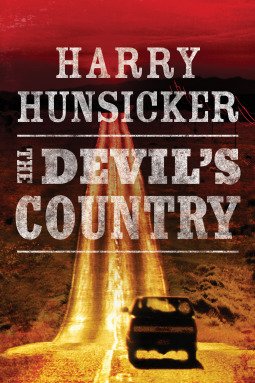 Harry Hunsicker is the former executive vice president of the Mystery Writers of America as well as a successful author. Reading this suspenseful and at times almost surreal tale makes it easy to understand why so many people want to read his work. I’d do it again in a heartbeat. Thanks go to Net Galley and to Thomas and Mercer for the DRC, which I received in exchange for this honest review. This book will be available to the public April 11, 2017.
 I received my DRC for this collection courtesy of Net Galley and Pushkin Press. I thank them for the opportunity to read and review; this compilation of poetry and prose will be for sale on December 1, 2016. What a crying shame it’s so negative.




 Annie Bell could have chosen to marry a well-to-do member of the gentry in her home town, a man with fine china and a full time kitchen servant. Young and buoyant, she chooses love instead, and moves to Oklahoma with Samuel Bell to start a brand new life on the free land that’s been provided. What could go wrong when two young people are strong and dedicated to one another? Oh, it’s an old, old story in so many ways, but Meadows makes it brand new. Thanks to Net Galley and Henry Holt Publishers, I read it free and in advance in exchange for this honest review. It will be available to the public August 9, 2016.
 Those that occasionally hole up on their days off and binge on reality TV shows will love this book; those that don’t will love it too. This reviewer has never watched a single episode of “Survivor” or any other reality-survival show, and yet once I began reading this novel, it elbowed aside all the other books I was reading till I was done. Thanks go to Net Galley and Random House Ballantine for the DRC, which I received in exchange for this honest review.
 I like short stories. My Goodreads library tells me I have munched my way through 89 collections and anthologies; yet I can tell you that there is nothing even remotely similar to what Hale offers here. Thanks go to Simon and Schuster and Net Galley for permitting me to view the DRC for the purpose of an honest review. You should get a copy May 17, 2016 when it is released, so that when it is immediately banned by various school boards you will know what they’re screaming about.
 This week marks this blog’s second anniversary! I note with satisfaction that although my number of followers has climbed slowly, it has climbed rather than fallen. Thank you for making the journey with me.
 Miller’s Valley is an intimate, poignant story so personal that it is hard to remember that it’s fiction rather than a memoir. Thanks to Net Galley and Random House for the DRC. Though I usually read several DRC’s at a time, this was the one I saved for the end of the day, for that time when the phone stops ringing, the dogs quit barking, the family doesn’t need my attention, and there’s nobody at the front door. During those deep, silent hours I immersed myself into the life of Mimi Miller, hypnotized as if my best friend were perched on the bed spilling out her secrets.
 Seattle Book Mama