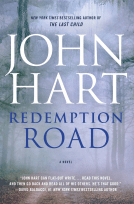
Redemption Road, by John Hart ***-****

redemptionroadJohn Hart has  loyal readers, but until a friend mentioned his name to me I had not read his work. Thanks go to Net Galley and St. Martin’s Press for the DRC, which I received free in return for an honest review. This title is available to the public May 3, 2016. There are some partial spoilers below that give up events midway through the book, but of course the ending is kept secret so that you may find it for yourself. I rate this novel 3.5 stars and round upward.

Our protagonist is Elizabeth Black, a cop burdened by her profound attachment to Adrian Wall, a former cop sent to prison for a murder she is certain he did not commit, and also to Gideon, the child of the murder victim. On the day Wall is released from prison, Gideon, now an adolescent, lies in wait for him, prepared to shoot the man he believes killed his mother.

All hell breaks loose, and once more Liz is immersed in the case. She has served as surrogate mother to Gideon since his mother’s death; his father is not fit to raise a child, and so she has quietly slipped in and out of that family’s home, preparing meals, purchasing the child’s clothes. She can’t step back from this case, even when ordered by her superiors to do so.

Hart is a gorgeous prose stylist, and his pacing is unbeatable. He does use one very old plot device, and it, along with the subscript, which I will discuss in a minute, and the absolutely impossible denouement are the reasons the final star-and-a-half is denied.  In addition, there is a place in the story—I won’t spoil the specifics—in which Liz is stark naked and leaps into a car without a stitch of clothing on, and no one finds this remarkable. It appears that the writer had intended to get her dressed and overlooked this detail, as did editors.Hart’s facility with setting is lush and matchless; the violence in this novel, thoroughly visceral, tipped my “ick” button a couple of times, and for this reason and others, I may not return to his work. But his talent and skill are unquestionable.

A minor character of considerable interest is the attorney Liz hires to defend those close to her, a very elderly local courtroom legend known as Crybaby Jones. Every time Crybaby said or did anything, my mind lit up like Christmas, it was so endearing and entertaining. I wish he had been given a larger role in the story, but for the most part he was relegated to the sidelines.

Another character of interest is the prison warden, who functions as a local kingpin and terrorizes those around him into instant submission. I disliked the way this character was shaped, because it gave the author a handy way to dismiss the over-the-top violence by local cops and prison guards as the product of one terrible man’s dominance, which gives the reader the false but comforting assurance that when cops get bad, it’s an anomaly. Hart may believe this; I don’t. And this is a part of the subscript that grated on my nerves. Early in the story Liz reflects that it is oh so hard to be a cop “since Ferguson”, sounding the message that those of us that hold cops accountable and question the deaths of children and other weaponless civilians is cruelly unfair to those that wield the badge. My e-reader comment: “Oh boo hoo. Poor poor cops.”

Because this writer spins a good thriller, I attempted to overlook this and another troubling aspect of the subscript, but the second message was hammered home again, and again, and again, the message that any woman that terminates a pregnancy is a baby killer. He goes after this one long and loudly, with Liz recalling the day she “killed her baby” in a sleazy trailer park abortion. If we’d just had the trailer and no other abortion reference it could have been interpreted as a message that abortion should be safe and legal in every state in the USA, including North Carolina, but that is clearly not the author’s intent. He has her tearfully remembering what would have been her due date had she delivered the “child”; she marks her embryo’s birthday-that-wasn’t every year, and mawkishly speculates about what he –oh yes, she knows its gender, although this is not even scientifically possible until the fifth month of a pregnancy– might have liked, his possible activities, preferences, and yada yada.

Have you had an abortion, or known someone that has? I can think of half a dozen women without trying hard, and this is just not how it goes, folks. Nor should it be.

Fiction writers often use story to drive home a political message, because story is such a strong device and delivers such powerful feelings. In the hands of friends, it is admirable and welcome. In the hands of those that wish to dictate what a woman may or may not do with her body, and in the hands of those that would restore the status quo of police terror over Black men and other vulnerable members of our society, it is galling.

To sum up, Hart has created a work of stunning prose and imagery and tremendous suspense. If you lean far enough to the right to be unaffected or even galvanized by the subscript, then this is your book.

The Girls, by Emma Cline*****

thegirlsThe Girls is a fictionalized account of the Manson Murders, a terrible killing spree that stunned the USA in the 1960s before any mass shootings had occurred, when Americans were still reeling from the assassinations of President Kennedy, his brother, Senator Robert Kennedy, and Dr. Martin Luther King. Manson, a career criminal with a penchant for violence yet possessed of a strange sort of charisma, attracted a number of young women and girls into a cult of his own founding. Later they would commit a series of grisly murders in the hills outside Berkeley, and it is this cult and these crimes on which Cline’s story is based. Great thanks to Net Galley and Random House for the DRC. This book will be published June 14, 2016.

Evie is an only child of the middle class; she is well provided for, but her parents have split up and her presence is getting in the way of her mother’s love life. Evie needs her mother’s attention now that she has entered her teens and so she pushes the limits in small ways, then in larger ones. When it becomes clear that her mother just doesn’t want her around, Evie looks elsewhere and finds herself drawn to a feral-looking young woman named Suzanne, who has unsuccessfully tried to shoplift something from a nearby store. Before long, Evie is sleeping on a mattress at the rural commune where Suzanne lives, eating from the communal kitchen and being used sexually by the group’s charismatic leader, and then by a man in the music industry that Russell, the founder, wants to please in the hope of having his music published.  Russell dispenses hallucinogenic drugs freely to make the girls more compliant.

We know immediately that this place, the commune, is not a good place. When we find that the babies  born to young women that live there—in this era before Roe versus Wade gave women the right to choose—are segregated from their young mothers and the pitiful way they regress and attempt to attach themselves to various females in search of a mother or mother figure, that’s a huge tell. But when Evie arrives she doesn’t want to know these things, at least not yet. All Evie wants is to be with Suzanne.

The story’s success isn’t anchored so much in the story line, a story that’s been tapped by previous writers, but in the dead-accuracy of setting, both the details of the time and in every other respect as well, from home furnishings, to slang, to clothing, to the way women were regarded by men. The women’s movement hadn’t taken root yet. This reviewer grew up during this time, and every now and then some small period bit of minutiae sparks a memory. In fact, the whole story seems almost as if a shoebox of snapshots from pre-digital days had been spilled onto the floor, then arranged in order.

The other key aspect that makes this story strong is the character development. Evie doesn’t have to live in poverty among bad people, but she feels both angry at her mother and hemmed in by the conventional expectations of her family and friends. Her boundary-testing costs her the loyalty of her best friend, really her only friend, and so she casts about for a new set of peers. Her mother prefers the fiction that she is still visiting Connie, the friend that has disowned her, and this lie provides Evie with a lot of wiggle room on evenings when her mother is with her boyfriend and finds it convenient for Evie not to be home.

As for Evie, what has started out to be an adventure, a bold experiment in branching out from the middle class suburban life she’s always known, gradually begins to darken. But the worse things get, the more important it is to her to prove her fealty to Suzanne, to not be rejected a second time as she was with Connie. Hints are dropped that probably she ought to just go back where she came from before it’s too late, but she is determined not to hear them.  I want to grab her by the sleeve and get her out of there; Evie won’t budge. Once she is in trouble at home for the things she had done on behalf of the group, her desire to avoid her home and stay with Suzanne grows even stronger, which leads her into more trouble yet. Clues are dropped that something big is going to happen, something that our protagonist maybe should avoid, but she plunges forward anyway with the bullheaded determination peculiar to adolescence.

All told, Evie’s future doesn’t look good.

Readers among the Boomer generation will love this book for its striking accuracy; those that are younger will feel as if they have traveled to a time and place they have never seen before. One way or another, Cline’s masterful storytelling weaves a powerful spell that doesn’t let go until the last page is turned. Riveting, and highly recommended.

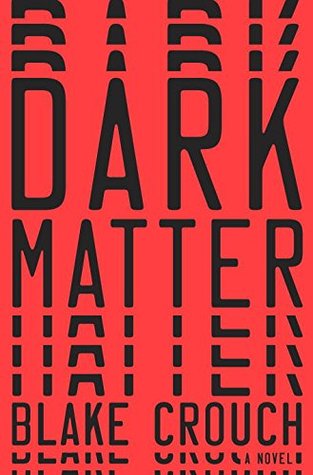
Dark Matter, by Blake Crouch*****

darkmatterNote: my records showed this would be published today, but they are in error. This title actually comes out in August and I have run my review earlier than I should have. You’ll see this again at a date closer to publication.

Blake Crouch is a seasoned writer, but I had never read his work before; only recently have I ventured back into science fiction, a genre I abandoned when some writers began incorporating tech jokes and algorithms into their work. Humanities oriented and gun shy, I veered back to my other favorite genres. Crouch makes it a joy to be back reading sci fi. I received this DRC free, courtesy of Net Galley and Crown Publishing Group in exchange for an honest review. It’s for sale August 2, and it will be in theaters soon too. Don’t get left out, because this one is huge.

Jason Dessen is a teacher, having abandoned a burgeoning career in research in order to become a family man. The story is infused with the question almost every adult has, the question of the road not taken. By the time we’re in our thirties or even our mid-twenties, we have made hard choices that leave us musing occasionally about what might have happened if we had pursued a different course, if the destiny we either chose or were thrust into had played out differently. It is this question that Crouch taps into.

On an ordinary evening, Jason’s old friend calls him and asks him to come to a nearby bar and celebrate a momentous event. Jason is a father and happily married, so he doesn’t spend a lot of time hanging out in bars with the guys, and tonight is family night, so it’s especially important to be at home. But this celebration is particularly important to his friend, and so he steps out for one fast beer for the sake of the friendship, with the promise to bring home ice cream on his way home.

That’s not what happens.

On his way home, he is followed by someone, a guy who jumps him not for his wallet, but for his life. He’s knocked out and awakens thus:


   Where the hell am I? A hanger?

I catch a glint of memory—a needle puncturing my neck. I was injected with something. This is some crazy hallucination.

A radio squawks. “Extraction team, report. Over.”

The woman says with excitement bleeding through her voice, “We have Dessen. We’re out of the box and en route. Over.”


Until Jason’s research funding dried up, he had been working on a cube that could penetrate the “multiverse”, and take matter from the world in which we live to a parallel reality. In another life, Jason has not only done this, but done it on a spectacular level. Here we get into string theory and other aspects of science that are over my head, and this is the type of thing that prevents me from reading more technically demanding sci fi.  Happily, the author only stays there long enough to provide the foundation for the science fiction aspect of his story:


Most astrophysicists believe that the force holding stars and galaxies together—the thing that makes our whole universe work—comes from a theoretical substance we can’t measure or observe directly. Something they call dark matter. And this dark matter makes up most of the known universe…Some string theorists think it might be a clue to the existence of the multiverse.


The idea is that every time someone hits a benchmark in his life when he must make a choice—college versus work, career versus marriage, to have a child or not, to move away or stay here—there is some parallel version of himself that does the other thing in another universe.

Once I got to the part where string theory is mentioned, I recoiled in horror—was the whole book going to be like this now? How could I even review it?—and I went to read my other books for awhile. But when I picked it up again, we quickly blew through the technical part, which for all I know may be bad science for the sake of a great story anyway, and we were back in poor Jason’s bewildering life. From that moment forward, roughly the twelve percent mark, the story grabbed me by the hair and didn’t let go till I was done.

This story packs a walloping punch, and I have at least one friend who would have made it just fine through the science blurb but then would have been unable to tolerate the emotional torrent that follows. Some people don’t want a story that will make their heart beat faster, and if that’s you, this is not your book.

But for those that enjoy a genuine thriller, this book is for you.  In fact, it’s impossible to draw a line as to whether this story is more a thriller or science fiction. It has all the qualities of a strong thriller, but the story can’t be told without the sci fi foundation. For those that are leery of reading science fiction due to a lack of proficiency in astrophysics or other aspects of science, however, you’ll be fine here. Crouch touches on science long enough to get establish the basis of his story and hook the reader, and then it’s back to Jason and his many dilemmas.

Highly recommended to anyone with a literacy level of a high school senior or beyond. Get it now!

The Black Glove, by Geoffrey Miller*****

The Black GloveThe place is Hollywood, California; the time is 1980. Terry Traven is a private detective specializing in finding the runaway children of the wealthy. He is offered a job that appears to be more of the same; a local mogul’s son has disappeared, and Dad wants him found. But then the disappearance turns out to be a kidnapping, and the kidnapping turns out to be a murder, at which point all hell breaks loose. This story is fast-paced and though it’s set a generation or two ago, the issues with police brutality—otherwise known as “the black glove”—make it more socially relevant than your average piece of crime fiction. There are other components that will sit well with those with an eye for social justice, too. Thank you Brash Books Priority Reviewer’s Circle for the DRC, which I received in exchange for a fair and honest review. This book is available for sale right now.
The beginning of the book doesn’t appear to be auspicious. A guy walks into Traven’s office and presents him with a dossier that tells him all about himself, at least in the words of intelligence sources. The dossier is too lengthy–we see every word, pages and pages of italicized material– and is clearly a fast, easy way for the author to introduce us to the character. I was prepared to be let down.

Once we get past that sloppy introduction, however, the story is complex and fast paced enough to remind me of James Lee Burke’s detective series. Toss in some quirky names, like Senator Suspenders and a punk rock band called The Dead Cherries, and add a whole lot of action. And yet somehow we find ourselves discussing issues of race, gender, and gay rights without slowing the pace at all. I almost always take off at least a star for the use of the “n” word, but the way it is used here isn’t just some cheap stunt to show us that a bad guy is really rotten or ignorant; instead, the characters manage to embark on an abbreviated discussion of race and white privilege without ever becoming preachy or distracting from the main thread.  Some of it is very indirect, and it took me awhile to get a handle on it. In other places, it’s crystal clear, as when the visiting room at the jail is “gas chamber green…a cruelly subtle reminder to the inmate of his loss of freedom.”

The story’s subscript demonstrates how women and people of color are sometimes so overwhelmed by the racism and sexism that is inherent in US culture—and even more so when this novel was written than now—that we find ourselves internalizing that hatred. Likewise gay men, lesbians, and bisexuals; those from the Boomer generation will recall just how difficult this time period was for anyone that wasn’t straight.  And given that Miller wrote this during that time, I consider this story to be courageously written, a gutsy story by a writer unafraid to take a hard look at a controversial topic.

In fact, Brash Books hasn’t introduced a detective this brainy and complex, yet entertaining since they brought out Barbara Neely’s Blanche White series. What a tremendous find! I wish there was a whole series with this detective.

Meanwhile chances are excellent that you haven’t read this book yet, and if you lean left and enjoy a good detective novel, this is one you should scoop up right away.  It’s strong fiction with a progressive thread running through it. Don’t miss out.

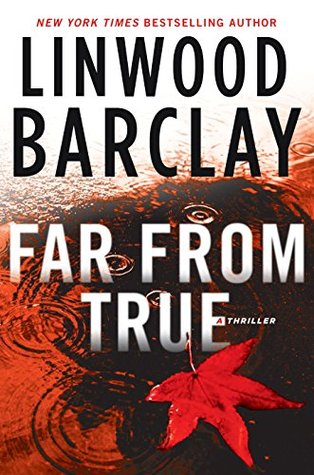
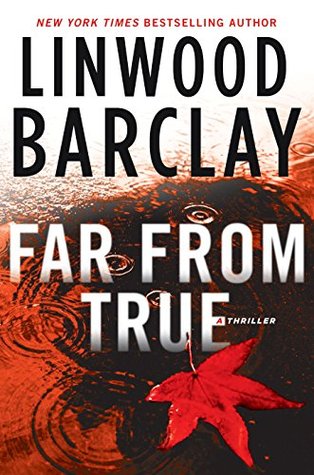
Far From True, by Linwood Barclay****

This one is available for purchase now, so I am running my review one more time.

seattlebookmama's avatarSeattle Book Mama

farfromtrueBarclay is an established writer, with a number of best sellers to his credit, but he was new to me. My thanks go to Net Galley and Berkley Publishing Group for providing me with a DRC in exchange for an honest review.
And indeed, it does take a pro to weave such an intricate plot so adroitly. But let’s take it from the top and go from there.

The story is set in Promise Falls, an ironically named town that contains more trouble than you can imagine. The initial crisis takes place at the drive-in movie theater, the last showing before the place closes up and the property is sold. But then the unthinkable happens.

Like most disasters, this one triggers a flurry of other emergencies erupt related to the victims of the theater tragedy. There are greedy relatives, heartsick loved ones, and other events and individuals that are just…

View original post 457 more words

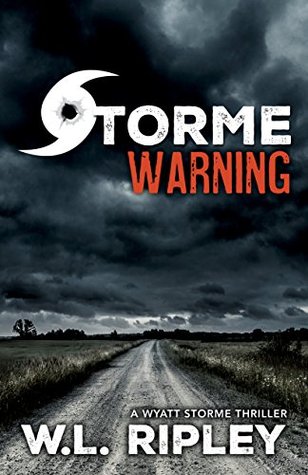
Storme Warning, by WL Ripley****

stormewarningStorme Warning is the fourth and thus far final installment in a terrific series. I have read three, and will read the fourth if I can find it. The snappy patter and nonstop action and suspense make it hard to put down once you’ve begun. I rate it 4.49 stars, and thank Brash Books Priority Readers Circle for providing me with this DRC in exchange for an honest review. The book is available for purchase right now.
Wyatt Storme is retired from football. He divides his time between his cabin in Missouri and another cabin in Colorado; this story takes place in Missouri. He owns a considerable piece of land because after having the press follow him hither and yon for the duration of his NFL career, he craves simplicity and solitude. “Reclusive”, as his best friend Chick explains to an outsider.

Because all of a sudden, Wyatt’s land is chock full of outsiders. Hollywood director Geoffrey Salinger wants to shoot his hot new movie on location; his star has received death threats, and Chick has been tapped as bodyguard. Wyatt doesn’t like it much, but Chick wants the work, so he agrees to tolerate the intrusion, but he sets terms in a way that provide him with an unusual amount of control over industry hotshots that aren’t accustomed to leaving the driver’s seat. Combine this scenario with the smart, snappy patter between Wyatt and Chick; throw some 70’s song lyrics into the narrative as if they are merely part of the story; add some mobsters from out of town; and you have a really fun, fast-paced story.

The final .51 star is denied because of the way the author deals with race. He means well to be sure. But racist terms that are sprinkled in an almost nonstop stream throughout the book are going to make this a prohibitively painful book for most African-American readers. It’s true that Ripley uses the “n” word and other slurs (against other races also, but mostly Black folk) to determine who is a bad guy, but when one is close enough to the heat those terms create, all the fun stops as soon as the word appears. It’s like finding a rattlesnake in the cookie jar; you’re having a good time, expecting good things to continue happening, and then, bam, there it is.

Depending on who you are, it’s enough to take your breath away.

To be sure, I don’t know what it is like to be a person of color; I am not one. But for many years I have been the only Caucasian person in my house, with others here being either Asian, Black, or mixed, and I do know what it is to be the wife and mother of people that don’t enjoy white privilege. The “n” word and others like it are serious, serious things. And insult is added to injury by having the African-American character unable to enter a scene without race issues being the first to fall from his lips. Most Black people don’t really want to engage white people in discussions of race unless it’s in a formal political setting, and even then, it’s more comfortable to talk to another person of color, or a room that is mostly people of color. But LeBeau is clearly in this story for no purpose other than to be the Black character. He isn’t developed, and what is worse, he isn’t capable of much that is positive. As with the Black girl in the brief restaurant scene, a white guy has to come to the rescue. To depict all characters of color as victims and set them up to be saved every stinking time by Caucasian characters is inexcusable. (LeBeau tries to carry off a rescue once, but it doesn’t work out, and Chick emerges the hero once more.)

Should the writer continue the series, I recommend that he simply use white folks, if that’s his comfort zone, or include multiple people of color and develop them. Give them characteristics beyond coming into the room and making readers aware they aren’t white. And don’t diminish them by making them unable to stand up for themselves or others. I further recommend not using that word, ever again. It’s cheap and easy, but it costs some readers dearly. I would not give this book to my son to read. The pain would outweigh the enjoyment; in fact, I guarantee he wouldn’t finish it. There are more subtle yet unmistakable ways to demonstrate that a character is racist, if that is a key goal. There are other ways just to show that a character is a bad guy, too.

Hollywood and television have learned how to create actual characters of color, as opposed to casting someone to “be the Black guy”. Ripley has skill enough to do the same.

I’ve given the downside of this novel more space than the 90 percent that I enjoyed, but I have done so because no other reviewer I’ve seen so far has addressed it, and someone has to do it.

With the single clear caveat provided here, this fast-paced, mostly-funny detective story is recommended .

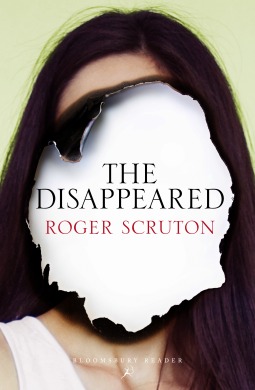
The Disappeared, by Roger Scruton***

thedisappearedThe Disappeared was published in UK, and is now available to readers in the USA. Scruton shines a spot light on victims of domestic violence, trafficking, and rape. It’s a timely issue, and no one can read his story and walk away unmoved. Thanks go to Bloomsbury Reader for inviting me to read and review the DRC free in exchange for an honest review. This book is available to the public tomorrow, February 26.

The stories evolve around three women’s stories; we have Sharon, Muhibbah, and the reader is the third, with the narrative switching to the second person, a woman being abducted and raped on board a ship: “…you are nothing but female meat.”

The default for the second-person character is female, which I found gutsy and laudable. Unfortunately, positive treatment of women in this novel begins and ends here…and the second-person character is going to be raped right away.

Justin and Stephen are the two goodhearted men that are trying to assist Muhibbah and Sharon, both of whom are being cruelly abused at home. In each case, it is an immigrant that is doing the abusing. And here I winced.

On the one hand, I can see that Scruton is letting us know that the cultural mores of Islam should not be considered a legitimate excuse for domestic abuse. He clearly can’t do that without including a Muslim woman. Yet if we could have some positive depiction of a Muslim individual somewhere within the text to cut across the stereotype that is so widespread, and which this novel tends to embrace, it would make for better literature and a fairer accounting. Because not all Muslim families hurt their women. I have taught Muslim girls in Seattle that are well educated and whose parents permit them to choose what their futures will hold. Scruton’s depiction of only sneaky, violent, and abusive Muslims makes for a two dimensional telling, which is a shame, because his academic background and word-smithery indicate he is capable of better things.

The central part of the novel slows, and here the plot drags when the writer tries to do too much with a single story. Justin lapses into philosophical musing, which would perhaps work for mainstream fiction or romance genres, but not as much for a suspenseful, missing-woman mystery or thriller. The character worries about the environment, and a lot of detail is given to wind farms and solar panels that not only fails to move the plot forward, but brings all action to a halt. He loses himself in heavy metal music, and several pages are suddenly devoted to hard rock. What? Why? Scruton is by trade a philosopher above all else, but to write a strong thriller, the message has to be driven home through story only. A drifting inner narrative in the midst of what has been action, action, and more action leaves the reader feeling cheated.

Toward the end of the novel, the pace quickens once more, and ultimately the three narratives are braided together at the story’s end in a way that is masterful.

Spoiler: don’t read past this point if you want the ending to be a complete surprise.

I find myself perturbed at the gender stereotypes that seem to belong to another era. Women here are either victims, sex objects, or both. The only female professional is one that steps in as a bureaucrat and foils the rescue effort one of our two male heroes is attempting. In addition, I found myself wondering why neither man can use his position and authority to lend comfort and aid without either becoming sexually involved with the girl or woman he is trying to help, or wanting to do so. The 16 year old girl that can’t get over her crush on the older male teacher and immediately drops her clothes for him despite his reticence sounds like something out of a men’s magazine. No, no, and no.

Scruton is an experienced writer, and is eloquent in painting a portrait of abused women hidden in plain view in the major urban centers of Western, developed nations. If he can cut across stereotypes and introduce greater complexity as he develops his characters, the next novel will be even better.

Where All Light Tends to Go, by David Joy*****

WhereAllLightTends“Dead men tell no tales, Jacob. The ones left to living are the ones who write the history.”
I received my DRC courtesy of Net Galley and Putnam Penguin publishers in exchange for an honest review. This title is available for purchase.

Jacob McNeely is a teenager in Cashier, North Carolina, a tiny  town deep in the crags and hollows of the Appalachian Mountains. His mother is a crank user recently released against his father’s wishes from a psychiatric hospital. Jacob has always wished she might turn into a real mother, but it isn’t going to happen.

His father is the local drug czar, with cops on his payroll and a wide variety of other employees as well. He uses McNeely’s Auto Garage to launder his drug money. If any clueless tourist should come by, he gives them a quote so outrageous they take their business elsewhere. Locals foolish enough to cross him or get in his way find themselves and their vehicles in a deep, watery grave yard. That’s if the abused, underfed Walker coonhounds that are tied up at intervals throughout his property don’t kill them first.

Jacob walks a careful tight rope just in order to stay alive. He doesn’t like the life he leads, but he doesn’t see a way out. That is, unless he can run away with Maggie, the girl he has loved since childhood. Maggie is cut out for greater things; Maggie should go to college and escape the danger and poverty of Cashier.

If only Jake could go with her.

Joy is a gifted writer. His stark prose is chilling yet poignant, and so arresting that the reader will be hard pressed to set it down once it’s begun. But you may think twice about reading it at bedtime.

Where does all light tend to go? The allegory is heavy but sophisticated. Perhaps all light goes toward heaven, the candle that reminds us of the existence of God.

Or it’s possible that all light just goes out.

Searing, wrenching, and deeply affecting, this is a book to remember long after you’ve forgotten everything else you’ve read. Highly recommended to adults. Definitely not for children or adolescents.

Simply brilliant!


Far From True, by Linwood Barclay****

farfromtrueBarclay is an established writer, with a number of best sellers to his credit, but he was new to me. My thanks go to Net Galley and Berkley Publishing Group for providing me with a DRC in exchange for an honest review.

And indeed, it does take a pro to weave such an intricate plot so adroitly. But let’s take it from the top and go from there.

The story is set in Promise Falls, an ironically named town that contains more trouble than you can imagine. The initial crisis takes place at the drive-in movie theater, the last showing before the place closes up and the property is sold. But then the unthinkable happens.

Like most disasters, this one triggers a flurry of other emergencies erupt related to the victims of the theater tragedy. There are greedy relatives, heartsick loved ones, and other events and individuals that are just bizarre. And then there are more bodies, and the number “23” appears over and over again, a grim warning.

Some mystery novels are great for the classroom. This one isn’t. In fact, if I were a school librarian I wouldn’t buy it either. Leave this one for consenting adults.

For us, there is more flexibility. There are some parts that are more sexually explicit than your average detective novel, and readers know whether or not they find this appealing. If you have read Barclay’s other mysteries, perhaps you already have some notion of what is in store. But if, like me, you come to this title without having read the first book in the Promise Falls series, you can dive in as if it were a stand-alone mystery. There is no prior knowledge assumed.

I liked the story in spite of the kinky stuff that reached beyond my own perception of what is tasteful. The suspense was so palpable, and the many subplots so well woven throughout the text that I expected to rate this title five stars. I read several books at a time, and for awhile this was my “dessert” mystery, the book I reached for after I had dispatched my obligation to the publisher for a title I had not enjoyed as much. While there were a couple of situations that confused me sometimes—we have two new couples that are starting a relationship while all this unfolds, and I tended to mix them up, and which kid was whose again?—most of the characters were distinct and developed sufficiently that I knew who they were and what they were like when the story bounced back to their point of view. Frequent changes in setting, character, and point of view heightened the suspense.

I was eternally grateful not to have a protagonist agonizing over whether or not to stop at the bar, whether or not to have just one beer. Heaven save me from any more agonized alcoholic main characters. And so this was a relief.

Ultimately though, the ending left me feeling cheated, and that is where the final star fell off my rating. To be sure it was a surprise ending, but it felt dissonant and tacked on. I often can’t tell how much I like a good story until I see the ending, and that was surely true here.

Nevertheless, it’s a solid piece of fiction, and worth your time and dime. Unless you have deep, deep pockets, I don’t think I would go full hard jacket price for this one, but if you can obtain it at a discount, digitally, or in paperback, it’s a fun read for a chilly late winter weekend.

This title will be available for purchase March 8.

Try Not to Breathe, by Holly Seddon*****

trynottobreatheTry Not to Breathe is the sort of book that steals into your senses and takes over your life until it is done.I was invited to read and review this title by Net Galley and Random House Ballantine. My thanks go to both.  I fed it to myself into intentionally small bites at first, because I read several hours before I go to sleep, and under no circumstances did I want this story anywhere in my dreams. On Friday I hit the halfway mark, and immediately realized that Seddon’s novel would occupy my Saturday, period.

It’s a story that will make you put the cereal in the fridge and the milk in a cupboard. But on the other hand, it’s a terrific book to be snowed-in with.

Our premise is that Amy, a fifteen year old girl that was savagely beaten by a party unknown, has been unconscious in the hospital for fifteen additional years. But she isn’t on a ventilator, and brain waves turn up on the MRI. She can’t communicate, but she is thinking part of the time.

She’s still in there.

Our two other chief protagonists are Jake and Alex. Jake was Amy’s girlfriend, and briefly was considered a suspect by police. He didn’t do it, and he still visits her now that her family is gone. Partly it is because it’s believed that she can hear what is said to her, and he hopes that he can provide some measure of comfort. And partly he visits the ward for the quiet. It’s his private time, when neither work nor his wife can claim his attention. But he doesn’t tell his wife, and the lies are building up, corroding his relationship with his very pregnant spouse.

Alex is a free lance reporter whose love affair with alcohol has displaced her career, ended her pregnancy, and destroyed her marriage. She is isolated, miserable, and needs someone to talk to. With the tantalizing promise that her nearly moribund career can be rekindled by uncovering new information in Amy’s case, she begins visiting Amy, and she begins digging. And as one revelation leads to another, the tension and suspense are nearly unbearable!

The ending leaves me slightly dissatisfied, a left curve thrown in order to surprise the reader, but the innovative way in which it is revealed is so clever that I can’t bring myself to lop even half a star off my rating. If like me you occasionally wallow in a good thriller or mystery, you’ll find this one is a cut above the rest.

Seddon, herself an accomplished journalist, makes her debut as a novelist with this title, and she is a writer to watch in the future. Her thriller is available to the public February 23, 2016. Highly recommended!